Reviewed by our editorial team Updated
Why Sofia Is One of Europe’s Most Overlooked Historical Cities
Modern Sofia is often introduced through its cathedrals, Roman ruins and mountain scenery. Yet beneath the surface lies a far more complex story. Over the centuries, the city has experienced imperial rule, wars, political upheaval, ideological change and dramatic social transformation. Layers of this history remain visible throughout the capital, often hiding in plain sight among everyday streets, government buildings and public spaces.
Unlike destinations where historical sites are concentrated in a single district, Sofia’s story unfolds across the entire city. A visitor can walk from the remains of Ancient Serdica to monumental government buildings, pass Soviet-era monuments and finish the day inside museums documenting Bulgaria’s twentieth-century transformation. Few European capitals display so many different periods of history within such a compact area.
Much of Sofia’s lesser-known history centres around the decades when Bulgaria formed part of the Eastern Bloc. Government buildings, public art, military museums and Cold War-era landmarks continue to shape the city today. While many visitors focus exclusively on the medieval and Roman attractions, those willing to look deeper will discover a fascinating side of Sofia that reveals how the modern city was shaped.
This guide explores the landmarks, museums and historical sites that tell the story of Communist Bulgaria, the Cold War, wartime Sofia and the political changes that transformed the country during the twentieth century. Rather than focusing on sensationalism, it aims to help visitors understand the events and places that helped create the Sofia seen today.
Sofia at a Glance
| Item | Information |
|---|---|
| Country | Bulgaria |
| Population | Approximately 1.3 million |
| Best For | Cold War history, political history, military museums |
| Main Historical Periods | Roman, Medieval, Ottoman, Modern, Communist Era |
| Key Historical Attraction | Museum of Socialist Art |
| Main Historical District | Largo Complex |
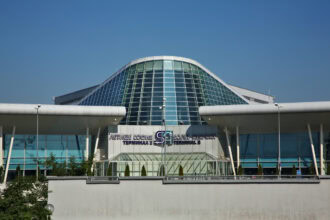
| Closest Airport | Sofia Airport (SOF) |
| Suggested Time | 1–2 days for historical sites |
| Ideal Companion Guide | Things to Do in Sofia |
Many of Sofia’s most important historical attractions are located within walking distance of one another. Visitors can comfortably combine museums, monuments and government districts into a single itinerary while still leaving time to explore the city’s more traditional attractions.
See hotel options and places to stay in Sofia.
Browse hotelsBrowse apartments, holiday homes and self-catering stays in Sofia.
View rentalsCompare hotel deals in Sofia from multiple booking sites.
Compare pricesUnderstanding Bulgaria’s Communist Era
To understand many of Sofia’s twentieth-century landmarks, it helps to understand the period during which Bulgaria was governed as the People’s Republic of Bulgaria. Following the political changes of the mid-1940s, the country became closely aligned with the Soviet Union, a relationship that would shape Bulgarian politics, architecture, culture and daily life for several decades.
During this period, Sofia underwent significant transformation. Large housing developments expanded across the city, new government buildings appeared and public spaces were redesigned to reflect the political priorities of the era. Monuments celebrating workers, military achievements and socialist ideals became common features of the urban landscape.
The influence of this period remains visible throughout Sofia today. Government complexes, residential districts, transport infrastructure and public art all reflect decisions made during the second half of the twentieth century. Even visitors with no particular interest in political history will encounter evidence of this era while exploring the city.
The period came to an end in 1989, when Bulgaria began transitioning towards a democratic political system and market economy. While some monuments were removed or relocated, many remain, providing a fascinating record of the country’s recent past. Understanding this background helps visitors place many of Sofia’s most unusual landmarks into context.
Today, the Communist era remains an important chapter in Bulgaria’s story. Museums and historical sites across Sofia explore both the achievements and challenges of the period, allowing visitors to gain a more balanced understanding of how the country developed.
The Largo and Former Centre of Political Power
Among Sofia’s most significant historical locations is the Largo Complex, a group of monumental buildings located in the heart of the city centre. For decades, this area served as the political centre of Bulgaria and remains one of the most recognisable examples of twentieth-century architecture in the country.
The complex includes the former Party House, the Council of Ministers and the Presidency, creating a vast administrative district designed to project authority and national importance. The scale of the buildings immediately distinguishes them from the older architecture found elsewhere in Sofia.
What makes the Largo particularly fascinating is the contrast between different periods of history. Directly beneath the modern square lie the excavated remains of Ancient Serdica, allowing visitors to view Roman streets and archaeological remains while standing among twentieth-century government buildings. Few places illustrate Sofia’s layered history more effectively.
Walking through the area provides an opportunity to see how political priorities influenced urban planning. Wide boulevards, monumental façades and large public spaces were designed to create an imposing civic centre. Today, the district remains one of Sofia’s most important landmarks and serves as an excellent starting point for exploring the city’s modern history.
The Largo also sits within easy walking distance of Alexander Nevsky Cathedral, Saint Sofia Church, Ancient Serdica and several major museums, making it a convenient stop on any historical itinerary through the Bulgarian capital.
Museum of Socialist Art
Among Sofia’s most fascinating twentieth-century attractions, the Museum of Socialist Art offers the most comprehensive introduction to Communist-era Bulgaria and the period that shaped much of the modern capital. Opened in 2011, the museum preserves artwork, monuments and cultural artefacts that once stood prominently throughout the country before being removed, relocated or reinterpreted following Bulgaria’s political transition.
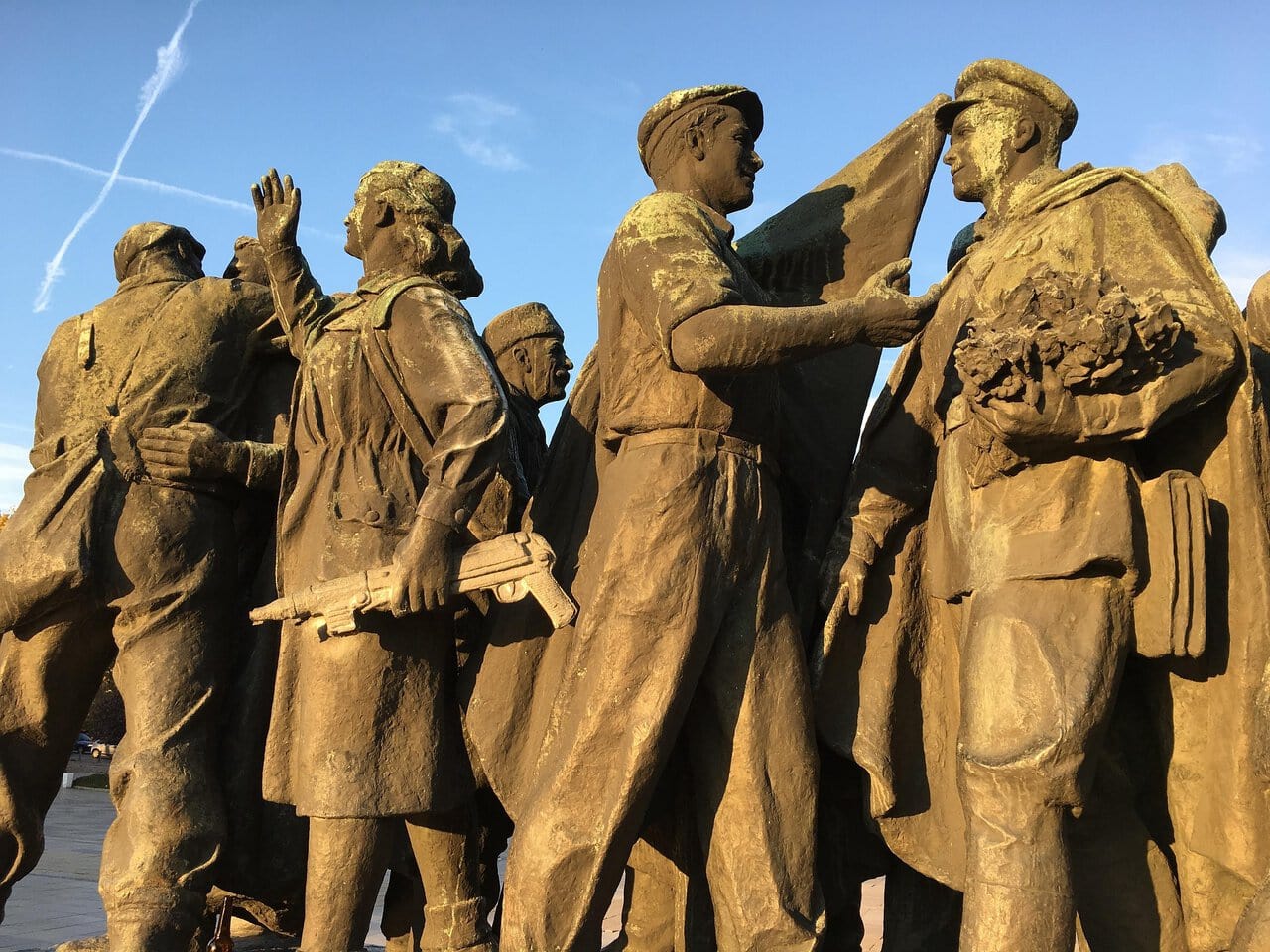
The museum’s most striking feature is its large outdoor sculpture park, where visitors can walk among enormous statues, public monuments and symbolic artworks that once formed part of Bulgaria’s official visual landscape. Standing beside these towering sculptures provides a powerful reminder of how public spaces were used to communicate political ideals during the twentieth century. The sheer scale of many exhibits is impressive and helps explain why these monuments once dominated city squares and public buildings throughout the country.
Inside the museum, visitors encounter an extensive collection of paintings, posters, films, photographs and cultural artefacts that document everyday life, artistic trends and public messaging during the period. Rather than focusing solely on politics, the exhibitions also explore how architecture, design, education and culture evolved during these decades.
One of the museum’s greatest strengths is the context it provides for the rest of Sofia. After visiting, landmarks such as the Largo Complex, various public monuments and many of the city’s residential districts become easier to understand. Buildings that might initially appear ordinary suddenly reveal themselves as products of a specific historical period.
For visitors interested in modern history, architecture, political change, public art or Cold War Europe, the Museum of Socialist Art is one of the most rewarding museums in Sofia and an essential stop for anyone wanting to understand the city’s recent past.
Opening hours and admission prices are published by the National Gallery, which operates the museum.
Soviet-Era Monuments and Memorials
Throughout Sofia, visitors will encounter numerous monuments, memorials and commemorative structures that reflect Bulgaria’s close relationship with the Soviet Union during much of the twentieth century. These landmarks form an important part of the city’s historical landscape and continue to generate discussion about memory, heritage and national identity.
Perhaps the most recognisable example is the Soviet Army Monument, located close to Borisova Gradina. For decades, the monument served as one of Sofia’s most prominent public landmarks and remains one of the city’s most discussed historical sites. Its scale, location and symbolism ensure that it continues to attract attention from visitors interested in understanding Bulgaria’s modern history.
Beyond the major monuments, smaller memorials can be found throughout the capital. Plaques, commemorative markers and public artworks commemorate military events, historical anniversaries and international relationships that were considered important during the period in which they were constructed. Together they form an open-air historical trail spread across the city.
What makes these monuments particularly interesting today is the way they reflect changing perspectives over time. Some continue to occupy their original locations, while others have been moved, modified or reinterpreted. As Bulgaria has evolved, so too has the public conversation surrounding these sites. This gives visitors an opportunity not only to learn about the past but also to observe how societies engage with their historical legacy.
For travellers interested in architecture, urban planning and public history, Sofia’s Soviet-era monuments provide valuable insight into how political priorities influenced the appearance and development of the capital during the twentieth century.
National Museum of Military History
For anyone interested in Bulgaria’s military heritage, the National Museum of Military History is one of the city’s most impressive and informative attractions. Covering more than a century of military development, the museum explores how armed forces, technology and historical events helped shape modern Bulgaria.
The first thing many visitors notice is the museum’s extensive outdoor exhibition area, where rows of historic aircraft, armoured vehicles, artillery pieces, missile systems and military equipment are displayed in the open air. The opportunity to walk among these exhibits and examine them at close range makes the museum particularly engaging, even for visitors with only a casual interest in military history.
Inside the museum, exhibitions explore a broad range of topics, including national defence, military innovation, aviation history, regional conflicts and Bulgaria’s role within changing European alliances throughout the nineteenth and twentieth centuries. Uniforms, medals, documents, maps and personal artefacts help bring these stories to life.
One of the museum’s strengths is its ability to connect major historical events with the experiences of ordinary people. Rather than focusing solely on equipment and technology, the exhibitions also examine the lives of soldiers, pilots, officers and civilians whose experiences shaped the country’s history.
Visitors interested in Cold War history, aviation, military technology or modern Bulgarian history will find plenty to explore. Combined with the Museum of Socialist Art and the city’s historical monuments, it provides an essential piece of the wider story of twentieth-century Sofia.
Located within easy reach of the city centre, the National Museum of Military History remains one of the most underrated museums in Sofia and deserves a place on any history-focused itinerary.
Sofia During the Second World War
Many visitors are surprised to discover that Sofia’s twentieth-century history was heavily influenced by the events of the Second World War. While the city avoided the scale of devastation experienced by some European capitals, the conflict nevertheless left a lasting mark on Sofia’s development and helped shape many of the changes that followed.
During the war years, Sofia served as Bulgaria’s principal political, administrative and transport centre. As events across Europe intensified, the capital became increasingly affected by wider developments, and parts of the city experienced significant disruption. Several districts suffered damage, leading to reconstruction projects that would reshape portions of Sofia during the following decades.
Today, evidence of this period remains woven into the city’s urban fabric. Visitors walking through Sofia will encounter buildings, public spaces and neighbourhoods that reflect the reconstruction efforts of the mid-twentieth century. In some cases, entire streetscapes reveal how the city evolved in response to wartime events and post-war redevelopment.
The conflict also represented a major turning point in Bulgarian history. The years that followed brought profound political, social and economic changes that transformed the country and influenced the appearance of Sofia for generations. Understanding this transition helps visitors place many of the city’s later monuments, museums and government buildings into context.
Travellers wishing to explore this chapter of Sofia’s history should combine a visit to the National Museum of Military History with time spent exploring the city centre. Together, these experiences provide a clearer picture of how the Bulgarian capital evolved throughout one of the most important periods in modern European history.
Although Sofia is rarely marketed as a wartime destination, understanding the city’s experiences during the Second World War provides valuable context for anyone interested in the broader story of modern Bulgaria and the forces that shaped the capital seen today.
Compare routes and fares for your journey to Sofia.
Compare flightsUse an eSIM to get online without hunting for a local SIM after arrival.
See eSIM optionsCheck private pickup options and plan your onward journey before arrival.
View transfersJewish Heritage and Twentieth-Century History
One of the most fascinating aspects of Sofia’s history is the story of its Jewish community, whose presence in the city stretches back centuries. While many visitors focus on Sofia’s Roman, medieval and Communist-era landmarks, the city’s Jewish heritage provides another important perspective on Bulgaria’s complex past and cultural diversity.
The centrepiece of this story is the magnificent Sofia Synagogue, one of the largest synagogues in Europe and among Sofia’s most impressive architectural landmarks. Completed in 1909, the building features an extraordinary interior, elaborate decoration and one of the largest chandeliers on the continent. Its scale reflects the importance and prosperity of Sofia’s Jewish community during the early twentieth century.
The surrounding district also contains historical sites, memorials and cultural institutions that help explain the role Jewish communities played in the development of modern Bulgaria. Visitors interested in social history will find this part of Sofia particularly rewarding, as it reveals a side of the capital often overlooked by mainstream travel guides.
The twentieth century brought significant challenges and change across Europe, and Bulgaria’s Jewish communities were not immune to these developments. Today, museums, memorials and educational initiatives help preserve these stories while encouraging visitors to better understand this period of history.
Exploring Jewish heritage in Sofia provides valuable context for understanding the city’s broader cultural landscape. Alongside Orthodox churches, mosques and government buildings, the synagogue stands as a reminder of the diverse communities that have shaped Bulgaria’s capital over the centuries.
For visitors interested in religious history, architecture, cultural heritage and the human stories behind historical events, the Sofia Synagogue remains one of the city’s most important yet frequently overlooked attractions.
Civil Defence and Cold War Preparedness
During much of the twentieth century, Sofia occupied an important position within the Eastern Bloc, and like many capitals of the era, preparations were made for a range of potential emergencies. Although much of this infrastructure was never intended to be seen by visitors, traces of Cold War preparedness can still be found throughout the city.
Throughout the second half of the twentieth century, governments across Europe invested heavily in civil defence planning, emergency infrastructure and contingency measures designed to protect populations during periods of international tension. Bulgaria was no exception, and Sofia developed various systems intended to support the capital during times of crisis.
Many residents who grew up during this period remember public information campaigns, emergency preparedness measures and the broader atmosphere associated with Cold War planning. While much of the infrastructure was functional rather than architectural, it nevertheless formed an important part of everyday life during the era.
Visitors interested in this aspect of history will find that museums such as the Museum of Socialist Art and the National Museum of Military History provide useful context for understanding the broader political environment in which these preparations were made. Together, they help explain why civil defence planning became such an important consideration throughout Europe.
Although Sofia does not possess the same concentration of publicly accessible Cold War sites found in some other countries, understanding the city’s role during this period adds another layer to the story of modern Bulgaria. It also helps explain many of the political, military and social decisions that influenced the capital during the twentieth century.
For travellers who have enjoyed exploring military museums, transport heritage or historical infrastructure elsewhere in Europe, Sofia’s Cold War history offers another fascinating perspective on the city.
Buzludzha: Bulgaria’s Most Famous Communist Landmark
No discussion of Bulgaria’s twentieth-century history would be complete without mentioning Buzludzha, arguably the country’s most famous modern monument. Although located several hours from Sofia, it has become one of the most recognisable historical sites in Bulgaria and attracts visitors from around the world.
Perched dramatically on a mountain summit in the Balkan Mountains, the Buzludzha Monument resembles something from a science-fiction film. Its unusual circular design, vast scale and isolated location have helped transform it into one of the most photographed landmarks in south-eastern Europe.
Constructed during the late twentieth century, the monument was intended to commemorate important moments in Bulgaria’s political history. Following political changes at the end of the century, the structure gradually fell into disuse, and its weathered appearance has only increased public fascination with the site.
Even from a distance, the monument is extraordinary. Sitting high above the surrounding mountains, it dominates the landscape and creates one of Bulgaria’s most dramatic viewpoints. Visitors making the journey are rewarded not only with the monument itself but also with spectacular scenery stretching across central Bulgaria.
In recent years, growing efforts have focused on preserving and stabilising the structure, recognising its significance as an architectural and historical landmark. While opinions regarding its symbolism may differ, there is little disagreement about its importance as one of Bulgaria’s most remarkable buildings.
For travellers interested in Cold War history, modern architecture, abandoned landmarks and unusual places, Buzludzha is one of the most memorable excursions available from Sofia and one of the most distinctive attractions in the Balkans.
Historical Day Trips from Sofia
Beyond Sofia itself, several destinations allow visitors to explore key chapters of Bulgarian history while experiencing some of the country’s most impressive landscapes. Together, they provide a deeper understanding of the events, personalities and movements that shaped modern Bulgaria.
Among the most famous is Buzludzha, which combines dramatic mountain scenery with one of the country’s most recognisable twentieth-century monuments. Often paired with nearby Shipka Pass, it provides an excellent introduction to Bulgaria’s modern historical narrative.
Another important destination is Pleven, a city closely associated with the Russo-Turkish War and the events that ultimately led to the re-establishment of Bulgaria as an independent state. Today, visitors can explore museums, memorials and historical sites that commemorate this important period.
The area around Shipka Pass also contains several monuments and memorials dedicated to significant nineteenth-century events. Combined with the stunning scenery of the Balkan Mountains, the region offers one of the most rewarding historical excursions in the country.
Visitors interested in military history often combine these destinations with sites such as the National Museum of Military History in Sofia, creating a broader understanding of how Bulgaria developed through successive periods of conflict, political change and national transformation.
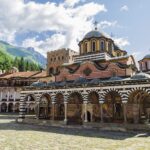
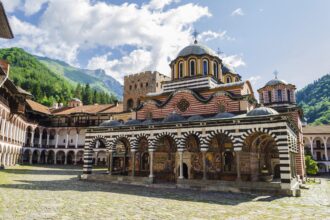
While attractions such as Rila Monastery and Plovdiv remain the most popular day trips from Sofia, travellers interested in modern history will often find destinations such as Buzludzha, Shipka and Pleven equally rewarding. Together they reveal a side of Bulgaria that many visitors never discover.
The Hidden History Beneath Modern Sofia
One of the most fascinating aspects of Sofia is how much of its history remains hidden in plain sight. Visitors often arrive expecting to find a pleasant Balkan capital filled with churches, cafés and museums. What they discover instead is a city where multiple centuries coexist within a remarkably compact area.
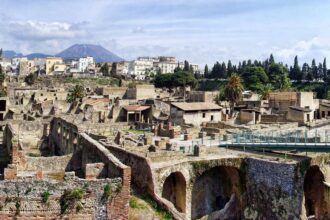
Beneath the modern streets lie the remains of Ancient Serdica, the Roman city that once occupied the site of today’s capital. Visitors exploring the Largo Complex can walk among Roman streets while standing beneath twentieth-century government buildings. Few cities illustrate the passage of time quite so dramatically.
Elsewhere, Ottoman-era landmarks, Orthodox cathedrals, Communist-era monuments and modern commercial developments stand within minutes of one another. This layering of history is what makes Sofia so rewarding for visitors interested in understanding how cities evolve. Rather than preserving a single period, Sofia preserves fragments of many.
The city’s twentieth-century story is particularly visible. Government districts, residential neighbourhoods, military museums and public monuments continue to reflect the political and social changes that transformed Bulgaria during the modern era. Yet these landmarks exist alongside medieval churches and Roman ruins, creating an urban landscape unlike almost anywhere else in Europe.
What makes Sofia’s hidden history especially compelling is that much of it is not confined to museums. It can be discovered simply by walking through the city, observing architecture, reading memorials and understanding the stories behind familiar landmarks. Visitors willing to look beyond the obvious attractions will often find that Sofia reveals itself gradually rather than immediately.
For travellers interested in history, architecture, politics, culture or urban development, Sofia offers one of Europe’s most underrated historical experiences. The city rewards curiosity, and every layer of its past helps explain the capital that exists today.

Rupert’s Handy Travel Tips
Interested in Sofia’s hidden history? Here are a few practical tips Rupert recommends before exploring the city’s twentieth-century landmarks.
- Visit the museum first: See the Museum of Socialist Art before exploring the city centre, as it provides useful context that makes many of Sofia’s monuments and buildings easier to understand.
- Combine the complex and the ruins: Pair the Largo Complex with the nearby Roman ruins of Ancient Serdica to see how different periods of Sofia’s history overlap.
- Allow plenty of time: The National Museum of Military History is larger than most visitors expect, so don’t rush through the outdoor exhibits.
- Plan a Cold War day trip: If you’re interested in Cold War history, consider combining Sofia with a visit to Buzludzha and Shipka Pass.
- Look beyond the museums: Some of Sofia’s most interesting historical discoveries can be found simply by walking through the city and observing its architecture.
- Wear comfortable shoes: Many historical sites are spread across the city centre, so comfortable walking shoes are highly recommended.
Rupert’s verdict: The most interesting thing about Sofia is not any single attraction. It’s the way Roman, Ottoman, modern and twentieth-century history all exist side by side within the same city.
Want more practical travel tips? Visit our Who is Rupert? page to learn more.




Frequently Asked Questions
What is the best historical attraction in Sofia?
Many visitors consider the Museum of Socialist Art the most informative attraction for understanding Sofia’s twentieth-century history, while Ancient Serdica remains the city’s most important archaeological site.
Is Sofia good for history lovers?
Yes. Sofia combines Roman ruins, Orthodox churches, Ottoman-era landmarks, military museums and Cold War history, making it one of the most historically diverse capitals in Europe.
What is the Largo in Sofia?
The Largo Complex is a group of monumental government buildings located in central Sofia. It served as the political heart of Bulgaria during much of the twentieth century and sits directly above the remains of Ancient Serdica.
Can you visit Buzludzha from Sofia?
Yes. Buzludzha can be visited as a long day trip from Sofia, either independently by car or as part of an organised tour.
Where can I learn about Bulgaria’s Communist era?
The best place to start is the Museum of Socialist Art, followed by the Largo Complex, various city monuments and the National Museum of Military History.
Does Sofia have Cold War attractions?
Yes. Visitors can explore museums, monuments, government districts and historical sites connected to Bulgaria’s role during the Cold War period.
Is the National Museum of Military History worth visiting?
Absolutely. The museum contains one of Bulgaria’s most impressive collections of aircraft, military vehicles, artefacts and historical exhibitions.
How much time do you need to explore Sofia’s historical sites?
Most visitors should allow at least one full day, although two days provides a much more comprehensive experience.
Further Reading & Related Guides
Interested in discovering more of Bulgaria’s history? Our Day Trips from Sofia guide covers the country’s best excursions, including Rila Monastery, Plovdiv and Iskar Gorge.
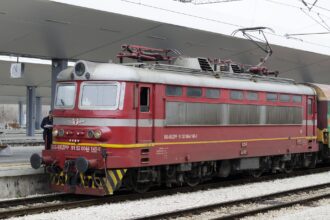
Travellers interested in Bulgaria’s railways should also read our Night Trains from Sofia guide and Interrail Bulgaria Guide, while visitors arriving by air may find our Sofia Airport Transfers Guide useful.
To stay connected while exploring the capital and beyond, compare your options in our eSIM Guide. For another look at Cold War Europe, our Tallinn Dark Tourism Guide explores Estonia’s Soviet-era prisons and surveillance sites, while our full Dark Tourism Travel Guide covers historic sites and abandoned places worldwide.