Reviewed by our editorial team Published
Plenty of people still picture Mallorca as Ibiza’s quieter, older sibling: a package-holiday island of pool bars and airport transfers. That picture survives on a narrow strip of coastline, while the rest of the island is a genuine Mediterranean landscape of jagged limestone ridges, terraced hillsides silvered with olive groves, and a walkable historic capital above a working harbour.
The Serra de Tramuntana anchors the northwest coast, a UNESCO-listed mountain range where roads switchback above the sea and villages like Deià and Fornalutx cling to slopes still farmed the way they have been for eight centuries. Peaks push past 1,000 metres barely a few kilometres from the water, producing views that feel more Alpine than Mediterranean at first glance.
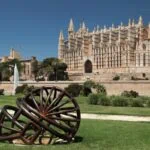
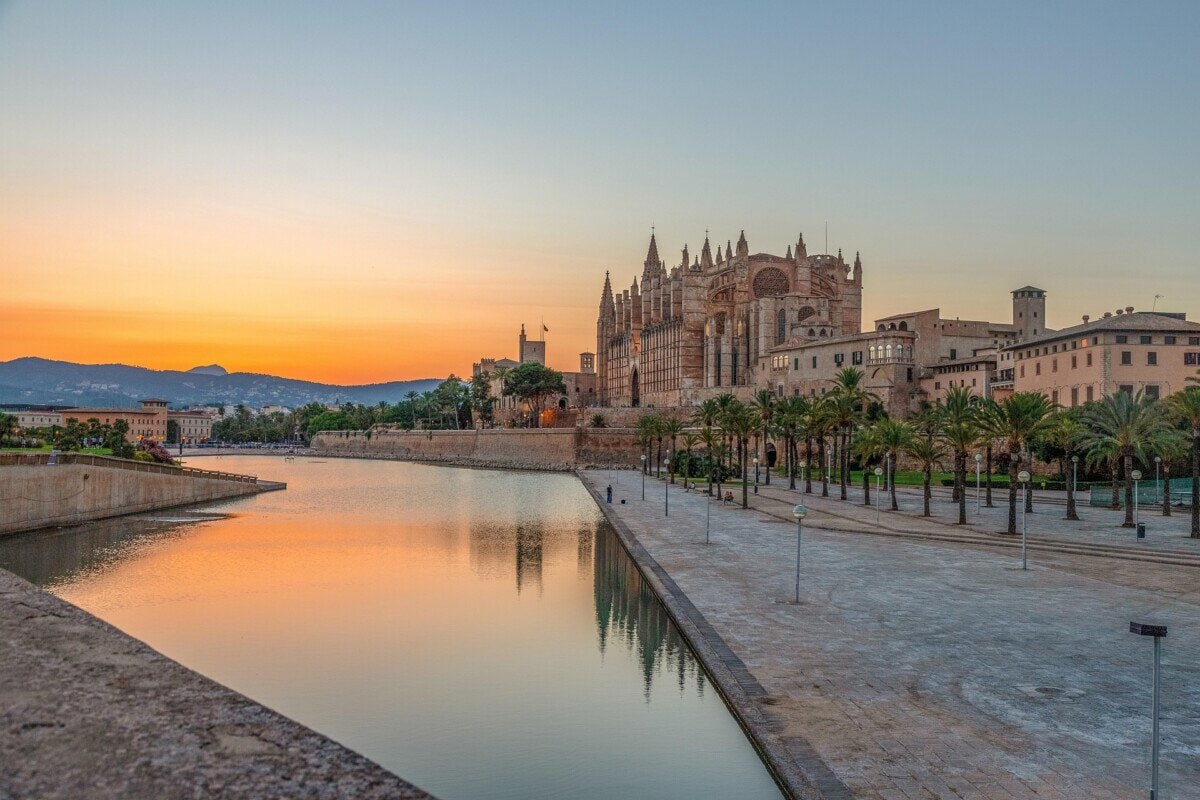
Palma itself is a proper city rather than a resort town, its old town a maze of honey-stone lanes, tapas bars and a Gothic cathedral that took three centuries to finish. Beyond the capital, the coastline shifts character every hour’s drive, from the wide golden bays around Alcúdia in the north to the hidden limestone coves of the east.
That range of terrain is what separates Mallorca from Ibiza and Formentera, both smaller islands built almost entirely around beaches and nightlife. Mallorca can fill a fortnight without repeating a day, mixing mountain hikes and market lunches of sobrassada and pa amb oli with lazy afternoons on the sand.
It suits almost anyone as a result: families after an easy resort base, hikers and cyclists drawn to the Tramuntana, couples wanting a walkable old town, and quieter shoulder-season travellers who would rather skip the summer crush. What follows is everything gathered in one place, covering when to come, how to get here and get around, and a region-by-region look at where to spend your time, with a fuller guide waiting a click away whenever you’re ready to dig into the detail.
Choose Your Mallorca
Mallorca packs enough contrast into one island that picking a starting point matters more than picking a single sight. The table below matches a few common trip types to the region and guide worth reading first, so treat it as a signpost before the fuller sections below.
| If Your Trip Is… | Head For | Start Here |
|---|---|---|
| A short city break: cathedral, old town, tapas | Palma and the Bay | Things to Do in Palma de Mallorca |
| Mountain hikes, terraced villages and slow drives | Serra de Tramuntana | Things to Do in the Serra de Tramuntana |
| A family beach base with wide sandy bays | Alcúdia and the North | Things to Do in Alcúdia and the North of Mallorca |
| Hidden coves, show caves and quieter towns | The East Coast | Things to Do on Mallorca’s East Coast |
| A self-drive loop of the whole island | Full circular route | Mallorca Road Trip |
| Getting around without hiring a car | Bus and rail network | Getting Around Mallorca Without a Car |
Mallorca at a Glance
A quick reference for the basics before diving into the detail below. Keep this table in mind as a checklist while planning, since it covers the handful of facts that shape almost every other decision on a Mallorca trip.
| Fact | Detail |
|---|---|
| Capital | Palma de Mallorca (population around 430,000) |
| Island size | Approximately 3,640 km² (largest of the Balearic Islands) |
| Population | Around 940,000 residents |
| Best time to visit | May, June and September for warm, drier weather without peak-summer crowds |
| Main airport | Palma de Mallorca Airport (PMI), around 8km east of Palma |
| Main ferry ports | Palma (main) and Alcúdia (secondary) |
| Currency | Euro (EUR) |
| Languages | Spanish and Catalan, spoken locally as the Mallorquí dialect |
Best for two or three nights. The widest choice of rooms, with filters for free cancellation and included breakfast.
View staysBest for families, or any stay past about four nights. A kitchen and a washing machine start paying for themselves.
Browse rentalsBest if you have already picked a hotel. Checks the big booking sites for the same room and shows who is cheapest.
Check dealsMallorca’s History and Culture
Mallorca’s history runs a lot deeper than the twentieth-century tourism boom most visitors associate with it. Bronze Age settlers left talayots, the stone watchtowers that still dot the countryside, and Roman colonists later founded Pollentia near modern Alcúdia in 123 BC. Centuries of Byzantine and then Moorish rule followed, and it is Arabic rather than Latin behind names like Alcúdia itself, which comes from the word for a hill.
The island became genuinely independent in 1229, when James I of Aragon’s conquest founded the short-lived Kingdom of Mallorca, and Palma’s Gothic cathedral, La Seu, was begun soon after and took the best part of three centuries to finish. Stretches of the old city walls the kingdom built still trace parts of the old town today, running close to where the harbour promenade now sits.
Culturally, Mallorca has never simply been Spanish in the way a first-time visitor might expect. Catalan, spoken locally as Mallorquí, is still the everyday language in villages away from the coast, and the food traditions covered later in this guide date back centuries rather than to any modern tourist menu. The tourism boom itself is more recent than it feels, having turned fishing villages into resort towns within a couple of generations, a shift older residents will still happily talk about if asked.
Best Time to Visit Mallorca
Mallorca runs on a genuine Mediterranean climate, meaning hot, dry summers and mild, wetter winters, but the island’s mountains complicate that simple picture. July and August regularly push past 30°C on the coast, and the sea is warm enough for swimming from roughly late May through to early October.
May, June and September are the widely recommended sweet spot. Temperatures still sit comfortably in the low-to-mid twenties, the sea is swimmable, and both the roads and the beaches are noticeably quieter than the July and August peak.
Weather is not uniform across the island, and this is where the Serra de Tramuntana genuinely changes the picture. When moist air blows in off the sea from the northwest, it hits the mountains and is forced upward, dropping most of its rain on villages like Sóller on the northern side, while the same air arrives warm and dry on Palma and the south only a few kilometres away.
It is entirely possible to see rain in the Tramuntana while the sun is out in Palma at the same moment. October tends to be the wettest month overall, and the mountains can see occasional snow in winter at higher elevations, while July is reliably the driest month with barely any rainfall at all.
Winter (December to February) is genuinely quiet, with many coastal resorts scaling back for the season, though Palma itself stays lively year-round and hosts some of the island’s biggest festivals in January. A cold, occasionally forceful north-westerly wind, locally associated with the Tramuntana range, can make winter feel sharper on the coast than the daytime temperature alone suggests.
Flying Into Mallorca
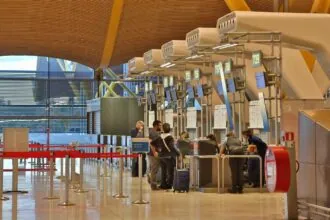
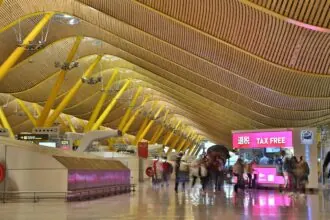
Almost every visitor arrives through Palma de Mallorca Airport (PMI), one of Spain’s busiest. It handled around 33.8 million passengers in 2025, making it the third-busiest airport in the country behind Madrid and Barcelona, and one of the busiest in Europe.
The airport sits around 8km east of central Palma, close enough that most transfers into the city take well under half an hour outside peak traffic. That scale means a wide network of direct flights from across the UK, mainland Europe and Spain, particularly through the summer season when frequencies increase sharply.
Getting from the terminal to a hotel or resort is straightforward, with options ranging from the public bus and taxi ranks to pre-booked private transfers for larger groups or late arrivals. The full breakdown of routes, journey times and approximate costs for every option is covered in our dedicated guide to Palma de Mallorca Airport Transfers, which is worth checking before booking anything on arrival.
For the airport’s own live information on terminals, parking and transport options, AENA’s official Palma de Mallorca Airport page is the most reliable source, since terminal layouts and transport pick-up points do shift between seasons.

Sailing to Mallorca
Mallorca is also reachable by ferry, which is a genuinely useful option for anyone bringing a car, travelling with a lot of luggage, or combining the trip with another Spanish region or a second Balearic island. Palma is the main port, with Alcúdia in the north acting as a smaller secondary arrival point on some routes.
From mainland Spain, the busiest link runs from Barcelona to Palma, with a fast ferry crossing in around three and a half hours and a slower overnight service, complete with cabins, taking roughly seven hours. Fares typically start from around €23 (£20/$27) one-way per passenger without a vehicle, though prices climb with a car and rise further in peak season.
Valencia and Dénia also run regular services to Mallorca, giving southern Spain a more direct route than detouring via Barcelona. Inter-island ferries connect Palma to Ibiza in around two hours on the fastest services, with Menorca also reachable directly, making it realistic to combine two Balearic islands in a single trip without flying between them.
Operators including Baleària and Trasmediterránea run these routes, with schedules and fares varying meaningfully by season. Our dedicated Mallorca Ferry Routes guide covers every mainland and inter-island connection in full, including which operator runs what and how far in advance to book over summer.
Hire Car or Public Transport?
This is the single biggest planning decision on a Mallorca trip, and it genuinely depends on where you’re staying. A hire car is close to essential for exploring the Serra de Tramuntana properly, since many of the mountain villages, viewpoints and hiking trailheads sit well off the main bus routes and are far more rewarding with the freedom to stop wherever the road allows.
A base in Palma or one of the larger resort towns changes that calculation considerably. The island’s TIB regional bus network, along with modernised rail lines running out of Palma, cover the main towns reasonably well, and a car becomes more of a convenience than a necessity if the plan is city time plus a few beach days.
Cost is a genuine factor too: a small hire car typically runs from around £25 (€29/$34) a day in low season to significantly more in July and August, while a week’s regional bus pass costs a fraction of that. Fuel is priced similarly to the Spanish mainland, and mountain roads like the Ma-10 coast road reward a small car over anything oversized.
Our Mallorca Road Trip guide lays out a full circular driving route around the island for anyone hiring a car, covering the Tramuntana coast road, the north and the east coast coves. For a car-free approach, Getting Around Mallorca Without a Car breaks down the bus and rail network, including realistic journey times between the main towns.
Where to Go in Mallorca
Mallorca splits naturally into a handful of regions, and no single one tells the whole story on its own. Head north-west and the coastline turns to cliff, with the Serra de Tramuntana’s terraced villages stacked above the water; drive an hour east instead and you are picking your way down a dirt track to a turquoise cove that barely makes it onto a map. Palma sits in between the two, close enough to reach from almost anywhere on the island for a day, while the north’s wide sandy bays run at a completely different, family-friendly pace to the quieter coves further south and east.
Most visitors end up basing themselves in two or three of these regions rather than trying to cover everything from one hotel, and deciding which combination fits the trip is worth doing before anything else gets booked. The four regional guides below go into proper depth on what to expect, what to do and where to stay, so treat this short section as the map before the detail.
Best if you can move a day either way. Shows how the fare changes across the month.
Compare flightsBest for anyone whose home plan charges by the megabyte abroad. Pay a fixed price up front.
Check eSIMsBest when public transport has stopped, or when you are travelling with children and bags.
Book a transferPalma and the Bay: Cathedral, Old Town and Day Trips
Palma is the obvious starting point for most visitors, and it earns that role. The Gothic cathedral of La Seu dominates the seafront skyline, its rose window catching the afternoon light over a harbour still busy with working boats, while the old town’s tangle of stone lanes hides tapas bars, boutique courtyards and squares that stay quiet even in August.
It also makes a realistic base for day trips, since much of the rest of the island sits within an hour or so’s drive: pack a swimsuit and a change of shoes and you can be climbing through a cave system by mid-morning and lying on a beach by lunch. Things to Do in Palma de Mallorca goes deep on the cathedral, the old town and the waterfront, and Day Trips from Palma rounds up where to head once you have done the capital justice.
Markets are worth building a morning around too: the Saturday flea market and the covered Mercat de l’Olivar both reward an early start, ideally followed by coffee in one of the old town’s shaded squares before the afternoon heat sets in. It is an easy city to wander without a fixed plan, which suits a first day on the island.
The Serra de Tramuntana: Mountains, Villages and Hiking
Mallorca’s single most distinctive region, the Tramuntana is a UNESCO-listed mountain landscape of stone-terraced hillsides, cliff-edge villages and genuinely dramatic coastal roads. Sóller, Deià, Fornalutx and Valldemossa are the best-known bases, each with its own atmosphere despite sitting only a short drive apart.
Mornings here tend to start with mist sitting in the valleys before it burns off by midday, and the late-afternoon light on the terraced groves produces one of the island’s most photographed views for good reason. It rewards slow travel over ticking off sights, whether that means stopping at every viewpoint on the coast road or a long lunch in a village square.
Things to Do in the Serra de Tramuntana goes further into the region: the hiking trailheads, the viewpoints, and which villages suit a lazy afternoon rather than a full overnight stay. One activity earns a page of its own, the historic Sóller Train, a century-old narrow-gauge railway that climbs from Palma through the mountains to the coast and is worth riding even for anyone who never sets foot on a trail.
Alcúdia and the North: Beaches, Old Town and Formentor
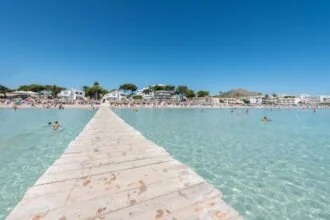
The north is built around wide sandy bays, and it has a gentler, more open feel than the mountains further west. Alcúdia’s walled old town sits back from the coast with Roman ruins and craft shops inside its ramparts, while the Bay of Alcúdia and Bay of Pollença offer some of the island’s longest, most family-friendly stretches of sand.
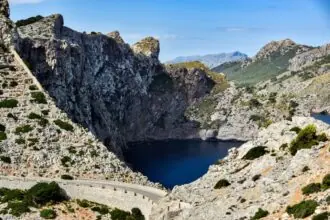
It is also the gateway to Cap de Formentor, a dramatic headland at the island’s northern tip reached by a narrow, winding road that clings to cliffs hundreds of metres above the water. The lighthouse at the end is worth the drive alone, especially in the last hour before sunset when the cliffs turn a deep gold.
Things to Do in Alcúdia and the North of Mallorca covers the beaches, the old town and the headland drive in full, including which bays fill fastest in August and where to find a genuinely quieter stretch of sand a short walk further along. It also names the best spots for watching the sun drop over the bay, a detail worth building an evening around, ideally with a cold drink already in hand.

The East Coast: Coves, Caves and Quiet Towns
The east coast is where Mallorca’s famous coves and show caves cluster, with a string of small calas cut into the limestone coastline between Porto Cristo and Cala d’Or. It’s generally quieter and less built-up than the north or the bay of Palma, and the water in these coves tends to run an almost impossibly clear turquoise thanks to the pale rock underneath.
Coves like Cala Varques and Cala Mondragó reward the walk or short drive it takes to reach them, since most sit without direct road access and stay noticeably calmer than anything near a resort. The show caves at Drac and Hams add a genuinely different kind of day out, with underground lakes and, at Drac, a short classical music performance by boat.
Things to Do on Mallorca’s East Coast goes further into the coves, caves and small towns along this stretch, including which beaches justify the walk and which are better left to the coach parties in peak season traffic. Porto Cristo itself makes a sensible base for exploring this stretch without a car, with regular buses running along the coast in summer.
Where Should You Stay in Mallorca?
Every section above makes clear how different Mallorca’s regions feel, but that still leaves the practical question of where to actually base yourself. The honest answer depends entirely on what the trip is for, since a base that suits a hiking week in the Tramuntana is the wrong choice for a nightlife-focused long weekend, and vice versa.
| Base | Best For | Car Needed? | Beach Access | Nightlife | Good for a First Visit? |
|---|---|---|---|---|---|
| Palma | City breaks, food and sightseeing | No | Moderate | Good | Excellent |
| Port de Pollença | Families and cycling | Helpful | Excellent | Quiet | Excellent |
| Sóller | Mountains and hiking | Helpful | Nearby, via Port de Sóller | Quiet | Good |
| Alcúdia | Families and beaches | Helpful | Excellent | Moderate | Excellent |
| Cala d’Or | Coves and couples | Helpful | Excellent | Moderate | Good |
| Magaluf | Nightlife | No | Excellent | Very lively | Depends on the group |
Palma, Alcúdia and Sóller each have a fuller guide covering things to do once a base is picked: Things to Do in Palma de Mallorca, Things to Do in Alcúdia and the North of Mallorca and Things to Do in the Serra de Tramuntana cover Sóller in detail. Port de Pollença, Cala d’Or and Magaluf don’t yet have a dedicated guide on the site, but the regional sections above cover the areas around each of them.
Mallorca’s Main Resorts
Beyond the four regions covered above, a specific string of purpose-built resort towns is where a large share of visitors actually stay, and they deserve their own mention rather than being folded into the wider coastline. These are the classic package-holiday bases: closer to the airport and to each other than the mountains or the quieter coves, and built specifically around hotels, bars and easy beach access rather than sightseeing.
Magaluf and Palma Nova, just west of Palma along the Bay of Palma, are the best known of the bunch. Magaluf’s strip is built around superclubs and pool parties that run from lunchtime until dawn in peak season, while Palma Nova next door is calmer and more family-oriented despite sitting only a short walk away.
Santa Ponsa and Peguera, a little further along the same coast, trade some of that nightlife for a quieter, more family-first atmosphere, with long sandy beaches and a slower pace than Magaluf’s main strip. Both still put Palma within easy day-trip reach for anyone who wants the city without basing there.
S’Arenal, on the other side of Palma towards the airport, is one of the island’s longest-running resort strips and has traditionally drawn a large German and Spanish holiday crowd. It sits close enough to the airport and the city that transfers are short in either direction, which suits a shorter trip.
On the east coast, Cala Millor and Cala Ratjada anchor a similar but generally quieter resort strip, with long sandy bays that suit families more than a nightlife crowd. Both sit within easy reach of the show caves and coves covered in Things to Do on Mallorca’s East Coast, making them a practical base for that part of the island specifically.
Best for solo travellers and anyone watching the budget. Dorm beds and private rooms in the same search.
Browse hostelsBest for anyone flying more than once or twice a year. Handles the compensation claim so you are not chasing the airline.
See AirHelp+Best for the gap between checking out and your train. Drop bags at a shop or hotel nearby and carry on.
Store your bagsMallorca’s Best Beaches
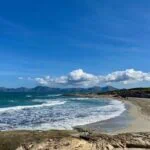
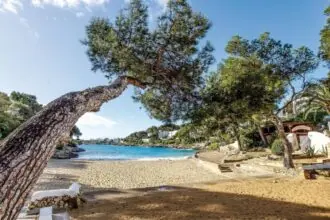
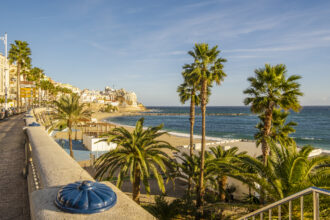
Beaches are a core part of Mallorca’s appeal, and the island covers an unusually wide range within a relatively small area. There are the long sandy bays around Alcúdia and Palma Nova that suit families and anyone after easy access, and the tucked-away limestone coves, or calas, that dot the east coast and require more of a walk or a drive to reach.
Es Trenc in the south and Cala Mondragó on the east coast are the two names that come up most, prized for turquoise water and, at Mondragó, a protected natural park setting. Cala Varques and Caló des Moro add the photogenic dirt-track coves further southeast, while Camp de Mar and Illetas stay closer to Palma for an easy dinner back in the city that evening.
This section is deliberately a taster rather than a full round-up, since covering every notable beach properly needs far more space than a hub page allows. Our dedicated Mallorca’s Best Beaches guide goes region by region with practical detail on access, facilities and how busy each one gets in peak season.
Mallorca Food and Wine
Mallorcan food leans heavily on pork, olive oil and bread, and a handful of dishes turn up on menus across the island. Sobrassada is a soft, spreadable cured sausage made from pork and paprika, typically eaten raw spread on toasted bread, while pa amb oli takes that same bread, rubs it with a local ripe tomato, and finishes it with olive oil and sea salt.
Ensaimada is the island’s signature pastry, a coiled, feather-light bun made with lard rather than butter and dusted with icing sugar, traditionally eaten for breakfast alongside hot chocolate. It carries protected geographical status, and a plain one from a bakery typically costs only a couple of euros (roughly £2/$2).
Tumbet is the island’s classic vegetable dish, layering separately fried aubergine, red pepper and potato under a garlic and tomato sauce, a technique that keeps each vegetable distinct rather than stewing everything together. It’s a genuine main course rather than a side dish, and a common vegetarian option on traditional menus.
Wine is a growing part of the island’s food scene too, centred on the Binissalem Denomination of Origin, Mallorca’s oldest, established in 1990. Its red wines are built around the native Manto Negro grape, and the region’s handful of bodegas near the town of Binissalem make an easy half-day trip from Palma for anyone interested in a tasting.
Walking, Hiking and Cycling in Mallorca
The Serra de Tramuntana makes Mallorca a genuine hiking destination, not just a beach one. The GR221, known locally as the Ruta de Pedra en Sec, is a long-distance route strung between mountain villages along old dry-stone paths, and it can be tackled in short day sections just as easily as end to end.
Things to Do in the Serra de Tramuntana details the GR221 and its shorter alternative routes, including which sections suit a casual walker rather than a serious trekker. Good boots and an early start matter more than technical gear for most day sections, since the exposed limestone gets brutally hot by midday in summer.
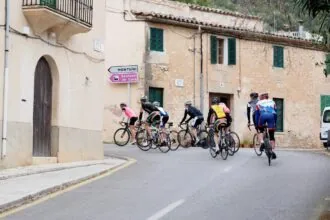
Cycling deserves its own mention, since Mallorca is genuinely one of Europe’s biggest road-cycling training destinations, drawing amateur and professional riders alike every spring for the quiet mountain roads, reliable weather and climbs like the Sa Calobra switchbacks. Professional teams have used the island as a pre-season base for decades, and it shows in the number of bike-friendly cafes and hire shops clustered around Pollença and Port de Pollença.
Cycling in Mallorca lays out routes, hire options and the best times of year to ride, including which climbs are worth tackling on a first visit rather than saving for a training-camp regular.
Nightlife in Mallorca
Nightlife on Mallorca varies enormously by region, and it’s worth being honest about that rather than lumping the whole island together. Resort areas such as Magaluf and Palma Nova host the island’s younger, louder clubbing scene, aimed squarely at a package-holiday crowd looking for late bars and clubs within walking distance of their hotel.
Magaluf’s strip is unapologetic about what it is, built around superclubs and pool parties that run from lunchtime until dawn during peak season. It is worth going in with eyes open about which resort you are booking, since the same coastline includes areas only a few kilometres away with a completely different, family-first atmosphere.
Palma itself offers something different again, with a genuine old-town bar scene around areas like Santa Catalina and La Llotja that leans more towards relaxed evening drinks and tapas than clubbing until dawn. The north and east coast are quieter still, with most towns winding down to a handful of restaurants and low-key bars after dinner.
Which end of that spectrum suits a given trip depends entirely on where you base yourself, so it’s worth matching accommodation to the kind of evenings you actually want rather than assuming the whole island runs on one pace.
Annual Events and Festivals
Palma’s biggest annual celebration is Sant Sebastià, the festival marking the city’s patron saint every January. It runs across several days around 20 January and includes free open-air concerts, food stalls and correfocs (fire runs), with most events genuinely free to attend rather than ticketed.
It’s a useful reminder that Palma stays lively well outside the summer season, and it’s worth building a January visit around if the timing works, since hotel rates in the capital are typically at their lowest point of the year regardless.
Later in the year, Palma’s museums and galleries take part in Nit de l’Art (Art Night), held annually every September, when venues across the city open late into the evening with free exhibitions and events. It’s a good example of the kind of cultural programming the capital keeps running well beyond the beach season.
Beyond the capital, plenty of towns run their own summer festivals through July and August, when fireworks and torch-lit re-enactments take over village squares long after the day-trippers have gone home. Pollença’s Moors and Christians re-enactment each 2 August recreates a 1550 pirate raid on the town, and it is worth timing a trip to Alcúdia and the North around if the dates line up.
Things People Get Wrong About Mallorca
A few assumptions catch out first-time visitors more than anything else, and most of them come from treating Mallorca as a single, uniform island rather than the patchwork of regions covered above. Knowing these in advance saves a wasted afternoon or a booking regret.
The most common mistake is assuming Palma is just an airport gateway, treating it as a stopover rather than a destination. Its cathedral, old town and food scene easily fill two or three days on their own, and skipping it entirely means missing a genuine part of the trip.
Booking Magaluf without realising how lively it is causes the opposite problem. The resort’s superclub reputation is not an exaggeration, and a family booking there by name alone can end up somewhere far louder than expected, when the same coastline has much quieter options only a short drive away.
Not every beautiful cala has parking beside it, and several of the east coast’s best coves have no direct road access at all. Reaching them means a walk down a dirt track from the nearest car park, which is worth planning for rather than discovering on the day.
Driving the Tramuntana too quickly is another common trap. The coast road’s switchbacks reward a slow pace, and a route that looks like forty minutes on a map can easily take two hours with stops.
The Sóller Train and Sóller town are often treated as a rushed half-day, when the ride itself takes around an hour each way. That leaves surprisingly little time in town unless the whole day is built around it.
Finally, it’s easy to try covering too much of the island from one base, or to assume public transport reaches every scenic spot. A single hotel rarely works for both a mountain week and a beach week, and the TIB bus network covers the main towns well but not most hiking trailheads or hidden coves, which is where a hire car earns its cost.

Mallorca Without the Crowds
Peak season brings genuine crowds to a handful of specific spots rather than the whole island evenly, so a few small adjustments go a long way. None of this means giving up on the places everyone comes for, just timing or a short detour around them.
If Palma’s old town feels packed at midday, visit the cathedral and old town lanes early morning or in the two hours before dinner, once the cruise-ship crowds have thinned. The same lanes that feel overwhelming at noon are genuinely peaceful an hour either side of it.
If Alcúdia’s beaches are full, the quieter northern end of the Bay of Pollença, a short drive further round, sees noticeably less traffic than the main strip. It’s the same sand and the same water, just fewer people on it.
If Caló des Moro is overwhelmed, nearby Cala S’Almunia and Cala Llombards see a fraction of the visitors for a similar view, both reached along the same stretch of coast road. Sóller has an equivalent escape too: Fornalutx and Biniaraix, a few minutes further into the valley, keep the same architecture and views with almost none of the day-trip traffic.
If Cap de Formentor’s viewpoints are queued, the Mirador des Colomer, a little before the final stretch, usually has space even when the lighthouse car park is full.
What to Book Before You Arrive
Most of Mallorca can be booked after arrival without any trouble, but a handful of things genuinely sell out or get noticeably more expensive if left too late, especially through July and August. This is a quick guide to which is which.
A hire car for July and August is worth arranging as early as possible, since prices climb sharply and availability tightens weeks before the peak, covered in more detail in our Mallorca Road Trip guide. Tickets for the Caves of Drac and Hams are worth booking ahead too in peak season, since both run on a timed-entry system and the popular midday slots go first.
A seat on the Sóller Train during summer is another one to sort early, since the historic carriages sell out on the best-weather days, particularly the mid-morning departures, something covered in our Sóller Train guide. The same goes for any boat trip out of Port de Sóller, Cala Ratjada or Porto Cristo, since capacity is limited and popular routes fill a day or more ahead in season.
Popular hotels in Palma, Sóller and Alcúdia are worth booking well out too, since the best-located options in each town go first, often months ahead for peak weeks. Airport transfers for larger groups deserve the same treatment, since a private minibus needs more lead time than a standard taxi, covered in our Palma de Mallorca Airport Transfers guide.
Plenty else on the island is genuinely fine to leave until closer to the date. Museums and smaller attractions in Palma have queues but rarely turn people away, local buses and trains are bought on the day with no pre-booking system in normal use, most beaches never need a reservation beyond an early start, and a same-day booking or a walk-in usually works for a sit-down restaurant outside the height of August.
Medical Help in Mallorca
Pharmacies (farmàcies) are easy to spot across the island by their green cross sign, and they’re a sensible first stop for anything minor. Outside normal hours, each area has a rotating farmàcia de guàrdia (duty pharmacy) that stays open overnight or on public holidays, usually listed in the window of every closed pharmacy nearby.
For anything more serious, Palma is home to Hospital Universitari Son Espases, the island’s main public referral hospital, and Hospital Son Llàtzer, another large public hospital on the edge of the city. Private options such as Quirónsalud Palmaplanas also operate in Palma and are commonly used by international visitors and expatriates.
The emergency number across the EU, including Spain, is 112, covering ambulance, police and fire services from any phone. UK visitors carrying a valid GHIC or EHIC card can access Spain’s public healthcare system on broadly the same terms as a Spanish resident for necessary treatment, though this doesn’t cover repatriation, private treatment or a lost or delayed holiday.
A GHIC or EHIC card is not a substitute for genuine cover, so it’s worth arranging a proper travel insurance policy before travelling regardless of which card you’re carrying. Our guide to travel insurance apps covers how to compare and buy cover quickly if you haven’t sorted it yet.

Taxis and Ride-Sharing in Mallorca
Regular metered taxis are widely available across the island, with ranks at the airport, in Palma and in every major resort town, and fares are regulated rather than negotiated on the spot. They’re a reliable fallback for late-night journeys or anywhere buses stop running early.
A metered taxi from the airport into central Palma typically costs somewhere around £15 (€18/$20), rising for late-night surcharges or extra luggage, and it is worth confirming the driver has started the meter before setting off. Fares to resort towns further afield, such as Alcúdia or the Sóller area, run considerably higher and are worth comparing against a pre-booked transfer.
Ride-hailing is a genuinely evolving picture on Mallorca rather than a settled one. Uber has operated on the island since 2023 and continues to run, though it remains locked in an ongoing regulatory dispute with local taxi federations over the number of licensed ride-hailing vehicles the Balearic government allows.
Bolt and Cabify were not operating on Mallorca at the time of writing, though both have been reported as considering entering the Balearic market following a court ruling on vehicle licensing. Given how fast this is shifting, it’s worth checking the relevant app directly for current availability rather than assuming a service is or isn’t there.
How Long Do You Need in Mallorca?
A long weekend of three to four days is enough to see Palma properly and add on one or two day trips, and it works well for a first taste of the island or a city-focused break. It won’t leave time for both the mountains and a proper beach stay, though, so expect to pick one focus over the other.
A week is the realistic minimum for covering more than one region properly, pairing a few nights in or near the Tramuntana with a few days based on the coast. Ten days to two weeks is where Mallorca really opens up, giving enough time to genuinely explore the mountains, the north, the east coast and Palma without rushing between them.
Anyone torn between regions and short on time should prioritise ruthlessly rather than trying to skim everything, since a rushed morning in the Tramuntana followed by an afternoon on an east coast beach usually means arriving at both too late to enjoy either. Whatever the length of the trip, building in at least one day with nothing booked tends to be the one most people remember, whether that turns into an unplanned swim, a long lunch that runs late, or an empty viewpoint stumbled on by accident.
A Mallorca Itinerary: 3 Days, 7 Days and 10 Days
The advice above about needing anything from a long weekend to two weeks makes a lot more sense with an actual plan attached to it. None of these are the only way to do it, but each is a realistic starting point that avoids the classic mistake of trying to fit the whole island into too short a trip.
Three days is enough for a first taste built almost entirely around Palma, with one day given over to the mountains.
| Day | Focus |
|---|---|
| 1 | Palma: the cathedral, the old town and a market morning |
| 2 | Sóller and the Tramuntana, by train or hire car |
| 3 | Alcúdia’s old town and a beach afternoon, or a day trip closer to Palma |
A week is the point where the mountains and the coast both fit properly, without the rush of a shorter trip.
| Day | Focus |
|---|---|
| 1-2 | Palma and a day trip or two from the capital |
| 3-4 | Sóller, Deià, Fornalutx and the Tramuntana coast road |
| 5-6 | Alcúdia or the east coast coves, depending on the beach style preferred |
| 7 | One flexible day for whatever the weather or mood suggests |
Ten days is where the island properly opens up, adding a full road trip and more of the east coast’s coves and caves.
| Day | Focus |
|---|---|
| 1-2 | Palma |
| 3-4 | Sóller and the Tramuntana |
| 5 | Cap de Formentor and Alcúdia’s old town |
| 6-7 | Alcúdia’s beaches or the Bay of Pollença |
| 8-9 | The east coast: Porto Cristo, the show caves and the coves |
| 10 | A flexible day, or the drive back around via the south |
Anyone hiring a car for the trip can turn the ten-day version into a proper loop of the island using our Mallorca Road Trip guide, which lays out a full circular route stop by stop.

Rupert’s Handy Travel Tips
Mallorca is a bigger, more varied island than most first-time visitors expect, so here’s what I’d want to know before landing.
- Base yourself carefully: Palma suits day-trippers and city lovers, the Tramuntana suits hikers, and the north or east coast suits beach-first trips, so match your base to what you actually want to do most.
- Hire a car for the mountains: the Serra de Tramuntana’s best villages and viewpoints are genuinely hard to reach on public transport, so budget for a hire car if that region is on your list.
- Travel outside July and August if you can: May, June and September give you warm weather and swimmable seas with far less traffic on the mountain roads.
- Don’t skip Palma’s shoulder season: the January Sant Sebastià festival and September’s Nit de l’Art both show a side of the capital most summer-only visitors never see.
- Sort travel insurance before you fly: a GHIC or EHIC card helps with public healthcare costs but doesn’t cover everything, so pair it with proper cover.
Want to meet the reindeer behind our travel tips? Find out more in our page Who is Rupert?.




Mallorca Travel Guide: Frequently Asked Questions
Is Mallorca just like Ibiza?
Not really. Mallorca is far larger, with a real mountain range, a bigger historic capital, and much more regional variety, while Ibiza is smaller and more concentrated around its beaches and nightlife.
What is the best time of year to visit Mallorca?
May, June and September offer the best balance of warm, swimmable weather and lighter crowds. July and August are hottest and busiest, while winter is quiet but still mild on the coast.
Do I need a car in Mallorca?
A car is close to essential for exploring the Serra de Tramuntana properly. It’s less necessary if you’re staying in Palma or a larger resort town well served by buses and trains.
How do I get to Mallorca?
Most visitors fly into Palma de Mallorca Airport (PMI). Ferries also run from Barcelona, Valencia and Dénia on mainland Spain, plus inter-island routes from Ibiza and Menorca.
How many days do I need in Mallorca?
A long weekend covers Palma and a day trip or two. A week to two weeks is better for combining the mountains, the coast and the capital without rushing.
Is Uber available in Mallorca?
Uber has operated on the island since 2023, though the local ride-hailing market remains subject to ongoing regulatory disputes with taxi operators. Check the app directly for current availability, since this situation continues to shift.
Further Reading
Start with the practicalities of getting there and around. Our guides to Palma de Mallorca Airport Transfers and Mallorca Ferry Routes cover every arrival option in detail, while Mallorca Road Trip and Getting Around Mallorca Without a Car lay out the hire-car-versus-public-transport decision covered above.
For the regions themselves, Things to Do in Palma de Mallorca and Day Trips from Palma are the best starting points for a capital-based trip. Things to Do in the Serra de Tramuntana, Things to Do in Alcúdia and the North of Mallorca and Things to Do on Mallorca’s East Coast cover the mountains, north and east coast respectively.
Finally, a handful of pages go deeper on specific activities. The Sóller Train covers the island’s historic mountain railway in more detail, while Mallorca’s Best Beaches and Cycling in Mallorca round out the coastline and the island’s growing reputation as a road-cycling destination.