Reviewed by our editorial team Updated
The north of Mallorca feels like a different island from the busy south coast resorts, and that is exactly its appeal. Alcúdia anchors the region with a walled Roman-era old town and a long, family-friendly resort strip along the bay, while inland the market town of Pollença keeps a slower, more traditional pace beneath its famous stone stairway. Between the two lies one of the island’s genuine wild spaces, the wetland reserve of S’Albufera, and beyond Pollença the coast road climbs and twists out to Cap de Formentor, the dramatic finger of limestone cliff at Mallorca’s northern tip.
This corner of the island rewards a few unhurried days rather than a single rushed excursion. A morning can go on the Roman ruins of Pollentia and the medieval walls above them, an afternoon on Pollença’s steps and Sunday stalls, and an early evening on the clifftop views along the Formentor road, ideally timed for sunset.
Public transport genuinely works here, which is not true everywhere on Mallorca. The TIB bus network runs regular services linking Palma, Alcúdia, Port de Pollença and Pollença, and a dedicated seasonal shuttle covers the Formentor peninsula, so it is entirely possible to explore this cluster without renting a car.
This guide covers the five things that genuinely define the north: Alcúdia’s old town and Pollentia, the resort life of Port d’Alcúdia, the old town and market of Pollença, the drive and viewpoints of Cap de Formentor, and the birdlife of S’Albufera. For a fuller beach round-up beyond Port d’Alcúdia’s own strip, and for cycling routes around the peninsula, this guide links out to AppSavvyTraveller’s dedicated pages rather than repeating that ground here.
| Area | Why Go | Getting There by Bus |
|---|---|---|
| Alcúdia Old Town | Medieval walls, Roman ruins of Pollentia | TIB line 351 from Palma; local town buses from the port |
| Port d’Alcúdia | Marina, promenade, family beach strip | TIB line 351 from Palma; line 322 from Pollença |
| Pollença | Old town, Calvari steps, Sunday market | TIB line 301/340 from Palma and Port de Pollença |
| Cap de Formentor | Lighthouse, Mirador Es Colomer, coastal drive | Seasonal TIB line 334 shuttle from Port de Pollença |
| S’Albufera Natural Park | Wetland trails, birdwatching hides | On the main road between Port d’Alcúdia and Ca’n Picafort |
Don’t Miss in the North of Mallorca
Two things set the north apart from a standard Mallorca itinerary. The first is the sunset drive out to Cap de Formentor, when the coach parties have gone and the road, the light on the cliffs, and the pine scent belong almost entirely to whoever is still up there.
Timing matters more than almost anything else on this stretch of coast. Arrive at the Mirador Es Colomer car park an hour or so before sunset, well before the small lot fills, and the walk up to the old watchtower turns into one of the best free views on the entire island.
The second is food rather than a view. Port d’Alcúdia and Alcúdia old town sit close to the sea and to the fishing tradition that goes with it, and the local specialty worth seeking out is a plate of fresh gambas de Sóller-style prawns or simple grilled fish at one of the small restaurants tucked into the old town’s back streets, away from the marina’s more tourist-priced terraces.
Pair that with an ensaimada, Mallorca’s coiled, sugar-dusted pastry, from one of Alcúdia’s bakeries the next morning, and a visit to this region covers both its landscape and its table. Neither of these experiences needs a ticket or a booking, which is part of why they are so easy to miss on a schedule built entirely around named attractions.
Alcúdia’s Medieval Walls and Historic Streets
Alcúdia’s old town is one of the few places on Mallorca where a complete circuit of medieval walls still rings the historic centre. The current stone fortifications largely date from the 14th century, built on top of the earlier Roman and Moorish defences that made this a strategic spot long before Mallorca joined the Crown of Aragon.
Walking the ramparts, particularly around the Porta de Mallorca and Porta de Xara gates, gives a genuine sense of scale that a photo from street level does not. Inside the walls, narrow lanes open onto the honey-coloured facade of the parish church of Sant Jaume and a scattering of small squares that stay noticeably quieter than the resort strip a short drive away.
The old town runs a genuinely good market twice a week, on Tuesdays and Sundays, when stalls selling local produce, leather goods and clothing fill the streets around the walls. It is a far more local affair than the beach-town souvenir markets closer to the coast, and mornings are the best time to go before the midday heat sets in.
Alcúdia old town sits inland from Port d’Alcúdia, close enough to walk in around 25 to 30 minutes or reach on a short local bus hop. TIB line 351 from Palma stops in Alcúdia town on its way to the port, making the old town an easy add-on to a day trip from the capital rather than a separate excursion.
Best if you want daily housekeeping and a front desk. Filter by area first, then by price.
Check availabilityBest for families, or any stay past about four nights. A kitchen and a washing machine start paying for themselves.
Browse rentalsBest for double-checking. Runs the same search across several booking sites so you are not leaving money behind.
Compare pricesExploring the Roman Ruins of Pollentia
Just outside the old town’s walls lie the Roman ruins of Pollentia, founded around 123 BC and, for several centuries, the most important city in the entire Balearic archipelago. It is easy to underestimate this site from the road; the excavated area is modest compared with Roman remains elsewhere in Spain, but what survives is genuinely rare for a Balearic island.
Three areas make up the visit. La Portella is the old residential quarter, with the outlines of Roman houses including the so-called House of the Two Treasures still traceable in the stonework, and a Roman theatre carved directly into the bedrock still occasionally hosts performances in summer.
The Forum area, only opened to visitors in 2002, adds the site’s civic heart: the old central square, the remains of temples, and the commercial buildings that once lined it. Finds from the excavations, including household items and jewellery, are displayed a short walk away at the Pollentia Monographic Museum in the old town itself.
Entry to the archaeological site costs around €4 (£3/$5), with the site generally open weekday mornings and afternoons and shorter hours at weekends; the museum keeps a similarly modest entrance fee and closes earlier on Saturdays, so it is worth checking current hours locally before planning a same-day visit to both. Since both sites sit inside or immediately beside the old town, no separate transport is needed beyond getting to Alcúdia itself.
Sunrise Dolphin Watching Boat Trip in Alcúdia Bay
A dedicated sunrise boat trip leaves from a kiosk on Port d’Alcúdia’s seafront promenade before most of the resort is awake, timed deliberately to catch the bay at its calmest. The outing runs for around three hours and includes a small breakfast served on board once the boat clears the marina.
The draw is the bottlenose dolphins that live in these waters, and the large catamaran used for the trip carries enough passengers that a sighting becomes a shared moment rather than a private one. Operators are upfront that dolphins occasionally do not appear, in which case a free return ticket is offered instead of a refund.
Because the boat leaves so early, even a summer morning on open water can feel cool, so a light layer over swimwear and a covered bag for a phone or camera are worth packing alongside sunscreen. Prices start at around £54 (€63/$68) per person, and the exact departure time shifts slightly through the season to match the actual sunrise.
It is a distinctly different way to experience this coastline from the clifftop views further round at Formentor, trading altitude for sea level and a genuine chance of wildlife rather than scenery alone. Anyone building a full day around it should plan for a proper breakfast back on land, since the one served on board is deliberately light.
The Marina and Waterfront at Port d’Alcúdia
Port d’Alcúdia’s marina sits at the southern end of the resort, packed with sailing yachts, motor cruisers and the boats used for day trips around the bay. It is a genuinely pleasant place for an evening walk, with a run of harbourside restaurants that get noticeably better and less tourist-priced the further they sit from the main strip.
From here, several operators run half-day and full-day boat excursions along the bay of Alcúdia and further round toward the Formentor peninsula, giving a sea-level view of cliffs that most visitors only ever see from a clifftop road. Glass-bottom boats and short snorkelling trips are also common, and departures are frequent enough in high season that booking a day or two ahead is normally enough.
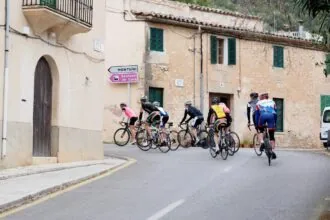
The marina area also marks the start of the coastal path and cycle lane that runs the length of the bay toward Ca’n Picafort. Cycling this stretch, and the longer ride out toward Cap de Formentor, is genuinely popular and covered in full, route by route, in AppSavvyTraveller’s guide to cycling in Mallorca.
Getting to the marina by bus is straightforward: TIB line 351 from Palma terminates close to the port, and once there, everything along the front is walkable. There is no need for a car for this part of a north Mallorca stay, and parking near the marina in peak season is tight and often paid.

The Promenade and Family Resort Strip
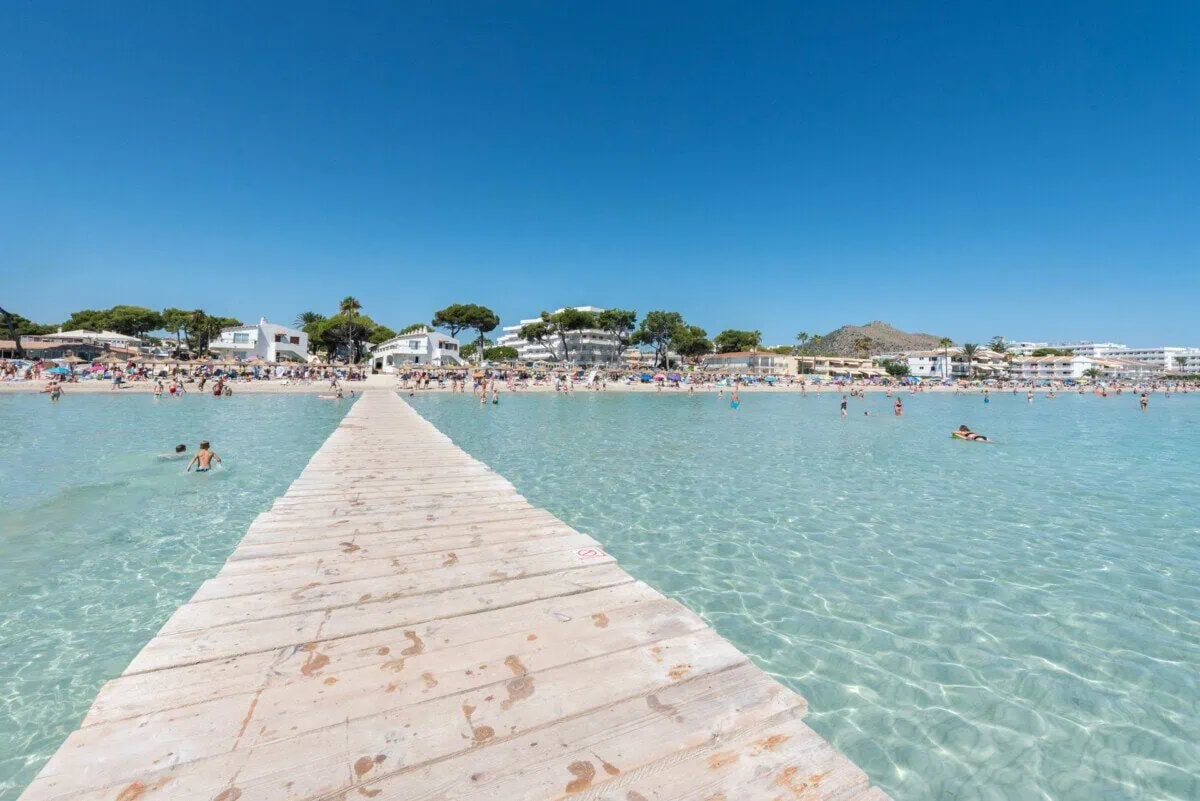
North of the marina, Port d’Alcúdia turns into one of Mallorca’s longest and most established family resort strips, a wide beachfront promenade lined with hotels, apartment blocks, ice cream kiosks and low-key bars built firmly around package holidays rather than nightlife. The pace here is deliberately easy, and it shows in the mix of families with young children and older repeat visitors who come back to the same hotel year after year.
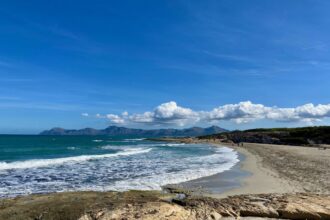
The resort’s own beach, a long stretch of fine sand with shallow, gently sloping water, is genuinely one of the better family beaches on the island and a major reason the strip developed here in the first place. For a fuller comparison against Mallorca’s other beaches, including the quieter coves further along this coast, AppSavvyTraveller’s guide to Mallorca’s best beaches covers the full round-up.
Along the promenade, expect the usual resort mix of pedal boats, jet-ski hire and beach bars, alongside a genuinely useful string of supermarkets and pharmacies that make self-catering easy. Prices along the seafront run a little higher than inland Alcúdia, with a simple beachfront lunch typically costing around €12-€15 (£10-£13/$14-$18) per person.
The strip runs for several kilometres, so a bike or the local bus is genuinely useful for getting between a hotel at one end and the marina or old town at the other. Local buses shuttle up and down the front regularly in season, and it is a flat, easy walk if the weather is cool enough.
A Half-Day Trip to the Caves of Drach and Lake Martel
A coach pickup from Alcúdia runs out to the Caves of Drach near Porto Cristo on the east coast, one of Mallorca’s most visited natural sites and a genuinely different landscape from anything else in this guide. The round trip takes around five hours including transport, cave time and a stop on the way back.
Inside, a network of chambers hung with stalactites and stalagmites leads down to Lake Martel, one of the largest underground lakes in the world, where small boats carry visitors across water lit for the occasion. A live classical music concert, played by musicians seated in one of those boats, fills the cave’s naturally sharp acoustics before the crossing itself.
The standard package folds in a stop at a Majorica pearl showroom on the way back, along with lunch and basic travel insurance, making it a genuinely full day out rather than a quick add-on. Visitors should expect around 300 steps inside the caves, so comfortable shoes matter more here than on most of this guide’s other stops.
Prices for the half-day package from the north start at around £49 (€57/$62) per person, booked through the pickup point in Alcúdia rather than at the caves themselves. It is one of the few excursions in this guide that genuinely needs a full half-day set aside rather than fitting around a beach morning.
An Open-Top Bus Tour Around Alcúdia and the Bay
An open-top bus runs a fixed 90 to 100 minute loop around Alcúdia and the bay, with hotel pickup included for anyone staying within a short walk of the main strip. Unlike a typical hop-on-hop-off service, there are no stops to get off and rejoin later, so it works as one continuous sightseeing circuit.
The route covers the resort’s main landmarks in one go, from the Port d’Alcúdia waterfront and a photo stop at Aucanada’s beach and lighthouse, through to the walled old town, the Roman ruins of Pollentia and the parish church of Sant Jaume. A second photo stop overlooks the Bay of Pollença with the Formentor peninsula in the distance.
A local guide narrates the route live in English, German and Spanish rather than through recorded audio, which suits visitors who like a bit of back-and-forth over a fixed script. Free transfers are available from Ca’n Picafort and Playa de Muro on a limited basis, worth asking about when booking.
Tickets start at around £21 (€25/$27) per adult, with meals and drinks not included on board. It is a genuinely efficient way to see the whole of Alcúdia’s spread-out sights in one sitting for anyone short on time or reluctant to drive between them.
Best if you can move a day either way. Shows how the fare changes across the month.
Compare flightsBest for anyone whose home plan charges by the megabyte abroad. Pay a fixed price up front.
Check eSIMsBest after a long flight or a late landing. Price agreed before you travel, and no taxi queue.
Check transfersA Day at Hidropark Alcúdia’s Water Slides and Pools
Hidropark sits a short distance inland from the Port d’Alcúdia promenade and gives the resort strip its main family water park, open seasonally from around April through October. It is built around two main pools and a run of slides rather than any single headline ride.
The best-known attraction is the Kamikaze, a fifteen-metre slide with a genuinely steep drop, alongside a spiral slide built into a snake-themed structure and a set of seven racing lanes for families to go down together. A wave slide and a smaller octopus area with three mini slides round out the options for younger children.
A dedicated wave pool runs regular sessions announced over the park’s speakers, and a separate kiddie pool and splash pad with jets and animal-themed features keep the youngest visitors occupied without needing the bigger slides at all. Sun loungers and shaded areas are dotted around both pools.
Entry costs around £29 (€34/$37) for adults and less for children aged three to ten and for seniors, with online tickets normally needing to be bought at least a day ahead. It pairs naturally with a beach morning along the promenade, since the park opens later in the day than the beach itself gets going.
Pollença Old Town and Plaça Major
Pollença sits inland at the foot of the Tramuntana foothills, and it keeps a genuinely different character from the coastal resorts nearby. Stone townhouses, orange trees in the squares and a slower daily rhythm make it feel closer to a working Mallorcan town than a holiday destination, even though it is only a short drive from the beaches at Port de Pollença.
The heart of the town is the Plaça Major, a wide square framed by the parish church of Nostra Senyora dels Àngels and lined with cafe terraces that fill up through the morning. From here, most of the old town’s small museums, galleries and artisan shops are within a few minutes’ walk.
For walkers, the town is also the starting point for the Boquer Valley walk, a well-known coastal trail out toward the sea between two limestone ridges. The route detail and difficulty are covered fully in AppSavvyTraveller’s guide to hikes, villages and scenic drives in the Serra de Tramuntana, since this stretch of walking country is owned by that page rather than repeated here.
Pollença is reached from Palma on TIB line 340, and from Port de Pollença and Port d’Alcúdia on local connecting services, with the journey from the capital taking roughly 45 minutes to an hour depending on the route taken. This makes it a genuinely easy half-day trip on public transport rather than a place that needs a hire car.
Climbing the Calvari Steps
Pollença’s best-known sight is the Calvari, a flight of 365 stone steps, one for each day of the year, climbing from the edge of the old town up to a small hilltop chapel. Cypress trees line much of the route, and the steps themselves are original enough in places to feel genuinely old rather than restored for visitors.
The climb is steady rather than difficult, and most visitors manage it in 15 to 20 minutes at an easy pace, with plenty of shaded spots to pause. At the top, the tiny Calvario chapel opens onto a genuinely wide view back over Pollença’s rooftops and, on a clear day, out toward the Formentor peninsula itself.
Every Easter week, a solemn torchlit procession known as the Davallament descends these same steps after dark, one of Mallorca’s most atmospheric religious events and worth timing a visit around if the dates align. Outside Easter, sunrise or the last hour before sunset are the best times to climb, avoiding both the midday heat and the coach-tour crowds.
The steps begin a short, flat walk from the Plaça Major, so no separate transport is needed once in Pollença itself. There is a longer, gentler road route up the same hill for anyone who would rather not tackle the steps directly.
Pollença’s Sunday Market
Every Sunday morning, Pollença’s Plaça Major and the surrounding streets fill with one of the largest and most genuinely local markets in this part of Mallorca. Stalls sell everything from fresh produce and local cheeses to leather goods, ceramics and clothing, and the atmosphere is noticeably less souvenir-focused than the markets closer to the resort coast.
The market spills out through several connected squares, so it is worth allowing at least an hour to walk the full circuit without rushing. Cafes around the edges do brisk trade all morning, and a coffee with an ensaimada while watching the square fill up is as much a part of the experience as the shopping itself.
Arriving early, before around 10am, means better access to the freshest produce and far less congestion in the narrow lanes. By midday the market is at its busiest, and parking in the old town, already limited on an ordinary day, becomes genuinely difficult.
Because the market takes over the same central streets covered above, no separate transport advice applies here beyond what already gets a visitor into Pollença. Anyone travelling in by bus should simply expect a livelier, more crowded old town than on a quiet weekday.
Port de Pollença: A Quieter Base by the Bay
Port de Pollença sits on its own wide, sheltered bay a short drive from Pollença’s old town, and it makes a genuinely different base from Port d’Alcúdia’s busier resort strip. The seafront promenade curves gently around calm, shallow water backed by pine-covered hills rather than a built-up marina, and the pace along it stays noticeably slower even at the height of summer. Low-rise hotels and villas line most of the shore, and the restaurants and cafes facing the water lean toward simple, locally run places over big international chains.
This is also the practical gateway to Cap de Formentor. The switchback road up to the peninsula’s viewpoints and lighthouse begins right at the edge of town, and the seasonal shuttle covering the restricted driving hours departs from here, making Port de Pollença the obvious overnight base for anyone building a Formentor sunset into their trip without a late drive back. A small working harbour on the bay’s northern side also runs seasonal boat trips out toward the cape, a good alternative to the road for anyone who would rather see those cliffs from the water.
Port de Pollença suits families who want calm, gently shelving water close to their accommodation rather than a lively strip, and it suits walkers and cyclists using it as a base for the Boquer Valley trail or the Tramuntana foothills nearby. Anyone chasing Alcúdia’s nightlife and bigger beach crowds should stay closer to Port d’Alcúdia instead, but travellers wanting a quieter, more traditional north coast base will likely prefer it.
The Drive Along the Formentor Peninsula
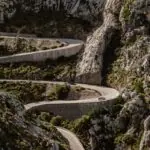
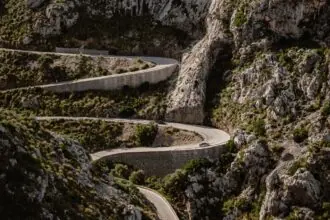
The road out to Cap de Formentor is, by itself, one of the great reasons to visit this part of Mallorca. It climbs sharply out of Port de Pollença in a series of tight switchbacks, opening onto cliff-edge views over turquoise water long before the lighthouse at the very tip comes into sight.
The peninsula’s popularity has forced real changes to how it can be visited. From 15 May to 15 October, private vehicles are banned from the road between 10am and 10pm, with fines reaching €200 for anyone caught driving it during those restricted hours, so a self-drive visit now needs to be timed either very early or after 10pm.
The practical alternative during those hours is the seasonal TIB bus line 334, which runs from Port de Pollença out along the peninsula in stages, covering both the viewpoint stop at Es Colomer and, further on, the approach to the lighthouse itself. Anyone planning a road-trip-style visit outside the restricted hours can find fuller driving advice in AppSavvyTraveller’s Mallorca road trip guide.
Whichever way it is reached, the drive itself deserves unhurried time rather than being treated as a means to an end. Pull-ins along the route offer their own views, and cyclists tackling this same climb, a genuinely tough but rewarding ride covered separately in AppSavvyTraveller’s cycling in Mallorca guide, are a common sight through the cooler morning hours.
Best for solo travellers and anyone watching the budget. Dorm beds and private rooms in the same search.
Browse hostelsBest for anyone flying more than once or twice a year. Handles the compensation claim so you are not chasing the airline.
See AirHelp+Best if your room is not ready yet. Left luggage booked in advance, so you are not hunting for a locker.
Check storageMirador Es Colomer: Formentor’s Best Viewpoint
Roughly a third of the way along the peninsula, the Mirador Es Colomer is widely considered the single best viewpoint on this stretch of coast, and arguably on the whole island. The islet of Es Colomer rises sheer from the sea directly below, flanked by vertical cliffs that drop hundreds of metres, with the jagged Formentor coastline stretching away into the distance.
A short uphill path with steps leads from the car park to the upper platform near the old Sa Creueta watchtower, taking around 20 to 30 minutes there and back at an easy pace. The spot is genuinely exposed and often windy, which only adds to the drama, though it means a light jacket is worth carrying even in summer.
The small free car park beside the road fills quickly, especially around sunset and throughout the summer months, so arriving early makes a real difference to whether there is anywhere to stop at all. This is also the point where the seasonal restrictions matter most, since it sits within the zone the TIB 334 shuttle is specifically designed to serve during the banned driving hours.
Sunset is, without question, the best time to be here, and it is the specific highlight flagged earlier in this guide’s Don’t Miss section. Anyone driving outside the restricted window should still allow for the car park being genuinely small, and everyone else should build the seasonal bus timetable into their plans rather than assume a service will simply turn up.
Far de Formentor: the Lighthouse at the Cape
The road finally ends at the Far de Formentor, a lighthouse built in 1863 standing 384 metres above the Mediterranean at the very tip of the peninsula. It marks the northernmost point most visitors will reach on Mallorca, and the views from around the lighthouse extend across open water toward the neighbouring island of Menorca on a genuinely clear day.
The lighthouse building itself is not open to the public, but the surrounding area, cafe and viewing points make the final stretch of the drive worth completing rather than turning back at Es Colomer. The road down to the very end is narrower again than the section before it, which is part of why the seasonal restrictions extend all the way out here.
A small cafe near the lighthouse serves simple drinks and snacks at prices noticeably higher than in Pollença itself, reflecting its remote position, with a coffee typically costing around €3-€4 (£3/$4-$5). It is a welcome stop after the climb and the winding final approach, particularly for anyone who has cycled the route.
Getting here without a car during the restricted hours means riding the TIB 334 shuttle all the way to its final stop, rather than the intermediate stop at the viewpoint. Outside those hours, the drive from Port de Pollença to the lighthouse takes around 25 to 30 minutes each way, not counting stops.
S’Albufera’s Wetland Trails and Birdwatching Hides
S’Albufera is Mallorca’s largest wetland, a 1,700-hectare reserve of reed beds, channels and freshwater lagoons sitting between Port d’Alcúdia and Ca’n Picafort. It is a completely different landscape from the beaches and cliffs that define the rest of this guide, and for birdwatchers in particular it is one of the genuine highlights of the entire island.
More than 250 bird species have been recorded here, including a population of moustached warblers considered one of the most important in Europe, alongside bitterns, grey herons and seasonal visitors such as ospreys and Eleonora’s falcons. Beyond birdlife, the park is also home to frogs, snakes, turtles and around two dozen species of fish living in its channels.
Four marked routes lead visitors through the reserve on foot or by bicycle, taking in a series of observation hides positioned along the water’s edge. These hides let visitors watch birds at close range without disturbing them, and even a casual walk of an hour or two is enough to spot a genuinely wide range of species, especially in the cooler early morning.
Binoculars are worth bringing if a visitor owns a pair, though the visitor centre can sometimes lend equipment, and a printed species list from the entrance helps make sense of what is actually being seen. Sturdy, closed shoes are a sensible choice given the boggy ground in places, particularly after rain.
Getting to S’Albufera Natural Park
Access to S’Albufera Natural Park is via the Pont dels Anglesos bridge on the main coastal road between Port d’Alcúdia and Ca’n Picafort, roughly a 20-minute walk or a short cycle from either end of the promenade strip. Cars must be left in the roadside car park just outside the entrance, since no vehicles are allowed inside the reserve itself.
Entrance to S’Albufera is free, and the park is open year-round, typically from 9am to 4pm, with slightly longer hours in summer. This makes it one of the very few genuinely cost-free attractions covered anywhere in this guide, and a natural pairing with an otherwise beach-focused day from Port d’Alcúdia.
Local buses running along the coastal road between Port d’Alcúdia and Ca’n Picafort pass close to the entrance, though the walk or cycle from the resort strip is short enough that most visitors simply go on foot or by bike. Anyone without their own bicycle can normally rent one cheaply from a hire shop along the Port d’Alcúdia promenade.
Early morning is genuinely the best time to visit, both for the light and for the birds themselves, which are far more active before the day’s heat sets in. A couple of hours is enough for a worthwhile visit, though committed birdwatchers can easily spend a full morning working through all four marked routes.
Shopping and Markets in the North of Mallorca
Neither Alcúdia nor the wider north is a shopping destination in the way Palma is, but between two genuine local markets and the port’s everyday shops, there is more here than the average resort strip offers.
Alcúdia old town’s Tuesday and Sunday market is the main event, filling the streets inside the walls with around 450 stalls selling local produce, cured meats and olives alongside leather goods, ceramics and hand-painted fans. It runs from roughly 8am to 1.30pm, and arriving before 11am makes a real difference to both the crowds and what is still left on the produce stalls.
In high season, Port d’Alcúdia runs its own evening version along the Passeig Marítim near the marina, a summer night market held on Wednesdays, Thursdays, Fridays and Saturdays through July and August. It leans more toward crafts, jewellery and holiday souvenirs than the old town’s produce stalls, but it is a pleasant way to browse after dinner without driving anywhere.
For everyday needs, the promenade strip is genuinely well served by supermarkets and pharmacies, already useful for self-catering stays, and Alcúdia old town has a handful of independent shops selling the same leatherwork and ceramics found on market stalls, just on a normal weekday.
Bring cash for both markets, since a good number of stallholders still do not take cards, and treat the old town’s Tuesday and Sunday stalls as the more genuinely local of the two if choosing between them and the resort’s summer night market.
Nightlife in Alcúdia and Port d’Alcúdia
The north’s nightlife is almost entirely a Port d’Alcúdia story, and it splits fairly cleanly by both location and crowd rather than blending into one scene.
Carrer Pedro Mas y Reus, known locally as Dollar Street, is the resort’s main entertainment strip, lined with pubs and bars running live bands, karaoke and quiz nights through the evening. It is built around a genuinely mixed crowd, families out for an early evening as much as groups looking to stay out later.
For anything closer to proper clubbing, the Bananas disco complex is where it happens, with a cluster of dance clubs and music bars that get noticeably busier at weekends once locals join the holidaymakers already there. This is the part of Port d’Alcúdia’s nightlife aimed squarely at an adult, later crowd rather than families.
The marina area offers a quieter alternative, a run of harbourside restaurants and relaxed bars, including a few Irish pubs, that work well as an early-evening stop before deciding whether to head toward Dollar Street or turn in for the night.
Move inland to Alcúdia’s old town, and the picture changes completely. Evenings here are built around restaurants and tapas bars rather than bars staying open late, and by 11pm the streets inside the walls are genuinely quiet, a deliberate contrast worth knowing about when choosing where to base a stay.

What to Do in Alcúdia When It Rains
Most of what this guide covers is genuinely outdoors, from the old town walls to the Formentor cliffs, so a rainy day in the north calls for a different plan rather than just pushing through.
The Pollentia Monographic Museum, already covered above alongside the Roman ruins, is the most obvious indoor swap, housing the finds from the excavations in a fraction of the time the open-air site takes to walk. It is a genuinely good option precisely because it pairs so naturally with a site that is otherwise entirely at the mercy of the weather.
Alcúdia’s Tuesday and Sunday market, covered in full above, has enough covered stalls and nearby cafes to make a wet morning there still worthwhile, and the old town’s narrow lanes offer plenty of doorways and small independent shops to duck into between showers.
Along the promenade, the supermarkets and pharmacies that make self-catering easy double as a practical rainy-day fallback, and several of the harbourside restaurants near the marina have enough covered seating to sit out a shower over a long lunch.
For a genuinely full wet-weather day, it is worth considering the indoor options covered in AppSavvyTraveller’s guide to things to do in Palma, roughly an hour south by car or bus, which has a far deeper bench of museums and covered attractions than the north can offer on its own.
Rain in this part of Mallorca rarely settles in for a full day, particularly outside the winter months, so waiting out a shower over a coffee is often the simplest fix of all.
High Season vs Low Season in Alcúdia
Alcúdia is one of Mallorca’s biggest package-holiday resorts, and that makes the gap between high and low season sharper here than almost anywhere else on the island.
High season runs roughly from May to October, peaking through July and August, when Port d’Alcúdia’s promenade, its bars and the Bananas disco complex all run at full capacity and hotels along the strip are booked solid. This is also exactly when the Cap de Formentor driving restrictions, already covered above, are in force.
From around late October, the resort winds down fast. Many hotels, bars and restaurants along the strip close for winter within a matter of weeks, and entertainment staff commonly relocate to other destinations, such as the Canary Islands, until the following spring.
Seasonal bus routes thin out at the same time, with services such as the connections between Alcúdia and Ca’n Picafort or Cala Ratjada stopping for winter and not resuming until spring, so anyone visiting outside the main season should double-check current TIB timetables rather than assume a summer route is still running.
Alcúdia’s old town is the exception. It has a genuine year-round population, and its Tuesday and Sunday market carries on through winter regardless of how quiet the port becomes, making it a reliable base even for an off-season visit.
The trade-off is real either way: visiting in July or August means a genuinely lively resort but higher prices and crowded beaches, while a trip in the shoulder months of May, June or October trades some of that buzz for lower prices, quieter beaches and a good chance most of what matters is still open, without the risk of a fully wintered-down strip.

Rupert’s Handy Travel Tips
The north of Mallorca is easy to enjoy well, but a handful of local quirks catch first-time visitors out. Here is what to know before heading up from Palma:
- Time Formentor for sunset: the car park at Mirador Es Colomer is far quieter and far more beautiful in the last hour of daylight than at midday.
- Check the Formentor road ban: private cars can’t use the peninsula road between 10am and 10pm from mid-May to mid-October, so plan around the TIB 334 shuttle in that window.
- Go to Pollença on a Sunday if you want the market: any other day, the old town is calm and easy; on a Sunday, come early for the best stalls.
- Carry cash for on-board buses: single TIB tickets bought from the driver are cash-only, so keep a few small notes handy.
- Bring insect repellent to S’Albufera: it’s a wetland, and mosquitoes are part of the deal, especially in the warmer months.
Want to meet the reindeer behind our travel tips? Find out more in our page Who is Rupert?.




Frequently Asked Questions
How many days do you need for Alcúdia and the north of Mallorca?
Two to three full days is enough to cover Alcúdia’s old town and Pollentia, Port d’Alcúdia, Pollença, Cap de Formentor and S’Albufera without rushing. Basing a stay in either Alcúdia or Pollença puts every one of these within a short bus ride or drive.
Can you visit Cap de Formentor without a car?
Yes. The seasonal TIB bus line 334 runs from Port de Pollença out along the peninsula, covering both the Mirador Es Colomer viewpoint and the lighthouse, and it is the only practical option during the private vehicle ban that runs 10am to 10pm from mid-May to mid-October.
Is the Roman site of Pollentia worth visiting?
Yes, for anyone interested in history it is a genuinely rare survival, since Pollentia was the most important Roman city in the Balearic Islands. The site is modest in scale but includes a rock-cut theatre and a residential quarter, and it sits right beside Alcúdia’s old town walls, so it costs little extra time to add on.
What day is the Pollença market?
Pollença’s main market takes over the Plaça Major and surrounding streets every Sunday morning. Alcúdia old town also runs its own, separate market on Tuesdays and Sundays.
Is S’Albufera Natural Park free to visit?
Yes, entrance to S’Albufera is free, making it one of the few genuinely cost-free attractions in this part of Mallorca. The park is open year-round, roughly 9am to 4pm, with four marked routes and several birdwatching hides.
Is it safe to drive the Cap de Formentor road?
The road is narrow with tight switchbacks and sheer drops in places, so it demands a confident, unhurried driver rather than being genuinely dangerous. Whatever the plan, it is worth having a travel insurance app set up before a Mallorca trip in case of any mishap on the road or elsewhere.
Further Reading
This guide sits inside AppSavvyTraveller’s wider Mallorca travel guide, which links out to every corner of the island covered on the site, from Palma to the east coast. For the practicalities of arriving and moving around before heading north, the Palma airport transfers guide and the guide to getting around Mallorca without a car both cover exactly the kind of bus-based travel this region rewards.
Anyone tempted to hire a car anyway, particularly for the Formentor road outside its restricted hours, should read the Mallorca road trip guide first. For the beaches only briefly mentioned here, the full guide to Mallorca’s best beaches covers the island’s best sand in far more depth than one section of a regional round-up can.
Two more specialist guides are worth pairing with a trip up here. The cycling in Mallorca guide covers the peninsula climb and the coastal bay route in proper route detail, and the guide to the Serra de Tramuntana covers the Boquer Valley walk from Pollença and the wider mountain trails just to the south of this region.