Reviewed by our editorial team Published
Mallorca has a reputation as an island you need a hire car to enjoy properly, and for parts of it that reputation is fair. But the reputation obscures a genuinely useful public transport system that covers far more ground than most first-time visitors expect, built from three separate networks that each do a different job.
EMT Palma runs the city buses inside the capital itself, while the island-wide TIB coach network links Palma to every town and resort worth naming, from Alcúdia in the north to Santanyí in the south-east. A third operator, SFM, runs the modernised commuter railway that cuts through the island’s flat interior, and it has nothing to do with the famous vintage Sóller Train, which is a separate, privately-run tourist railway with its own dedicated guide.
Geography decides how far this gets you. Palma, the interior towns along the rail line, and the north bay around Alcúdia are genuinely easy without a car. The Serra de Tramuntana coast and the scattered coves of the east coast are a different story, and this guide says so plainly rather than pretending a bus timetable will get you everywhere a hire car will.
This page walks through EMT, TIB and SFM in turn, covers the boat that genuinely substitutes for a car on one of the island’s most dramatic roads, lists the apps worth having on your phone, and finishes with an honest, place-by-place verdict. For the wider picture, start with our Mallorca Travel Guide, and if you land at Palma Airport, our Palma Airport Transfers guide covers the first leg of the journey.
One more thing worth knowing before you plan any stops: Mallorca’s public transport is genuinely affordable by Western European standards, and paying for it no longer means queuing at a ticket office every time. A contactless bank card now works across most of EMT, TIB and SFM, and exactly how buying and validating a ticket works, including whether any kind of visitor travel pass exists, is covered in full further down this guide.
EMT Palma: Getting Around the Capital
EMT Palma is the municipal bus operator for the capital itself, running a dense network of city routes that make a hire car genuinely unnecessary if you’re basing yourself in Palma. Buses cover the old town, the port, the Paseo Marítimo, S’Arenal and the residential districts inland, with a single cash fare of around €2 (£1.70/$2.35) paid to the driver or tapped with a contactless bank card on most vehicles.
Two routes matter most for visitors: line A1 connects Palma Airport directly to Plaça d’Espanya and the port area roughly every 15 minutes, and line A2 runs from the airport to S’Arenal every 20 to 30 minutes. Both cost around €5 (£4.30/$5.85) and are a straightforward alternative to a taxi if you’re travelling light and aren’t in a hurry.
The EMT Palma app shows live arrival times and route maps for the whole network, which is worth downloading before you land since stops aren’t always obviously signed for a first-time visitor. Once you’re settled in Palma itself, our guide to things to do in Palma de Mallorca covers the sights EMT’s routes will actually take you to.
Daytime frequency inside Palma is high enough on the main routes that you’re rarely waiting long between buses, though the timetable thins out considerably in the evening, so it’s worth checking the last departure back to your hotel rather than assuming a late bus will still be running. Payment methods are converging with the rest of the island’s network too, and a growing share of EMT’s fleet now accepts the same contactless bank card tap-in used on TIB and SFM, which the tickets and validation section further down this guide covers in detail.
The TIB Regional Bus Network
TIB is the island-wide coach network, and it is the workhorse of car-free travel in Mallorca once you leave Palma’s city limits. Every route starts from the Estació Intermodal, the underground transport hub beneath Plaça d’Espanya, and routes are numbered loosely by the region they serve rather than following any obvious logic from the outside.
Cash fares on TIB scale with distance, running from around €2 up to roughly €13 (£1.70-£11/$2.35-$15.20) for the longest cross-island trips, and tickets can be bought on board or through the TIB journey planner, which is the most reliable place to check current departures since rural services thin out considerably outside the summer season.
| Corridor | Key Towns Served | Approx. Journey from Palma | Bus Line(s) |
|---|---|---|---|
| North (Bay of Pollença) | Alcúdia, Port d’Alcúdia, Port de Pollença | Around 1 hour | 301 / 302 |
| Tramuntana coast | Valldemossa, Deià, Port de Sóller | 30 minutes to 1 hour | 203 / 210 |
| North-west link | Port de Sóller to Alcúdia | Varies by stop | 231 |
| East coast | Manacor, Porto Cristo, Cala Millor | Around 1-1.5 hours, often with a change | 412 and local connections via Manacor |
| South-east coast | Cala d’Or, Santanyí, Colònia de Sant Jordi | Around 1.5-2 hours, sometimes two buses | 428 / 501 / 515 / 517 |
Timetables shift meaningfully between summer and winter schedules, and a route that runs every 30 minutes in July can drop to two or three departures a day in January, particularly on the smaller resort lines. It’s worth building extra slack into the return leg of any day trip, since missing the last bus back from a small town usually means an expensive taxi rather than a short wait for the next one.
Best if you want daily housekeeping and a front desk. Filter by area first, then by price.
Check availabilityBest for groups who want one address and separate bedrooms rather than three hotel rooms.
See holiday homesBest if you have already picked a hotel. Checks the big booking sites for the same room and shows who is cheapest.
Check dealsNorth to Alcúdia and the Bay of Pollença by TIB Bus
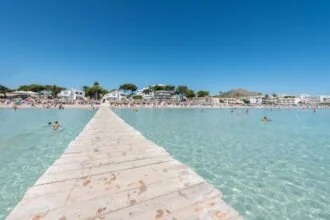
Line 302 links Palma directly to Alcúdia in around an hour, making the walled old town and the long beaches of the bay one of the easiest resort areas on the island to reach without a car. Line 301 continues on to Port de Pollença, and local shuttle routes fill in the gaps around the bay itself once you’ve arrived.
Services run considerably more often in peak summer than in shoulder or winter months, so it’s worth checking the return timetable before you set off rather than assuming an evening bus will be waiting. Our guide to things to do in Alcúdia and the north of Mallorca has the detail on what the area itself offers once you’re there.
Once you’re off the 301 or 302 in Port d’Alcúdia or Port de Pollença, local shuttle buses fill in the short hops along the bay itself, so you don’t need to walk the full length of the resort strip with luggage. These local routes generally run more often in peak summer than the main Palma line does, which makes basing yourself anywhere along the bay a genuinely low-stress choice if you’re travelling without a car.
Climbing West to Valldemossa, Deià and Port de Sóller
Line 210 (which runs as line 203 for part of its length) is the most scenic regular bus route on the island, climbing from Palma to Valldemossa in around 30 minutes before continuing through Deià to Port de Sóller. In high season it runs roughly hourly through the day; outside summer, gaps can stretch to 90 minutes or more, and the last useful return departure matters more than the first outbound one.
This single route is genuinely enough to visit Valldemossa or Deià as a day trip from Palma, but it does not substitute for a car if you want to string several Tramuntana villages together in one day. See our Serra de Tramuntana things-to-do guide for how the villages along this corridor compare.
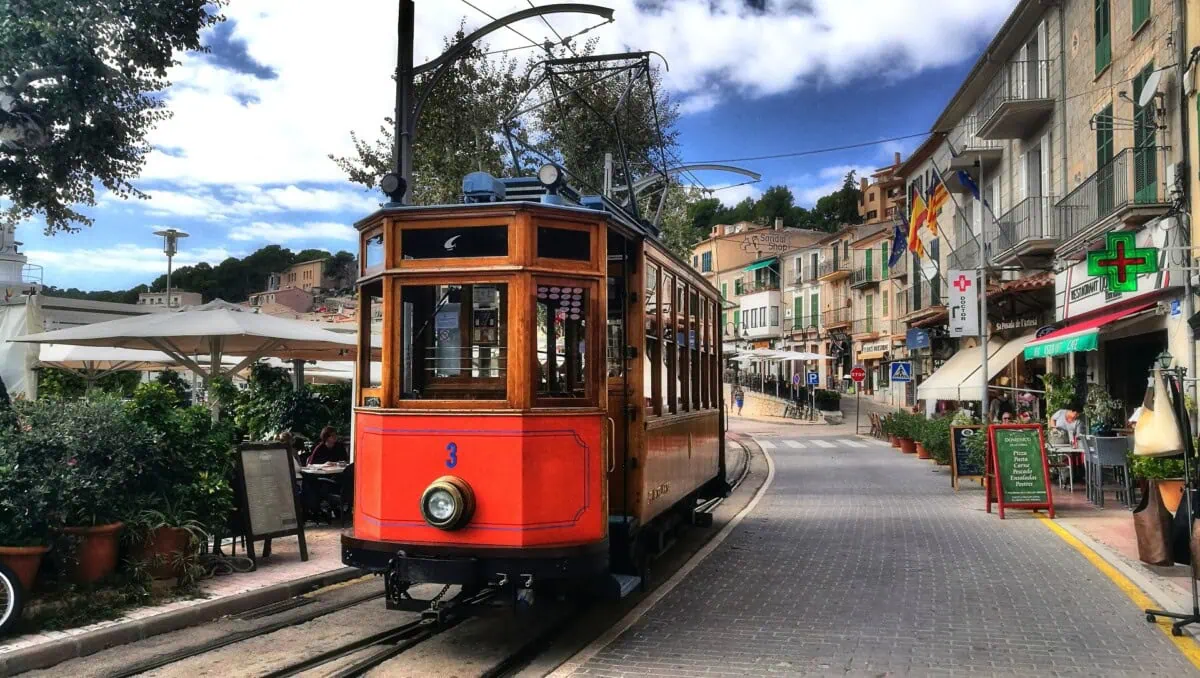
Arriving in Port de Sóller on line 210 also puts you within walking distance of both the historic tram down from Sóller town and the harbourside stop for the Sa Calobra boat, so a single bus ticket can realistically kick off a day combining three different ways of getting around. Just remember it’s the return bus, not the outward one, that actually needs planning around.
East and South to the Coastal Resorts by Bus
Reaching the east coast resorts by bus is possible but rarely convenient. A direct service or the SFM train gets you to Manacor, from where a local connection covers the short final stretch to Porto Cristo and on towards Cala Millor, while lines 501 and 515 head south-east to Cala d’Or in around one and a half to two hours depending on whether a change is needed.
Santanyí and Colònia de Sant Jordi are covered by line 517, again with a limited number of daily departures. None of this is impossible, but it’s a genuinely different experience from driving straight to a cove; our east coast things-to-do guide is honest about which spots this actually suits.
Because so many of these routes involve a change, it’s worth building a genuine buffer into your plans rather than timing connections tightly. A missed link in Manacor on a thin winter timetable can easily add an hour or more to a journey that looks straightforward on the map.

The SFM Train Network
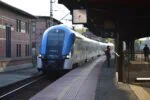
SFM (Serveis Ferroviaris de Mallorca) operates the island’s modern, electrified commuter railway, and it’s easy to confuse with the historic Sóller Train simply because both start in Palma. In practice they couldn’t be more different: SFM’s three lines are ordinary metre-gauge commuter trains built to move residents and visitors quickly through the flat interior, all departing from the same underground Palma Intermodal Station at Plaça d’Espanya that also serves the TIB buses.
The Palma-Inca stretch is electrified and carries the heaviest traffic, with trains splitting beyond Inca to continue either north-east to Sa Pobla or east to Manacor. Fares are inexpensive and paid the same way as TIB, with a contactless bank card the simplest option for a visitor who isn’t picking up an Intermodal card.
| Line | Route | Key Stations | Approx. Journey Time | Single Fare |
|---|---|---|---|---|
| T1 | Palma – Inca | Palma Intermodal, Santa Maria, Consell, Binissalem, Lloseta, Inca | Around 38 minutes | ~€3.60 (£3.10/$4.20) |
| T2 | Palma – Inca – Sa Pobla | As T1, continuing via Muro to Sa Pobla | Around 1 hour | ~€4.50 (£3.90/$5.25) |
| T3 | Palma – Inca – Manacor | As T1, continuing via Sineu and Petra to Manacor | Around 1 hour 12 minutes | ~€4.50 (£3.90/$5.25) |
Frequency drops off outside the busy Palma-Inca stretch, but even the outer branches typically run at least hourly through the day. If your plans include the interior towns along this line, an SFM ticket is the simplest, cheapest way to reach them, and it saves the wear of a mountain drive entirely.
Stations along the line are unstaffed halts rather than full ticket offices, so most have a self-service machine on the platform alongside the contactless card readers, and the trains themselves are modern, step-free and air-conditioned, a genuine comfort during the height of summer. It’s a noticeably faster and cooler way to reach the interior than the equivalent TIB bus route on a hot afternoon.
Tickets, Passes and Validation: How Paying Actually Works
Mallorca doesn’t sell a dedicated multi-day tourist travel pass, and it’s worth saying that plainly rather than sending you looking for one that doesn’t exist. The free-travel Targeta Ciutadana and Tarjeta Intermodal cards that cover residents through 2026 require proof of local registration (empadronamiento) to obtain, so as a visitor you simply can’t apply for one, whatever the length of your stay.
That still leaves three straightforward ways to pay across EMT, TIB and SFM, and buying and validating a ticket generally works like this:
- Pay cash to the driver on EMT and TIB buses, or use the self-service ticket machine on the platform at an SFM station or the Palma Intermodal Station before you board.
- Tap a contactless bank card on the reader as you board, and tap it again as you get off, even on TIB and SFM where you’ve technically already paid; skipping the tap-out on those networks adds a small penalty of around €0.30 (£0.25/$0.35) per person.
- Buy a digital QR ticket in advance through the TIB CTM app if you’d rather not handle cash or worry about finding the right card at the door.
- Keep your ticket or QR code until you’re off the vehicle, since an inspector’s spot check without a valid, validated ticket usually means an on-the-spot fine.
Paying by contactless card on TIB and SFM has a genuine perk worth knowing about: the system caps what you’re charged in a single day at the equivalent of four journeys, however many trips you actually take, and it treats up to three lines taken within 60 minutes of your first tap as one connected journey rather than separate fares. Travelling as a group, everyone taps in individually but only needs to tap out once per group on the same card, which is the fastest way to move a family through a bus door without holding up the queue behind you.
The Sóller Train: A Different Railway Altogether
It’s worth being direct about this because the confusion is common: the famous wooden-carriage Sóller Train (Ferrocarril de Sóller) that climbs from Palma to Sóller through the Tramuntana is not part of the SFM network above, and it isn’t a discounted commuter option either. It’s a separately owned, privately operated heritage railway dating back to 1912, built and run as a scenic tourist experience rather than daily transport.
Fares reflect that difference: a one-way Sóller Train ticket runs considerably higher than an SFM fare covering a similar distance, and the appeal is the journey itself, the vintage rolling stock and the mountain scenery, not simply getting from A to B. It remains a genuinely worthwhile way to reach Sóller without a car, just not for the same reasons as the modern rail lines.
Tickets are sold at the dedicated ticket office beside Palma’s Plaça d’Espanya, not through the TIB app or the contactless readers used elsewhere on the island, and none of the daily fare-capping or free-transfer logic covered above for TIB and SFM applies here. Buying ahead in peak season is genuinely worth it, since the most popular departures do sell out.
Because it deserves its own detail rather than a rushed mention here, we’ve covered its full timetable, fares and what to expect on board in a dedicated page: The Sóller Train.
Best for long or awkward journeys. Builds one itinerary out of separate flights.
View flightsBest for anyone whose home plan charges by the megabyte abroad. Pay a fixed price up front.
Check eSIMsBest when public transport has stopped, or when you are travelling with children and bags.
Book a transferBoat Trips Along the Tramuntana Coast
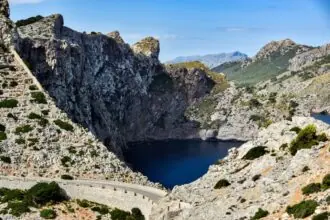
One genuine substitute for a car exists on the single hardest stretch of coast road on the island: the boat from Port de Sóller to Sa Calobra, run by the local operator Barcos Azules. The crossing takes around an hour each way and drops you directly beneath the dramatic Torrent de Pareis gorge, avoiding the notoriously tight switchbacks of the Sa Calobra road entirely.
In high season (roughly April to October) there are typically four daily departures from Port de Sóller, with return sailings from Sa Calobra in the early and mid afternoon; outside that window, sailings drop to a handful of days per week. A round-trip adult ticket costs around €35 (£30/$41), or €23 (£20/$27) one-way, with children aged 6 to 11 paying roughly half and under-6s travelling free.
Tickets for the crossing are sold at the kiosk on the quayside in Port de Sóller or online in advance through the operator’s own site, and neither TIB’s contactless system nor the SFM ticket machines cover this leg, since Barcos Azules runs entirely independently of the island’s public transport network.
This boat is popular enough in summer that booking ahead is genuinely worthwhile rather than a precaution. It pairs naturally with a day based around Sóller and Port de Sóller, which our day trips from Palma guide and our guide to exploring the Serra de Tramuntana both cover in more depth.
Car-Free by Base: Comparing Mallorca’s Main Holiday Towns
Where you base yourself matters more than any single bus route, since the same trip that’s effortless from one town can mean two changes and a long wait from another. The comparison below pulls together the realistic picture for the island’s five most common bases, rating each one on how far you can genuinely get without a hire car. It draws only on the TIB, SFM and Sóller Train links already covered above, rather than inventing routes this guide hasn’t verified.
| Base | How Realistic Is Car-Free? | Main Bus/Train Links |
|---|---|---|
| Palma | Easy | Dense EMT city network, plus TIB and SFM both starting from the Palma Intermodal Station |
| Alcúdia / Port d’Alcúdia | Doable with planning | TIB line 302 direct from Palma in around an hour, with local shuttle buses covering the bay itself |
| Sóller / Port de Sóller | Easy | The heritage Sóller Train, TIB line 210/203 bus, and the Sa Calobra boat all converge here |
| East coast (e.g. Cala Millor) | Difficult | SFM train to Manacor plus a local TIB connection, usually needing a change and running only a few times daily |
| Tramuntana villages (Valldemossa, Deià and beyond) | Difficult | Single TIB line 210/203 serves Valldemossa and Deià, thinning to a handful of daily departures outside summer |
Palma and Sóller share the same advantage: more than one network reaches them, so a thin timetable on one route rarely leaves you stuck for long. Alcúdia sits comfortably in the middle, well connected to Palma by a direct TIB coach, but reliant on that single main bus line once winter frequencies drop away.
The east coast and the wider Tramuntana villages are where a car-free base asks the most patience, since both regions depend on connections that run only a handful of times a day outside peak season and often require a change in Manacor or along the mountain road. Basing yourself here without a car isn’t impossible, but it suits a slower, timetable-led trip rather than one built around spontaneous day trips to several places at once.
Useful Apps for Getting Around Without a Car
The TIB CTM app is the single most useful download for anyone relying on public transport, covering island-wide bus routes, SFM train times and the Palma metro in one route planner, with live delay information and digital ticket purchase for most services. The separate EMT Palma app does the same job specifically for Palma’s city buses, and both are worth installing before you arrive since a handful of rural TIB tickets still need to be bought on board or at a counter.
Ride-hailing apps are genuinely unreliable on the island, and it’s worth knowing that before you assume otherwise. Uber has trialled a small fleet in parts of Palma, Calvià, Andratx and Llucmajor, but coverage is patchy and plenty of visitors simply find no cars available when they open the app. Cabify and Bolt were reportedly exploring entry into the Balearic market following a court ruling that forced a review of previously rejected licences, but neither was running a live public service at the time of writing, and the older Free Now taxi app withdrew from Palma back in 2020 and hasn’t returned.
The dependable fallback is a licensed taxi, hailed on the street, picked up from a rank, or booked by phone or through a local booking app; taxis remain plentiful and reasonably priced across the island’s main towns and resorts. Keep a taxi number or app saved for the evenings and remoter spots where TIB’s timetable has already finished for the day.
It’s worth saving an offline map of your planned route too, since mobile signal drops out in parts of the Tramuntana’s mountain passes and a handful of the smaller east coast villages, exactly where you’re most likely to need reassurance that you’re standing at the right stop.
Which Towns You Can Actually Manage Without a Car
The honest picture is a genuine split rather than a blanket yes or no. Palma, the interior towns along the SFM line, and the Alcúdia/Port de Pollença bay are all comfortably reachable with public transport alone, even for a visitor without much patience for timetables. The wider Tramuntana coast and the east coast’s scattered resorts are a different matter, and this is exactly where a Mallorca road trip or an organised tour genuinely earns its cost.
| Town / Area | Manageable Without a Car? | Notes |
|---|---|---|
| Palma | Yes | Dense EMT network and a genuinely walkable old town |
| Inca, Manacor, Sineu, Sa Pobla (interior) | Yes | Direct, frequent SFM trains from Palma |
| Alcúdia & Port de Pollença (north bay) | Mostly yes | Direct TIB coach in around an hour, fewer buses off season |
| Sóller & Port de Sóller | Yes | Heritage train, TIB bus and the Sa Calobra boat all converge here |
| Wider Tramuntana coast (Deià, Valldemossa, Banyalbufar, Estellencs) | Difficult | Infrequent buses along a slow mountain road; a car or tour is genuinely easier |
| East coast resorts (Porto Cristo, Cala Millor, Cala d’Or, Santanyí) | Difficult | Buses exist but usually need a change and run only a few times daily |
If your trip is genuinely built around Palma, the north bay and the interior towns, public transport alone will do the job comfortably and save you the cost and hassle of a hire car. If it’s built around the Tramuntana coves and the east coast’s beaches, plan for a car, a tour, or long, patient days with the timetable rather than assuming the bus network will flex to meet you.
If your itinerary changes once you’re actually on the island, remember this table is a rough guide rather than a fixed rule. A single well-timed TIB bus or SFM train can still make a day trip to a “difficult” spot perfectly workable, it just needs more planning around timetables than a spontaneous drive would.

Rupert’s Handy Travel Tips
Rupert has hopped on and off Mallorca’s buses and trains enough times to know exactly where the system helps you and where it quietly expects you to have a car.
- Know your three operators: EMT is Palma only, TIB is everywhere else, and SFM is the modern train, not the Sóller Train.
- Time the Tramuntana buses carefully: line 210/203 to Valldemossa, Deià and Port de Sóller thins out badly outside peak summer, so check the last return before you set off.
- Book the Sa Calobra boat ahead in summer: there are only a few sailings a day and the popular ones can fill up.
- Don’t count on Uber: ride-hailing coverage is patchy at best, so keep a licensed taxi number or app saved instead.
- Tap in and tap out, every time: Mallorca’s buses, trains and metro all require validation at both ends of the journey, even with credit already on the card.
Want to meet the reindeer behind our travel tips? Find out more in our page Who is Rupert?.




Frequently Asked Questions
Do I need a car to get around Mallorca?
Not for Palma, the north bay around Alcúdia and Port de Pollença, or the interior towns along the SFM rail line, all of which have solid public transport. You will likely want a car, or a tour, for the wider Serra de Tramuntana coast and the scattered east coast coves.
What’s the difference between EMT, TIB and SFM?
EMT Palma runs the city buses inside Palma, TIB runs the island-wide regional coaches to every town and resort, and SFM operates the modern electrified commuter trains on the Palma-Inca-Manacor and Palma-Inca-Sa Pobla lines. All three connect at the Palma Intermodal Station under Plaça d’Espanya.
Is the Sóller Train part of the regular rail network?
No, the historic Ferrocarril de Sóller is a separately owned, privately run heritage railway aimed at visitors, not a commuter line, and it costs considerably more than an SFM ticket. Our dedicated Sóller Train guide covers its timetable and fares in full.
Is public transport really free in Mallorca in 2026?
It’s free for residents travelling with a Tarjeta Única or Tarjeta Intermodal card, both of which require proof of local registration (empadronamiento) to obtain. Visitors without residency cannot get one of these cards and still pay standard cash or contactless fares, which remain inexpensive by European standards.
Is there a travel pass I can buy for buses and trains in Mallorca?
Not as a multi-day tourist pass in the way some European cities sell. The free-travel cards above are resident-only, so as a visitor you’ll pay with cash, at an SFM ticket machine, or by tapping a contactless bank card, which caps your daily total at roughly four journeys and lets you change between up to three lines free within 60 minutes of your first tap.
Can I use Uber, Bolt or Cabify in Mallorca?
Not reliably. Uber has trialled a small fleet in parts of Palma, Calvià, Andratx and Llucmajor, and Cabify and Bolt were still exploring entry into the Balearic market rather than running a live public service at the time of writing. Licensed taxis remain the dependable fallback across the island.
How do I get from Port de Sóller to Sa Calobra without driving the mountain road?
A dedicated excursion boat run by Barcos Azules covers the crossing in around an hour each way, several times a day in high season, landing you directly below the Torrent de Pareis gorge. It’s a far more relaxed alternative to the tight switchbacks of the Sa Calobra road.
Further Reading
Start with our Mallorca Travel Guide for the wider picture of the island, including when to visit and how to reach it in the first place, and pair it with our Palma Airport Transfers guide for the journey from PMI into the island’s transport network.
If the sections above have convinced you that certain corners of the island are easier with your own wheels, our Mallorca road trip guide lays out a full circular route through the Tramuntana and the north coast. For the single most famous alternative to driving that stretch, our dedicated Sóller Train guide covers everything about the heritage railway.
Once you’ve settled on how you’re getting around, our regional guides fill in what’s actually worth doing once you arrive: things to do in Alcúdia and the north, things to do on the east coast, and what to see and do in the Serra de Tramuntana for those planning to explore the mountains beyond the main bus routes.