Reviewed by our editorial team Published
Mallorca’s east coast runs from the show caves above Porto Cristo down through a string of resort towns and hidden coves to the wild dunes of Cala Mondragó, and it rewards visitors who go beyond the sun loungers of Palma. This stretch of the island packs some of Mallorca’s most photographed natural wonders into a compact, easily linked corridor, and much of it is reachable without ever needing to hire a car.
The headline draw is Porto Cristo, home to the Coves del Drac, where a classical music quartet performs from illuminated boats gliding across an underground lake. A short bus ride further along the coast brings you to the fortified market town of Capdepera and the quiet hill town of Artà, both far calmer than the beach resorts yet full of genuine Mallorcan character.
Between the caves and the old towns sit the coast’s resort strips and whitewashed harbours. Cala Millor and neighbouring Cala Bona form one long promenade of hotels and restaurants, while Cala d’Or, designed in the 1930s by an Ibizan architect, still looks like a scaled-down version of Ibiza Town with its cube-shaped white villas around a working marina. Further south again, the protected pine woods of Cala Mondragó give a sense of what this coastline looked like before any of the resorts existed.
This guide covers each of these places in depth, including how to reach them by the TIB public bus network where a genuine route exists, and where a hire car or organised trip is honestly the more realistic option. For a full comparison of the coast’s beaches against the rest of the island, see our guide to Mallorca’s Best Beaches, and for the bigger picture of moving around without your own vehicle, our guide to Getting Around Mallorca Without a Car is a useful companion. If this is one stop on a wider island itinerary, our Mallorca Travel Guide hub ties the whole trip together.
| Place | Known For | Getting There by Bus |
|---|---|---|
| Porto Cristo | Coves del Drac, Coves dels Hams, harbour town | TIB line 401 (year-round, via Manacor) |
| Cala Millor / Cala Bona | Resort promenade, long sandy beach | TIB lines 401 and A42 (year-round, direct from the airport) |
| Cala d’Or | Whitewashed marina town, five coves | TIB express line 515e (Palma) and line 428 (Porto Cristo) |
| Cala Mondragó | Protected natural park, dune beaches | No direct scheduled line into the park; car or taxi from Cala d’Or/Santanyí |
| Artà | Old town, Sant Salvador sanctuary | TIB express line 411e (year-round, direct from Palma) |
| Capdepera | Hilltop castle, Wednesday market | TIB lines 411 and 411e (year-round) |
Don’t Miss on Mallorca’s East Coast
If time is short, a handful of stops on this coast are genuinely worth prioritising over the rest. The Coves del Drac boat concert is the single most famous experience on the east coast, and it is popular enough that sessions sell out in summer, so book ahead rather than turning up on spec.
The Sant Salvador sanctuary above Artà gives one of the best inland views on this side of the island for the cost of climbing a set of stone steps, and it costs nothing to visit. Capdepera Castle is the coast’s best-value historic sight, with sweeping views toward Menorca on a clear day for a token entry fee.
For a slower pace, the whitewashed lanes of Cala d’Or’s marina and the pine-backed sands of Cala Mondragó both show a gentler side of the coast than the big resort beaches. Between them, these six stops give a realistic one-to-two-day route along the coast, whether you are staying in Palma, based at one of the resorts, or passing through on a longer island road trip.
Choosing a Base: Porto Cristo vs Cala Millor vs Cala d’Or
Anyone planning more than a day trip along this coast has to pick a base, and the three obvious candidates suit quite different trips. Porto Cristo feels the most authentically Mallorcan of the three, a working harbour town rather than a purpose-built resort, and it puts the Coves del Drac and Coves dels Hams within easy walking distance. Cala Millor is the opposite end of the spectrum, a large-scale family resort with the coast’s best beach for young children and the only genuinely direct bus link to the airport. Cala d’Or sits somewhere between the two in feel but leans younger and more sociable, its marina lined with bars that fill up well into the evening.
| Base | Vibe | Best Suited To | Proximity to Main Sights | Price Level |
|---|---|---|---|---|
| Porto Cristo | Working harbour town, low-key and local | Couples and independent travellers wanting caves on the doorstep | Coves del Drac and Coves dels Hams both walkable | Mid-range |
| Cala Millor | Large-scale resort strip, family-oriented | Families with young children | Central for the resort strip; caves and Artà a bus ride away | Budget to mid-range |
| Cala d’Or | Whitewashed marina town, sociable evenings | Couples and groups wanting nightlife with the marina on hand | Good for Cala Mondragó and the southern coves; furthest from the caves | Mid-range to higher |
None of the three is a bad choice, but the honest advice is to match the base to the trip rather than the other way round. A family with a hire car is well served almost anywhere on this stretch, while anyone relying on the bus network gets the most flexibility by basing themselves in Porto Cristo or Cala Millor, both of which sit directly on the year-round line 401 route.
Best if you want daily housekeeping and a front desk. Filter by area first, then by price.
Check availabilityBest for groups who want one address and separate bedrooms rather than three hotel rooms.
See holiday homesBest as a last check before booking. Compares hotel rates across several sites in one search.
Compare ratesPorto Cristo: Caves, a Harbour and a Quiet Coastal Base
Porto Cristo is a modest harbour town roughly 13km east of Manacor, built around a narrow sea inlet where fishing boats still moor alongside pleasure craft. It grew up almost entirely around the show caves that sit either side of it, and the town itself is a pleasant, low-key base rather than a destination in its own right.
The seafront promenade is lined with seafood restaurants serving fresh fish and paella, and a small pebble-and-sand beach sits right in the harbour mouth for anyone wanting to cool off between cave visits. Cala Petita and Cala Estany, two tiny coves either side of the main bay, are worth the short walk if the harbour beach feels crowded.
TIB line 401 runs year-round between Palma and Cala Millor, calling at Portocristo, Manacor, Vilafranca, Montuïri and Algaida along the way, so the town is genuinely reachable by public transport without a change of bus from Palma. In summer, the seasonal line 425 also links Portocristo directly with S’Illot, Sa Coma, Cala Millor and Cala Bona, which is handy for anyone staying at one of the nearby resorts rather than in Palma itself.
Porto Cristo’s small harbour beach sits right where the boats moor, calm and sheltered enough for a quick swim between cave visits, though space is tight once the height of summer arrives. A short stroll along the seafront takes in the town’s aquarium and a scatter of quiet squares where the old fishing character still shows through, well away from any high-rise resort development.
Most visitors treat Porto Cristo as a half-day base built around one or both cave systems, with an hour or so left over for lunch on the seafront or a dip at the harbour beach. Parking is straightforward outside the busiest summer weeks, with pay-and-display bays close to the harbour and a larger free area a short walk back from the water.
Coves del Drac: The Underground Boat Concert
The Coves del Drac are the single most visited attraction on this coast, and for good reason. A guided walkway leads through roughly a kilometre of dramatically lit stalactite chambers before opening onto Lake Martel, one of the largest known underground lakes in the world at around 115 metres long.
Every session ends with a short live classical music concert, performed by a quartet from illuminated boats drifting across the lake, the natural rock acoustics doing most of the work. Visitors can then cross the lake themselves by boat or walk back around it on foot, both included in the ticket at no extra charge, and the whole visit takes about an hour.
Tickets cost around €18.50 (£16/$22) for adults and €11.50 (£10/$13) for children aged three to twelve when booked online, with a small surcharge at the ticket office and free entry for under-threes. Sessions run roughly every hour in high season (mid-March to October) and four times a day in winter, and they do sell out in July and August, so booking a slot in advance through the official Coves del Drac website is genuinely worth doing rather than risking a wasted trip.
The caves sit a short walk south of Porto Cristo’s centre, close enough to reach on foot from anywhere in town, and there is a car park for anyone driving in independently.
Coves dels Hams: A Quieter Cave for Cavers
Coves dels Hams sit on the opposite side of Porto Cristo from the Coves del Drac, and while they see far fewer visitors, they are a genuinely worthwhile stop for anyone with a real interest in caving rather than just the boat-and-concert spectacle next door. The name comes from the Majorcan word for “harpoons,” a reference to the distinctive hook-shaped stalactite formations found throughout the cave system.
The caves were formed more than ten million years ago, and they hold a small piece of local history too: in 1910, before mains electricity had even reached Porto Cristo, the site’s owner rigged up a water-powered generator to bring electric light underground, making it one of the earliest electrically lit spaces on the island. A shorter boat trip across the cave’s own lake is included, along with a light show set to music in one of the chambers.
Adult tickets run at around €18 (£15/$21), with reduced child rates. Precise current child pricing wasn’t confirmed at the time of writing, so it’s worth checking the ticket price board or official booking page on the day.
Because the two cave systems are only a few minutes apart by car or a short walk across town, most visitors treat them as a single half-day out from Porto Cristo. Anyone touring the wider region without a car should note that both sit close enough to walk from the line 401 bus stop in the town centre, so no separate transport is needed once you have reached Porto Cristo itself.

The Cala Millor and Cala Bona Resort Strip
Cala Millor is the largest purpose-built resort on this stretch of coast, and its main draw is simply scale. The beach itself runs for around 1.8km of fine golden sand, backed by a wide seafront promenade split between a footpath and a cycle lane and lined with an almost unbroken run of hotels, bars and restaurants.
Neighbouring Cala Bona, a former fishing hamlet just north along the same stretch of sand, has effectively merged with Cala Millor into one continuous tourism strip since the 1970s, though it keeps a smaller, slightly quieter harbour feel around its own little marina. Together they offer everything from casual tapas bars to fine dining, plus a pedestrian shopping street set back from the seafront for anyone after more than souvenirs and beachwear.
Unusually for this coast, Cala Millor has a genuinely direct public transport link to the airport as well as to Palma. TIB line A42 runs between Cala Bona and Palma airport, while year-round line 401 connects Cala Millor to Palma via Manacor, Vilafranca, Montuïri and Algaida. In summer, seasonal line 425 also loops Cala Bona, Cala Millor, Sa Coma, S’Illot and Portocristo together, which makes it easy to base yourself here and see the caves without a car. Anyone arriving straight off a flight should also check our guide to Palma Airport Transfers for the full range of options beyond the bus.
Both beaches shelve gently and stay shallow close to shore, which makes them a reliable choice for families with young children, and lifeguard cover plus a full run of sun loungers and pedal boats operates through the main season. A single day comfortably covers the beach and promenade, and parking is easiest in the multi-storey car parks set back from the seafront rather than hunting for free kerbside space in July or August.
For a proper comparison of Cala Millor’s beach against the rest of the island’s best sand, our Mallorca’s Best Beaches guide covers it alongside the competition. If you’d rather explore the coast on two wheels than by bus, the promenade’s dedicated cycle path is one of several stretches covered in our Cycling in Mallorca guide.
Cala d’Or: An Ibiza-Style Marina Town
Cala d’Or looks nothing like the rest of Mallorca’s east coast, and that’s entirely deliberate. It was designed in the 1930s by the Ibizan architect Josep Costa Ferrer, who gave it the low, cube-shaped, whitewashed buildings typical of Ibiza rather than the more traditional Mallorcan style found elsewhere on the island.
The result is a genuinely attractive small town, its old fishing harbour now a proper marina lined with waterfront restaurants and bars rather than working boats. Its name, meaning “golden bay,” comes from the warm-toned rock of the coves scattered around the town, five named coves in total, Cala Ferrera, Cala Esmeralda, Cala Serena, Cala Gran and Cala Llonga, each a short walk or a ride on the town’s little tourist train apart.
Getting here by public transport is realistic if not entirely direct. The express TIB line 515e connects Cala d’Or with Palma, while line 428 links it up the coast to Portocristo, and further local lines (514 and 515) run inland to Felanitx, Porreres and Campos. There’s no direct bus from Palma airport itself, so anyone flying in and heading straight for Cala d’Or is genuinely better off with a hire car or a pre-booked private transfer, and journey time by road from the airport is around an hour.
Of the five named coves, Cala Gran is the largest and busiest, with the fullest range of facilities, while Cala Esmeralda and Cala Ferrera are smaller and quieter, better suited to an early swim before the day trippers arrive. Boat and kayak rental run from the marina through summer for anyone who wants to see the coves from the water, and a relaxed day covers the marina plus two or three coves without feeling rushed.
The coves around Cala d’Or are covered in more detail, alongside the rest of the island’s best beaches, in our Mallorca’s Best Beaches guide. Drivers linking Cala d’Or into a longer island loop should also see our Mallorca Road Trip guide for how it fits into a wider east-and-south itinerary.
Pine Woods and Protected Beaches at Cala Mondragó
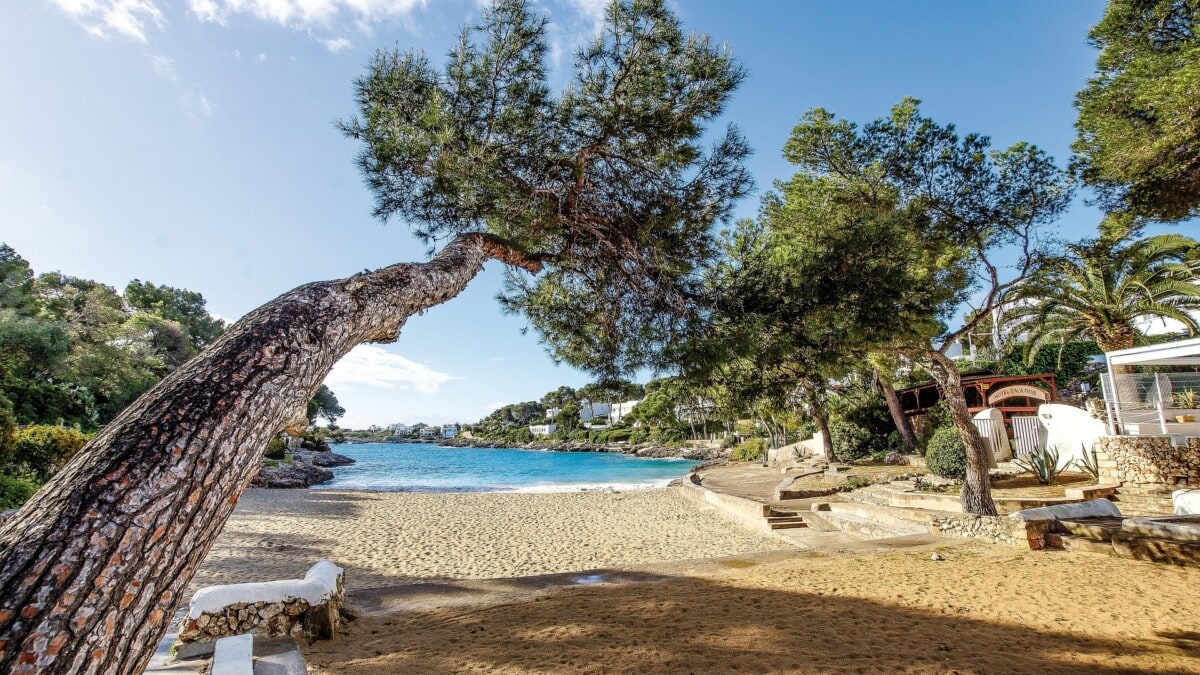
Cala Mondragó sits inside the Parc Natural de Mondragó, a protected stretch of pine woods, dunes and wetland just south of Cala d’Or, and it looks noticeably different from the built-up resorts further up the coast. Because development has been restricted here since the park was created in 1992, the two main coves, Cala Mondragó and S’Amarador, keep their natural backdrop of umbrella pines and low dunes rather than a wall of hotels.
A network of easy walking trails links the two coves and a scattering of old farmhouses through the woods, and a small seasonal beach bar and lifeguard station operate through the main summer months at each cove. There’s no entry fee to the park itself, though the car parks charge a daily fee in high season, and arriving early in the day is genuinely worth it before both coves fill up.
This is one stop where honesty about transport matters. There’s no scheduled TIB bus line running directly into the park, and reports of seasonal shuttle services from nearby towns are inconsistent from year to year, so the realistic options are a hire car, a taxi from Cala d’Or or Santanyí (both around 15 minutes away), or an organised excursion. Anyone without their own transport is better off treating this as a half-day add-on to a Cala d’Or visit rather than counting on public transport alone.
The water in both coves is clear and calm enough for confident swimming and light snorkelling, with a rocky fringe at each end worth a look for small fish rather than the flat open sand of the resorts further north. Car parks at both S’Amarador and Cala Mondragó charge a daily fee in July and August, and a couple of hours at each cove, plus the connecting trail between them, makes for a satisfying half-day out.
For how Cala Mondragó compares with the island’s other natural beaches, and for the fuller picture of which Mallorca coves are worth the detour, see our Mallorca’s Best Beaches guide.
Best for long or awkward journeys. Builds one itinerary out of separate flights.
View flightsBest for short trips. Install the eSIM at home and arrive with working data, no shop queue.
Browse eSIMsBest if you would rather not work out the transport on arrival. Book it now and forget it.
View transfersComparing the East Coast’s Best-Known Beaches and Coves
The stretch between Porto Cristo and Cala Mondragó covers almost the full range of what Mallorca’s east coast can offer, running from a full-service resort beach to a genuinely wild, protected cove. Cala Millor’s beach sits at the developed end, with lifeguards, sun loungers, pedal boats and a promenade of bars right behind the sand, and it’s the easiest of the four to reach without any planning at all. Cala d’Or’s Cala Gran is the busiest of that town’s five coves but still noticeably smaller and calmer than Cala Millor, with boat and kayak rental available from the nearby marina for anyone who fancies reaching the quieter coves further along by water rather than on foot. Porto Cristo’s own harbour beach, by contrast, is tiny and functional, more a place to cool off between cave visits than a destination in itself.
| Beach / Cove | Facilities | How Developed | How to Reach |
|---|---|---|---|
| Cala Millor | Lifeguards, loungers, pedal boats, full promenade | Fully developed resort beach | Walk-in from the resort strip; direct bus (401, A42) |
| Porto Cristo (harbour beach) | Basic; a handful of nearby cafes | Small and functional, minimal infrastructure | Walk-in from the town centre |
| Cala Gran (Cala d’Or) | Loungers and a beach bar in summer | Moderately developed | Walk-in from the marina, or by boat/kayak from the harbour |
| Cala Mondragó / S’Amarador | Seasonal beach bar and lifeguard only | Protected natural park, undeveloped | Need a car or taxi; no direct bus into the park |
As a rough rule, the further south this coast runs, the quieter and less developed the beaches become, with Cala Mondragó and S’Amarador the clearest example. Both sit inside a protected natural park with no scheduled bus service at all, so reaching them means a hire car, a short taxi from Cala d’Or or Santanyí, or an organised excursion. Anyone chasing facilities and convenience should head for Cala Millor, while a quieter swim further south means arranging your own transport.
Artà’s Old Town and Tuesday Craft Market
The old town is a tight knot of narrow, sloping streets climbing up from the main square, largely untouched by the tourism that has shaped the coast just a few kilometres away. It’s the kind of place best explored on foot with no fixed plan, ducking into small bakeries and family-run bars rather than following a checklist of sights.
Just outside town, the Ses Païsses talayotic settlement is a genuinely atmospheric Bronze Age site, its massive cyclopean stone walls and central tower still standing among the olive trees for a modest entry fee. It takes no more than half an hour to walk around, making it an easy add-on before or after a wander through Artà’s old town rather than a destination in its own right.
A weekly craft market takes over the Na Batlessa estate on Tuesday mornings, at the corner of Ciutat and Plaça del Conqueridor, selling locally made goods rather than the mass-produced souvenirs found in the resort towns. The town’s old, disused railway station has also been repurposed as an additional outlet for local artisans, a small but telling sign of how Artà has adapted without losing its identity.
There’s no need to plan around opening hours here in the way you would for a ticketed attraction. Simply arriving on a Tuesday morning, when the market is running and the old town is at its liveliest, is the easiest way to time a visit.
Santuari de Sant Salvador: A Hilltop View Above Artà
Above the old town, the Santuari de Sant Salvador sits on a hilltop reached by a climb of around 180 stone steps, and the effort is repaid with one of the best inland views on this side of Mallorca. The sanctuary itself is a fortified church, shaded by trees along the approach, with a small garden and a chapel containing local religious artwork.
From the top, the view stretches out over Artà’s terracotta rooftops toward the surrounding farmland and, on a clear day, as far as the coast itself. There’s no entry fee to visit, and it makes a natural extension to an hour or two spent wandering the old town below, though the climb itself means it’s not a realistic stop for anyone with limited mobility.
The fortress traces back to the town’s Moorish-era origins, its metre-thick walls and watchtowers built to give Artà refuge from pirate raids on this coast. The neoclassical church inside these walls, added in 1832, holds the sanctuary’s altar and religious artwork, and a small cafeteria near the entrance sells cold drinks after the climb.
The climb begins at the Parish Church of the Transfiguration in Artà’s main square, where the steps are shaded for much of the way by trees and garden walls. The site opens daily from around 8am to 6pm, and 30 to 45 minutes covers the round trip with a few minutes to take in the view.
Artà marks the sanctuary’s own festival in late July and early August, when the town’s patron saint celebrations spill down from the hilltop. Pairing the climb with a wander through the old town below makes a satisfying half-day, and no car or ticket is needed.
Capdepera: A Castle Town Near the Resorts
Capdepera takes its name from the castle that still dominates the town from its hilltop above, and it remains one of the quieter, more genuinely local stops on this stretch of coast despite sitting only a few minutes from the busy resort of Cala Rajada. The town below the castle is small enough to see on foot in an hour or two, with a handful of good local bakeries and family-run restaurants around the main square.
Like Artà, Capdepera benefits from the year-round express TIB line 411e, which runs eight departures a day between Cala Rajada, Capdepera, Artà, Sant Llorenç and Palma without a change of bus, alongside the older line 411 connecting Capdepera to Manacor. Between the two, this is one of the better-connected towns on the whole east coast for anyone relying on public transport rather than a hire car.
The old town’s hub is the tree-lined Plaça de l’Orient, ringed by cafes and shaded benches just below the Church of Sant Bartomeu, a solid 14th-century parish church built in the same golden Mallorcan stone as the streets around it. A short walk away, the small Museu de la Llata preserves the traditional craft of palm-leaf weaving that once supported much of the town.
Because most visitors head straight for Cala Rajada’s beaches or the castle above, Capdepera’s own streets stay noticeably calmer even in August, with cobbled lanes worth wandering without any fixed itinerary. Combined with the castle and the Wednesday market covered below, the old town gives this stop a depth that a quick photo from the castle walls alone would miss.
Climbing Capdepera Castle
The 14th-century castle above the town once enclosed an entire fortified village of around 125 houses within its walls, and while most of those have long gone, the walls, narrow alleys and central chapel remain genuinely atmospheric to walk through. Climbing to the Miguel Nunis tower, the highest point of the complex, gives sweeping views across the coastline and, on a clear day, all the way to Menorca.
Entry costs a token €3 (£3/$4) per person, with the proceeds going toward the castle’s upkeep, making it easily the best-value historic sight on this coast. The castle opens from 10am to 5pm in winter (November to May) and stays open until 8pm or later through the summer months, and the walk up from the town centre takes about ten minutes on cobbled, sloping streets.
Legend credits King James I with using the castle’s hilltop position to trick Menorca into surrendering, lighting so many bonfires along these walls that the neighbouring island’s rulers believed a huge army had already landed. Whether or not the story is entirely true, the Treaty of Capdepera that followed did bring Menorca under Aragonese rule, and the castle’s views toward the island are what keep the tale worth telling on site.
Inside the walls, the small Church of Nostra Senyora de l’Esperança dates from the same period as the fortifications, and four corner towers, known as Sa Boira, Ses Dames, En Banya and Costerans, once anchored the defences at each edge of the enclosure. The old governor’s house still stands near the main gate, a reminder that this was a working village rather than just a fort.
Most visitors comfortably cover the full circuit of walls, tower and chapel in 45 minutes to an hour, longer with a stop at the top to take in the view. Combined with the town below, the castle earns its place as the single best-value historic stop on this whole coast.
Capdepera’s Wednesday Market
Capdepera’s weekly market fills the streets below the castle every Wednesday morning, and it’s a proper working market rather than a tourist stall setup, with fresh produce, local cheeses and household goods alongside the usual clothing and leather stands. It’s worth timing a visit to coincide with market day if your schedule allows, since the town is noticeably livelier and the surrounding cafes busier than on any other day of the week.
Combining the market with a morning climb up to the castle before the day’s heat sets in makes for one of the most satisfying half-days anywhere on this coast, and it costs almost nothing beyond the castle’s modest entry fee. From here, Cala Rajada and its own beaches are an easy onward stop for the afternoon if you have transport, though that town falls outside the scope of this guide.
Capdepera also has its own small beach at Font de sa Cala, a quieter alternative to the crowds at Cala Rajada, with clear, sheltered water and a handful of low-key beach bars rather than a full resort strip. Altogether, the castle, old town and a coffee stop are comfortably done in half a day, leaving an afternoon free for the beach or an onward trip along the coast.
Best for solo travellers and anyone watching the budget. Dorm beds and private rooms in the same search.
Browse hostelsBest if you have ever given up on a claim. AirHelp checks whether the flight qualifies and pursues it for you.
See the benefitsBest for a day with a suitcase and nowhere to put it. Find a storage point near where you already are.
View storageGetting Around the East Coast Without a Car
It’s worth being honest about this upfront: the east coast is one of the more manageable parts of Mallorca for public transport, but it’s not a coast where you can skip a hire car and see everything. The TIB bus network genuinely connects the bigger resort towns to each other and to Palma, with year-round line 401 linking Porto Cristo and Cala Millor via Manacor, express line 411e reaching Artà and Capdepera directly, and line A42 running straight into the airport at Cala Bona. Between these towns and Palma, the bus is a realistic, comfortable option rather than a compromise.
Where the network genuinely breaks down is at the coves and natural spaces between the towns. Cala Mondragó and S’Amarador have no scheduled bus service into the park at all, and Cala d’Or has no direct bus from the airport, so both are honestly easier with a hire car, a taxi for the final stretch, or a pre-booked transfer. Travellers building a bus-only itinerary should plan around the towns the network does serve well, Porto Cristo, Cala Millor, Artà and Capdepera, and treat the coves further south as a day best paired with a taxi or an organised excursion rather than assuming a bus will get you there.

Rupert’s Handy Travel Tips
The east coast rewards a bit of planning, here’s how to make the most of a day or two out this way:
- Book the caves ahead: Coves del Drac sessions sell out in July and August, so reserve a time slot online rather than turning up on the day.
- Pair the two cave systems: Coves del Drac and Coves dels Hams sit close enough together to visit both in one morning.
- Time Artà and Capdepera around market day: Tuesday in Artà, Wednesday in Capdepera, when both towns are at their liveliest.
- Use the express buses: lines 411e and A42 cut out the change at Manacor and reach straight into Palma or the airport.
- Arrive early at Cala Mondragó: both coves in the natural park fill up quickly once the sun is properly out.
Want to meet the reindeer behind our travel tips? Find out more about our resident travel expert in our page Who is Rupert?.




Frequently Asked Questions
Do I need a car to see Mallorca’s east coast?
Not entirely. Porto Cristo, Cala Millor, Cala Bona, Artà and Capdepera are all genuinely reachable by the TIB public bus network, but Cala d’Or has no direct airport bus and Cala Mondragó has no scheduled service into the park at all, so a hire car or organised trip is the more realistic option for those two stops.
How much does it cost to visit the Coves del Drac?
Adult tickets cost around €18.50 (£16/$22) and child tickets around €11.50 (£10/$13) when booked online, with a small surcharge at the ticket office. The price includes the guided walk, the classical concert on Lake Martel and the boat or walking option back across the lake.
What’s the difference between the Coves del Drac and the Coves dels Hams?
Coves del Drac is the larger, more famous system, built around the boat concert on Lake Martel. Coves dels Hams is smaller and quieter, known instead for its hook-shaped stalactites and a light-and-music show, and makes a good add-on rather than a replacement for the Drac caves.
Is Cala Mondragó worth visiting without a car?
It’s possible with a taxi from Cala d’Or or Santanyí, both around 15 minutes away, but there’s no reliable scheduled bus into the natural park itself. Visitors without their own transport are better off booking an organised excursion or treating it as a taxi add-on to a Cala d’Or day out.
What day is the market in Artà and Capdepera?
Artà’s craft market runs on Tuesday mornings at the Na Batlessa estate, while Capdepera’s larger general market takes over the streets below the castle every Wednesday morning. Both are worth timing a visit around if your schedule allows.
How long should I spend on Mallorca’s east coast?
A single full day covers the highlights if you focus on Porto Cristo’s caves plus one resort or old town, but a genuinely relaxed two days lets you add Artà, Capdepera and either Cala d’Or or Cala Mondragó without rushing between stops.
Further Reading
This guide focuses on the east coast’s caves, resort towns and old towns, but it’s worth pairing with a couple of companion guides if you’re building a longer itinerary. Our Mallorca’s Best Beaches guide covers the fuller comparison of Cala Millor, Cala Mondragó and the island’s other standout stretches of sand, since a beach-by-beach breakdown deserves its own dedicated page rather than repeating that ground here.
If cycling is more your pace than the bus timetable, our Cycling in Mallorca guide details the coast’s dedicated cycle paths and quieter inland routes around Artà and Manacor. And for the practicalities of getting between all these towns without your own vehicle, our Getting Around Mallorca Without a Car guide goes into more detail on the TIB network than there’s room for here.
Anyone landing at Palma and heading straight for the coast should also check our Palma Airport Transfers guide before booking anything, and our Mallorca Road Trip guide is the natural next stop for weaving this coast into a longer driving loop of the island. Whatever the plan, a travel insurance app such as those covered in our Travel Insurance Apps guide is worth having in place before you go, particularly if a cave visit, a hire car or an organised excursion is part of the itinerary.