Reviewed by our editorial team Published
Long before most travellers picture Mallorca for anything beyond its beaches, road cyclists have quietly claimed it as one of Europe’s finest testing grounds. Professional teams have used the island as a winter training base for decades, and the annual Challenge Ciclista Mallorca stage race each January draws a strong international field to prove the point.
The appeal is straightforward. Mild winters, quiet mountain roads and a striking variety of terrain sit inside an island barely 100km across.
Inside that compact footprint sits the limestone wall of the Serra de Tramuntana, a mountain range that has produced some of the most photographed climbs in road cycling, alongside long flat stretches of coast that suit a far more relaxed pace. A rider chasing a genuine mountain challenge and a rider who simply wants an easy loop by the sea can both find exactly what they’re looking for within a short drive of the same hotel.
This guide focuses purely on the cycling itself: which climbs and routes are actually worth the effort, how to ride safely alongside local traffic, what to expect from hiring a bike, and which apps genuinely help with planning a route. For a broader look at what else the island offers beyond two wheels, our Mallorca travel guide covers the wider trip.
Whether the plan is a single serious climb or a full week of riding, a little preparation on gearing, timing and road etiquette makes the difference between a good ride and a genuinely great one.
Why Mallorca Draws Cyclists From Across Europe
Climate is the single biggest reason Mallorca built its cycling reputation. The island sees around 300 days of sunshine a year by commonly cited estimates, and its cycling season effectively runs from February through October, well outside the punishing heat of a Mediterranean midsummer.
That’s precisely why the professional peloton descends each January and February, when much of northern Europe is still locked in genuinely miserable riding weather. Training camps and early-season races have made Mallorca a fixture on the pro calendar long before it became a bucket-list destination for amateur riders too.
Road surfaces are the second reason, and they matter more than scenery once you’re actually pedalling. Mallorca’s mountain roads, including the famous switchback climbs, are generally well maintained and wide enough for a bike and a car to pass comfortably, a contrast to the pot-holed lanes cyclists tolerate in many other parts of Europe.
The Balearic Islands’ own tourism board actively promotes cycle tourism as a genuine pillar of the region’s identity, and that institutional backing has helped keep investment in road quality flowing over the years. It also means local infrastructure, from signage to rest stops, has been built with cyclists specifically in mind rather than as an afterthought.
Driver awareness is the less obvious factor, but arguably the most important one for anyone nervous about riding abroad. Cycling tourism is such a significant part of the island’s economy, especially outside peak beach season, that local drivers are used to sharing the road with groups of cyclists in a way that’s rare elsewhere.
That doesn’t remove the need for basic caution, covered in the safety section below, but it does mean a rider arriving from a country with a less cycling-friendly culture will generally find Mallorca’s drivers more patient than expected. Overtaking is usually calm and deliberate rather than rushed, even on the narrower mountain roads.
The Island’s Best-Known Climbs and Routes
Mallorca has no shortage of routes, but a handful have become genuine cycling landmarks, repeated in professional training camps and cycling media year after year. The table below compares four of the best known: three climbs in the Serra de Tramuntana and one flat coastal alternative for anyone building confidence before tackling the mountains.
Distances and elevation figures are one-way from the base of each climb, and gradients are averages rather than the steepest individual sections, since a short ramp of 15% or more can appear briefly on almost any of these roads. Use the table as a planning guide, then read the detail below on whichever routes suit your fitness and timeframe.
| Route | Distance | Elevation Gain / Difficulty | Terrain Type |
|---|---|---|---|
| Sa Calobra / Coll dels Reis | 9.4km one-way | 660m gain, around 7% average, roughly two dozen hairpin bends (hard) | Dead-end mountain road through a limestone gorge |
| Cap de Formentor | 10.7km one-way from Coll de sa Creueta | 284m gain, around 2.6% average (moderate) | Rolling coastal peninsula road with sea cliffs |
| Puig Major | 14.3km one-way from the Sóller side | 833m gain, around 5.8% average, steepens in the final km (hard) | Mountain pass road past two reservoirs |
| Palma to S’Arenal coastal path | Around 15km one-way (30km round trip) | Flat, negligible gain (easy) | Dedicated seafront cycle path, no traffic |
Best if you want daily housekeeping and a front desk. Filter by area first, then by price.
Check availabilityBest for families, or any stay past about four nights. A kitchen and a washing machine start paying for themselves.
Browse rentalsBest for double-checking. Runs the same search across several booking sites so you are not leaving money behind.
Compare pricesSa Calobra and the Coll dels Reis: The Signature Climb
The climb to the Coll dels Reis, better known simply as Sa Calobra, is the single most famous stretch of road on the island. It runs for 9.4km with 660m of climbing at a remarkably consistent 7% average gradient, threading through a series of dramatic limestone gorges carved into the Tramuntana.
Roughly two dozen hairpin bends stack up along the route, including the Nus de sa Corbata, a bridge that loops back 270 degrees on itself like a tied knot. It’s one of the most photographed pieces of road in European cycling.
The road was built in the 1930s purely to connect the remote cove of Sa Calobra to the rest of the island, and it remains a dead end today. That means riders climb it, descend to the small port at the bottom, then have to turn around and climb straight back out again, since there’s no through route.
Because the road is narrow in places and shared with tourist coaches heading down to the cove, timing matters here more than on almost any other Mallorcan climb. Riding early in the morning or later in the afternoon avoids the worst of the coach traffic that squeezes through the tightest bends in the middle of the day.
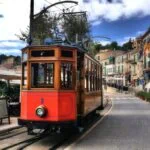
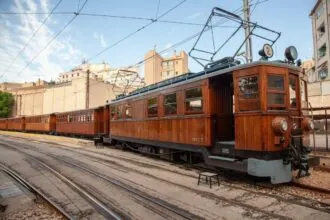
This climb sits within the wider Serra de Tramuntana, and riders based nearby in Sóller can also reach the area on the historic Sóller train if they’d rather leave the bike at the hotel for a day. Combining a rest day like that with a big climbing day either side is a genuinely popular way to structure a week’s trip.
Cap de Formentor: The Gentler Coastal Route
At the opposite end of the island’s road network, the route out to the Cap de Formentor lighthouse offers a gentler and arguably even more scenic climb. The final stretch from the Coll de sa Creueta covers 10.7km and just 284m of elevation gain, an average gradient of around 2.6%, making it approachable for a confident intermediate rider rather than a specialist climber.
The road winds along a narrow peninsula with the Mediterranean dropping away on both sides, passing the Mirador des Colomer viewpoint on the way to the lighthouse itself, where a small café makes a natural place to stop. A full loop out from Alcúdia and back covers around 68.5km with roughly 1,085m of total climbing, which makes it a realistic half-day ride rather than a full expedition.
The trade-off is traffic. The final few kilometres to the lighthouse can get busy with hire cars, tour buses and other cyclists from mid-morning onward, so an early start pays off here just as it does at Sa Calobra.
The route starts near Alcúdia and the north coast, making it easy to combine a morning ride with a wider look at that part of the island later in the day. Many riders base themselves in the area specifically to be close to this climb.
Puig Major: Mallorca’s Highest Ascent
Puig Major is Mallorca’s highest peak at 1,436m, but cyclists don’t actually reach the summit. A military radar installation occupies the top, and the access road beyond a certain point is restricted to military traffic only, so the climb effectively finishes just below it, near the Túnel de Monnàber.
From the Sóller side, that public stretch still runs 14.3km with 833m of elevation gain, averaging close to 5.8%, with the gradient noticeably steepening in the final kilometre. The road itself is wide and well surfaced for most of its length, running past the Cúber and Gorg Blau reservoirs before the final push.
It’s popular enough that cyclists routinely share the road with cars and motorcycles, so it never feels quite as remote as the scenery suggests. Puig Major sits directly on the route between Sóller and Sa Calobra, so many riders combine the two into a single long day.
It’s also one of the better vantage points for the wider Tramuntana range, which our Serra de Tramuntana guide explores in more depth on foot, useful for anyone splitting a trip between cycling days and slower days off the bike.

A Flatter Option: Palma to S’Arenal
Not every ride in Mallorca needs to involve a mountain pass. The coastal path running from central Palma out to S’Arenal and the Playa de Palma beach strip is entirely flat and built on dedicated cycle infrastructure separated from road traffic for virtually its whole length.
The out-and-back covers around 30km in total, roughly 15km each way, making it a comfortable half-day ride even for someone who hasn’t ridden much before this trip. It’s a genuinely good option for building confidence on a hire bike before attempting one of the mountain climbs above, or simply for a lower-key day mixed into a longer stay.
The route starts close to the heart of Palma, making it an easy add-on to a day already spent in the city. It finishes among the beach clubs and promenade near some of the island’s busiest beaches, where a swim is a fairly natural way to round off the ride.
Comparing Mallorca’s Signature Routes by Rider Type
With four very different routes already covered in detail, it helps to see them side by side. Matching the route to the rider matters more than raw fitness alone, since a strong climber on the wrong road can end up bored, and a nervous beginner on the wrong one can end up miserable.
The table below groups the island’s best-known rides by who they actually suit, from serious road cyclists training through the winter to casual and family riders who just want a scenic morning out. Distance and difficulty repeat the detail from earlier in this guide, but the final column is the one worth reading first.
| Route | Distance | Difficulty & Terrain | Best Suited To |
|---|---|---|---|
| Sa Calobra / Coll dels Reis | 9.4km one-way (18.8km round trip) | Hard: 7% average gradient, around two dozen hairpins, dead-end mountain road | Serious road cyclists building climbing fitness |
| Puig Major | 14.3km one-way from Sóller | Hard: 5.8% average, steepens sharply in the final kilometre | Strong climbers after the island’s highest paved ascent |
| Cap de Formentor | 10.7km final stretch (68.5km full loop from Alcúdia) | Moderate: 2.6% average, busier with tour traffic by late morning | Confident intermediate riders prioritising scenery over suffering |
| Palma to S’Arenal coastal path | Around 15km one-way (30km round trip) | Easy: flat, traffic-free dedicated cycle path | Casual and family cyclists, and anyone building confidence on a hire bike |
The Tramuntana’s gravel and mule-track loops mentioned above sit outside this table entirely, since they demand a completely different set of skills and a gravel-specific bike rather than a road setup, and suit experienced off-road riders more than newcomers to any of the routes above.
Mountain Biking and Gravel Riding Beyond the Road
Everything covered so far assumes riding on tarmac, but Mallorca also has a genuine mountain biking and gravel scene that most visiting road cyclists never see. The Serra de Tramuntana alone hides more than 30 mapped gravel and off-road routes, many following old mule tracks and dry-stone terracing that predate the modern roads by centuries.
One of the most highly rated is the Claret Pass to Es Grau Pass loop from Esporles, an 80km round trip with close to 1,970m of climbing across rough tracks and forest. A gentler alternative links the Coll de Sóller and Deià on a 72km loop with around 1,630m of gain, still demanding underfoot but more forgiving overall.
The terrain is the real difference from the road climbs described above. Riders swap smooth tarmac for loose stone and farm tracks through vineyards and olive groves, so a gravel or hardtail mountain bike with wider tyres is genuinely necessary rather than a nice-to-have.
Several rental shops around Sóller and the wider Tramuntana now stock gravel and mountain bikes alongside their usual road fleets, generally at similar day rates to the road bike hire covered later in this guide. Booking ahead still helps in peak months, since off-road bikes make up a smaller share of most shops’ stock than road bikes do.
Anyone tempted by this quieter side of the island should read our guide to the Serra de Tramuntana, since the same range that hosts these gravel routes rewards exploring on foot or by car between rides too. It’s a genuinely good way to add variety to a longer cycling trip without ever leaving the mountains.
Best for finding routes the airlines do not sell as a single ticket. Combines carriers to bring the fare down.
Search flightsBest if you want maps and messaging working the moment you switch your phone on.
See eSIM plansBest after a long flight or a late landing. Price agreed before you travel, and no taxi queue.
Check transfersRoad Safety and Riding Etiquette
Spanish law requires drivers to leave a minimum of 1.5 metres when overtaking a cyclist, a rule that applies across the whole country and gives riders real legal backing on Mallorca’s narrower mountain roads. Helmets are compulsory for adults riding outside built-up areas, which covers virtually every mountain climb described above, and are worth wearing everywhere else too.
Group riding etiquette matters just as much as the legal rules. Spanish traffic law generally allows cyclists to ride two abreast, but on a narrow, blind-cornered climb like Sa Calobra it’s far safer and more considerate to single out whenever a vehicle approaches from either direction.
A bright jersey or a small rear light, even in daylight, makes a real difference on the winding descents where sightlines are short. Visibility matters more than it feels like it should, since a rider tucked into the shadow of a rock wall can be genuinely hard to spot.
The other safety factor worth planning around is simple fitness for the terrain. Puig Major and Sa Calobra both involve long, sustained climbs with limited shade and few places to refill water bottles, so carrying more fluid than feels necessary at the bottom is a sensible habit rather than overcaution.
Given the genuine risk of a fall on a fast, unfamiliar descent, or a stolen bike left outside a café, it’s worth checking that a travel insurance policy actually covers cycling as an activity before setting off. Our guide to travel insurance apps is a useful starting point for comparing cover that includes cycling-related claims.
Finally, respect road closures where they exist. The restricted military access road near the summit of Puig Major is not open to the public regardless of how quiet it looks, and riding past a barrier there risks a great deal more than an awkward conversation.
Hiring a Bike in Mallorca
Hiring rather than bringing your own bike is the norm for most visitors, and Mallorca has a mature rental market built specifically around road cyclists. A standard road bike hire typically runs from roughly €25-50 a day (about £22-43 / $29-59), usually including a helmet, a basic repair kit and a lock.
A like-for-like e-bike costs somewhat more, around €30-55 a day (about £26-47 / $35-64), reflecting the added cost of the battery and motor. Weekly rentals are usually the better value option for a genuine cycling trip, often working out 10-20% cheaper per day than booking single days.
Most shops ask for photo ID and a card for a deposit against the bike, which is standard practice rather than a red flag, and many will deliver a bike straight to a hotel. It’s worth checking that a helmet, lock and repair kit are actually included before leaving the shop, since standards vary between operators.
Choosing between a road bike and an e-bike comes down to fitness and ambition rather than budget alone. A road bike suits anyone planning to tackle Sa Calobra or Puig Major properly, while an e-bike is a genuinely sensible choice for a less experienced rider who still wants to see the mountain roads without needing to be race fit.
Booking ahead matters more than it might seem, particularly during the busiest cycling months of February to May, when good-quality road bikes can sell out at popular shops well before a trip. Anyone travelling with their own bike instead should check our Mallorca ferry routes guide, since arriving by sea from mainland Spain is often the simplest way to bring a bike over without dealing with airline bike-carriage rules.
Bringing Your Own Bike: Flights and Ferries
Hiring a bike locally is simpler for most trips, but some riders would rather bring their own bike from home, especially ahead of a specific event or a long touring holiday. The logistics differ a lot depending on whether you fly or take the ferry, and the costs are worth checking before you book.
The main budget airlines serving Mallorca all treat a bike as special sports equipment rather than standard luggage. Ryanair charges from £52 (€60/$71) per bike per flight when added at initial booking, rising to £65 (€75/$89) if added later, with a 30kg weight limit and a requirement that the bike travels in a proper bike box or bag.
easyJet charges £45 (€52/$62) online or £55 (€64/$76) at the airport, up to 32kg, but does not accept e-bikes at all as checked baggage. Vueling sits close to easyJet’s price at around £47 (€55/$65) each way booked in advance, also up to 32kg, and asks that tyres be deflated and pedals removed before packing.
Arriving by ferry from mainland Spain is often the more relaxed option for a bike. Major operators including Baleària, Trasmediterranea and GNV generally carry bikes free of charge, though you still need to declare the bike when booking rather than turning up with it unannounced.
A handful of smaller operators, among them Corsica Ferries, Fred Olsen Express and Naviera Armas, charge a modest fee of roughly £6-14 (€7-16/$8-19) each way instead. Either way, foot passengers wheel the bike up the same ramp used by vehicles, where crew direct you to a spot to secure it for the crossing.
Our guide to Mallorca’s ferry routes covers the sailing options in more detail, including which mainland ports connect to the island. For a straightforward one-way trip, the ferry is usually the cheaper and less stressful way to travel with a bike than any of the airlines above.

Useful Apps and Tools for Planning a Ride
Komoot is the most widely used route-planning app among cyclists visiting Mallorca, and its regional route collections for the island are detailed enough to plan an entire trip’s worth of rides without a paper map. Its turn-by-turn voice navigation is particularly useful on unfamiliar mountain descents, where missing a junction at speed is a genuine hazard.
Strava remains the standard for tracking rides and comparing effort against other cyclists, and its heatmap feature, which shows where the most recorded rides cluster, is a genuinely useful way to confirm that a route like Sa Calobra or Cap de Formentor is as popular in practice as it is in write-ups like this one. Segment times on the well-known climbs also give a useful sense of how a personal effort compares to the wider cycling community.
For anyone who prefers a more customisable planning tool, RideWithGPS offers similar route-building with a focus on exportable GPX files for a bike computer. Downloading the relevant map area for offline use before setting off is worth doing either way, since mobile signal drops out in parts of the Tramuntana’s deeper gorges.
The Best Time of Year to Cycle in Mallorca
The cycling season on Mallorca runs broadly from February through October, with the shoulder months either side of summer offering the most comfortable riding conditions. February to May is genuinely the busiest period, partly because it overlaps with the professional teams’ own training camps and the Challenge Ciclista Mallorca stage race held in late January and early February.
Summer brings reliably dry weather, but daytime temperatures on exposed climbs like Sa Calobra regularly climb into the low 30s Celsius, making an early start close to essential. September and October offer a genuinely underrated alternative, with warm but more manageable temperatures and lighter crowds on the most famous roads.
Winter, from November through January, is the quietest and coolest period. While it’s rarely cold enough to stop riding outright, shorter daylight hours and a higher chance of rain in the mountains make it the least reliable window for a trip built specifically around cycling.
Cycling-Friendly Hotels and Multi-Day Touring Bases
Where you base yourself matters almost as much as which climbs you plan to ride. Port de Pollença and Port d’Alcúdia, which sit in the same bay beneath the Tramuntana, are the island’s best-known cycling bases and host several professional training camps each spring.
Sóller is the natural choice for anyone focused on Sa Calobra and Puig Major, sitting close to both climbs on the mountain side of the island. Campanet offers a quieter, less touristy alternative with similar access to the same landmark routes for riders who’d rather stay somewhere smaller.
A genuine cycling hotel earns that label through specifics rather than marketing, and the good ones share a similar set of features. Expect a secure bike garage with hooks and locks, a wash-and-maintenance area with pumps and basic tools, and often an on-site mechanic during peak season.
Laundry for sweat-soaked kit and a buffet built with athletes in mind are the other giveaways of a hotel that genuinely caters to cyclists rather than just tolerating them. Several properties around Alcúdia and the north coast tick most of these boxes and are worth checking specifically for cycling packages.
For a longer trip, some operators offer self-guided, point-to-point touring with luggage moved between hotels each day, so riders only need to carry a small saddle bag rather than full panniers. It’s a genuinely practical way to string together several of the routes in this guide without doubling back to the same base each night.
Booking a cycling-focused hotel well ahead matters just as much as booking a hire bike, particularly for February to May, when the best rooms at the most popular addresses fill up alongside the bikes themselves.
Best for short city stops where being central matters more than the room. Dorms and private rooms both listed.
See hostelsBest if you have ever given up on a claim. AirHelp checks whether the flight qualifies and pursues it for you.
See the benefitsBest for the gap between checking out and your train. Drop bags at a shop or hotel nearby and carry on.
Store your bagsComparing Mallorca’s Best Cycling Bases
Choosing where to stay is as much a cycling decision as choosing which climb to ride. Port de Pollença and Port d’Alcúdia, Sóller and Campanet are the four names that come up repeatedly among riders planning a Mallorca trip, and each suits a slightly different priority.
Port de Pollença and Port d’Alcúdia sit closest to Cap de Formentor and host several professional training camps each spring, making them the liveliest and most established cycling bases on the island. Sóller sits directly beneath Sa Calobra and Puig Major, which makes it the natural choice for anyone whose trip is really about those two climbs, while Campanet offers the same proximity with a quieter, less touristy stay.
| Base | Key Climbs Nearby | Best Suited To |
|---|---|---|
| Port de Pollença / Port d’Alcúdia | Cap de Formentor | Riders wanting an established cycling hub with training-camp infrastructure |
| Sóller | Sa Calobra, Puig Major | Riders whose trip is built around the island’s two toughest climbs |
| Campanet | Sa Calobra, Puig Major (short drive) | Riders wanting the same climbs with a smaller, quieter base |
None of these towns is the wrong choice, and the right base simply depends on which routes matter most to a given trip. A rider splitting time between Sa Calobra and Formentor might reasonably base in Alcúdia and accept a longer drive to the gorge on the day it matters.

Rupert’s Handy Travel Tips
Cycling Mallorca’s climbs is genuinely one of the best things you can do here, but a little planning turns a hard ride into a properly enjoyable one. Here are a few tips from experience:
- Start early on Sa Calobra and Formentor: Both roads get busy with tour buses and hire cars from mid-morning, so an early start means quieter roads and cooler temperatures.
- Carry more water than feels necessary: There are few refill points on the longer climbs, so pack extra bottles before you set off.
- Check your hire bike before you ride away: Test the brakes and gears in the car park, not on your first descent.
- Pack a lightweight rain layer even in summer: Weather in the Tramuntana can turn quickly at altitude, even when Palma is dry and sunny.
- Book popular hire bikes well ahead in spring: February to May is peak season for cycling visitors, and the best road bikes go first.
Want to meet the reindeer behind our travel tips? Find out more in our page Who is Rupert?.




Frequently Asked Questions
Do I need to be an experienced cyclist to ride in Mallorca?
No. The island suits every level, from the flat, traffic-free Palma to S’Arenal coastal path for beginners through to demanding mountain climbs like Sa Calobra for experienced riders, so it’s worth matching the route to your own fitness rather than assuming a trip has to involve the famous climbs.
How difficult is the Sa Calobra climb?
It’s a genuinely tough but manageable climb for a reasonably fit cyclist, covering 9.4km and 660m of elevation gain at a fairly consistent 7% average gradient, with around two dozen hairpin bends. Because it’s a dead-end road, you also have to climb back out the way you came.
Can I hire an e-bike instead of a road bike?
Yes, e-bikes are widely available across the island and typically cost around €30-55 a day (about £26-47 / $35-64), a little more than a standard road bike. They’re a sensible option for a less experienced rider who still wants to tackle the mountain routes.
Is it safe to cycle on Mallorca’s roads?
Generally, yes. Spanish law requires drivers to leave a minimum 1.5-metre gap when overtaking, and local drivers are used to sharing narrow mountain roads with cyclists, though basic precautions like bright clothing and single-file riding on blind corners still matter.
When is the best time of year to cycle in Mallorca?
February to May is the busiest and most popular window, coinciding with professional training camps, while September and October offer similarly good conditions with fewer crowds. The core season runs from February through October overall.
Can I reach the summit of Puig Major by bike?
No. The true summit is occupied by a restricted military installation, and the public road stops just below it near the Túnel de Monnàber, which is still where most of the climbing and the views are found.
Further Reading
For a broader look at what else the island offers alongside its cycling routes, our Mallorca travel guide covers the practical basics of planning a wider trip, and our guide to touring Mallorca by car is a useful comparison for anyone deciding whether to explore some stretches on four wheels rather than two.
Many of the climbs described above sit within the Serra de Tramuntana, a mountain range just as well known among walkers as it is among cyclists. Riders based around Sóller can also read about the historic Sóller train as a scenic alternative for a rest day away from the saddle.
If a cycling trip is only part of a longer stay, our guides to day trips from Palma and Mallorca’s ferry routes both cover useful ground for building out the rest of the itinerary, whether that means adding a car-free day out or working out how to bring a bike over from the mainland.