Reviewed by our editorial team Updated
Why Visit Bratislava?
Things to do in and around Bratislava often surprise first-time visitors because Slovakia’s capital is frequently overshadowed by nearby giants such as Vienna, Budapest, and Prague. Yet those who make the effort to visit are often rewarded with one of Central Europe’s most enjoyable and underrated city breaks.
What makes Bratislava particularly appealing is its balance. It has the history and architecture expected of a European capital, but without the overwhelming crowds found elsewhere. Visitors can wander through medieval streets, climb to a hilltop castle, enjoy riverside walks along the Danube, and still feel as though they are discovering a destination that remains relatively authentic.
The city’s location is another major advantage. Positioned at the meeting point of Slovakia, Austria, and Hungary, Bratislava sits closer to Vienna than many people realise and offers easy access to a remarkable range of attractions beyond the city itself. Within a short distance, travellers can explore castle ruins, wine-producing villages, forest parks, mountain scenery, lakes, and neighbouring historic cities. Few European capitals offer such a variety of experiences within such a compact geographical area.
Bratislava is also remarkably easy to explore. The historic centre is compact, many of the main attractions are within walking distance of one another, and public transport is straightforward. This means visitors spend less time navigating and more time actually enjoying the destination. Whether you are planning a weekend city break, an Interrail adventure, a Danube cruise stop, or a wider tour of Central Europe, Bratislava rewards visitors with far more attractions than its modest size initially suggests.
Perhaps the city’s greatest strength is that it combines several different travel experiences in one destination. It works as a historic city, a food destination, a wine destination, a cultural break, a gateway to nature, and a base for day trips. As a result, the list of things to do in and around Bratislava is considerably longer than many travellers expect before they arrive.
Bratislava at a Glance
| Feature | Details |
|---|---|
| Country | Slovakia |
| River | Danube |
| Airport | Bratislava Airport (BTS) |
| Currency | Euro (€) |
| Population | Approx. 480,000 |
| Best For | City breaks, castles, food, wine, day trips |
| Recommended Stay | 2–3 days |
| Walking Friendly | Excellent |
| Nearest Capital City | Vienna |
| Best Time to Visit | April–June and September–October |
Best for two or three nights. The widest choice of rooms, with filters for free cancellation and included breakfast.
View staysBest for longer stays. Whole apartments and houses, so you are not eating out three times a day.
View rentalsBest if you have already picked a hotel. Checks the big booking sites for the same room and shows who is cheapest.
Check dealsExplore Bratislava’s Old Town
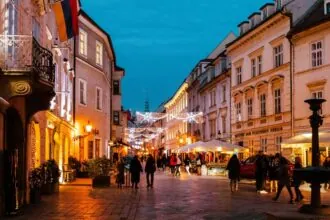
Among all the things to do in and around Bratislava, exploring the Old Town remains the essential experience and the place where most visitors begin their journey. Although considerably smaller than the historic centres of Prague or Budapest, Bratislava’s Old Town compensates with charm, atmosphere, and accessibility. Almost every major city-centre attraction can be reached on foot, allowing visitors to explore at a relaxed pace.
The heart of the district is Main Square (Hlavné námestie), a historic gathering place surrounded by colourful buildings, cafés, restaurants, and elegant architecture. From here, a network of narrow streets leads visitors through some of the city’s oldest and most interesting areas. Medieval lanes open unexpectedly into hidden courtyards, small squares, and viewpoints, creating a district that rewards wandering as much as deliberate sightseeing.
The Old Town is also where many of Bratislava’s best-known landmarks are located. Visitors will encounter Michael’s Gate, the city’s last surviving medieval gate, the historic Old Town Hall, numerous churches, and the famous bronze statues that have become symbols of modern Bratislava. The most photographed is undoubtedly Čumil, the worker emerging from a manhole cover, but several others are scattered throughout the historic centre.
Food and drink form an equally important part of the experience. The Old Town contains some of Bratislava’s best restaurants, traditional Slovak pubs, wine bars, and coffee houses. This makes it easy to combine sightseeing with regular breaks, particularly during the warmer months when outdoor terraces fill the squares.
What makes the district particularly enjoyable is its manageable size. Visitors can comfortably explore the major highlights in a single day while still discovering quieter streets and corners that many tourists overlook. The result is a historic centre that feels welcoming rather than overwhelming and serves as the perfect introduction to Slovakia’s capital.
Visit Bratislava Castle
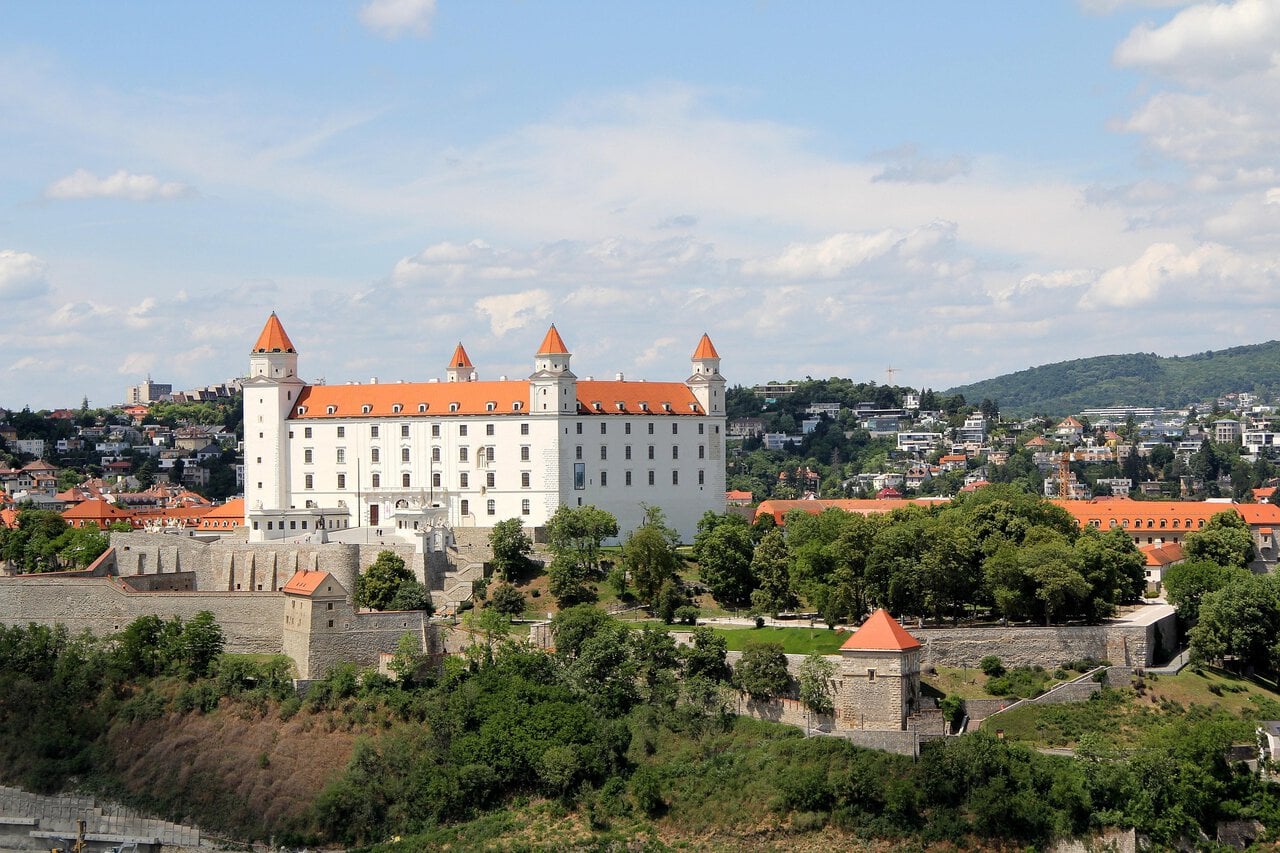
Standing high above the Danube River, Bratislava Castle is the city’s defining landmark and one of the most important historic sites in Slovakia. Its commanding position has made it a strategic stronghold for centuries, and today it provides both a fascinating historical attraction and some of the finest views in Central Europe.
The castle hill has been occupied since prehistoric times, with Celtic, Roman, and medieval settlements all recognising the value of this strategic location. Over the centuries the castle evolved into a royal residence and administrative centre, reflecting Bratislava’s importance within the former Kingdom of Hungary. Although the building suffered significant damage during its history, extensive restoration has returned it to its present appearance.
Approaching the castle is an experience in itself. Visitors can either walk uphill through the historic streets below or take advantage of public transport before exploring the grounds. As the castle comes into view, its distinctive rectangular design and four corner towers create one of the most recognisable silhouettes in Central Europe.
Inside, parts of the complex house exhibits belonging to the Slovak National Museum, covering aspects of Slovak history, archaeology, and culture. However, many visitors are drawn primarily by the views. The elevated position offers sweeping panoramas across Bratislava, the Danube, and neighbouring countries. On clear days it is possible to appreciate just how uniquely positioned the city is at the crossroads of Central Europe.
The castle grounds are also an excellent place to slow down and enjoy the city. Landscaped gardens, open spaces, and riverside viewpoints provide numerous opportunities for photography. Whether visiting during the bright days of summer or beneath the festive lights of winter, Bratislava Castle remains one of the most rewarding attractions in the country and a highlight of any visit to the Slovak capital.
Climb the UFO Observation Deck
Among all the modern attractions included in the list of things to do in and around Bratislava, the UFO Observation Deck is arguably the most distinctive. Perched high above the Danube River on top of the striking Most SNP Bridge, the structure resembles a giant flying saucer suspended above the city and has become one of Bratislava’s most recognisable landmarks.
Completed in 1972, the bridge was a remarkable engineering achievement and remains one of the longest cable-stayed bridges in the world with a single pylon. While the bridge itself is impressive, most visitors come for the panoramic views available from the observation deck, located approximately 95 metres above the river.
A high-speed lift transports visitors to the top in just a few seconds, where floor-to-ceiling windows provide spectacular views across Bratislava’s Old Town, Bratislava Castle, the Danube, and the surrounding countryside. On clear days it is even possible to see parts of Austria, Hungary, and the distant hills beyond the city.
The observation platform is particularly popular at sunset when the golden light illuminates the rooftops of the Old Town and reflects across the Danube. Photographers will find some of the best city views available anywhere in Bratislava, while first-time visitors gain an excellent overview of how the city is laid out.
At the top, visitors will also find the famous UFO Restaurant, which offers dining with one of the most dramatic views in Central Europe. Even if you do not choose to eat there, the observation deck remains one of the best places to appreciate the unique geography of Bratislava and understand how the city sits at the crossroads of several countries.
See More in Less Time with a Bratislava Oldtimer Sightseeing Tour
One of the most enjoyable ways to get your bearings in Bratislava is aboard the city’s famous Oldtimer sightseeing vehicles. Styled to resemble historic vintage buses, these distinctive vehicles combine guided sightseeing, panoramic viewpoints, and access to attractions spread beyond the compact Old Town, making them particularly useful for first-time visitors.
While many of Bratislava’s central attractions can be explored on foot, some of the city’s best viewpoints and landmarks sit outside the historic core. The Oldtimer tour solves this problem by linking the Old Town, Bratislava Castle, Slavín Memorial, the Presidential Palace, and numerous other attractions within a single journey.
The experience begins in the historic centre before travelling through some of Bratislava’s most important districts. Along the route, passengers pass landmarks including the Slovak National Theatre, the Reduta Concert Hall, the unusual inverted-pyramid headquarters of Slovak Radio, sections of the historic Town Walls, and the elegant Grassalkovich Palace, which serves as the residence of the Slovak President.
One of the biggest highlights is the journey to Bratislava Castle. Depending on the tour selected, passengers can stop at the castle to explore the grounds and enjoy panoramic views across the Danube River, Austria, and the wider Bratislava region before continuing the sightseeing circuit.
The extended panoramic version also visits Slavín Memorial, widely regarded as one of the finest viewpoints in the city. From here, visitors enjoy sweeping views over the rooftops of Bratislava, the Danube Valley, and the surrounding countryside. For many travellers, this becomes one of the highlights of their visit.
The onboard audio commentary is available in a wide range of languages, making the tour accessible to international visitors. It also provides useful context about the buildings, monuments, and historic sites passed along the route, helping first-time visitors understand the city’s history before exploring individual attractions in greater detail.
For travellers with limited time, families with children, or visitors who prefer a structured introduction to the city, the Bratislava Oldtimer Sightseeing Tour offers one of the easiest and most enjoyable ways to discover the Slovak capital.
| Tour Feature | Details |
|---|---|
| Duration | 60–155 minutes depending on tour |
| Starting Point | Námestie Eugena Suchoňa, Bratislava |
| Includes Castle Stop | Selected tours |
| Audio Guide | Available in multiple languages |
| Best For | First-time visitors |
| Main Highlights | Old Town, Bratislava Castle, Slavín, Presidential Palace, Danube views |
| Walking Required | Minimal |
Step Through Michael’s Gate
Of all the historic attractions in Bratislava, few are as important as Michael’s Gate (Michalská brána). Dating back to the 14th century, it is the only surviving city gate from the medieval fortifications that once protected Bratislava and serves as one of the most iconic symbols of the Slovak capital.
The impressive tower rises above the surrounding streets and acts as a natural entrance into the Old Town. For centuries, merchants, travellers, nobles, and royalty passed through this gateway when entering the city. Today, visitors continue the tradition as they walk beneath the tower and into the historic heart of Bratislava.
The structure seen today reflects several architectural styles accumulated over the centuries. While its origins are medieval, later renovations introduced the elegant Baroque appearance that visitors see today. The distinctive green copper roof has become one of the most photographed features of Bratislava’s skyline.
Inside the tower, visitors can explore museum exhibits dedicated to the city’s historic fortifications and defensive systems. Climbing to the top rewards travellers with excellent views over the surrounding rooftops, church towers, and narrow streets of the Old Town. The perspective is particularly useful for understanding the compact layout of the historic centre.
Immediately outside the gate, visitors will notice the famous Kilometre Zero plaque, which displays the distances from Bratislava to major world cities. It is a small detail that many travellers overlook but one that reinforces Bratislava’s historical role as an important crossroads within Central Europe.
See St Martin’s Cathedral
Standing proudly beneath the walls of Bratislava Castle, St Martin’s Cathedral is one of the most historically significant buildings in Slovakia and an essential stop for anyone interested in the city’s past. While its exterior may appear relatively understated compared with some of Europe’s grander cathedrals, its historical importance is extraordinary.
Between 1563 and 1830, the cathedral served as the coronation church of the Kingdom of Hungary. During this period, 11 kings and queens and numerous royal consorts were crowned within its walls. This includes famous rulers such as Maria Theresa, one of the most influential monarchs in European history. To commemorate this role, a gilded replica of the Hungarian royal crown sits atop the cathedral’s tower.
The interior reflects centuries of religious and political history. Visitors can admire Gothic architecture, historic chapels, impressive stained glass, and numerous monuments dedicated to nobles, bishops, and members of the royal court. The atmosphere remains peaceful despite the cathedral’s central location and provides a welcome contrast to the busier streets outside.
Its position between Bratislava Castle and the Old Town makes it easy to include within any sightseeing itinerary. The cathedral also forms part of many walking tours exploring Bratislava’s royal and medieval heritage.
For travellers interested in history, this is far more than simply another church. It represents a period when Bratislava was one of the most important cities in the Kingdom of Hungary and played a central role in shaping the history of the region.
Best for finding routes the airlines do not sell as a single ticket. Combines carriers to bring the fare down.
Search flightsBest for anyone whose home plan charges by the megabyte abroad. Pay a fixed price up front.
Check eSIMsBest when public transport has stopped, or when you are travelling with children and bags.
Book a transferVisit the Blue Church
Few buildings capture visitors’ attention quite like the famous Blue Church, officially known as the Church of St Elizabeth. Located a short walk from the Old Town, this extraordinary building is one of Bratislava’s most photographed landmarks and one of the most unusual churches in Europe.
Completed in 1913, the church is a masterpiece of Art Nouveau architecture. Almost every surface is finished in shades of pale blue, from the walls and roof tiles to the decorative details and interior furnishings. The result is a building that appears almost dreamlike, standing out dramatically from the more traditional architecture found elsewhere in the city.
Designed by renowned Hungarian architect Ödön Lechner, the church incorporates flowing lines, decorative mosaics, ornate carvings, and colourful ceramic elements. The architecture reflects the artistic optimism of the early twentieth century and remains one of the finest examples of Art Nouveau design in Central Europe.
The interior continues the blue theme and feels unlike almost any other religious building. Soft colours, elegant decoration, and natural light create a surprisingly tranquil atmosphere that encourages visitors to slow down and appreciate the craftsmanship involved.
The church is particularly popular with photographers and social media users thanks to its unique appearance. However, it is far more than simply a photo opportunity. The building represents an important chapter in the architectural history of Bratislava and offers a fascinating contrast to the medieval and Gothic landmarks found elsewhere in the city.
For many visitors, the Blue Church becomes one of the most memorable attractions of their entire trip and demonstrates that the list of things to do in and around Bratislava extends well beyond castles and historic squares.
Discover Slavín Memorial
Perched high on a hill overlooking the city, the Slavín Memorial is one of the most important historical sites in Bratislava and offers some of the finest panoramic views in the entire capital. While many visitors focus on Bratislava Castle or the Old Town, those willing to make the short journey to Slavín are rewarded with a combination of history, tranquillity, and spectacular scenery.
The memorial commemorates the thousands of Soviet soldiers who lost their lives during the liberation of Bratislava in 1945 towards the end of the Second World War. The site serves both as a military cemetery and as a national monument, making it one of the most significant memorial locations in Slovakia. At its centre stands a towering monument crowned by a statue of a Soviet soldier, visible from many parts of the city.
Beyond its historical importance, Slavín is also one of the best viewpoints in Bratislava. From the elevated terraces, visitors can enjoy sweeping views across the Old Town, Bratislava Castle, the Danube River, and the modern districts that have developed around the historic centre. On clear days, the panorama stretches far into Austria and the surrounding countryside.
The atmosphere here differs dramatically from the busy streets below. The landscaped grounds, tree-lined pathways, and peaceful setting create a reflective environment that encourages visitors to spend time appreciating both the history and the views. Unlike some of the city’s busier attractions, Slavín rarely feels crowded, making it an excellent place to escape the tourist trail for an hour or two.
For travellers interested in history, photography, or simply finding the best viewpoints in the city, Slavín Memorial deserves a place near the top of any Bratislava itinerary.
Take a Danube River Cruise
The mighty Danube River has shaped the development of Bratislava for centuries, and one of the most enjoyable things to do in and around Bratislava is to experience the city from the water. A Danube River cruise provides a completely different perspective on the Slovak capital, revealing landmarks and views that are difficult to appreciate from street level.
Short sightseeing cruises operate throughout much of the year and offer excellent views of Bratislava Castle, the distinctive UFO Observation Deck, the city’s waterfront developments, and the surrounding hills. Seeing the castle rise above the riverbanks from the deck of a boat provides some of the best photo opportunities available in the city.
One of the most popular options is the cruise between Bratislava and Vienna. These services allow travellers to move between two European capitals via the Danube while enjoying scenic views along the way. The journey itself becomes part of the attraction, passing riverside villages, castles, and stretches of countryside that many visitors never see when travelling by train or road.
Evening cruises are particularly appealing during the warmer months. As darkness falls, the illuminated Bratislava Castle, St Martin’s Cathedral, and city skyline create a memorable backdrop reflected in the waters of the Danube. Many operators also offer dining cruises, allowing visitors to combine sightseeing with food and drink.
For first-time visitors, a river cruise provides an excellent introduction to the city’s geography and highlights how closely Bratislava’s history has been linked to one of Europe’s most important waterways.
Explore Bratislava’s Food and Drink Scene
Among the most enjoyable things to do in and around Bratislava is simply eating and drinking your way through the city. While neighbouring countries often receive more international attention for their cuisine, Slovakia offers a rich culinary tradition that reflects influences from Hungary, Austria, Czechia, and the wider Carpathian region.
The historic streets of the Old Town are packed with restaurants, wine bars, cafés, and traditional pubs. Visitors can choose between modern fine dining establishments, cosy cellar restaurants, riverside terraces, and family-run venues serving authentic Slovak dishes. The variety means that Bratislava caters equally well to budget travellers and those seeking a more upscale dining experience.
One of the dishes most visitors encounter is bryndzové halušky, often considered Slovakia’s national dish. These potato dumplings are served with sheep’s cheese and bacon, creating a hearty meal that reflects the country’s rural traditions. Other local specialities include roasted meats, soups, sausages, and pastries that have evolved through centuries of cultural exchange across Central Europe.
The city’s drinks scene is equally impressive. The nearby Small Carpathians Wine Region has been producing wine for centuries, and many local restaurants feature Slovak wines that are difficult to find elsewhere. Meanwhile, craft beer has become increasingly popular, with numerous breweries and specialist bars appearing throughout the city.
Whether enjoying a traditional meal beneath the walls of Bratislava Castle, sampling wines from the Small Carpathians, or relaxing in a café overlooking a historic square, food and drink form an essential part of the Bratislava experience.
Best Museums in Bratislava
Although many visitors come for the castles, churches, and riverside scenery, the museums of Bratislava offer a deeper understanding of the city’s history, culture, and development. From medieval artefacts to modern transport exhibits, the Slovak capital provides a surprisingly varied museum scene.
The Bratislava City Museum is one of the oldest museums in Slovakia and occupies parts of the historic Old Town Hall complex. Its exhibits explore the development of the city through the centuries, covering everything from medieval trade and daily life to periods when Bratislava served as an important political centre within the Kingdom of Hungary. Climbing the tower also provides excellent views over the surrounding streets.
The Slovak National Museum operates several branches throughout the city, including exhibitions within Bratislava Castle. These collections explore archaeology, natural history, cultural heritage, and national identity, providing visitors with a broader understanding of Slovakia beyond the capital itself.
Transport enthusiasts should make time for the Museum of Transport, located close to Bratislava Main Station. The collection includes historic locomotives, classic cars, motorcycles, and other vehicles that chart the development of transport across the region. For visitors arriving by train, it is a particularly convenient attraction to include within a city itinerary.
Art lovers can explore galleries featuring Slovak and international works, while specialised museums cover subjects ranging from Jewish history to modern design. Collectively, these institutions help reveal the many layers of Bratislava’s story and demonstrate that the city offers much more than its compact size might initially suggest.
Visit Devin Castle
Among all the things to do in and around Bratislava, few attractions combine history, scenery, and atmosphere as effectively as Devin Castle. Located approximately 12 kilometres west of Bratislava city centre, the castle occupies one of the most dramatic positions in Slovakia, standing high above the point where the Danube River meets the Morava River.
The location has been strategically important for thousands of years. Archaeological evidence suggests human settlement here dates back to prehistoric times, while the site later formed part of the frontier system of the Roman Empire. During the medieval period, the castle became a key defensive stronghold protecting trade routes and borders throughout the region.
Today, visitors can explore extensive castle ruins spread across a rocky cliff overlooking the rivers below. Unlike many restored castles, Devin Castle retains a rugged and authentic appearance, allowing visitors to imagine what life might have been like when the fortress guarded this important frontier. The remains of towers, walls, courtyards, and defensive structures create one of the most atmospheric historic sites in Slovakia.
The views are equally impressive. From the upper sections of the castle, visitors can look across the Danube Valley, neighbouring Austria, and the surrounding countryside. The combination of rivers, forests, cliffs, and open landscapes makes Devin one of the most photogenic locations near Bratislava.
Reaching the castle is straightforward. Regular buses connect the site with the city centre, while many visitors choose to arrive via seasonal Danube river cruises, creating an enjoyable excursion that combines sightseeing on both land and water. For anyone spending several days in Bratislava, Devin Castle is one of the most rewarding attractions in the entire region.
Best if you would rather spend the money on Bratislava than on the room. Compare hostels by location and rating.
Search hostelsBest arranged before you fly rather than after. Covers claim handling, plus lounge access on eligible delays.
Explore AirHelp+Best if your room is not ready yet. Left luggage booked in advance, so you are not hunting for a locker.
Check storageDiscover the Small Carpathians Wine Region
Many visitors are surprised to learn that one of Central Europe’s oldest wine regions lies just beyond the outskirts of Bratislava. The Small Carpathians Wine Region stretches north-east from the capital and offers a completely different experience from the historic streets and castles found within the city itself.
Wine production here dates back centuries, with vineyards benefiting from favourable slopes, mineral-rich soils, and a climate well suited to viticulture. The region became particularly important during the period of the Kingdom of Hungary, when local wines were exported throughout the region and enjoyed by nobles and merchants alike.
Today, visitors can explore picturesque wine towns including Svätý Jur, Pezinok, and Modra. Each retains a distinctive character, with historic centres, traditional wine cellars, and family-run wineries offering tastings throughout much of the year. The slower pace of life provides a welcome contrast to the city and creates an ideal half-day or full-day excursion.
Wine tourism has become increasingly important in the region, with visitors able to sample local varieties while learning about traditional production methods. Many wineries remain family-owned and provide a far more personal experience than those found in some of Europe’s larger wine destinations.
The surrounding countryside is equally attractive. Rolling vineyards, wooded hills, and scenic roads create excellent opportunities for walking, cycling, and photography. For travellers interested in food, wine, and local culture, the Small Carpathians provide one of the most enjoyable day trips available from Bratislava and demonstrate just how much there is to see beyond the city limits.
Visit Danubiana Meulensteen Art Museum
Located on a peninsula extending into the Danube River, the Danubiana Meulensteen Art Museum is one of the most unusual cultural attractions in Slovakia and one of the finest examples of modern architecture in the country. Its unique location alone makes it worth visiting, with the building appearing to float above the water surrounded by expansive river views.
Opened in 2000, the museum focuses primarily on modern and contemporary art. Its collections include works by Slovak artists alongside exhibitions featuring international painters, sculptors, and multimedia creators. The combination of changing exhibitions and permanent displays ensures that repeat visits often reveal something new.
The architecture is a major attraction in its own right. Designed to maximise the surrounding river scenery, the museum incorporates large windows, outdoor sculpture spaces, and open terraces overlooking the Danube. Visitors frequently find themselves moving between galleries and viewpoints, enjoying both the art and the landscape.
Outside, a sculpture park extends around the building, creating an experience that blends culture and nature. The riverside setting encourages visitors to slow down and spend time exploring the grounds rather than simply rushing through the exhibitions.
Because it lies outside the city centre, Danubiana receives far fewer visitors than attractions such as Bratislava Castle or the Old Town. This makes it one of the best hidden gems in the region and a particularly rewarding destination for travellers seeking something beyond the standard tourist trail.
Bratislava Forest Park
For travellers looking to escape the urban environment without travelling far from the city, Bratislava Forest Park (Bratislavský lesopark) offers an extensive network of woodland trails, viewpoints, cycling routes, and recreational areas. Covering thousands of hectares on the edge of the capital, it provides one of the largest green spaces accessible from any European capital city.
The forest park begins surprisingly close to the urban area and feels worlds away from the busy streets of the Old Town. Visitors quickly find themselves surrounded by dense woodland, rolling hills, and peaceful walking paths that attract hikers, cyclists, runners, and families throughout the year.
One of the most popular destinations within the park is Kamzík, a hill topped by the distinctive Kamzík Television Tower. The area provides excellent views across Bratislava, the Danube Valley, and parts of the surrounding region. Several trails converge here, making it a natural focal point for visitors exploring the forest.
The park also contains lakes, picnic areas, wildlife habitats, and educational trails. During summer, it offers welcome shade from the heat of the city, while autumn transforms the landscape into a patchwork of gold, orange, and red foliage. Even during winter, the park remains popular with walkers seeking fresh air and scenic views.
What makes Bratislava Forest Park particularly appealing is its accessibility. Visitors can reach parts of the park using public transport and begin hiking within a short time of leaving the city centre. For travellers who enjoy combining urban exploration with nature, it provides one of the most rewarding experiences available in and around Bratislava.

Take a Day Trip to Vienna
One of the biggest advantages of visiting Bratislava is its remarkable proximity to Vienna. The Austrian capital lies only around 80 kilometres away, making it one of the easiest international day trips in Europe. In fact, Vienna is closer to Bratislava than many suburbs are to their own city centres, allowing travellers to experience two European capitals during a single trip.
The connection between the cities is excellent. Frequent trains, coaches, and Danube river cruises operate throughout the year, giving visitors multiple transport options. Rail services typically take around one hour, making Vienna easily accessible even for travellers staying only a few days in Bratislava.
Once in Vienna, visitors can explore world-famous attractions including Schönbrunn Palace, St Stephen’s Cathedral, the Hofburg Palace, and the elegant streets of the historic centre. The city’s grand architecture contrasts sharply with the more intimate scale of Bratislava, creating two very different capital-city experiences.
The day trip works particularly well because Vienna’s efficient transport network makes it easy to cover several attractions in a single visit. Many travellers spend the morning exploring Bratislava before heading to Vienna for an afternoon of sightseeing, returning to Slovakia in the evening.
For visitors seeking maximum value from a Central European trip, combining Bratislava and Vienna is one of the most rewarding travel combinations available anywhere on the continent.
Discover Trnava
Often referred to as the “Slovak Rome”, Trnava is one of the most attractive and underrated day trips from Bratislava. Located approximately 50 kilometres north-east of the capital, the city is easily reached by train and offers visitors a beautifully preserved historic centre without the crowds found in larger destinations.
The city’s nickname comes from its remarkable concentration of churches and religious buildings. For centuries, Trnava played a significant role in the religious life of the region, and visitors today can still admire impressive examples of Gothic, Renaissance, and Baroque architecture throughout the historic centre.
Walking through Trnava’s medieval streets is one of the highlights of any visit. The city retains substantial sections of its historic fortifications, while elegant squares, colourful buildings, and attractive cafés create a relaxed atmosphere that encourages exploration. Unlike some heavily touristed historic towns, Trnava still feels authentic and lived-in.
The compact nature of the city makes it ideal for a day trip. Visitors can explore the main attractions comfortably on foot while enjoying local restaurants, wine bars, and coffee houses. The city’s growing reputation as a food and wine destination adds another reason to visit.
For travellers interested in history, architecture, and experiencing a different side of Slovakia, Trnava offers one of the most rewarding excursions available from Bratislava.
Explore Brno
Although located in the Czech Republic, Brno makes an excellent international day trip from Bratislava thanks to the short travel time and excellent transport links between the two cities. As the second-largest city in Czechia, Brno combines historic architecture, vibrant student life, and a growing reputation for food, culture, and nightlife.
The city is often overshadowed by Prague, which means many visitors arrive with relatively low expectations and leave pleasantly surprised. Brno’s historic centre contains elegant squares, impressive churches, underground tunnels, and one of the country’s most distinctive landmarks, Špilberk Castle, which overlooks the city from a hilltop position.
One of Brno’s strengths is its atmosphere. The large student population gives the city an energetic and youthful feel, while the historic architecture ensures it never loses its sense of character. The combination creates a destination that feels lively without becoming overwhelming.
Food lovers will also find plenty to enjoy. The city has developed a strong café culture and an increasingly impressive restaurant scene, making it a pleasant place to spend a full day wandering between attractions and stopping for refreshments.
For travellers already exploring Bratislava, a visit to Brno provides the opportunity to experience another country, another culture, and another historic Central European city without spending hours travelling.

Visit Győr
Located in north-western Hungary, Győr is one of the easiest and most enjoyable international day trips from Bratislava. Positioned between Bratislava, Budapest, and Vienna, the city has long occupied an important position on Central Europe’s trade routes and today remains one of Hungary’s most attractive historic destinations.
The city’s beautifully preserved Baroque Old Town forms the centrepiece of any visit. Elegant squares, colourful buildings, historic churches, and riverside streets create an atmosphere that feels distinctly different from both Bratislava and Vienna. The compact centre is highly walkable, making it ideal for a relaxed day of sightseeing.
Győr’s history stretches back to Roman times, and traces of its long past can be found throughout the city. Visitors will encounter impressive religious buildings, attractive public spaces, and museums that help tell the story of this important Hungarian settlement.
The city also sits at the meeting point of several rivers, adding to its charm and creating pleasant waterside areas for walking and relaxation. Combined with excellent transport connections and a manageable size, this makes Győr particularly well suited to day-trip visitors.
For travellers looking to add a third country to their Bratislava itinerary, Győr offers an easy and rewarding introduction to Hungary beyond the better-known attractions of Budapest.
Visit Červený Kameň Castle
Located in the foothills of the Small Carpathian Mountains, Červený Kameň Castle is one of the finest historic fortresses in Slovakia and one of the most rewarding day trips from Bratislava. Situated approximately 40 kilometres north-east of the capital, the castle combines impressive architecture, fascinating history, beautiful countryside, and some of the best-preserved defensive structures in the region.
The origins of the site date back to the 13th century, although much of what visitors see today reflects later Renaissance and Baroque developments. Over the centuries, the castle became one of the wealthiest noble residences in the region and was owned by powerful aristocratic families who transformed it into both a defensive stronghold and a luxurious residence.
The highlight for many visitors is the enormous system of underground cellars and storage chambers. These vast vaulted spaces rank among the largest historic wine and storage cellars in Central Europe and provide a fascinating glimpse into how noble estates operated hundreds of years ago. Walking through these underground passages is often one of the most memorable parts of the visit.
Above ground, visitors can explore elegant courtyards, richly furnished rooms, historic halls, and landscaped grounds. The surrounding countryside adds to the appeal, with rolling hills, forests, and vineyards creating a scenic backdrop throughout the year.
For travellers interested in castles, history, and photography, Červený Kameň Castle offers a very different experience from Bratislava Castle or Devin Castle and demonstrates the remarkable variety of historic attractions available within easy reach of the capital.
Explore Lake Neusiedl
Straddling the border between Austria and Hungary, Lake Neusiedl (Neusiedler See) offers one of the most unique landscapes in Central Europe and makes an excellent excursion from Bratislava. The lake lies approximately one hour from the Slovak capital and provides a complete contrast to the castles, churches, and historic streets that dominate many Bratislava itineraries.
Recognised as a UNESCO World Heritage Site, the region is famous for its shallow waters, reed beds, wildlife habitats, and picturesque lakeside villages. Unlike the dramatic alpine lakes found elsewhere in Austria, Lake Neusiedl has a distinctive character shaped by open landscapes and extensive wetlands that attract birdlife from across Europe.
The area is particularly popular with cyclists. A network of well-maintained cycling routes circles much of the lake, allowing visitors to pass through vineyards, nature reserves, and traditional villages while enjoying views across the water. During warmer months, sailing, paddleboarding, swimming, and other water-based activities also become popular.
The surrounding region is equally appealing. Charming settlements such as Rust, famous for its wine production and nesting storks, provide opportunities to explore local culture and cuisine. Vineyards stretch across the hills surrounding the lake, making the area attractive for both wine lovers and outdoor enthusiasts.
For visitors seeking nature, scenery, and a slower pace of life, Lake Neusiedl provides one of the most enjoyable escapes from Bratislava and showcases a side of Central Europe that many tourists never experience.

Family-Friendly Attractions
Families visiting Bratislava will find plenty of attractions that appeal to children as well as adults. One of the city’s strengths is its compact layout, which reduces travel times between attractions and makes sightseeing considerably easier with younger travellers.
Bratislava Castle is often a favourite because children enjoy exploring the large grounds, climbing the hill, and taking in the panoramic views across the city. The open spaces provide opportunities to move around freely while still experiencing one of Slovakia’s most important historic sites.
The riverside areas along the Danube are another excellent option. Wide promenades, parks, playgrounds, and boat trips create opportunities for families to enjoy the outdoors while remaining close to the city centre. Seasonal river cruises are particularly popular with younger visitors who enjoy seeing the city from the water.
For a more unusual experience, the Bratislava Zoo provides a family-friendly day out on the edge of the city. While it may not be as large as some of Europe’s major zoos, it remains a popular attraction and combines well with visits to nearby green spaces.
Children also tend to enjoy the famous statues scattered throughout the Old Town, particularly Čumil, whose playful appearance has become one of the city’s best-known symbols. Spotting these sculptures while exploring the historic centre can make sightseeing more engaging for younger travellers.
The combination of castles, parks, river cruises, wildlife attractions, and walkable streets makes Bratislava one of the more family-friendly capitals in Central Europe.
Hidden Gems Around Bratislava
Beyond the famous landmarks, some of the most memorable things to do in and around Bratislava involve discovering places that many visitors overlook. These hidden gems often provide a more authentic perspective on the city and its surroundings while helping travellers escape the busiest tourist areas.
One such location is the Sandberg Nature Reserve, situated on the north-western edge of Bratislava. This fascinating landscape contains ancient fossil deposits and unusual geological formations that reveal a time when the area lay beneath a prehistoric sea. Walking trails provide access to viewpoints and educational displays explaining the site’s significance.
Another overlooked attraction is the Gerulata Roman Camp, a former frontier outpost of the Roman Empire that forms part of the wider Frontiers of the Roman Empire UNESCO World Heritage Site. Here visitors can explore archaeological remains and learn about the period when Roman forces guarded the Danube frontier.
Travellers interested in architecture should also consider exploring some of the lesser-known districts beyond the Old Town, where examples of Communist-era architecture, modern development projects, and everyday Slovak life provide a very different perspective on the city.
For those willing to venture slightly further, the villages and vineyards of the Small Carpathians contain countless hidden wine cellars, scenic viewpoints, and local restaurants that rarely appear in mainstream guidebooks. These smaller discoveries often become highlights precisely because they feel less commercialised and more authentic.
While Bratislava Castle, Devin Castle, and the Old Town deservedly attract most visitors, taking the time to explore some of these lesser-known attractions often results in a richer and more memorable experience.
Suggested 1-Day Bratislava Itinerary
If you only have a single day in Bratislava, it is still possible to experience many of the city’s highlights without feeling rushed. The compact nature of the historic centre means that several major attractions can be combined into a highly enjoyable walking itinerary.
Begin your morning in the heart of the Old Town, allowing time to wander through Main Square, explore the surrounding medieval streets, and photograph landmarks such as Michael’s Gate and the famous Čumil statue. The quieter morning hours provide the best opportunity to appreciate the atmosphere before the busiest part of the day begins.
From there, make your way towards St Martin’s Cathedral, one of the most historically significant buildings in Slovakia. After exploring the cathedral, continue uphill to Bratislava Castle. Allow at least a couple of hours here to explore the grounds, visit the museum exhibits, and enjoy the panoramic views across the Danube River, Austria, and the wider Bratislava region.
Following lunch in the Old Town, head to the colourful Blue Church, one of the city’s most distinctive landmarks. The short walk also provides an opportunity to explore parts of Bratislava that many visitors overlook.
During the late afternoon, stroll along the Danube waterfront before crossing to the iconic UFO Observation Deck. Timing your visit for sunset provides some of the most spectacular views available anywhere in the city, with the rooftops of Bratislava, the river, and the surrounding countryside illuminated by the evening light.
Finish your day with dinner in the Old Town or beside the Danube, sampling traditional Slovak dishes and local wines before enjoying the atmosphere of the city after dark.

Suggested 2-Day Bratislava Itinerary
With two days available, visitors can enjoy the major city attractions while also exploring some of the outstanding destinations located beyond the centre. This allows for a much deeper understanding of why there are so many rewarding things to do in and around Bratislava.
On Day One, focus on the city itself. Explore the Old Town, visit Michael’s Gate, St Martin’s Cathedral, and Bratislava Castle, then spend the afternoon discovering the Blue Church, the Danube waterfront, and the UFO Observation Deck. Finish the day with a traditional Slovak meal and perhaps a walk through the illuminated historic centre.
On Day Two, begin with a visit to Devin Castle, one of the most spectacular historic sites in Slovakia. The dramatic location above the meeting point of the Danube and Morava Rivers makes it one of the most memorable excursions available from the city. After exploring the castle ruins and viewpoints, continue into the Small Carpathians Wine Region to discover traditional wine towns such as Pezinok, Modra, or Svätý Jur.
Those with an interest in modern culture may wish to include the Danubiana Meulensteen Art Museum, whose riverside setting and contemporary exhibitions offer a striking contrast to the medieval attractions found elsewhere in the region. Alternatively, nature lovers can spend part of the afternoon exploring Bratislava Forest Park or enjoying the trails around Kamzík.
End your second day with a Danube River Cruise or a final evening in the historic centre. By this point, visitors will have experienced not only Bratislava itself but also some of the castles, countryside, vineyards, and cultural attractions that make the surrounding region so appealing.

Rupert’s Handy Travel Tips
Planning a trip to Bratislava? Rupert has a few tips that can help you make the most of your visit:
- Stay at least two nights: Many visitors only spend a few hours in Bratislava, but staying longer allows time for Devin Castle, the Small Carpathians, and other attractions beyond the Old Town.
- Visit Bratislava Castle early: Morning visits usually mean fewer crowds and clearer views across the Danube and surrounding countryside.
- Use Bratislava as a base: Vienna, Brno, Győr, Trnava, and numerous wine villages can all be reached easily from the city.
- Try local wine: The nearby Small Carpathians Wine Region produces excellent wines that many international visitors never discover.
- Don’t skip Devin Castle: It is one of Slovakia’s most impressive historic sites and offers some of the best scenery near the capital.
- Walk whenever possible: The Old Town is compact, pedestrian-friendly, and best explored on foot.
Want to meet the reindeer behind our travel tips? Find out more in our page Who is Rupert?.




Frequently Asked Questions About Bratislava
How many days do you need in Bratislava?
Most visitors find that two to three days is ideal. This allows enough time to explore the Old Town, Bratislava Castle, major museums, and several attractions outside the city centre such as Devin Castle or the Small Carpathians Wine Region.
Is Bratislava worth visiting?
Yes. Bratislava combines historic architecture, castles, riverside scenery, excellent food, wine experiences, and easy international day trips. It is one of the most underrated capital cities in Europe.
Can you visit Bratislava as a day trip from Vienna?
Yes. Vienna is approximately one hour away by train, making Bratislava one of Europe’s easiest international day trips.
What is the most famous attraction in Bratislava?
Bratislava Castle is the city’s most recognisable landmark and offers some of the best views across the Danube River and surrounding region.
Is Bratislava walkable?
Yes. The Old Town is compact and highly walkable, with many of the city’s main attractions located within a short distance of one another.
What is there to do in Bratislava for families?
Families can enjoy Bratislava Castle, Danube cruises, Bratislava Zoo, parks, playgrounds, and the famous statues scattered throughout the Old Town.
What are the best day trips from Bratislava?
Popular options include Vienna, Trnava, Brno, Győr, Devin Castle, Červený Kameň Castle, and the Small Carpathians Wine Region.
When is the best time to visit Bratislava?
The most pleasant months are generally April to June and September to October, when temperatures are comfortable and sightseeing conditions are excellent.
Can you take a river cruise from Bratislava?
Yes. Several operators offer Danube River Cruises, including sightseeing trips and services connecting Bratislava with Vienna.
Is Bratislava expensive?
Compared with many Western European capitals, Bratislava is generally considered affordable. Accommodation, food, and attractions often cost less than in nearby Vienna while offering a similar Central European atmosphere.
Further Reading & Related Guides
If you’re continuing your journey through Slovakia, our Bratislava Airport Transfers Guide explains the easiest ways to reach the city centre and surrounding destinations after landing. Travellers arriving by rail should also read our Leo Express Trains Guide, which covers direct connections between Prague, Bratislava, Košice, Kraków, and Warsaw.
If you’re planning to explore more of Slovakia after visiting the capital, our Sleeper Trains from Bratislava Guide explains the overnight rail connections available from the city, including routes that can help you travel further across Central Europe while saving on accommodation. Travellers interested in the region’s twentieth-century history should also read our Bratislava Cold War Guide, which explores former bunkers, Communist-era landmarks, military sites, and the city’s strategic position behind the Iron Curtain. If you’re touring the country by rail, our Interrail Slovakia Guide explains how to make the most of Slovakia’s railway network, covering major routes, scenic journeys, pass validity, and practical tips for travelling between destinations such as Bratislava, Košice, the High Tatras, and beyond.
If you’re exploring Central Europe by train, our Guide to European High-Speed Trains and Interrail Pass Guide can help plan onward journeys across the continent. Finally, staying connected is essential, so our eSIM Apps Guide explains the best options for accessing affordable mobile data while travelling through Slovakia, Austria, Hungary, and beyond.