Reviewed by our editorial team Updated
Escape the City for a Day
Florence’s real strength as a base runs well beyond its own city limits, since few places in Italy pack quite so much genuinely rewarding territory within such easy reach. Sitting at the heart of Tuscany, with fast rail links stretching into Emilia-Romagna and along the Ligurian coast, Florence quietly ranks among the best jumping off points for day trips found anywhere in the country.
Within roughly two hours of the city, you can genuinely reach the Leaning Tower of Pisa, the medieval hill towns of Siena and San Gimignano, the celebrated vineyards of Chianti, and Bologna’s extraordinary food scene, all without needing to change hotels or pack a bag. Few regions in Italy offer this much variety in such a compact travelling radius.
Tuscany’s regional rail network, run largely by Trenitalia, genuinely suits day tripping well, with frequent departures from Firenze Santa Maria Novella covering most of the destinations in this guide without needing a car at all. Where public transport genuinely falls short, particularly in the wine regions and smaller hill towns without a direct rail connection, organised tours or a rental car fill the gap.
This guide covers nine of the best day trips from Florence, from a quick regional hop to Pisa through to a considerably more ambitious full day out to the Cinque Terre, along with honest guidance on when public transport works well and when booking an organised tour genuinely makes more sense. Whichever destination you choose, having Florence as your base opens up considerably more of Tuscany than staying in the city alone ever could.
Best Day Trips at a Glance
Before working through each destination in detail, it genuinely helps to see how the best day trips from Florence compare on travel time, transport options and who each one actually suits. Some destinations, like Pisa or Bologna, are served by direct or near direct trains and need almost no planning at all, while others, particularly San Gimignano and the Chianti wine region, are genuinely easier with an organised tour unless you are already comfortable driving yourself around unfamiliar rural roads.
Journey times below are given from Firenze Santa Maria Novella, Florence’s main station, and reflect typical off peak service rather than the absolute fastest connection available. Actual travel times can vary depending on the exact train you catch, the day of the week, and whether a change is required along the route.
Distance from Florence genuinely does not always predict how easy a particular destination actually is to reach by public transport. San Gimignano, for example, sits closer to Florence on the map than Bologna, but currently has no direct train connection at all, while Bologna, considerably further away, is reachable in barely half an hour by high speed rail.
Use this table as a starting point for planning your own itinerary, then read the dedicated section further down this guide for the destination or destinations that catch your eye, since each one goes into considerably more detail on timings, what to see, and whether public transport or an organised tour genuinely makes more sense for that specific trip on the day.
| Destination | Travel Time | Best Transport | Best For |
|---|---|---|---|
| Pisa | ~1 hour | Direct regional train | The Leaning Tower |
| Siena | ~1 to 1.5 hours | Train or direct SITA coach | Piazza del Campo and medieval atmosphere |
| San Gimignano | ~1 to 1.5 hours | Bus via Poggibonsi or organised tour | Medieval towers |
| Chianti | Varies | Car or organised wine tour | Wine tasting and countryside |
| Lucca | ~1h15 to 1h45 | Direct regional train | Walking or cycling the city walls |
| Bologna | ~35 minutes | High speed train | Food culture and Piazza Maggiore |
| Cinque Terre | ~2.5 to 3 hours | Train with a change, usually at Pisa | Clifftop villages and hiking |
| Arezzo | ~50 minutes to 1 hour | Direct regional or Intercity train | Piero della Francesca frescoes |
| Montalcino & Montepulciano | Full day, no direct transit | Organised wine tour | Brunello and Vino Nobile wine |
See hotel options and places to stay in Florence.
Browse hotelsBrowse apartments, homes and self-catering accommodation in Florence.
Browse rentalsCompare hotel deals in Florence from multiple booking sites.
Compare pricesVisit the Leaning Tower of Pisa
Visiting the Leaning Tower of Pisa is genuinely the most popular day trip from Florence, and for good reason, since the connection is quick, frequent and requires almost no advance planning to pull off successfully. Regional trains run directly between Florence and Pisa Centrale roughly every half hour throughout the day, with the journey typically taking around an hour depending on the specific service.
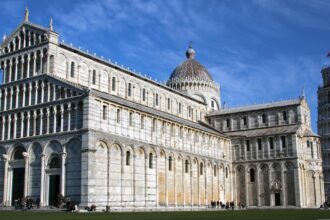
Beyond the famous leaning tower itself, the surrounding Piazza dei Miracoli, or Square of Miracles, holds a genuinely striking cluster of white marble buildings, including the cathedral and baptistery, all worth exploring beyond the obligatory tilted tower photograph most visitors arrive specifically to take. Pisa’s compact historic centre also rewards a wander beyond the main square, with quieter streets, riverside walks along the Arno and a genuinely different, more relaxed atmosphere than Florence itself.
Climbing the tower requires a separate timed ticket booked in advance, particularly during peak season when slots can sell out, and given the queues that build around the base of the tower by midmorning, an early start is genuinely worth planning around. Most visitors find that a half day comfortably covers the essentials, leaving time to explore a little further into the city, grab lunch in a quieter side street, or return to Florence for an early dinner instead.
Pisa is one of the easiest day trips from Florence using public transport. Trenitalia regional trains depart from Firenze Santa Maria Novella approximately every 30 minutes, with the journey taking around one hour to Pisa Centrale. Faster Intercity services are occasionally available, but the regional trains usually offer the best value and are included with the Italia in Tour Pass. From Pisa Centrale, the Leaning Tower and Piazza dei Miracoli are around a 20 to 25-minute walk, or you can take the LAM Rossa local bus, which stops close to the tower. Tickets can be purchased at station ticket machines, via the Trenitalia app or online before you travel.
Given how popular and straightforward this specific day trip is, we’ve covered it in considerably more depth in our dedicated Pisa Day Trip from Florence guide, which includes a full suggested itinerary, ticket booking advice and practical tips for making the most of your visit.
Discover Medieval Siena
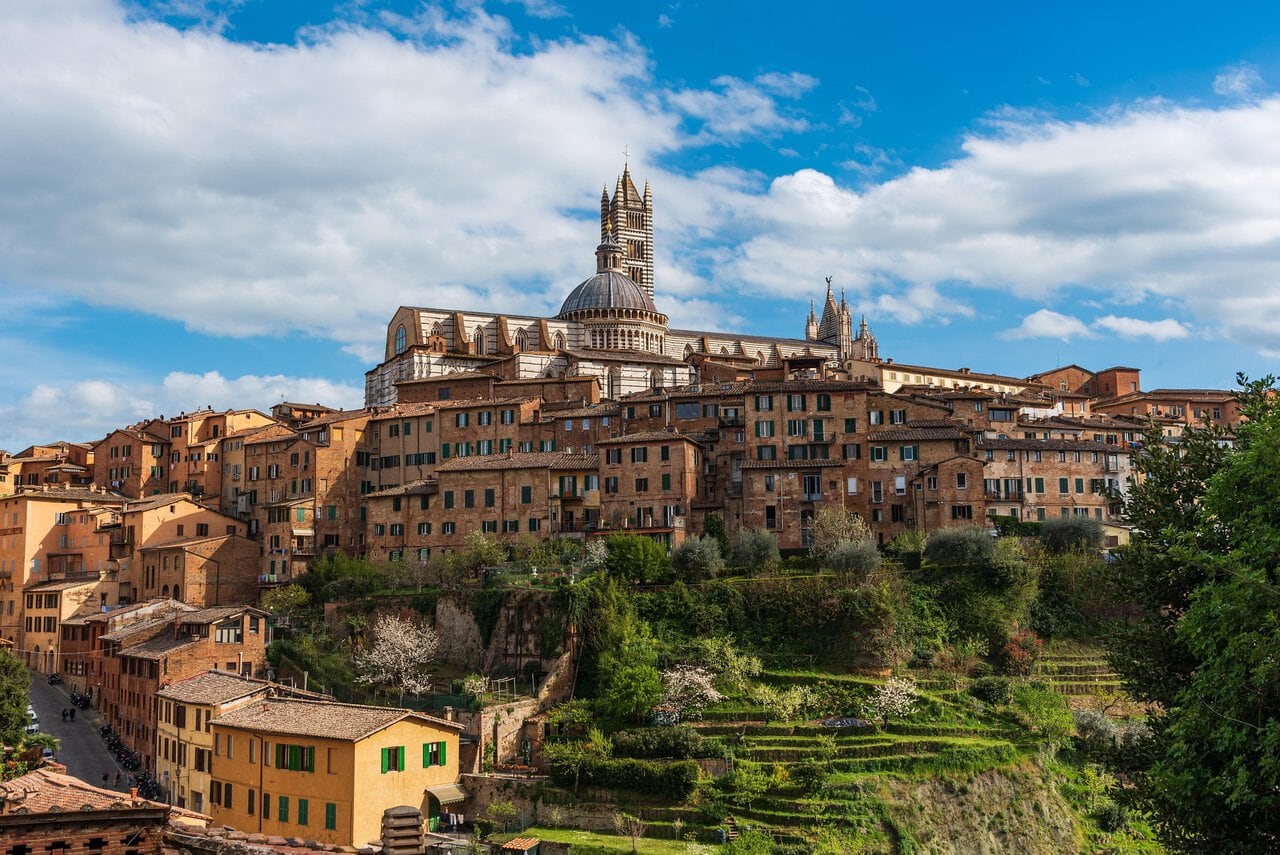
Siena offers a genuinely different flavour of Tuscan city compared with Florence, swapping Renaissance grandeur for a more intact medieval atmosphere that has changed remarkably little since its centuries long rivalry with Florence came to an end. The city’s crowning glory is Piazza del Campo, a vast shell shaped square widely considered one of the finest medieval piazzas anywhere in Europe.
Twice each summer, the square transforms into the setting for the Palio di Siena, a fiercely contested bareback horse race between the city’s historic districts that draws enormous local passion and crowds from across the region. Even outside race days, climbing the Torre del Mangia, the square’s soaring bell tower, rewards the effort with genuinely spectacular views across the city’s terracotta rooftops and the surrounding Tuscan countryside.
Siena’s Duomo, with its striped black and white marble facade and elaborately decorated interior, ranks among Italy’s most impressive Gothic cathedrals and stands in genuine contrast to Florence’s more famous but architecturally quite different cathedral. The winding medieval streets surrounding the piazza reward slow, aimless wandering considerably more than a rigid checklist of sights.
Siena can be reached by either regional train or coach, although many visitors find the coach more convenient. Trenitalia regional trains leave Firenze Santa Maria Novella regularly throughout the day, taking around 1 hour 30 minutes to Siena Station. From there, escalators and local buses connect with the historic centre, although it still involves a short uphill journey. Alternatively, Autolinee Toscane’s 131R coach departs from Florence Bus Station beside Santa Maria Novella and arrives much closer to Piazza Gramsci, just a short walk from Siena’s medieval centre. Italia in Tour covers the regional train but not the coach service.
Wander Around San Gimignano
San Gimignano is genuinely one of the most instantly recognisable hill towns in all of Tuscany, its skyline still bristling with medieval stone towers that earned it the nickname the “Medieval Manhattan” long before that comparison became a cliché in travel writing. Originally home to more than seventy such towers, built by competing noble families as displays of wealth and status, around fourteen genuinely survive today.
Wandering the town’s compact historic centre, itself a UNESCO World Heritage Site, rewards visitors with narrow medieval streets, several excellent viewpoints looking out across the Tuscan countryside, and a genuinely lively piazza at its heart lined with cafés and gelaterias. San Gimignano is also famous for its own Vernaccia white wine, one of Tuscany’s oldest recognised wine varieties, worth sampling at one of the many small wine bars scattered throughout town.
Given the town’s small scale, most visitors find a half day genuinely sufficient to see the highlights, climbing at least one surviving tower for the view and wandering the main streets without needing to rush. Combining San Gimignano with a stop in nearby Siena or the Chianti wine region makes for a genuinely satisfying, if slightly longer, full day out from Florence.
There is no direct train to San Gimignano, but reaching the town is still straightforward. Take a Trenitalia regional train from Firenze Santa Maria Novella to Poggibonsi-San Gimignano, a journey of around one hour, before transferring to Autolinee Toscane bus 130 or 131, which takes approximately 20 to 25 minutes to San Gimignano. The overall journey normally takes between 1 hour 20 minutes and 1 hour 40 minutes, depending on your connection. The rail section is covered by the Italia in Tour Pass, while the local bus requires a separate ticket.
Taste Wine in the Chianti Hills
The Chianti hills, stretching south from Florence towards Siena, form one of Italy’s most celebrated wine regions, a landscape of rolling vineyards, olive groves and stone farmhouses that genuinely looks like the postcard image of Tuscany most visitors arrive already picturing. This is the heartland of Chianti Classico, identifiable by its distinctive black rooster seal, one of Italy’s most internationally recognised wine appellations.
Small towns like Greve in Chianti and Radda in Chianti make natural bases for exploring the region, each with a genuinely attractive historic centre, local wine shops and family run restaurants serving Tuscan classics alongside the local vintage. Many wineries throughout the region welcome visitors for tastings and cellar tours, some booked in advance and others genuinely happy to accommodate walk ins outside their busiest periods.
Unlike most other destinations covered in this guide, the Chianti region is not well served by public transport at all, since the most rewarding wineries and villages sit scattered across the countryside rather than clustered around a single train station. Renting a car for the day or joining an organised wine tour is genuinely the practical way to explore here, with a guided tour also solving the entirely reasonable problem of tasting several wines while someone else handles the driving.
Public transport into the heart of the Chianti wine region is limited, making this one of the few destinations where a train is not the best option. While Autolinee Toscane buses connect Florence with towns such as Greve in Chianti, services are relatively infrequent and do not reach many of the wineries visitors want to experience. For anyone hoping to visit several vineyards or enjoy wine tastings without worrying about driving, an organised wine tour is by far the easiest choice. Hiring a car offers the greatest flexibility if you prefer to explore independently.
Explore the Walled City of Lucca
Lucca is genuinely one of the most underrated day trips from Florence, a beautifully preserved walled city that somehow avoids the intense crowds found at some of Tuscany’s more famous hill towns despite offering a genuinely comparable historic centre. The city’s defining feature is its remarkably intact Renaissance walls, a continuous ring of fortifications now transformed into a tree lined pedestrian and cycling path circling the entire old town.
Walking or cycling the full loop of the walls, roughly four kilometres, offers a genuinely unique perspective on the city, with views alternating between the historic centre on one side and surrounding parkland on the other. Bike hire shops sit conveniently near the main entrances, making this one of the most relaxed, low effort ways to get your bearings in any Tuscan city covered in this guide.
Inside the walls, Lucca’s historic centre rewards slow wandering, with the oval shaped Piazza dell’Anfiteatro, built directly over the footprint of a Roman amphitheatre, ranking among the city’s most distinctive squares. Music lovers should also seek out the birthplace of composer Giacomo Puccini, now a small museum, and check whether the city’s excellent Puccini opera festival coincides with your visit.
Lucca is another excellent destination for rail travellers. Direct Trenitalia regional trains depart from Firenze Santa Maria Novella at least once every hour, with journey times typically between 1 hour 15 minutes and 1 hour 40 minutes. The journey is fully covered by the Italia in Tour Pass, making Lucca particularly good value if you are visiting several Tuscan towns. From Lucca Station, it is only a five-minute walk to the Renaissance city walls and around 10 minutes to Piazza dell’Anfiteatro and the historic centre.
Experience Bologna’s Food Scene
Bologna offers a genuinely compelling change of pace from Tuscany’s hill towns and vineyards, trading rolling countryside for one of Italy’s greatest food cities and a genuinely handsome historic centre defined by miles of covered medieval porticoes. Given how quick the connection from Florence is, Bologna is entirely achievable even for visitors with only a single spare day to dedicate to it.
The city’s food credentials are genuinely difficult to overstate, since Bologna is widely considered the birthplace of both tortellini and the ragù sauce that inspired the internationally famous, if considerably altered, spaghetti bolognese. Wandering the Quadrilatero market district, with its densely packed delis, cheese shops and salumerias selling genuine mortadella and Parmigiano Reggiano, is genuinely one of the best food focused walks anywhere in Italy.
Beyond eating, Bologna’s Piazza Maggiore forms a genuinely grand Renaissance square at the heart of the city, while the leaning Two Towers, Torre degli Asinelli and Torre Garisenda, offer a smaller scale echo of Pisa’s more famous tilted landmark for visitors willing to climb the taller tower’s considerable staircase. The city’s porticoes, stretching for many kilometres throughout the historic centre, are themselves a UNESCO World Heritage listing worth appreciating as you walk between sights.
Bologna is one of the quickest and easiest day trips from Florence. Frecciarossa and Italo high-speed trains operate every 15 to 20 minutes, with the fastest services taking around 35 minutes between Firenze Santa Maria Novella and Bologna Centrale. High-speed tickets should be booked in advance for the lowest fares, particularly at weekends. Regional trains are also available but take considerably longer. The Italia in Tour Pass does not cover Frecciarossa or Italo services, so a separate ticket is required. From Bologna Centrale, it is around a 15-minute walk to Piazza Maggiore and the city’s historic centre.
Compare routes and fares for your journey to Florence.
Compare flightsUse an eSIM to get online without hunting for a local SIM after arrival.
See eSIM optionsArrange a private airport pickup for your trip to Florence.
Check transfersSpend the Day in Cinque Terre
Spending the day in the Cinque Terre is genuinely the most ambitious day trip covered in this guide, and honestly worth attempting only if you’re comfortable with a long travel day bookending a shorter stretch of actual sightseeing. These five clifftop villages, Monterosso, Vernazza, Corniglia, Manarola and Riomaggiore, sit along Liguria’s dramatic coastline and rank among Italy’s most photographed destinations.
Once you arrive, moving between the villages is genuinely straightforward thanks to the dedicated Cinque Terre Express train, connecting all five settlements in a matter of minutes each, alongside a network of coastal hiking trails for visitors wanting to walk between villages instead. Each village has its own genuinely distinct character, from Monterosso’s proper sandy beach to Manarola’s postcard perfect harbour lined with colourful houses.
The honest drawback is travel time. Reaching the Cinque Terre from Florence typically takes between two and a half and three hours each way, almost always requiring at least one change, commonly at Pisa, since no reliable direct service currently connects the two directly. This means a day trip genuinely demands an early start, generally catching a train from Florence by six or seven in the morning to make the most of your time on the coast before the return journey.
Travelling to the Cinque Terre requires at least one change, usually at Pisa Centrale or La Spezia Centrale, before joining the Cinque Terre Express train that links the five villages. The complete journey normally takes between 2½ and 3 hours each way, so an early departure from Florence is recommended. Regional trains are covered by the Italia in Tour Pass, but you will also need a Cinque Terre Train Card if you plan to make multiple journeys between the villages during the day. Careful planning of train times will help you maximise your time on the Ligurian coast.
Explore Arezzo’s Historic Centre
Arezzo sits directly on the main Rome to Milan railway line, making it one of the quickest and most straightforward day trips from Florence covered in this guide, despite remaining considerably less crowded than Tuscany’s more famous hill towns. The city rewards visitors with a genuinely well preserved historic centre that mixes Etruscan, Roman and Renaissance layers of history without the crowds found elsewhere in the region.
The sloping Piazza Grande, ringed by medieval and Renaissance buildings, forms the natural heart of the city and hosts a genuinely excellent antiques market on the first weekend of every month, drawing dealers and browsers from across the region. Film fans may also recognise the square from Roberto Benigni’s Life Is Beautiful, much of which was filmed on location throughout Arezzo.
Art lovers should make a point of visiting the Basilica di San Francesco, home to Piero della Francesca’s celebrated fresco cycle, The Legend of the True Cross, widely considered one of the finest surviving works of the early Renaissance and genuinely worth the trip on its own for anyone with an interest in art history. Booking a timed entry slot in advance is worth doing given the frescoes’ fragile condition and limited viewing numbers permitted at any one time.
Arezzo is one of the simplest Tuscan cities to reach from Florence. Trenitalia regional and Intercity trains run frequently from Firenze Santa Maria Novella, with journey times of around 50 minutes to one hour. Regional services are included with the Italia in Tour Pass, making Arezzo a particularly affordable excursion. From Arezzo Station, it is around a 10 to 15-minute uphill walk to Piazza Grande and the historic centre, with local buses also available if preferred.
Visit the Vineyards of Tuscany
Beyond the Chianti hills covered earlier in this guide, Tuscany’s wider wine country stretches south into territory home to some of Italy’s most celebrated and expensive reds, genuinely worth a dedicated day trip for visitors with a serious interest in wine rather than simply a passing curiosity. This region rewards travellers willing to venture a little further from Florence than the closer, more accessible destinations covered elsewhere in this guide.
Montalcino, a fortified hill town south of Siena, produces Brunello di Montalcino, widely regarded as one of Italy’s finest and most age worthy red wines, made entirely from a specific Sangiovese clone grown on the surrounding slopes. Nearby Montepulciano produces its own celebrated red, Vino Nobile di Montepulciano, and offers a genuinely attractive Renaissance hill town to explore between tastings, with cellars carved directly into the rock beneath many historic palazzos.
Both towns sit considerably further from Florence than Chianti, and reaching them independently by public transport is genuinely impractical given the limited bus connections and complete absence of a direct rail link. An organised wine tour, typically running a full day and often combining both towns with lunch at a working estate, remains genuinely the most practical way to experience this part of Tuscany without renting a car and navigating unfamiliar rural roads yourself.
Although it is technically possible to reach Montalcino and Montepulciano using a combination of regional trains and local buses, the journey is slow, involves several changes and can take well over two and a half hours each way. Public transport also makes it difficult to visit wineries located outside the town centres. For this reason, most visitors choose either an organised wine tour departing from Florence or hire a car for the day. A guided tour also allows you to enjoy wine tastings without needing to drive, making it the most practical and enjoyable option for exploring Tuscany’s famous wine-producing regions.
Choosing the Right Day Trip
With nine genuinely different day trips covered in this guide, deciding where to spend your limited time comes down largely to your specific interests and how much travel time you’re willing to accept for the right destination. There is no single correct answer, but a few clear patterns make the choice considerably easier.
For visitors wanting a straightforward, low effort day out, Pisa, Bologna and Arezzo all connect directly to Florence by regular train services, removing most of the planning burden and letting you set your own pace once you arrive. Bologna in particular suits food focused travellers, while Pisa remains the obvious choice for anyone wanting the classic photograph beside the leaning tower.
Travellers drawn to medieval hill towns and Tuscan atmosphere should prioritise Siena and Lucca, both reachable by direct or near direct public transport, while San Gimignano rewards the slightly more awkward journey with one of the region’s most distinctive skylines. Wine enthusiasts, meanwhile, should focus on Chianti for a closer, more accessible option or push further to Montalcino and Montepulciano for a more serious, dedicated wine day.
Only attempt the Cinque Terre as a day trip if you’re genuinely comfortable with an early start and a long travel day on both ends, since the payoff, five spectacular clifftop villages, comes at the cost of considerably more time spent in transit than any other destination covered in this guide. Whichever day trips you choose, having Florence as your base genuinely opens up an extraordinary breadth of Tuscany and beyond without ever needing to change hotels.
Save Money with the Italia in Tour Pass
If you are planning to visit several Tuscan towns over a weekend, it’s worth looking at Italia in Tour, Trenitalia’s excellent-value regional rail pass. The pass offers unlimited travel on most Trenitalia regional trains for either three or five consecutive days, making it ideal if you’re planning multiple day trips from Florence without hiring a car.
For example, you could easily combine Pisa, Lucca and Arezzo, or visit Pisa one day and Siena the next, without buying separate regional train tickets each time. Because the pass covers regional services rather than high-speed Frecciarossa trains, it works best for destinations where regional trains are already the recommended option.
Italia in Tour is particularly good value for travellers staying in Florence for several days and exploring Tuscany at a relaxed pace. It also removes the need to queue for tickets before every journey, allowing you to board eligible regional trains with much greater flexibility.
If you’re considering several rail-based excursions during your stay, read our dedicated Italia in Tour Pass Guide, where we explain how the pass works, what it covers and whether it will actually save you money.

Rupert’s Handy Travel Tips
Tuscany rewards a bit of planning, so here’s what I’d want to know before choosing a day trip.
- Match the destination to the transport: Pisa, Bologna, Lucca and Arezzo work brilliantly by train alone, but the wine regions genuinely need a car or a tour.
- Book Piero della Francesca’s frescoes in Arezzo ahead: viewing numbers are limited given the fragile condition of the artwork.
- Start early for the Cinque Terre: the round trip alone takes five to six hours, so an early train is essential to make the most of your day.
- Take the SITA coach to Siena, not just the train: it drops you considerably closer to the historic centre than the train station does.
- Visit Chianti in autumn if you can: the grape harvest and changing vineyard colours make it genuinely the most atmospheric time to go.
Want to meet the reindeer behind our travel tips? Find out more in our page Who is Rupert?.




Frequently Asked Questions
What is the best day trip from Florence?
It depends on your interests. Pisa suits a quick, classic visit, Bologna suits food lovers, Siena and Lucca suit medieval atmosphere, and Chianti suits wine enthusiasts.
Can I visit the Cinque Terre from Florence in a day?
Yes, but it requires an early start, since the journey takes around two and a half to three hours each way with at least one change, usually at Pisa.
Do I need a car to visit Chianti?
Not necessarily, but public transport is genuinely limited across the wine region. A rental car or an organised wine tour is considerably more practical than relying on buses.
Is Bologna worth a day trip from Florence?
Yes, the high speed train takes as little as thirty three minutes, making Bologna’s food scene and historic centre entirely achievable even on a tight schedule.
How do I get to San Gimignano from Florence?
There is no direct train. Most visitors take a regional train or bus to Poggibonsi, followed by a local bus, or join an organised tour instead.
What is the easiest day trip from Florence?
Pisa, Bologna and Arezzo all connect by direct train with frequent services, requiring little advance planning compared with the wine regions or Cinque Terre.
Further Reading
Arriving by air, our Florence Airport to City Centre guide covers the T2 tram, taxis, private transfers and every other transport option into the city.
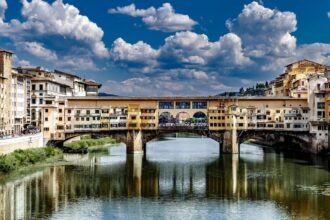
Once you’re in the city, our Things to Do in Florence guide covers the Duomo, Uffizi Gallery, Ponte Vecchio and every other essential city sight, while our Best Museums in Florence guide takes a closer look at the Uffizi, Accademia, Bargello and Florence’s other world class collections.
For a deeper dive into the Pisa route specifically, our Pisa Day Trip from Florence guide covers a full suggested itinerary and ticket booking advice.
If you’re travelling around Italy more widely, our Best eSIM Apps Guide will help you stay connected wherever your Tuscan day trips take you.