Reviewed by our editorial team Updated
Which Florence Museums Are Worth Visiting?
Florence’s museum scene genuinely rewards patience, since the city’s collections run considerably deeper than the two or three names most first time visitors arrive already knowing. Beyond the Uffizi and Accademia, Florence holds an extraordinary concentration of specialist museums covering sculpture, science, cathedral history and ancient civilisations, several of which rank among the finest of their kind found anywhere in the world.
Given how many museums the city genuinely offers, deciding which ones are worth your limited time is arguably the harder question than simply what each one contains. This guide takes the headline attractions already covered in our wider Things to Do in Florence guide and goes considerably deeper, alongside several smaller museums that rarely make it onto a first time visitor’s shortlist despite being genuinely excellent in their own right.
Whether you have a single dedicated museum day or a full week to work through Florence’s collections at a relaxed pace, this guide is built to help you prioritise. Some museums, like the Uffizi, genuinely justify an entire morning or afternoon on their own, while others, such as the Bargello or Galileo Museum, reward an hour or two without demanding the same level of advance planning.
We’ve also covered practical questions that matter just as much as the art itself, including which combined tickets and city passes can genuinely save you money, how museums here work for families with children, and how to build a realistic multi day museum itinerary rather than trying to see everything in a single exhausting sprint.
Quick Comparison Table
Before working through each museum in detail, it genuinely helps to see how Florence’s major collections compare on cost, time needed and what each one actually specialises in. Some, like the Uffizi, cover a genuinely enormous span of art history in a single visit, while others, such as the Galileo Museum, focus tightly on a single specialist subject that rewards a shorter, more focused visit instead.
The table below groups the museums covered in this guide by rough cost and time commitment, giving you a realistic starting point for planning a museum heavy day or spreading your visits across several days depending on how long you’re staying in Florence.
Prices at Florence’s museums do shift periodically, and several offer combined tickets covering more than one collection at a meaningful discount compared with buying separate entries, a topic covered in more detail later in this guide. As always, checking official websites close to your travel dates is genuinely worth doing before finalising your itinerary.
Note that queue times and required advance booking vary considerably between these museums, which is worth factoring into how far ahead you plan each individual visit.
| Museum | Cost | Time Needed | Specialises In |
|---|---|---|---|
| Uffizi Gallery | €16-25 | 2 to 3 hours | Renaissance painting |
| Accademia Gallery | €16-25 | 1 to 1.5 hours | Michelangelo’s David |
| Palazzo Pitti | ~€22 combined with Boboli | 1.5 to 2 hours | Medici palace and paintings |
| Bargello Museum | ~€12 (~€26 combined with Accademia) | 1 to 2 hours | Renaissance sculpture |
| Galileo Museum | ~€13 | 1 hour | Scientific instruments |
| Museo dell’Opera del Duomo | ~€30 (Brunelleschi Pass) | 1 to 1.5 hours | Cathedral treasures |
| National Archaeological Museum | A few euros; free with recent Uffizi ticket | 1.5 to 2 hours | Etruscan, Roman & Egyptian antiquities |
Compare hotels and other places to stay in Florence.
Check availabilityExplore holiday homes and apartments around Florence.
See holiday homesCompare hotel deals in Florence from multiple booking sites.
Compare pricesAdmire Renaissance Masterpieces at the Uffizi
The Uffizi Gallery is covered briefly in our wider Things to Do in Florence guide, but given its status as the single most important art museum in the city, it genuinely deserves a much closer look here. Originally built as government offices for the ruling Medici family, hence the name Uffizi, the building was gradually converted into a gallery to display the family’s own private art collection, eventually passing to the city itself.
The collection’s most celebrated room houses Botticelli’s The Birth of Venus and Primavera, displayed together and drawing sustained crowds throughout the day regardless of season. Beyond Botticelli, the galleries trace the development of Italian art chronologically, moving from early Gothic altarpieces through to High Renaissance masterpieces by Leonardo da Vinci, Michelangelo and Raphael, before continuing into later Venetian and Baroque works by Titian and Caravaggio.
Given the sheer scale of the collection, spanning more than one hundred rooms across two main floors, most visitors genuinely need at least two to three hours to see the highlights properly, with serious enthusiasts easily filling a full day. The Vasari Corridor, the elevated passage connecting the Uffizi to Palazzo Pitti across Ponte Vecchio, occasionally opens for separate guided tours and offers a genuinely unique perspective on the collection when available.
Standard tickets run from around sixteen to twenty five euros depending on season and time of entry, with afternoon slots from four o’clock offering meaningful savings. Given the museum’s enormous popularity, booking a timed entry slot several weeks in advance is genuinely essential during spring and summer, when walk up queues routinely stretch for hours outside the entrance.
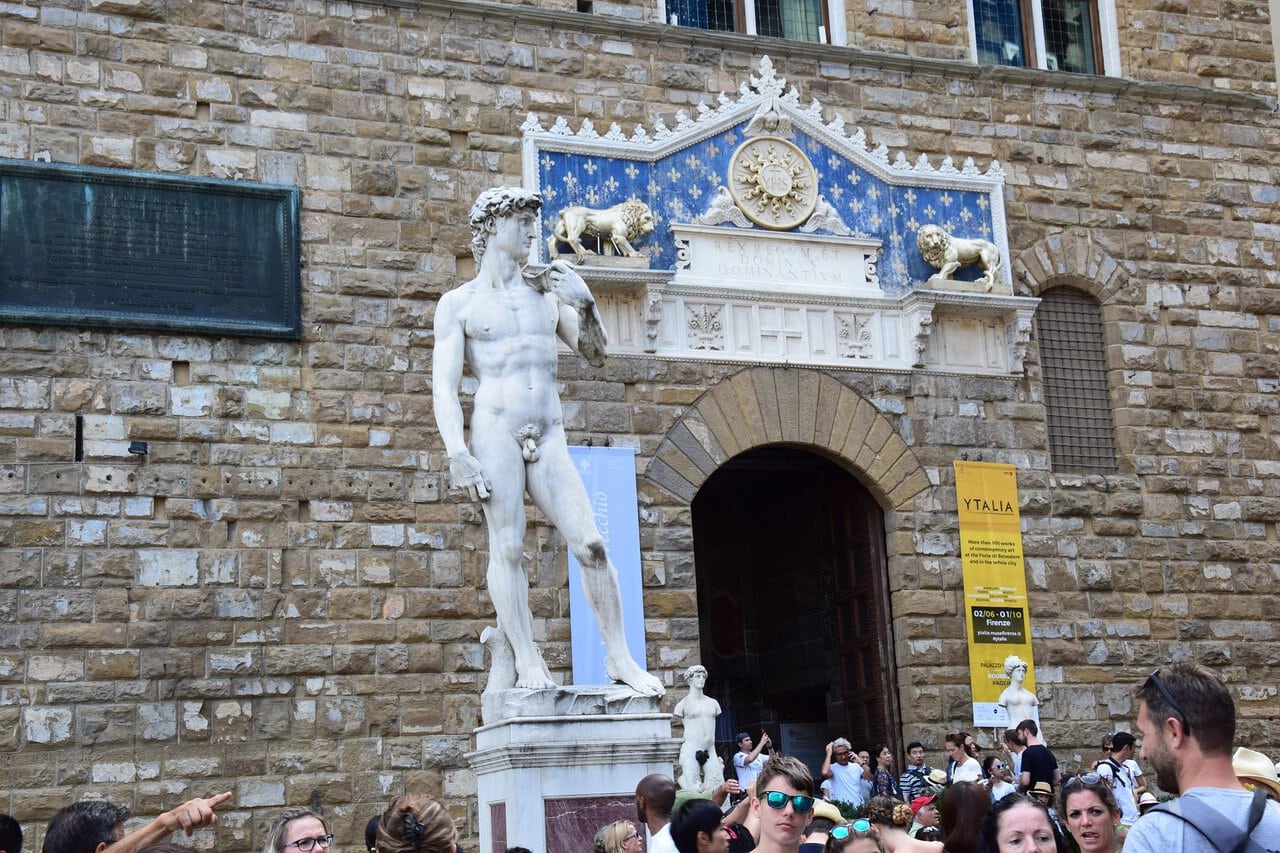
Meet Michelangelo’s David at the Accademia
The Accademia Gallery exists almost entirely because of a single sculpture, and yet reducing a visit purely to Michelangelo’s David genuinely sells the museum short, since the surrounding galleries hold several works well worth building extra time into your visit for. Founded originally as a teaching academy for artists, the museum retains a genuinely different character from the grander, more encyclopaedic Uffizi nearby.
Beyond David itself, housed in a specially designed rotunda offering natural light from above, the Accademia holds Michelangelo’s unfinished Prisoners, four figures seemingly straining to emerge from their marble blocks, left deliberately incomplete and offering a genuinely fascinating window into the artist’s working process rather than only his finished results. A plaster cast gallery nearby displays nineteenth century sculptural studies that most visitors walk straight past, unaware of the genuinely interesting work on display.
The museum also holds a collection of early Florentine paintings, including significant Gothic and early Renaissance altarpieces predating the more famous works found at the Uffizi. While these rooms rarely draw the same crowds as David itself, they offer useful context for understanding the artistic developments that led into the High Renaissance covered so extensively elsewhere in the city.
Tickets typically run from sixteen to twenty five euros depending on season, and given the gallery’s enormous popularity, booking weeks ahead is genuinely essential during peak months. Combined tickets pairing the Accademia with the Bargello Museum, covered later in this guide, offer a genuinely useful way to see both of Florence’s most significant David sculptures, Michelangelo’s marble original and Donatello’s earlier bronze, across a single visit.
Step Inside Palazzo Pitti
Palazzo Pitti genuinely rewards visitors willing to look past its status as the quieter alternative to the Uffizi, since the palace actually houses several distinct museums under a single roof rather than one straightforward collection. Once the primary residence of the ruling Medici family and later the Savoy monarchy, the building itself is genuinely worth appreciating alongside whatever happens to be on display inside its many rooms.
The Palatine Gallery remains the headline attraction, displaying paintings in the deliberately crowded, salon style typical of a genuine aristocratic residence rather than a modern museum’s careful spacing. Raphael, Titian and Rubens all feature prominently, hung beneath elaborately frescoed ceilings that are arguably as much the attraction as the paintings themselves.
Beyond the Palatine Gallery, the palace also houses the Costume and Fashion Museum, tracing the history of Italian dress from the eighteenth century through to contemporary designers, alongside a Silver Museum displaying Medici treasures and a Gallery of Modern Art covering nineteenth and twentieth century Italian painting. Together, these smaller collections give visitors with a full afternoon considerably more to explore than the headline rooms alone.
Entry typically costs around twenty two euros when combined with access to the neighbouring Boboli Gardens, and given the palace’s genuine scale, allowing at least ninety minutes is worthwhile even for a relatively focused visit. Compared with the Uffizi, Palazzo Pitti sees noticeably fewer crowds, making it a genuinely pleasant choice for visitors who want to slow down after a more intensive morning spent at Florence’s busier headline museums earlier in the day.
Explore the Bargello Museum
The Bargello Museum is genuinely one of Florence’s best kept secrets, a former medieval fortress, police headquarters and prison that now houses the finest collection of Renaissance sculpture found anywhere outside the Vatican. Built in 1255 as the seat of the city’s chief magistrate, the building takes its current name from the bargello, or police chief, who was later headquartered here.
The undisputed highlight is Donatello’s bronze David, the first freestanding nude bronze sculpture created since antiquity, cast around 1440 and genuinely revolutionary for its era. Unlike Michelangelo’s later marble version, this David is considerably smaller, dressed only in boots and a hat, and displayed without the barriers or glass separating you from other major Florentine sculptures, letting you walk a full circle around the work itself.
The Bargello also holds several pieces by Michelangelo, including his youthful Bacchus and Brutus, alongside the original bronze competition panels submitted by Ghiberti and Brunelleschi for the Baptistery doors commission, displayed side by side and offering a genuinely fascinating glimpse into the rivalry that shaped early Renaissance Florence. Ghiberti won the commission, and Brunelleschi went on to design the cathedral’s famous dome instead.
Standard entry costs around twelve euros, with a combined ticket covering both the Bargello and Accademia running to roughly twenty six euros across a forty eight hour window. Given how few visitors make it here compared with Florence’s headline museums, the Bargello genuinely offers one of the calmest, most rewarding museum experiences in the entire city, even during the busiest tourist season, when the surrounding streets grow considerably more crowded.
Learn at the Galileo Museum
The Galileo Museum, formerly known as the Museum of the History of Science, offers a genuinely fascinating change of pace from Florence’s art heavy museum scene, tracing the development of scientific instruments from the Medici era through to the twentieth century. Located right beside the Uffizi along the Arno, it makes a genuinely easy addition to a morning already spent exploring the nearby galleries.
The undisputed centrepiece is Galileo Galilei’s own telescopes, the very instruments he used to make observations that fundamentally reshaped humanity’s understanding of the solar system. Displayed alongside them are astrolabes, armillary spheres and other astronomical instruments largely assembled by the Medici and later Lorraine families, whose patronage helped establish Florence as a genuine centre of scientific enquiry during the Renaissance and beyond.
Beyond astronomy, the museum’s eighteen rooms cover mathematics, optics, navigation and early surgical instruments, with several interactive displays letting visitors try their hand at reading time using historical instruments rather than simply viewing them behind glass. Younger visitors and science enthusiasts of any age tend to find this considerably more engaging than a purely observational museum experience.
Entry costs around thirteen euros for adults, with children under six entering free, making it a genuinely affordable addition to a Florence itinerary already weighted heavily towards more expensive paid art museums elsewhere in the city. Given its compact scale, most visitors can comfortably see the highlights in around an hour, making the Galileo Museum a genuinely easy pairing with the Uffizi or Bargello on the same day without needing to dedicate an entire separate outing to it.
Discover the Museo dell’Opera del Duomo
The Museo dell’Opera del Duomo, tucked behind the cathedral itself, houses original sculptures and artefacts removed from the Duomo complex over the centuries for preservation, and genuinely ranks among Florence’s most underrated major museums despite sitting only steps from one of the city’s busiest tourist attractions. Many visitors walk straight past its entrance entirely, entirely unaware of what genuinely waits inside for those who take the time to look.
The museum’s most celebrated treasure is Lorenzo Ghiberti’s Gates of Paradise, the original bronze Baptistery doors, so admired by Michelangelo that he reportedly coined the nickname himself. The doors displayed on the Baptistery today are careful replicas, with the genuine originals preserved indoors here, allowing visitors to appreciate Ghiberti’s intricate biblical scenes at considerably closer range than the outdoor copies ever permit.
Michelangelo himself features prominently too, with his unfinished Florentine Pietà on display, a work he originally intended for his own tomb before abandoning it in apparent frustration and later selling it unfinished. Donatello’s Penitent Magdalene, a startlingly gaunt and realistic wooden sculpture, remains equally striking, its unflinching depiction of aging and suffering considerably ahead of its time when carved in the fifteenth century.
Entry is generally bundled into the wider Brunelleschi Pass covering the dome climb, Baptistery and Bell Tower, running to around thirty euros across a seventy two hour validity window. Given its relatively lower visitor numbers compared with the crowded piazza outside, the museum offers a genuinely peaceful, unhurried way to appreciate some of Florence’s most significant sculptural treasures, away from the queues waiting for the dome climb next door.
Search routes and flight options for your trip to Florence.
Search flightsUse an eSIM to get online without hunting for a local SIM after arrival.
See eSIM optionsCheck private pickup options and plan your onward journey before arrival.
View transfersVisit the National Archaeological Museum
The National Archaeological Museum, housed in the seventeenth century Palazzo della Crocetta near Piazza Santissima Annunziata, offers a genuinely different perspective on Florence’s collections, moving beyond Renaissance art entirely to focus on Etruscan, Roman, Greek and Egyptian antiquities assembled by the Medici and Lorraine families over centuries.
The undisputed highlight is the Chimera of Arezzo, an extraordinary Etruscan bronze depicting a lion with a goat’s head emerging from its back and a serpent for a tail, unearthed near Arezzo in the sixteenth century and considered one of the finest surviving examples of Etruscan bronze casting anywhere in the world. Displayed nearby is the Arringatore, a bronze figure of an Etruscan nobleman that similarly ranks among the museum’s most significant pieces.
The museum’s Egyptian collection, the second largest in Italy after Turin’s, occupies its own dedicated section, with rooms deliberately designed to recreate the atmosphere of an Egyptian temple, complete with mummies, sarcophagi and a small wooden funerary chariot dating back to the era of Tutankhamun. This immersive presentation genuinely appeals to families and younger visitors who might otherwise find archaeological museums less engaging than Florence’s more famous painting galleries.
Entry costs a modest few euros compared with Florence’s headline museums, and visitors holding a valid Uffizi ticket can claim free admission here within five days of their original visit, a genuinely useful perk worth knowing about before buying a separate ticket. Given its considerably lower visitor numbers, the museum makes a genuinely relaxed addition to an itinerary otherwise dominated by crowded Renaissance galleries elsewhere across the city.
Enjoy Family-Friendly Museum Experiences
Florence’s museums are not always designed with children in mind, and rooms full of Renaissance altarpieces can quickly test the patience of younger visitors, but several genuinely excellent options exist for families wanting to keep everyone engaged throughout the day. Picking the right mix of museums makes a genuine difference to how the whole family experiences the city.
The Galileo Museum, covered earlier in this guide, tends to work particularly well for families thanks to its interactive displays and hands on demonstrations, letting children engage directly with historical scientific instruments rather than simply observing paintings from a respectful distance. The National Archaeological Museum, with its immersive Egyptian rooms recreating temple atmospheres, mummies and sarcophagi, similarly captures younger imaginations considerably more effectively than a standard painting gallery.
Beyond the museums covered in depth elsewhere in this guide, the Leonardo da Vinci Interactive Museum, a smaller attraction near the Duomo, lets children handle working models of Leonardo’s inventions, from flying machines to hydraulic devices, offering a genuinely hands on alternative to Florence’s more traditional collections. This kind of tactile engagement tends to hold children’s attention considerably longer than passive viewing ever manages.
When planning a family museum day, building in genuine breaks between visits is worth prioritising over trying to squeeze in every headline attraction, since even adults find Florence’s museum density exhausting without pacing themselves properly. Combining one major museum with a lighter, more interactive experience, plus a break in a park or piazza between them, genuinely works better for families than an intensive back to back museum schedule.
Saving Money with Museum Passes
Given how many of Florence’s best museums come with their own individual admission fees, working out whether a combined ticket or city pass genuinely saves money is worth doing before you start buying tickets one at a time. Several of the museums covered in this guide offer meaningful discounts when booked together rather than separately.
The most direct saving comes from combining the Accademia and Bargello, running to roughly twenty six euros across a forty eight hour window rather than paying full price for both individually, letting you see Michelangelo’s marble David and Donatello’s earlier bronze version on the same trip. Similarly, visitors holding a valid Uffizi ticket can claim free entry to the National Archaeological Museum within five days, a genuinely easy way to add an extra museum to your itinerary at no additional cost.
Beyond individual combined tickets, Florence’s wider city pass options, including the official Firenze Card and several commercial alternatives, bundle access to dozens of museums across a fixed validity period, generally working out considerably better value for visitors planning to see four or more paid attractions during their stay. Families in particular benefit from certain passes offering free entry for children accompanying a paying adult, meaningfully reducing the overall cost for a group.
Whether a pass genuinely makes sense depends entirely on your specific itinerary, and our dedicated Florence Attraction Pass Comparison guide breaks down exactly which option suits different lengths of stay, how museum focused visitors should choose between them, and where each pass offers the strongest genuine value against buying individual tickets separately.
Planning the Perfect Museum Itinerary
Building a realistic museum itinerary in Florence genuinely comes down to accepting that you cannot see everything, and prioritising accordingly rather than trying to cram every collection covered in this guide into a single overwhelming visit. Most visitors get considerably more out of two or three focused museum days than a rushed attempt to see everything at once.
For a single dedicated museum day, pairing the Uffizi in the morning with the Accademia in the afternoon covers Florence’s two absolute headline attractions, though booking both timed entries several weeks in advance is genuinely essential during peak season. Adding the nearby Galileo Museum as a shorter final stop works well given its proximity to the Uffizi and considerably lighter time commitment.
Visitors with a second museum day to spare should consider combining Palazzo Pitti with the Boboli Gardens for a more relaxed afternoon across the river, followed by the Bargello on a separate morning given its genuinely calmer atmosphere compared with Florence’s busier headline collections. The Museo dell’Opera del Duomo pairs naturally with a Duomo complex visit, since both sit within the same immediate area near the cathedral.
For those with a genuine third day to dedicate to museums, the National Archaeological Museum offers a considerably different experience from the Renaissance focused collections covered elsewhere, making it a good final stop before shifting attention towards Florence’s other attractions, day trips into Tuscany, or simply slowing down and enjoying the city without another gallery on the agenda for once.

Rupert’s Handy Travel Tips
Florence’s museums reward a bit of planning, so here’s what I’d want to know before diving in.
- Book the Uffizi and Accademia weeks ahead: both sell out during peak season, and walk up queues can stretch for hours without a timed slot.
- Use your Uffizi ticket for a free bonus visit: it grants free entry to the National Archaeological Museum within five days of your original visit.
- Combine the Accademia and Bargello: a joint ticket lets you see both of Florence’s most famous David sculptures for around twenty six euros.
- Save the Bargello and Galileo Museum for quieter days: neither needs the same weeks-ahead booking as the Uffizi and Accademia.
- Don’t try to see everything in one trip: two or three focused museum days genuinely beat one exhausting sprint through every collection.
Want to meet the reindeer behind our travel tips? Find out more in our page Who is Rupert?.




Frequently Asked Questions
Which is the best museum in Florence?
The Uffizi Gallery is widely considered Florence’s most important museum, housing an extraordinary collection of Renaissance masterpieces including Botticelli’s The Birth of Venus.
Do I need to book Florence museums in advance?
Yes for the Uffizi and Accademia, which sell out weeks ahead during peak season. Smaller museums like the Bargello and Galileo Museum are considerably more flexible.
Is the Bargello Museum worth visiting?
Yes. It houses Donatello’s bronze David, several works by Michelangelo, and sees far fewer visitors than Florence’s headline museums, making it a genuinely calm experience.
Can I visit the National Archaeological Museum for free?
Visitors holding a valid Uffizi ticket can claim free entry to the National Archaeological Museum within five days of their original Uffizi visit.
Which Florence museum is best for children?
The Galileo Museum and National Archaeological Museum both offer hands on, interactive experiences that tend to engage children more than traditional painting galleries.
Is a Florence museum pass worth buying?
It depends on how many museums you plan to visit. Passes generally offer better value once you’re visiting four or more paid attractions during your stay.
How many museum days should I plan for in Florence?
Two to three focused museum days covers the highlights comfortably, including the Uffizi, Accademia, Palazzo Pitti and Bargello, without feeling rushed.
Further Reading
For an overview of Florence’s essential sights beyond museums, our Things to Do in Florence guide covers the Duomo, Ponte Vecchio, Piazzale Michelangelo and much more, and our Florence Attraction Pass Comparison guide explains whether the Firenze Card, Florence City Pass or Flex Pass genuinely suits your trip.
Arriving by air, our Florence Airport to City Centre guide covers the T2 tram, taxis, private transfers and every other transport option into the city.
If you have extra time to explore Tuscany, our Best Day Trips from Florence guide rounds up Pisa, Siena, San Gimignano and other unforgettable destinations, and our Pisa Day Trip from Florence guide covers that specific route in detail.