Reviewed by our editorial team Updated
Why the High Tatras Are One of Europe’s Most Underrated Mountain Destinations
The High Tatras are one of the most overlooked mountain regions in Europe. Stretching across northern Slovakia near the border with Poland, the region combines dramatic alpine scenery, scenic mountain railways, hiking trails, ski resorts and surprisingly affordable travel costs in a way that feels increasingly rare elsewhere in Europe.
While many travellers automatically focus on the Alps in Switzerland or Austria, the High Tatras offer a very different atmosphere. The mountains remain less commercialised, prices are generally lower and the transport network still feels practical rather than built purely for tourism. Visitors can ride mountain railways, stay beside alpine lakes and hike through spectacular scenery without the extreme costs often associated with Western Europe’s most famous mountain destinations.
One of the region’s greatest strengths is how accessible it remains without needing a car. The famous Tatra Electric Railway network connects many of the main mountain resorts and hiking areas, while the historic High Tatras cog railway climbs steeply into the mountains from Štrba toward Štrbské Pleso. This creates one of the best integrated mountain public transport systems in Central Europe.
The region also changes dramatically throughout the year. Winter brings skiing, snow-covered forests and frozen mountain lakes, while summer transforms the Tatras into one of the best hiking destinations in the region. Even outside peak seasons, the combination of mountain scenery, railway travel and calmer tourist numbers makes the High Tatras feel far more relaxed than many better-known alpine destinations.
Where the High Tatras Are Located
The High Tatras are located in northern Slovakia along the border with southern Poland. The mountains form part of the wider Carpathian mountain range and represent the highest section of the entire Carpathians, creating some of the most dramatic landscapes in Central and Eastern Europe.
Although the High Tatras are relatively compact compared with the Alps, the scenery still feels properly alpine. Sharp peaks, steep valleys, mountain lakes, waterfalls and dense forests dominate the landscape throughout the region. Many travellers are surprised by how rugged and dramatic the mountains appear once they arrive, especially considering Slovakia’s relatively low profile within European tourism.
The main Slovak gateway into the mountains is Poprad, which sits just south of the Tatras and acts as the region’s primary transport hub. From Poprad, trains and mountain railways connect travellers with major resort areas including Štrbské Pleso, Starý Smokovec and Tatranská Lomnica.
The mountains are also relatively easy to combine with wider travel across Central Europe. Cities including Kraków, Bratislava, Budapest and Prague all connect reasonably well into the Slovak rail network, making the High Tatras an excellent addition to longer European rail itineraries.
See hotel options and places to stay in High Tatras.
Browse hotelsBrowse apartments, holiday homes and self-catering stays in High Tatras.
View rentalsCompare hotel deals in High Tatras from multiple booking sites.
Compare pricesTatra National Park and Protected Mountain Landscapes
Much of the High Tatras sits within the protected territory of Tatra National Park, known locally as TANAP. Established in 1949, it is the oldest national park in Slovakia and protects some of the most important alpine landscapes anywhere in the wider Carpathian Mountains.
The national park covers dramatic mountain scenery including alpine lakes, dense forests, waterfalls, steep valleys and rocky peaks rising well above the surrounding lowlands. Many of the famous destinations served by the Tatra Electric Railway, including Štrbské Pleso, Starý Smokovec and Tatranská Lomnica, sit either within or directly beside protected park territory.
The park is also internationally important for wildlife conservation. Protected species across the wider Tatras ecosystem include brown bears, wolves, lynx, golden eagles and the famous Tatra chamois, a rare mountain goat species strongly associated with the region. Forests and mountain habitats throughout the park form part of one of Europe’s most important protected alpine ecosystems outside the Alps.
One of the most impressive aspects of the Tatras is how closely the railway network integrates with the national park itself. Unlike some mountain regions where heavy road traffic dominates access, the Tatras still allow many travellers to explore protected mountain scenery using electric railways, hiking routes and public transport rather than relying entirely on cars.
The wider Carpathian ecosystem surrounding the Tatras also connects into the Ancient and Primeval Beech Forests of the Carpathians UNESCO World Heritage landscape, reinforcing the environmental importance of the region’s protected forests and mountain habitats.
Quick Facts About the High Tatras
| Feature | Details |
|---|---|
| Location | Northern Slovakia on the border with Poland |
| Mountain Range | Part of the Carpathian Mountains |
| Highest Peak | Gerlachovský štít at 2,655 metres |
| Main Gateway City | Poprad |
| Most Famous Resort | Štrbské Pleso |
| Best Known Railway | High Tatras Cog Railway |
| Mountain Railway Network | Tatra Electric Railway |
| Best For | Hiking, skiing, scenic railways, alpine lakes and mountain scenery |
| Nearest Airport | Poprad-Tatry Airport |
| Currency | Euro (€) |
| Best Seasons | Winter for skiing and snow scenery, summer for hiking and lakes |
| Typical Summer Temperatures | Around 15°C to 25°C depending on altitude |
| Typical Winter Temperatures | Often below 0°C in higher mountain areas |
| Can You Visit Without a Car? | Yes, the railway network makes the region very accessible |
| Famous Mountain Resorts | Štrbské Pleso, Starý Smokovec and Tatranská Lomnica |
| Popular Activities | Hiking, skiing, mountain photography, scenic rail travel and lake walks |
Best Places to Visit in the High Tatras
The High Tatras contain several distinct mountain resorts and railway-linked destinations, each offering different scenery, activities and atmospheres. Because the region is relatively compact and well connected by rail, travellers can easily visit multiple locations during the same trip.
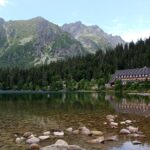
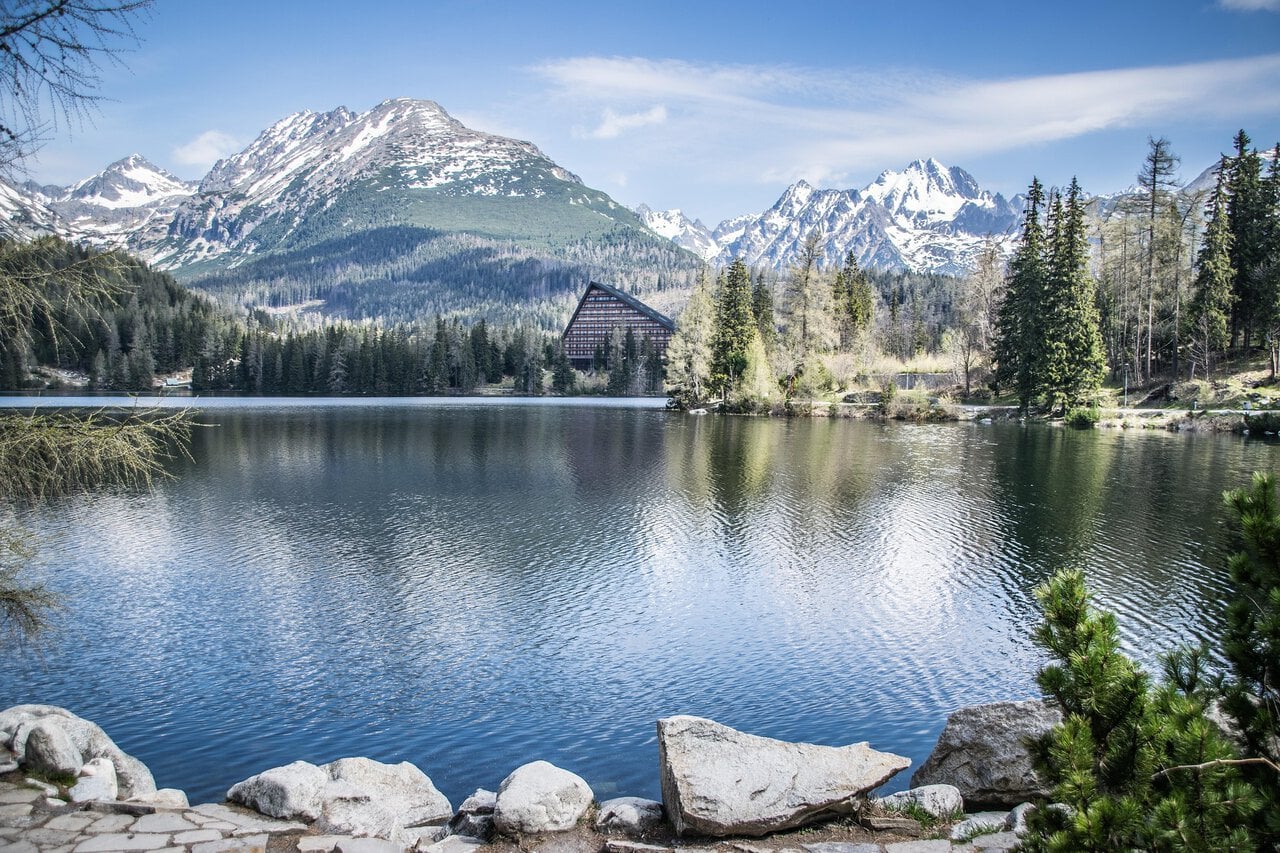
Štrbské Pleso is probably the most famous destination in the Slovak Tatras. The resort sits beside a spectacular alpine lake surrounded by forests and mountain peaks, creating one of the country’s most recognisable landscapes. The area is especially popular for hiking, skiing and scenic walks around the lake itself, while the famous High Tatras cog railway provides one of the most memorable ways to reach the resort.
Starý Smokovec acts as one of the historic centres of tourism in the Tatras and remains one of the best-connected settlements within the mountain railway network. The town combines traditional mountain resort architecture with hotels, restaurants and direct access to hiking trails leading deeper into the mountains. The nearby funicular railway toward Hrebienok is one of the area’s most popular attractions.
Another major destination is Tatranská Lomnica, which is best known for its ski infrastructure and cable car connections toward Lomnický štít, one of the highest and most famous peaks in Slovakia. The resort works particularly well for travellers wanting dramatic mountain scenery without committing to difficult hikes, as the cable car system provides relatively easy access to high alpine viewpoints.
Smaller villages and mountain stops throughout the Tatras also reward slower exploration. Because the railway system links so many areas together, travellers can easily spend several days moving gradually between lakes, mountain resorts and hiking areas without needing to constantly return to the same base.

Top Experiences in the High Tatras
One of the best experiences in the High Tatras is riding the region’s spectacular mountain cable cars into the upper alpine scenery surrounding Lomnický štít. From Tatranská Lomnica, cable cars climb steadily through forests and rocky mountain terrain toward some of the highest viewpoints in the entire Carpathian Mountains. Even travellers not planning serious hiking routes can still experience dramatic alpine panoramas normally associated with far more expensive mountain destinations in Switzerland or Austria.
Walking through the Tatras is equally rewarding, even for visitors not attempting major mountain hikes. Some of the most enjoyable experiences come simply from following lakeside paths, forest trails and mountain promenades around destinations including Štrbské Pleso and Starý Smokovec. Easy walking routes connect waterfalls, alpine lakes and scenic viewpoints throughout the region, while mountain railways make it easy to move between different trailheads without needing a car.
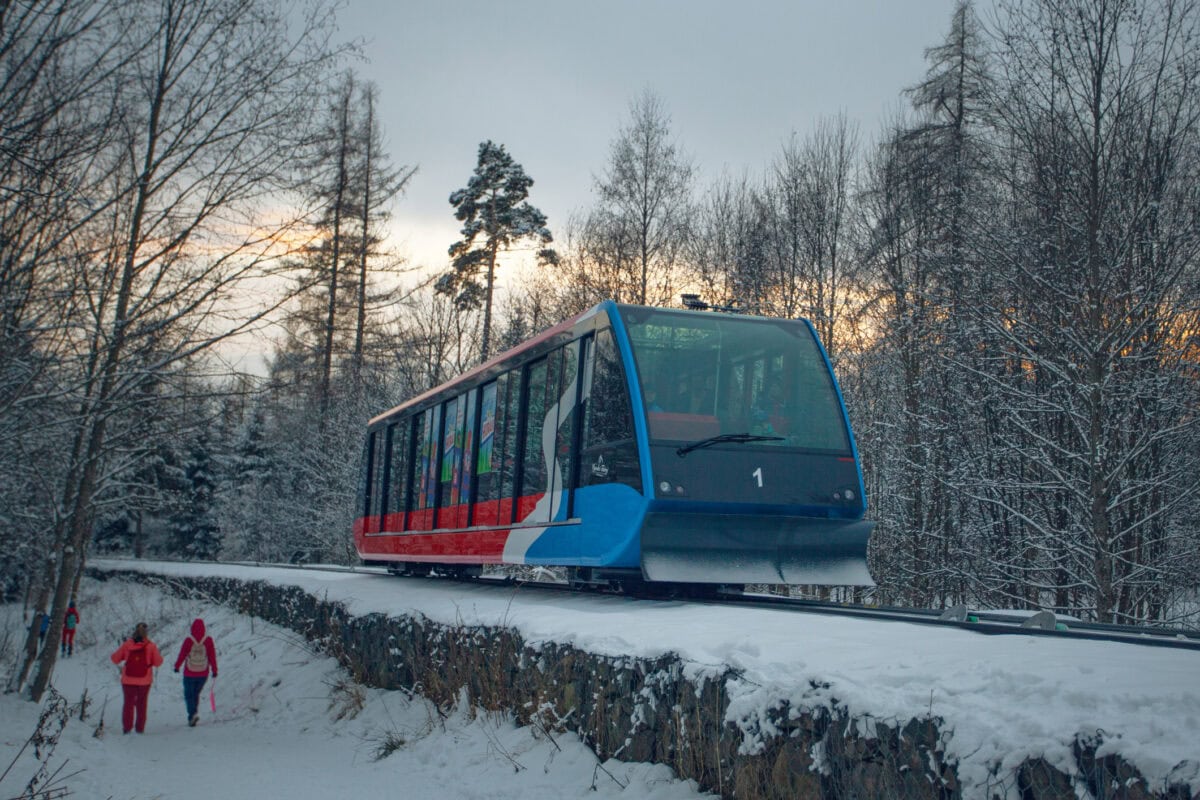
Winter transforms the Tatras into one of the most atmospheric mountain regions in Central Europe. Snow-covered forests, frozen lakes and mountain railways running through alpine scenery create an atmosphere that often feels surprisingly comparable to much more famous Alpine destinations. The combination of snow and the Tatra Electric Railway is especially memorable, with trains moving through dense forests beneath snow-covered peaks and mountain villages.
For hikers, the Tatras offer a huge variety of routes ranging from relaxed lake walks to demanding alpine trails. Popular areas around Hrebienok, Popradské Pleso and Skalnaté Pleso provide some of the best combinations of scenery and accessibility in the region. Many trails also connect naturally into mountain huts and scenic railway stations, allowing travellers to build flexible hiking days across different parts of the Tatras.
Best Hiking Trails, Lakes and Scenic Viewpoints in the High Tatras
The High Tatras are one of the best hiking destinations in Central Europe, combining alpine lakes, steep mountain trails, waterfalls and dramatic viewpoints across a surprisingly compact area. One of the biggest advantages of the region is how accessible many of the trails are using the mountain railway network, allowing travellers to explore large sections of the Tatras without needing a car.
Some of the easiest and most rewarding walks can be found around Štrbské Pleso, where paths circle the famous alpine lake beneath the surrounding peaks. The lake itself is one of Slovakia’s most photographed natural landmarks, particularly during calm mornings when the mountains reflect across the water. Even travellers not planning serious hikes can still enjoy excellent scenery simply by walking around the shoreline and nearby forest paths.
For more ambitious hikers, routes from Starý Smokovec and Tatranská Lomnica lead deeper into the mountains toward waterfalls, mountain huts and higher alpine viewpoints. Popular routes include trails toward Hrebienok, alpine valleys filled with waterfalls and more demanding mountain terrain closer to the higher peaks. Summer conditions usually provide the best access to these routes, although weather conditions in the mountains can change rapidly even during warmer months.
One of the most famous viewpoints in the region is Lomnický štít, which offers panoramic views across large sections of the Tatras and surrounding countries. Cable car access makes the peak far more accessible than many comparable alpine viewpoints elsewhere in Europe, allowing travellers to experience high mountain scenery without committing to difficult mountaineering routes.
Photography opportunities exist throughout the region. Mountain lakes, forests, railway lines, snow-covered peaks and changing weather conditions combine to create constantly shifting scenery across the Tatras. Early mornings and late afternoons often provide the most dramatic lighting conditions, particularly around the lakes and higher mountain ridges.
Scenic Mountain Railways and the High Tatras Cog Railway
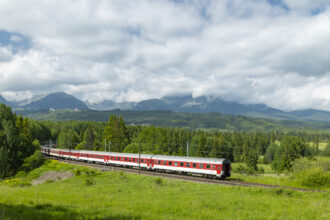
One of the defining features of the High Tatras is the region’s remarkable mountain railway network. Unlike many mountain destinations where travellers rely heavily on cars or buses, the Tatras can be explored extensively using trains, electric railways and mountain transport systems that connect resorts, hiking areas and scenic viewpoints across the region.
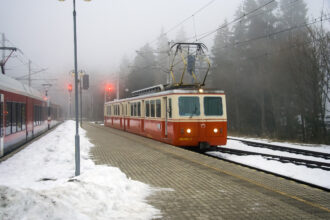
The backbone of the system is the Tatra Electric Railway, a narrow-gauge mountain railway linking destinations including Štrbské Pleso, Starý Smokovec and Tatranská Lomnica. The trains themselves feel like a mixture of trams and alpine railways, travelling through forests, valleys and mountain villages beneath the surrounding peaks. For many visitors, simply riding the trains becomes one of the highlights of visiting the Tatras.
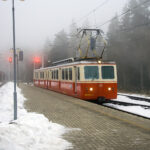
The most famous route within the network is the historic High Tatras cog railway, officially known as the Štrba Rack Railway. This steep mountain railway climbs from Štrba up toward Štrbské Pleso using a special rack-and-pinion system designed to handle the steep gradients. The route is one of the most scenic and underrated mountain railways in Europe, particularly during winter when snow-covered forests surround the line.
One of the biggest strengths of the railway system is how practical it remains. Unlike many famous scenic railways elsewhere in Europe, the Tatras network still functions as everyday public transport for locals, hikers and skiers. Tickets remain relatively affordable, services operate frequently and connections between different mountain areas are generally straightforward.
The railway network also makes the High Tatras particularly attractive for Interrail travellers and visitors exploring Central Europe by train. Travellers can arrive from cities including Bratislava, Kraków or Prague, transfer onto mountain railways and continue directly into alpine scenery without needing a car at any stage of the journey.
Search routes and flight options for your trip to High Tatras.
Search flightsChoose an Airalo eSIM and arrange mobile data before you arrive.
Browse eSIMsHave a private airport pickup arranged before you travel.
Book a transferSki Resorts and Winter Sports in the High Tatras
During winter, the High Tatras transform into one of the best-value ski destinations in Central Europe. While the region lacks the enormous scale of some Alpine mega-resorts, it compensates with lower prices, impressive scenery and a far more relaxed atmosphere than many heavily commercialised ski areas elsewhere in Europe.
The best-known winter destination is Štrbské Pleso, which combines ski slopes with dramatic alpine scenery and direct railway access. The resort is particularly popular with beginner and intermediate skiers, while the surrounding snow-covered forests create one of the most atmospheric winter landscapes in Slovakia. Cross-country skiing is also very popular in the area thanks to the wider valley terrain surrounding the lake.
Tatranská Lomnica offers some of the most challenging ski terrain in the Slovak Tatras and is widely regarded as one of the country’s top ski resorts. Cable cars and ski lifts climb toward higher elevations beneath Lomnický štít, creating spectacular views across the mountains during clear weather conditions.
Winter tourism in the Tatras extends beyond skiing alone. Snow-covered hiking routes, mountain hotels, scenic rail journeys and alpine lake scenery all help attract travellers looking for quieter winter experiences away from Europe’s busiest ski regions. The combination of mountain railways and winter landscapes is especially appealing for photographers and scenic train enthusiasts.
Another major advantage of the region is affordability. Accommodation, lift passes and food prices are often significantly lower than equivalent destinations in Austria, France or Switzerland. This makes the High Tatras particularly attractive for travellers seeking alpine winter scenery without the extreme costs associated with many Western European ski destinations.
Cable Cars, Funiculars and Mountain Lifts in the High Tatras
Although the High Tatras are famous for hiking and mountain railways, the region’s cable cars and mountain lifts are equally important parts of the overall travel experience. These systems allow visitors to reach spectacular alpine viewpoints, mountain lakes and higher elevations without needing advanced hiking ability or mountaineering experience.
The most famous lift system operates from Tatranská Lomnica toward Skalnaté Pleso and eventually Lomnický štít, one of the highest peaks in Slovakia. The journey itself is one of the highlights of visiting the Tatras, with cable cars rising steadily above forests, ski slopes and rocky mountain scenery before reaching dramatic alpine viewpoints overlooking large sections of the Carpathian Mountains.
Even travellers not planning major hikes often use the lifts simply for the scenery. Viewing platforms around Skalnaté Pleso provide spectacular panoramas across the mountains and valleys below, while changing weather conditions can create constantly shifting alpine landscapes throughout the day.
Another important lift system is the Hrebienok funicular operating from Starý Smokovec. This short but popular mountain railway carries visitors uphill toward hiking trails, waterfalls and mountain huts without requiring a steep uphill climb on foot. During winter, the area around Hrebienok also becomes known for snow attractions and winter scenery.
Many ski resorts across the Tatras also operate chairlifts, gondolas and cable cars throughout winter, particularly around Tatranská Lomnica and Štrbské Pleso. However, unlike some ski destinations where lifts close entirely outside winter, many Tatras cable cars continue operating during summer for sightseeing and hiking access.
Weather conditions can occasionally affect operations, especially at higher elevations around Lomnický štít, where strong winds and alpine storms sometimes cause temporary closures. Clear mornings often provide the best visibility for photography and panoramic mountain views, while sunset conditions can create particularly dramatic lighting across the surrounding peaks and valleys.
Best Time to Visit the High Tatras
The best time to visit the High Tatras depends heavily on the type of trip you are planning. The mountains change dramatically throughout the year, with completely different scenery, activities and travel conditions between summer and winter.
Summer is generally considered the best season for hiking, mountain lakes and scenic outdoor exploration. Between roughly June and September, trails are usually fully accessible, mountain railways operate heavily and temperatures remain comfortable for walking. Clear summer days also provide the best visibility for panoramic viewpoints and photography across the Tatras.
Autumn brings quieter conditions and some of the region’s most impressive colours, with forests around Štrbské Pleso and Starý Smokovec turning shades of gold and orange. Tourist numbers usually drop after summer, creating a calmer atmosphere across much of the region.
Winter transforms the mountains completely. Snow covers the forests, lakes partially freeze and ski resorts become the focus of tourism throughout the Tatras. The combination of snowy landscapes and mountain railways creates some of the most atmospheric scenery in Central Europe, particularly along the famous High Tatras cog railway.
Spring can be more unpredictable, with lingering snow at higher elevations and rapidly changing weather conditions throughout the mountains. However, this season often offers quieter trails and lower accommodation prices before the main summer hiking season begins.

How to Reach and Get Around the High Tatras Without a Car
One of the biggest advantages of visiting the High Tatras is that the region is surprisingly easy to explore without driving. Unlike many mountain destinations in Europe that rely heavily on cars and long mountain roads, the Tatras have an extensive rail network linking major resorts, hiking areas and transport hubs across the region.
Most international travellers reach the mountains via Poprad, which acts as the main transport gateway to the Tatras. The city sits on Slovakia’s important east-west railway corridor and has direct rail connections toward Bratislava, Košice and neighbouring countries including Poland and the Czech Republic. The nearby Poprad-Tatry Airport also provides limited international access for some travellers.
Once inside the region, the famous Tatra Electric Railway becomes the easiest way to move between mountain settlements. The narrow-gauge railway connects destinations including Štrbské Pleso, Starý Smokovec and Tatranská Lomnica, allowing travellers to move around the mountains quickly without relying on buses or taxis.
The historic High Tatras cog railway also plays an important role within the network. Officially known as the Štrba Rack Railway, the line climbs steeply from Štrba station up toward Štrbské Pleso, providing one of the most scenic rail journeys in the region. Services generally operate roughly once per hour and the short journey takes around 15 minutes.
Because the transport system is relatively compact and well integrated, many travellers find that a car becomes unnecessary once they arrive in the Tatras. The railway network, hiking routes and mountain resorts all connect naturally together, creating one of the most accessible alpine-style regions in Central Europe for independent travellers.
Where to Stay in the High Tatras
Choosing where to stay in the High Tatras depends heavily on the type of trip you are planning. Some travellers prioritise skiing and winter sports, while others focus on hiking, scenic railways or relaxed mountain scenery beside the lakes and forests.
Štrbské Pleso is usually considered the most scenic and atmospheric base within the Slovak Tatras. The resort sits beside its famous alpine lake and provides direct access to hiking trails, ski slopes and the mountain railway network. Hotels here often focus on mountain views, wellness facilities and easy access to the surrounding scenery. It is particularly popular for winter trips and romantic mountain escapes.
Travellers wanting the best railway connections often choose Starý Smokovec. The town acts as one of the central hubs within the Tatra Electric Railway network and offers good access toward hiking routes, restaurants and nearby attractions. Accommodation ranges from traditional mountain hotels to smaller guesthouses and apartments.
Tatranská Lomnica works especially well for skiing and cable car access toward Lomnický štít. The resort tends to attract travellers focused on mountain sports and higher alpine scenery, particularly during winter ski season.
Budget-conscious travellers sometimes stay in Poprad instead of directly within the mountains. While the city lacks the same alpine atmosphere, accommodation prices are often lower and railway access into the Tatras remains straightforward. This can work particularly well for travellers planning day trips into the mountains rather than full resort stays.
Food, Mountain Huts and Traditional Slovak Cuisine
Food in the High Tatras combines traditional Slovak mountain cuisine with the hearty meals typically associated with alpine regions across Central Europe. Restaurants throughout the Tatras often focus on warming dishes designed for hikers, skiers and travellers spending long days outdoors in the mountains.
One of the most famous Slovak dishes is bryndzové halušky, a traditional meal made from potato dumplings topped with sheep cheese and bacon. The dish appears throughout the Tatras and remains strongly associated with Slovak mountain culture. Heavier soups, grilled meats and potato-based dishes are also common across mountain restaurants and hotels.
Mountain huts form another important part of the hiking culture within the Tatras. Many trails pass traditional alpine refuges where hikers can stop for meals, drinks or short breaks while exploring the mountains. These huts often provide some of the most atmospheric dining experiences in the region, particularly during colder weather when travellers gather inside beside mountain scenery and changing alpine conditions.
The resort areas around Štrbské Pleso, Starý Smokovec and Tatranská Lomnica contain the widest selection of restaurants, cafés and mountain hotels. Travellers will find everything from casual Slovak comfort food to more upscale mountain dining focused on regional ingredients and alpine-style cuisine.
Compared with many famous alpine destinations in Western Europe, food prices in Slovakia generally remain relatively reasonable. Even in the main mountain resorts, travellers can often eat well without the extreme restaurant costs associated with ski resorts in countries such as Switzerland or France.
Browse hostels and budget-friendly stays around High Tatras.
See hostelsFlying to High Tatras? Get fast compensation payouts, eligible lounge benefits and expert help when flights go wrong.
See AirHelp+ benefitsLeave your luggage somewhere convenient and enjoy High Tatras hands-free.
View storageCosts and Budget Tips for Visiting the High Tatras
One of the strongest reasons to visit the High Tatras is the overall value compared with many better-known mountain destinations in Europe. While prices have increased in recent years, the region still remains noticeably more affordable than major alpine resorts in Austria, France or Switzerland.
Accommodation costs vary significantly depending on season and resort location. Winter ski season and peak summer hiking months naturally bring higher prices, particularly around Štrbské Pleso and Tatranská Lomnica. Travellers staying in Poprad often find lower hotel prices while still retaining easy railway access into the mountains.
The mountain railway network is generally very affordable compared with scenic railways elsewhere in Europe. Even the famous High Tatras cog railway usually costs only a few euros for a single ride, making it remarkably inexpensive considering the scenery and engineering involved. Wider regional rail tickets covering parts of the Tatra Electric Railway network also provide good value for travellers planning multiple journeys.
Food prices also remain relatively manageable throughout much of the region. Traditional Slovak restaurants, cafés and mountain huts often cost significantly less than equivalent venues in the Alps, especially away from the most tourist-focused resort areas. Travellers willing to use local transport and avoid peak holiday periods can still experience alpine scenery at a fraction of typical Western European mountain resort costs.
High Tatras Itinerary Ideas for Hikers, Families and Winter Travellers
The High Tatras work extremely well for short breaks, scenic rail holidays and longer mountain itineraries thanks to the region’s compact size and excellent railway connections. Because many of the main resorts are linked by the Tatra Electric Railway, travellers can experience lakes, ski resorts, hiking trails and mountain viewpoints without spending large amounts of time travelling between destinations.
For a shorter trip, many visitors focus on Štrbské Pleso and the surrounding lake area. This works particularly well for relaxed mountain scenery, shorter walks and scenic railway journeys. Travellers can ride the famous High Tatras cog railway, walk around the lake and enjoy mountain views without committing to difficult hikes or complex logistics. Families and casual visitors often find this the easiest introduction to the Tatras.
A longer hiking-focused itinerary usually combines Štrbské Pleso, Starý Smokovec and Tatranská Lomnica over several days. This allows travellers to explore multiple hiking areas, waterfalls, mountain lakes and railway routes while using the mountain rail system as the main form of transport. Because the region is relatively compact, it becomes easy to combine scenic train journeys with outdoor activities throughout the trip.
Winter travellers often structure trips around skiing and snow scenery. Tatranská Lomnica usually appeals most to skiers wanting larger slopes and cable car access toward Lomnický štít, while Štrbské Pleso works especially well for travellers wanting a mixture of winter scenery, skiing and relaxed alpine atmosphere beside the frozen lake.
The region also works very well within wider Central European rail itineraries. Travellers frequently combine the Tatras with destinations including Kraków, Bratislava, Budapest and Prague, creating a broader journey through some of the region’s most scenic railway and mountain landscapes.
High Tatras Travel Tips and Safety Advice
The High Tatras are generally very safe for travellers, but mountain conditions can change rapidly throughout the year. Even during summer, weather in higher elevations may shift suddenly from sunshine to fog, heavy rain or strong winds within relatively short periods of time.
Travellers planning hikes should always carry extra clothing layers, suitable footwear and water, particularly when moving into higher mountain terrain. Temperatures at elevation can feel significantly colder than lower areas around Poprad, especially during mornings, evenings and periods of poor weather.
Winter conditions require additional caution. Snow and ice can make some trails dangerous without proper equipment, while weather changes around the higher peaks may reduce visibility very quickly. Travellers unfamiliar with alpine winter conditions should avoid attempting difficult mountain routes without local guidance or suitable experience.
One of the advantages of the Tatras is the strong railway network linking many major areas. The Tatra Electric Railway and High Tatras cog railway provide reliable alternatives to driving in snowy mountain conditions, particularly during winter months when roads may become more difficult.
Travellers should also remember that some mountain trails close seasonally for environmental protection or safety reasons, particularly during winter and early spring. Checking local conditions before beginning longer hikes is always recommended.

eSIMs and Mobile Connectivity in the High Tatras
Mobile coverage across the High Tatras is generally good in the main resort areas, railway stations and larger hiking zones, although signal quality can become weaker in remote valleys and higher mountain terrain. Travellers staying connected for maps, train tickets and hiking navigation will usually find mobile data extremely useful throughout the region.
Using an eSIM is often the easiest option for international visitors travelling through Slovakia and wider Central Europe. eSIMs allow travellers to activate mobile data plans digitally without needing to purchase physical SIM cards after arrival. This becomes especially useful for rail travellers moving between multiple countries during the same trip.
Reliable mobile connectivity is particularly helpful when using the Tatra Electric Railway network, checking mountain weather conditions or navigating hiking trails around destinations including Štrbské Pleso and Starý Smokovec. Many travellers also rely heavily on mobile data for train bookings, accommodation reservations and offline hiking maps while exploring the Tatras.
Travellers planning broader European trips may benefit from regional eSIM plans covering multiple countries including Poland, Hungary, Austria and the Czech Republic. This can simplify connectivity when combining the High Tatras with wider rail journeys across Central Europe.

Rupert’s Handy Travel Tips
The High Tatras are one of Rupert’s favourite mountain regions in Central Europe because they combine dramatic scenery, scenic railways and relatively affordable travel costs without the crowds often found in larger Alpine resorts.
- Use the mountain railways whenever possible because the Tatra Electric Railway makes it easy to explore the region without needing a car.
- Allow time for weather changes because conditions in the High Tatras can shift very quickly, especially near higher peaks and exposed trails.
- Visit Štrbské Pleso early in the morning if you want calmer lake reflections and quieter walking trails around the water.
- Winter is ideal for atmosphere and photography thanks to snow-covered forests, mountain railways and dramatic alpine scenery.
- Carry offline maps and mobile data because signal strength can become weaker on more remote mountain trails.
Want to meet the reindeer behind our travel tips? Find out more in our page Who is Rupert?.
Frequently Asked Questions About Visiting the High Tatras
Are the High Tatras worth visiting?
Yes, the High Tatras are one of the most underrated mountain destinations in Europe. The region combines alpine scenery, scenic railways, hiking trails, ski resorts and relatively affordable prices in a way that feels increasingly rare elsewhere in Central Europe.
Can you visit the High Tatras without a car?
Yes, the mountains are surprisingly easy to explore using public transport. The Tatra Electric Railway and the famous High Tatras cog railway connect many of the main resorts and hiking areas, making the region one of the easiest alpine-style destinations in Europe to visit without driving.
What is the best base in the High Tatras?
Many travellers choose Štrbské Pleso because of its scenic lake, mountain atmosphere and direct railway access. Starý Smokovec works especially well for transport connections and hiking access, while Tatranská Lomnica is popular for skiing and cable car access toward Lomnický štít.
When is the best time to visit the High Tatras?
Summer is generally best for hiking, mountain lakes and outdoor activities, while winter is ideal for skiing, snow scenery and scenic railway photography. Autumn also provides beautiful forest colours and quieter conditions across much of the region.
How many days do you need in the High Tatras?
Many travellers spend between 2 and 5 days in the region depending on their plans. Short trips work well for scenic railway rides and lake walks, while longer stays allow time for hiking, skiing and exploring multiple mountain resorts.
Further Reading & Related Guides
Travellers exploring the High Tatras will usually find themselves wanting to discover more of Slovakia’s scenic railways, mountain resorts and wider Central European travel routes. The Tatras connect naturally into broader railway adventures across the region, making them ideal for travellers building longer rail and mountain itineraries.
If you want to explore the wider mountain rail network in more detail, our dedicated Tatra Electric Railway Guide explains how to travel between resorts including Štrbské Pleso, Starý Smokovec and Tatranská Lomnica entirely by train. Travellers specifically interested in the region’s steep mountain railways should also read our full High Tatras Cog Railway Guide, covering the famous rack railway climbing from Štrba into the mountains.
Rail travellers planning wider journeys through the country may also find our Interrail Slovakia Guide useful for understanding scenic routes, sleeper trains and rail connections across Slovakia. During winter, our Slovakia Ski Guide explores the country’s best-value ski resorts, winter railway access and snow destinations beyond the better-known Alpine countries.
For travellers needing reliable mobile data while hiking or using the mountain railways, our guide to the best eSIMs explains how to stay connected throughout the High Tatras without relying on expensive roaming charges or physical SIM cards.