Reviewed by our editorial team Updated
Why the Tatra Electric Railway Is One of Europe’s Most Underrated Mountain Rail Networks
The Tatra Electric Railway is one of the most underrated mountain railway systems in Europe. Running through the heart of the High Tatras, the network links alpine lakes, ski resorts, hiking gateways and dramatic mountain scenery using a compact but remarkably effective electric railway system.
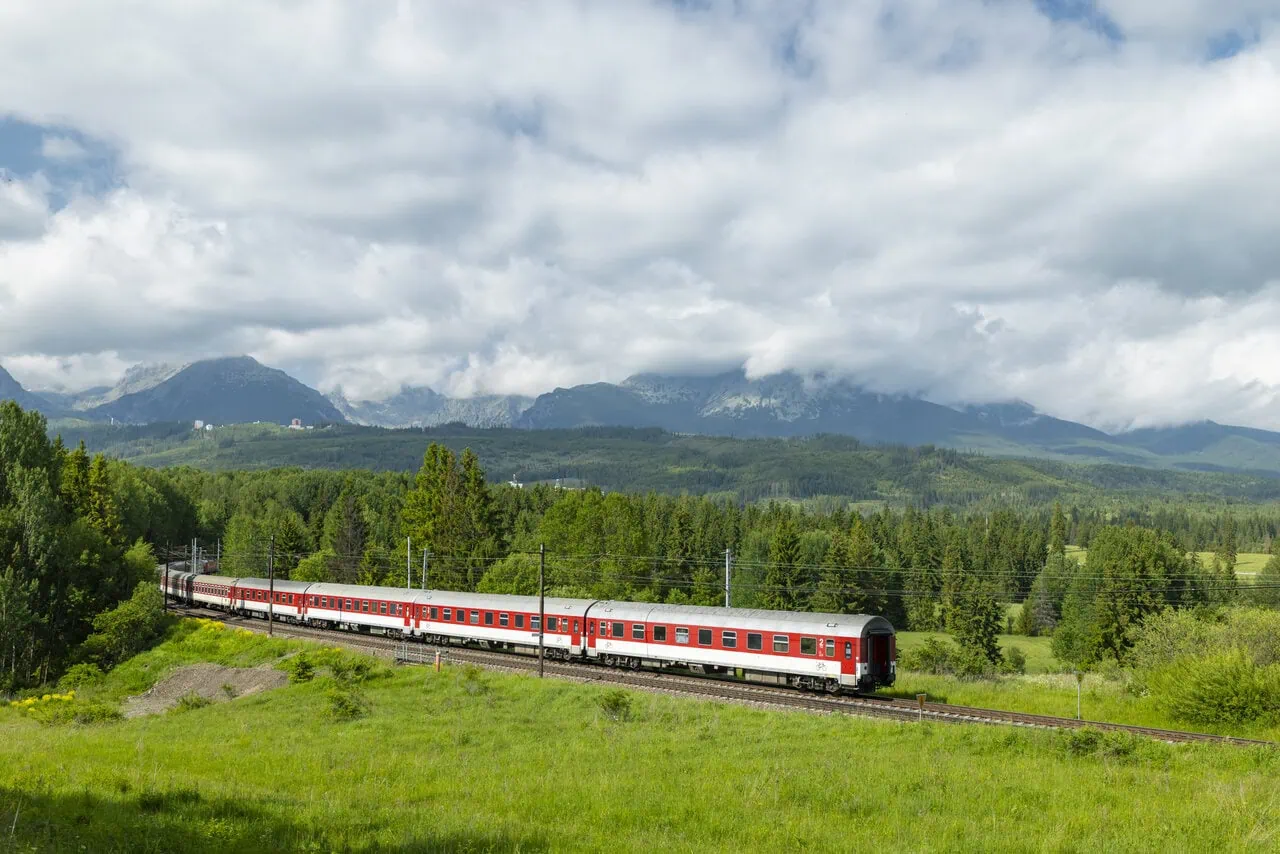
While many travellers focus on the famous mountain railways of Switzerland or Austria, the Tatras network delivers a surprisingly similar atmosphere at a fraction of the cost. The trains pass through forests, mountain villages and alpine scenery beneath some of the highest peaks in the entire Carpathian Mountains, while still functioning as practical everyday transport for locals, hikers and skiers.
One of the network’s biggest strengths is how naturally it integrates into wider travel across Central Europe. Travellers can arrive by long-distance train into Poprad, transfer directly onto mountain railways and continue deep into the Tatras without needing a car. The system also connects directly into the historic High Tatras cog railway, creating one of the most scenic and accessible mountain transport systems anywhere in the region.
The railway changes dramatically throughout the year. During winter, trains run through snow-covered forests toward ski resorts and frozen mountain lakes. In summer, hikers use the network to access trails, waterfalls and panoramic viewpoints throughout the mountains. Even travellers with little interest in railways often find the journeys themselves becoming one of the highlights of visiting the Tatras.
What the Tatra Electric Railway Is
The Tatra Electric Railway is a narrow-gauge electric mountain railway network operating across the Slovak side of the High Tatras. Known locally as the TEŽ, the railway links many of the region’s major mountain settlements, ski resorts and hiking gateways using electric trains specifically designed for alpine conditions.
The system first developed during the early twentieth century as tourism in the Tatras began expanding rapidly. Mountain resorts including Starý Smokovec, Štrbské Pleso and Tatranská Lomnica required reliable transport links capable of operating through difficult mountain terrain and harsh winter weather. Over time, the railway evolved into the backbone of public transport across the Slovak Tatras.
Today, the railway remains both practical and scenic. Unlike many famous mountain railways elsewhere in Europe that function mainly as tourist attractions, the Tatra Electric Railway still operates as genuine public transport used daily by residents, commuters, hikers and winter sports travellers.
The network also integrates with the famous Štrba Rack Railway, commonly known as the High Tatras cog railway. This steep mountain railway climbs from Štrba toward Štrbské Pleso, allowing travellers arriving on Slovakia’s main railway corridor to connect directly into the mountains.
See hotel options and places to stay in Slovakia.
Browse hotelsBrowse apartments, holiday homes and self-catering stays in Slovakia.
View rentalsCompare prices for Slovakia hotels across multiple booking sites.
Check dealsWhere the Tatra Electric Railway Runs
The Tatra Electric Railway operates as a connected mountain railway network rather than a single straight line. Understanding how the system fits together makes travelling around the High Tatras much easier, particularly for visitors arriving for the first time.
Most journeys begin at Poprad-Tatry railway station in Poprad, which acts as the gateway between Slovakia’s main rail network and the mountain railway system. From here, electric mountain trains climb northward into the Tatras toward the central resort area around Starý Smokovec.
One branch of the network continues eastward from Starý Smokovec toward Tatranská Lomnica, one of the region’s main ski and cable car resorts. Another section of the system links toward Štrbské Pleso, famous for its alpine lake, hiking trails and mountain scenery.
The network also connects with the historic High Tatras cog railway climbing from Štrba. This separate rack railway forms one of the most scenic parts of the wider system, carrying passengers steeply upward into the mountains toward Štrbské Pleso using a specialised cog mechanism designed for steep gradients.
Because the railway network links so many mountain resorts together, travellers can easily move between hiking areas, ski resorts and scenic viewpoints without needing road transport. This flexibility is one of the main reasons the Tatras remain so attractive for independent rail travellers and mountain visitors.
Quick Facts About the Tatra Electric Railway
| Feature | Details |
|---|---|
| Official Name | Tatra Electric Railway |
| Local Name | TEŽ – Tatranské elektrické železnice |
| Location | High Tatras, northern Slovakia |
| Main Hub | Poprad-Tatry railway station |
| Main Resorts Connected | Starý Smokovec, Štrbské Pleso and Tatranská Lomnica |
| Railway Type | Narrow-gauge electric mountain railway |
| Track Gauge | 1,000 mm metre gauge |
| Best Known Connection | The historic High Tatras cog railway from Štrba |
| Best For | Hiking, skiing, scenic journeys and mountain transport |
| Peak Travel Seasons | Summer hiking season and winter ski season |
| Can You Use It Without a Car? | Yes, the network is designed for mountain travel without driving |
| Most Scenic Section | The route toward Štrbské Pleso and the cog railway connection |
| Typical Train Frequency | Roughly every 30 to 60 minutes depending on route and season |
| Nearest Airport | Poprad-Tatry Airport |
| Interrail Useful? | Yes, particularly when combined with wider Slovak rail travel |
Main Routes and Stations on the Tatra Electric Railway
The Tatra Electric Railway operates as a connected network of mountain railway routes rather than a single end-to-end line. Understanding the major stations and route layout makes travelling around the High Tatras significantly easier, especially for first-time visitors arriving by train or through Poprad-Tatry Airport.
| Section | Main Route | Typical Journey Time | Highlights |
|---|---|---|---|
| 1 | Poprad → Starý Smokovec | Around 25 to 40 minutes | Main gateway route into the High Tatras with mountain scenery increasing steadily after leaving Poprad |
| 2 | Starý Smokovec → Tatranská Lomnica | Around 15 to 20 minutes | Scenic branch toward ski resorts and the cable car connection for Lomnický štít |
| 3 | Starý Smokovec → Štrbské Pleso | Around 25 to 35 minutes | Forest scenery, mountain views and access toward alpine lakes and hiking trails |
| 4 | Štrba → Štrbské Pleso | Around 15 minutes | Historic High Tatras cog railway climbing steeply into the mountains |
Poprad acts as the main access point for most travellers entering the network. The city connects directly into Slovakia’s national railway system and provides onward access toward the mountain railway lines. Travellers arriving from Bratislava, Košice, Prague or Kraków will usually begin their mountain journey here.
Starý Smokovec functions as the central interchange point within the network and is one of the most important stations in the entire Tatras system. The town combines railway connections, hotels, hiking access and traditional mountain resort atmosphere, making it one of the most practical bases for exploring the region.
The branch toward Tatranská Lomnica is especially popular during winter because of the resort’s ski infrastructure and cable car access toward Lomnický štít. During summer, the line also attracts hikers and photographers looking for dramatic alpine scenery beneath the surrounding peaks.
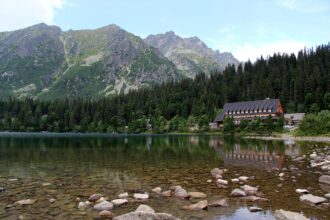
Meanwhile, Štrbské Pleso remains one of the most scenic destinations anywhere on the network. The combination of the famous alpine lake, hiking routes and the historic cog railway connection from Štrba makes the route one of the highlights of rail travel in Central Europe.

Scenic Highlights Along the Railway
One of the biggest reasons travellers fall in love with the Tatra Electric Railway is the constantly changing mountain scenery surrounding the trains. Unlike many scenic railways that focus mainly on a single dramatic viewpoint, the Tatras network delivers a mixture of forests, alpine lakes, mountain villages and steep peaks throughout much of the journey.
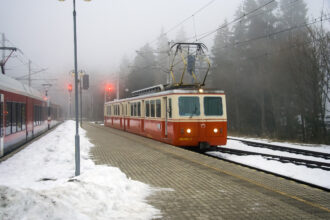
The route between Poprad and Starý Smokovec gradually introduces travellers to the mountains, with forested slopes and distant peaks appearing increasingly dramatic as the train climbs higher into the Tatras. During winter, snow-covered trees and mountain fog create particularly atmospheric conditions across this section of the line.
The branch toward Tatranská Lomnica provides some of the best views toward Lomnický štít, especially during clear weather. Travellers heading in this direction often experience some of the network’s most dramatic mountain panoramas, particularly during early morning and late afternoon light.
The route toward Štrbské Pleso is widely regarded as the most scenic section of the entire system. Dense forests, alpine landscapes and the famous lake scenery combine to create one of the most memorable railway journeys in Slovakia. The connecting High Tatras cog railway from Štrba adds another layer of drama thanks to its steep mountain climb through heavily forested terrain.
Seasonality also transforms the visual atmosphere of the railway. Summer brings green forests, hiking scenery and clearer mountain views, while winter creates frozen landscapes, snow-covered villages and dramatic alpine weather conditions that often feel surprisingly similar to much more famous railway routes in the Alps.
Tickets, Prices and How to Buy Tickets
One of the strongest advantages of the Tatra Electric Railway is how affordable the network remains compared with many mountain railway systems elsewhere in Europe. While famous Alpine railways can sometimes cost extremely high prices for relatively short journeys, the Tatras network still operates primarily as public transport, helping keep fares accessible for both locals and visitors.
Standard single tickets between mountain resorts usually cost only a few euros depending on distance travelled, while wider regional tickets covering multiple sections of the network are also available. Even combining several railway journeys throughout the day often remains relatively inexpensive by European mountain travel standards.
Tickets can usually be purchased at railway stations, ticket machines or through Slovak railway ticket systems. Many travellers simply buy tickets shortly before departure because the network functions more like regional public transport than a reservation-heavy tourist railway system. During busy winter and summer periods, trains can become crowded, although advance seat reservations are generally unnecessary on most services.
Travellers using the famous High Tatras cog railway between Štrba and Štrbské Pleso should normally expect separate or integrated regional fares depending on the ticket type used. Even so, prices remain extremely reasonable compared with similar scenic mountain railways elsewhere in Europe.
For many travellers, one of the biggest surprises is how inexpensive the overall network feels considering the scenery, engineering and convenience involved. This affordability is one of the main reasons the High Tatras remain such a strong value destination for rail travellers, hikers and winter visitors.
Travellers using Interrail or Eurail can usually use their passes on much of Slovakia’s main railway network reaching Poprad, although coverage on the local Tatra Electric Railway and the High Tatras cog railway can vary depending on current agreements and ticket rules. In some cases, local supplementary tickets may still be required for sections of the mountain railway network.
Even when separate tickets are needed, prices on the Tatra Electric Railway remain relatively inexpensive compared with many famous mountain railways elsewhere in Europe. Many travellers therefore simply purchase local tickets separately while using Interrail for the wider long-distance journey into the Tatras.
Timetables, Frequency and Best Times to Travel
Services on the Tatra Electric Railway generally operate frequently throughout the day, particularly between the main mountain resorts and transport hubs. On the busiest sections of the network, trains often run roughly every 30 to 60 minutes, with frequencies varying depending on route, season and time of day.
The core routes linking Poprad, Starý Smokovec and Tatranská Lomnica usually provide the most regular service levels because of their importance for commuters, hikers and ski travellers. The connecting High Tatras cog railway toward Štrbské Pleso also operates regularly throughout much of the day.
Winter and summer represent the busiest travel periods across the network. Ski season increases passenger numbers heavily around Tatranská Lomnica and Štrbské Pleso, while summer hiking season creates strong demand across almost the entire railway system.
For scenic journeys, early morning and late afternoon often provide the best overall atmosphere. Morning services can deliver calmer conditions and clearer mountain visibility, while evening light frequently creates dramatic colours across the forests and peaks surrounding the railway. Winter travellers may also experience particularly atmospheric conditions during snowfall or mountain fog.
Because the network functions as practical public transport rather than a reservation-heavy tourist railway, travellers usually retain significant flexibility. Many visitors simply arrive at the station, purchase tickets shortly before departure and travel spontaneously depending on weather conditions or hiking plans for the day.
Search flights and useful route combinations for your trip.
View flightsChoose an Airalo eSIM and arrange mobile data before you arrive.
Browse eSIMsArrange a private airport pickup for your trip to Slovakia.
Check transfersUsing the Railway for Hiking, Lakes and Mountain Trails
One of the biggest advantages of the Tatra Electric Railway is how effectively it functions as a hiking transport network rather than simply a scenic railway. Throughout the High Tatras, trains provide direct access to lakes, waterfalls, mountain valleys and trailheads that would otherwise require long road journeys or difficult parking arrangements.
Many travellers use the railway to build flexible hiking days across the mountains. Instead of completing circular routes back to the same parking area, hikers can start in one resort, walk through the mountains and finish in another before returning by train. This creates far more freedom when planning routes through the Tatras.
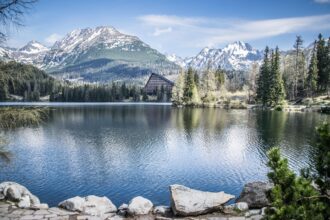
Štrbské Pleso is one of the most important hiking gateways on the network. The famous alpine lake sits directly beside the railway station and provides immediate access to mountain scenery, forest walks and higher alpine trails. Even casual visitors can enjoy spectacular surroundings without committing to demanding mountain hikes.
Starý Smokovec also acts as a major hiking hub thanks to its central location within the railway system. Trails from the town lead toward waterfalls, mountain huts and the popular Hrebienok area, while railway connections make it easy to continue elsewhere in the Tatras afterward.
The railway becomes especially valuable during summer when roads and parking areas around the mountains can become busier. Trains allow travellers to move efficiently between hiking areas while avoiding many of the traffic and parking pressures that affect mountain destinations elsewhere in Europe.
Using the Railway for Ski Resorts and Winter Travel
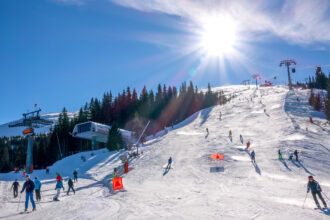
During winter, the Tatra Electric Railway transforms into one of the most useful ski transport systems in Central Europe. Snow-covered trains connect ski resorts, mountain hotels and winter hiking areas across the Tatras while helping travellers avoid difficult mountain driving conditions.
The railway is particularly important for travellers staying in Starý Smokovec, Štrbské Pleso and Tatranská Lomnica. All three resorts sit directly on the wider network, allowing visitors to move between ski areas, restaurants and accommodation without constantly relying on taxis or cars.
Tatranská Lomnica is especially important for skiing because of its cable car infrastructure and access toward Lomnický štít. Winter travellers often use the railway to reach the resort before continuing toward ski slopes and higher mountain areas.
The route toward Štrbské Pleso becomes particularly atmospheric during winter. Snow-covered forests, mountain fog and frozen scenery combine with the historic High Tatras cog railway to create one of the most visually impressive winter rail journeys anywhere in the region.
Winter conditions can still affect operations occasionally during severe weather, but the railway generally remains one of the most reliable ways to move around the mountains during snowy periods. Many travellers find the trains significantly less stressful than driving on icy mountain roads, especially during ski season.
Best Scenic Journeys on the Tatra Electric Railway
Although almost the entire Tatra Electric Railway network is scenic, some sections stand out as particularly memorable for mountain views, forests and alpine atmosphere. Travellers with limited time can still experience several spectacular journeys within a single day thanks to the compact size of the network.
The most famous journey is usually the route involving the High Tatras cog railway between Štrba and Štrbské Pleso. The steep mountain climb through dense forests creates one of the most distinctive railway experiences in Central Europe, especially during winter when snow transforms the surrounding landscape.
The section between Starý Smokovec and Tatranská Lomnica also provides excellent mountain scenery beneath the peaks surrounding Lomnický štít. Clear weather often produces dramatic panoramic views across the surrounding valleys and forests.
Travellers wanting a broader scenic circuit often combine multiple routes together in a single journey. A typical day might involve travelling from Poprad toward Starý Smokovec, continuing onward toward Štrbské Pleso and then returning through the cog railway connection via Štrba. This allows travellers to experience several distinct sections of the network within one continuous rail itinerary.
Seasonality dramatically changes the atmosphere of these journeys. Summer highlights green forests, hiking trails and clear mountain panoramas, while winter creates snowy landscapes, frozen lakes and dramatic alpine weather conditions that often feel comparable to much more famous Alpine railway routes.

How to Reach the Railway from Poprad Airport
Most travellers access the Tatra Electric Railway through Poprad-Tatry railway station, which acts as the main gateway into the mountain rail network after arriving at Poprad-Tatry Airport.
The airport itself does not have a dedicated railway station directly connected to the terminal. Instead, travellers normally continue first toward Poprad town centre or directly to Poprad-Tatry station using taxis, local buses or private transfers.
Taxi journeys from the airport to the railway station are relatively short and usually take around 10 to 15 minutes depending on traffic and weather conditions. Many travellers prefer this option, particularly during winter or when carrying skis and larger luggage.
Limited local bus services may also connect the airport with Poprad and the railway station, although frequencies can vary depending on season and flight schedules. Because the airport is located relatively close to the town itself, many visitors find transfers fairly straightforward compared with larger European mountain airports.
Once at Poprad-Tatry station, travellers can continue directly into the mountains using the wider railway network. Electric mountain trains operate toward destinations including Starý Smokovec, Štrbské Pleso and Tatranská Lomnica, making it possible to reach much of the Tatras without needing additional road transport.
Interrail and International Rail Connections
The Tatra Electric Railway works surprisingly well as part of wider European rail journeys, particularly for travellers exploring Central Europe using Interrail or long-distance international trains. Because the network connects directly into Slovakia’s main railway corridor at Poprad, the mountains are far easier to reach by rail than many travellers initially expect.
Long-distance trains arriving at Poprad-Tatry railway station connect the High Tatras with major cities including Bratislava, Košice, Prague, Budapest and Kraków. This makes the Tatras highly practical for travellers building multi-country rail itineraries across the region.
| Destination | Typical Direct Train Time from Poprad | Notes |
|---|---|---|
| Bratislava | Around 4 to 5.5 hours | Main westbound Slovak rail route with regular long-distance services |
| Košice | Around 1.5 to 2 hours | Fastest major city connection from Poprad |
| Prague | Around 6 to 8 hours | Direct daytime and overnight rail connections available on some services |
| Budapest | Around 5 to 7 hours | Usually requires at least one change depending on route |
| Kraków | Around 3 to 5 hours | Cross-border rail route popular with Tatras travellers |
Many travellers combine the mountains with broader rail routes through the former Austro-Hungarian region, linking the Tatras with destinations in Poland, Hungary, Austria and the Czech Republic. The relatively low travel costs across Slovakia also make the country especially attractive for budget-conscious rail travellers wanting mountain scenery without Swiss-level prices.
Interrail coverage generally includes the major Slovak railway network reaching Poprad, although coverage on local mountain railway services can vary depending on current pass agreements and ticket rules. Travellers should still verify the latest Interrail conditions before travelling, particularly regarding the High Tatras cog railway and regional mountain lines.
One of the biggest strengths of the Tatras overall is how naturally the mountain railways integrate into ordinary rail travel. Unlike some remote alpine regions requiring complicated transfers, the High Tatras feel like a genuine continuation of the wider European railway network.
eSIMs and Mobile Connectivity in the High Tatras
Mobile coverage across the High Tatras is generally strong around the main railway stations, mountain resorts and populated valleys served by the Tatra Electric Railway. Travellers using digital train tickets, hiking maps or live weather forecasts will usually find mobile data extremely useful throughout the region.
Using an eSIM is often the simplest option for international visitors travelling through Slovakia and wider Central Europe. eSIMs allow travellers to activate mobile data plans digitally before arrival without needing to search for physical SIM cards after reaching the mountains.
Reliable mobile connectivity becomes particularly useful when checking railway timetables, navigating hiking routes or monitoring weather conditions across the Tatras. Conditions in the mountains can change quickly, especially during winter and at higher elevations, making live weather updates valuable for both hikers and skiers.
Travellers combining Slovakia with wider rail travel across neighbouring countries may also benefit from regional eSIM plans covering destinations including Poland, Hungary, Austria and the Czech Republic. This can simplify connectivity significantly for travellers moving between multiple countries during the same rail trip.

Rupert’s Handy Travel Tips
The Tatra Electric Railway is much more than just transport. Rupert says the network is one of the best ways to actually experience the High Tatras, especially if you enjoy scenic railways, mountain landscapes and flexible travel without a car.
- Use Starý Smokovec as your railway hub because it sits at the centre of the network and makes changing routes very easy.
- Do not miss the cog railway to Štrbské Pleso because it is one of the most scenic mountain rail journeys in all of Central Europe.
- Travel early in the morning for the clearest mountain views especially during summer when afternoon cloud can build quickly around the peaks.
- Allow flexibility in winter because snowfall and mountain weather can occasionally affect timetables and visibility.
- Combine train journeys with hiking routes so you can start in one mountain resort and finish in another without needing to return to the same place.
Want to meet the reindeer behind our travel tips? Find out more in our page Who is Rupert?.
Compare hostels and budget-friendly accommodation around Slovakia.
Browse hostelsFlying to Slovakia? Get fast compensation payouts, eligible lounge benefits and expert help when flights go wrong.
See AirHelp+ benefitsArriving before check-in or leaving later? Store your luggage and make more of your time in Slovakia.
Store your bagsFrequently Asked Questions About the Tatra Electric Railway
Is the Tatra Electric Railway worth riding?
Yes, the Tatra Electric Railway is one of the most scenic and underrated mountain railway systems in Europe. The network combines alpine scenery, mountain resorts, hiking access and historic railway infrastructure across the High Tatras.
Can you explore the High Tatras without a car?
Yes, the railway network makes it surprisingly easy to explore much of the region using public transport alone. Resorts including Štrbské Pleso, Starý Smokovec and Tatranská Lomnica are all connected by rail.
What is the most scenic route on the network?
Many travellers consider the journey involving the High Tatras cog railway between Štrba and Štrbské Pleso to be the most scenic section of the system.
How often do trains run?
Services on the busiest sections of the network generally operate every 30 to 60 minutes depending on route, season and time of day.
Can you use Interrail on the Tatra Electric Railway?
Long-distance Slovak rail services reaching Poprad are generally covered by Interrail, although local mountain railway coverage can vary depending on current agreements and ticket conditions.
Further Reading & Related Guides
Travellers exploring the Tatra Electric Railway will usually find themselves wanting to discover more of the wider High Tatras region, including mountain resorts, scenic railways and winter travel routes across northern Slovakia.
Our full High Tatras Travel Guide explores hiking trails, alpine lakes, ski resorts and mountain viewpoints throughout the region, while the dedicated High Tatras Cog Railway Guide focuses specifically on the historic rack railway climbing from Štrba toward Štrbské Pleso.
Travellers arriving by air should also read our Poprad Airport to High Tatras Guide, covering railway transfers, taxis and the best ways to reach the mountains from Poprad-Tatry Airport. Rail travellers exploring the country more broadly may also find our Interrail Slovakia Guide useful for scenic rail routes and wider Slovak train travel.
For winter visitors, our Slovakia Ski Guide covers the country’s best-value ski resorts and winter transport advice, while our guide to the best eSIMs explains how to stay connected throughout the Tatras without relying on expensive roaming charges or physical SIM cards.