Reviewed by our editorial team Updated
Sardinia Travel Guide: Best Time to Visit, Getting There and Around
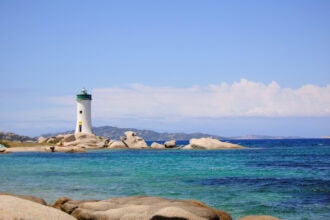
Sardinia is Italy’s second-largest island, sitting in the Mediterranean roughly halfway between the Italian mainland, Corsica and North Africa. Unlike Sicily or the smaller Italian islands, it feels almost like its own country in miniature, with a coastline of granite coves, pink-sand beaches and turquoise water that rivals anywhere else in the Mediterranean.
The interior is just as distinctive: rugged mountains, ancient nuraghi (Bronze Age stone towers found nowhere else on earth) and villages where Sardinian, not Italian, is still the first language spoken at home. That layered identity, part Italian, part Catalan around Alghero, part something older and entirely its own in the mountainous Barbagia region, gives Sardinia a character mainland Italy simply doesn’t have.
Visitors come for very different reasons depending on where they land. The glamorous marinas and superyachts of the Costa Smeralda near Olbia are a world apart from the Roman ruins and workaday energy of Cagliari in the south, and both differ again from the Catalan-flavoured old town of Alghero in the northwest.
This guide is the starting point for planning a first trip to the island. It works through when to go, the airports and ferry ports that get you there, how to get around once you’ve arrived, and which base or region suits the kind of trip you have in mind, before pointing you toward the more detailed guides covering each place in depth.
Sardinia’s size also rewards a bit of upfront planning. At over 24,000 square kilometres, it is far too large to see properly from a single base, and the drive between, say, Alghero and Cagliari takes the better part of a day.
Deciding early which corner of the island matches your priorities, whether that’s beaches, history, nightlife or hiking, will save far more time on the ground than any single packing tip. The sections below are built to help you make exactly that call.
Sardinia at a Glance
Here’s the essential detail at a glance before you start planning specific routes and dates.
| Category | Detail |
|---|---|
| Capital / Main City | Cagliari |
| Size | About 24,100 km² (Italy’s second-largest island after Sicily) |
| Population | Around 1.6 million |
| Best Time to Visit | June and September for warm seas with fewer crowds; July and August are hottest, busiest and priciest |
| Main Airports | Cagliari Elmas (CAG), Olbia Costa Smeralda (OLB), Alghero-Fertilia (AHO) |
| Main Ferry Ports | Olbia, Porto Torres, Cagliari, plus Palau for the La Maddalena islands |
| Currency | Euro (€) |
| Language | Italian and Sardinian, with a Catalan dialect spoken around Alghero |
For official, up-to-date planning information straight from the regional government, Sardegna Turismo, the island’s official tourism board, is a genuinely useful resource at sardegnaturismo.it, covering everything from event calendars to detailed regional guides.
Best if you want daily housekeeping and a front desk. Filter by area first, then by price.
Check availabilityBest for groups who want one address and separate bedrooms rather than three hotel rooms.
See holiday homesBest if you have already picked a hotel. Checks the big booking sites for the same room and shows who is cheapest.
Check dealsBest Time to Visit Sardinia
Sardinia follows a classic Mediterranean climate, with hot, dry summers and mild, wetter winters. Average temperatures climb to around 25°C (77°F) at sea level in July and August, dropping to a mild 9 to 10°C (48 to 50°F) in January and February, so genuinely cold weather is rare even in midwinter.
The sea takes longer to warm up than the air does. Comfortable swimming conditions generally run from July to September, when coastal water sits in the low-to-mid twenties Celsius, while June and October are noticeably cooler and better suited to sightseeing than long beach days.
August is peak season in every sense: flights and ferries run at their fullest, coastal towns swell with Italian holidaymakers, and the best-known beaches and restaurants fill up fast, especially around the Costa Smeralda. Booking accommodation, hire cars and ferry crossings well ahead is essential for anyone travelling in August.
June and September are widely considered the sweet spot for a first visit, since the sea is warm enough to swim comfortably while the crowds thin out considerably compared with August. Spring and autumn beyond those months suit travellers more interested in hiking, food and history than beach time, and winter is quiet and mild, though many coastal resorts and some ferry routes scale back significantly outside the summer season.
Sardinia’s weather is also shaped by two distinctive winds worth knowing about. The Maestrale blows from the northwest and is most active from October through April, though it can gust through in summer too, roughening the sea on the island’s north and west coasts while leaving the east and southeast noticeably calmer. The Scirocco is its opposite number, a hot, humid wind arriving from North Africa in spring and autumn that can push inland temperatures above 40°C (104°F) and leaves the air hazy rather than the Maestrale’s crisp, clear skies.
Rainfall follows a classic Mediterranean pattern, concentrated in autumn and winter and almost absent in high summer. October and November are the wettest months, particularly around Alghero in the northwest, while July is close to bone dry along most of the coast, and the mountainous interior sees noticeably more rain year-round than the drier south around Cagliari. Anyone travelling in the shoulder seasons should pack for the odd wet, windy day alongside the sunshine, especially if the itinerary includes the more exposed western coastline.
Flying into Sardinia: Which of the Three Airports to Choose
Sardinia has three international airports, each serving a different part of the island, so choosing the right one matters almost as much as choosing your dates. Cagliari Elmas (CAG) in the south is the busiest and most consistently served of the three, with year-round connections to Rome and Milan alongside seasonal budget routes from across Europe.
Olbia Costa Smeralda (OLB) in the northeast is the main gateway for the Costa Smeralda and the glamorous northeast coast, and it sees a heavy concentration of seasonal flights from across Europe through the summer months, easing back considerably once autumn arrives. Alghero-Fertilia (AHO) in the northwest is the smallest of the three, with a more limited, largely seasonal schedule built around budget carriers and a handful of Italian domestic routes.
Low-cost carriers including easyJet and Ryanair run seasonal routes from across Europe into all three, alongside Italy’s flag carrier ITA Airways linking Sardinia to Rome and Milan for onward connections. Exact routes and frequencies shift from year to year, so it’s worth checking live schedules close to your travel dates rather than relying on last summer’s timetable.
Once you land, our dedicated guides cover the practical side of each airport in full: Cagliari Airport Transfers, Olbia Airport Transfers and Alghero Airport Transfers. Each covers trains, buses, taxis and private transfers for getting from the runway into town.
Sailing to Sardinia: Ferry Ports and Routes
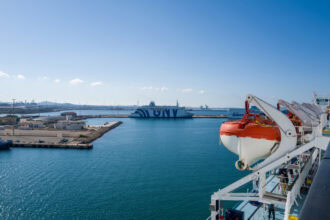
Sardinia has no direct flights from large parts of Europe, so travelling by ferry remains a genuinely popular option, especially for anyone bringing a car, a campervan, or simply preferring a slower start to the trip. Ferries connect the island to mainland Italy from ports including Genoa, Livorno, Civitavecchia and Naples, to France from Toulon, Nice and Marseille, and to Corsica via the short hop between Bonifacio and Santa Teresa Gallura.
Sardinia’s three main ferry gateways mirror its airports: Olbia in the northeast, Porto Torres in the northwest, and Cagliari in the south, each served by a different mix of Italian, French and Spanish routes. There’s also a short, frequent inter-island crossing from Palau to La Maddalena in the far northeast, which many visitors treat as part of the same trip.
Deciding between flying and taking the ferry usually comes down to whether you need a vehicle on the island and how much you value a slower, more scenic arrival. Car spaces on the busiest summer crossings sell out weeks ahead, so early booking matters if a ferry is part of your plan.
Our Sardinia Ferry Routes guide is the full hub for every crossing, operator and journey time, including dedicated write-ups of the Olbia, Porto Torres and Palau to La Maddalena routes. Start there for prices, operators and terminal practicalities.
Hire Car or Public Transport? Getting Around Once You’re There
Once you’ve arrived, how you get around depends heavily on the kind of trip you’re planning. Sardinia’s public transport network of trains and buses links the main towns reasonably well along the coast, but it thins out fast in the mountainous interior and rarely reaches the smaller beaches and villages that make the island special.
A hire car is by far the easiest way to see more than one region, and it’s genuinely useful for anyone planning to explore inland or string together several coastal towns in one trip. Traffic is light outside the main resorts, roads are generally good, and driving between the three airport regions, Cagliari, Olbia and Alghero, is all a matter of hours rather than days.
That said, plenty of visitors manage without one, particularly if they’re basing themselves in a single city like Cagliari or Olbia and using trains, local buses or day-tour operators for excursions. Our Getting Around Sardinia Without a Car guide covers exactly how far that approach can take you.
For anyone hiring a car and wanting to see multiple regions properly, our Road Trip Around Sardinia guide plots a full circular route around the island. It’s the natural next stop once you’ve decided a car is part of the plan.
Where to Go in Sardinia
Sardinia divides naturally into four regions built around its main towns and airports, and most first-time visitors base themselves in one or two of these rather than trying to circle the whole island in a single trip. Below is a short introduction to each, with links through to our full guides for every base.
Cagliari and the South
Sardinia’s capital and largest city sits at the southern tip of the island, built around a hilltop citadel called Castello, a Roman amphitheatre and the wide urban beach at Poetto. It’s the best-connected base on the island by air, train and ferry, and it makes a comfortable, walkable introduction to Sardinia for anyone with limited time.
Beyond the city itself, the south holds some of Sardinia’s most rewarding day trips, including Roman ruins at Nora, the UNESCO-listed nuraghe complex at Barumini, and the beaches and dunes around Chia and Villasimius, most reachable inside two hours. Cruise passengers also arrive here, with the port sitting a short walk from the old town.
Our full guides cover all of it: Things to Do in Cagliari, Day Trips from Cagliari and, for anyone arriving by cruise ship, our Cagliari Cruise Port Guide.
Olbia and the Costa Smeralda
Olbia is the gateway to Sardinia’s most glamorous stretch of coastline, the Costa Smeralda, where designer boutiques, superyacht marinas and some of the Mediterranean’s most photographed beaches sit within a short drive of the airport. The town itself is low-key and functional, more a transport hub than a destination, but it’s an easy, well-connected base for exploring the coast on either side of it.
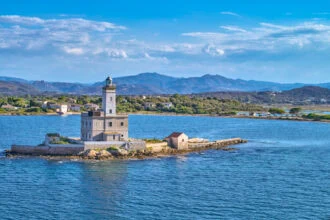
North and east of Olbia, the coastline becomes a string of granite headlands and turquoise coves running toward the Maddalena archipelago, popular with boat trips and increasingly busy through July and August. It’s also Sardinia’s main gateway for ferries as well as flights, making it a natural first or last stop for anyone combining a sea crossing with time on this coast.
See our guides to Things to Do in Olbia, Olbia Airport Transfers and Olbia Ferry Routes for the full detail on this stretch of coast.
Alghero and the Northwest
Alghero, on the island’s northwest coast, has a genuinely different feel from the rest of Sardinia thanks to centuries of Catalan rule; locals still speak a Catalan dialect, and the honey-coloured old town behind the sea walls has an unmistakably Spanish flavour, right down to the paella on local menus. Beyond the ramparts, the coastline holds some of Sardinia’s best beaches alongside boat trips along the Riviera del Corallo.
The area is also home to the dramatic limestone cliffs of Capo Caccia and the otherworldly Neptune’s Grotto, both easy half-day trips from town, and to Porto Torres, the island’s third major ferry port and the main arrival point for routes from France. Alghero’s own airport gives it reasonably good, if more seasonal, flight links across Europe.
Read more in our guides to Things to Do in Alghero, Alghero Airport Transfers and Porto Torres Ferry Routes.
Palau and the La Maddalena Archipelago
Palau, in the far northeast near Olbia, is best known as the departure point for the short ferry crossing to La Maddalena, a national park archipelago of granite islands and some of the clearest water anywhere in the Mediterranean. It’s a quieter, more low-key base than the Costa Smeralda proper, popular with visitors who want beach-hopping by boat rather than a resort scene.
The archipelago itself is largely protected parkland, with limited development and a strong focus on boat trips, snorkelling and quiet beaches rather than nightlife, making it a good add-on for anyone already based around Olbia. The Palau to La Maddalena crossing itself takes only a matter of minutes and runs frequently through the day.
See our guides to Things to Do in Palau and Palau to La Maddalena Ferry for the full detail on the archipelago.
Sardinia’s Best Beaches
Sardinia belongs among the very best beach destinations in the Mediterranean, and the sheer range on offer means no single description can do it justice. Rather than repeat what our destination guides already cover in depth, this section gives a first look at the island’s main beach regions.
The Costa Smeralda near Olbia is the most photographed stretch, a run of small granite-framed coves and pine-backed sand tucked between headlands rather than one continuous beach. Boat trips from Olbia and Palau reach quieter bays further along the coast that are barely visible from the road.
Down in the south, Chia pairs pale sand with genuine dunes and a shallow lagoon that regularly draws flamingos, making it one of the most distinctive beaches on the island. It sits within easy reach of Cagliari, alongside the busy urban beach at Poetto right on the capital’s own doorstep.
In the far northwest, La Pelosa near Stintino has become something of a poster image for Sardinia, with shallow, almost Caribbean-blue water lapping fine white sand facing a small offshore tower. It fills up fast in summer, and a booking system now caps how many visitors can enter each day.
Further south again, Cala Goloritzé near Baunei is the wilder end of the spectrum, a pebble beach beneath a dramatic limestone spire that sits inside a protected marine area. It’s reachable only on foot or by boat, and it rewards the effort with scenery few other Sardinian beaches can match.
For the full detail on beaches near each base, our Things to Do in Cagliari, Things to Do in Olbia, Things to Do in Alghero and Things to Do in Palau guides all cover the best local options, alongside our Day Trips from Cagliari guide for Chia and beyond.
Best for long or awkward journeys. Builds one itinerary out of separate flights.
View flightsBest for short trips. Install the eSIM at home and arrive in Sardinia with working data, no shop queue.
Browse eSIMsBest after a long flight or a late landing. Price agreed before you travel, and no taxi queue.
Check transfersSardinian Food and Wine
Sardinian cooking is distinct from the rest of Italy, shaped by centuries of shepherding tradition and the island’s relative isolation from the mainland. Expect hearty, pastoral dishes built around roast meat, sheep’s cheese and simple durum-wheat pasta rather than the seafood-heavy image many visitors bring with them.
The signature dish is porceddu, a whole suckling pig slow-roasted over an open fire, traditionally with myrtle leaves, until the skin turns dark and crackling. It appears on menus across the island, especially inland, and is often the centrepiece of a Sardinian celebration meal.
Pecorino sardo, a firm sheep’s milk cheese, is another staple, ranging from a mild version eaten young at the table to a sharper, grating-style version aged for months. Bottarga, cured and pressed grey mullet or tuna roe, is grated over pasta for a salty, umami-rich finish and counts as one of Sardinia’s genuine culinary specialities within Italy as a whole.
On the pasta side, malloreddus, small ridged shells usually served with a sausage and tomato sauce, and culurgiones, potato and pecorino-filled pasta pinched into a distinctive wheat-ear shape, are the two dishes most closely associated with the island. Both are worth seeking out well beyond the tourist-facing restaurants near the coast.
For dessert, try seadas, fried pastry parcels filled with fresh cheese and drizzled with honey, ideally alongside a glass of Cannonau. Cannonau is the robust red wine grown across much of the island, and it’s among the highest-alcohol, most tannic reds produced anywhere in Italy.
A number of agriturismi and family-run trattorias across the interior specialise in dishes like these, often serving a set, multi-course menu built entirely around them rather than an à la carte list. It’s one of the more affordable, memorable ways to spend an evening away from the coast.
Nightlife in Sardinia
Nightlife on Sardinia is real, but it’s distinctly seasonal, and anyone expecting a year-round club scene will be disappointed outside the summer months. Roughly June to September is when almost everything worth mentioning actually operates.
The Costa Smeralda near Olbia is the island’s genuine nightlife hub in peak season, with a cluster of beach clubs, marina-side bars and late-night lounges drawing a glamorous, high-spending crowd through July and August. Prices here run considerably higher than almost anywhere else on the island, in keeping with the area’s superyacht reputation.
Cagliari offers a more everyday, less exclusive bar scene, centred on the narrow streets of the Marina district and around Via Sardegna, where a genuinely local student and after-work crowd fills aperitivo bars and small live-music venues. It’s a better fit for anyone wanting a normal night out rather than a resort-style scene.
Outside those pockets, most Sardinian towns go quiet after dinner, especially away from the coast and outside the June-to-September window, and that’s less a flaw than an accurate reflection of what the island is actually built around. Visitors chasing nightlife as the main event are generally better served basing themselves in or near Olbia.
Beyond bars and clubs, plenty of towns run open-air summer events, from local food festivals to outdoor concerts, that make for a livelier evening without needing a dedicated club scene. Checking the Sardegna Turismo events calendar ahead of a trip is the easiest way to catch one of these while you’re there.
Major Attractions and Landmarks
Beyond its beaches, Sardinia holds a handful of genuinely significant historic and natural sites, several with real archaeological or UNESCO-level importance. The four below are the standouts most first-time visitors should have on their radar, each covered in fuller depth in one of our destination guides.
Su Nuraxi di Barumini
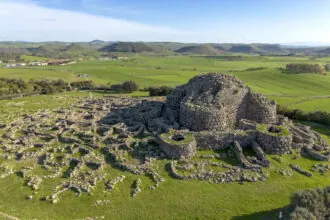
Su Nuraxi is the best-preserved and most important of Sardinia’s thousands of nuraghi, the mysterious Bronze Age stone towers found nowhere else in the world. UNESCO inscribed the complex as a World Heritage Site in 1997, recognising it as an outstanding example of a prehistoric civilisation that developed almost entirely on the island.
The site sits inland from Cagliari near the town of Barumini and combines a central defensive tower with a surrounding village of stone dwellings, giving a rare, tangible sense of how Nuragic communities actually lived. It’s a genuinely worthwhile half-day trip, and it’s covered in full, including how to get there, in our Day Trips from Cagliari guide.
Neptune’s Grotto
Neptune’s Grotto (Grotta di Nettuno) is a vast limestone sea cave beneath the cliffs of Capo Caccia near Alghero, filled with stalactites, stalagmites and a small internal lake. Visitors reach it either by boat from Alghero harbour or by descending the 654 steps of the Escala del Cabirol staircase cut into the cliff face.
It’s one of Sardinia’s most-visited natural attractions and makes an easy half-day trip from Alghero, ideally combined with the wider Capo Caccia headland. Full practical detail on getting there is covered in our Road Trip Around Sardinia guide.
The Roman Ruins at Nora
Nora, on a small peninsula near Pula south of Cagliari, began as a Phoenician settlement before becoming a substantial Roman town, and its ruins now include a theatre, baths, mosaic floors and the remains of a forum, much of it right beside the sea. It’s one of the most atmospheric ancient sites in Sardinia, with part of the old town now partly submerged just offshore.
The site makes a straightforward day trip from Cagliari and pairs naturally with the beaches around Chia further along the same coast. It’s covered in full in our Day Trips from Cagliari guide, alongside Su Nuraxi and the other main excursions from the capital.
La Maddalena Archipelago
The La Maddalena archipelago, off the coast near Palau in the far northeast, is a national park of granite islands, protected coves and some of the clearest water anywhere in the Mediterranean. It’s best explored by boat trip rather than from any single fixed viewpoint, with island-hopping the main draw.
Palau is the usual departure point, connected to La Maddalena town by a short, frequent ferry crossing that takes only a matter of minutes. Full detail on the archipelago and the crossing itself is in our Things to Do in Palau guide and our dedicated Palau to La Maddalena Ferry guide.
Getting Around by Train
Sardinia’s rail backbone is run by Trenitalia, Italy’s national operator, with lines linking Cagliari, Oristano, Sassari, Olbia and a number of smaller towns along mostly coastal and lowland routes. It’s a genuinely useful way to move between the main hub towns without a car, particularly along the Cagliari-Oristano-Sassari corridor.
Services run at a modest but workable frequency on the main lines, generally several trains a day rather than one every hour, and the rolling stock is simple regional stock rather than anything resembling mainland Italy’s high-speed services. Tickets are inexpensive and easy to buy at the station or through Trenitalia’s own app.
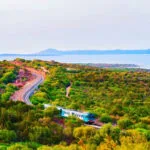
Beyond the everyday network, the Trenino Verde (“little green train”) is Sardinia’s separate heritage railway, running narrow-gauge lines through some of the island’s most scenic and otherwise hard-to-reach interior, including routes through the Gennargentu mountains and the Barbagia region. It operates seasonally, mainly as chartered and summer scheduled tourist journeys rather than everyday transport, and is worth treating as an excursion in its own right rather than a way to get somewhere practical.
The rail network’s real limitation is reach: it thins out fast away from the main towns and rarely gets close to the smaller beaches, villages and inland sights that draw most visitors. For the full practical detail on combining trains with buses and where the gaps are, our Getting Around Sardinia Without a Car guide covers exactly how far the network will take you.
Taxis and Ride-Sharing in Sardinia
Taxis are the easiest way to get around Sardinia’s towns without a car, and they’re readily available outside the airports, ferry ports and central squares of Cagliari, Olbia and Alghero. Ranks near the main train stations in each of those towns are usually the most reliable place to find one rather than trying to hail one from the street.
Availability drops off quickly once you leave those three hubs, and rural towns and smaller coastal villages often have only a handful of licensed drivers working outside peak summer hours, if any at all. It’s worth asking your accommodation to book a taxi ahead for an early flight or a late ferry rather than assuming one will simply turn up.
Ride-hailing apps remain far more limited in Sardinia than on the Italian mainland. Uber has only recently arrived on the island, and even then it operates as Uber Taxi, a way to hail a licensed local driver in Cagliari, Quartu and Olbia rather than the private-driver model familiar from cities like Rome or Milan.
Outside those three areas, a traditional taxi rank or a hotel-arranged pickup remains the more dependable option almost everywhere else on the island. Fares aren’t always metered as consistently as in larger cities, so agreeing an approximate price, or confirming the meter is running, before setting off is a sensible habit.
For anyone weighing up taxis against other options, our Getting Around Sardinia Without a Car guide covers how buses, trains and taxis fit together for a car-free trip, and our Cagliari Airport Transfers guide has current taxi fares for that specific route.
Walking and Hiking in Sardinia
Sardinia’s coastline and mountainous interior offer some of the best hiking in the Mediterranean, ranging from a gentle afternoon stroll to a multi-day wilderness trek that would challenge experienced walkers. Visitors who venture beyond the beach are rewarded with landscapes unlike anywhere else in Italy.
The best-known and most demanding route is the Selvaggio Blu, a roughly 40-50 km coastal trail along the dramatic cliffs of the Golfo di Orosei, usually tackled over four to seven days. Sections require scrambling and short abseils down eroded goat-herder paths, so it’s normally attempted with a local guide rather than solo, and it’s widely considered one of Italy’s toughest treks.
The mountainous Supramonte and Barbagia regions inland offer gentler but still genuinely wild walking, through holm-oak forest, limestone gorges and shepherd country largely untouched by modern development. Trails here connect villages like Orgosolo and Oliena, and several lead to dramatic canyons and cave systems worth a full day’s walk in their own right.
One of the most rewarding short walks on the island leads to Cala Goloritzé, a pebble beach beneath a soaring limestone spire near Baunei, reached on foot from the Golfo di Orosei plateau in around ninety minutes each way. It’s a protected national monument and one of the finest coastal panoramas in Sardinia, without needing the technical skills the full Selvaggio Blu demands.
For something easier still, the Capo Caccia headland near Alghero offers waymarked coastal paths with sweeping Mediterranean views for a fraction of the effort, and Cagliari’s own Sella del Diavolo promontory gives city-based visitors a short, accessible hike with panoramic views over Poetto Beach and the gulf. Both suit visitors without dedicated hiking gear or a full day to spare.
Best if you would rather spend the money on Sardinia than on the room. Compare hostels by location and rating.
Search hostelsBest for anyone flying more than once or twice a year. Handles the compensation claim so you are not chasing the airline.
See AirHelp+Best for a day with a bag and nowhere to put it. Find a storage point near where you already are.
View storageAnnual Events and Festivals in Sardinia
Sardinia’s calendar is dotted with festivals that go back centuries, and several rank among the largest folk and religious events held anywhere in Italy. Timing a trip around one is a good way to see a side of the island a straightforward beach holiday rarely touches.
The biggest is Sant’Efisio in Cagliari, held every year from 1 to 4 May, when a statue of the saint is carried in procession through the city and on to the town of Nora, around 60 km away, accompanied by thousands of participants in traditional dress, decorated ox carts and folk musicians. It has run continuously since the 17th century and remains one of Sardinia’s most important religious and cultural events.
Cavalcata Sarda, held in Sassari on the third Sunday of May, brings together costumed riders and folk groups from across the island for a morning parade of traditional dress and jewellery, followed by afternoon horse-riding displays known as pariglie. It’s one of the best single opportunities to see Sardinia’s regional costumes gathered in one place.
Nuoro’s Redentore festival, held towards the end of August, combines a folklore parade of around two thousand costumed performers and horse riders with a solemn pilgrimage up Monte Ortobene to a statue of Christ the Redeemer above the town. The two halves, one secular and spectacular, the other religious and reflective, run side by side across the same week.
In the mountain village of Mamoiada, in the Barbagia region, the striking Mamuthones and Issohadores masked figures appear twice a year: first around 17 January for the feast of Sant’Antonio Abate, then again through Carnevale in the weeks before Lent. The heavy wooden masks and bell-laden costumes of the Mamuthones make this one of the most ancient and unforgettable traditions anywhere on the island.
Medical Help in Sardinia
A farmacia (pharmacy) is usually the fastest way to deal with a minor health issue anywhere in Sardinia, and they’re easy to spot by the illuminated green cross sign outside. Pharmacists can advise on everyday problems like sunburn, an upset stomach or travel sickness without needing to see a doctor first, and most stock basic supplies visitors forget to pack.
For anything a pharmacist can’t handle, doctors and dentists (medico and dentista) operate in every sizeable town, and hotels or tourist offices can often point visitors toward one who speaks English. A private consultation is usually the quickest route for a non-emergency issue, since same-day appointments with a state-system doctor are generally reserved for local residents.
For anything more serious, Sardinia’s main hospitals are concentrated around its three biggest cities. In Cagliari, the Azienda Ospedaliera Brotzu and the Ospedale San Giovanni di Dio are the two largest general hospitals, Sassari’s main hospital is the Ospedale Civile SS Annunziata, and Olbia is served by the Ospedale Giovanni Paolo II.
In a genuine emergency, dial 112, the single emergency number used right across the European Union, which connects to ambulance, police and fire services and can be reached from any phone, even one without a SIM card.
EU citizens travelling with a valid European Health Insurance Card (EHIC), or UK visitors carrying the Global Health Insurance Card (GHIC), can access Italy’s state-run healthcare system on the same terms as an Italian resident, though this only covers necessary medical treatment rather than repatriation or private care. Everyone else, and EU or UK travellers wanting broader protection, should still take out a genuine travel insurance policy before departure, since neither card replaces proper cover for a serious illness, an accident or an unplanned flight home.
How Long Do You Need in Sardinia
Sardinia rewards different amounts of time depending on what you’re after. A long weekend, three or four days, is enough to get a proper feel for a single base like Cagliari or Alghero, covering the main historic sights, a beach day or two and perhaps one day trip into the surrounding area.
A full week gives you room to combine a city base with a slower coastal stretch, for example splitting time between Cagliari and the beaches around Chia and Villasimius, or basing in Alghero with day trips out to Capo Caccia and Porto Torres. It’s also enough time to add the short hop across to La Maddalena if you’re anywhere near Olbia or Palau.
For anyone wanting to see more than one region properly, ten days to two weeks with a hire car is the realistic minimum, since driving distances between the south, northeast and northwest all run to several hours each way. Our Road Trip Around Sardinia guide plots exactly that kind of circular route, covering all the island’s main regions in a single, sensibly paced itinerary.

Rupert’s Handy Travel Tips
Planning a first trip to Sardinia comes with a few decisions that are easy to get wrong, here’s what I’d tell a friend before they book anything.
- Pick your airport by region, not price: a cheap fare into the wrong corner of the island can cost you hours of driving to reach your base.
- Book August travel months ahead: flights, ferries, hire cars and accommodation all tighten up fast once the school-holiday crowds arrive.
- Don’t try to see it all in one trip: Sardinia is bigger than it looks on a map, so pick one or two regions rather than chasing every coastline at once.
- Hire a car if you’re going beyond one city: public transport is fine for a single base, but it won’t get you to the best beaches or the interior.
- Aim for June or September: you’ll get warm seas without the August crowds or prices, especially if your travel dates are flexible.
Want to meet the reindeer behind our travel tips? Find out more in our page Who is Rupert?.




Frequently Asked Questions
Is Sardinia part of Italy?
Yes, Sardinia is an autonomous region of Italy, though it has its own language and culture and a strong sense of separate identity from the mainland.
Is Sardinia expensive?
It varies widely by season and location: prices around the Costa Smeralda near Olbia run considerably higher than Cagliari or the interior, and August is noticeably pricier everywhere than the shoulder months.
Do you need a car in Sardinia?
Not if you’re basing yourself in one city like Cagliari or Olbia, but a hire car is close to essential if you want to reach the best beaches, the interior or more than one region.
What’s the best time to visit Sardinia?
June and September offer the best balance of warm, swimmable seas and manageable crowds; July and August are hottest and busiest, while spring and autumn suit sightseeing more than beach time.
How do you get to Sardinia?
Most visitors fly into one of the island’s three airports, Cagliari, Olbia or Alghero, though ferries from mainland Italy, France and Corsica are a popular alternative, especially for anyone bringing a car.
How many days do you need in Sardinia?
A long weekend suits a single base, a week allows a city plus a coastal stretch, and ten days to two weeks with a hire car is realistic for seeing more than one region properly.
Is Sardinia good for a beach holiday?
Yes, it’s one of the Mediterranean’s best beach destinations, with everything from the busy urban sand at Poetto to wilder, harder-to-reach coves further from the main towns.
What language do people speak in Sardinia?
Italian is spoken everywhere, alongside Sardinian in daily life across much of the island and a distinct Catalan dialect still spoken around Alghero.
Further Reading
If Cagliari is your base, our Things to Do in Cagliari guide covers the city in full, alongside Day Trips from Cagliari for the Roman ruins at Nora and the beaches around Chia, and our Cagliari Airport Transfers and Cagliari Cruise Port Guide guides for arriving by plane or by ship.
For the northeast, our Things to Do in Olbia guide is the starting point for the Costa Smeralda, with Olbia Airport Transfers and Olbia Ferry Routes covering the practical side of arriving, and Things to Do in Palau plus the Palau to La Maddalena Ferry guide covering the archipelago just up the coast.
In the northwest, our Things to Do in Alghero guide covers the Catalan old town and the coastline around Capo Caccia, alongside Alghero Airport Transfers and Porto Torres Ferry Routes for anyone arriving into that corner of the island.
And if you’re planning to see more than one region, our Getting Around Sardinia Without a Car guide explains how far public transport will get you, our Sardinia Ferry Routes hub covers every crossing onto the island in full, and our Road Trip Around Sardinia guide plots a complete route for anyone hiring a car and wanting to circle the island properly.