Reviewed by our editorial team Updated
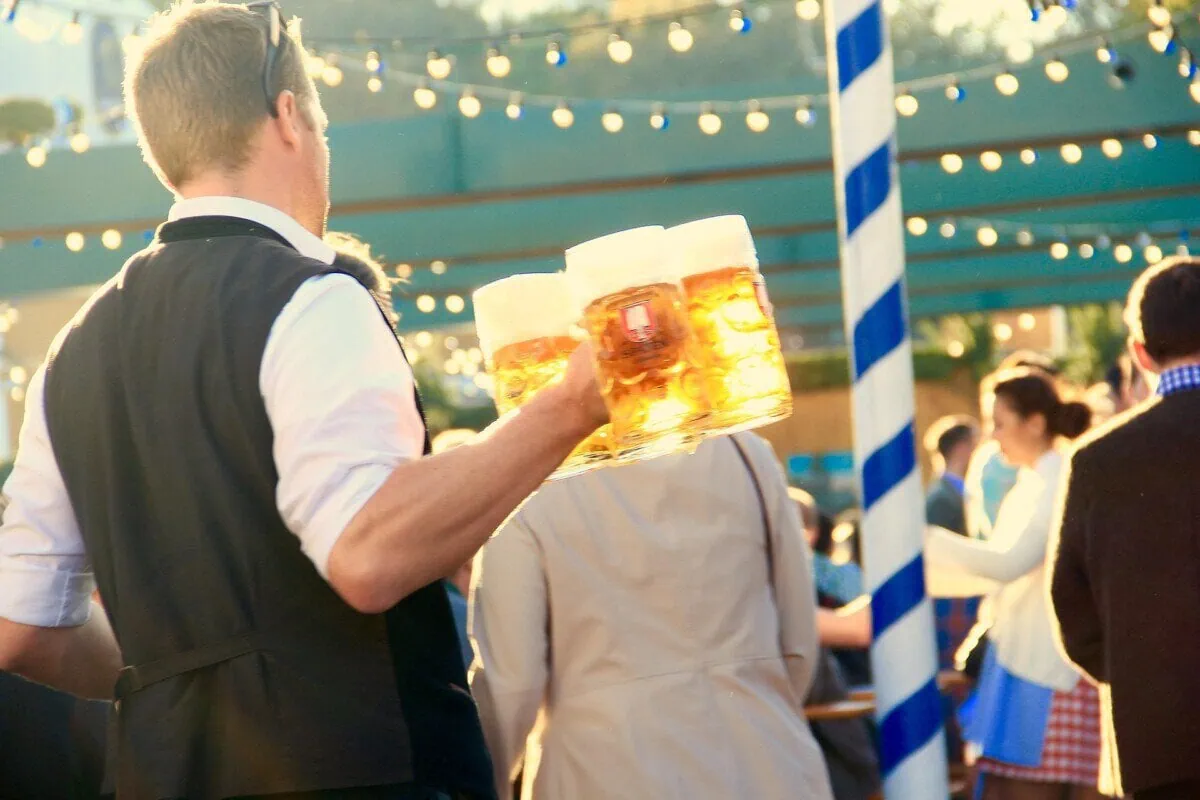
Oktoberfest is not just a beer festival. It is the world’s largest Volksfest (folk festival), and calling it merely a beer occasion undersells what actually happens on the Theresienwiese each autumn. Every year the meadow on the edge of central Munich transforms into a temporary city of its own, with fourteen enormous beer tents, dozens of smaller ones, fairground rides, and food stalls spread across roughly 34 football pitches of open ground.
The scale is genuinely hard to grasp until you stand in the middle of it. More than six million visitors pass through the gates over roughly two and a half weeks, drinking upward of seven million litres of beer and working through hundreds of thousands of roast chickens, and the whole event runs almost entirely on tradition rather than any centralised ticketing system.
Its roots go back to 1810, when a royal wedding and a horse race on the same meadow gave Munich a taste for an annual autumn gathering, and the city has kept the tradition alive, with a handful of interruptions, for more than two centuries since. That history matters because it explains why Oktoberfest still feels distinctly Bavarian rather than manufactured for tourists, even with visitors arriving from every continent.
Locals genuinely attend in large numbers, wearing Tracht (traditional Bavarian dress) without irony, and entire families, works outings, and groups of pensioners share the grounds with backpackers and stag parties in roughly equal measure. That mix is part of what makes the Wiesn, as Munich itself calls it, so different from a purpose-built tourist event elsewhere in Europe.
Getting the most from a visit means understanding a few things that are not obvious from photographs alone: which tents suit which crowd, why a table reservation matters more than people expect, what the beer and food genuinely cost, and when to go if the sheer scale of it all sounds overwhelming. This guide works through all of that in detail.
It also sits alongside AST’s other Munich guides, so if the airport transfer, the city’s other sights, or a matchday at the Allianz Arena are also part of the trip, those are covered in detail elsewhere on the site. Oktoberfest, though, deserves its own dedicated guide, given how much genuinely goes on beyond the Maß in your hand.
| Aspect | Detail |
|---|---|
| Location | Theresienwiese, central Munich |
| Nearest U-Bahn | Theresienwiese station (U4/U5) |
| 2026 Dates | 19 September to 4 October 2026 |
| Typical Duration | 16-18 days, mid/late September to the first Sunday in October |
| Number of Tents | 14 large tents, plus around 20 smaller ones |
| Average Beer Price (2026) | €15.61 (£13/$18) per Maß (1 litre) |
| Entry Cost | Free. You only pay for food, drink and rides |
The History of Oktoberfest: From Royal Wedding to World’s Biggest Festival
Oktoberfest began almost by accident, as a wedding celebration rather than a beer festival. On 12 October 1810, Crown Prince Ludwig of Bavaria (later King Ludwig I) married Princess Therese of Saxe-Hildburghausen, and a Bavarian National Guard officer named Andreas Michael Dall’Armi proposed marking the occasion with a horse race on a meadow just outside the city gates.
That meadow was named Theresienwiese (“Therese’s Meadow”) in honour of the bride, and locals still shorten it today to the “Wiesn,” the name most Müncheners actually use for the festival. The horse race was such a success that Munich’s citizens asked to repeat it the following year, and by 1811 the Bavarian Agricultural Association had added a farming show alongside the racing.
The event became a fixture, surviving cancellations for war, cholera outbreaks, and economic crises across the nineteenth and twentieth centuries, though it kept returning whenever circumstances allowed. Large beer tents as we would recognise them today only really arrived between 1896 and 1913, when Munich’s breweries began building substantial temporary halls rather than simple stalls.
The tradition of the mayor tapping the first keg to officially open the festival, shouting “O’zapft is!” (“It’s tapped!”), dates only to 1950, considerably more recent than most visitors assume given how central it now feels. The festival’s darkest moment came on 26 September 1980, when a bomb exploded at the main entrance, killing 13 people in one of the deadliest terrorist attacks in postwar German history.
Modern Oktoberfest has grown far beyond its horse-racing origins into the logistical operation it is today, but the essential shape, a beer-and-fairground festival on the same meadow named after a Bavarian princess, has never really changed. Even the shift of most of the festival into September, which happened in the 1870s to catch better autumn weather, has never prompted anyone to rename it.
Knowing this history helps explain why Oktoberfest feels genuinely rooted rather than invented for visitors, and why so many Bavarian families treat it as a normal part of the autumn calendar rather than a tourist spectacle. It is worth remembering, walking into a tent for the first time, that the same basic tradition has been running in some form for well over 200 years.
When Is Oktoberfest? Understanding the Dates
Despite the name, most of Oktoberfest actually happens in September, not October, a quirk dating back to a scheduling change in the 1870s made to take advantage of milder, longer evenings before autumn properly sets in. The festival follows a consistent pattern: it starts on a Saturday in mid-to-late September and runs for roughly 16 to 18 days, generally finishing on the first Sunday in October.
For 2026, the confirmed dates published by the City of Munich are 19 September to 4 October 2026, giving visitors a full 16-day run across two complete weekends plus a mid-point spanning German Unity Day. Exact festival dates for years beyond 2026 have not yet been published at the time of writing, so treat the pattern above as the reliable planning guide and always confirm the current year’s dates on the official Oktoberfest website before booking flights or hotels.
Large tents typically serve beer until around 10:30pm, closing fully by 11:30pm, while the fairground rides and stalls generally run from 10am to 11:30pm. The historic “Oide Wiesn” section, a smaller, more traditional area with vintage rides and a calmer atmosphere, keeps broadly similar hours within the same overall festival dates.
Within that window, the first and last weekends are consistently the busiest, packed with tourists arriving for the opening ceremony and locals making a final visit before it closes. Weekday afternoons, particularly in the second week, are noticeably quieter and a far easier introduction for a first-time visitor.
Because the festival straddles the change from summer to autumn, weather varies considerably across its run, with the opening days sometimes warm enough for the beer gardens outside the tents and the closing days occasionally cold enough for a coat over the Tracht. Packing for both extremes is sensible for anyone visiting across a full trip rather than a single day.
The safest planning approach is to lock in the specific year’s dates from the official Oktoberfest.de or Muenchen.de sites as soon as they are published, generally around a year in advance, rather than relying on last year’s calendar or a rough guess at “late September.” Hotel prices in Munich rise sharply for the exact festival dates, so early confirmation genuinely saves money as well as stress.
Best if you want daily housekeeping and a front desk. Filter by area first, then by price.
Check availabilityBest for longer stays. Whole apartments and houses, so you are not eating out three times a day.
View rentalsBest as a last check before booking. Compares hotel rates across several sites in one search.
Compare ratesSchottenhamel and the Ceremonial Tapping of the First Keg
If there is one moment that defines the start of Oktoberfest, it happens inside the Schottenhamel tent, the largest of the fourteen big tents and the only one where the festival’s official opening ceremony takes place. At exactly noon on the opening Saturday, the Lord Mayor of Munich taps the first keg with a wooden mallet, shouting “O’zapft is!” once the beer flows, and no other tent is permitted to serve a drop until that first tap has happened.
The tent itself traces its history back to 1867, when the Schottenhamel family first set up a beer stand on the Theresienwiese, and it has grown into a structure holding around 10,000 people between its indoor hall and outdoor garden. Its beer is supplied by Spaten, one of Munich’s six major breweries, and the atmosphere leans younger and more studenty than some of the grander, more tourist-heavy tents nearby.
Watching the actual tapping ceremony from inside Schottenhamel requires a reserved table, since the tent is invitation-heavy on opening day with politicians, brewery representatives, and local dignitaries filling much of the floor. Visitors without a reservation can still watch the moment on large screens set up around the festival grounds, or simply soak up the atmosphere outside as news of the first tap ripples across the Theresienwiese.
Beyond opening day, Schottenhamel settles into a lively, youthful crowd for the rest of the festival, with a reputation among locals as one of the tents where genuine Munich students and young professionals still make up a large share of the tables. That makes it a reasonable choice for visitors wanting a boisterous, sing-along evening without the heaviest international-tourist concentration found elsewhere.
The tent’s capacity and central location, close to the Theresienwiese’s main entrances, mean it fills quickly on weekend evenings even outside the opening ceremony itself. Arriving before early afternoon on a Friday or Saturday genuinely improves the odds of finding unreserved seating inside.
For anyone planning a first Oktoberfest visit specifically to witness the opening ceremony, it is worth knowing that the actual tapping is a matter of seconds, not an extended show, and the real experience is the buildup and atmosphere around it rather than the tap itself. A spot near Schottenhamel from mid-morning on opening Saturday is the best way to feel part of the moment even without a table inside.
Choosing a Tent: Hofbräu, Löwenbräu, Paulaner and Augustiner Compared
With fourteen large tents and around twenty smaller ones on the Theresienwiese, picking where to spend an evening is one of the first genuine decisions any Oktoberfest visitor has to make, and each tent has a distinct character built up over decades. The Hofbräu-Festzelt is arguably the most internationally famous, thanks to the global recognition of the Hofbräuhaus brand, and it is consistently the loudest, most party-focused tent on the grounds, especially popular with visitors from Australia, the US, and the UK.
A large standing area in the centre of Hofbräu-Festzelt means it feels less formal than tents built primarily around long bench tables, and singing, dancing on benches, and a genuinely raucous atmosphere are the norm rather than the exception here. It is the tent to pick for an unashamedly loud, international night out, not for a quiet conversation over dinner.
The Löwenbräu-Festzelt is instantly recognisable from outside thanks to its roaring lion mascot mounted above the entrance, and it draws a mix of traditional Bavarian regulars and fans of the local 1860 Munich football club alongside its share of international visitors. Its atmosphere sits a notch calmer than Hofbräu’s but still leans firmly towards a lively evening rather than a sedate one.
The Paulaner-Festzelt, topped by a rotating figure of a Paulaner monk, is known for serving its beer in an unusually large mug and for a genuinely strong live brass-band tradition running through the day. It tends to skew towards a broader mix of ages and, during the daytime especially, a more family-friendly crowd than tents built primarily around evening drinking.
For a noticeably more traditional, less internationally geared experience, the Augustiner-Festhalle stands apart by serving its beer from wooden barrels rather than the steel kegs used almost everywhere else on the grounds, a detail regulars genuinely notice in the taste. It also runs its own on-site butcher’s shop, and locals widely regard it as one of the more authentic, less touristy tents left on the Theresienwiese, with Augustiner beer also priced among the cheapest of the big tents.
None of these four is objectively “the best,” and the right pick depends entirely on the kind of evening being planned: Hofbräu or Löwenbräu for a loud, sociable night, Paulaner for a livelier daytime visit with music, and Augustiner for something closer to how Munich locals actually experience the festival. Trying more than one tent across a multi-day visit is the easiest way to get a genuine feel for how different they really are.
Getting to the Theresienwiese
The festival grounds sit a short distance south-west of Munich’s city centre, and reaching them is one of the more straightforward parts of an Oktoberfest visit thanks to the city’s dense U-Bahn network. The single most direct route is Theresienwiese station, served by the U4 and U5 lines, which drops visitors right at the festival’s main entrances with the shortest possible walk. Our Munich Public Transport guide covers the wider U-Bahn and S-Bahn network in full, handy if a Wiesn visit is only one stop on a longer day around the city.
That convenience comes at a cost: Theresienwiese station carries the heaviest crowds of any stop serving the festival, particularly in the hour either side of the evening tent closing times. Two quieter alternatives, Goetheplatz and Poccistraße, both served by the U3 and U6 lines, sit around a 10-minute walk from the grounds and are consistently less crowded, especially useful late in the evening when a packed platform is the last thing anyone wants.
Visitors staying near Munich Hauptbahnhof can simply walk to the festival, a route of around 15 to 20 minutes on foot heading south from the station’s south exit along Bayerstraße. It is a genuinely pleasant option in good weather and avoids the underground crowds entirely for anyone not carrying much beyond a coat and a wallet.
A ring road for cars is set up around the entire festival perimeter for the duration of Oktoberfest, with parking prohibited inside that cordon, so driving to the Theresienwiese and hoping to park nearby is simply not realistic. Anyone arriving by car should plan to park well outside the closure zone and use public transport for the final stretch instead.
Trains run considerably more frequently than usual during the festival’s peak hours, but the sheer volume of people moving through Theresienwiese station at closing time still makes for a genuinely slow, crowded exit most nights. Building in extra time for the return journey, rather than assuming a quick U-Bahn hop, avoids a frustrating end to the evening.
For most visitors, the practical advice is simple: use Theresienwiese station for the shortest walk if arriving reasonably early, but consider Goetheplatz or Poccistraße for a calmer exit later in the evening, and never plan around finding a parking space anywhere close to the grounds. None of these transport options need booking in advance, which is one less thing to worry about compared with the tents themselves.
Table Reservations: How to Actually Get a Seat
One of the most common mistakes first-time visitors make is assuming Oktoberfest works like any other festival, where turning up on a Saturday evening and finding a seat is simply a matter of looking around. In reality, the large tents reserve the majority of their tables well in advance, and walking in expecting an easy seat on a weekend evening is one of the surest ways to end up standing outside instead.
Reservations for most tents open around spring, typically by April or May for the festival that follows, and popular tents for popular dates can fill within weeks of opening. Crucially, tables are almost always sized for groups of eight to ten people, since Oktoberfest reservations are built around shared, communal seating rather than couples or solo visitors booking a pair of seats.
Reserving a table itself is generally free, but most tents require prepaying for a set of consumption vouchers, typically covering beer and a chicken dinner, running to somewhere around €350 (£301/$410) per table as a rough average, alongside a small lump-sum charge of about €1.50 (£1.30/$1.75) per reservation space for admission wristbands and similar extras. That upfront cost is one of the least understood parts of the whole reservation process for visitors booking their first Oktoberfest trip.
Not every table is reserved, though: large tents keep a meaningful share of seating free for walk-ins, generally around a quarter of total capacity on weekdays, rising to 40% until 3pm on weekends and public holidays before dropping back to 25% for the evening. Arriving at a large tent for weekday lunch is comfortably the easiest way to find a seat without any reservation at all.
Some of the smaller, more specialised venues, including Käfer Wiesn-Schänke and Kufflers Weinzelt, are effectively fully reserved at almost all times, and turning up without a booking there rarely works even on a quiet weekday. These tents suit visitors planning well ahead rather than anyone hoping to wander in on the day.
The realistic advice for a solo traveller, couple, or small group without an eight-person party is straightforward: arrive early, ideally by late morning on a weekday, head for a tent’s designated walk-in area, and treat any seat inside a tent during peak weekend evenings as a genuine bonus rather than a guarantee. It is also worth remembering that last-minute cancellations occasionally free up tables close to the festival itself, so checking a tent’s own website again shortly before travelling is never wasted effort.
What Beer and Food Cost in 2026
Getting onto the Theresienwiese itself is free, a detail that surprises plenty of first-time visitors expecting an entrance fee similar to other major festivals. Every euro spent at Oktoberfest goes on beer, food, and rides, which means the real cost of a visit depends entirely on how much time is spent at a table rather than any ticket price.
The beer itself only comes in one measure inside the tents, the Maß, a full one-litre glass, and prices for 2026 sit between €14.90 and €15.90 (£13-14/$17-19) across the big tents, averaging around €15.61 (£13/$18). Augustiner-Festhalle is consistently the cheapest of the large tents, while several of the more internationally known venues sit at the top of that range.
Food follows a similar pattern of tent-to-tent variation, but the classic Hendl, a half roast chicken, typically runs to €14-18 (£12-15/$16-21), and it remains the single most ordered dish across the festival for good reason. A giant Brezn (pretzel) is a far cheaper accompaniment at around €5-7 (£4-6/$6-8), and most tables order several to share alongside the beer.
For a heartier meal, Schweinshaxe (roast pork knuckle) with dumplings and coleslaw generally costs €18-25 (£15-22/$21-29), while a plate of Weißwürste (Munich’s traditional white sausages) with sweet mustard sits closer to €8-12 (£7-10/$9-14). Both are genuinely filling options for anyone planning a full evening rather than a quick drink and a snack.
A realistic budget for a proper sit-down evening, one Maß, a Hendl, and a shared Brezn, works out to roughly €35-40 (£30-34/$41-47) per person before any extra rounds, and that figure climbs quickly once a second or third beer enters the picture. Cash and card are both widely accepted inside the tents these days, though carrying some cash is still sensible for smaller stalls outside them.
The rides and games scattered across the grounds add a separate cost on top of any tent visit, generally priced individually rather than through any all-inclusive pass, and families budgeting for a full day should factor that in alongside the food and drink. Tuesdays bring reduced prices on many rides and stalls until around 7pm, making it a genuinely good day to combine the fairground side of Oktoberfest with a lighter overall spend.
What to Wear: Dirndl, Lederhosen and Tracht
Traditional Bavarian dress, known collectively as Tracht, is a genuine and living part of Oktoberfest culture rather than a costume put on for tourists’ benefit, and wearing it is both welcomed and expected by locals rather than seen as appropriation. For women, that generally means a Dirndl, a fitted bodice and full skirt worn with a blouse and apron, while men typically wear Lederhosen, leather shorts or breeches paired with a checked shirt and often braces.
A small but genuinely meaningful detail for anyone wearing a Dirndl is the apron bow: tied on the wearer’s left side, it traditionally signals that a woman is single, while a bow on the right signals she is taken, and a bow tied at the front or back is a way of sidestepping the signal altogether. It is a piece of local etiquette worth knowing even for visitors who treat it as a bit of fun rather than a serious statement.
Munich has a substantial retail industry built entirely around Tracht, from long-established local outfitters to department stores that stock entire floors of Dirndls and Lederhosen in the weeks before the festival. Renting or buying locally, rather than arriving with something bought online sight unseen, generally gets a far better fit and a more authentic look for the money.
Nobody is required to wear Tracht to attend Oktoberfest, and plenty of visitors turn up in ordinary clothes without any issue at all, but doing so noticeably changes how a visit feels once inside a tent. Dressing appropriately tends to draw a warmer response from the mostly Bavarian crowd around a table, and it is simply more comfortable than jeans once the singing and bench-standing get going.
A genuine point of local sensitivity is treating Tracht as a costume to mock rather than clothing with a real cultural history behind it, something Munich residents are increasingly vocal about pushing back against. Wearing it with the same respect shown to any other country’s traditional dress, rather than as a novelty outfit, goes a long way with the people actually sharing the tent.
Practically speaking, comfortable shoes matter more than the outfit itself, since a day at Oktoberfest involves a genuine amount of walking and standing, and Lederhosen or a Dirndl paired with the wrong footwear makes for a long, uncomfortable evening. Layering is also worth planning for, given how much the weather can shift across the festival’s roughly two-and-a-half-week run.
Best for finding routes the airlines do not sell as a single ticket. Combines carriers to bring the fare down.
Search flightsBest for anyone whose home plan charges by the megabyte abroad. Pay a fixed price up front.
Check eSIMsBest after a long flight or a late landing. Price agreed before you travel, and no taxi queue.
Check transfersFamily Visits and the Quieter Times to Go
Oktoberfest has a genuinely strong family-friendly side that rarely makes it into photographs of the festival, largely because those photographs tend to focus on the evening crowds inside the loudest tents. Weekday afternoons, particularly before around 6pm, are considerably calmer across the whole Theresienwiese, with families, older visitors, and local regulars making up a much larger share of the crowd than in the evening.
Tuesdays are the closest thing Oktoberfest has to an official family day, with reduced prices at many rides and stalls until roughly 7pm, making it a genuinely sensible day to bring children who want the fairground side of the festival without the evening’s beer-tent atmosphere. Several tents, including Paulaner and Hacker-Festzelt, also lean noticeably more family-friendly during daytime hours thanks to their live music and food-focused daytime programming.
The Oide Wiesn, the festival’s smaller historic section, is worth knowing about specifically for a calmer visit, since it runs vintage fairground rides and a more traditional, less intensely crowded atmosphere than the main grounds. It requires a separate, modest entry fee, but the trade-off in noise and crowding is genuinely significant for families or anyone finding the main Theresienwiese overwhelming.
The opening and closing weekends of the festival are consistently its busiest, drawing both first-time tourists chasing the ceremonial opening and locals determined to make a final visit before it ends. Visitors specifically looking to avoid crowds should aim for the middle stretch of the festival, ideally a weekday, rather than either end of the roughly two-and-a-half-week run.
Evenings inside the large tents get progressively louder and more crowded as the night goes on, so families or anyone wanting a lower-key experience should plan to arrive earlier in the day and leave before the evening’s peak drinking hours set in properly. A lunchtime table, rather than a 7pm one, gives a genuinely different, more relaxed sense of what the festival is actually like.
None of this means Oktoberfest is only loud and rowdy after dark. The daytime hours across most of its run offer a version of the festival closer to a large, particularly good street fair, with brass bands, food stalls, and rides taking centre stage over any serious drinking, and timing a visit around that daytime atmosphere is one of the better pieces of planning advice for a first trip.
Common Mistakes First-Time Visitors Make
The single most common mistake is assuming a table will simply be available on a weekend evening without any reservation, when in reality the large tents allocate a shrinking share of seating to walk-ins as the evening goes on. Arriving at 7pm on a Saturday with no booking and no group of eight is one of the most reliable ways to spend a long time standing outside a tent rather than inside one.
A related error is booking a table for too few people, since Oktoberfest reservations are built around groups of eight to ten, and trying to reserve a table for two or three at most large tents simply is not possible. Solo travellers and couples are far better served by planning around walk-in periods, particularly weekday lunchtimes, than chasing a reservation that does not exist for their group size.
Plenty of visitors also underestimate the beer, treating a full litre Maß as equivalent to a standard pint and pacing an evening accordingly, which catches out people who would never dream of drinking that quickly at home. Eating something substantial, like a Hendl or Weißwürste, alongside the beer rather than after several rounds makes for a considerably more comfortable night.
Another genuine planning gap is transport timing, particularly underestimating how crowded Theresienwiese station gets at closing time and assuming a quick U-Bahn ride home will follow straight after the last drink. Building in extra time for the walk and the wait, or heading for the quieter Goetheplatz or Poccistraße stations instead, avoids a frustrating end to an otherwise good evening.
Some visitors also book accommodation too late, not realising that hotel prices across Munich rise sharply for the exact festival dates and that rooms genuinely sell out well in advance, particularly for the opening and closing weekends. Confirming travel dates against the official festival calendar as soon as it is published, rather than guessing at “sometime in late September,” avoids both problems at once.
Finally, treating Oktoberfest as nothing but the tents is arguably the biggest missed opportunity, since the daytime fairground, the Oide Wiesn’s historic rides, and the food stalls scattered across the grounds are all worth genuine time in their own right. A visit built entirely around evening drinking sees only one side of what is, at its core, a much broader folk festival.
Munich Beyond the Wiesn
However good a visit to Oktoberfest turns out to be, it is worth remembering that Munich itself has a genuinely rich set of sights and experiences that have nothing to do with the festival at all. Anyone building a longer trip around Oktoberfest dates would be missing a great deal by treating the Theresienwiese as the whole itinerary rather than a highlight within it.
The city’s old town, museums, and Bavarian food scene are all easily worth a full day or two either side of a festival visit, and Munich’s excellent public transport network makes fitting both into the same trip genuinely straightforward. Our dedicated Best Things to Do in Munich guide rounds up the sights, tours, and prices worth prioritising away from the festival grounds.
For anyone with a spare day and a taste for the wider Bavarian countryside, Neuschwanstein Castle, the Dachau Memorial Site, and Zugspitze are all realistic day trips by train from central Munich, and none require a car. Our Best Day Trips from Munich guide covers all of them in full detail, alongside advice on which pairs well with which given how different their tone and travel time can be.
Football fans visiting during the season should also check whether a Bayern Munich fixture at the Allianz Arena falls during their stay, since the club’s stadium is one of the most striking in world football and worth visiting even without a match ticket via its museum and tours. Our How to Get to the Stadium in Munich guide covers the U-Bahn route, parking, and ticket-buying reality in detail.
Travellers flying in specifically for Oktoberfest should also plan the airport leg properly, since Munich Airport sits considerably further from the centre than many first-time visitors expect, and the festival’s own crowds add extra pressure to an already busy transport network during its run. Our Munich Airport Transfers guide covers every realistic way of making that journey, including the S-Bahn, express bus, and private transfer options.
And for anyone continuing on afterwards to the Alps for a ski trip, our Munich Airport to Ski Resorts guide picks up exactly where the city-centre planning leaves off, covering Garmisch-Partenkirchen, Innsbruck, and destinations further into Austria. Between all five guides, Munich and its surroundings genuinely offer enough for a stay measured in days rather than a single festival afternoon.

Rupert’s Handy Travel Tips
Heading to Oktoberfest? Rupert has a few tips that can save both time and a rough morning after:
- Book a table months ahead if you want a big weekend evening: reservations open around spring and popular tents fill fast, and tables are sized for groups of eight to ten, not couples.
- No reservation? Go for weekday lunch instead: large tents keep a quarter or more of seats free for walk-ins, and that share is far easier to claim before the evening rush.
- Use Goetheplatz or Poccistraße (U3/U6) late at night: Theresienwiese station itself gets genuinely crowded at closing time.
- Eat before your third beer, not after: a Maß is a full litre, and a Hendl or Weißwürste alongside it makes for a far steadier evening.
- Confirm this year’s exact dates before booking anything: the pattern is reliable, but hotel prices spike hard for the specific festival dates each year.
- Wearing Tracht is genuinely welcomed, not required: a Dirndl or Lederhosen adds to the evening, but comfortable shoes matter more than either.
Want to meet the reindeer behind our travel tips? Find out more in our page Who is Rupert?.



Frequently Asked Questions About Oktoberfest in Munich
When is Oktoberfest 2026?
Oktoberfest 2026 runs from 19 September to 4 October 2026, as confirmed by the City of Munich. For later years, check the official Oktoberfest.de or Muenchen.de sites closer to the time, since exact dates shift slightly year to year within the usual mid-September to early-October pattern.
Is Oktoberfest free to attend?
Yes. Entry to the Theresienwiese grounds is free, and visitors only pay for beer, food, and fairground rides once inside.
Do I need to reserve a table?
Not strictly, but it is strongly recommended for evenings and weekends, since large tents keep only around a quarter of seats free for walk-ins outside of weekday lunchtimes, and reservations are sized for groups of eight to ten people.
How much does a beer cost at Oktoberfest?
A one-litre Maß costs between €14.90 and €15.90 (£13-14/$17-19) across the large tents in 2026, averaging around €15.61 (£13/$18).
Which tent is best for a first-time visitor?
It depends on the mood: Hofbräu-Festzelt for a loud, international party atmosphere, Paulaner-Festzelt for a livelier daytime visit with music, and Augustiner-Festhalle for a calmer, more traditionally Bavarian experience.
What is the best way to get to Oktoberfest?
Take the U-Bahn to Theresienwiese station (U4/U5) for the shortest walk, or use Goetheplatz or Poccistraße (U3/U6) for a quieter alternative, particularly late in the evening. Walking from Hauptbahnhof takes around 15 to 20 minutes.
Do I have to wear Lederhosen or a Dirndl?
No, but Tracht is a genuine, welcomed part of the culture rather than a costume, and plenty of visitors choose to wear it. Ordinary clothes are also perfectly fine.
When is the quietest time to visit Oktoberfest?
Weekday afternoons in the middle stretch of the festival, away from the opening and closing weekends, are consistently the calmest time to go.
Further Reading & Related Guides
Landing in Munich for Oktoberfest? Our Munich Airport Transfers guide covers every realistic way of reaching the city centre from MUC, while our Best Things to Do in Munich guide rounds up the sights worth prioritising beyond the Theresienwiese.
Building in a day trip either side of the festival? Our Best Day Trips from Munich guide covers Neuschwanstein, Dachau, and beyond, and our How to Get to the Stadium in Munich guide is worth a look if a Bayern Munich fixture also falls during your stay.
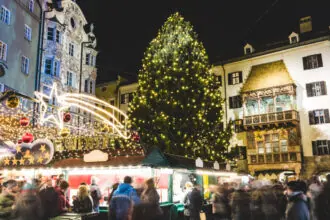
Heading on to the mountains once the festival ends? Our Munich Airport to Ski Resorts guide covers Garmisch-Partenkirchen, Innsbruck, and further into Austria, and our German Rail Tickets Explained guide breaks down the Bayern-Ticket and Deutschland-Ticket fares that also cover Munich’s own U-Bahn and S-Bahn network. Planning a return visit in December? Our Munich Christmas Markets guide covers the Marienplatz Christkindlmarkt, Tollwood and the rest of the city’s festive season.
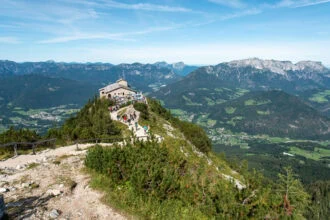
Continuing your trip through the country’s new Germany cluster on AST? Our Best Things to Do in Nuremberg guide covers Bavaria’s other great historic city, and our Visiting Eagle’s Nest & Berchtesgaden guide covers another of Bavaria’s most distinctive day trips in full depth.