Reviewed by our editorial team Updated
Getting Around Munich
Munich packs a lot of ground into a compact, walkable centre, but its public transport network is what makes the rest of the city and the surrounding countryside so easy to reach. U-Bahn, S-Bahn, trams and buses combine into one of Germany’s most reliable networks, and most visitors will rarely wait more than a few minutes for a connection.
Unlike Berlin’s lettered fare zones, Munich uses a ring-based system that fans outward from the city centre, and getting this right matters more here than in most German cities because the airport sits a long way out.
As in the rest of Germany, Munich runs on a proof-of-payment honour system rather than ticket gates, which means understanding how and when to buy a ticket is genuinely useful rather than optional background reading.
This guide covers how Munich’s network is organised, what the MVV ring system means for your ticket choice, current prices for single, day and weekly tickets, and when the Deutschlandticket makes more sense than buying individually.
Munich is also one of the more compact major German cities to navigate, and its Altstadt core is easily walkable between Marienplatz, the Frauenkirche and the Viktualienmarkt, with the U-Bahn mainly useful for reaching districts further out.
Bavaria’s tourism board and the operators both push English-friendly signage and announcements, so first-time visitors rarely struggle with the basics, even if the ring-based fare system takes a moment longer to click than Berlin’s lettered zones.
Munich Public Transport at a Glance
| Transport | Main operator | Best for | Visitor tip |
|---|---|---|---|
| U-Bahn | MVG | Fast journeys across the city | Eight lines, very frequent on weekdays |
| S-Bahn | S-Bahn München (DB) | Airport, Olympiapark and outer suburbs | All lines share one central tunnel through Marienplatz |
| Trams | MVG | Shorter hops in the centre | Route 19 links the main station to the Maximilianeum |
| Buses | MVG | Filling in the gaps | Bus 51 reaches Nymphenburg Palace; the Museumslinie (bus 100) links the museum quarter |
Best for a short trip. Compare rooms by neighbourhood, price and guest rating before you book.
Compare hotelsBest for longer stays. Whole apartments and houses, so you are not eating out three times a day.
View rentalsBest if you have already picked a hotel. Checks the big booking sites for the same room and shows who is cheapest.
Check dealsWho Runs Public Transport in Munich?
MVG (Münchner Verkehrsgesellschaft) operates Munich’s U-Bahn, trams and city buses. It is the operator most visitors will interact with directly, since its trains and vehicles carry the network’s most recognisable branding.
The S-Bahn is run separately by S-Bahn München, a subsidiary of DB Regio Bayern and, in turn, Deutsche Bahn, echoing the same split found in several other German cities between the metro operator and the suburban rail operator.
Everything is tied together by the MVV, the Munich Transport and Tariff Association, which sets one shared set of zones and tickets across MVG, S-Bahn and the regional buses that reach out into Bavaria.
As with Berlin, the practical result is that a single MVV ticket works across every mode, so there is no need to buy separate tickets for the U-Bahn versus the S-Bahn or a tram.
MVG is owned by Stadtwerke München, the city’s municipal utility company, which also runs Munich’s electricity and water networks, a fairly common structure among German transport operators.
The MVV association’s reach extends well beyond Munich itself, tying in regional bus operators and S-Bahn stations as far out as Augsburg’s border, so day-trippers heading into the wider region are often still covered by the same fare family.
How the Munich U-Bahn Works
Munich’s U-Bahn has eight numbered lines, U1 to U8, though only six of them run as genuinely independent routes. U7 and U8 are rush-hour and Saturday-afternoon booster services that share track with the main lines rather than timetables of their own.
The core lines cover real distance and connect very different parts of the city. U6, the longest at just over 27 kilometres, runs from Garching-Forschungszentrum on the northern edge of the city, past the Technical University campus, down through the centre to Klinikum Großhadern hospital in the south, while U3 links Moosach in the north-west to Fürstenried West, tracing the original 1972 Olympic-era route through the middle of the city.
U1 and U2 cover the opposite corners of the city. U1 connects the Olympia-Einkaufszentrum shopping centre to Mangfallplatz in the south-east, and U2 runs from Feldmoching in the north down to Messestadt Ost, the stop for Munich’s trade fair grounds and the Riem district.
Marienplatz and Odeonsplatz are the busiest interchanges, and almost any cross-town journey passes through one of them, with the dedicated hub-stations section below setting out exactly which lines meet where. Trains run every few minutes during the day, tightening to close to two-minute intervals on the shared central stretches during the morning and evening rush hour, and several lines continue through the night on Fridays and Saturdays.
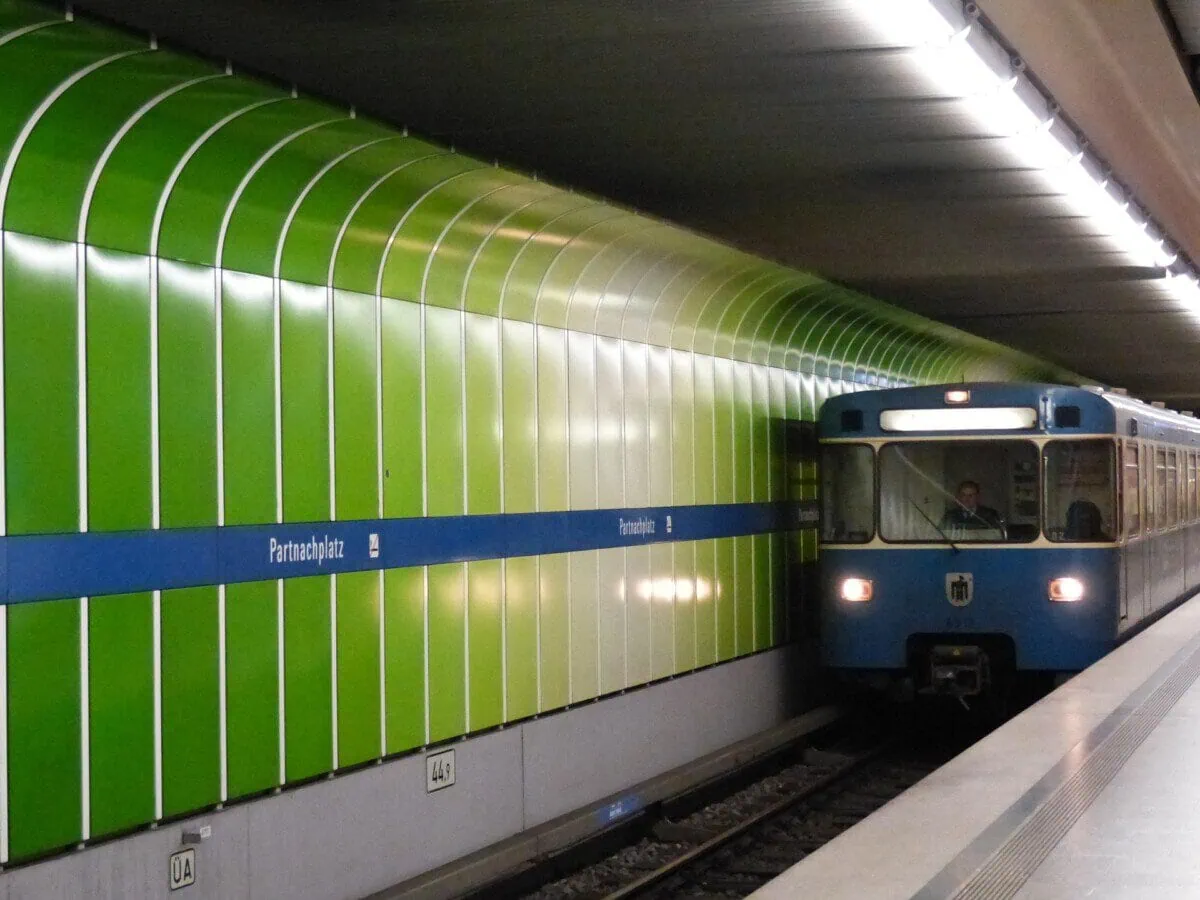
Buying and validating a U-Bahn ticket works the same way as across the rest of the MVV network, covered in full in the How to Buy a Ticket and How to Validate a Ticket sections below. Munich’s U-Bahn stations are also known for distinctive individual design, with several, including Candidplatz and Westfriedhof, worth a quick look even if you are not getting off there deliberately.
The Munich S-Bahn
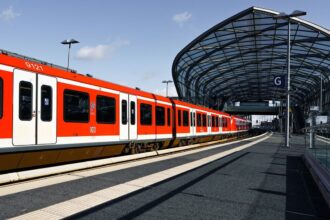
The S-Bahn is Munich’s suburban rail network, and every one of its eight main lines, S1 to S8, funnels through a single central tunnel, the Stammstrecke. It runs beneath Hauptbahnhof, Marienplatz and Ostbahnhof, which makes that stretch the busiest section of track in the city.
A ninth line, S20, runs across the city between Pasing and Höllriegelskreuth without entering the tunnel at all, making it a useful overflow route whenever the Stammstrecke itself is disrupted. This shared tunnel is also the network’s biggest weakness, since a delay on any one line tends to ripple across the whole S-Bahn network, and every service passes through the same few stations regardless of where it started.
S8 is the line most visitors will use, running from Hauptbahnhof through Ostbahnhof and out to Munich Airport, while S1 reaches the airport from the opposite direction, approaching via Dachau and the northern suburbs. Because the airport sits in the far outer zone, checking your ticket covers the right rings before travelling is worth the extra minute it takes, and announcements on this specific line are typically given in German and English, even though that is less consistent on some of the outer suburban branches.
The other six lines fan out across greater Munich and Upper Bavaria. S6 runs from Tutzing on the Starnberger See lake all the way to Ebersberg in the east, S3 connects Mammendorf to Holzkirchen, S4 links Geltendorf to Ebersberg, and S7 runs from Wolfratshausen up through the centre to Kreuzstraße and Trudering, so day-trippers heading for the lakes or the Alpine foothills are usually riding one of these rather than S1 or S8.
S-Bahn stations share the same MVV ticket machines and validation boxes as the U-Bahn, though on the S-Bahn side they are usually DB-branded rather than MVG-branded. On a small suburban platform without a working machine, buy through the MVGO, MVV or DB Navigator app before boarding rather than assume it can be explained away later, since a missing machine is not accepted as an excuse and carries the same fine covered in the How to Validate a Ticket section below.
The Stammstrecke tunnel is currently being supplemented by a second tunnel project, intended to relieve congestion on the shared line, though construction has stretched over many years and full completion remains some way off. S-Bahn trains carry dedicated luggage racks near the doors, which is genuinely useful on the S1 or S8 run to and from the airport with suitcases in tow.
The Best Stations for Changing Lines in Munich
Three stations matter most when it comes to changing lines or catching a long-distance train in Munich, and each sits on a different part of the network. Knowing which one applies to your journey saves a wasted trip across the city to the wrong platform.
Marienplatz is where the historic core meets the transport network, served by U-Bahn lines U3 and U6 plus every S-Bahn line running through the shared Stammstrecke tunnel beneath the square. Anyone basing themselves near the Frauenkirche or Viktualienmarkt will pass through it constantly, since it sits right at the centre of the Altstadt and trains arrive every two to three minutes at peak times.
Hauptbahnhof is Munich’s long-distance rail gateway, with ICE and IC services running to Hamburg, Berlin, Cologne and onward into Switzerland and Italy. U-Bahn lines U1, U2, U4 and U5 converge here alongside every S-Bahn line, and it also doubles as the starting point for the S1 and S8 airport trains and the Lufthansa Express Bus.
Ostbahnhof, on the eastern side of the centre, carries the U5 U-Bahn line and the same full spread of S-Bahn routes, plus InterCity, EuroCity and Railjet services heading toward Salzburg, Innsbruck and Vienna via Rosenheim. It is the better departure point than Hauptbahnhof for anyone travelling southeast into Austria or Italy, or staying in Munich’s eastern districts near the Gasteig or Werksviertel.
For sightseeing, Marienplatz is the natural base since it sits inside the walkable Altstadt, while Hauptbahnhof is the one to plan around for long-distance trains heading west or north and for the Munich Airport S-Bahn. Ostbahnhof is worth remembering specifically for anything heading toward Austria, Italy or the wider southeast.
| Station | Key Lines | Best For |
|---|---|---|
| Marienplatz | U3, U6; all S-Bahn lines | Historic Altstadt; Frauenkirche and Viktualienmarkt |
| Hauptbahnhof | U1, U2, U4, U5; all S-Bahn; ICE/IC | Long-distance trains west/north; S1/S8 to the airport |
| Ostbahnhof | U5; all S-Bahn; IC/EC/Railjet | Trains toward Austria and Italy; eastern Munich |
Munich’s Trams
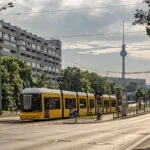
Munich runs twelve daytime tram lines, numbered 12, 14, 16, 17, 18, 19, 20, 21, 23, 25, 27 and 28, alongside night tram routes that take over once some of them stop for the evening. That is a genuinely useful network for short hops the U-Bahn does not cover well, since trams run along streets the underground simply does not reach.
Route 19 is the most useful single line for a visitor, running from Pasing railway station in the west through the city centre at Karlsplatz and Theatinerstraße, on past Hauptbahnhof, and out to the Maximilianeum and Ostbahnhof, passing close to several museums and the National Theatre on the way. Route 16 covers a similarly long stretch on the opposite side of the network, linking Romanplatz in the west through Donnersbergerstraße, Hackerbrücke and Hauptbahnhof out to St Emmeram in the east, useful for anyone staying in the western districts who wants a single-change route across the centre.
Munich’s tram network has been steadily expanding in recent years, with newer routes extending into districts that previously relied only on buses, part of a long-term plan to reduce car use in the city centre. Trams are also fully low-floor and step-free across the modern fleet, making them one of the more accessible options for wheelchair users or anyone travelling with heavy luggage.
Unlike the U-Bahn, trams run at street level alongside traffic on some stretches, so journeys can occasionally take a little longer during rush hour if the road ahead is congested. Every tram carries two on-board ticket machines right at the doors, more than a bus gets, which is worth knowing since the How to Validate a Ticket section below explains exactly when and how to use them.
Munich Buses
MVG’s bus network is the largest part of the system by line count, running well over a hundred routes once the ExpressBus, MetroBus, StadtBus and night bus tiers are added together. Four ExpressBus routes, X30, X35, X36 and X80, run limited-stop journeys along the longest corridors, while a much larger StadtBus tier, numbered from the 130s upward, fills in the rest of the city.
MetroBus routes, numbered in the 50s and 60s and marked with a distinct blue livery, run the busiest corridors at high frequency, often every five to ten minutes during the day, comparable to a tram in practical terms and the tier most likely to be useful to a visitor rather than a resident’s daily commute. Bus 100, the Museumslinie, is the standout for sightseeing, running from Hauptbahnhof Nord through the Kunstareal museum quarter, Odeonsplatz and Prinzregentenstraße to Ostbahnhof, stopping close to more than twenty museums along the way, including the Alte Pinakothek, the Pinakothek der Moderne, the Lenbachhaus and the Haus der Kunst.
Bus 51 is the practical route to Nymphenburg Palace, running out to the Schloss Nymphenburg stop right at the palace gates, while BMW Welt and the BMW Museum are better reached on the U3 to Olympiazentrum, a short walk from the entrance, since no single bus route serves it as directly. Night buses take over once the U-Bahn stops running on weeknights, covering many of the same corridors as the daytime rail network in the N40s, N70s and N80s route numbers, at a reduced frequency.
Buses are low-floor and wheelchair accessible across virtually the entire fleet, and drivers will lower the ramp on request for anyone boarding with a pushchair or mobility aid. Real-time countdown displays at busier stops, alongside live data in the MVGO and MVV apps, make it easy to time your arrival rather than waiting blind at the stop.
Each bus carries a single on-board ticket machine, fewer than a tram gets, and a ticket bought this way carries a small surcharge over pre-purchasing through the MVGO or MVV app. If that machine is broken, tell the driver straight away and buy at your first transfer stop instead, since a broken machine does not exempt you from having a valid, validated ticket.
Best for finding routes the airlines do not sell as a single ticket. Combines carriers to bring the fare down.
Search flightsBest for anyone whose home plan charges by the megabyte abroad. Pay a fixed price up front.
Check eSIMsBest when public transport has stopped, or when you are travelling with children and bags.
Book a transferHow to Buy a Ticket in Munich
Munich gives you several ways to buy a ticket before you travel, and the right one usually depends on how spontaneous the trip is. Platform ticket machines sit at every U-Bahn and S-Bahn station entrance, taking cash and card, and sell the full range of MVV tickets from a single Einzelfahrkarte to a Tageskarte covering the whole day.
Trams and buses carry their own on-board machines too, so a paper ticket bought there works exactly like a station-bought one once it has been stamped. MVG also runs staffed customer centres across the city, useful for a Deutschlandticket sign-up or a group ticket, both covered in full in their own sections below.
| Channel | Best For | Notes |
|---|---|---|
| Platform machines | Single & day tickets on the spot | Cash and card at every station entrance |
| On-board machines (tram/bus) | Buying right before boarding | Small surcharge vs the apps |
| MVG customer centres | Deutschlandticket sign-up, group tickets | Staffed, citywide |
| MVGO / MVV apps | Most visitors | Ticket valid immediately, no stamping needed |
| MVVswipe | Pay-as-you-go | Tap in/out; see Apps section below |
For most visitors the MVGO or MVV app is the simplest channel, since a mobile ticket activates the moment you buy it with no separate stamping required. Both apps also support MVVswipe, Munich’s tap-in tap-out fare system, and we cover exactly how that works in the Apps section below rather than repeating it here.
Whichever ticket you choose, make sure it actually covers the right zone before boarding, since Munich’s ring-based system means a city-only Zone M ticket will not cover a trip out to Munich Airport in Zone 5. Our Ring-Based Fare Zone System and Ticket Prices sections below set out current fares in full, and our Deutschlandticket section further below explains when the monthly pass beats buying tickets individually.
Every channel above sells the same core ticket types, so the choice is mostly about convenience rather than availability. Single, day and fare-ring tickets are all covered in full in our Ticket Prices section below, and the Deutschlandticket subscription described further below is bought slightly differently, through the app or MVG’s own website rather than a station machine.
How to Validate a Ticket in Munich
Munich runs on Germany’s standard honour system, so nobody checks your ticket at a barrier before you board a U-Bahn, S-Bahn, tram or bus. Plain-clothes inspectors carry out random checks on board instead, and it is entirely on you to have a valid, validated ticket ready to show before that happens.
The detail that catches out more visitors here than almost anywhere else is that a paper ticket must be stamped in the blue validation box at the station entrance, before you go down to the platform, not once you are standing on it. That is a genuine difference from cities where validation happens platform-side, and both Munich’s U-Bahn and S-Bahn entrances use the same blue boxes next to the ticket machines.
On trams, validate the moment you step aboard, since the on-board machine sits right at the door, and MVG’s own rule treats a ticket bought or stamped anywhere else on the vehicle as too late. Buses work the same way, with a single validation machine beside the driver that needs using before you take a seat.
Riding with an unvalidated or missing ticket carries a real €60 on-the-spot fine if an inspector catches you, and Munich’s honour system makes no exception for a broken machine or an unlucky first attempt. A ticket bought through the MVGO or MVV app, or an active MVVswipe check-in, needs no separate stamping at all, since both count as valid from the moment you buy or tap in.
If you already hold a valid personal ticket but simply cannot produce it during a check, MVG lets you submit proof within fourteen days for a much smaller administrative fee instead of the full fine. That exception never covers a ticket that was never bought or validated in the first place, so treat the blue box as a genuine step, not an optional formality.
Munich’s Ring-Based Fare Zone System
Munich’s fare map works nothing like Berlin’s lettered zones, so it is worth understanding on its own terms. A central zone, called Zone M, covers the entire city, and beyond it a series of numbered rings, 1 through 6, spread outward into the surrounding region.
Fares are calculated by how many rings your journey touches, not by distance in kilometres, so a short hop that happens to cross a ring boundary can cost more than a longer trip that stays within one.
Munich Airport sits out in Zone 5, so any journey to or from it needs a ticket spanning Zone M through Zone 5, not just a single-zone city ticket.
For almost all sightseeing within the city itself, a Zone M ticket is all you need, and it is only day trips or the airport run that require paying for the outer rings.
A ticket bought for the wrong number of rings is not automatically upgraded on board, so it pays to double-check your route against the zone map before setting off on a longer day trip.
MVV’s official website and both mobile apps include a zone calculator that works out exactly which rings a given journey crosses, removing the guesswork for a one-off trip outside the city centre.
Munich Public Transport Ticket Prices
Prices below reflect MVV’s current fares for Zone M, the zone covering the whole city centre. Journeys that cross into the outer rings, including the airport run, cost more than the figures shown here.
Children under six travel free on all MVV services, and children aged six to fourteen pay a reduced Kinder fare, worth factoring in for a family trip around the city.
| Ticket | Zone | Price | Validity |
|---|---|---|---|
| Kurzstrecke (short trip) | Zone M | €2.10 | Short hops only, no transfers |
| Einzelfahrkarte (single) | Zone M | €4.20 | One direction, transfers allowed within the time limit |
| Tageskarte (day ticket) | Zone M | €10.10 | Unlimited travel until 6am the next day |
| Wochenkarte (weekly) | Zone M / 2 zones | €23.80 | Seven days from first use |
A Streifenkarte-style multi-trip option was phased out in recent years in favour of the digital MVV Swipe check-in system, covered in the apps section below, which now handles pay-as-you-go fares for many riders instead.
All ticket types can be bought from platform vending machines, MVG customer centres, or either official app, and machine-bought tickets accept both cash and card at most stations.
Group and day tickets covering up to five people travelling together offer a further discount over buying individual day tickets, worth checking if you are travelling as a family or small group.
The Deutschlandticket in Munich
The national Deutschlandticket costs €63 a month and covers unlimited travel across the entire MVV area, including the outer rings and the airport, which makes it genuinely strong value once a Munich stay stretches past about a week.
It also covers regional trains across the whole of Germany, which suits anyone planning a day trip to the Alps, Nuremberg or Salzburg’s border region during a longer Bavarian trip.
The ticket is non-transferable and tied to one named person, so a couple or family cannot share a single subscription between them the way an older group ticket allowed.
It is sold as a rolling monthly subscription rather than a one-off purchase, and most providers let you cancel before the next billing cycle if your trip ends earlier than planned.
Because it activates from the first day of the calendar month rather than the purchase date, arriving mid-month means paying the full price for partial use, so weigh that against single and day tickets first.
Our German Rail Tickets Explained guide breaks down how the Deutschlandticket compares with regional passes, and our Interrail Germany Pass guide is worth a look if Munich is one stop on a wider German rail trip rather than the whole itinerary.
Apps for Getting Around Munich
MVGO is MVG’s own mobility app, covering journey planning, live departures and mobile ticket purchase across U-Bahn, S-Bahn, trams and buses, alongside MVG’s own bike, e-scooter and e-moped rental fleet in one screen.
A separate official MVV app also exists, run by the wider Munich Transport and Tariff Association rather than MVG alone, and covers the same journey planning and ticketing across the whole MVV area, including regional buses further out.
Both apps, alongside a third option called München Navigator, now support MVVswipe, a check-in/check-out system where you tap to start your journey and tap again when you arrive, with the fare calculated automatically and capped at the price of a day ticket.
The DB Navigator app remains useful alongside these, particularly for checking S-Bahn disruptions on the shared central tunnel or booking onward regional and long-distance trains.
A ticket or MVVswipe session in any of these apps is fully valid during a spot check, so there is no need to also carry a printed ticket as a backup.
Because Munich’s operators have consolidated and renamed apps more than once in recent years, it is worth checking you have the current MVGO app rather than an older, discontinued version still listed under a previous name in some app store searches.
Best for short city stops where being central matters more than the room. Dorms and private rooms both listed.
See hostelsBest if you have ever given up on a claim. AirHelp checks whether the flight qualifies and pursues it for you.
See the benefitsBest for a day with a suitcase and nowhere to put it. Find a storage point near where you already are.
View storageGetting To and From Munich Airport
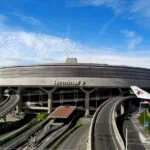
Munich Airport sits around twenty eight kilometres from the centre, out in fare Zone 5. The S1 and S8 S-Bahn lines both run directly there, and a dedicated Lufthansa Express Bus also connects the airport to the city.
The S1 approaches the airport via Dachau and Munich’s northern suburbs, while the S8 approaches via the eastern side through Ostbahnhof, so it is worth checking which one starts closer to where you are staying.
Both S-Bahn lines run every ten to twenty minutes through most of the day, and the journey from central Munich takes roughly forty five minutes on either line.
The Lufthansa Express Bus runs a more direct route from the Hauptbahnhof and a couple of central hotel stops, useful if you are travelling with heavy luggage and would rather avoid a station transfer.
A standard taxi from the airport to the city centre takes a similar amount of time to the train during quiet traffic, but costs considerably more, so the S-Bahn remains the better value option for most visitors.
Because this involves comparing journey time, price and luggage space across several genuinely different options, we cover it in full in a dedicated guide rather than repeating it here.
See our Munich Airport Transfers guide for a complete breakdown of every route into the city, with current prices and timings.
Common Munich Public Transport Mistakes
The most common mistake is buying a Zone M ticket for a trip to the airport. Munich’s honour system means nobody stops you at a barrier, but an inspector checking your ticket on an S8 train will find it invalid for the outer rings.
Another frequent error is assuming Munich’s zones work like Berlin’s, and trying to buy an AB-style ticket that simply does not exist here, since Munich prices by rings crossed rather than lettered bands.
Finally, visitors sometimes forget that a Kurzstrecke ticket does not allow transfers, so it only suits a single short hop rather than a journey that changes lines partway through.
Some visitors also assume an MVVswipe tap-in works the same way at every gate-free entrance without confirming their phone actually registered the check-in, so it is worth glancing at the app to confirm before boarding.
Finally, it is easy to forget that night bus and reduced weekend U-Bahn schedules run differently to weekday daytime services, so always check the app before relying on a very late or very early connection.
A less obvious trap is assuming MVG and MVV are simply two names for the same thing; MVG operates the vehicles inside Munich while MVV sets the fares and zones across the whole region, and mixing them up can cause confusion when reading route maps.

Rupert’s Handy Travel Tips
Munich’s rings caught me out the first time I rode out to the airport, so here is what I wish I had known before I set off.
- Forget Berlin’s AB and ABC zones entirely here, Munich prices by rings crossed from Zone M outward.
- Buy a ticket that spans Zone M through Zone 5 before heading to the airport on the S8 or S1.
- Zone M alone covers almost everything you will want to see in the city centre.
- Work out the Deutschlandticket cost before your trip if you are staying more than about a week.
- Hop on tram 19 if you want a scenic, unhurried way to reach the museums along the Isar.
Want to meet the reindeer behind our travel tips? Find out more in our page Who is Rupert?.


Frequently Asked Questions
Does Munich use the same fare zones as Berlin?
No. Munich uses a ring-based system radiating out from central Zone M, while Berlin uses three lettered zones, A, B and C, so tickets from one city do not translate directly to the other.
Do I need a special ticket for Munich Airport?
Yes. The airport sits in Zone 5, so you need a ticket spanning Zone M through Zone 5 rather than a standard city-zone ticket.
Are there ticket barriers in Munich?
No. Like the rest of Germany, Munich runs on a proof-of-payment honour system, with random inspections rather than gates at stations.
Who runs the Munich S-Bahn?
S-Bahn München, a subsidiary of DB Regio Bayern, runs the S-Bahn, while MVG separately runs the U-Bahn, trams and buses.
Is the Deutschlandticket worth buying for a short city break?
Usually not for a stay under a week, but it becomes better value than single and day tickets combined once a trip runs longer, especially if you are also taking day trips outside Munich.
Further Reading
Munich’s transport network is only the practical part of a visit, so a few of our other Munich guides are worth pairing with this one. Our Munich Airport Transfers guide covers every route between the airport and the city in full, and our Munich Things to Do guide points that Zone M ticket toward the beer halls, palaces and parks worth the trip.
Ready to leave the city behind for a day, our Munich Day Trips guide maps out genuine escapes from castles to Bavaria’s largest lake, all reachable on the MVV ticket covered above. Visiting in autumn instead, our Oktoberfest in Munich guide sets out the tents, dates and costs, since the U-Bahn is also the easiest way to reach the Theresienwiese.
Landing over the festive season, our Munich Christmas Markets guide covers the Christkindlmarkt at Marienplatz and the city’s other seasonal stalls, most within a short U- or S-Bahn hop of each other.
Planning a longer rail trip through Bavaria or Germany, our German Rail Tickets Explained and Interrail Germany Pass guides cover the Deutschlandticket and multi-stop rail passes in full detail.