Reviewed by our editorial team Updated
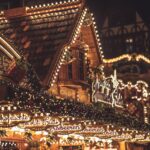
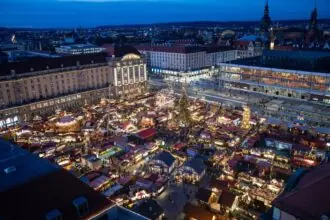
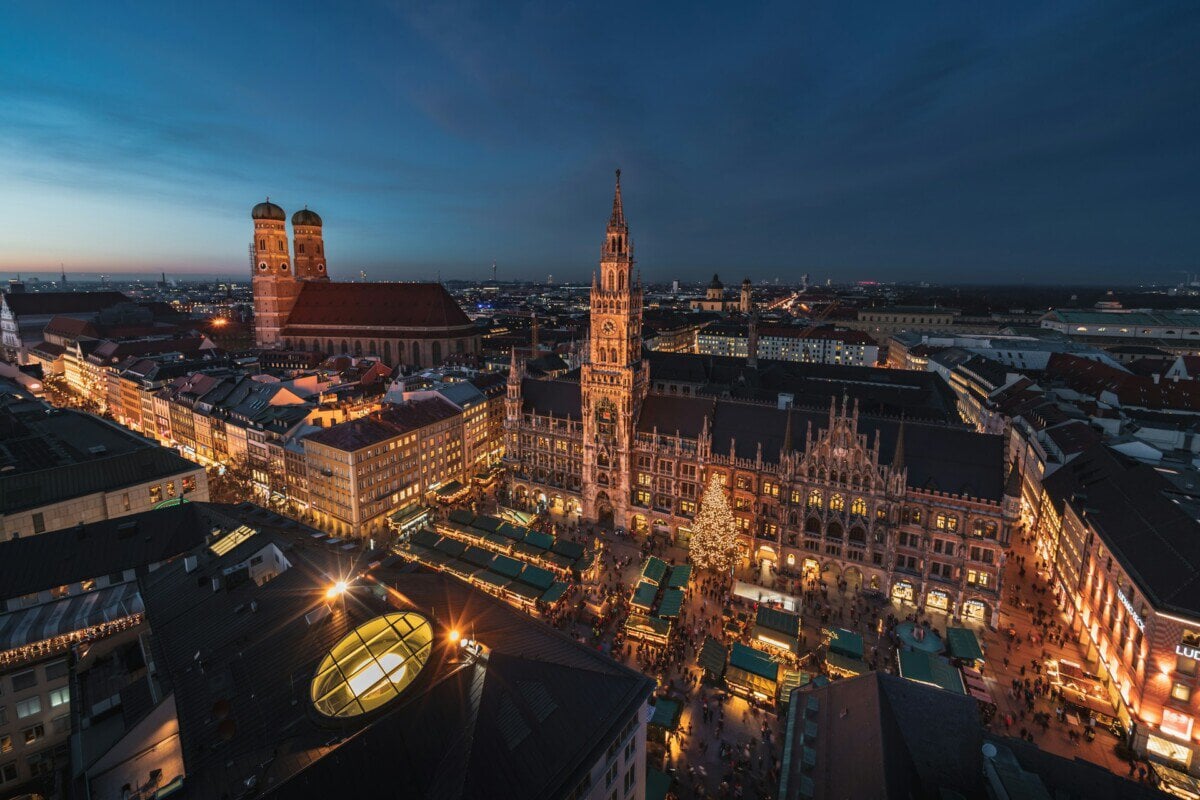
Munich’s festive season centres on the Christkindlmarkt at Marienplatz, first recorded as a Nikolaimarkt in 1310, which puts it among the oldest documented Christmas-season markets anywhere in the German-speaking world. Renamed Christmarkt in 1806 and moved to its present home on Marienplatz only in 1972, the market has spent more than seven centuries adapting to the city that grew up around it.
That single square is only the start of it. Munich runs a genuine scattering of smaller markets across the city, from a medieval-themed market on Wittelsbacherplatz to a woodland market wrapped around the Chinese Tower in the Englischer Garten, each with its own distinct character rather than a copy of the main event.
This guide works through the Christkindlmarkt in depth, including its 2026 opening dates, the roughly 140 stalls that fill Marienplatz each winter, and the nearly 30-metre tree donated by a different Austrian or Italian town every year. It then covers Wittelsbacherplatz’s medieval market, the Chinesischer Turm’s quieter woodland setting, the Tollwood Winter Festival’s alternative take on the season, and the Residenz Christmas Village’s palace courtyard.
It also covers Munich’s own unusual approach to Sunday shopping, what to wear for a genuinely cold Bavarian December, and how to move between markets scattered across the city on the U-Bahn and S-Bahn. Every date and detail below has been checked against Munich’s own tourist board and municipal listings rather than carried over from a previous season.
Munich’s Christmas Markets at a Glance
The table below rounds up the city’s most notable markets, including the five covered in full further down this guide, as a starting point for choosing where to go. Full detail on dates, history and what actually fills each square sits in the dedicated sections that follow.
| Market | Location | Known For | Dates (2026) |
|---|---|---|---|
| Christkindlmarkt | Marienplatz & Rindermarkt | Munich’s original market, first recorded in 1310, around 140 stalls and a donated Alpine tree | 20 Nov to 24 Dec (closed 22 Nov) |
| Mittelaltermarkt | Wittelsbacherplatz | Costumed traders, blacksmiths and potters recreating a medieval fair | 20 Nov to 23 Dec |
| Christmas Market at the Chinesischer Turm | Englischer Garten | A quieter woodland market around the Chinese Tower pagoda, with a carousel and brass band | Late Nov to 24 Dec; exact dates tbc |
| Tollwood Winter Festival | Theresienwiese | Organic, fair-trade market with a circus big top, free entry to the festival grounds | 24 Nov to 23 Dec |
| Residenz Weihnachtsdorf | Residenz courtyard, Odeonsplatz | Craft demonstrations from goldsmiths and glassblowers in a covered palace courtyard | 16 Nov to 22 Dec |
| Sendlinger Tor Market | Sendlinger-Tor-Platz | Running since 1886, with international goods including nativity scenes from Tyrol and Peru | 20 Nov to 22 Dec |
| Münchner Eiszauber | Karlsplatz-Stachus | Bavaria’s largest mobile ice rink, running in timed admission blocks | Late Nov into January; exact dates tbc |
The Christkindlmarkt’s Roots in Medieval Munich
Munich’s own Christmas market can trace itself back further than most. The Marienplatz market was first recorded as a Nikolaimarkt in 1310, a market timed around the feast of St Nicholas rather than Christmas itself, which puts it among the oldest documented Christmas-season markets anywhere in the German-speaking world.
That early market moved around the city several times over the following centuries, following whichever square suited the town council best at the time. It was formally renamed Christmarkt in 1806, a shift that reflected the market’s slow drift from a saint’s-day trading fair toward the specifically Christmas-focused event familiar today.
The market did not settle at its current home until relatively recently in that long history. It has run on Marienplatz, Munich’s grand central square in front of the Neues Rathaus, only since 1972, meaning the site most visitors now think of as the market’s natural home is actually its newest.
Like most of Germany’s old Christmas markets, the Munich market’s exact medieval character has shifted considerably across seven centuries of war, rebuilding and modern tourism. What survives today is a market that leans on its long history for identity while functioning, in practice, as a thoroughly modern seasonal event built for the roughly three million visitors who now pass through each winter.
Best for a short trip. Compare rooms by neighbourhood, price and guest rating before you book.
Compare hotelsBest for groups who want one address and separate bedrooms rather than three hotel rooms.
See holiday homesBest if you have already picked a hotel. Checks the big booking sites for the same room and shows who is cheapest.
Check deals2026 Dates, the Donated Tree and the Kripperlmarkt
For 2026, the Christkindlmarkt is scheduled to run from 20 November to 24 December, with the market closed on 22 November and shortened hours of 10am to 2pm on Christmas Eve itself. Standard hours run from 10am to 9pm Monday to Saturday and 10am to 8pm on Sundays, spread across Marienplatz and the neighbouring Rindermarkt.
Around 140 stalls fill the two squares, selling everything from hand-carved nativity figures to roasted chestnuts and mulled wine. A mug of Glühwein typically costs around €4 to €5 (£3.44 to £4.30/$4.68 to $5.85), in line with the rest of the country’s markets, with a small refundable deposit on the mug itself.
The market’s centrepiece is its Christmas tree, standing nearly 30 metres tall and donated every year by a different Austrian or Italian town. In exchange, the donor municipality gets a self-presentation space in the Rathaus’s inner courtyard and permission to run its own Glühwein stand there for the season, with the 2026 tree, a 75-year-old spruce, arriving from Ellmau in Austria’s Kaiser Mountains and carrying 265 fairy lights alongside 3,975 LED lights.
A short walk away on Neuhauserstrasse near Stachus, a separate Kripperlmarkt sells nothing but nativity scenes and their accessories, spread across more than ten dedicated stands. It is a quieter, more specialised stop than Marienplatz itself, and worth the short detour for anyone shopping specifically for a crib scene rather than general Christmas gifts.
The Medieval Market at Wittelsbacherplatz
A short walk north of the old town, the market on Wittelsbacherplatz trades Marienplatz’s polish for a full medieval theme. Traders in period costume sell from rustic wooden huts rather than modern chalets, giving the square a rougher, more theatrical feel than the main Christkindlmarkt.
Craftspeople work in view of visitors throughout the market’s run, with blacksmiths, potters and glassblowers demonstrating skills that would genuinely have been in use centuries ago. Fire jugglers and wandering musicians add to the atmosphere between the stalls.
Food and drink lean into the theme just as hard as the crafts do. Mead, mulled beer and roasted meats are served from iron cauldrons and earthenware mugs, alongside dark bread and spit-roasted meat, a genuinely different menu from the Glühwein and gingerbread found across most of the city’s other markets.
For 2026 the market is scheduled to run from 20 November to 23 December, closing a day earlier than the main Christkindlmarkt. It sits directly on Briennerstrasse, a short walk from Odeonsplatz and easily combined with a visit to the Residenz Christmas Village covered below.
Christmas Under the Chinese Tower in the Englischer Garten
For a genuinely quieter alternative to the crowds at Marienplatz, the market wrapped around the Chinesischer Turm sits inside the Englischer Garten, one of Europe’s largest urban parks. Bare winter trees and lantern light give the whole site a hushed, almost rural feel rather than a city-centre bustle.
The market circles the tower’s famous wooden pagoda, itself home to one of Munich’s best-known beer gardens for the rest of the year. A children’s carousel and horse-drawn carriage rides through the park add a gentler, family-focused note than some of the city’s louder markets.
Live brass bands play from the tower’s own bandstand through the season, echoing the summer beer-garden tradition the same spot is known for. It is one of the better options for visitors who want a Christmas market experience without the density of Marienplatz’s crowds.
Exact 2026 dates had not been confirmed at the time of writing, though the market has run every winter in recent years across the standard late-November to Christmas Eve window. Reaching it means a walk or short bus ride into the park itself, since no market stall sits directly on a U-Bahn or tram stop.
Tollwood Winter Festival: Munich’s Alternative Christmas
Rather than another round of wooden chalets, the Tollwood Winter Festival on the Theresienwiese, the same field that hosts Oktoberfest, builds its own alternative to a conventional Christmas market. Organic food and fair-trade handicrafts from around 200 exhibitors worldwide fill the market tents, deliberately avoiding the mass-produced souvenirs found elsewhere.
A dedicated environmental and cultural programme runs alongside the market itself, with talks, workshops and performances built around sustainability rather than simply shopping. The festival’s Grand Chapiteau big top hosts a full slate of international circus, dance and music shows through the season.
Entry to the festival grounds and its Market of Ideas is free, and more than 90% of the wider programme, including much of the circus tent’s content, runs on complimentary tickets too. Only a handful of premium performances and special events charge separately.
For 2026 the market runs from 24 November to 23 December, with the wider festival site staying open into a New Year’s Eve party on 31 December. It sits a short walk from Theresienwiese U-Bahn station, making it one of the easier markets on this list to reach directly by public transport.
The Residenz Christmas Village
Inside the Residenz, the former royal palace of the Bavarian monarchy, a Christmas village fills the building’s largest courtyard with stalls sheltered from the worst of Munich’s winter weather. A giant illuminated tree anchors the space, ringed by wooden huts selling fine crafts and gourmet food rather than mass-market souvenirs.
Craftspeople work the stalls in full view of visitors, with goldsmiths, fur workers and glassblowers demonstrating trades that have genuinely been practised inside these walls for centuries. Classical music performances run through the season, fitting for a market housed inside one of Bavaria’s grandest historic buildings.
The covered courtyard setting makes this one of the more comfortable markets on this list during a genuinely wet or windy Munich December. It is a noticeably calmer, more upscale experience than the crowds around Marienplatz, closer in spirit to Berlin’s own ticketed Gendarmenmarkt market than to a typical open-air Christmas fair.
For 2026 the market runs from 16 November to 22 December, one of the earliest openings and earliest closings of any market covered here. It sits on Odeonsplatz, a short walk from both Wittelsbacherplatz’s medieval market and the main U-Bahn interchange at Odeonsplatz itself.
More Munich Markets and the Eiszauber Ice Rink
Beyond the markets covered above, Munich runs several smaller Christmas markets worth knowing about even without their own dedicated section here. The Sendlinger Tor market, running since 1886, is one of the city’s oldest, spreading international goods including nativity scenes from Tyrol and Peru around the old city gate.
For genuine ice skating rather than market stalls, the Münchner Eiszauber sets up on Karlsplatz, better known locally as Stachus, billed as Bavaria’s largest mobile ice arena. Admission runs in time blocks rather than a flat day rate, from around €8 (£6.88/$9.36) for an early session up to €14 (£12.04/$16.38) in the evening, with skate hire adding roughly €8 (£6.88/$9.36) on top.
Across the river in Haidhausen, a smaller neighbourhood market on Weissenburger Platz has run for around forty years and is regularly cited by locals as the city’s most atmospheric, built around South Tyrolean nativity figures rather than the crowds of the centre. It is worth the tram ride out for anyone who has already covered the main markets.
None of these three individually justifies a special trip on its own, but together they round out a Munich Christmas visit with more variety than the Christkindlmarkt alone. Sendlinger Tor and the Eiszauber both sit within a short walk of each other in the old town, making them easy to combine in a single afternoon.
Best if you can move a day either way. Shows how the fare changes across the month.
Compare flightsBest for anyone whose home plan charges by the megabyte abroad. Pay a fixed price up front.
Check eSIMsBest when public transport has stopped, or when you are travelling with children and bags.
Book a transferChristmas Shopping and Sunday Trading in Munich
Munich’s shopping streets, particularly Kaufingerstrasse and Neuhauser Strasse running west from Marienplatz, stay busy through Advent with the city’s main department stores and chain retailers. Standard hours run Monday to Saturday, typically from around 10am to 8pm, in line with the rest of the country.
Where Munich genuinely differs from the other German cities in this comparison is Sunday trading. Bavaria’s state government treats Munich as a deliberate exception to the usual pattern of a handful of confirmed verkaufsoffene Sonntage each year, and the city does not permit Sunday shop openings even during major events.
That makes Munich one of the few major German Christmas market cities where a Sunday visit built around shopping simply will not work, whatever the calendar looks like elsewhere in the country. Visitors used to Berlin’s or Dresden’s confirmed Advent Sundays should not assume the same pattern applies here.
The market stalls themselves stay open on Sundays as normal, since they operate under separate market licensing rather than standard retail rules. It is only the city’s ordinary shops, rather than the Christmas markets, that stay closed.
What to Wear: Munich’s December Weather
Munich sits closer to the Alps than most of Germany’s other major Christmas market cities, and its December weather reflects that. Daytime highs typically hover between about 1°C and 4°C (34°F to 39°F), often a few degrees colder than Berlin or Cologne on the same day, with evenings dropping well below freezing.
Snow is a genuine possibility through the market season rather than a rare novelty, given the city’s proximity to the mountains. A warm, waterproof coat, sturdy boots with real grip and proper gloves matter more here than almost anywhere else on this site’s German Christmas market guides.
Because several of Munich’s markets, including Wittelsbacherplatz and the Chinesischer Turm, sit outdoors with limited shelter, dressing for a long stretch standing still matters more than for a market like Cologne’s covered cathedral square. The Residenz Christmas Village’s covered courtyard is the one genuine exception among the markets covered above.
Layering is the simplest practical approach, since most markets pair well with a warm drink and a walk between stalls rather than continuous movement. Anyone planning a full day across several markets should budget time to warm up indoors between stops rather than trying to power through the cold in one long stretch.
New Year’s Eve in Munich
Munich’s Christmas markets mostly close by 22 or 24 December, but the city’s own New Year’s Eve, known locally as Silvester, is a genuinely different event worth planning around if a trip runs into late December. Private fireworks have been effectively banned across the Mittlerer Ring, the ring road circling the inner city, since 2021, with fines running into the tens of thousands of euros for anyone setting them off inside it.
In place of the traditional street fireworks, the city now runs its own ticketed Silvestermeile, an 800-metre stretch of Ludwigstrasse between the Siegestor and Odeonsplatz turned over to stages, DJs and a laser and light show timed for midnight. Early tickets for the 2026 event start at around €33 (£28.38/$38.61), rising to roughly €40 (£34.40/$46.80) closer to the date, with a set of free tickets reserved for lower-income residents.
Anyone who prefers to watch from a distance rather than join the ticketed crowd tends to head for Olympiapark, Luitpoldpark or the banks of the Isar, all outside the fireworks-restricted zone and popular with locals rather than visitors. A separate, ticketed Altstadt Festival also runs on Marienplatz itself through the night, with street food and live music continuing well into the early hours.
Whichever option you pick, booking ahead matters more on Silvester than on an ordinary Christmas market evening. Restaurants across the city take dinner reservations for the night weeks in advance, and both the Silvestermeile and the Altstadt Festival sell through their ticket allocations before the day itself.

Getting to Munich’s Christmas Markets
Munich’s markets sit close enough together in the old town that walking between several of them in one day is genuinely realistic. Marienplatz, Wittelsbacherplatz, the Residenz and Sendlinger Tor all sit within about a fifteen-minute walk of each other, connected by the same pedestrianised streets that carry the city’s main shopping routes.
The Chinesischer Turm and Tollwood sit further out, and both are best reached by the city’s U-Bahn and tram network rather than on foot. A standard MVV single ticket covers most journeys within the city zone, and Munich’s transport map is straightforward enough to navigate without much local knowledge. Our Munich Public Transport guide covers the full U-Bahn, S-Bahn, tram and bus network in depth, including ticket types and zones, if you want more detail before setting off between markets.
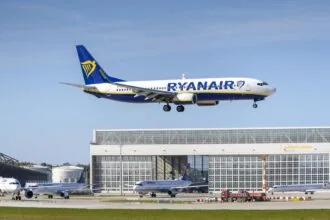
Travellers arriving by air land at Munich Airport, from where the S-Bahn lines S1 and S8 reach the Hauptbahnhof and Marienplatz in around 45 minutes. Our own Munich Airport Transfers guide covers every realistic option from the airport in more depth, including the Lufthansa Express Bus and private transfers.
Driving into the city centre during the market season is rarely worth the effort, since much of the old town around Marienplatz is pedestrianised and parking nearby is limited. As with most German cities at Christmas, booking accommodation well ahead is worth doing given how popular Munich has become as a festive destination.

Rupert’s Handy Travel Tips
Planning a trip to Munich’s Christmas markets this winter? Here are a few useful tips to make your visit smoother.
- Visit Marienplatz on a weekday morning: the main Christkindlmarkt gets genuinely crowded most evenings, and mornings give you a calmer look at the tree and stalls.
- Don’t plan Sunday shopping around Munich: unlike Berlin or Dresden, the city does not permit Sunday shop openings even during Advent, so any shopping trip needs a weekday.
- Dress for genuine cold: Munich runs a few degrees colder than Berlin or Cologne on the same December day given its closeness to the Alps, so pack proper boots and gloves.
- Combine Wittelsbacherplatz and the Residenz: both markets sit a short walk apart near Odeonsplatz and pair well in a single afternoon.
- Skate at Karlsplatz-Stachus, not Marienplatz: the Münchner Eiszauber’s ice rink runs in timed admission blocks rather than a flat day rate, so check the times before you go.
- Visit the Kripperlmarkt for a genuine nativity scene: the Neuhauserstrasse stands near Stachus sell nothing else, and it’s a quieter stop than Marienplatz itself.
- Budget transfer time for Tollwood or the Chinese Tower: neither sits directly on Marienplatz, so build in a short U-Bahn or tram ride between markets.
Want to meet the reindeer behind our travel tips? Find out more in our page Who is Rupert?.




Frequently Asked Questions About Munich’s Christmas Markets
When does Munich’s Christmas market open in 2026?
The Christkindlmarkt at Marienplatz is scheduled to run from 20 November to 24 December 2026, closed on 22 November, with standard hours of 10am to 9pm Monday to Saturday and 10am to 8pm on Sundays.
Is Munich’s Christmas market really one of the oldest in Germany?
Yes. It was first recorded as a Nikolaimarkt in 1310, making it one of the oldest documented Christmas-season markets anywhere in the German-speaking world, though it only moved to its current Marienplatz site in 1972.
How many stalls does the main Munich Christmas market have?
Around 140 stalls fill Marienplatz and the neighbouring Rindermarkt each winter, selling everything from handmade nativity figures to Glühwein and roasted chestnuts.
Where does the Marienplatz Christmas tree come from?
A different Austrian or Italian town donates the nearly 30-metre tree every year, receiving a self-presentation space in the Rathaus’s inner courtyard and permission to run its own Glühwein stand in return. The 2026 tree is a 75-year-old spruce from Ellmau in Austria’s Kaiser Mountains.
Are shops open on Sundays in Munich during Advent?
No. Unlike Berlin, Dresden or Hamburg, Munich does not permit Sunday shop openings even during major events, so a Sunday visit built around shopping is not realistic here regardless of the time of year.
Is there ice skating at Munich’s Christmas markets?
Yes, at the Münchner Eiszauber on Karlsplatz-Stachus, billed as Bavaria’s largest mobile ice arena, though it operates as a standalone ice rink alongside the market stalls rather than as part of the Christkindlmarkt itself.
What is the Tollwood Winter Festival?
Tollwood is Munich’s alternative Christmas market, held on the Theresienwiese with organic food, fair-trade crafts and a circus big top, and its festival grounds are free to enter.
Which Munich Christmas market is quietest?
The market around the Chinesischer Turm in the Englischer Garten is the calmest of the city’s main markets, set among bare winter trees away from Marienplatz’s crowds.
Can I set off fireworks in Munich on New Year’s Eve?
No, not within the Mittlerer Ring, where private fireworks have been effectively banned since 2021. The city runs its own ticketed Silvestermeile on Ludwigstrasse instead, with a laser and light show replacing traditional fireworks at midnight.
Further Reading
Munich is only one stop in this site’s wider German Christmas market coverage, and comparing it against the country’s other major markets is worth doing before settling on a single city. Our Germany’s Christmas Markets Compared guide pulls together every city covered in depth on this site, while our Nuremberg’s Christmas Market guide and Dresden Christmas Market guide cover two of Bavaria’s and Saxony’s own historic markets.
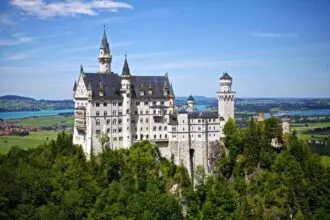
If the rest of Munich itself is on the agenda too, our Best Things to Do in Munich guide rounds up the beer halls, palaces and parks worth prioritising beyond the market stalls, and our Munich Day Trips guide covers everything from Neuschwanstein Castle to the Dachau Memorial Site for anyone extending a market trip into a longer stay.
Landing at the airport before any of the above? Our Munich Airport Transfers guide covers every realistic way of reaching the city centre from MUC, while our Munich Airport to Ski Resorts guide is worth a look for anyone combining a market trip with a few days on the slopes.
For a football fixture or a very different Munich tradition beyond the festive season, our How to Get to the Stadium in Munich guide and Oktoberfest Munich guide round out the rest of this site’s Munich cluster.