Reviewed by our editorial team Published
Three Terminals, One Very Busy Gateway to Paris
Charles de Gaulle Airport, almost always shortened to CDG, is France’s busiest airport and the main long-haul gateway into Paris. It sits around 25 kilometres north-east of the city centre near Roissy-en-France, spread across three separate terminal areas that between them handle well over seventy million passengers a year.
That scale brings genuine transport choice, but it also brings genuine change. Anyone who has flown into CDG before should know that the old Roissybus coach into central Paris closed permanently at the end of February 2026, which means several older guides to this airport are now quietly out of date.
The good news is that the airport’s own RER B rail link was never affected by that closure and remains the fastest and most reliable way into the city for most travellers. Express buses, taxi ranks, ride-hailing pickup points, car hire desks and several long-stay car parks all sit within a short walk or a free shuttle ride of Arrivals too.
This guide covers every realistic way of making that 25-kilometre journey in 2026: the RER B express train, what actually replaced the Roissybus, taxis and ride-hailing apps, pre-booked private transfers, and driving or parking at the terminal. It also explains how the three terminals fit together, since picking the right transfer starts with knowing which one you have landed at.
None of these options is automatically correct for every traveller. A solo visitor with hand luggage heading straight to a hotel near Gare du Nord needs a very different answer from a family of five landing at midnight with a stack of suitcases, and the sections below are built around that difference.
| Transfer Option | Typical Journey Time | Approximate Cost | Best For |
|---|---|---|---|
| RER B | ~30-50 mins to central stations | €14.00 (£12/$16) | Fastest option for most visitors |
| Bus 9517 (via Saint-Denis-Pleyel) | ~45-60 mins with a change | From €15.00 (£13/$18) | A fallback since Roissybus closed |
| Taxi | 40-60 mins | €56-65 (£48-56/$66-76) | Door-to-door convenience |
| Private Transfer | 40-60 mins | From €60 (£52/$70) | Families and groups |
| Car Hire | Flexible | Varies by season | Exploring beyond Paris |
| Self-Drive/Drop-off | 40-60 mins | Parking varies | Travellers with their own car |
Understanding CDG: Terminals One, Two and Three
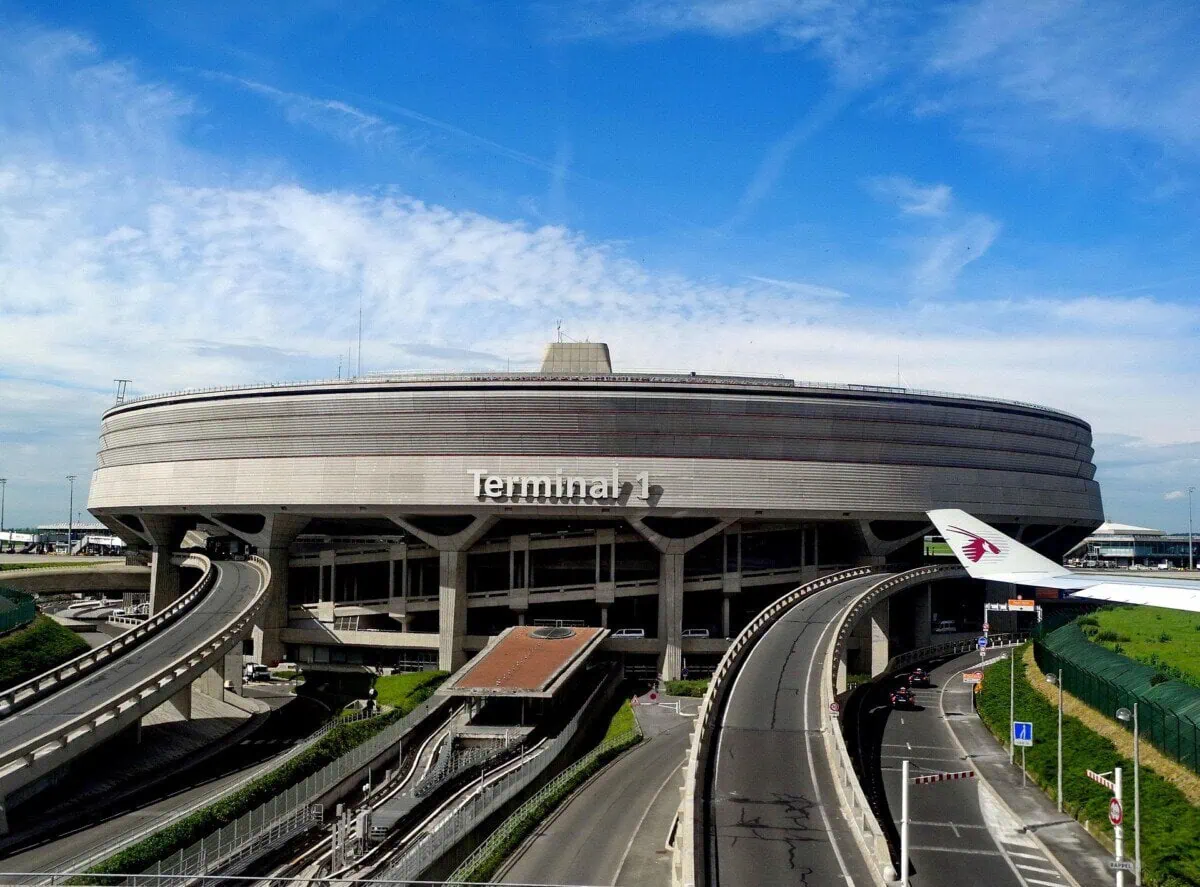
CDG is built around three distinct terminal areas rather than one continuous building, and knowing which one a flight uses matters for every transfer decision that follows. Terminal 1 is a circular building mostly used by Star Alliance carriers including Lufthansa, United, Turkish Airlines and Singapore Airlines, alongside Qatar Airways and several other long-haul names.
Terminal 2 is by far the largest, split into sub-halls 2A through 2G, and it is where Air France and its SkyTeam partners such as Delta, Korean Air and KLM are based, alongside easyJet, British Airways, Emirates and a long list of others depending on the exact hall. Terminal 3 is smaller again and handles most of the charter and low-cost operators using CDG.
Moving between terminals on foot is not realistic given the distances involved, which is exactly why the airport built CDGVAL, a free, fully automated shuttle train that loops between Terminal 1, Terminal 3, Terminal 2 and the airport’s RER and TGV station. It runs roughly every four to eight minutes and is the quickest way to reconnect with a train or bus station from the wrong terminal.
For transfer planning, the terminal split also decides which railway station to head for. CDG 1 station serves Terminal 1, Terminal 3 and the Roissypole bus hub, while CDG 2 station sits beneath Terminal 2 and doubles as the airport’s TGV stop for onward long-distance rail travel.
Checking a boarding pass or confirmation email for the terminal number before leaving the gate saves a wasted CDGVAL loop later. It is a small step, but it is the single most useful piece of orientation for anyone unfamiliar with how spread out CDG actually is.
Best for a short trip. Compare rooms by neighbourhood, price and guest rating before you book.
Compare hotelsBest for families, or any stay past about four nights. A kitchen and a washing machine start paying for themselves.
Browse rentalsBest if you have already picked a hotel. Checks the big booking sites for the same room and shows who is cheapest.
Check dealsRER B: The Fastest Way Into Central Paris
For most travellers, the RER B remains the best way to reach central Paris from CDG, and its role has only grown more important since the Roissybus closed. It is a proper regional express railway rather than a slow city metro, run jointly by RATP and SNCF, with full timetables published on the official Bonjour RATP airport page.
Trains run roughly every ten to twenty minutes from around 5am to midnight, calling first at CDG 1 (for Terminals 1 and 3) and then CDG 2 (for Terminal 2) before heading south into the city. Journey time to Gare du Nord is typically around 30 minutes, stretching to nearer 45 to 50 minutes for stations further south such as Denfert-Rochereau or Saint-Michel.
The simplest ticket to buy is the flat-fare Paris Region Airports ticket, priced at €14.00 (£12/$16) for an adult and €7.00 (£6/$8) reduced, valid on the RER B between CDG and any station in Paris regardless of which zone you start or end in. It can be loaded onto a Navigo Easy card or bought through the RATP or Île-de-France Mobilités apps, and our full Paris Public Transport guide covers every other ticket type in detail.
Trains can get crowded with commuters at peak times, and the line has a long-standing reputation for occasional delays, so it is worth allowing a little extra margin rather than cutting a connection fine. Luggage racks exist but fill quickly on a busy service, which is the main reason families with several large suitcases sometimes still prefer a taxi despite the RER being considerably cheaper.
For a solo traveller or a couple with hand luggage heading to a hotel near Gare du Nord, Châtelet or Saint-Michel, the RER B is almost always the right call. It beats every other option on price, and once traffic on the A1 motorway is factored in, it frequently beats a taxi on speed as well.
Buses: Why Roissybus Is Gone and What Replaced It
For decades, the Roissybus coach ran a direct route between CDG and Paris Opéra, and plenty of older travel advice still points visitors towards it. That service permanently stopped running on 28 February 2026, closed by RATP after years of unreliable journey times caused by congestion on the A1 motorway and the approach into central Paris.
There is no direct like-for-like replacement. The nearest thing is Bus 9517, run by Transdev, but it is not a single direct service into the centre: passengers first take the Metro or RER to Saint-Denis-Pleyel, then change onto the bus for the final leg to the airport, which typically adds fifteen to twenty-five minutes over the old direct run.
Fares for that route run from around €15.00 (£13/$18), and that price does not necessarily include the separate Metro or RER ticket needed to reach Saint-Denis-Pleyel in the first place. Given the extra change and the added cost, it is a genuine fallback rather than a first choice for most visitors.
Travellers may also come across mentions of Cars Air France, the airline-branded coach network that once ran between CDG, Orly and several Paris landmarks. That service was discontinued some years ago and no longer operates in any form, so it is worth disregarding entirely if an older source suggests otherwise.
With both of those older bus options gone, the honest, current advice for 2026 is simple: default to the RER B for the journey into Paris, and treat a taxi, ride-hailing app or private transfer as the practical alternative for anyone who would rather not deal with a change at Saint-Denis-Pleyel.
Taking a Taxi or Ride-Hailing App From the Terminal
A taxi remains the simplest door-to-door option from CDG, and Paris is one of the easier European capitals to budget for one, since the fare into the city is fixed rather than metered. Official ranks sit outside all three terminals and are staffed around the clock, with journey times typically running 40 to 60 minutes depending on traffic on the A1 and A3.
Regulated flat fares apply day and night regardless of traffic: €56.00 (£48/$66) to the Right Bank and €65.00 (£56/$76) to the Left Bank, with the split determined by which side of the Seine your destination sits on. These rates are set by the French government rather than the individual driver, so there is no need to negotiate or watch a meter.
Ride-hailing apps including Uber, Bolt and the French app Heetch all operate at CDG, picking up from a designated zone separate from the official taxi rank. Fares track close to the regulated taxi rate, though surge pricing can apply at very busy times, so it is worth checking the in-app estimate before confirming a ride.
Travellers who would rather book by phone than queue at the rank can also use G7, one of Paris’s longest-established taxi dispatch services, which covers CDG pickups alongside the rest of the city through its own app. This is particularly useful for a pre-arranged early departure, when turning up to a quiet rank is less certain than a confirmed booking.
For groups of three or four, splitting a flat-fare taxi can work out close to the cost of several individual RER tickets once the walk to the platform and any luggage hassle are weighed up. Late-night arrivals, once RER frequency has thinned out, are really where a taxi or ride-hailing app earns its keep over the train.
Booking a Private Transfer Before You Land
A pre-booked private transfer suits anyone who would rather settle the ride into Paris before the outbound flight even leaves the ground. Most operators send a named driver into the arrivals hall holding a board with the passenger’s name, which removes any uncertainty about finding transport after a long flight.
Because the price is agreed in advance, there is no surprise if the A1 or A3 is running slow that afternoon, and no awkward wait at a busy rank during a big travel weekend. Fixed-price private transfers to central Paris typically start from around €60.00 (£52/$70) for a standard car, with larger vehicles and further destinations costing more.
Journey times are broadly similar to a taxi, usually around 40 to 60 minutes depending on traffic and the exact drop-off address. The real advantage is certainty rather than speed: families, business travellers and anyone with a lot of luggage tend to find a guaranteed pickup point and fixed fare worth the extra cost over a standard taxi.
Most operators also offer larger vehicles for groups, and some can arrange transfers well beyond central Paris, including to Disneyland Paris or towns further into Île-de-France, which suits travellers who are not simply heading to a city-centre hotel. Our Disneyland Paris guide covers ticket options and getting there in full for anyone combining both in one trip.
A private transfer is particularly worth considering for very early departures or very late arrivals, when RER frequency drops and a taxi rank may have a longer queue than usual. For most solo travellers on a budget, the train remains cheaper and often just as fast, but for a stress-free start or end to a trip, the extra cost is easy to justify.

Compare Airport Transfer Companies
Pre-booking your airport transfer can save time and reduce stress when you arrive. Whether you need a private taxi, shared shuttle or executive transfer, comparing providers can help you find the best price and service for your journey.
We’ve selected three trusted airport transfer companies so you can compare prices, vehicle options, cancellation policies and customer reviews before you travel.
Driving, Drop-Offs and Parking at CDG
Drivers reach CDG via the A1 motorway from the south or the A3 from the east, both clearly signed from central Paris and the surrounding ring roads. The drive itself typically takes 30 to 45 minutes outside peak hours, though rush-hour congestion on the A1 can extend that noticeably, particularly on a Friday afternoon.
Short kerbside drop-offs are free for a limited window at each terminal, which covers a straightforward passenger set-down without needing to enter a car park. Anyone staying longer, whether to help with luggage or wait out a delayed arrival, needs one of the paid car parks instead.
CDG runs a large network of short-stay and long-stay car parks across all three terminals, with premium and valet options available for travellers who would rather hand over the keys than find their own space. Rates vary considerably by duration and how close a car park sits to the terminal, so it is worth comparing and pre-booking online where possible.
Car hire is also available at the airport for anyone planning to explore beyond Paris, such as the Loire Valley or Normandy, and the section below covers exactly where each operator’s desk actually is. Inside the city itself, though, a car mostly gets in the way, given expensive central parking and an extensive Métro and RER network that covers almost everywhere a visitor needs to go.
Renting purely to reach a city-centre hotel and then leaving the car parked for the rest of a stay rarely makes financial sense. For that single journey, the RER B or a private transfer will almost always be cheaper and less stressful than hunting for parking once inside Paris.
Car Hire at CDG: Operators and Where to Collect a Vehicle
All the familiar international operators serve Charles de Gaulle, including Europcar, Avis, Hertz, Sixt, Enterprise and Budget, alongside smaller names such as Alamo, National and Thrifty. That genuine choice of operators at the airport makes it worth comparing a couple of quotes before committing to a booking.
Terminal 1 has rental desks directly in the arrivals hall, so travellers landing there can collect a car within a few minutes of clearing customs. Terminal 2 consolidates every operator into a single indoor hub linking halls 2A/2C and 2B/2D, and that same building also serves passengers arriving into 2E and 2F without needing to step outside.
Terminal 3 itself has no rental desks at all, which catches out travellers who assume every terminal works the same way. Anyone landing there needs to take the free CDGVAL shuttle to Terminal 1 or Terminal 2 first, so it is worth building that extra ten minutes into arrival plans.
Day rates for a small economy car can start from around €20.00 (£17/$23) in low season, climbing considerably during the summer and around French public holidays. Booking online in advance nearly always beats walking up to a desk on the day, and it is worth checking whether a debit card is accepted, since several operators in France still insist on a credit card for the security deposit.
A hire car only really earns its keep once a trip leaves Paris behind, for a road trip through the Loire Valley, Normandy or further into the French countryside. Our Paris Public Transport guide covers the Métro and RER network in full for anyone weighing up whether a car is worth it inside the city at all.

Search Car Hire Options in CDG
When public transport does not fit your plans in CDG, hiring a car can give you more control over your route and travel times.
Search both Discover Cars and EconomyBookings to compare rental prices, vehicle categories and supplier conditions.
Best for long or awkward journeys. Builds one itinerary out of separate flights.
View flightsBest for short trips. Install the eSIM at home and arrive in Paris with working data, no shop queue.
Browse eSIMsBest if you would rather not work out the transport on arrival. Book it now and forget it.
View transfersMatching the Right Transfer to Your Trip
Destination, luggage, budget and group size all factor into the right choice here, and CDG’s genuinely good rail link means most visitors can land on an easy answer once those four things are settled. For solo travellers or couples heading to a hotel near Gare du Nord, Châtelet or the Marais, the RER B is almost always the right call.
It is fast, frequent and considerably cheaper than a taxi, and a realistic door-to-door estimate, including the walk from Arrivals and a short onward connection, usually lands somewhere around 45 to 60 minutes. Since the Roissybus closed, it is also simply the most straightforward public transport option left, without the added change that Bus 9517 now requires.
Families, late-night arrivals and anyone carrying substantial luggage should lean towards a taxi or a pre-booked private transfer instead. The flat-fare system takes the guesswork out of a taxi at CDG, and a private transfer costs a little more but removes any uncertainty about finding transport after a long-haul flight.
Travellers planning to explore beyond Paris, whether that is a road trip through the wider region or several stops around northern France, should weigh up car hire, but should be honest about whether the car will actually get used once inside the city itself.
As a general rule, default to the RER B with light luggage and a station-friendly route, save taxis and private transfers for late arrivals, groups and heavy bags, and only add a hire car once the trip genuinely leaves Paris behind. With three terminals and one excellent rail link, CDG rewards a traveller who checks the current transport picture rather than one relying on an outdated guide.

Rupert’s Handy Travel Tips
Flying into Charles de Gaulle? Rupert has a few tips that can save both time and money:
- Forget the Roissybus, it no longer exists: head straight for the RER B signs instead, since the old direct coach into Opéra closed for good in February 2026.
- Check your terminal before you board CDGVAL: Terminal 1 and 3 share CDG 1 station, while Terminal 2 has its own CDG 2 station, so the free shuttle takes a different loop depending on where you’re headed.
- Buy the flat-fare airport ticket, not a standard single: the Paris Region Airports ticket covers the whole RER B ride at one set price, whichever Paris station you’re travelling to.
- Use the ride-app pickup zone for Uber and Bolt: it’s separate from the taxi rank, so head there rather than waiting in the taxi queue.
- Only hire a car if you’re leaving Paris: the city’s own Métro and RER network is excellent, and parking in the centre is expensive and often restricted.
Want to meet the reindeer behind our travel tips? Find out more in our page Who is Rupert?.




Frequently Asked Questions About CDG Airport Transfers
What is the fastest way to get from CDG to central Paris?
The RER B is generally the fastest option, reaching Gare du Nord in around 30 minutes.
Is the Roissybus still running from CDG to Paris?
No. It closed permanently on 28 February 2026, and the RER B is now the main public transport alternative.
How much does the train from CDG to Paris cost?
A standard adult fare on the flat-rate Paris Region Airports ticket costs €14.00 (£12/$16).
How much is a taxi from CDG to Paris?
Regulated flat fares are €56.00 (£48/$66) to the Right Bank and €65.00 (£56/$76) to the Left Bank, applying at any time of day.
Is Uber available at CDG Airport?
Yes. Uber, Bolt and Heetch all operate from a designated pickup zone separate from the taxi rank.
Which terminal do I need for CDGVAL?
Terminal 1 and Terminal 3 share CDG 1 station, while Terminal 2 has its own CDG 2 station; the free CDGVAL shuttle connects all three.
Is it worth hiring a car at CDG?
Only if travelling beyond Paris itself. Within the city, the Métro and RER network are usually faster and cheaper than driving.
Further Reading & Related Guides
Once you have made it into the city, our Things to Do in Paris guide rounds up the museums, landmarks and day trips worth prioritising. Our Paris Public Transport guide then covers the Métro, RER, buses and trams in full once the RER B has dropped you at a central station.
Connecting onward to the theme parks, our Disneyland Paris Guide covers tickets, park hours and the RER A journey out to Marne-la-Vallée. Arriving from London by rail first, our Eurostar Trains Guide covers routes, fares and the journey into Gare du Nord before you ever reach CDG.
Booking that Eurostar leg early genuinely pays off. Our Eurostar Snap Deals guide explains how to bag a heavily discounted fare if your travel dates are flexible enough to use it.
Comparing your options before booking a flight is worth doing too. Our Orly Airport Transfers guide covers Paris’s closer, second airport, while our Beauvais Airport Transfers guide sets out honestly what to expect from the budget-airline gateway well outside the city.