
Why UNESCO Carcassonne Matters
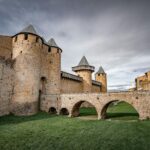
UNESCO Carcassonne is one of the most important medieval heritage sites in Europe and one of the most visually recognisable historic locations in France. Dominated by enormous fortress walls, defensive towers, battlements, and the famous Cité de Carcassonne skyline, the city represents more than simply a popular tourist attraction. It is one of the best surviving examples of a fortified medieval city anywhere in the world.
For many travellers, the importance of UNESCO Carcassonne lies in the sheer scale of preservation. The fortified city still feels physically enclosed and defensive in a way many historic European cities no longer do. Walking through the gates, towers, and narrow stone streets allows visitors to experience how a major medieval stronghold once functioned.
The site is also important because it represents multiple periods of history rather than a single medieval moment. The city contains layers of Roman, medieval, royal French, and nineteenth-century restoration history, all visible within the walls and architecture of the fortress itself.
UNESCO recognition helped transform Carcassonne into one of France’s most famous heritage destinations. Today, the city attracts millions of visitors interested in medieval history, military architecture, photography, and wider southern French culture.
The site also plays an important role in understanding the history of southwestern France. Conflicts linked to the Cathar period, border tensions between France and Aragón, and later royal defensive strategies all shaped the city’s development across centuries.
For visitors travelling through southern France, UNESCO Carcassonne remains one of the clearest examples of how medieval Europe once looked and functioned before modern urban expansion transformed much of the continent.
Learn More from UNESCO
This destination is connected to a UNESCO World Heritage Site, recognised for its outstanding cultural, historical, or natural importance. You can explore official listings, background information, and protected heritage sites through UNESCO’s global database.
Quick Overview of UNESCO Carcassonne
| Feature | Details |
|---|---|
| UNESCO Status | UNESCO World Heritage Site |
| UNESCO Listing Year | 1997 |
| Main Site | Cité de Carcassonne |
| Famous For | Double fortress walls and medieval military architecture |
| Region | Occitanie, southern France |
| Key Attraction | Château Comtal |
| Historic Origins | Roman settlement and medieval fortress |
| Restoration Figure | Eugène Viollet-le-Duc |
| Best For | Medieval history, UNESCO travel, photography, architecture |
One reason UNESCO Carcassonne stands out globally is the scale of its surviving fortifications. The city contains around 3 kilometres of defensive walls and dozens of towers, creating one of the most complete medieval fortress systems remaining in Europe.
Unlike many heritage sites that survive only as ruins, much of Carcassonne remains visually intact and highly accessible for visitors today. Travellers can still walk through fortified gateways, explore castle areas, visit sections of the ramparts, and experience the enclosed atmosphere of the medieval city itself.
The site is also unusual because of its nineteenth-century restoration history. The large-scale reconstruction work carried out by Viollet-le-Duc remains controversial among historians but played a major role in preserving the fortress and shaping how visitors experience it today.
Browse hotels and accommodation for your visit to Carcassonne.
View staysExplore holiday homes and apartments around Carcassonne.
See holiday homesCompare prices for Carcassonne hotels across multiple booking sites.
Check dealsWhat Is the Cité de Carcassonne?
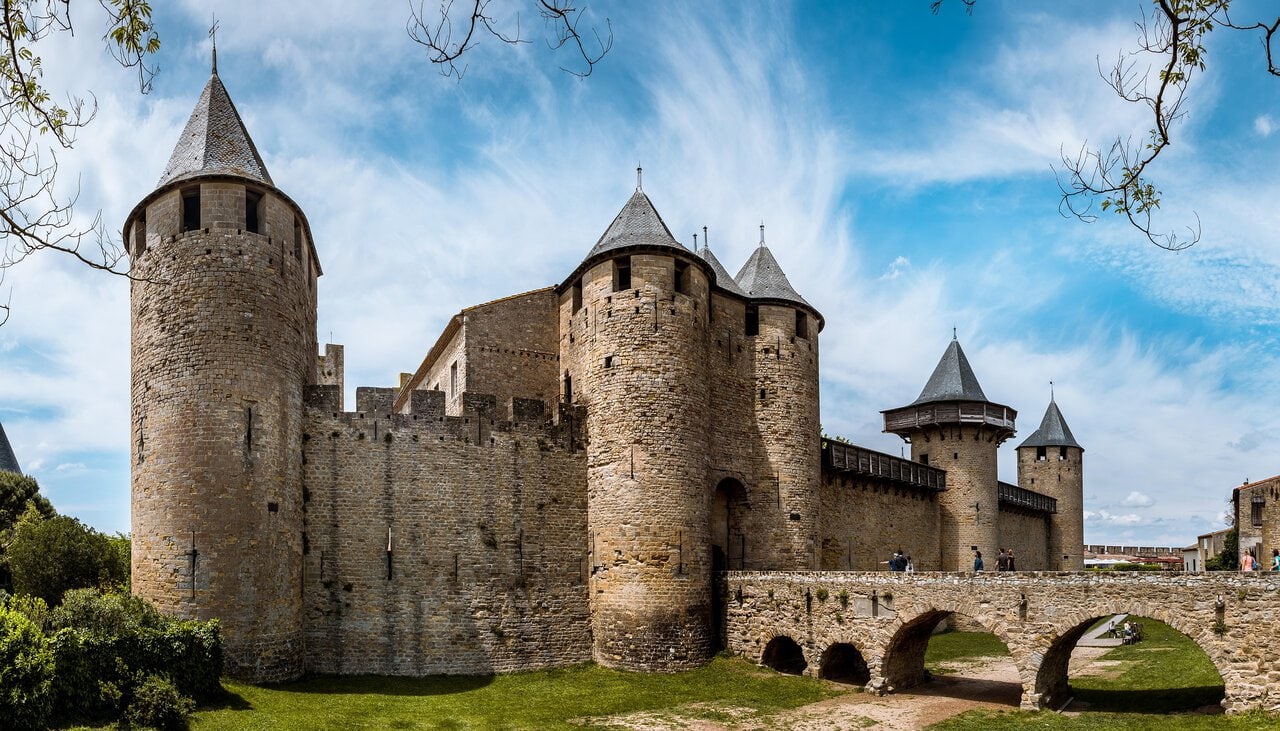
The Cité de Carcassonne is the enormous fortified medieval city sitting above the modern lower town of Carcassonne in southern France. Surrounded by massive double defensive walls and dominated by towers, battlements, and fortified gateways, the cité forms the heart of the city’s UNESCO World Heritage designation.
The fortified city was designed primarily for defence. Across centuries, walls, gates, towers, and internal military structures protected the settlement from invasion, siege, and regional conflict. The elevated position above the surrounding landscape also gave defenders strategic visibility across the wider Occitanie region.
Today, the cité functions as both a living historic district and one of the most visited heritage attractions in France. Inside the walls, visitors find medieval streets, fortified entrances, churches, restaurants, courtyards, museums, defensive walkways, and the major fortress complex of Château Comtal.
One important thing visitors often misunderstand is that much of the medieval city itself is free to enter. Travellers can walk through the gates and explore many public areas of the fortress without needing tickets. Paid access mainly applies to the castle complex, archaeological sections, and parts of the elevated ramparts connected with the fortress defences.
The cité also differs from many restored heritage sites because it still feels physically enclosed and defensive. Narrow streets, towering walls, fortified access points, and heavily protected entrances continue to shape the atmosphere of the city today in a way rarely seen elsewhere in Europe.
For many travellers, simply seeing the skyline of the fortified city rising above the surrounding landscape becomes one of the most memorable moments of visiting UNESCO Carcassonne. The combination of medieval military architecture, massive stone fortifications, and elevated towers creates one of the most recognisable historic scenes anywhere in France.
Why Carcassonne Became a UNESCO World Heritage Site
Cité de Carcassonne became a UNESCO World Heritage Site in 1997 because it represents one of the finest and most complete surviving examples of a fortified medieval city anywhere in the world. UNESCO recognised both the extraordinary scale of the fortress itself and the importance of its restoration and preservation across centuries.
The most important factor behind the UNESCO listing is the city’s remarkable system of double defensive walls. Stretching for around 3 kilometres and reinforced by dozens of towers and defensive structures, the fortifications demonstrate the evolution of medieval military architecture across several historic periods.
UNESCO also recognised the importance of the city’s layered history. The fortress contains visible remains and influences from the Roman period, the medieval era, royal French military expansion, and nineteenth-century restoration work. Few historic cities in Europe show such a clear physical timeline of defensive urban development.
Another major reason for the UNESCO designation was the role of Eugène Viollet-le-Duc in preserving the city during the nineteenth century. By the early 1800s, large parts of Carcassonne had fallen into serious decline, and sections of the fortress were at risk of collapse or demolition. The restoration project led by Viollet-le-Duc transformed the site and prevented the medieval city from disappearing entirely.
The restoration itself remains historically important because it shaped modern approaches to architectural preservation in France. Although historians still debate some of the restoration decisions, the work helped establish Carcassonne as one of Europe’s most famous heritage sites.
UNESCO status also reflects the city’s wider cultural importance. Beyond the walls themselves, Carcassonne represents centuries of conflict, border defence, political power, and regional identity within southern France.
Today, the UNESCO designation helps protect the fortress while supporting ongoing conservation work and international recognition of the site’s historic significance.
The History of UNESCO Carcassonne
The history of UNESCO Carcassonne stretches back more than two thousand years and reflects the changing political, military, and cultural history of southern France. The fortified city visible today is the result of multiple historical periods layered together across centuries.
Long before the medieval walls became famous, the site already occupied an important strategic position above the surrounding landscape. Control of the area allowed oversight of trade routes, regional movement, and access between different parts of southern Europe.
Across the centuries, Roman occupation, medieval warfare, royal expansion, religious conflict, and later restoration projects all transformed the city. Each historical period left physical traces within the fortress, helping explain why the site eventually gained UNESCO recognition.
The city became particularly important during the medieval period when the fortress evolved into one of the strongest defensive positions in the region. During this time, the city was linked with the powerful Trencavel family and later became heavily associated with the conflicts surrounding the Cathars and the Albigensian Crusade.
Later, after becoming part of the royal French defensive system, Carcassonne developed into a major frontier stronghold protecting the border between France and the territories of the Crown of Aragón.
By the nineteenth century, however, the fortress had fallen into decline and faced potential destruction before the large-scale restoration campaign led by Eugène Viollet-le-Duc transformed the city once again.
The modern UNESCO site therefore represents not just one historical era, but the survival of multiple periods of European history within a single fortified landscape.
Roman Origins of Carcassonne
The origins of Carcassonne date back to the Roman period, when the settlement became an important fortified location within the expanding Roman territories of southern Gaul. The Romans recognised the strategic value of the elevated site and constructed some of the earliest defensive structures around the settlement.
Parts of the Roman fortifications still survive within the later medieval walls visible today. Some towers and stone sections incorporated into the fortress can still be identified as Roman in origin, demonstrating how later generations repeatedly built upon the earlier defensive foundations.
The Roman settlement helped establish Carcassonne as a long-term military and strategic location. Control of the site allowed oversight of important regional routes linking different parts of southern France and the wider Mediterranean world.
Although much of what visitors see today is medieval rather than Roman, the Roman foundations remain extremely important because they formed the earliest stage of the city’s defensive history.
Medieval Carcassonne and the Cathar Period
During the medieval period, Carcassonne developed into one of the most important fortified cities in southern France. The city became closely associated with the powerful Trencavel family, who controlled large territories across the region during the twelfth and early thirteenth centuries.
This period also connected the city with the history of the Cathars, a religious movement that spread through parts of southern France during the Middle Ages. The movement was eventually targeted during the Albigensian Crusade, a violent campaign launched against Cathar influence in the region.
In 1209, the siege of Carcassonne became one of the defining events of the crusade. The city eventually surrendered, and control passed away from the Trencavel family towards forces aligned with the French crown.
The conflicts surrounding the Cathar period helped shape the future military development of the fortress. Defensive structures expanded significantly afterwards as the city became increasingly important within the royal French frontier system.
Today, the connection between Carcassonne, the Cathars, and the wider medieval conflicts of southern France remains one of the most historically significant aspects of the UNESCO site.
Royal Fortress and Border Stronghold
After coming under stronger royal French control, Carcassonne evolved into a major military frontier fortress protecting the border between the Kingdom of France and the territories linked to the Crown of Aragón.
This role transformed the city into one of the most heavily defended strongholds in southern France. The famous double walls, expanded towers, fortified gates, and defensive corridors visible today largely developed during this period of royal military reinforcement.
The fortress protected an important strategic corridor across the region and formed part of a wider chain of defensive positions across the south of France. The scale of the fortifications reflected the military importance of the border during the medieval period.
Over time, however, the strategic importance of the city gradually declined as borders shifted and military technology evolved. By the modern era, large parts of the fortress had deteriorated significantly before restoration efforts eventually preserved the site.
Today, the surviving walls and defensive structures remain one of the clearest examples of large-scale medieval military planning anywhere in Europe.
The Double Fortress Walls and Military Architecture
One of the main reasons UNESCO Carcassonne is considered globally important is the extraordinary scale and preservation of its double fortress walls. Few medieval cities anywhere in Europe retain such a complete and visually dramatic defensive system.
The fortifications surrounding Cité de Carcassonne stretch for roughly 3 kilometres and include dozens of towers, fortified gateways, battlements, defensive corridors, and elevated rampart sections. The sheer size of the walls immediately dominates the skyline and remains the defining visual feature of the city today.
The existence of two separate defensive walls was particularly important militarily. Attackers breaching the outer wall still faced an additional defensive barrier inside, creating a layered protection system designed to slow sieges and expose invading forces to defenders positioned above.
Different sections of the walls also reflect different historical periods. Some foundations and towers still contain visible Roman elements, while large sections of the outer fortifications date from the medieval royal expansion of the fortress.
The towers themselves vary significantly in shape and design depending on the period in which they were constructed. Rounded towers were often better at resisting attack than earlier square structures, and the evolving architecture of the walls demonstrates changing medieval military strategies across centuries.
Walking around the exterior of the fortress remains one of the best ways to appreciate the scale of the defensive system. From ground level, the walls rise dramatically above the surrounding landscape, especially when viewed from areas near the Aude River and the lower town.
The military architecture of Carcassonne is also important because it influenced wider European understanding of medieval fortification design. The city became a major reference point for historians, architects, and restoration specialists studying medieval defensive systems.
Today, the walls remain one of the most photographed and recognisable examples of fortified medieval architecture anywhere in the world.
Château Comtal and the Defensive System
Château Comtal formed the military heart of Carcassonne’s defensive system and remains the most important internal fortress structure within the UNESCO site.
Built within the fortified cité itself, the castle acted as the final defensive stronghold during periods of conflict. Even if attackers breached parts of the outer city, the château provided an additional heavily defended position protected by its own walls, towers, and defensive features.
The structure originally developed under the powerful Trencavel family before later royal French expansion transformed the complex into part of the kingdom’s frontier defence network. Over time, additional fortifications, galleries, and military corridors strengthened the castle’s role within the wider fortress system.
One of the most important features of the château is its integration with the surrounding ramparts. Elevated defensive walkways connected different parts of the fortress, allowing defenders to move rapidly between towers and defensive positions during attacks.
Visitors exploring the castle today can still see courtyards, towers, fortified entrances, defensive galleries, and archaeological remains connected to the military history of the site. The elevated rampart walks also provide some of the best views across the fortress walls and surrounding countryside.
The château demonstrates how medieval military architecture relied not simply on large walls, but on multiple layers of controlled defence. Gates, narrow passages, elevated firing positions, and internal fallback areas all formed part of the wider security system protecting the city.
Today, entry into Château Comtal is one of the few major ticketed parts of the UNESCO site. Access normally includes sections of the ramparts, archaeological areas, and exhibition spaces explaining the history of the fortress.
For many visitors, the château provides the clearest understanding of how UNESCO Carcassonne actually functioned as a working military fortress during the medieval period.
Eugène Viollet-le-Duc and the Restoration of Carcassonne
By the nineteenth century, large parts of Carcassonne had fallen into serious decline. The fortress no longer held major military importance, sections of the walls were deteriorating, and some areas faced potential demolition before large-scale restoration efforts began.
The survival of modern UNESCO Carcassonne is therefore heavily linked to the work of Eugène Viollet-le-Duc, one of the most influential architectural restoration figures in French history.
Beginning in the mid-1800s, Viollet-le-Duc led a major campaign to restore the medieval city. Towers, walls, gateways, roofs, and defensive structures were repaired or reconstructed in an attempt to preserve the fortress and recover its medieval appearance.
The restoration project transformed Carcassonne from a decaying historic site into one of the most famous medieval cities in Europe. Without this work, large sections of the fortress may have disappeared entirely.
However, the restoration also became controversial. Viollet-le-Duc sometimes restored buildings according to how he believed medieval architecture should look rather than strictly preserving surviving original structures. Some historians criticised aspects of the project for creating an idealised vision of the Middle Ages rather than a purely authentic reconstruction.
One of the most debated examples involves the pointed slate roofs added to some towers. Critics argued these reflected northern French architectural styles rather than the historically more Mediterranean appearance the fortress may originally have had.
Despite these debates, the restoration remains historically significant in its own right. The work shaped modern heritage preservation across France and played a major role in developing nineteenth-century conservation philosophy.
Today, visitors experience a version of Carcassonne shaped both by medieval history and by nineteenth-century restoration ideals. UNESCO recognition acknowledges not only the fortress itself, but also the importance of the preservation campaign that saved the city from destruction.
Search flights and useful route combinations for your trip.
View flightsUse an eSIM to get online without hunting for a local SIM after arrival.
See eSIM optionsHave a private airport pickup arranged before you travel.
Book a transferExploring UNESCO Carcassonne Today
Today, UNESCO Carcassonne functions both as a major international tourism destination and as a living historic environment. Millions of visitors arrive each year to experience the fortress walls, medieval streets, castle complex, and surrounding southern French landscape.
One of the most unusual aspects of the site is that much of the Cité de Carcassonne remains freely accessible. Visitors can walk through the fortified gates, explore public streets, photograph the walls, and experience the enclosed medieval atmosphere without purchasing tickets.
The city itself contains restaurants, hotels, museums, churches, souvenir shops, and residential areas spread throughout the old fortress streets. Although tourism now dominates much of the citadel economy, the city still retains a strong visual identity linked to its medieval origins.
The experience changes significantly depending on time of day. During summer afternoons, the fortress can become extremely crowded with organised tours and day-trip visitors arriving from across France and wider Europe. Early mornings and evenings usually provide a calmer and more atmospheric experience.
Walking through the narrow stone streets remains one of the highlights for most travellers. Towers appear above rooftops, defensive walls rise between passageways, and elevated viewpoints reveal views across the lower town and surrounding countryside.
The surrounding areas outside the walls are also important parts of the UNESCO experience. Some of the best perspectives of the fortress come from the river crossings, lower roads, and areas near the Canal du Midi.
For many visitors, the appeal of UNESCO Carcassonne lies not only in individual attractions, but in the overall feeling of moving through a large-scale medieval defensive city that still physically dominates the landscape today.
Do You Need Tickets in UNESCO Carcassonne?
One of the most important things visitors should understand about UNESCO Carcassonne is that much of the fortified city can be explored completely free of charge. Travellers can walk through the gates of the Cité de Carcassonne, explore the medieval streets, photograph the walls, and experience the atmosphere of the fortress without needing an entrance ticket.
However, some of the site’s most important historic areas are ticketed. Paid access applies mainly to Château Comtal, sections of the elevated ramparts, archaeological displays, and internal defensive galleries connected with the castle complex.
For many visitors, the château ticket is worth purchasing because it provides access to the best preserved defensive areas within the fortress. Walking the ramparts and elevated galleries gives a much clearer understanding of how the military system of Carcassonne actually functioned during the medieval period.
The ticketed areas also include archaeological and exhibition spaces explaining the evolution of the fortress across the Roman, medieval, and royal French periods. Audio guides are normally available for travellers wanting more detailed historical context during their visit.
During summer and major tourism periods, queues for the castle and ramparts can become extremely long by late morning. Prebooking tickets is therefore often worthwhile, especially for travellers visiting during weekends or school holidays.
Some visitors qualify for reduced or free entry depending on age, nationality, and special heritage access days. Certain Sundays and national heritage events occasionally provide free access to parts of the monument, although conditions can vary throughout the year.
Even travellers choosing not to buy tickets can still have an excellent experience in UNESCO Carcassonne because the fortress exterior, streets, gates, and surrounding viewpoints remain among the most visually impressive medieval environments in Europe.
Best Viewpoints and Photo Spots in Carcassonne
UNESCO Carcassonne is one of the most photogenic historic sites in France, and many visitors spend almost as much time photographing the fortress as exploring the interior streets themselves. The skyline of the Cité de Carcassonne changes dramatically depending on angle, light, weather, and time of day.
One of the best viewpoints is from the riverside and bridge areas near the Aude River below the fortress. From here, the full scale of the double walls and defensive towers becomes immediately visible, especially during sunrise and sunset when the stone catches warmer southern French light.
The approach routes from the lower town also provide excellent photography opportunities. As visitors walk from Carcassonne Railway Station towards the citadel, the fortress gradually rises above the surrounding streets and rooftops, creating one of the most dramatic urban approaches in southern France.
Inside the fortress, elevated sections around Château Comtal provide some of the best panoramic views across the lower town and wider Occitanie countryside. The ticketed rampart walks are especially valuable for photography because they allow visitors to see the layered structure of the defensive walls from above.
The area around the Canal du Midi also offers quieter photography locations away from the busiest tourism crowds. Reflections, tree-lined paths, and lower-angle perspectives create a softer contrast with the military architecture above.
Night photography is particularly rewarding in Carcassonne. Once the fortress becomes illuminated after dark, the towers and battlements take on a dramatically different appearance compared with daytime conditions. Many photographers deliberately stay overnight specifically to capture the illuminated skyline.
For the best overall lighting conditions, early morning and late evening remain ideal throughout most of the year. Midday summer sunlight can create harsh shadows and extremely bright stone surfaces, particularly inside the exposed medieval streets.
Browse hostels and budget-friendly stays around Carcassonne.
See hostelsFlying to Carcassonne? Get fast compensation payouts, eligible lounge benefits and expert help when flights go wrong.
See AirHelp+ benefitsUse convenient luggage storage around Carcassonne between arrival, check-in and departure.
Check storageHow Long to Spend in UNESCO Carcassonne and the Best Time to Visit
For most travellers, UNESCO Carcassonne works best as either a full-day visit or a short overnight stay. The main highlights of the fortress can comfortably be explored within one day, but staying overnight allows visitors to experience the city during quieter and more atmospheric periods.
A typical full-day visit usually provides enough time to explore the Cité de Carcassonne, visit Château Comtal, walk sections of the ramparts, see the basilica, and spend time around the lower town and Canal du Midi.
However, many visitors find the fortress far more enjoyable during the evening and early morning once large tour groups and day-trip crowds begin leaving. The atmosphere changes dramatically after sunset, particularly during summer when illuminated walls and quieter streets make the citadel feel far more immersive.
For most travellers, the best times to visit are spring and autumn. Months such as April, May, September, and October usually provide pleasant weather while avoiding the most intense summer crowds and temperatures.
Summer remains the busiest season. Between June and August, the fortress becomes extremely crowded with international visitors and organised tours. The longer daylight hours and evening atmosphere are major advantages, but temperatures inside the exposed stone streets can become extremely high during the middle of the day.
Winter offers a calmer and often more authentic experience. Visitor numbers drop significantly, accommodation prices are often lower, and the fortress feels quieter and more reflective. Some tourism services and restaurants may operate reduced hours outside the peak season, but many travellers enjoy the less commercial atmosphere.
For photography, early morning and late evening remain the best times regardless of season. Softer lighting conditions across the walls and towers create far stronger visual conditions than harsh midday summer sunlight.
Overall, UNESCO Carcassonne remains flexible enough to work both as a shorter stop within a wider southern France itinerary and as a more immersive overnight heritage experience.
How to Get to Carcassonne
Despite its medieval appearance, Carcassonne is relatively easy to reach using modern transport networks across southern France. The city connects well by rail, road, and regional air routes, making it accessible both for day trips and longer itineraries.
Most rail travellers arrive via Carcassonne Railway Station, which sits in the lower town beneath the fortified city. Regional TER services connect Carcassonne with Toulouse, Mediterranean France, and wider parts of the Occitanie region.
Longer-distance rail travellers from Paris usually reach the city using high-speed rail connections combined with regional trains. Overnight sleeper services towards Toulouse also provide another practical route into the area for railway enthusiasts and slower travellers.
Driving to Carcassonne is straightforward using the French motorway network, particularly via the A61 motorway connecting the city with Toulouse and Mediterranean France. Car hire works especially well for travellers exploring vineyards, villages, and countryside areas across the wider region.
Carcassonne Airport handles a number of regional and low-cost European routes, although the airport is much smaller than major French aviation hubs. Many international travellers instead arrive through Toulouse-Blagnac Airport before continuing onwards by rail or road.
Once arriving in the city, many visitors walk between the lower town and the fortress itself. The journey from the railway station to the citadel usually takes around 20 to 30 minutes, although taxis and local transport options are also available.
Because the fortress skyline dominates the surrounding landscape, approaching UNESCO Carcassonne itself often becomes part of the experience, particularly for first-time visitors arriving by train or road through the lower town.

Rupert’s Handy Travel Tips
Rupert has a strong belief that medieval fortresses should be approached slowly. He recommends walking around the outside of UNESCO Carcassonne before entering the gates because the scale of the walls makes far more sense when you first see them rising above the landscape rather than appearing suddenly between souvenir shops and crowds.
- Rupert insists the fortress is at its best during the evening, once the loudest day-trip crowds disappear and the stone streets begin sounding medieval again.
- If you visit Château Comtal, Rupert recommends heading straight for the ramparts first because the views across the double walls are one of the clearest ways to understand why Carcassonne became a UNESCO World Heritage Site.
- Rupert strongly distrusts medieval streets at 2pm in August. Summer heat inside the fortress can become intense, particularly around the exposed stone walkways.
- The lower town around Bastide Saint-Louis is worth exploring because it reminds visitors that Carcassonne is still a living French city rather than simply an open-air museum.
Want to meet the reindeer behind our travel tips? Find out more in our page Who is Rupert?.

Further Reading & Related France Guides
Travellers visiting UNESCO Carcassonne often combine the fortress with wider journeys across southern France, the Pyrenees, and the broader European rail network. Several related guides can help make planning these routes significantly easier.
Travellers arriving through Carcassonne Airport may also want to explore our wider Carcassonne travel guides before continuing into the city. Discover the best things to do inside the medieval fortress in our Things to Do in Carcassonne guide, or plan wider regional exploration with our Best Day Trips from Carcassonne guide, covering destinations such as Toulouse, Narbonne, the Pyrenees, and the surrounding Cathar region.
Visitors arriving by rail may also benefit from the wider Paris to Carcassonne guide and the Toulouse to Carcassonne guide, particularly for understanding regional TER services, high-speed rail routes, and overnight sleeper connections into southern France.
Travellers interested in overnight rail should additionally explore the wider French Night Trains from Paris guide, especially because sleeper services towards Toulouse provide one of the easiest ways to reach the region without flying.
Visitors spending longer in southwestern France may also find the Toulouse city guide and the day trips from Toulouse guide useful for broader exploration across the Occitanie region.
Travellers using rail passes should also consider both the Interrail pass guide and the Interrail France guide, particularly because French regional services and sleeper reservations operate differently from many other European rail systems.
For visitors continuing south after Carcassonne, the Toulouse to Andorra guide and the Europe ski and snowboarding guide are especially useful for onward travel towards the Pyrenees and wider mountain regions.