Reviewed by our editorial team Updated
Explore the Best Day Trips from The Hague
The Hague makes an unusually good base for exploring the rest of the Netherlands. It sits at the hub of the Randstad’s rail network, with direct trains reaching Delft in around a quarter of an hour and Rotterdam in under half an hour, while Leiden, Gouda, Dordrecht and Utrecht are all comfortably within an hour’s travel. Add a UNESCO-listed windmill village, one of Europe’s great cheese towns and a string of North Sea beach resorts, and you have enough material for a full week of day trips without ever changing hotels.
This guide covers the best day trips from The Hague, including Delft, Rotterdam, Leiden, Kinderdijk, Gouda and the Dutch coast, plus a handful of further options for visitors staying longer. For each destination, we cover exactly how to get there from Den Haag Centraal or Den Haag HS, how long to set aside, and what makes the detour worthwhile. Journey times below are approximate and based on typical NS (Nederlandse Spoorwegen) timetables; always check ns.nl or the NS app on the day, since engineering works and timetable changes are common on the Dutch network.
Two things make day-tripping from The Hague unusually easy. First, most of these towns are so close together that they can be combined: Delft and Rotterdam sit on the same rail corridor, so a single day covering both is entirely realistic. Second, the Netherlands’ train network is dense and frequent enough that you rarely need to plan around a single departure time; sprinters and intercities on these routes typically run every ten to fifteen minutes throughout the day, so a missed connection costs you minutes, not hours.
We have grouped the destinations below roughly by how much time they need. Delft and Gouda work well as half-day trips that leave the afternoon free for The Hague itself. Rotterdam, Leiden and Utrecht reward a full day. Kinderdijk requires more patience with connections but is worth the effort for its windmills, and the coastal towns north and south of Scheveningen offer an easy, low-effort escape when you just want sea air. If you’re staying in The Hague itself and haven’t yet worked through the city centre, our guide to the best things to do in The Hague covers the Mauritshuis, Binnenhof, Scheveningen beach and Madurodam in detail, so we’ve kept overlap with that page to a minimum here.
A note on tickets: for most single day trips, a simple return ticket bought via the NS app or at a yellow ticket machine is the cheapest and simplest option. If you’re planning to visit several of these towns across a longer stay, it’s worth comparing the cost against an NS Day Ticket or a Holland Travel Ticket, both of which can work out cheaper than paying per journey once you’re covering three or more towns in a single day. Visitors combining the Netherlands with Belgium or Luxembourg on the same trip should also look at the Interrail Benelux Pass.
Use this table as a quick-reference guide before diving into the details below. “Typical Journey” times are for the direct or fastest practical route from Den Haag Centraal.
| Destination | Typical Journey | Best Transport | Recommended Time | Best For |
|---|---|---|---|---|
| Delft | 12-15 minutes | Direct train (Sprinter/Intercity) | Half day (3-4 hours) | Historic centre, Vermeer, Delftware |
| Rotterdam | 21-26 minutes | Direct train (Intercity/Sprinter) | Full day | Modern architecture, markets, waterfront |
| Leiden | 17-19 minutes | Direct train (Intercity) | Half to full day | Canals, museums, university history |
| Gouda | 19-25 minutes | Direct train (Sprinter) | Half day (3-4 hours) | Cheese market, historic centre |
| Kinderdijk | 75-90 minutes | Train + metro + bus, or seasonal Waterbus | Half day (3-5 hours) | UNESCO windmills, photography |
| The Dutch Coast (Kijkduin, Wassenaar, Katwijk) | 20-45 minutes | Tram, bus or short train + bus | Half day | Beaches, dunes, quieter coastal towns |
| Keukenhof & the Bulb Region | 45-60 minutes | Direct bus (seasonal, mid-March to mid-May) | Half to full day | Tulip fields and gardens (spring only) |
| Dordrecht | 35-40 minutes | Direct train (Intercity/Sprinter) | Half day | Historic harbour, gateway to the Biesbosch |
| Utrecht | 35-40 minutes | Direct train (Intercity) | Full day | Canals, Dom Tower, independent shopping |
Delft
Delft is the easiest day trip from The Hague by a wide margin; it’s so close that some visitors base themselves there instead and treat The Hague as the day trip. Direct trains from Den Haag Centraal or Den Haag HS to Delft typically take 12-15 minutes, with sprinters running roughly every ten minutes throughout the day. The station drops you a five-minute walk from the historic centre, so there’s barely any “getting there” to speak of.
The obvious draw is Vermeer, who was born and lived his whole life in Delft, though frustratingly none of his paintings remain in the city (they’re scattered across the Mauritshuis, the Rijksmuseum and museums abroad). The Vermeer Centrum Delft, housed in the old Guild of St Luke building on Voldersgracht, uses reproductions and context to tell his story and explain the city he painted, including the famous “View of Delft” viewpoint. For the real Delft atmosphere, though, the centre itself does the work: the Markt is bookended by the Gothic Nieuwe Kerk, whose tower you can climb for a view over the whole city and, on clear days, as far as The Hague and Rotterdam, and the Stadhuis (city hall) opposite. A few streets away, the Oude Kerk, nicknamed “de Scheve Toren” (the leaning tower) for its distinctly tilted spire, is where Vermeer himself is buried.
Delft is also the home of Delftware, the blue-and-white pottery the Netherlands is famous for. Royal Delft (Koninklijke Delft), founded in 1653, is the last of the original Delft potteries still producing by hand, and its factory on Rotterdamseweg (a 20-minute walk or short bus ride from the centre) offers tours through the painting studios and a museum of historic pieces. Smaller workshops in the centre, including the Delftse Pauw near the station, offer a more compact version of the same experience if you’re short on time.
Beyond the headline sights, Delft rewards slow wandering. The canals here are narrower and quieter than Amsterdam’s, lined with lime trees and gabled merchant houses, and a canal cruise (departing regularly from near the Markt) is a relaxed way to see the Prinsenhof Museum (the former convent where William of Orange was assassinated in 1584, with the bullet holes still visible in the stairwell) and the Technical University’s more modern campus on the city’s southern edge. The Wednesday and Saturday markets on the Markt square add flowers, cheese and street food to the mix if your visit lines up with one.
Because it’s so close to The Hague, Delft pairs naturally with a second stop. Many visitors continue on to Rotterdam afterwards, since Delft sits directly on the same rail line, so the whole loop of Hague-Delft-Rotterdam-Hague can be done comfortably in a single day without feeling rushed.
Getting around once you arrive is straightforward on foot, since Delft’s entire historic centre fits within roughly a 15-minute walk end to end, but renting a bike for an hour or two (widely available near the station) is a pleasant way to reach the Royal Delft factory and the quieter canals on the city’s edges without retracing your steps. If you’re visiting in December, Delft’s Christmas market and ice rink on the Markt add a festive layer to the same historic backdrop, and the Nieuwe Kerk’s tower is a particularly good spot for photographs of the illuminated square below.
Best for a short trip. Compare rooms by neighbourhood, price and guest rating before you book.
Compare hotelsBest for longer stays. Whole apartments and houses, so you are not eating out three times a day.
View rentalsBest for double-checking. Runs the same The Hague search across several booking sites so you are not leaving money behind.
Compare pricesRotterdam
Rotterdam is the day trip from The Hague that surprises people most, because the two cities are so different despite sitting barely 20 kilometres apart. Where The Hague is stately and green, Rotterdam is bold, vertical and rebuilt almost entirely from scratch after the devastating bombing of May 1940, which makes it the Netherlands’ best showcase for contemporary architecture. Direct trains from Den Haag Centraal to Rotterdam Centraal take on average around 26 minutes, with the fastest intercity services doing it in as little as 21 minutes; both intercity and sprinter trains run the route, typically four to six times an hour, so there’s rarely more than a ten-minute wait.
Rotterdam Centraal station itself is worth a look, with its angular, sail-like canopy, before you head into the city. The Cube Houses (Kubuswoningen) near Blaak station are the most photographed oddity: a cluster of tilted yellow cubes designed by Piet Blom in the late 1970s, one of which is open as a small museum showing how residents actually live inside them. Next door, the Markthal is a cavernous horseshoe-shaped market hall with a vast, colourful ceiling mural, ground-floor food stalls selling everything from stroopwafels to fresh oysters, and apartments built into the arch above.
Rotterdam’s waterfront is best explored on foot or by water taxi. The Erasmusbrug, locally nicknamed “de Zwaan” (the swan) for its asymmetric white pylon, links the city centre to the Kop van Zuid district, home to the restored Hotel New York (once the departure hall for the Holland America Line, and the last building many emigrants to the United States saw of Europe). For a proper overview, the Euromast observation tower near the Park district climbs to over 100 metres, with a rotating restaurant and, for the adventurous, an abseil down the outside. The Kunsthal and the Museum Boijmans Van Beuningen (partially reopened after renovation) round out the culture, while Witte de Withstraat is the go-to street for galleries, bars and independent restaurants in the evening.
Rotterdam is also the natural gateway if you want to see the Kinderdijk windmills without the awkward cross-city connection from The Hague directly: the metro and bus links described further down all start from Rotterdam. Given how much there is to see, Rotterdam is one of the few destinations on this list that genuinely deserves a full day rather than a rushed half-day add-on.
Rotterdam’s metro and tram network (run by RET) is extensive and easy to use if you’d rather not walk between every sight, and a day pass is usually the better value if you’re planning to cover the Markthal, the Euromast and Kop van Zuid in the same visit. Foodies should also budget time for Fenix Food Factory on the south bank, a converted warehouse packed with independent producers and a good lunch stop between the Erasmusbrug and the Euromast.
Because Rotterdam has so much to offer on its own, we’ve covered it in full in a dedicated guide: see Best Things to Do in Rotterdam for a complete rundown of attractions, neighbourhoods and practical tips, and our companion guide to Best Day Trips from Rotterdam if you decide to base yourself there for a few nights instead.
Leiden
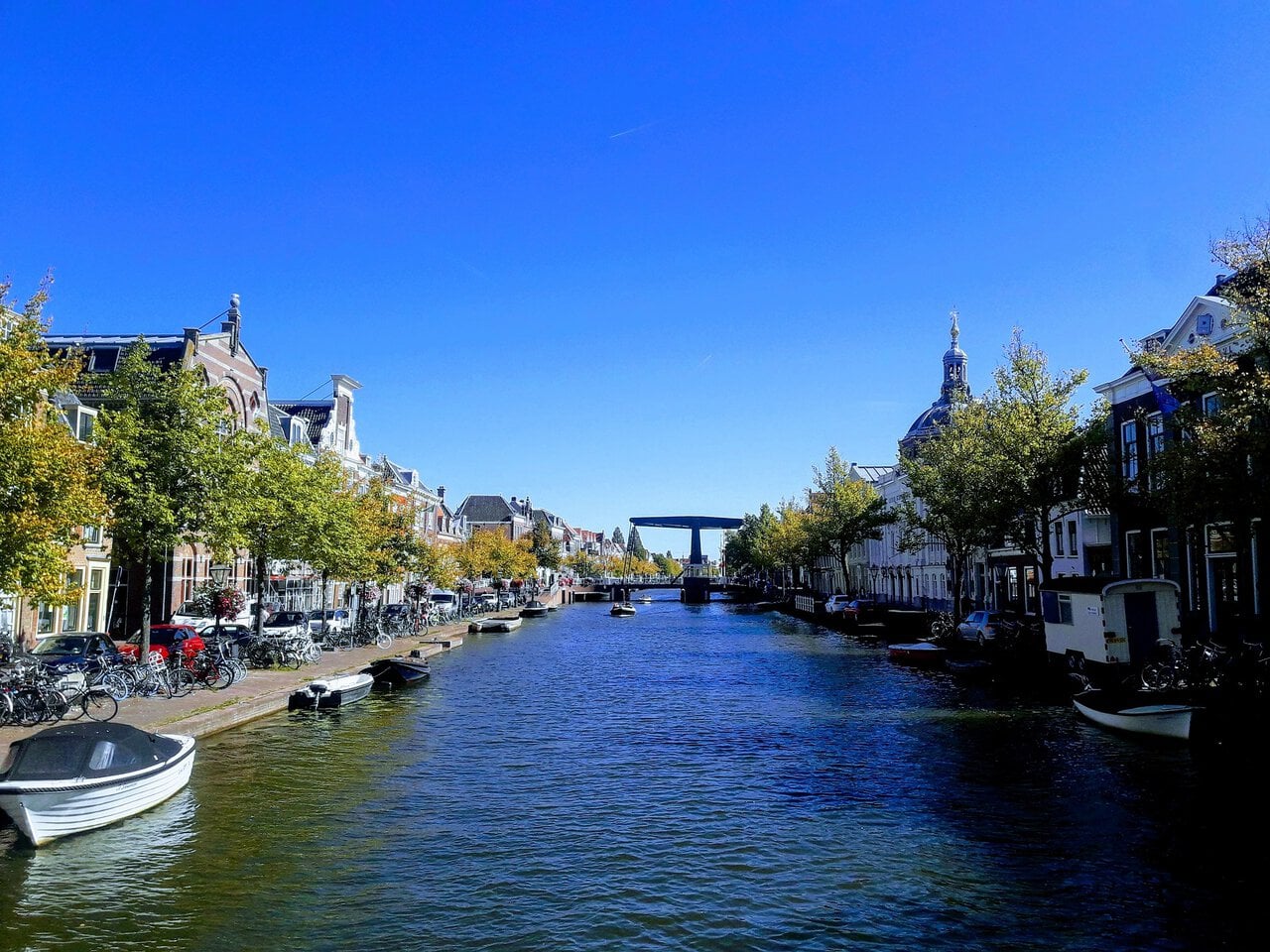
Leiden is the Netherlands’ oldest university city (the university was founded in 1575, a gift from William of Orange for the city’s resistance during a Spanish siege) and one of the prettiest towns in the Randstad, with a compact historic centre wrapped by two branches of the Oude Rijn. Direct trains from Den Haag Centraal to Leiden Centraal take around 17-19 minutes, running frequently throughout the day, which makes Leiden an easy half-day trip or a relaxed full day if you want to linger in its museums.
Leiden punches well above its size for museums. Naturalis Biodiversity Center, a short walk from the station, is one of the country’s best natural history museums, with a genuine T. rex skeleton and extensive interactive exhibits that work well for families. The Rijksmuseum van Oudheden (National Museum of Antiquities) holds an outstanding Egyptian collection, including the Temple of Taffeh, a genuine ancient Egyptian temple given to the Netherlands by Egypt and reconstructed inside the museum’s atrium. Molenmuseum De Valk, a working 18th-century windmill right in the city, is one of the few places in the Randstad where you can climb inside a mill and see the grinding machinery in action rather than just admiring it from outside.
Leiden’s old town is genuinely walkable in an afternoon. The Pieterskerk, a soaring Gothic church where the Pilgrims worshipped before departing for America via Plymouth in 1620 (a fact commemorated with a small plaque and the nearby Pilgrim Fathers’ Church), sits at the heart of a warren of narrow streets and hidden courtyards (hofjes) built as almshouses for the poor. The Hortus Botanicus Leiden, founded in 1590 and one of the oldest botanical gardens in the world, is a quiet, well-tended escape from the streets, particularly pleasant in spring and early summer. Rembrandt was born in Leiden in 1606, and while none of his major works stay in the city permanently, a small trail of plaques marks locations connected to his early life.
The Saturday market along the Nieuwe Rijn and Haarlemmerstraat is one of the larger and better general markets in the region, and the city’s many “hofjes” and canal-side cafés make it an easy place to spend a few unstructured hours after the main sights. Leiden also works as a stepping stone: buses to Keukenhof and the bulb fields run from just outside Leiden Centraal in season, so combining Leiden with a spring visit to the tulip gardens in a single day is a popular option.
Cyclists take note: Leiden is flat, compact and genuinely bike-friendly, and renting a bike for a couple of hours (widely available near the station) is a good way to cover more ground than walking allows, particularly if you want to reach the windmill museum, the botanical garden and the old town in one visit.
History buffs with an interest in early American history will also find Leiden rewarding beyond the Pieterskerk: the American Pilgrim Museum, housed in one of the city’s oldest surviving houses, tells the story of the English separatists who lived in Leiden for over a decade before sailing for the New World, and gives useful context for the plaques and small memorials scattered around the old town.
Gouda
Gouda is famous well beyond the Netherlands for the cheese that bears its name, but the town itself, often overlooked in favour of its more famous neighbours, is a genuinely handsome stop with one of the finest market squares in the country. Direct sprinter trains from Den Haag Centraal to Gouda take roughly 19-25 minutes depending on the specific service and stops along the way, making it an easy and inexpensive half-day trip.
The centrepiece is the Markt, one of the largest market squares in the Netherlands, dominated by the Gothic Stadhuis (town hall) built in 1450, the oldest surviving city hall in the country still used for its original purpose. Beside it stands the Waag (weigh house), a striking 17th-century building with a carved relief above the door depicting cheese being weighed, and now home to the Kaasmuseum (Cheese Museum), where you can see the traditional weighing and grading process explained in detail.
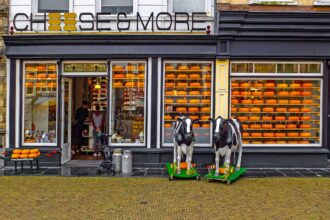
If your visit lines up with a Thursday morning between roughly April and August, the Markt hosts a traditional cheese market (Goudse Kaasmarkt), where cheesemakers arrive with wheels of Gouda stacked on barrows, and buyers and sellers still go through the ceremonial hand-clapping negotiation (handjeklap) that has marked cheese trading here for centuries. It’s staged partly for visitors these days, but it’s rooted in a genuinely centuries-old practice and remains one of the most photogenic traditions in the Randstad. Outside those months, the cheese shops around the Markt sell the same product year-round, and several offer tastings.
Beyond the cheese, Gouda’s Sint-Janskerk is worth the entry fee for its stained-glass windows alone: at over 70 metres, it’s the longest church in the Netherlands, and its 17th-century windows (the Goudse Glazen) are considered among the finest examples of Dutch stained glass anywhere, depicting biblical scenes and historical events in extraordinary detail and colour. Gouda is also known for stroopwafels and syrup waffles, and for candles: the city was a major candle-manufacturing centre historically, which is why its Christmas lights display (Gouda bij Kaarslicht, held on selected December evenings when the town is lit almost entirely by candlelight) has become a popular seasonal draw.
Gouda’s compact centre means three to four hours is usually enough to see the main sights properly, which makes it easy to combine with another nearby stop: Rotterdam is a further 15-20 minutes beyond Gouda on some routes, and Utrecht is reachable in around 30 minutes, so an ambitious itinerary could realistically string two of these towns together in a single day.
The town’s narrow, largely pedestrianised streets around the Markt also make it a pleasant place to simply sit with a coffee and watch the square go about its business, something that’s easy to overlook when planning a day trip around a checklist of named sights. A short walk from the centre, the Museumhaven Gouda gathers a small fleet of restored historic barges and boats moored along the canal, a quieter attraction that rewards a slower pace.
Kinderdijk
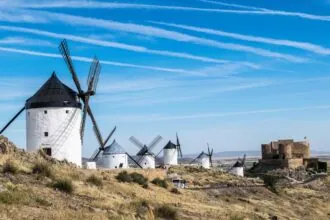
Kinderdijk is the postcard image of the Netherlands: nineteen 18th-century windmills lined up along the polder waterways, built to drain the low-lying land between the Lek and Noord rivers, and collectively recognised as a UNESCO World Heritage Site since 1997. It’s the least convenient destination on this list from The Hague in terms of pure logistics, but it’s also the one most visitors say was worth the extra effort once they’re standing among the mills.
There’s no single direct train, so the standard route is: take the train from Den Haag Centraal to Rotterdam Centraal (around 21-26 minutes), then the RET metro (lines A, B or C) to Kralingse Zoom (around 10 minutes), then the Qbuzz bus 489 towards Ridderkerk/Kinderdijk (around 35 minutes, running roughly twice an hour, seven days a week), which drops you close to the Molenkade and the visitor centre. All told, budget 75-90 minutes door to door, plus whatever wait you have between connections. In the warmer months (roughly Easter to October), a more scenic alternative is to take the Waterbus or seasonal WaterShuttle from Rotterdam’s Erasmusbrug, which reaches the windmill area in under half an hour on the water, a genuinely pleasant way to arrive, though schedules are typically limited to Friday through Sunday and are worth checking in advance at waterbus.nl.
Once there, the site is best explored on foot or by rented bike along the dyke path that runs past the mills. Two of the windmills (one from the Nederwaard group and one from the Overwaard group) are open to visitors and furnished as they would have been when families genuinely lived and worked inside them, often raising large families in surprisingly cramped quarters beneath the sails. The visitor centre explains the engineering behind the wider drainage system, which still uses pumping stations (now electric rather than wind-powered) to keep this reclaimed land dry. A boat tour through the polder’s canals, running regularly from the visitor centre in season, is one of the best ways to see the mills from water level and get close to the wildlife in the surrounding wetlands.
Photographers should aim for early morning or the last couple of hours before sunset, both for the light and to avoid the tour-bus crowds that build up around midday. Because of the connection time involved, most visitors treat Kinderdijk as either a standalone half-day trip or combine it with Rotterdam, given that you pass directly through the city on the way: seeing the Cube Houses or Markthal in the morning and heading out to the windmills in the afternoon is a well-worn and efficient combination.
Driving is the fastest option if you have a car, at roughly 45 minutes via the A20 and A16, with paid parking available near the visitor centre, though most independent travellers find the train-metro-bus combination perfectly manageable with a little patience.
The Dutch Coast: Kijkduin, Wassenaar and the Coastal Towns
The Hague already has its own beach at Scheveningen, covered in detail in our guide to things to do in The Hague, but the wider Dutch coast stretching north and south of the city offers a quieter, more local alternative for anyone who has already ticked off Scheveningen’s pier and promenade, or who simply wants to avoid its crowds and beach-club prices.
Kijkduin, at the southern end of The Hague’s own coastline, is the obvious first alternative and barely counts as a “trip” at all: tram line 12 and several bus routes reach it from the city centre in around 20-25 minutes. It has a similarly wide sandy beach to Scheveningen but with a noticeably smaller, more residential feel, a modest lighthouse (Vuurtoren Kijkduin) you can climb for coastal views, and a beach square lined with lower-key cafés rather than the bigger resort-style venues further north. It’s popular with local families and considerably less crowded on a warm weekend.
North of The Hague, Wassenaar‘s coastline blends into the Meijendel dune reserve, a large area of protected coastal dunes, woodland and grassland that’s excellent for walking or cycling and forms part of the Hague’s drinking-water catchment area, which is why it has been kept relatively undeveloped. Bus routes from the Hague reach Wassenaar’s dune entrances in well under half an hour, and the reserve’s visitor centre offers marked trails ranging from an easy hour’s loop to longer half-day hikes past small lakes and grazing Scottish Highland cattle used for conservation grazing.
Further north again, Katwijk aan Zee and Noordwijk aan Zee are proper Dutch seaside resort towns, each reachable from The Hague in around 35-50 minutes by a combination of train (to Leiden Centraal) and connecting bus, or by direct bus service along the coast road. Katwijk has a long, clean beach backed by a striking modern flood-defence structure built into the dunes (the Katwijk boulevard doubles as a sea wall, with an underground car park hidden inside it), while Noordwijk is the more polished, hotel-lined resort of the two, popular with both Dutch holidaymakers and international conference visitors thanks to facilities like the Space Expo centre nearby. Both make an easy full or half-day escape if beach time, rather than another historic town centre, is what you’re after.
If you’re travelling with children, Kijkduin and Wassenaar are the simplest options given their short journey times, while Katwijk and Noordwijk suit visitors who want a fuller “seaside town” day out with restaurants, shops and a boulevard to stroll, and who don’t mind an extra 15-20 minutes on the road.
Keukenhof and the Bulb Region (Seasonal Day Trip)
If your visit to The Hague falls between mid-March and mid-May, the Keukenhof gardens near Lisse are worth reorganising your itinerary around. Keukenhof is one of the largest flower gardens in the world, planted with several million tulip, daffodil and hyacinth bulbs across landscaped grounds, and it’s only open for this roughly eight-week spring window each year before the bulbs are lifted and the gardens close until the following season.
Direct seasonal buses (typically numbered 858) run from Den Haag Centraal to Keukenhof, taking around 45-60 minutes depending on traffic; an alternative route goes via Leiden Centraal, taking the train there first (17-19 minutes) and picking up a connecting bus (numbered 854 or similar) for the final stretch, which can sometimes be faster if the direct bus is delayed by traffic on the motorway. Tickets for Keukenhof, including combined transport-and-entry options, sell out on popular weekends, so booking online in advance is strongly recommended rather than turning up and hoping.
Beyond the gardens themselves, the surrounding bulb region between Leiden and Haarlem is criss-crossed with flat cycling routes through the actual commercial flower fields, which in peak bloom (typically mid-April) form the wide, saturated stripes of colour seen in aerial photographs of the Netherlands. Renting a bike in Lisse or at Keukenhof itself and riding out into the fields for an hour or two is a popular add-on for visitors who want to see the flowers growing commercially, not just arranged in a garden.
Outside the tulip season, the gardens are closed and this isn’t a viable day trip; visitors travelling in summer, autumn or winter should skip straight to the other destinations on this list instead.
Best if you can move a day either way. Shows how the fare to The Hague changes across the month.
Compare flightsBest for anyone whose home plan charges by the megabyte abroad. Pay a fixed price up front.
Check eSIMsBest when public transport has stopped, or when you are travelling with children and bags.
Book a transferDordrecht
Dordrecht is the Netherlands’ oldest city with a formal city charter (granted in 1220), and it’s often skipped by visitors who don’t realise how close it sits to The Hague. Direct trains from Den Haag Centraal typically take 35-40 minutes, running frequently as part of the main intercity corridor south towards Breda and Belgium.
The historic harbour area, where three rivers meet, is the highlight: a genuinely picturesque cluster of merchant houses, quaysides and the Grote Kerk (Church of Our Lady), whose leaning tower and river views make it worth the climb. The Dordrechts Museum holds a strong collection of Dutch Golden Age paintings, including work by artists from the local Dordrecht school, and the compact old town is easy to cover on foot in a couple of hours.
Dordrecht is also the main gateway to the Biesbosch National Park, a freshwater tidal wetland of channels, reed beds and willow forest just outside the city, popular for canoeing, cycling and boat safaris to spot beavers and a wide range of birdlife. Whisper boats and water taxis run from Dordrecht’s harbour into the park itself, making it possible to combine the historic town in the morning with a couple of hours on the water in the afternoon.
Because Dordrecht sits on the same southbound line as several other stops, it can be combined with Rotterdam (a further 15-20 minutes north) in a single day if you want to cover more ground, though on its own it comfortably fills a relaxed half-day.
Utrecht
Utrecht is a little further afield than the other destinations on this list, but it’s a genuinely worthwhile full-day trip if you have the time. Direct intercity trains from Den Haag Centraal typically take 35-40 minutes, running several times an hour throughout the day.
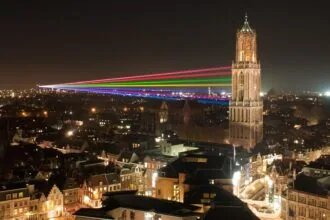
What sets Utrecht apart from Amsterdam’s canals is its unique two-level layout: wharf cellars (werven) sit directly at water level below the main streets, now converted into cafés and restaurants with their own canal-side terraces, a system unlike anything else in the Netherlands. The Dom Tower, at over 112 metres, is the tallest church tower in the country and can be climbed (via a guided tour, as the stairwell isn’t open for unguided access) for sweeping views across the city and, on a clear day, towards Amsterdam. The adjoining Dom Church and the gap where the nave used to stand (destroyed in a tornado in 1674 and never rebuilt) is one of the more unusual sights in Dutch church architecture.
Utrecht’s old town is dense with independent shops, particularly around Oudegracht and the surrounding streets, and the city has a younger, more studenty energy than The Hague thanks to Utrecht University’s large student population. The Centraal Museum and the Museum Speelklok (dedicated to mechanical musical instruments, from music boxes to full fairground organs) are both worth a visit if time allows.
Because Utrecht is substantial enough to deserve its own full guide, we’ve covered it separately: see Best Things to Do in Utrecht for the full rundown, and Best Day Trips from Utrecht if you decide it’s worth a stay of its own.
Practical Tips for Day-Tripping from The Hague
A few practical details make day trips from The Hague noticeably smoother. First, decide which of the two main stations you’re departing from: Den Haag Centraal is the larger, more central hub and the better choice for most of the destinations above, while Den Haag HS (Hollands Spoor), a little further from the historic centre, also serves many of the same routes and can occasionally be the faster option depending on the specific train. Check both when planning, since the NS app will show you whichever station gets you there quickest.
Luggage storage is rarely an issue for day trips, since none of these destinations require checked bags, but if you’re travelling onward the same day, both Den Haag Centraal and Den Haag HS have staffed or locker-based storage options near the main entrance. Weather is worth planning around too: the Netherlands sees rain year-round, and a compact umbrella or light rain jacket is more useful than an umbrella if you’re also cycling, which several of these destinations (particularly Leiden, Delft and the bulb region) make easy and worthwhile.
Timing matters more than distance for a comfortable day out. Trains on all these routes run more frequently, and are noticeably less crowded, outside the weekday morning and evening rush hours (roughly 7:00-9:00 and 16:30-18:30), when commuters heading to and from Rotterdam, Leiden and Utrecht fill the carriages. Travelling mid-morning and returning mid-afternoon, where your schedule allows, generally means more seats and a calmer journey both ways.
Finally, most of the museums and attractions mentioned above are closed or run reduced hours on 1 January, 25 December, and sometimes King’s Day (27 April), so it’s worth double-checking opening hours for your specific dates if your trip falls near a Dutch public holiday.

Which Day Trip Is Right for You?
With nine options above, it helps to narrow things down by what you actually want from the day. If your time in The Hague is short (a single free afternoon, say), Delft is the obvious choice: it’s close enough that the journey barely eats into your day, and its compact centre can genuinely be seen properly in three or four hours.
If you want a real change of pace from The Hague’s stately, government-city atmosphere, Rotterdam is the strongest option and the one that rewards a full day best: its architecture, markets and waterfront are unlike anywhere else in the country, and it’s substantial enough that you won’t run out of things to do. Leiden and Utrecht sit in between: both are classic Dutch canal towns with strong museums, better suited to visitors who enjoy wandering without a rigid list of sights to tick off.
For something more distinctive, Kinderdijk and Gouda each offer an experience you genuinely can’t get elsewhere in the region (windmills and cheese respectively), but they ask different things of you. Gouda is low-effort and easy to combine with another stop; Kinderdijk requires more patience with connections but delivers one of the most recognisably “Dutch” scenes in the entire country. If beach time or fresh air matters more than another historic centre, the coastal towns around Kijkduin and Wassenaar are the least demanding option on this list, needing barely 20-25 minutes of travel.
Travelling in spring? Rearrange everything around Keukenhof: it’s only open for about eight weeks a year, and missing that window means waiting twelve months for another chance. Outside those dates, Dordrecht is worth considering for travellers who’ve already covered the more famous names and want a quieter, less-visited alternative with genuine historic substance.
Travelling Independently or Joining a Guided Tour
Every destination in this guide is straightforward to reach independently by train, tram or bus, and for most visitors that’s the better option: the Dutch public transport network is fast, frequent and easy to navigate even without much Dutch, tickets are simple to buy through the NS app or contactless bank card, and you retain complete control over your schedule. For Delft, Rotterdam, Leiden, Gouda, Dordrecht and Utrecht in particular, there’s little a guided tour adds that you can’t manage yourself with a train timetable and a rough plan for the day.
Kinderdijk is the one destination on this list where a guided tour genuinely simplifies things. Because the journey involves a train, a metro and a bus (or a seasonal boat connection), an organised day tour that handles transport, timing and often a knowledgeable guide explaining the windmills’ engineering can be worth the extra cost, particularly if you’re short on time or travelling with people who’d rather not manage multiple transfers. Many tours combine Kinderdijk with Rotterdam or Delft in a single day, which is an efficient way to cover two or three destinations without working out the logistics yourself.
Keukenhof is a middle case: the direct seasonal bus makes independent travel entirely manageable, but combined ticket-and-transport packages sold in advance can be worth it during peak bloom weeks, both for the convenience and because they sometimes guarantee entry on days when walk-up tickets sell out.
If you do book a guided option for any of these destinations, look for smaller group sizes and confirm exactly what’s included: some “day trip” tours cover only transport and a guided walking overview, leaving museum or attraction entry fees separate, while others bundle everything into one price. Reading the small print before booking avoids the most common source of disappointment with organised day tours.

Rupert’s Handy Travel Tips
I’ve hopped on and off enough Dutch sprinters to know exactly how to make the most of a day trip from The Hague: here’s what I’ve learned.
- Buy tickets in the app, not at the desk: The NS app lets you buy tickets with a foreign bank card and works out cheaper and faster than queuing at a staffed counter, most of which have closed anyway.
- Tap in and out, every time: Whether you’re using a contactless bank card or an OV-chipkaart, always check in at the yellow or blue reader on the platform and check out at your destination; forgetting either end triggers the maximum fare.
- Pair Delft with Rotterdam: They sit on the same line barely fifteen minutes apart, so don’t waste a whole day on Delft alone when Rotterdam is right next door.
- Build in slack for Kinderdijk: The train-metro-bus combination works fine, but give yourself an extra 20-30 minutes of buffer in case a connection is running late; it’s the one day trip here where a missed transfer actually costs you time.
- Check Keukenhof’s dates before you plan around it: It only opens for about eight weeks each spring, so confirm the current season’s exact dates on the official site before building your itinerary around it.
Want to meet the reindeer behind our travel tips? Find out more in our page Who is Rupert?.




Frequently Asked Questions
What is the best day trip from The Hague?
It depends on your interests and time. Delft is the easiest and fastest for a short visit, at just 12-15 minutes away. Rotterdam offers the most to do for a full day out. Kinderdijk gives you the classic windmill scene the Netherlands is famous for, though it takes the longest to reach.
Can I visit Delft and Rotterdam in the same day?
Yes, easily. They sit on the same rail corridor, with Delft roughly 15 minutes from The Hague and Rotterdam a further 10-15 minutes beyond that. A morning in Delft followed by an afternoon and evening in Rotterdam is a popular and comfortable combination.
How do I get to Kinderdijk from The Hague without a car?
Take the train from Den Haag Centraal to Rotterdam Centraal, then the RET metro to Kralingse Zoom, then the Qbuzz bus 489 to Kinderdijk. Budget around 75-90 minutes door to door. Between roughly Easter and October, a scenic alternative is the Waterbus or WaterShuttle from Rotterdam’s Erasmusbrug, though this typically only runs Friday to Sunday.
Is Gouda worth visiting if I’m not interested in cheese?
Yes. The Markt square, Stadhuis and Sint-Janskerk (with the longest stained-glass windows in the Netherlands) are worth seeing on their own merits, and the town’s compact centre makes for a pleasant few hours regardless of the cheese market.
When does the Gouda cheese market run?
The traditional Thursday morning cheese market typically runs from around April to August. Outside those months and days, the cheese shops around the Markt are open as normal, but you won’t see the ceremonial market itself.
What’s the difference between Scheveningen and Kijkduin?
Both are Hague beaches, but Scheveningen (covered in our main Hague guide) is the larger, livelier resort with a pier and boulevard, while Kijkduin, a little further south, is quieter, more residential and less crowded, with its own small lighthouse.
Is Keukenhof open all year?
No. Keukenhof only opens for around eight weeks each year, typically mid-March to mid-May, to coincide with peak tulip bloom. It’s closed the rest of the year, so check the exact current-season dates before planning around it.
Do I need to buy train tickets in advance?
No. Dutch trains use an open, tap-in/tap-out system rather than reserved seats for these regional and intercity routes, so you can simply buy a ticket via the NS app or tap in with a contactless card on the day. Advance booking isn’t necessary or generally cheaper for these journeys.
Should I leave from Den Haag Centraal or Den Haag HS?
Both stations serve most of these routes, and either works well. Den Haag Centraal is larger, more central and generally the more convenient choice, but it’s worth checking the NS app for your specific journey, since some services depart slightly faster from Den Haag HS.
Can I combine more than two day trips in one visit to The Hague?
Yes, particularly along the Delft-Rotterdam-Dordrecht corridor or the Den Haag-Leiden-bulb region route, since journey times between these towns are short. Trying to cover more than two properly in a single day is possible but tends to feel rushed, so three or four separate day trips across your stay is usually more enjoyable than cramming.
Further Reading
Before you head out on any of the day trips above, it’s worth working through The Hague itself first: our guide to Best Things to Do in The Hague covers the Mauritshuis, Binnenhof, Scheveningen and Madurodam, and helps you decide how many days to leave free for the excursions covered here. If Rotterdam ends up being your favourite stop, it has enough of its own to justify a stay of its own: see Best Things to Do in Rotterdam and Best Day Trips from Rotterdam for more.
The same logic applies to Utrecht, which we’ve covered separately in Best Things to Do in Utrecht and Best Day Trips from Utrecht, both useful if you decide it deserves more than a single day. If you’re combining The Hague with Amsterdam on the same trip, our cornerstone guides to Best Things to Do in Amsterdam and Best Day Trips from Amsterdam cover the country’s other major hub in the same level of depth.
For the practical side of getting around, our guides to the NS Day Ticket and the Holland Travel Ticket explain when a day pass beats buying individual tickets, while the Interrail Benelux Pass is worth a look if the Netherlands is only part of a wider Belgium-Netherlands-Luxembourg trip.