Reviewed by our editorial team Updated
Discover the Best Day Trips from Amsterdam
One of Amsterdam’s greatest strengths is its location. Thanks to the Netherlands’ excellent rail network, reliable regional buses and well-organised road system, it’s incredibly easy to escape the capital for a day and experience a completely different side of the country. Within an hour or two, you can swap bustling canals for historic windmills, traditional fishing villages, sandy beaches, medieval city centres or peaceful countryside, all without changing hotels.
Many of the Netherlands’ most famous attractions lie surprisingly close to Amsterdam. The iconic windmills of Zaanse Schans, the colourful fishing villages of Volendam and Marken, the historic streets of Haarlem, the modern architecture of Rotterdam and the fairytale canals of Giethoorn can all be visited as rewarding day trips. During spring, millions of visitors also head to the spectacular Keukenhof Gardens, while summer is the perfect time to relax on the beaches of Zandvoort.
Travelling independently is usually straightforward. Frequent NS trains connect Amsterdam with destinations across the country, while regional bus operators serve smaller towns and villages that don’t have railway stations. If you’re planning several excursions, the Amsterdam & Region Travel Ticket (ARTT) can offer excellent value, covering many of the most popular destinations around the capital with a single pass.
Alternatively, organised day tours remain extremely popular. They remove the stress of planning transport, often combine multiple destinations into one itinerary, and frequently include extras such as cheese tastings, clog-making demonstrations, canal cruises or expert local guides. For first-time visitors with limited time, these tours can be one of the easiest ways to experience the Dutch countryside.
In this guide we’ll compare the best day trips from Amsterdam, explain how to get to each destination, discuss whether it’s better to travel independently or join a guided tour, and help you decide which destinations deserve a place on your itinerary.
| Destination | Typical Journey | Best Transport | Recommended Time | Best For |
|---|---|---|---|---|
| Zaanse Schans | 20–25 minutes | Train or Bus | Half Day | Windmills & Dutch history |
| Volendam & Marken | 30–45 minutes | Bus or Guided Tour | Full Day | Fishing villages & local culture |
| Edam | 35–40 minutes | Bus | Half Day | Cheese & historic streets |
| Haarlem | 15–20 minutes | Train | Full Day | History & shopping |
| Utrecht | 25–30 minutes | Train | Full Day | Canals & architecture |
| Delft | Around 1 hour | Train | Full Day | Vermeer & canals |
| Rotterdam | 40–45 minutes | Train | Full Day | Modern architecture |
| Kinderdijk | Around 1½ hours | Train & Waterbus | Full Day | UNESCO windmills |
| Keukenhof (seasonal) | 40–60 minutes | Bus or Tour | Full Day | Tulips & gardens |
| Giethoorn | Around 2 hours | Coach Tour or Car | Full Day | Canals & countryside |
| Zandvoort | Around 30 minutes | Train | Full Day | Beach |
| Alkmaar | 35–40 minutes | Train | Half or Full Day | Cheese market |
Zaanse Schans
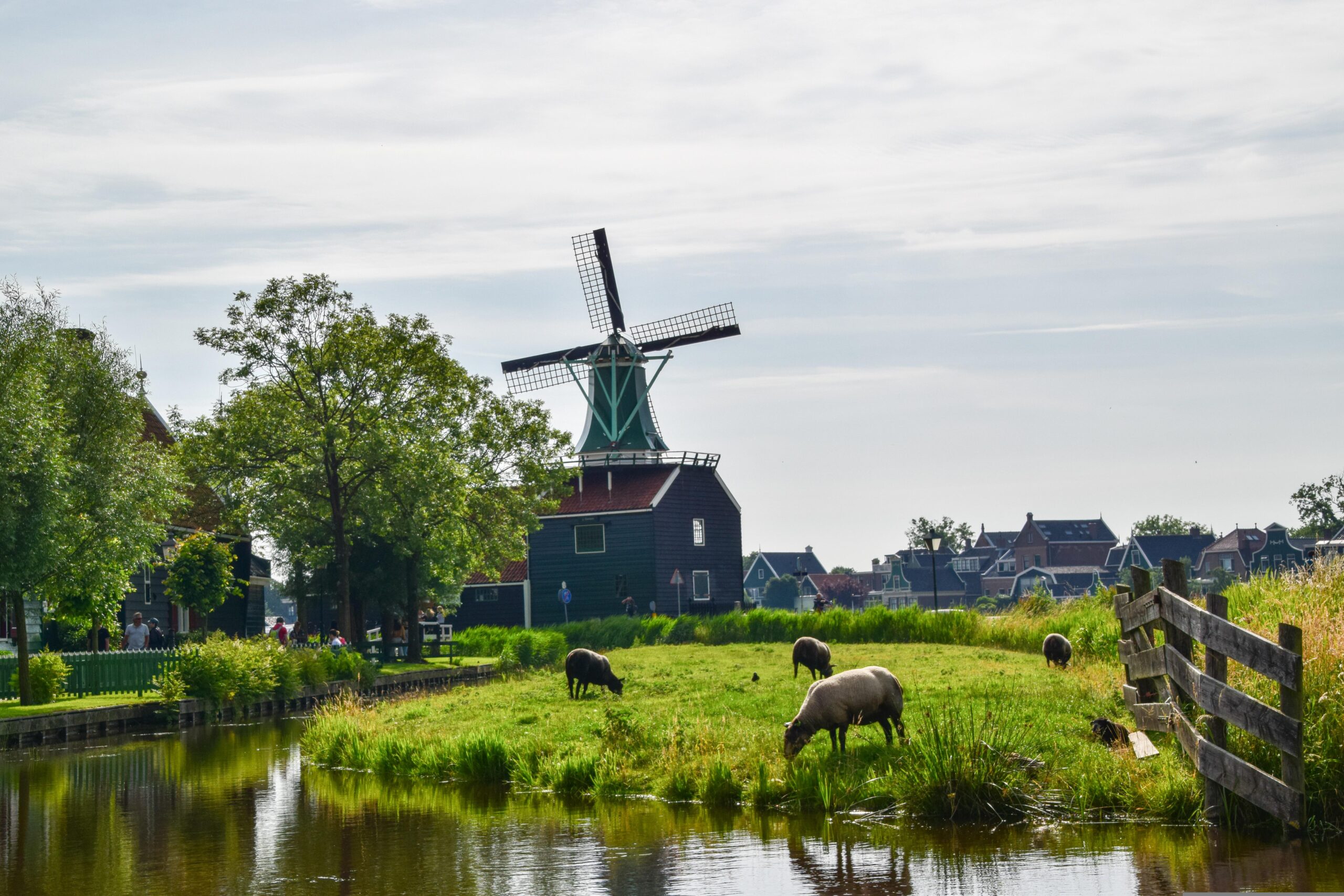
If you’re only planning one countryside trip from Amsterdam, Zaanse Schans is often the first destination visitors choose. Located just north of the city, this beautifully preserved village showcases the Netherlands’ industrial heritage with its collection of working windmills, traditional wooden houses, artisan workshops and riverside scenery. It’s one of the country’s most photographed locations and offers a fantastic introduction to classic Dutch culture.
Although often described as an open-air museum, Zaanse Schans is actually a living community where people still live and work. Visitors are free to wander around the village, admire the historic buildings and enjoy the peaceful setting beside the River Zaan. Several of the windmills remain operational and can be visited for an additional fee, allowing you to see how they once produced everything from flour and spices to paint pigments and timber.
The village is also famous for its traditional clog-making demonstrations and Dutch cheese tastings, giving visitors the opportunity to learn about two of the country’s best-known exports. Watching craftsmen produce wooden shoes using historic machinery remains one of the highlights for many visitors, while the local cheese farms offer samples of classic Edam, Gouda and other regional varieties.
Travelling independently is straightforward. Frequent NS trains run from Amsterdam Centraal Station to Zaandijk Zaanse Schans, followed by a short walk to the village. Regional buses also operate from Amsterdam, and the Amsterdam & Region Travel Ticket covers many of these services, making it an economical choice for independent travellers.
However, many visitors choose to visit Zaanse Schans as part of a guided countryside tour. Combining the windmills with nearby villages such as Volendam, Marken and Edam allows you to experience several of the Netherlands’ highlights in a single day without worrying about transport connections or planning the itinerary yourself.
Best for a short trip. Compare rooms by neighbourhood, price and guest rating before you book.
Compare hotelsBest for families, or any stay past about four nights. A kitchen and a washing machine start paying for themselves.
Browse rentalsBest as a last check before booking. Compares Amsterdam hotel rates across several sites in one search.
Compare ratesVolendam, Marken and Edam
If you’d like to experience the traditional Netherlands beyond Amsterdam, it’s difficult to beat a day exploring Volendam, Marken and Edam. Each town has its own distinct character, yet together they provide a fascinating insight into Dutch history, maritime culture and centuries-old traditions. Best of all, they’re located close enough together to be comfortably visited in a single day.
Volendam is perhaps the most famous of the three. This attractive fishing village sits on the shores of the IJsselmeer and is renowned for its bustling harbour, colourful wooden houses and seafood restaurants. Walking along the waterfront, you’ll see traditional fishing boats moored beside modern yachts, while cafés and souvenir shops line the promenade. It’s also one of the best places in the Netherlands to sample freshly prepared herring, kibbeling and smoked eel, all local specialities that have been enjoyed here for generations.
Just across the water lies Marken, a peaceful former island that was once completely isolated from the mainland. Today it’s connected by a causeway, but the village has retained its unique identity, with green-painted timber houses, picturesque canals, historic harbour and quiet residential streets creating an atmosphere very different from Amsterdam. Marken is also well known for its wooden shoe workshops, where visitors can watch traditional clog-making demonstrations and learn how Dutch clogs are still produced today.
The third stop, Edam, is famous around the world for its cheese, but there’s far more to discover than its internationally recognised name. The compact historic centre is filled with beautiful canals, medieval bridges, elegant merchant houses and cobbled streets, making it one of the prettiest towns in North Holland. During the summer months, visitors can even experience the traditional Edam Cheese Market, where historic trading customs are recreated in the town square.
Travelling independently is certainly possible using regional buses from Amsterdam, and many visitors combine Volendam and Marken using the seasonal Marken Express ferry. However, coordinating buses, ferries and timetables between all three villages can take time, particularly if you’re unfamiliar with the transport network.
For that reason, organised countryside tours remain extremely popular. They handle all the transport, include expert guides, and often feature experiences such as cheese tastings, clog-making demonstrations and scenic countryside drives that would be difficult to arrange independently. If you’re short on time or visiting the Netherlands for the first time, they’re an excellent way to experience several of the country’s most iconic destinations in a single day.
Haarlem
Located just 15 to 20 minutes by train from Amsterdam Centraal Station, Haarlem is one of the easiest and most rewarding day trips in the Netherlands. Often described as a quieter, more relaxed version of Amsterdam, the city combines beautiful canals, impressive historic architecture and excellent museums without the crowds found in the capital.
The heart of Haarlem is the magnificent Grote Markt, one of the country’s finest market squares. Surrounded by cafés, restaurants and elegant historic buildings, it’s dominated by the towering St. Bavo Church, whose impressive organ was once played by both Mozart and Handel. The square regularly hosts markets and events, making it an ideal place to pause for lunch while watching local life unfold.
Beyond the centre, Haarlem’s charming streets are lined with independent boutiques, antique shops and galleries. The city is also home to the internationally renowned Frans Hals Museum, celebrating one of the Dutch Golden Age’s greatest painters, while the fascinating Teylers Museum (the oldest museum in the Netherlands) combines art, science and natural history under one roof.
A short walk from the centre brings you to De Adriaan Windmill, an iconic riverside windmill that has become one of Haarlem’s best-known landmarks. Visitors can tour the interior and enjoy panoramic views across the rooftops and canals, while nearby walking routes follow the peaceful banks of the River Spaarne.
Haarlem is particularly easy to visit independently thanks to the frequent NS train services operating throughout the day. Trains depart from Amsterdam Centraal every few minutes, making it possible to enjoy a relaxed day without needing to pre-book tickets or join a guided tour. It’s an ideal destination for travellers who enjoy historic cities, shopping, museums and beautiful architecture, all within easy reach of Amsterdam.
Utrecht
Although often overshadowed by Amsterdam, Utrecht is considered by many Dutch people to be one of the country’s most beautiful cities. Located just 25 to 30 minutes by direct train, it combines medieval streets, lively cafés and picturesque canals with a more relaxed atmosphere than the capital, making it an excellent full-day excursion.
What immediately sets Utrecht apart is its unique two-level canal system. Unlike Amsterdam, many of Utrecht’s canals feature historic wharf cellars built below street level. These former storage spaces have been transformed into cafés, restaurants and terraces sitting directly beside the water, creating one of the most distinctive cityscapes in Europe.
Towering above the centre is the magnificent Dom Tower, the tallest church tower in the Netherlands. Visitors willing to climb its hundreds of steps are rewarded with spectacular views across the city and surrounding countryside, while the adjacent Dom Church and historic cloisters offer a fascinating glimpse into Utrecht’s medieval past.
The compact city centre is ideal for exploring on foot. Wandering through narrow streets reveals independent bookshops, boutique stores, lively squares and waterside cafés, while attractions such as the Museum Speelklok, Centraal Museum and Railway Museum provide plenty to discover for visitors with different interests.
Frequent NS Intercity trains make Utrecht one of the simplest day trips from Amsterdam, with departures throughout the day from Amsterdam Centraal Station. Thanks to the short journey time and compact historic centre, it’s an excellent choice for travellers looking to experience another side of the Netherlands without spending hours travelling.
Rotterdam
If you’re looking to experience a completely different side of the Netherlands, Rotterdam should be at the top of your list. Unlike Amsterdam’s centuries-old canals and historic merchant houses, Rotterdam is a city of bold modern architecture, innovative design and one of Europe’s busiest ports. Much of the city was destroyed during the Second World War and rebuilt with an ambitious vision, creating a skyline unlike anywhere else in the country.
The city is easily reached by direct NS Intercity trains from Amsterdam Centraal Station, with journey times of around 40 to 45 minutes. Frequent departures throughout the day make Rotterdam one of the easiest independent day trips, and once you arrive at Rotterdam Centraal, many of the city’s biggest attractions are within walking distance or a short tram ride away.
One of Rotterdam’s most famous sights is the striking Cube Houses (Kubuswoningen), a collection of tilted yellow homes that have become an architectural icon. Nearby you’ll find the spectacular Markthal, an enormous indoor food market featuring fresh produce, international cuisine and one of Europe’s largest works of public art covering its ceiling. It’s the perfect place to stop for lunch while sampling Dutch and international specialities.
A walk along the waterfront reveals another side of Rotterdam. The elegant Erasmus Bridge connects the northern and southern parts of the city, while boat tours operate around the vast harbour, offering a glimpse into one of the world’s busiest shipping ports. Visitors wanting panoramic views should head to the Euromast, where observation decks overlook the skyline, river and surrounding countryside.
Rotterdam is also home to excellent museums, vibrant shopping streets and a lively café scene, making it a destination that’s easy to fill for an entire day. It’s particularly well suited to visitors interested in modern architecture, photography, food and contemporary culture, providing a fascinating contrast to Amsterdam’s historic atmosphere.
Delft
Smaller, quieter and wonderfully picturesque, Delft offers everything many visitors imagine when they picture a traditional Dutch town. Famous for its blue-and-white Delftware pottery, beautiful canals and historic market squares, it’s one of the country’s most charming destinations and makes an excellent day trip from Amsterdam.
Direct trains connect Amsterdam Centraal Station with Delft in approximately one hour, making it easy to visit independently. The railway station sits just a short walk from the historic centre, allowing visitors to begin exploring almost immediately after arriving.
Delft is closely associated with the artist Johannes Vermeer, who spent much of his life here and painted many of his most famous works in the city. Visitors can learn more about his life at the Vermeer Centre Delft, while art lovers may also enjoy exploring the churches and streets that inspired many of his paintings.
The city is equally famous for its centuries-old Royal Delft pottery factory, where visitors can watch craftsmen producing the distinctive hand-painted ceramics that have become synonymous with Dutch craftsmanship. Factory tours explain the manufacturing process and showcase some of the finest examples of Delft Blue pottery still being produced today.
At the heart of the city lies the beautiful Markt, one of the Netherlands’ largest historic squares. Surrounded by cafés and elegant buildings, it’s overlooked by the impressive Nieuwe Kerk (New Church), where members of the Dutch Royal Family are buried, and the striking City Hall, with its Renaissance architecture. Combined with Delft’s peaceful canals and compact centre, the city is ideal for a relaxed day spent wandering on foot.
Kinderdijk
Few places represent the Netherlands quite as perfectly as Kinderdijk. This UNESCO World Heritage Site is home to 19 historic windmills, standing beside a network of canals that have helped protect the surrounding countryside from flooding for centuries. For many visitors, it’s one of the most iconic landscapes in the country.
Reaching Kinderdijk independently is certainly possible, although it requires a little more planning than destinations such as Haarlem or Utrecht. Most visitors travel by train to Rotterdam before continuing by Waterbus or regional bus to the windmills. The journey typically takes around 90 minutes, making Kinderdijk a comfortable full-day excursion from Amsterdam.
Once you arrive, you’ll find an extensive network of walking and cycling paths weaving between the windmills, canals and pumping stations. Several of the mills are open to visitors, allowing you to step inside and discover how millers once lived while helping manage the country’s water levels. Information centres throughout the site explain the remarkable engineering achievements that have enabled much of the Netherlands to exist below sea level.
Although exploring independently is rewarding, many visitors prefer to join an organised excursion that combines transport, admission and guided commentary into one convenient package. This removes the need to coordinate trains, boats and buses while ensuring you have plenty of time to appreciate one of the Netherlands’ most famous UNESCO sites.
Kinderdijk is especially recommended for travellers interested in photography, engineering, Dutch history and UNESCO World Heritage Sites. Combined with Rotterdam, it also makes an excellent full-day itinerary showcasing both the Netherlands’ modern achievements and its centuries-old battle against the sea.
Best for finding routes the airlines do not sell as a single ticket. Combines carriers to bring the fare down.
Search flightsBest for anyone whose home plan charges by the megabyte abroad. Pay a fixed price up front.
Check eSIMsBest if you would rather not work out the transport on arrival. Book it now and forget it.
View transfersGiethoorn
Often described as the “Venice of the Netherlands,” Giethoorn is unlike anywhere else in the country. Instead of roads running through the centre of the village, you’ll find peaceful canals, more than 180 wooden bridges and charming thatched-roof farmhouses, creating one of the most photographed destinations in Europe. It’s easy to see why so many visitors consider it the highlight of their trip to the Netherlands.
Located around 120 kilometres northeast of Amsterdam, Giethoorn is considerably further away than destinations such as Haarlem or Zaanse Schans. Travelling independently is certainly possible by combining NS trains and regional buses, but the journey usually takes around two hours each way and involves multiple changes. For that reason, many visitors choose to join an organised tour, allowing them to relax while someone else takes care of the transport.
The village itself is wonderfully peaceful. Cars are largely absent from the historic centre, with residents travelling by boat, bicycle or on foot instead. A network of narrow canals winds past flower-filled gardens and traditional Dutch cottages, while wooden footbridges connect different parts of the village. The atmosphere is remarkably tranquil, particularly compared with the busy streets of Amsterdam.
The best way to experience Giethoorn is undoubtedly from the water. Guided canal cruises glide through the village’s narrow waterways, passing beneath low bridges and offering close-up views of homes that can only be reached by boat. Many cruises also venture into the surrounding Weerribben-Wieden National Park, one of the largest freshwater wetlands in north-west Europe.
After your cruise, spend time wandering through the village at your own pace. Independent cafés, waterside restaurants, small museums and local shops line the footpaths, while quiet walking routes lead to viewpoints away from the busiest areas. It’s a destination where slowing down is very much part of the experience.
Because of the distance from Amsterdam, organised tours represent excellent value. The highest-rated excursions combine luxury coach travel, a guided canal cruise with a local skipper, free time to explore, a traditional Dutch cheese tasting and even access to a Hidden Gems walking route that takes visitors beyond the busiest tourist areas. It removes all of the transport planning while allowing you to simply enjoy one of the Netherlands’ most beautiful villages.
Zandvoort
If you’re visiting Amsterdam during the warmer months and fancy swapping canals for the coast, Zandvoort aan Zee is the perfect escape. Located on the North Sea coastline, this lively seaside resort is just 30 minutes by direct train from Amsterdam Centraal Station, making it one of the easiest beach day trips in the Netherlands.
The town is best known for its wide sandy beaches, stretching for several kilometres along the coast. During summer, visitors can relax on the sand, swim in the sea or hire sun loungers from one of the many beach clubs. Watersports such as kite surfing, paddleboarding and surfing are also popular when conditions allow.
Away from the beach, Zandvoort has a pleasant town centre filled with cafés, seafood restaurants and independent shops. The promenade is ideal for a leisurely stroll, while numerous beachfront terraces provide the perfect place to enjoy lunch overlooking the sea. Fresh seafood is a speciality here, particularly during the summer season.
Nature lovers should also explore the nearby South Kennemerland National Park, where walking and cycling trails pass through dunes, forests and grasslands that are home to wild deer, Highland cattle and numerous bird species. It’s an excellent option if you’d like to combine a beach day with some of the Netherlands’ finest coastal scenery.
Zandvoort is particularly appealing because of how easy it is to reach. Frequent NS trains run directly from Amsterdam Centraal Station throughout the day, meaning there’s no need to book organised tours or worry about complicated transport connections. Whether you’re looking for a relaxing beach day, coastal walks or simply a break from city sightseeing, Zandvoort offers a refreshing change of pace.
Alkmaar
For visitors interested in traditional Dutch culture, Alkmaar offers a fascinating blend of history, canals and one of the country’s most famous traditions: cheese. Located around 35 to 40 minutes by direct train from Amsterdam, it’s an easy independent day trip that’s particularly popular during spring and summer.
Alkmaar’s biggest attraction is its historic Cheese Market, held in the beautiful Waagplein between spring and early autumn. Here you’ll see traders dressed in traditional white clothing carrying large wheels of cheese using wooden barrows, recreating customs that date back centuries. It’s one of the Netherlands’ most iconic cultural experiences and attracts visitors from around the world.
Even outside market days, Alkmaar is well worth visiting. The compact historic centre is filled with attractive canals, narrow shopping streets, medieval buildings and welcoming cafés. The Dutch Cheese Museum, located inside the old Weigh House, explains the history of cheese production and the importance of dairy farming to the Dutch economy.
Visitors can also enjoy canal cruises, explore independent boutiques or simply wander through the city’s picturesque streets at a relaxed pace. Compared with Amsterdam, Alkmaar feels quieter and more local, making it an excellent destination for travellers wanting to experience everyday Dutch life away from the capital.
Thanks to regular NS train services, visiting Alkmaar independently couldn’t be easier. It’s an ideal destination for anyone interested in food, local traditions, history and photography, and combines particularly well with other towns in North Holland if you’re planning a longer stay in the region.
Which Day Trip Is Right for You?
With so many excellent destinations within easy reach of Amsterdam, choosing just one can be difficult. The good news is that each day trip offers something completely different, so the best choice depends on what interests you most.
If this is your first visit to the Netherlands, it’s hard to beat Zaanse Schans, Volendam and Marken. Together they provide classic Dutch scenery, working windmills, traditional villages, cheese tastings and clog-making demonstrations that many visitors associate with the country.
For travellers who enjoy historic cities, Haarlem, Utrecht and Delft each make outstanding choices. Haarlem offers beautiful architecture and excellent shopping, Utrecht is famous for its unique canals and lively atmosphere, while Delft combines Vermeer, Royal Delft pottery and one of the prettiest market squares in the Netherlands.
Those interested in modern architecture should head to Rotterdam, while photographers and UNESCO enthusiasts will love Kinderdijk and its world-famous windmills. During spring, Keukenhof is an unforgettable experience, while Zandvoort provides the perfect seaside escape during the warmer months.
Finally, if you’re looking for somewhere truly unique, Giethoorn stands in a category of its own. Its peaceful canals, wooden bridges and car-free streets create an atmosphere unlike anywhere else in the Netherlands, making it one of the country’s most memorable day trips.
Travelling Independently or Joining a Guided Tour
One of the biggest decisions when planning a day trip from Amsterdam is whether to travel independently or join an organised tour. The good news is that both options work extremely well, and the right choice largely depends on where you’re going, how much time you have and how much planning you want to do yourself.
For destinations such as Haarlem, Utrecht, Rotterdam, Delft, Alkmaar and Zandvoort, travelling independently is usually the better option. Frequent NS trains operate throughout the day, stations are centrally located, and the attractions are all within easy walking distance once you arrive. Simply turn up at Amsterdam Centraal Station, use OVpay or buy a train ticket, and you’re on your way.
The same applies to Zaanse Schans, although many visitors choose to combine it with nearby villages rather than visiting it on its own. If you’re only interested in the windmills, travelling independently by train or regional bus is straightforward. However, if you also want to visit Volendam, Marken and Edam, an organised tour can save a considerable amount of time by eliminating multiple bus journeys and transport changes.
Some destinations are much easier with a guided excursion. Giethoorn is the perfect example. Although it’s possible to reach independently, the journey involves around two hours of travel each way and usually requires changing between trains and buses. A coach tour takes care of all the transport, includes a canal cruise and still leaves several hours to explore the village, making it a very attractive option for first-time visitors.
The same is often true for Kinderdijk and Keukenhof. While independent travel is certainly possible, organised tours simplify the logistics and often include admission, commentary and carefully planned itineraries that maximise your time at each destination.
If you’re planning several independent excursions, it’s also worth considering the Amsterdam & Region Travel Ticket (ARTT). This pass covers many of the most popular destinations around Amsterdam, including Zaanse Schans, Volendam, Haarlem, Zandvoort and Schiphol Airport, potentially saving both money and the hassle of buying individual tickets throughout your stay.
Ultimately, there’s no right or wrong choice. Independent travel offers maximum flexibility and is ideal if you enjoy exploring at your own pace. Guided tours, on the other hand, remove the planning, provide local knowledge and often allow you to see several highlights in a single day. Many visitors actually combine both approaches, taking organised tours for the countryside while exploring the Netherlands’ cities independently.

Rupert’s Handy Travel Tips
One of the best things about staying in Amsterdam is that you don’t have to travel far to experience a completely different side of the Netherlands. Whether you’re looking for windmills, beaches, medieval towns or peaceful countryside, these tips will help you make the most of your day out:
- Leave early whenever possible: Attractions such as Zaanse Schans, Volendam and Giethoorn become much busier from late morning onwards. Early departures usually mean quieter streets, easier parking and better photographs.
- Don’t underestimate travel times: While destinations such as Haarlem, Zandvoort and Utrecht are easy by train with NS, places like Giethoorn and Kinderdijk require longer journeys. Always allow enough time to enjoy your destination rather than rushing back.
- Choose the right transport ticket: If you’re planning several independent day trips, the Amsterdam & Region Travel Ticket can save both money and hassle by covering trains, buses, trams and metro services across much of the surrounding region.
- Guided tours often save time: Multi-stop tours to places such as Zaanse Schans, Edam, Volendam and Marken remove the need to coordinate buses, ferries and timetables, allowing you to see more in a single day.
- Pack for changing weather: Dutch weather can be unpredictable. Comfortable walking shoes, a light waterproof jacket, sunscreen and a reusable water bottle are all worth bringing, even if the forecast looks promising.
Want to meet the reindeer behind our travel tips? Find out more in our page Who is Rupert?.




Frequently Asked Questions
What is the best day trip from Amsterdam?
For first-time visitors, Zaanse Schans is often the most popular choice thanks to its iconic windmills, traditional Dutch houses, cheese farms and clog-making demonstrations. If you have a full day available, combining Zaanse Schans, Volendam, Marken and Edam on a guided tour offers an excellent introduction to the Dutch countryside.
Can I visit several places in one day?
Yes. Destinations such as Zaanse Schans, Volendam, Marken and Edam are close together and are frequently combined into a single itinerary. If you’re travelling independently you’ll need to coordinate buses and ferries, whereas organised tours handle all the transport for you.
Which day trips are easiest by train?
The simplest rail journeys from Amsterdam are to Haarlem, Utrecht, Rotterdam, Delft, Alkmaar and Zandvoort. Direct NS train services operate regularly throughout the day, making them ideal for independent travellers.
Is Giethoorn worth visiting from Amsterdam?
Absolutely. Although it’s one of the longer day trips, Giethoorn’s peaceful canals, over 180 bridges and beautiful thatched cottages make it one of the most unique destinations in the Netherlands. If you don’t want to organise trains and buses yourself, an organised coach tour is usually the easiest option.
Should I buy the Amsterdam & Region Travel Ticket?
If you’re planning several independent day trips around North Holland, it can offer excellent value. It includes travel to destinations such as Zaanse Schans, Haarlem, Volendam, Zandvoort, Schiphol Airport and many other locations throughout the region.
Are guided day tours worth it?
For destinations involving multiple transport connections, many visitors find guided tours offer excellent value. They remove the hassle of planning trains, buses and ferries, while often including extras such as cheese tastings, clog-making demonstrations, canal cruises and knowledgeable local guides.
Further Reading
Amsterdam is a fantastic base for exploring the Netherlands, but there’s just as much to discover within the city itself. Before heading into the countryside, take a look at our comprehensive Things to Do in Amsterdam guide, where we’ve brought together the capital’s top attractions, neighbourhoods and hidden gems into one complete itinerary.
Planning your transport? Our Getting Around Amsterdam guide explains the city’s tram, metro, bus and ferry network in detail, while our Amsterdam Public Transport guide compares the GVB Public Transport Ticket, Amsterdam Travel Ticket and Amsterdam & Region Travel Ticket to help you choose the right pass for your trip.
If you’re staying in Amsterdam for several days, don’t miss our dedicated guides covering Amsterdam Canal Cruises, Hop-On Hop-Off Bus & Boat, Free Things to Do in Amsterdam, Museums in Amsterdam, Anne Frank & Jewish History, and the spectacular Amsterdam Light Festival, which transforms the city’s canals every winter.