Reviewed by our editorial team Updated
Discover the Best of Rotterdam
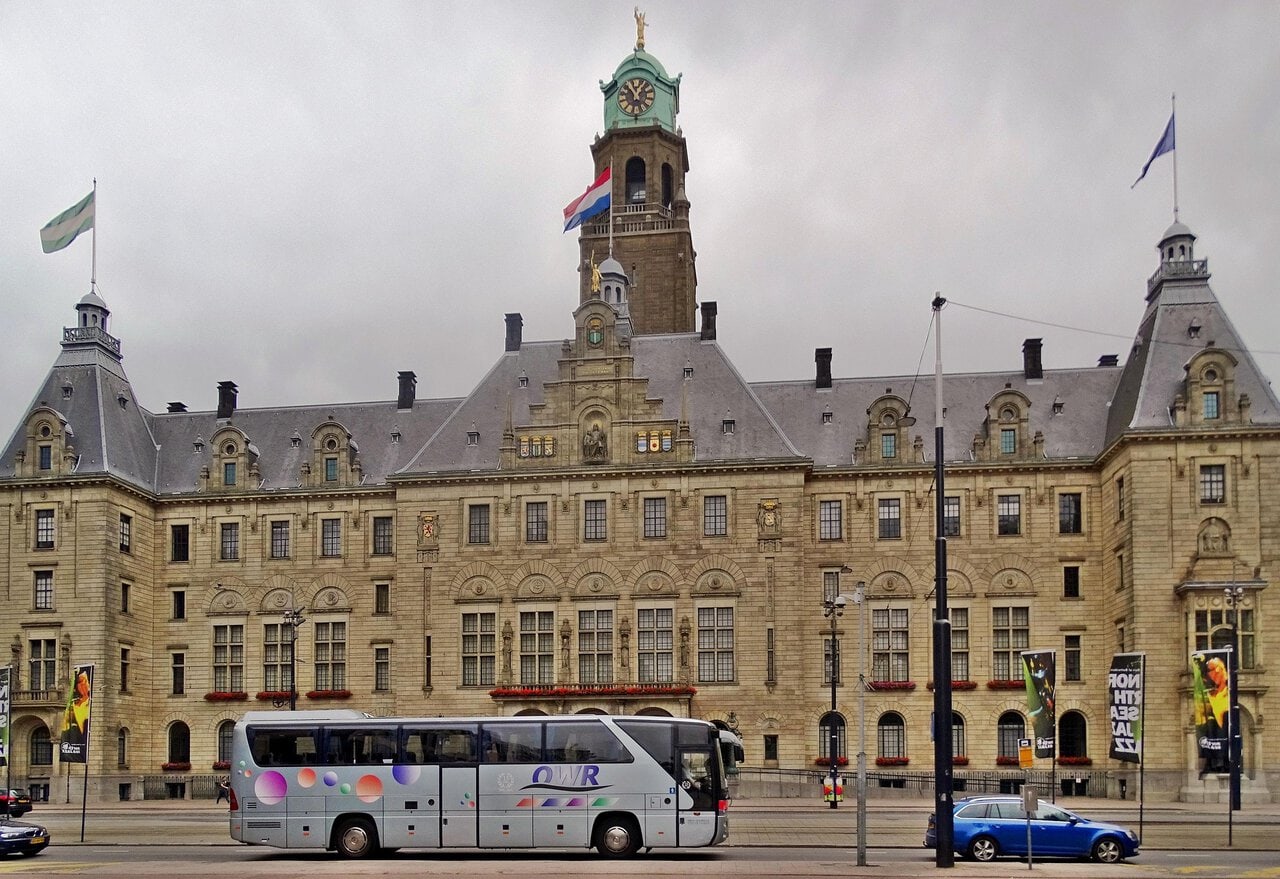
Rotterdam does not look, feel or behave like the rest of the Netherlands, and that is precisely the point. While Amsterdam trades on gabled canal houses and centuries-old streetscapes, Rotterdam was flattened by bombing in May 1940 and rebuilt almost entirely from scratch, which gave several generations of architects a blank canvas few European cities can offer. The result is a skyline of tilted cubes, an overturned pencil-shaped market hall, a swooping white bridge nicknamed “the Swan,” and Europe’s busiest seaport unfolding along the River Maas just beyond the city centre. It is a working city as much as a tourist one, and that authenticity is exactly what draws increasing numbers of visitors away from the well-trodden Amsterdam canal ring.
This guide covers the attractions that make Rotterdam worth a dedicated visit, whether you are basing yourself here for a weekend or adding it as a day trip from Amsterdam, The Hague or Utrecht. You will find full detail on the Cube Houses (Kubuswoningen) and the Kijk-Kubus show-home, the extraordinary Markthal food hall, the 185-metre Euromast observation tower, and the Spido harbour cruises that take you deep into the working port. We also cover Rotterdam’s genuinely strong museum scene, including the Depot of Museum Boijmans Van Beuningen, Kunsthal Rotterdam, the Maritime Museum and the newly opened Fenix Museum of Migration, plus the best shopping streets, from the below-street-level Koopgoot to the independent boutiques of Witte de Withstraat, and a handful of quieter corners that most first-time visitors miss entirely.
Rotterdam is compact and flat, and almost everything in this guide sits within a 20-30 minute walk or a short tram or metro ride of Rotterdam Centraal station. The RET public transport network (trams, metro and buses) is efficient and cheap, and a contactless bank card taps in and out exactly like the OV-chipkaart. Central Station itself is worth a glance before you even leave: its dramatic angled roof, completed in 2014, set the tone for the architectural ambition you will encounter throughout the city.
Give Rotterdam a minimum of two full days if you want to do the headline sights justice without rushing, and three or four if you want time for the museums, a proper harbour cruise, and a wander through Delfshaven or Katendrecht. Many visitors combine Rotterdam with day trips to Delft, Gouda or Kinderdijk, and if you’re travelling onward, our guides to Rotterdam The Hague Airport transfers and ferry routes from Rotterdam cover onward connections in detail.
Below, we have organised the city’s best attractions into a single reference guide, starting with a quick-comparison table so you can plan your itinerary at a glance, then working through each attraction, neighbourhood and hidden gem in more depth.
| Attraction | Time Needed | Admission | Best For |
|---|---|---|---|
| Cube Houses & Kijk-Kubus | 30-45 minutes | €3.50 adults, €2.50 students/seniors, €1.50 children (5-12) | Architecture fans, photographers |
| Markthal | 1-2 hours | Free to browse; food and stalls priced individually | Food lovers, families, rainy days |
| Euromast | 1.5-2 hours | Approximately €15-21 depending on package | Panoramic views, special experiences |
| Spido Harbour Cruise | 1.25-2 hours | From approximately €18.75 adults (standard 75-minute tour) | Port enthusiasts, first-time visitors |
| Erasmus Bridge & Kop van Zuid | 1-2 hours | Free | Skyline photography, evening walks |
| Museum Boijmans Van Beuningen (Depot) | 1.5-2.5 hours | Timed ticket required; main museum closed for renovation until 2030 | Art lovers, behind-the-scenes storage tours |
| Kunsthal Rotterdam | 1.5-2 hours | €19 adults, €12 students/CJP, free under 18 | Contemporary art, design and photography |
| Maritiem Museum | 1.5-2 hours | €19 adults, €13.50 children (4-15) | Maritime history, families |
| Fenix Museum of Migration | 1.5-2 hours | €15 adults (26+), €7.50 (18-25), free under 18 | Migration history, striking architecture |
| Historic Delfshaven | 1.5-2 hours | Free to walk; distillery tours priced separately | History, canals, quieter photography |
| Witte de Withstraat | 1-3 hours | Free (dining and drinks extra) | Nightlife, galleries, dining |
| Koopgoot & Lijnbaan | 2-3 hours | Free to browse | Shopping, department stores, high street brands |
| Hotel New York & SS Rotterdam | 1-2 hours | Free to view Hotel New York; SS Rotterdam tours priced separately | History buffs, sunset drinks |
| Diergaarde Blijdorp (Rotterdam Zoo) | 3-4 hours | From €27.50 adults | Families, animal lovers |
| Nederlands Fotomuseum | 1-1.5 hours | €17.50 adults, €10.50 (18-25), free under 18 | Photography enthusiasts |
| Noordereiland & Katendrecht | 1.5-2.5 hours | Free | Off-the-beaten-path walking, local food |
Cube Houses (Kubuswoningen) and Kijk-Kubus Museum House
The Cube Houses, or Kubuswoningen, are the single most photographed structure in Rotterdam and a genuine architectural experiment rather than a gimmick built for tourists. Designed by architect Piet Blom and completed in 1984, the cluster of around 38 yellow cube-shaped houses is tilted 45 degrees and balanced on hexagonal pylons, representing, according to Blom, an abstract forest, with each “tree trunk” (pylon) supporting a “tree crown” (the cube itself). They sit directly above Blaak metro and rail station, next to the Markthal, so you will almost certainly pass them without trying.
Most of the cubes are private residences, which is worth remembering if you are tempted to peer through windows, but one has been converted into the Kijk-Kubus (“Show-Cube”) museum house at Overblaak 70. For a modest admission of around €3.50 for adults, €2.50 for students and seniors, and €1.50 for children aged 5 to 12, you can climb through all three levels of a fully furnished cube and get a genuine feel for how disorienting (and surprisingly liveable) the tilted geometry becomes once you are inside. The skewed walls mean every piece of furniture had to be custom-built or specially angled, and the top floor offers a small viewing platform back out toward the Markthal and Oude Haven.
Give yourself 30 to 45 minutes here, more if you want to photograph the exterior from multiple angles first; the best shots come from ground level looking directly up between two cubes, or from the little bridge over the Oude Haven (Old Harbour) just to the south. If you want to stay inside a cube overnight, one has been converted into a small budget hostel, which is a memorable if slightly cramped way to say you have slept in a piece of architectural history.
The Cube Houses are open daily, though the exact hours of the Kijk-Kubus museum house shift seasonally, so check ahead if a visit inside is essential to your plans. The exteriors, of course, can be viewed and photographed at any time, day or night, and are particularly atmospheric when lit up after dark.
Best for a short trip. Compare rooms by neighbourhood, price and guest rating before you book.
Compare hotelsBest for longer stays. Whole apartments and houses, so you are not eating out three times a day.
View rentalsBest as a last check before booking. Compares Rotterdam hotel rates across several sites in one search.
Compare ratesMarkthal Rotterdam
The Markthal, or Market Hall, opened in 2014 directly beside the Cube Houses and Blaak station, and it remains one of the most striking pieces of civic architecture completed anywhere in Europe this century. Designed by MVRDV, the horseshoe-shaped building combines around 100 apartments arched over a covered market hall, with the entire 11,000-square-metre interior ceiling covered by “Horn of Plenty,” a vast digital artwork by Arno Coenen depicting fruit, vegetables, flowers and insects at enormous scale. Standing beneath it feels a little like standing inside a cathedral that has been reimagined as a grocery store.
Underneath the artwork sit roughly 100 stalls and shops selling fresh produce, cheese, fish, spices, flowers, pastries and prepared food from across the Netherlands and beyond, alongside a full-size Albert Heijn supermarket at basement level. It works equally well as a quick lunch stop, with roughly €5-12 covering a stroopwafel, bitterballen, poffertjes or a fresh seafood snack from one of the stalls, or as a slower grazing session moving between vendors. Glass floor panels near the Albert Heijn entrance reveal Roman-era archaeological remains discovered on site during construction, a small but easily missed detail.
Regular opening hours run Monday to Thursday and Saturday from 10:00 to 20:00, Friday from 10:00 to 21:00, and Sunday from 12:00 to 18:00, though individual stalls sometimes vary their own hours slightly and hours shift around public holidays and events like the Rotterdam Marathon. Plan on an hour if you are grabbing food and browsing, or up to two hours if you want to sit down for a proper meal at one of the restaurants along the ground-floor perimeter.
Because it sits directly above Blaak station and beside the Cube Houses, the Markthal is easy to combine with almost any other central-Rotterdam itinerary; most visitors naturally pair it with the Cube Houses and a walk along the Oude Haven waterfront in a single loop.
Euromast
Built in 1960 for the Floriade horticultural exhibition and later extended, the Euromast stands 185 metres tall at Parkhaven 20 on the edge of Het Park, making it the tallest structure in Rotterdam and one of the tallest observation towers in the Netherlands. A high-speed lift takes visitors up to an enclosed observation deck at around 100 metres, with an open-air platform above it, offering views across the port, the Erasmus Bridge, the city skyline and, on a genuinely clear day, as far as the dunes near the coast.
For thrill-seekers, the Euroscoop rotating glass capsule climbs the mast’s exterior to the very top of the tower, offering a slower, panoramic ascent that adds a noticeably different perspective from the standard lift. There is also an abseiling option down the outside of the tower for anyone wanting more adrenaline than a viewing platform can provide, typically bookable as an add-on experience. Ticket packages vary by season and by which of these extras you add on, with standard viewing-deck admission typically running somewhere in the €15-17 range for adults and combination tickets with the Euroscoop or a harbour cruise pushing closer to €20-21. Always check current pricing directly with Euromast before booking, since the tower periodically closes for maintenance (it underwent renovation work in early 2026) and packages are revised regularly.
The tower is open daily, generally from around 09:30 until 22:00 in the main season, though hours contract slightly in winter. Allow 1.5 to 2 hours for a visit including the lift queue, time on the viewing platforms, and a coffee at the panoramic Bristol restaurant partway up. Sunset is the single best time to go if your schedule allows it: the port lights up gradually as the sky changes colour, and the crowds thin noticeably compared to midday.
Het Park surrounding the tower is itself a pleasant green space for a pre- or post-visit stroll, and the Euromast sits an easy 15-20 minute walk or a short tram ride from Rotterdam Centraal, making it simple to combine with an afternoon around the Erasmus Bridge and Kop van Zuid.
Spido Harbour and Port Cruises
Rotterdam is Europe’s largest port, stretching more than 40 kilometres from the city centre to the North Sea and covering upwards of 12,600 hectares, and the single best way to grasp its scale is from the water. Spido, operating since 1957 from Willemsplein 85 right beside the Erasmus Bridge, runs the classic Rotterdam Harbour Tour: a 75-minute cruise with an included audio guide that loops past container terminals, dry docks, shipyards and the striking skyline of the Kop van Zuid before returning to the city centre.
Standard adult tickets cost around €18.75, with children priced around €10.55, and Spido has periodically run promotions allowing one child aged 4-11 to sail free with a paying adult, which is worth checking for on the day of booking. Departures run roughly hourly to every 45 minutes through the spring and summer months (daily from around 09:30 to 17:00 in high season), thinning to a handful of fixed departures in winter, typically at 11:00, 12:30, 14:00 and 15:30 on Thursday through Sunday plus a single early-afternoon sailing on other weekdays.
For a longer, more immersive trip, Spido also runs an Extended Harbour Tour that pushes further into the Maasvlakte container port area, plus themed options like a Surf & Turf dinner cruise and, in summer, an evening cruise timed to catch the port illuminated at dusk. Onboard catering is available (card payment only), and the boats are wheelchair accessible, with paid parking nearby at the Erasmus car park if you are driving in.
Book the standard tour if this is your only harbour cruise of the trip, since it comfortably covers the highlights in 75 minutes, and upgrade to the extended version only if the scale of container shipping and dry-dock engineering genuinely fascinates you. Either way, dress for wind: even in summer, the open-air sections of the boat get noticeably cooler once you are out on open water.
Discover Europe’s Largest Port at Portlantis
Rotterdam is home to Europe’s largest seaport, and nowhere explains its scale and importance better than Portlantis, the city’s impressive new visitor experience on Maasvlakte 2. Designed as an interactive attraction rather than a traditional museum, Portlantis brings the story of one of the world’s busiest ports to life through cutting-edge technology, hands-on exhibits and spectacular panoramic views.
Inside, you’ll discover how millions of tonnes of cargo pass through Rotterdam every year and how the port influences everyday life across Europe. Interactive displays, augmented reality experiences and detailed scale models explain everything from container terminals and giant cargo ships to offshore wind farms and the future of sustainable shipping. One of the highlights is the immersive flying experience, giving visitors the sensation of soaring above the vast harbour and industrial landscape.
The building itself is also part of the attraction. Climb the striking red staircase to the panoramic viewing deck, where you’ll enjoy sweeping views across the North Sea, beaches, sand dunes and the enormous port complex. Information panels help identify the ships, cranes and terminals stretching across the horizon, while sound collectors allow you to hear the activity taking place far below.
Visitors wanting an even closer look can also book boat and bus tours of the port, where guides explain how container terminals, offshore engineering and renewable energy projects operate. Whether you’re fascinated by engineering, shipping or modern infrastructure, Portlantis offers one of Rotterdam’s most unique attractions.
See Rotterdam by Land and Water on the Splash Tour
For one of the most entertaining sightseeing experiences in the Netherlands, climb aboard Rotterdam’s famous Splash Tour. This unusual sightseeing vehicle begins as a comfortable city bus before transforming into a boat for a spectacular dive into the River Maas, allowing you to explore Rotterdam from both land and water in a single trip.
The one-hour tour begins by passing many of the city’s best-known landmarks, including modern architecture, historic districts and impressive waterfront developments. Along the way, your guide shares fascinating stories about Rotterdam’s history, reconstruction after the Second World War and its status as one of Europe’s most innovative cities.
The highlight comes when the vehicle suddenly drives straight down the slipway and splashes into the river, transforming into a fully operational boat. From the water you’ll enjoy uninterrupted views of Rotterdam’s striking skyline, including the Erasmus Bridge, modern skyscrapers and busy harbour areas that helped make the city famous around the world.
Suitable for visitors of all ages, the Splash Tour combines sightseeing, entertainment and a little adrenaline into one memorable experience that’s unlike anything else you’ll find in the Netherlands.
Enjoy Unlimited Pancakes on a Rotterdam River Cruise
If you’re looking for something a little different, Rotterdam’s Pancake Cruise combines sightseeing with one of the Netherlands’ favourite comfort foods. During this 75-minute cruise along the River Maas, you’ll enjoy spectacular views of Rotterdam’s skyline while tucking into an all-you-can-eat buffet of freshly cooked Dutch pancakes.
Choose between traditional plain pancakes or favourites such as apple and bacon, before adding your own toppings from a generous selection including cheese, ham, fruit, jams and eggs. Gluten-free and vegan options are also available, making the cruise suitable for a wide range of dietary requirements.
As the boat sails through the city you’ll pass Rotterdam’s famous waterfront, modern architecture and impressive collection of bridges, giving you a relaxing perspective of the city away from the busy streets. Families are especially well catered for thanks to the onboard children’s play area, while adults can simply sit back and admire the views.
Departing close to the Euromast, the Pancake Cruise offers a fun and memorable way to combine lunch or dinner with sightseeing and is particularly popular with families visiting Rotterdam.
Best if you can move a day either way. Shows how the fare to Rotterdam changes across the month.
Compare flightsBest for anyone whose home plan charges by the megabyte abroad. Pay a fixed price up front.
Check eSIMsBest after a long flight or a late landing. Price agreed before you travel, and no taxi queue.
Check transfersTravel to Kinderdijk by WaterShuttle
One of the easiest and most enjoyable ways to visit the famous UNESCO-listed windmills of Kinderdijk is by taking the WaterShuttle from Rotterdam. Rather than travelling by road, this scenic ferry journey allows you to experience the city from the water before arriving directly at one of the Netherlands’ most iconic landscapes.
The comfortable WaterShuttle offers both indoor seating and an outdoor deck where you can enjoy excellent views of Rotterdam’s skyline as the city gradually gives way to peaceful riverside scenery. The journey is smooth, relaxing and ideal for photographers wanting a different perspective of the region.
A major advantage of the service is its flexibility. Bicycles and scooters travel free of charge, allowing visitors to continue exploring the extensive cycling routes around Kinderdijk after arrival. The ferry drops passengers close to the entrance of the windmill complex, making it one of the most convenient transport options available.
Combining a river journey with one of the Netherlands’ most famous UNESCO World Heritage Sites makes this far more than simple transport: it’s an attraction in its own right and one of the most rewarding excursions you can take from Rotterdam.
Visit the UNESCO-listed Van Nelle Factory
Architecture enthusiasts shouldn’t miss the opportunity to visit the Van Nelle Factory, one of the world’s finest examples of modern industrial architecture and a UNESCO World Heritage Site since 2014. Built during the 1920s and 1930s, the former coffee, tea and tobacco factory transformed the way industrial buildings were designed and is widely regarded as one of the masterpieces of the Modernist movement.
A guided tour explains how architects embraced the revolutionary ideas of light, air and space, creating a factory that was decades ahead of its time. Vast glass façades, elevated walkways and open production areas reflected a new philosophy that prioritised both efficiency and the wellbeing of workers.
Your guide brings the building to life with stories about its original production processes, innovative engineering and eventual transformation from a working factory into one of the Netherlands’ most important architectural landmarks. Admission also includes entry to the Chabot Museum, home to an excellent collection of Dutch Expressionist art, allowing you to combine two cultural attractions in a single day.
Whether you’re interested in architecture, industrial heritage or UNESCO World Heritage Sites, the Van Nelle Factory offers one of Rotterdam’s most fascinating and unusual experiences.
Erasmus Bridge and Kop van Zuid
Completed in 1996 and nicknamed “de Zwaan” (the Swan) for the sweeping curve of its single 139-metre pylon, the Erasmus Bridge is Rotterdam’s defining piece of modern infrastructure and arguably its most photogenic. It links the traditional city centre on the north bank of the Maas to Kop van Zuid, a former dockland district on the south bank that has been transformed since the 1990s into one of Rotterdam’s most architecturally dense neighbourhoods, packed with striking residential and office towers designed by an international roster of architects.
Walking or cycling across the bridge takes only a few minutes, but it is worth lingering, since the views back toward the Euromast and the harbour, and forward toward the Kop van Zuid skyline, are some of the best free photo opportunities in the city, especially around sunset when the cable stays catch the light. On the south side, a riverside promenade runs past the Hotel New York and the World Port Center toward Katendrecht, making it easy to turn the bridge crossing into a longer waterfront walk rather than a there-and-back errand.
Kop van Zuid itself rewards a slow wander rather than a checklist approach. Look out for the Rotterdam Public Library’s striking annex, the curved form of the Nationale Nederlanden building known locally as “De Boeg” (the Bow), and the Wilhelminapier, a former passenger-liner pier now lined with cafés, offices and apartment towers. The area feels distinctly different from the historic centre: glassier, taller, and more obviously a product of the last three decades of deliberate urban reinvention.
Budget 1-2 hours for the bridge and a loop through Kop van Zuid, longer if you continue on into Katendrecht (covered separately below). The whole area is flat, well-lit at night and comfortable to explore on foot, and it connects directly to the RET metro and tram network if you want to shortcut any section of the walk.

Museum Boijmans Van Beuningen and the Depot
Museum Boijmans Van Beuningen has long been considered one of the Netherlands’ finest art museums, with a collection spanning Old Masters like Bosch and Bruegel through to Dalí, Magritte and contemporary work. Its main building on the Museumpark, however, is currently closed for a major renovation approved by the city council, with a reopening not expected until roughly 2029, a decade-long project involving a reported investment north of €200 million to overhaul the entrance, visitor routing and exhibition spaces.
That does not mean the collection is inaccessible in the meantime. Since 2021, the museum’s collection has been housed in the Depot Boijmans Van Beuningen, a bowl-shaped, mirrored building next door at Museumpark 24, widely reported as the world’s first fully public art storage facility. Rather than a conventional curated exhibition, the Depot lets visitors walk among more than 150,000 objects arranged across fourteen climate-controlled storage compartments spread over six floors, with free short “Walk-in” tours (around 10 minutes, maximum 13 people) offering a genuine behind-the-scenes glimpse of how a major museum actually stores, conserves and restores its collection.
The Depot is only accessible with a timed online ticket (walk-up entry is not possible), and it is open Tuesday to Sunday from 11:00 to 17:00. A rooftop restaurant, Renilde, serves coffee and lunch during the same hours and dinner Thursday to Saturday evenings, with panoramic views across the Museumpark and city rooftops that are worth the visit even without an art agenda. Budget 1.5 to 2.5 hours to do the Depot justice, more if you book one of the guided storage-compartment tours.
If art history and unusual architecture both appeal, this is one of Rotterdam’s genuine must-dos precisely because so few visitors know it exists as an alternative to the closed main museum; it is arguably more interesting than a conventional gallery hang for anyone curious about how museums actually work behind the scenes.
Kunsthal Rotterdam
Designed by Rem Koolhaas‘s Office for Metropolitan Architecture and opened in 1992, the Kunsthal sits on the Museumpark a short walk from the Depot and Erasmus MC. Unlike a traditional museum, it holds no permanent collection of its own; instead, it hosts a rotating programme of major touring exhibitions covering everything from historical painting and photography to fashion, design and pop culture, which means the experience genuinely changes from one visit to the next.
The building itself is worth the visit independent of whatever is currently on display: Koolhaas designed a continuous ramped route through the galleries with deliberately varied ceiling heights, natural light and structural columns that break up sightlines in unexpected ways, making it something of a pilgrimage site for architecture students visiting Rotterdam.
Admission runs €19 for adults, with visitors 18 and under admitted free and students or CJP cardholders paying €12; groups of 15 or more pay a reduced €17 per person. Museumkaart holders and various pass schemes (Rotterdam Pass, ICOM, VriendenLoterij VIP) get in free. Booking an online ticket with a specific entry time is mandatory for everyone, including pass holders, and the venue accepts card payment only. The Kunsthal is open Tuesday to Sunday from 10:00 to 17:00 and closed on Mondays.
Allow 1.5 to 2 hours depending on how many of the concurrent exhibitions are running and how deeply you want to explore each one. Because it sits in the same Museumpark cluster as the Depot and the Nederlands Fotomuseum, it is easy to combine two or even three museum visits into a single cultural afternoon.
Maritiem Museum Rotterdam
Given that Rotterdam’s entire modern identity is built around its port, the Maritiem Museum at Leuvehaven 1, right beside the Erasmus Bridge, is one of the more logical museum stops in the city. It combines contemporary exhibitions exploring how global shipping shapes everyday life (recent themes have included the future of the sea and the concept of “destination port cities”) with one of the Netherlands’ oldest and largest museum harbours, where a fleet of historic vessels, tugboats and dockside cranes sits moored just outside the main building.
Inside, exhibits range from ship models and navigational instruments to interactive displays aimed squarely at families, and the museum maintains a maritime library dating back to 1857 for anyone wanting to go deeper into Dutch shipping history. Note that the historical ships and cranes in the outdoor museum harbour close for the winter months (roughly November through April), though the jetty and workshop areas stay open year-round.
Admission costs €19 for adults and €13.50 for children aged 4-15, with under-4s free and CJP or student cardholders paying €11.50; various passes and memberships grant free entry. Opening hours run Tuesday to Saturday from 10:00 to 17:00 and Sunday and public holidays from 11:00 to 17:00, with the museum closed on Mondays outside school holiday periods (when it opens 10:00-17:00 daily).
Plan on 1.5 to 2 hours, and pair it naturally with a Spido cruise departing from the nearby Willemsplein pier or a walk across the Erasmus Bridge, since all three sit within a five-minute walk of each other along the Leuvehaven waterfront.
Best for a short stop where being central matters more than the room. Dorms and private rooms both listed.
See hostelsBest for anyone flying more than once or twice a year. Handles the compensation claim so you are not chasing the airline.
See AirHelp+Best for a day with a bag and nowhere to put it. Find a storage point near where you already are.
View storageFenix Museum of Migration
Rotterdam’s newest major museum, Fenix, opened on the Katendrecht peninsula in May 2025 inside a former warehouse originally built in 1923, a building from which an estimated 400,000 emigrants once departed Europe for new lives overseas, including many of the ancestors of today’s Dutch-Australian and Dutch-American communities. That history is the museum’s subject: Fenix is dedicated entirely to the theme of migration, told through art rather than conventional historical exhibits.
The building’s centrepiece is impossible to miss: the Tornado, a 30-metre spiralling stainless-steel structure designed by Chinese firm MAD Architects (their first cultural project in Europe) containing a 550-metre double-helix wooden staircase that visitors can climb for sweeping views back across the Maas and the Rotterdam skyline. Inside, exhibitions have included “The Family of Migrants,” a wall of 194 photographs exploring migration across generations and continents, alongside contemporary art installations by internationally recognised artists addressing displacement, identity and movement.
The museum’s popularity has been striking: it reportedly passed 100,000 visitors within its first two months, so booking a timed ticket in advance is strongly recommended rather than optional. Admission runs €15 for adults aged 26 and over, €7.50 for those 18-25, and free for anyone under 18, with Rotterdam Pass and ICOM cardholders admitted free.
Budget 1.5 to 2 hours, and combine it naturally with the rest of a Katendrecht walk (see the Noordereiland and Katendrecht section below), since the museum sits directly on the waterfront a short stroll from the peninsula’s restaurants and the Fenix Food Factory nearby.
Historic Delfshaven
Almost everything in central Rotterdam was destroyed in the 1940 bombing, which makes Historic Delfshaven (Historisch Delfshaven), a few kilometres west of the centre, all the more valuable: it is one of the only pockets of the city that survived the war with its pre-20th-century character intact. Originally built as the port for the city of Delft (hence the name), the neighbourhood’s narrow brick streets, arched bridges and gabled warehouses along the Voorhaven and Achterhaven canals look far more like a scene from Amsterdam or Delft than the Rotterdam most visitors expect.
Delfshaven carries genuine historical weight beyond its looks: it is where the Pilgrim Fathers boarded the Speedwell in 1620 before sailing to England to join the Mayflower on the voyage that eventually reached what became Plymouth, Massachusetts. The Pilgrim Fathers Church (Pelgrimvaderskerk) near the harbour commemorates this connection and remains a modest but active place of worship.
The district’s working windmill, De Distilleerketel, still operates on the waterfront and occasionally offers tours explaining traditional milling. The surrounding streets hold a scattering of independent galleries, antique shops and cafés, plus the small Zakkendragershuisje museum housed in a former porters’ guild building. Unlike the city-centre attractions, Delfshaven rarely feels crowded, which is precisely its appeal for visitors who have already ticked off the Cube Houses and Markthal.
Reach it via metro (Delfshaven station, lines A, B or C) or tram in around 10-15 minutes from Rotterdam Centraal. Budget 1.5 to 2 hours for an unhurried wander, and consider timing your visit for late afternoon when the golden light on the brick facades and canal water is at its best for photography.
Witte de Withstraat
Named after a 17th-century Dutch naval officer, Witte de Withstraat runs from the Museumpark area toward the city centre and has evolved over the past two decades from a fairly rough stretch into Rotterdam’s best-known cultural and nightlife strip. By day it is lined with independent galleries, design shops, concept stores and the contemporary art space Kunstinstituut Melly (formerly the Witte de With Center for Contemporary Art, which gave the street part of its cultural identity); by night it becomes one of the liveliest concentrations of bars, cocktail lounges and restaurants in the city.
The street’s dining scene spans a genuinely wide range: casual tapas and pizza places sit alongside more ambitious kitchens, and there is a strong concentration of craft beer bars and natural wine spots that reward slow exploration rather than a single stop. It is also within easy walking distance of the Museumpark cluster (Kunsthal, Depot, Nederlands Fotomuseum), which makes it a natural place to end a museum-heavy afternoon with dinner and drinks.
Weekday evenings tend to be relaxed, while Friday and Saturday nights get considerably busier, particularly from around 22:00 onward as the bar crowd builds. If you are travelling with children or prefer a quieter evening, an earlier dinner reservation avoids the later, louder atmosphere without missing the street’s genuine charm.
Give the street 1-3 hours depending on whether you are treating it as a dinner stop, a bar crawl, or a proper gallery-hopping afternoon, since it comfortably supports all three depending on the time of day you arrive.

Koopgoot and Lijnbaan Shopping
Rotterdam’s main shopping district centres on two adjoining but distinctly different streets. The Lijnbaan, opened in 1953, was one of the first purpose-built pedestrian shopping streets in Europe, designed as part of the post-war reconstruction to give the city a clean, car-free retail spine, and it remains a protected piece of urban planning history as much as a functioning high street, lined with mainstream fashion chains, department stores and cafés under a distinctive canopy structure.
The Koopgoot (“Shopping Gutter”), officially Beursplein, is the sunken pedestrian plaza that connects the Lijnbaan to Coolsingel and Hoogstraat, built below street level to preserve traffic flow above while creating a dedicated shopping corridor beneath. It marked its 25th anniversary in the mid-2020s and remains anchored by large department stores alongside international high-street brands, with the sunken design creating a slightly sheltered, plaza-like atmosphere that works well even in Rotterdam’s frequent drizzle.
Together, the Lijnbaan and Koopgoot form the commercial heart of the city centre, an easy 5-10 minute walk from Rotterdam Centraal or a short tram ride to the Stadhuis stop. Expect the usual mix of Dutch and international chains (H&M, Zara, Bijenkorf and similar names) rather than boutique finds, which are better sought on Witte de Withstraat or in the smaller streets around Nieuwe Binnenweg.
Budget 2-3 hours for a proper shopping session covering both streets, and note that most shops follow standard Dutch retail hours (typically 10:00 to 18:00 on weekdays and Saturday, with later closing on Thursday or Friday evenings and shorter Sunday hours around 12:00 to 17:00).
Hotel New York and the SS Rotterdam
Standing at the tip of the Wilhelminapier on Kop van Zuid, Hotel New York occupies the former headquarters of the Holland America Line, the shipping company that carried millions of European emigrants to North America between the late 19th century and the 1970s. The turreted, twin-towered building dates from 1901 and now operates as a hotel and restaurant, but its lobby, café and riverside terrace remain open to non-guests and are worth a visit purely for the atmosphere and the direct views back across the Maas toward the Erasmus Bridge and city skyline.
A short distance further along the waterfront, the SS Rotterdam, the former flagship ocean liner of the Holland America Line, launched in 1959 and once known as “the Grande Dame” of the fleet, is now permanently moored and open for tours, dining and overnight stays. Visitors can explore several of the original decks, including preserved period interiors, engine rooms and the bridge, giving a genuine sense of transatlantic travel’s golden era before jet aircraft made ocean crossings obsolete for passenger travel.
Tours of the SS Rotterdam are typically priced in the mid-teens per adult (roughly €15-20 depending on which route or package you choose), and the ship’s restaurants and bars are also open to visitors who simply want a drink with a view rather than a full self-guided tour. Both Hotel New York and the SS Rotterdam sit an easy 10-15 minute walk from the Erasmus Bridge along the Kop van Zuid waterfront, or a short water taxi ride directly across the river from the city centre.
Allow an hour for a coffee stop at Hotel New York, or up to two hours if you add a full SS Rotterdam tour. Sunset is a particularly good time to visit either spot, with the terrace at Hotel New York in particular offering one of the better sunset views over the water in the whole city.
Diergaarde Blijdorp (Rotterdam Zoo)
Rotterdam Zoo, known locally as Diergaarde Blijdorp, dates back to 1857 (originally on a different site) and has grown into one of the larger and more highly regarded zoos in the Netherlands, home to well over 300 species across themed zones including an Asian rainforest dome, an African savanna area and extensive polar and ocean exhibits. It is a genuinely full-day option for families rather than a quick add-on stop.
Standard adult admission starts from around €27.50, with online booking and timed entry generally recommended, especially during school holidays and weekends when the zoo gets busy. Family and child pricing is typically available, and various combination or season-pass options exist for repeat visitors. The zoo also hosts Oceanium, a large aquarium and marine mammal complex, as a highlight within the wider grounds.
Diergaarde Blijdorp sits a short distance northwest of the city centre and is reachable by metro (Blijdorp/Zoo station) or tram within about 10-15 minutes of Rotterdam Centraal. Budget a minimum of three hours, and realistically closer to four if you want to see every zone without rushing children through exhibits they want to linger at.
This is squarely a family-oriented stop rather than a must-see for solo travellers or couples working through Rotterdam’s architecture and museums, but for anyone travelling with kids it is consistently one of the most highly rated attractions in the city and worth building a full day around.

Nederlands Fotomuseum and the Museumpark
The Nederlands Fotomuseum (Dutch Photography Museum), housed in a converted warehouse on the Wilhelminakade near the Museumpark, holds the national photography archive along with rotating exhibitions covering both historical Dutch photography and contemporary international work. It is smaller and quieter than the Kunsthal or the Depot, which makes it an easy, low-key addition rather than a full afternoon commitment.
Admission costs €17.50 for adults, €10.50 for those aged 18-25, with under-18s admitted free and EYCA cardholders paying €9.00; Museumkaart and Rotterdampas holders get in free. The museum is open Tuesday to Sunday from 11:00 to 17:00 and closed on Mondays.
The Museumpark itself, the green strip connecting the Fotomuseum, Kunsthal and Depot, is worth a slow walk in its own right: it was landscaped by French designer Yves Brunier and OMA (Rem Koolhaas’s practice) and doubles as a public park and a piece of the same architectural conversation as the museums surrounding it. Chess tables, quiet lawns and the underground car park’s distinctive above-ground ventilation towers all sit within the same compact green space.
Budget an hour at the Fotomuseum itself, and add 30-45 minutes if you want to walk the full length of the Museumpark and take in the surrounding architecture. It combines naturally with the Kunsthal and Depot as a single museum-district afternoon.
Noordereiland and Katendrecht: Rotterdam’s Hidden Gems
Most first-time visitors never cross south of the Erasmus Bridge beyond the immediate Kop van Zuid waterfront, which means Noordereiland and Katendrecht remain two of the least-visited but most rewarding neighbourhoods in the city for anyone who wants to see Rotterdam beyond its headline attractions. Noordereiland (“North Island,” despite sitting south of the centre) is a small residential island in the Maas connected by the Willemsbrug and Koninginnebrug bridges, with quiet streets of low-rise housing and a couple of unpretentious neighbourhood cafés that see almost no tourist traffic.
Katendrecht, a former red-light and dockworker district once considered one of Rotterdam’s roughest neighbourhoods, has undergone one of the city’s more dramatic transformations over the past 15 years. It is now home to the Fenix Museum of Migration (covered above), the Fenix Food Factory (a converted warehouse housing an ice cream maker, chocolatier, bakery, brewery and coffee roaster all producing on-site) and a growing cluster of restaurants along the Deliplein square, many specialising in Asian and Indonesian cuisine that reflects the area’s dockworker history.
The peninsula’s Rijnhavenbrug pedestrian and cycle bridge, and the small marina lined with houseboats, add to a neighbourhood feel that is markedly more relaxed than the glass towers just across the water at Kop van Zuid. It is an excellent spot for an evening meal away from the more tourist-heavy Witte de Withstraat, and the walk there along the water from the Erasmus Bridge is pleasant in its own right.
Reach Katendrecht via tram or water taxi from the city centre, or on foot in around 20-25 minutes from the Erasmus Bridge. Budget 1.5 to 2.5 hours for a wander through both neighbourhoods, more if you linger over a meal at Fenix Food Factory or one of the Deliplein restaurants, and treat it as the reward for having already covered the more obvious sights earlier in your trip.
Which Rotterdam Attraction Is Right for You?
With only a single day in Rotterdam, prioritise the Cube Houses, Markthal, a Spido harbour cruise and a walk across the Erasmus Bridge. This combination captures the city’s architectural identity and its port heritage in roughly five to six hours, all within easy walking or tram distance of each other. Add the Euromast if you want a proper panoramic view to finish the day, ideally timed for sunset.
With two days, use the second day for the Museumpark cluster (the Depot, Kunsthal and Nederlands Fotomuseum can all be covered in a single afternoon), followed by dinner and drinks on Witte de Withstraat. Art and architecture enthusiasts should prioritise this pairing over the zoo or additional shopping time.
Travelling with children tips the balance firmly toward Diergaarde Blijdorp, which realistically needs its own half or full day, alongside the more hands-on, visually immediate appeal of the Markthal and Cube Houses. Families with older children or teenagers should also consider the Fenix Museum, whose Tornado staircase and striking architecture tend to land well even with visitors who might otherwise resist a “history museum.”
For a third or fourth day, or for repeat visitors who have already covered the headline sights, Historic Delfshaven and the Noordereiland/Katendrecht walk offer the most authentic, least crowded experience of the city, alongside a proper shopping session along the Koopgoot and Lijnbaan if that has not already featured in your trip.

Rupert’s Handy Travel Tips
Rotterdam rewards a bit of local know-how more than most Dutch cities, so here’s what I’d want you to know before you set off exploring its skyline.
- Book timed tickets for the Depot and Fenix in advance: both venues run on strict timed-entry systems with no walk-up option, and Fenix in particular has been selling out well ahead of popular weekend slots since it opened.
- Tap in and out with a contactless bank card on RET trams and metro: Rotterdam’s public transport works exactly like Amsterdam’s OV-chipkaart system, so there’s no need to buy a separate paper ticket if your card supports contactless payment.
- Visit the Euromast near sunset rather than midday: the port and skyline light up gradually as the sun goes down, and the viewing platforms are noticeably quieter than during the busy midday cruise-crowd window.
- Cross to Katendrecht for dinner instead of staying on Witte de Withstraat: the Fenix Food Factory and Deliplein restaurants offer a quieter, more local evening than the busier bars closer to the centre.
- Pack a layer for the Spido cruise even in summer: the open sections of the harbour boat catch a genuine breeze once you’re out past the Erasmus Bridge, regardless of how warm it feels on land.
Want to meet the reindeer behind our travel tips? Find out more in our page Who is Rupert?.




Frequently Asked Questions
How many days do I need in Rotterdam?
Two full days cover the headline sights comfortably: the Cube Houses, Markthal, Erasmus Bridge, a Spido cruise and the Euromast on one day, and the Museumpark museums plus Witte de Withstraat on the second. Add a third or fourth day for Historic Delfshaven, Katendrecht, or Diergaarde Blijdorp if travelling with children.
Is Museum Boijmans Van Beuningen open?
The main museum building is closed for a major renovation expected to last until around 2029. In the meantime, its collection remains accessible at the Depot, a separate storage-and-viewing building next door that requires a timed online ticket.
Can you go inside the Cube Houses?
Most cube houses are private residences, but one has been converted into the Kijk-Kubus museum house, open to the public for a small admission fee, giving a genuine sense of what it is like to live inside the tilted structure.
Is the Rotterdam Markthal free to enter?
Yes, walking through and browsing the Markthal is free; you only pay for whatever food or produce you buy from the individual stalls and restaurants inside.
What is the best way to see the port of Rotterdam?
A Spido harbour cruise departing from Willemsplein, right beside the Erasmus Bridge, is the most practical way to see the working port. The standard 75-minute tour covers the main highlights; the Extended Harbour Tour pushes further into the Maasvlakte container terminals for anyone who wants a deeper look.
Is Rotterdam worth visiting if I’m already going to Amsterdam?
Yes, the two cities feel almost like different countries architecturally. Amsterdam offers historic canal-ring charm, while Rotterdam offers bold modern and post-war architecture, a working port and a noticeably different museum scene. Many visitors combine both on a single Netherlands trip, and Rotterdam is roughly 40 minutes from Amsterdam by direct train.
Do I need to book museum tickets in advance?
For the Depot and Fenix Museum, yes: both operate strictly on timed online tickets with no walk-up entry. Kunsthal and the Maritiem Museum also require or strongly recommend booking a specific entry slot online, particularly on weekends.
What is Rotterdam’s hidden gem that most tourists miss?
Katendrecht and Noordereiland, just south of the Erasmus Bridge, see a fraction of the foot traffic of the city centre despite housing the new Fenix Museum, the Fenix Food Factory and a genuinely local restaurant scene around Deliplein.
Further Reading
If you are building out a longer Rotterdam itinerary, our guide to Day Trips from Rotterdam covers nearby destinations such as Delft, Gouda and the Kinderdijk windmills, all reachable within an hour by train or bus. For arrivals and departures, see our guide to Rotterdam Airport Transfers, and if you’re arriving or leaving by sea, our Ferry Routes from Rotterdam guide covers the DFDS and P&O connections into the port, which pairs well with our broader DFDS Ferries Guide.
If you’re combining Rotterdam with other Dutch cities in this guide, Things to Do in The Hague and Things to Do in Utrecht are both under an hour away by direct train and make natural additions to a South Holland itinerary. And if Amsterdam features on your trip too, our cornerstone guides to Things to Do in Amsterdam and Day Trips from Amsterdam are worth reading alongside this one.
For getting around the wider Netherlands by rail, our guides to the NS Day Ticket, the Holland Travel Ticket and the Interrail Benelux Pass all cover ticket options that work well for a multi-city Netherlands trip built around Rotterdam.