Reviewed by our editorial team Updated
Discover Ferry Routes from Rotterdam
Rotterdam is the only Dutch city with a direct overnight ferry link to the United Kingdom, and it has held that distinction for decades. The service runs from Europoort, the vast industrial port complex west of the city centre, across the North Sea to Hull, and it is operated exclusively by P&O Ferries using two purpose-built cruise ferries, Pride of Rotterdam and Pride of Hull. For travellers who would rather sail than fly, who are bringing a car, a motorhome or a dog, or who simply want to turn the journey itself into part of the trip, this route is the practical way to get between the Netherlands and northern England without going anywhere near the Channel Tunnel or Dover.
This guide covers everything you need to plan a crossing on the Rotterdam-Hull route: the real operator and the real port (Europoort, not central Rotterdam, which trips up a surprising number of first-time bookers), how the daily overnight sailing schedule works, how to actually get from Rotterdam city centre to the terminal, what the ships are like once you’re on board, cabin options and pricing, taking a car or a pet, and the practical checks you should make before you travel, including passport and customs rules that changed after Brexit.
We’ll also look at what happens at the terminal itself, since Europoort is a working port rather than a passenger hub like an airport, and the check-in and boarding process is a little different to what most people expect. And because this is the only scheduled UK ferry route out of Rotterdam, we’ll briefly cover the nearest alternatives, including the DFDS route from Amsterdam and the Stena Line service from nearby Hoek van Holland, in case either fits your itinerary better.
If you’re combining this crossing with time in the Netherlands, it’s worth reading our guides to things to do in Rotterdam and day trips from Rotterdam alongside this one, since most people sailing from Europoort spend at least a night in the city either side of the crossing.
Whether you’re a foot passenger heading to a city break in Yorkshire, a driver taking a car across for a longer UK road trip, or a freight or motorhome traveller looking for the fastest way to skip the long drive around via the Channel Tunnel, here’s everything you need to know before you sail.
| Route | Typical Crossing Time | Frequency | Best For |
|---|---|---|---|
| Rotterdam (Europoort) – Hull, standard cabin | Approx. 11.5 hours (overnight) | Daily, every night of the week | Drivers, families and anyone who wants a proper night’s sleep in a private cabin |
| Rotterdam (Europoort) – Hull, Sleep Lounge recliner | Approx. 11.5 hours (overnight) | Daily, subject to availability | Solo foot passengers and budget-conscious travellers who don’t need a full cabin |
| Rotterdam (Europoort) – Hull, with vehicle | Approx. 11.5 hours (overnight) | Daily | Road trips, family holidays with luggage, and anyone touring the UK after arrival |
| Rotterdam (Europoort) – Hull, with pet | Approx. 11.5 hours (overnight) | Daily, pet cabins limited – book early | Travellers relocating or touring with a dog under the pet travel scheme |
| Amsterdam (IJmuiden) – Newcastle, DFDS (alternative route) | Approx. 15–16 hours (overnight) | Most days, seasonal variation | Travellers based near Amsterdam or heading to Scotland/North East England |
The Rotterdam-Hull Route: P&O Ferries at Europoort
The single scheduled passenger ferry route between Rotterdam and the UK is the Hull crossing, and it is run entirely by P&O Ferries. This is worth stating clearly because DFDS, which many travellers associate with North Sea ferry routes, does not sail out of Rotterdam – its Dutch-UK service departs from IJmuiden, near Amsterdam, to Newcastle instead. If you’re specifically looking to sail from Rotterdam, P&O is the only operator, and Hull is the only UK destination on offer.
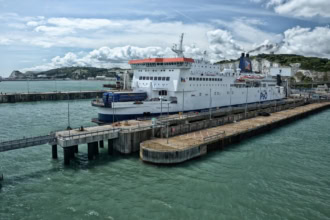
The route has a long pedigree. It was originally operated by North Sea Ferries from the 1960s onwards before being absorbed into P&O’s North Sea network, and the current ships, Pride of Rotterdam and Pride of Hull, have been sailing the route since 2001. Both are large cruise ferries built specifically for this crossing, at just under 60,000 gross tonnes each, with capacity for around 1,360 passengers and 546 cabins, alongside significant freight and vehicle deck space. They are more akin to a small cruise ship than a cross-Channel ferry, which reflects the length of the crossing.
Crucially, the Dutch terminal is not in central Rotterdam. It’s at Europoort, part of the wider Port of Rotterdam complex, roughly 37 kilometres (about 23 miles) west of the city centre, out towards the coast. Europoort is one of the largest port and petrochemical zones in Europe, and the passenger terminal sits within it at Beneluxhaven, a dedicated harbour for the ferry and its associated freight operations. This matters for planning purposes: you cannot simply walk or cycle to the ferry from Rotterdam Centraal, and it isn’t served by the city’s metro or tram network.
On the UK side, the ferry docks at King George Dock, a few miles east of Hull city centre, which is a similarly separate, dedicated ferry terminal rather than somewhere within easy walking distance of Hull Paragon Interchange.
Because this is the only direct sea route between Rotterdam and Britain, it’s used by a genuinely wide mix of travellers: leisure passengers doing a city break or road trip, people relocating between the two countries with a car full of belongings, motorhome owners touring Europe, dog owners travelling under the UK’s pet travel scheme, and a significant volume of freight traffic, since the crossing is also one of the busiest freight lanes on the North Sea.
Best for two or three nights. The widest choice of rooms, with filters for free cancellation and included breakfast.
View staysBest for families, or any stay past about four nights. A kitchen and a washing machine start paying for themselves.
Browse rentalsBest if you have already picked a hotel. Checks the big booking sites for the same room and shows who is cheapest.
Check dealsCrossing Time, Schedule and Frequency
The Rotterdam-Hull crossing takes approximately 11 hours and 30 minutes, and it operates as an overnight sailing in both directions, every night of the week. There’s no daytime option on this route – the whole point of the schedule is that you sleep through most of the crossing and arrive the next morning with a full day ahead of you.
From Hull, ships typically depart at around 20:30 Monday to Friday and slightly earlier, around 20:00, on Saturdays and Sundays, arriving into Rotterdam (Europoort) at approximately 08:30 on weekdays and 09:00 at weekends. In the other direction, sailings from Rotterdam typically depart around 21:00 on weekdays and 20:30 at weekends, arriving into Hull at approximately 07:30 on weekdays and 08:00 at weekends. Always treat these as a guide rather than gospel: P&O adjusts sailing times seasonally and around public holidays, so check the exact departure time for your date when you book.
Because there is only one sailing each way per day, this isn’t a route where you can turn up and take the next available crossing if you miss check-in. Missing your slot generally means waiting until the following evening, so build in a comfortable margin, especially if you’re driving to the terminal through Rotterdam’s rush-hour traffic or relying on a connecting train.
Check-in generally opens a few hours before departure and closes with a hard cut-off, typically around 90 minutes before sailing for foot passengers and vehicles alike, though P&O’s own confirmation email for your specific booking is the definitive source, since exact check-in windows can vary depending on the volume of freight traffic using the terminal that night.
Getting to the Europoort Ferry Terminal from Rotterdam City Centre
This is the part of the journey that catches out first-time travellers, because Europoort is not well connected by public transport and there is no direct train or metro service to the terminal. The full address is P&O Ferries, Beneluxhaven, Luxemburgweg 2, 3198 LG Europoort, and it sits at dock 5805 within the wider port complex.
By car is the most straightforward option. From central Rotterdam, follow the A15 motorway westbound and pick up signs for “Europoort”, then within the port area follow signs for “Engeland” (England) and “P&O Ferries” specifically, since the port has multiple terminals for different shipping lines. The drive takes roughly 45 to 60 minutes depending on traffic and the time of day.
It’s worth allowing extra time during the evening rush hour, since most sailings depart in the early evening when the roads out of the city are busiest. Be aware that there is no long-stay parking at the Dutch terminal for foot passengers leaving a car behind, since this route is really set up for people either driving their car onto the ferry or being dropped off.
By public transport plus coach is the option for foot passengers without a car. There’s no regular local bus running all the way to the terminal, so P&O runs (or coordinates) a coach connection between Rotterdam Centraal station and the Europoort terminal timed around each sailing, picking up from the Kruisplein area near the station.
This transfer must be booked in advance, either when you book your ferry ticket or shortly after, and typically costs somewhere in the region of €12–15 (£10–13 / $13–17) each way; it isn’t something you can simply turn up and pay for on the day. The transfer takes around 40 minutes. If you’re flying into Rotterdam The Hague Airport or arriving by train, our Rotterdam airport transfers guide covers getting into the city centre first, from where the coach transfer picks up.
By taxi is the simplest if slightly more expensive option for foot passengers, particularly if you’re travelling with heavy luggage or arriving outside the coach’s scheduled pickup window. Expect a taxi from Rotterdam Centraal or the city centre to the Europoort terminal to take around 40–45 minutes, with fares that can run considerably higher than the equivalent coach transfer, so it’s worth comparing costs if you’re on a budget, but useful as a fallback if your onward travel plans don’t line up with the coach.
Whichever way you’re travelling, don’t underestimate the distance. Unlike a lot of European ferry ports that sit close to the city they’re named after, Europoort is genuinely out on the edge of the Rotterdam port area, closer to Hoek van Holland and the coast than to the city centre, so treat the transfer as a proper leg of your journey rather than an afterthought.
At the Terminal: Check-In, Passports and Customs
Europoort‘s passenger terminal is a functional check-in hall rather than an airport-style shopping and dining hub, so don’t expect much beyond a check-in desk, some seating, a small café or vending area, and toilets. Most of the “terminal experience” on this route genuinely happens on board the ship rather than before you board it, which is one reason the ferries themselves are so heavily built out with restaurants, bars and entertainment.
Since Brexit, this crossing is an international border crossing outside the EU’s freedom-of-movement rules, so every passenger needs a valid passport (a national ID card is no longer sufficient for UK-bound travel from most EU countries). Border checks are carried out at the terminal before boarding, and if you’re travelling with a vehicle, be ready to show vehicle documents alongside passports for everyone on board.
Customs allowances also apply in both directions now that the UK is outside the EU customs union. If you’re bringing goods, alcohol or tobacco above the standard personal allowances, or travelling with commercial quantities of anything, check the current UK and Dutch customs limits before you travel, since these are enforced at the port rather than something you can sort out on board.
Vehicle check-in and loading works on a similar principle to other European ferry ports: you check in at the terminal, then drive through to a marshalling area where staff direct vehicles onto the ship in lanes, with freight, cars and motorhomes typically loaded in a coordinated sequence. Once on board, you leave your vehicle on the car deck for the duration of the crossing and won’t be able to access it again until you’re close to arrival, so take anything you need for the night, including any medication, chargers and a change of clothes, with you before you head up to the passenger decks.
Onboard the Pride of Rotterdam and Pride of Hull
Both ships spread their passenger facilities across a dozen decks, and the layout is designed around an 11.5-hour overnight journey rather than a quick hop, so there’s considerably more to do than on a short Channel crossing. Expect a Show Lounge with live entertainment on many sailings, a casino, a cinema, a dedicated children’s area, several bars including a show bar with live music, a World Duty Free shop, and a currency exchange desk.
The general flow of an evening on board tends to follow a pattern: board in the early evening, find your cabin or seat, grab dinner in one of the restaurants or the buffet, then either settle in for the entertainment programme, have a drink in one of the bars, or head straight to bed given the early-morning arrival. Breakfast service typically runs in the hours before docking the following morning, so you can eat before disembarking rather than needing to find something on arrival.
Wi-Fi is generally available on board, though bear in mind you’re crossing open sea for much of the night, so connectivity out in the middle of the North Sea can be intermittent compared with what you’d get in port. If you need to work or stay reliably connected, don’t count on it and plan accordingly.
Accessibility is reasonably well catered for: both ships have wheelchair-accessible cabins, lifts between decks, and accessible toilets, though it’s worth noting that one of the upper open decks isn’t accessible to wheelchairs on this particular route, so if mobility is a concern, it’s worth flagging your requirements with P&O when you book so staff can assist with boarding and disembarkation.
Cabins, the Sleep Lounge and Where to Rest
Because this is an overnight crossing, P&O has traditionally required every passenger to book either a cabin or, more recently, a seat in the dedicated Sleep Lounge, rather than allowing passengers to simply find a spot in a public lounge for the night. Cabin options range from Standard inside and outside cabins through to Premier cabins, Club cabins with extra space and lounge access, and Suites or state rooms with a sofa and more room to spread out. All cabins come with their own en-suite shower and toilet, which is a genuine comfort on an 11.5-hour crossing.
There are also interconnecting cabins for families, and pet-friendly cabins (more on those below) with more direct access to the outer decks. If two adults are sharing a standard cabin, fares for a cabin berth typically start somewhere in the region of £70–90 ($90–115 / €80–105) per person one-way in cheaper, off-peak periods, rising well beyond that in summer, at weekends, and around UK and Dutch public holidays; a solo traveller booking a cabin alone should expect a higher per-person rate, since you’re generally paying for the whole cabin.
For a genuinely useful and more recent addition to this specific route, P&O introduced a “Sleep Lounge” on the Hull-Rotterdam crossing: a quiet area with reclining seats, blankets and USB charging, positioned as a lower-cost alternative to a full cabin for solo travellers or anyone happy to skip the private cabin. Sleep Lounge seats have been advertised from around £45–50 ($58–64 / €52–58) per person one-way in off-peak periods for foot passengers, with a comparable low-season starting fare for one car plus one passenger using a Sleep Lounge seat instead of a cabin.
It’s a genuinely useful option if you’re travelling solo or on a tighter budget and don’t need the privacy of a cabin, since you still get full run of the ship’s restaurants, bars, shop and entertainment.
Whichever option you book, reserve early if you’re travelling in peak season (summer, school holidays, or around Christmas and New Year), since both cabins and Sleep Lounge seats sell out on popular sailings, particularly at weekends.
Taking a Car, Motorhome or Motorbike
A significant proportion of passengers on this route travel with a vehicle, whether that’s a car for a UK road trip, a motorhome touring further afield, or a motorbike. Fares are usually quoted per vehicle plus passengers, and pricing depends heavily on vehicle length and height, so it’s worth measuring your vehicle length and height accurately (including roof boxes, bikes or anything else mounted externally) when you book, since undeclared oversized vehicles can be turned away or charged more at the port.
Booking a car plus two adults sharing a standard cabin typically starts somewhere around £150–250 ($190–320 / €175–290) one-way in cheaper periods, though this swings substantially with the season, how far ahead you book and the cabin grade chosen – treat any specific figure as an estimate and always check the live fare for your dates.
If you’re arriving from elsewhere in the Netherlands or from Belgium or Germany to catch this crossing, remember that the terminal is on the western edge of Rotterdam’s port zone, so you’ll want to route via the A15 rather than through the city centre itself, especially if you’re driving a larger vehicle or towing anything, since the port road network is built for freight traffic and is more straightforward to navigate than city streets.
Once loaded, vehicles stay on the car deck for the full crossing, and drivers are called back to their vehicles in good time before docking the following morning, with disembarkation generally organised in a similar lane sequence to boarding.
Best for finding routes the airlines do not sell as a single ticket. Combines carriers to bring the fare down.
Search flightsBest for anyone whose home plan charges by the megabyte abroad. Pay a fixed price up front.
Check eSIMsBest after a long flight or a late landing. Price agreed before you travel, and no taxi queue.
Check transfersTravelling with Pets
P&O Ferries allows dogs, cats and other pets on the Rotterdam-Hull route, and this is one of the few practical ways to travel between the Netherlands and the UK by sea with an animal, since air travel with pets is far more restrictive. Pets generally travel in dedicated pet-friendly cabins, which are fitted out with direct or easier access to an exterior deck area so you can take your dog out during the night if needed, rather than being left in an unattended kennel below decks for the whole crossing.
Since the UK left the EU pet travel scheme and moved to its own system, anyone bringing a pet into Great Britain needs to meet the current requirements, which generally include microchipping, an up-to-date rabies vaccination, and the correct paperwork (an animal health certificate or UK-approved pet passport, depending on your circumstances and how recently you’ve travelled). Requirements and required lead times can change, so check the current UK government guidance well before you travel rather than assuming older pet passport rules still apply.
Pet-friendly cabins are limited in number compared with standard cabins, so if you’re travelling with an animal, book as early as possible, particularly for weekend and summer sailings, since these cabins tend to be among the first to sell out on the route.
It’s also worth allowing extra time for boarding and disembarkation with a pet, since you may need to walk your dog in a designated area at the terminal before check-in closes, and again once you’re clear of the port on arrival.
Booking Tips: Prices, Timing and What to Add On
Fares on this route move around a lot depending on how far ahead you book, the season, and the specific cabin or seat type, so a few general booking habits go a long way. Booking well in advance, particularly for summer sailings, weekends and public holiday periods on either side of the North Sea, tends to secure noticeably better rates than booking close to departure, when only the most expensive cabin grades may remain.
Midweek sailings are generally cheaper than Friday and Saturday departures, since demand for weekend crossings is higher from both leisure travellers and people doing short breaks. If your schedule is flexible, checking prices across a few different dates before committing can make a meaningful difference to the total cost, especially once you’re booking a cabin and a vehicle together.
Meals can usually be pre-booked at a discount compared with paying on board, so if you know you’ll want dinner or breakfast in one of the restaurants, adding it at the time of booking is generally cheaper than deciding on the night. The same applies to the coach transfer between Rotterdam Centraal and the terminal, which needs to be booked in advance rather than assumed as a walk-up option.
Finally, double-check your passport’s expiry date well before travelling, since UK border requirements for EU passport holders (and vice versa) can catch out travellers who haven’t sailed internationally in a while, and keep your booking confirmation, vehicle documents (if applicable) and any pet paperwork together and easily accessible for check-in.

Find Ferry Tickets for Rotterdam with Direct Ferries
Rather than checking several ferry operators separately, you can use Direct Ferries to search available crossings for Rotterdam in one place.
Comparing routes side by side makes it easier to choose the sailing time, port and operator that best suit your plans.
Want to compare ferry prices? You can also check Ferryhopper and FerryScanner before booking.
Alternative Ways Between the Netherlands and the UK
If the Rotterdam-Hull sailing times or Yorkshire arrival point don’t suit your trip, it’s worth knowing what else is out there, even though none of the alternatives depart from Rotterdam itself. DFDS operates a separate overnight route from IJmuiden, near Amsterdam, to Newcastle, roughly 15 to 16 hours each way, which is a genuinely useful option if you’re based closer to Amsterdam than Rotterdam, or if Newcastle and the north east or Scotland suit your onward plans better than Hull and Yorkshire. It’s a different operator, a different Dutch port and a different UK destination to the Rotterdam-Hull crossing, so the two aren’t really substitutes for each other so much as options depending on where you’re starting from and heading to; our DFDS ferries guide covers that route and DFDS’s wider network in more detail.
There’s also a Stena Line service between Hoek van Holland, a short distance along the coast from Rotterdam and technically part of the wider Rotterdam metropolitan area, and Harwich in Essex. That’s a shorter crossing, at around 7.5 hours, with both day and overnight sailings, and it lands you in the south east of England rather than Yorkshire, which may suit travellers heading towards London rather than the north.
If your route doesn’t involve a car, flying is naturally the faster option between Rotterdam The Hague Airport or Amsterdam Schiphol and UK airports, though it lacks the ability to bring a vehicle, larger amounts of luggage or a pet as easily as the ferry does, and it removes the overnight-crossing element that some travellers actively prefer since it saves on a night’s accommodation.
For a broader look at UK ferry ports and routes generally, including options from other parts of the Netherlands, Belgium and France, our UK ports guide and UK ferry routes guide are useful companion reading if you’re comparing this crossing against other ways into Britain by sea.
Is the Rotterdam-Hull Ferry Right for You?
This route makes the most sense if you’re travelling with a car, motorhome or pet, since it removes the need to drive all the way round via the Channel Tunnel or Dover, and it turns a long overland trip into an overnight sail where you sleep through most of the actual travelling. It’s also a good fit if Yorkshire, the north of England or Scotland is your final destination, since arriving into Hull puts you considerably closer to those areas than landing in Kent or Essex would.
It’s a less obvious choice if you’re a foot passenger with no vehicle heading somewhere near London, where flying or the Eurostar-plus-train combination via Belgium is likely to be quicker and, depending on how far ahead you book, not necessarily more expensive. The Rotterdam side of the crossing also demands a bit more logistical planning than a city-centre port would, given the distance out to Europoort and the need to pre-book a coach transfer if you’re not driving.
If your priority is cost above all else, compare the Sleep Lounge fare against a full cabin, since the savings can be significant if you’re travelling solo and don’t mind a reclining seat rather than a private room for the night. Families and anyone wanting genuine rest before an early UK arrival will generally still find a cabin worth the extra cost.
Why Rotterdam is an Excellent Place to Start Your Journey
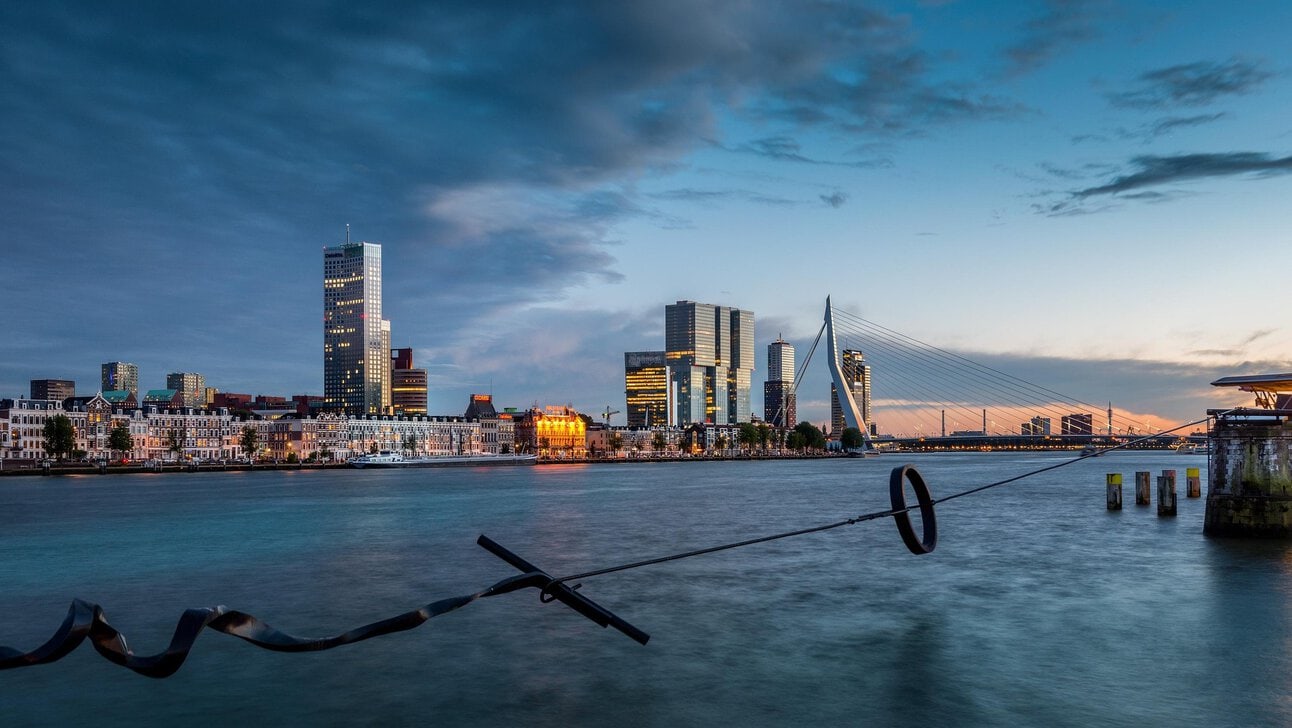
Before you even step aboard the ferry, Rotterdam is well worth exploring. As Europe’s largest seaport and the second-largest city in the Netherlands, it offers a completely different experience to Amsterdam. Rather than centuries of narrow canal houses, Rotterdam is known for its modern skyline, striking architecture, world-class museums and vibrant waterfront, making it an ideal city to spend a day or two in before sailing to the UK.
The city was heavily damaged during the Second World War and rebuilt with bold ambition, resulting in one of Europe’s most architecturally adventurous city centres. Visitors can admire the famous Cube Houses, walk across the Erasmus Bridge, explore the bustling Markthal, or enjoy panoramic views from the Euromast observation tower. The redeveloped waterfront around the Maas River is filled with cafés, restaurants and cultural venues, while neighbourhoods such as Delfshaven provide a glimpse of the historic Rotterdam that survived the wartime bombing.
Rotterdam is also one of the easiest ferry departure points to reach. Direct high-speed rail services connect the city with Amsterdam, Schiphol Airport, Utrecht, Eindhoven, Antwerp, Brussels and Paris, while excellent motorway links make it convenient for travellers arriving from Belgium, Germany or elsewhere in the Netherlands. Although the ferry itself departs from Europoort, around 37 kilometres west of the city centre, reaching the terminal is straightforward by car, pre-booked ferry coach or taxi.
For many travellers, sailing from Rotterdam turns the journey into part of the holiday. Rather than rushing through an airport, you can spend the afternoon exploring the city, enjoy dinner beside the river, and then head to Europoort ready to board your overnight crossing. It’s a far more relaxed start to a UK trip and one of the reasons this route remains so popular with families, road-trippers, motorhome owners and anyone looking to avoid the stress of flying.
If you’re planning to spend some time here before departure, our Things to Do in Rotterdam, Day Trips from Rotterdam and Rotterdam Airport Transfers guides will help you make the most of your visit.
Discover Hull After You Arrive
Although many passengers simply drive straight off towards their final destination, Hull deserves more than just a quick stop. Situated on the north bank of the Humber Estuary, the city has been welcoming travellers from continental Europe for centuries and remains one of England’s most important maritime gateways. Arriving by ferry also gives you a unique perspective, sailing directly into one of Britain’s busiest commercial ports before beginning your journey across Yorkshire and beyond.
Hull’s compact city centre is only a short drive or taxi ride from the ferry terminal and combines historic streets with modern attractions. The beautifully restored Old Town is packed with cobbled lanes, traditional pubs and impressive Georgian buildings, while the nearby Marina offers waterside restaurants and a pleasant place to stretch your legs after the overnight crossing. One of the city’s biggest attractions is The Deep, one of the UK’s largest aquariums, home to thousands of marine animals including sharks, rays and penguins.
The city also makes an excellent base for exploring Yorkshire. York can be reached in around an hour by road or rail, while the rolling countryside of the Yorkshire Wolds, the dramatic cliffs of the Yorkshire Coast, and the spectacular landscapes of the North York Moors National Park are all within easy reach. Travellers heading further north can continue towards Newcastle, the Lake District or Scotland, while those travelling west have straightforward motorway connections towards Leeds, Manchester and Liverpool via the M62.
If you’re travelling without a car, Hull Paragon Interchange provides regular rail services to destinations across northern England, including Leeds, Sheffield, York and London. This makes the Rotterdam-Hull ferry an attractive option not only for motorists but also for foot passengers planning a rail journey through Britain after arriving.
Whether Hull is your final destination or simply the first stop on a much longer adventure, taking a little time to explore the city rewards visitors with fascinating maritime history, excellent museums, welcoming pubs and easy access to some of northern England’s finest scenery. It’s a fitting introduction to the UK after an overnight voyage across the North Sea.

Rupert’s Handy Travel Tips
Sailing from Rotterdam to Hull is a genuinely relaxed way to cross to the UK, but a bit of planning at the Europoort end makes all the difference. Here’s what I’d tell a friend before they book.
- Don’t confuse Rotterdam city with Europoort: the terminal is around 37km west of the centre, closer to the coast than to Rotterdam Centraal, so build proper transfer time into your plans rather than assuming it’s a short hop.
- Book your coach transfer in advance if you’re a foot passenger: there’s no walk-up local bus to the terminal, so the Rotterdam Centraal-Europoort coach needs to be arranged when you book your ferry, not on the day.
- Pack an overnight bag separately: once your vehicle is loaded onto the car deck you won’t get back to it until the morning, so keep chargers, medication and a change of clothes with you rather than buried in the boot.
- Compare the Sleep Lounge against a cabin if you’re travelling solo: it’s a newer, cheaper option on this specific route and still gives you full access to the restaurants and bars, so it’s worth checking the price difference before automatically booking a cabin.
- Check passport and pet paperwork well ahead of time: this is an international crossing outside EU rules, so a national ID card won’t do, and if you’re bringing a dog, sort out microchipping, vaccination and the right certificate long before your sailing date.
Want to meet the reindeer behind our travel tips? Find out more in our page Who is Rupert?.




Frequently Asked Questions
Does the ferry from Rotterdam to Hull actually leave from central Rotterdam?
No. It departs from Europoort, a port area roughly 37km (about 23 miles) west of Rotterdam’s city centre. There’s no ferry terminal in the centre of the city itself, so you’ll need to factor in a drive, coach transfer or taxi to reach the port.
Which company operates the Rotterdam to Hull ferry?
P&O Ferries is the sole operator of this route, using two sister ships, Pride of Rotterdam and Pride of Hull. DFDS, which many travellers associate with North Sea crossings, operates a separate route from IJmuiden near Amsterdam to Newcastle, not from Rotterdam.
How long is the crossing?
Around 11 hours and 30 minutes. It’s an overnight sailing in both directions, departing in the evening and arriving the following morning.
Do I need to book a cabin, or can I just sit in a lounge overnight?
You need to book either a cabin or a seat in the dedicated Sleep Lounge, a reclining-seat area introduced on this route as a lower-cost alternative to a full cabin. You can’t simply travel without booking somewhere to rest for the night.
How do I get from Rotterdam city centre to the ferry terminal without a car?
The main option is a coach transfer between Rotterdam Centraal and the Europoort terminal, which must be booked in advance rather than paid for on the day. A taxi is a more expensive but more flexible alternative, taking around 40–45 minutes.
Can I bring my dog on the ferry?
Yes, P&O offers pet-friendly cabins with easier access to exterior decks. You’ll need to meet current UK pet travel requirements, including microchipping, rabies vaccination and the correct certificate, and pet cabins should be booked well in advance as numbers are limited.
Do I need a passport, or is an ID card enough?
You need a valid passport. Since Brexit, this is an international crossing outside EU freedom-of-movement rules, and a national ID card is no longer sufficient for travel to the UK on this route.
Is it cheaper to fly instead?
It depends on what you’re bringing and where you’re heading. Flying is usually quicker between Rotterdam or Amsterdam and UK airports, but the ferry lets you bring a car, more luggage or a pet, includes a night’s “accommodation” as part of the crossing, and lands you directly in Yorkshire, which can work out more convenient and often comparably priced once you factor in car hire or checked baggage on a flight.
Further Reading
If you’re planning time in Rotterdam either side of your crossing, it’s worth reading our guides to things to do in Rotterdam and day trips from Rotterdam, both of which pair naturally with this ferry guide, along with our Rotterdam airport transfers guide if you’re flying in before or after your sailing rather than driving straight to Europoort.
If you’re also spending time in Amsterdam as part of a wider Netherlands trip, our cornerstone guides to things to do in Amsterdam and day trips from Amsterdam are worth a look, and if your onward UK trip involves other ports or routes, our UK ports guide, UK ferry routes guide and rail and sail UK guide cover the wider picture of getting into Britain by sea and rail.
For travellers based closer to Amsterdam who are weighing up this crossing against the alternative Dutch departure point, our DFDS ferries guide covers the IJmuiden-Newcastle route and DFDS’s other North Sea sailings in full.