Reviewed by our editorial team Updated
Discover the Best Day Trips from Rotterdam
Rotterdam is one of the best-connected cities in the Netherlands for exploring beyond its own borders. Rebuilt almost entirely after the Second World War, the city itself is a showcase of bold modern architecture rather than gabled canal houses, and that contrast is exactly what makes it such a good base for day trips. Within thirty to sixty minutes of Rotterdam Centraal station, you can be standing among nineteen working windmills at Kinderdijk, wandering the cobbled market square in Delft where Vermeer painted, or strolling the government quarter and beaches of The Hague.
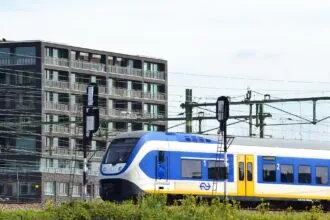
Rotterdam Centraal is a major hub on the Dutch intercity network, with frequent direct trains running along the Rotterdam-The Hague-Leiden-Amsterdam corridor and the Rotterdam-Gouda-Utrecht corridor. The RandstadRail light rail and metro network, plus the seasonal Waterbus and WaterShuttle ferries along the Nieuwe Maas and Merwede rivers, add extra options that many visitors overlook. In short, you rarely need a car to see the wider region properly, and in most cases the train is faster and less stressful than driving and parking in a Dutch town centre.
This guide covers the best day trips from Rotterdam, including Kinderdijk, Delft, The Hague, Gouda and Utrecht, plus a handful of further options worth considering if you have more than a few days in the city. For each destination we’ve researched the real journey time and transport options from Rotterdam Centraal, roughly how long you should set aside, and who each trip suits best, so you can build an itinerary that fits your schedule rather than guessing.
We’ve also included practical transport tips throughout, a comparison table so you can see all the options side by side, and a closing section weighing up independent travel against joining an organised tour. Whether you have a single free afternoon or a full week based in Rotterdam, there’s a combination of destinations here that will work for you.
A quick note on tickets before you set off: almost every train, tram, metro and bus journey described in this guide can be paid for with a contactless bank card or an OV-chipkaart, tapped in at the start of the journey and out at the end, so there’s rarely any need to queue at a ticket machine. If you’re planning to visit two or more of these towns during your stay, it’s worth weighing up whether a multi-day travel pass works out cheaper than paying per journey, which we cover in more detail towards the end of this guide.
Here’s an at-a-glance summary of every day trip covered in this guide, including typical journey time from Rotterdam Centraal, the best way to travel, how long to set aside, and who each destination suits best.
| Destination | Typical Journey | Best Transport | Recommended Time | Best For |
|---|---|---|---|---|
| Kinderdijk | 35-50 minutes | Waterbus/WaterShuttle ferry or RET metro + bus 489 | Half day (4-5 hours) | UNESCO windmills, photography, families |
| Delft | 10-15 minutes | Direct NS train from Rotterdam Centraal | Half day (4-6 hours) | Vermeer, Delftware, compact historic centre |
| The Hague | 20-30 minutes | Direct NS Intercity from Rotterdam Centraal | Full day | Museums, government quarter, Scheveningen beach |
| Gouda | 18-25 minutes | Direct NS Sprinter/Intercity from Rotterdam Centraal | Half day (3-5 hours) | Cheese market, gothic church, stroopwafels |
| Utrecht | 37-45 minutes | Direct NS Intercity from Rotterdam Centraal | Full day | Wharf-level canals, Dom Tower, student energy |
| Dordrecht | 13-20 minutes | Direct NS Intercity/Sprinter from Rotterdam Centraal | Half day (3-5 hours) | Historic harbour, Biesbosch National Park gateway |
| Leiden | 30-38 minutes | Direct or one-change NS train from Rotterdam Centraal | Half day (4-6 hours) | University town, museums, canal walks |
| Efteling | Approx. 1 hour 30 minutes-1 hour 45 minutes door to door | Train to Tilburg, then bus 136/300/301 | Full day | Theme park, families with children |
Kinderdijk
Kinderdijk is the single most popular day trip from Rotterdam, and it’s easy to see why. This UNESCO World Heritage site protects a cluster of nineteen windmills built around 1740 to help drain the low-lying polder land around the Alblasserwaard and Vijfheerenlanden. The mills still stand exactly where they were built, spread out along a network of canals and reed-lined dykes, and several remain inhabited or open as small museums where you can see how a milling family actually lived and worked.
The most scenic way to arrive is by water. A seasonal ferry service (previously run under the Waterbus brand and rebranded as the WaterShuttle on the direct Rotterdam-Kinderdijk line from October 2025) departs from the Erasmusbrug pier in central Rotterdam and drops you close to the entrance, with the crossing taking around 30 minutes and running on Fridays, Saturdays and Sundays, roughly from mid-morning until late afternoon depending on the season, so check current timetables before you set off since the last return sailing is often mid-to-late afternoon. If the direct boat isn’t running when you visit, the standard Waterbus still connects Rotterdam to Ridderkerk or Alblasserdam, from where a short ferry crossing or a ten-minute cycle ride gets you the rest of the way. The land-based alternative is to take any RET metro line to Kralingse Zoom and change onto bus 489 towards Kinderdijk Molenkade, a journey of around 45-50 minutes in total and one that keeps running into the evening, which is useful if you want to see the mills lit up or at sunset.
Once you’re there, plan for at least three to four hours. Walking the full length of the site along the towpath takes about an hour each way, but you’ll want to stop constantly for photos, and a small electric boat shuttle within the site lets you cover more ground without tiring out younger children. Two of the windmills are open to the public as furnished museum interiors, and the visitor centre near the entrance has a short film explaining the water management system that still keeps this part of the Netherlands dry.
Kinderdijk gets busy with coach tours around midday, particularly between April and September, so an early start on the first boat or bus of the day rewards you with quieter paths and softer light for photography. There’s little shelter from sun or rain along the open dykes, so dress for the weather. Bring cash or a card for the small on-site café, as options for food are limited compared to the other destinations in this guide.
Admission to the windmill site, visitor centre and the two museum mills typically runs to somewhere around €18 on an off-peak day and closer to €20 on a peak day, with the site generally open from around 9:00am to 5:30pm between January and early November and shorter winter hours after that, though it’s worth checking current times before you travel since these do shift seasonally. Booking your entry ticket online in advance is a good idea in summer, since it lets you skip the queue at the gate and guarantees entry on busy weekends.
Best if you want daily housekeeping and a front desk. Filter by area first, then by price.
Check availabilityBest for longer stays. Whole apartments and houses, so you are not eating out three times a day.
View rentalsBest if you have already picked a hotel. Checks the big booking sites for the same room and shows who is cheapest.
Check dealsDelft
Delft is the easiest day trip from Rotterdam by a clear margin, and one of the most rewarding for the time invested. Direct trains leave Rotterdam Centraal every few minutes throughout the day and reach Delft in around 10-15 minutes, making it entirely feasible even as a short morning or afternoon add-on to another plan. The station sits within easy walking distance of the historic centre, so there’s no need for a second leg of transport once you arrive.
The town is best known as the birthplace of Johannes Vermeer and as the home of Delft Blue pottery, and both threads run through the compact old centre. The Markt, Delft’s grand central square, is framed by the Gothic Nieuwe Kerk (New Church), where members of the Dutch royal family are buried in the crypt of the House of Orange-Nassau, and the ornate 17th-century Stadhuis (city hall) opposite. Climbing the New Church tower rewards you with a genuinely excellent view over the tiled roofs and canals below, and on a clear day you can pick out The Hague in the distance.
For Vermeer fans, the Vermeer Centrum Delft explains the painter’s life and techniques through reproductions and context (none of his original works remain in the city, most now hang in museums such as the Mauritshuis in The Hague or the Rijksmuseum), while the working Royal Delft factory on the edge of town still hand-paints the blue-and-white pottery the city is famous for and offers factory tours. History fans should also make time for the Prinsenhof Museum, set in the former convent where William of Orange was assassinated in 1584, with the bullet holes reportedly still visible in the stairwell wall.
Delft’s canals are narrower and quieter than Amsterdam’s, and a slow wander along Oude Delft, the oldest and longest canal in the town, is one of the nicest free things to do here. Because the journey from Rotterdam is so short, Delft pairs naturally with a second destination in the same day: many visitors combine it with The Hague, since a direct train connects the two towns in around 15 minutes, effectively turning two day trips into one long, satisfying day out.
Delft also hosts a lively general market on the Markt every Thursday, and an antiques and book market along the canals on Saturdays between spring and autumn, both of which are worth timing your visit around if your schedule allows. Most of the main sights, including the New Church tower and the Vermeer Centrum, charge modest individual admission fees rather than one combined ticket, so it’s worth deciding in advance which one or two you most want to see rather than trying to fit in everything on a short visit.
The Hague
The Hague, or Den Haag, is the Netherlands’ seat of government and the home of the King, and it feels noticeably grander and more formal than Rotterdam just twenty to thirty minutes up the line. Direct Intercity trains from Rotterdam Centraal run several times an hour to both Den Haag Centraal and Den Haag Hollands Spoor stations, with the fastest services taking around 22-26 minutes, so it’s a genuinely simple trip even for a half-day visit, though most people find a full day works better given how much there is to see.
The obvious highlight is the Mauritshuis, a compact former royal residence turned museum that punches far above its size with Vermeer’s Girl with a Pearl Earring and Rembrandt’s Anatomy Lesson of Dr. Nicolaes Tulp among its collection. Around the corner, the Binnenhof, the historic seat of the Dutch parliament, is worth walking through even from the outside, and the adjacent Ridderzaal (Knights’ Hall) is one of the most photographed buildings in the country. Peace and international law enthusiasts should also make time for the Peace Palace, home to the International Court of Justice, where a small visitor centre explains the building’s role even if you can’t get onto a guided tour, which typically needs to be booked well in advance.
The Hague also has a coastal side that Rotterdam lacks. Scheveningen, the city’s seaside district, is a short tram ride (lines 1 and 9 run direct from the centre) from the museums and government buildings, and its long sandy beach, pier and lighthouse make a good contrast to the formal city centre, especially in summer. If you’d rather stay inland, the Panorama Mesdag, a vast 360-degree painted cylinder depicting the 19th-century coastal village, gives you a sense of old Scheveningen without leaving the centre.
A standard adult ticket to the Mauritshuis costs around €21, and booking a timed entry slot online ahead of your visit is strongly recommended, particularly on weekends and during school holidays when the museum’s compact galleries fill up quickly. If you’re on a tighter budget, the Mauritshuis also offers reduced-price admission after 4pm on certain days, which is worth checking if your day trip runs later into the afternoon.
Because The Hague has so much to offer on its own, we’ve put together a full, dedicated guide covering it in depth: see our Best Things to Do in The Hague guide for museum opening times, neighbourhood breakdowns and more on Scheveningen. If you’re combining The Hague with another stop on the same day, Delft is only around 15 minutes further down the line, and Leiden is roughly 30-35 minutes in the other direction, making a two- or even three-town day realistic if you start early.
Gouda
Gouda is an easy, low-effort day trip that rewards you with a genuinely picturesque, lesser-visited Dutch town centre. Direct trains from Rotterdam Centraal reach Gouda in around 18-25 minutes, with both Sprinter and Intercity services running frequently throughout the day, and the station is a short walk from the historic Markt square.
That square is the largest in the Netherlands and is dominated by the Stadhuis, a strikingly ornate Gothic town hall dating from 1450 that still functions as the city hall today. Just off the square, Sint-Janskerk (St. John’s Church) holds the longest church in the country and is famous for its 70-plus stained glass windows dating back to the 16th century, many depicting biblical scenes alongside portraits of the Dutch nobility who funded them; it’s one of the most underrated sights in this whole guide.
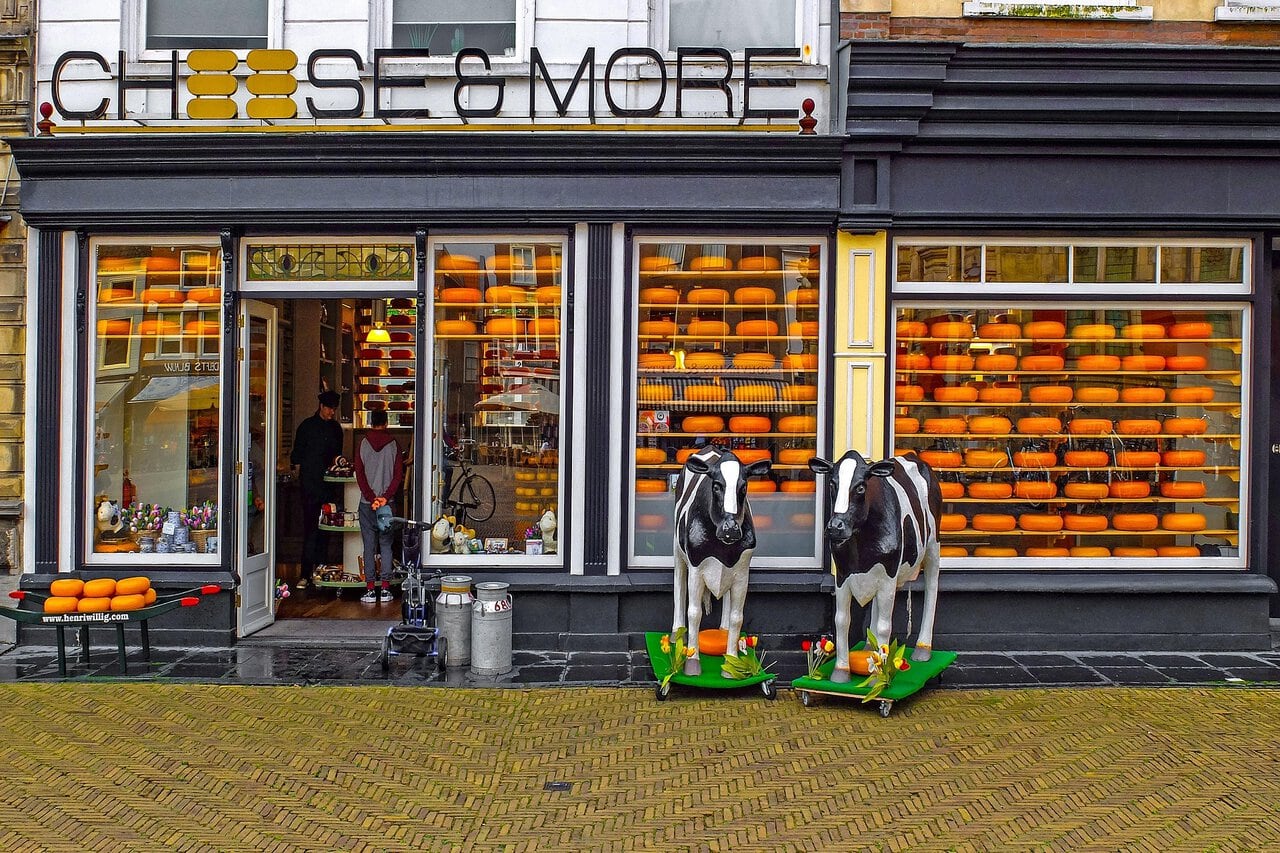
Gouda is, of course, synonymous with cheese, and if you can time your visit for a Thursday morning between April and August, the weekly traditional cheese market on the Markt is worth planning your whole day trip around. Farmers arrive with wheels of cheese stacked on barrows, and the ceremonial testing, price negotiation and porter’s guild display draw a genuinely local crowd rather than feeling staged purely for tourists. Outside market hours, the Waag (old weigh house) now houses a small cheese-focused exhibit and shop where you can taste and buy Gouda cheese at various ages.
Beyond cheese, Gouda is also known for stroopwafels, the caramel-filled waffle biscuits sold warm from stalls around the centre, and for its candle-making history, still celebrated each December with a candlelit evening market. The town’s canals are quieter and more residential than Delft’s, making for a pleasant, unhurried wander if you have a spare hour after the main sights.
Because Gouda is compact, three to five hours is usually enough to see the main sights properly, which makes it a good candidate to pair with another nearby stop, such as an afternoon in Delft or an early finish that lets you be back in Rotterdam in time for dinner. Its position between Rotterdam and Utrecht on the same rail line also makes it a natural stopover if you’re planning to visit both in a single day.
Most of Gouda’s main sights charge only small individual admission fees, and simply wandering the Markt, the surrounding streets and the canals costs nothing at all, which makes it one of the more budget-friendly stops in this guide. If you do time your visit for the Thursday cheese market, arrive by mid-morning: the ceremonial trading typically wraps up by early afternoon, and stalls selling cheese, produce and stroopwafels around the edges of the square are at their busiest and best-stocked earlier in the day.
Utrecht
Utrecht is the furthest of the core destinations in this guide, but it’s still comfortably a day-trip distance from Rotterdam. Direct Intercity trains connect the two roughly every ten to fifteen minutes throughout the day, with a typical journey of 37-45 minutes depending on the specific service, and the station (Utrecht Centraal) sits right beside the Hoog Catharijne shopping centre, a short walk from the historic core.
What makes Utrecht distinctive among Dutch cities is its wharf-level canal system: the Oudegracht runs below street level, with a lower tier of cellars and warehouses (now mostly cafés, bars and small shops) opening directly onto the water, so you can walk or dine at canal level rather than only looking down from a bridge. It’s a genuinely different visual experience from Amsterdam’s or Delft’s canals and one of the best reasons to make the slightly longer trip out from Rotterdam.
The Dom Tower, at over 112 metres, is the tallest church tower in the Netherlands and visible from most of the old town; climbing its 465 steps (only possible on a guided tour, which needs booking) gives you a panoramic view that on a clear day reportedly stretches as far as Amsterdam. The adjoining Dom Church and the gap between tower and nave, created when the nave collapsed in a 1674 storm and was never rebuilt, is one of the more unusual pieces of architectural history you’ll come across in the region. Museum-wise, the Centraal Museum covers Utrecht’s art and design history including Rietveld’s De Stijl furniture, while the Miffy Museum (Nijntje Museum) is a genuinely popular stop for families, since the beloved rabbit character was created by Utrecht illustrator Dick Bruna.
Utrecht also has a younger, more energetic feel than many other Dutch cities thanks to its large student population, which shows up in the bar and café scene around Neude square and along the Oudegracht in the evenings. Given how much there is to see, we’d recommend treating Utrecht as a full day trip rather than trying to squeeze it in alongside another stop; if you want to go deeper, our dedicated Best Things to Do in Utrecht guide covers the city’s neighbourhoods, museums and canal-level bars in full.
Because the Dom Tower can only be climbed as part of a guided tour with a limited number of spaces per group, it’s worth booking a slot online before you leave Rotterdam rather than hoping to walk up on the day, especially at weekends. If tower tickets are sold out, the view from ground level in Domplein, the square at the tower’s base, and a coffee at one of the wharf-level cafés along the Oudegracht are a perfectly good alternative way to spend the time you’d have used queuing.
Dordrecht
Dordrecht is the oldest city in Holland and one of the most underrated day trips on this list, largely because it sits in the shadow of its more famous neighbours. Direct trains from Rotterdam Centraal take just 13-20 minutes, making it one of the quickest options in this guide, and the station is a short walk or tram ride from the historic harbour area.
The Grote Kerk (Great Church), with its distinctively unfinished, squat tower, dominates the skyline above a genuinely well-preserved old harbour lined with 17th-century merchant houses. The Hof van Dordrecht, a former monastery courtyard, was the site of the first Free Assembly of the United Provinces in 1572, an important early moment in Dutch independence, and the small museum inside explains the story well. The Dordrechts Museum holds a strong collection of Golden Age Dutch painting, with particular depth in works by artists from the Dordrecht school.
Dordrecht’s real trump card, though, is its position at the gateway to the Biesbosch, one of the last extensive freshwater tidal wetlands in Europe. From the harbour, small passenger ferries and dedicated Biesbosch boat tours head out into the reed beds and channels, and it’s possible to combine a couple of hours in the historic centre with an afternoon boat trip if you plan ahead and check sailing times before you go, since these are typically less frequent than the standard Waterbus services.
Because it’s so close to Rotterdam and quick to reach, Dordrecht works well either as a relaxed half-day trip on its own or as an add-on if you’re also spending time at Kinderdijk, since both are served by connecting Waterbus routes along the same river system.
The old harbour area, with its cafés along the Wolwevershaven and Nieuwe Haven quaysides, is a pleasant, inexpensive spot to stop for lunch, and most of the individual museums and churches charge only modest admission fees compared with the bigger city-centre attractions elsewhere in this guide. If you’re travelling by car rather than train, Dordrecht is also the easiest of the smaller towns to combine with a Biesbosch visit, since several of the boat operators run from jetties within easy walking distance of the historic centre.
Leiden
Leiden is best known as the home of the Netherlands’ oldest university, founded in 1575, and as the birthplace of Rembrandt. It’s a bit further from Rotterdam than Delft or The Hague, but a direct or single-change train journey of around 30-38 minutes still makes it a comfortable half-day trip, with services running roughly every ten to fifteen minutes throughout the day.
The city centre is a genuinely attractive tangle of canals, historic courtyards (hofjes) originally built as almshouses for the poor, and university buildings, many still in daily academic use. The Hortus Botanicus, one of the oldest botanical gardens in the world, traces its roots to the same era as the university and is a peaceful stop if you want a break from walking. History enthusiasts should head to the Rijksmuseum van Oudheden (National Museum of Antiquities), which holds an outstanding Egyptian collection including the reconstructed Temple of Taffeh, a genuine ancient Egyptian temple gifted to the Netherlands and rebuilt inside the museum’s atrium.
Leiden also has a strong claim on Rembrandt, who was born and trained here before moving to Amsterdam, and several small museums and plaques around the centre trace his early life. The Burcht van Leiden, a circular medieval fortress mound in the middle of the city, gives a good vantage point over the rooftops and is free to climb.
Because Leiden sits on the same corridor as The Hague, it’s realistic to combine the two in a single, fuller day: a direct train connects Leiden and Den Haag Centraal in around 15 minutes, so an early start from Rotterdam can realistically take in both towns before heading back for the evening.
Leiden is also known for its late-August Tulip Festival displays around the city (a nod to the fact that the first tulip bulbs in the Netherlands were cultivated here at the university’s botanical garden in the 1590s), and if your visit falls in early October, the Leidens Ontzet festival, marking the 1574 lifting of the Spanish siege of the city, fills the streets with music, markets and traditional herring-and-white-bread stalls. Outside of festival dates, the city is generally calm and easy to explore on foot, with most of the main sights within a fifteen-minute walk of the station.
Best if you can move a day either way. Shows how the fare to Rotterdam changes across the month.
Compare flightsBest for short trips. Install the eSIM at home and arrive in Rotterdam with working data, no shop queue.
Browse eSIMsBest when public transport has stopped, or when you are travelling with children and bags.
Book a transferEfteling
If you’re travelling with children, or simply want a different pace of day out, Efteling is one of the most-loved theme parks in Europe and a realistic, if slightly longer, day trip from Rotterdam. It began life in the 1950s as a fairytale forest walk based on the illustrations of Anton Pieck and has grown into a full theme park while keeping much of that original storybook atmosphere, which sets it apart from more generic rollercoaster parks.
Getting there takes a bit more planning than the other trips in this guide. The most straightforward route is a direct or one-change train from Rotterdam Centraal to Tilburg, taking roughly 45-55 minutes, followed by a bus (lines such as 136, 300 or 301 serve the park directly from Tilburg station, with the Efteling stop clearly signed) of around 20-30 minutes. All in, budget for around 1 hour 30 minutes to 1 hour 45 minutes door to door, and note that combined train-and-bus tickets covering the whole journey can be bought in advance through NS, which is usually simpler than buying separate tickets on the day.
Inside the park, the Fairytale Forest remains the heart of the experience, with dozens of animated scenes based on classic European fairy tales tucked among the trees. For thrill-seekers, rides like the wooden coaster Joris en de Draak and the dark ride Symbolica are consistently rated among the best in the park, while younger children tend to gravitate towards the Efteling Steam Train that circles the park and the gentle Diorama boat ride. Because the park is large and popular, arriving at opening time and booking tickets online in advance both make a meaningful difference to how much you can fit in.
Given the travel time involved, Efteling really needs a full day, and it’s not one to combine with another stop. If you’re short on time or travelling without children, one of the closer, shorter destinations elsewhere in this guide will likely suit you better, but for families staying in Rotterdam for several days, it’s consistently one of the most memorable days out in the whole region.
Ticket pricing at Efteling is dynamic and depends on the date you visit, with standard adult day tickets typically ranging from around €40 on a quieter weekday to more than €55 during peak school holiday periods, so buying online in advance for a specific, less busy date can noticeably reduce the cost compared to a walk-up ticket on a popular day.
Sample Day Trip Itineraries from Rotterdam
If you’re not sure how to structure your time, these three sample itineraries show how the destinations in this guide fit together depending on how many days you have and what you’re most interested in.
One day, windmills and a historic town: Take the first Waterbus or WaterShuttle sailing to Kinderdijk and spend the morning walking the dykes and visiting one of the museum mills. Head back to Rotterdam by early afternoon, then hop on a direct train to Delft for a couple of hours around the Markt, the New Church tower and the Vermeer Centrum before returning to Rotterdam for dinner. This combines the region’s most iconic sight with an easy, low-effort second stop and works comfortably even if you’re only in Rotterdam for a short stay.
One day, city and culture: Take an early direct train to The Hague and spend the morning at the Mauritshuis and around the Binnenhof, then take the tram out to Scheveningen for lunch by the beach. In the afternoon, catch the short train back via Delft and get off there for an hour or two around the Markt and the New Church before returning to Rotterdam. This itinerary suits travellers who want museums, government-quarter architecture and a bit of coastline all in the same day.
Two days, further afield: On day one, take the direct train to Utrecht and spend the full day exploring the wharf-level Oudegracht, the Dom Tower and Domplein, and the Centraal Museum, treating it as a standalone full-day trip. On day two, take a direct train to Gouda for the morning (timed for the Thursday cheese market if your dates allow), then continue on to Dordrecht in the early afternoon for the historic harbour and, if sailing times allow, a short Biesbosch boat trip before heading back to Rotterdam. This pattern spreads out the longer and shorter destinations sensibly across two days rather than trying to rush everything into one.
Which Day Trip Is Right for You?
With eight solid options and only so many days in a trip, it helps to think about what kind of experience you actually want rather than just ticking off famous names. If your time is limited to half a day, Delft and Gouda are the two easiest wins: both are close, compact and require almost no planning beyond checking the next train time.
If you want the classic postcard image of the Netherlands, Kinderdijk is non-negotiable, but treat it as a half-day, plan your transport in advance, and go early to beat the coach groups. For culture and museums at a big-city scale, The Hague and Utrecht are your best bets, and both justify a full day rather than a rushed visit, which is exactly why we’ve given each of them their own dedicated guide.
If you’re drawn to quieter, less-touristed towns, Dordrecht and Leiden both reward the effort of getting slightly further from the well-worn Rotterdam-Delft-The Hague triangle, with Dordrecht adding the bonus of the Biesbosch wetlands on its doorstep. And if you’re travelling with children and have a full day to spare, nothing else on this list competes with Efteling, even accounting for the longer journey.
For a longer stay, a sensible pattern is to pair a quick destination with a fuller one on alternating days: Delft or Gouda on a lighter day, The Hague or Utrecht when you want to go deeper, and Kinderdijk or the Biesbosch when you want to be outdoors. Efteling is best kept as its own separate day given the extra travel involved.
Travelling Independently or Joining a Guided Tour
Almost every destination in this guide is straightforward to reach independently by train, tram or ferry, and for most travellers that’s the better option: it’s cheaper, it lets you set your own pace, and the Dutch public transport network from Rotterdam Centraal is frequent and reliable enough that you rarely need to plan much beyond checking the next departure. An OV-chipkaart or a contactless bank card tapped in and out at station gates covers trains, trams, buses and metro across almost the entire country, which removes most of the friction that can make independent travel abroad feel complicated.
That said, there are a few situations where a guided tour genuinely earns its cost. Kinderdijk is the clearest example: organised half-day tours from Rotterdam typically bundle the boat or coach transfer, entry tickets and a guide who can explain the water-management history in more depth than a self-guided visit usually allows, which is useful if you’d rather not work out ferry timetables yourself. Combination tours covering Kinderdijk alongside Delft or The Hague in a single organised day are also common and can be a time-efficient way to see several highlights without managing multiple separate train journeys.
For the historic towns like Delft, Gouda, Dordrecht and Leiden, independent travel is almost always the better choice: the train journeys are short, the centres are small enough to navigate on foot with a basic map, and a guide adds relatively little that a good self-guided walking route or audio guide can’t replace. The Hague and Utrecht sit somewhere in between; both are easy to reach independently, but a local walking tour focused on a specific theme (the Golden Age art collections in The Hague, for instance, or Utrecht’s wharf cellars) can add real context, especially on a first visit.
Efteling is the one destination where the practical case for a tour or a pre-arranged transport package is strongest, simply because of the train-and-bus connection involved; a combined ticket or an organised day-trip package removes the need to work out bus timetables in Tilburg on the day, which matters more if you’re travelling with tired children at the end of a long day.
One middle-ground option worth knowing about is the hop-on-hop-off style day pass some operators sell for the Rotterdam-Kinderdijk-Dordrecht river corridor, which lets you get on and off the Waterbus network across all three stops on a single ticket without committing to a fully guided itinerary. It’s a reasonable compromise if you want the flexibility of independent travel but would rather not work out individual boat and bus fares for each separate leg of a multi-stop day.

Rupert’s Handy Travel Tips
I’ve hopped on and off enough trains around Rotterdam to know a few shortcuts worth sharing before you plan your day trips.
- Tap in and out everywhere: A single contactless bank card or an OV-chipkaart works across trains, trams, metro and buses throughout this whole guide, so there’s no need to buy separate paper tickets at each stop.
- Check Kinderdijk’s boat timetable first: The Waterbus and WaterShuttle services to Kinderdijk run to a seasonal schedule with a firm last return sailing, so confirm times before you leave rather than after you arrive.
- Pair short trips together: Delft and The Hague are only about 15 minutes apart by train, and Gouda sits neatly between Rotterdam and Utrecht, so it’s easy to combine two shorter destinations into one longer day.
- Book Efteling tickets and the train-bus combo in advance: Buying park entry and your Tilburg bus connection online before you travel saves real time at both ends of a longer day out.
- Go early for Kinderdijk and Gouda’s cheese market: Both get noticeably busier with coach groups from mid-morning onwards, so an early start pays off in quieter paths and better photos.
Want to meet the reindeer behind our travel tips? Find out more in our page Who is Rupert?.




Frequently Asked Questions
What is the best day trip from Rotterdam?
Kinderdijk is the most iconic choice for its UNESCO-listed windmills, but Delft is the easiest and quickest if you only have a few hours, and The Hague or Utrecht are the best options if you want a fuller day of museums and city sightseeing.
How do you get to Kinderdijk from Rotterdam without a car?
The most scenic route is the seasonal Waterbus or WaterShuttle ferry from the Erasmusbrug pier, taking around 30 minutes. Alternatively, take any RET metro line to Kralingse Zoom and change onto bus 489 towards Kinderdijk Molenkade, a journey of around 45-50 minutes that runs later into the evening than the boat.
Can you visit Delft and The Hague in one day from Rotterdam?
Yes. Both are close to Rotterdam by train, and a direct connection between Delft and The Hague takes around 15 minutes, so it’s realistic to see the highlights of both in a single, fairly full day if you start early.
Is Gouda worth visiting as a day trip from Rotterdam?
Yes, particularly if you can time it for the traditional Thursday morning cheese market between April and August. Even outside market season, the Markt square, Stadhuis and Sint-Janskerk’s stained glass windows make it a worthwhile half-day trip.
How far is Utrecht from Rotterdam and is it worth a full day?
Utrecht is about 37-45 minutes from Rotterdam Centraal by direct Intercity train. It’s worth a full day given the size of the historic centre, the wharf-level canals, the Dom Tower and the number of museums, rather than trying to combine it with another stop.
Do I need to book tickets in advance for these day trips?
Train and public transport tickets generally don’t need advance booking within the Netherlands. However, popular museums such as the Mauritshuis in The Hague, the Peace Palace visitor centre, and Efteling theme park tickets are worth booking online ahead of time, especially in peak season.
Is it cheaper to buy a day ticket for multiple train journeys?
If you’re planning to visit two or more destinations by train in a single day, or making several day trips during your stay, an NS Day Ticket or a Holland Travel Ticket can work out more cost-effective than buying individual tickets for each leg.
What’s the best day trip from Rotterdam for families with children?
Efteling is the clear choice for a full-day family outing, while Kinderdijk and Gouda both work well as shorter, easier half-day trips that still keep younger children engaged with boats, windmills and stroopwafels.
Further Reading
If you haven’t yet planned your time inside Rotterdam itself, our Best Things to Do in Rotterdam guide covers the city’s architecture, markets and museums in full, and pairs naturally with the day trips in this guide once you’ve had a couple of days exploring the city centre. If you’re arriving by air, our Rotterdam Airport Transfers guide walks through getting from Rotterdam The Hague Airport into the city, and if you’re arriving by sea, our Ferry Routes from Rotterdam guide covers the DFDS and other crossings that serve the port.
Two of the destinations covered here, The Hague and Utrecht, have their own dedicated guides worth reading before you go: see Best Things to Do in The Hague and Best Things to Do in Utrecht for a deeper look at each city, and if you’re planning day trips out from either of those bases as well, our Best Day Trips from The Hague and Best Day Trips from Utrecht guides may also be useful.
If you’re also visiting Amsterdam on the same trip, our Best Things to Do in Amsterdam and Best Day Trips from Amsterdam guides are the country’s cornerstone city guides and cover many of the same themes from a different base. For getting around more broadly, our NS Day Ticket, Holland Travel Ticket and Interrail Benelux Pass guides all explain ticket options that can cover several of the journeys described above.