Reviewed by our editorial team Updated
Discover the Best Day Trips from Maastricht
Maastricht occupies one of the most unusual spots on the European map. Tucked into the narrow finger of Dutch Limburg between Belgium and Germany, the city sits closer to Brussels, Cologne and even Luxembourg than it does to Amsterdam. Locals joke that you can cycle to a different country before lunch, and it is barely an exaggeration – the Belgian border is about four kilometres from Maastricht’s Vrijthof square, and the German border is roughly six. This geography turns “day trips from Maastricht” into something genuinely unusual among Dutch cities: a tri-country itinerary where a single day can realistically include a Dutch castle ruin, a German cathedral where Charlemagne is buried, and a Belgian riverside city famous for waffles and stairs.
This guide covers the best day trips from Maastricht in detail, with real transport times, practical tips and honest advice on when to go it alone and when to book a guided tour. We start close to home with Valkenburg, the Netherlands’ only hilltop castle-ruin town and a place riddled with marl caves that double as concert halls, wine cellars and – every winter – underground Christmas markets. From there we cross into Germany for Aachen, Charlemagne’s imperial capital and home to the octagonal cathedral where thirty German kings were crowned. Then it is on to Belgium for Liège, a gritty, characterful city of steep staircases, riverside markets and some of the best beer culture in Europe.
Beyond those three headline destinations, we also cover the wooded hills and rivers of the Belgian Ardennes – specifically Durbuy and La Roche-en-Ardenne, both realistic (if longer) day trips for anyone with a car or willing to join an organised tour – plus a handful of the Limburg villages that rarely make it into international guidebooks but genuinely deserve a visit: Thorn, the whitewashed former abbey town; Gulpen and the rolling hills around Epen, Vaals and Slenaken; and Roermond, worth a detour for its historic centre and outlet shopping.
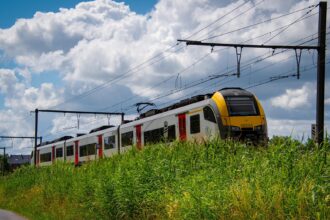
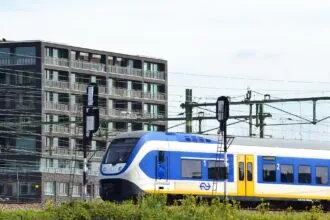
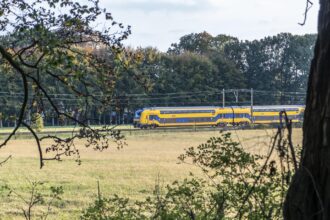
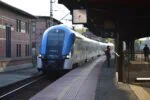
What makes this region special for day-tripping is the transport. Maastricht sits on the “Drielandentrein” – literally the “Three Countries Train” – a single hourly service that runs from Liège in Belgium, through Maastricht, and on into Aachen in Germany, crossing two international borders without a single change of train. Add regional buses, a genuinely useful cross-border rail-and-bus pass (the Euregio Ticket, which we will come back to), and a compact road network, and you have one of the most connected small regions in Europe for spontaneous cross-border exploring.
A word on pace: several of these trips can be combined or done as half-days if you are short on time, while others – particularly the Ardennes destinations – genuinely need a full day and are easier with a car or a tour. We have marked recommended time and best transport for each destination in the comparison table below, and gone into more practical detail within each section, including where to buy tickets, what to wear (bring a jumper for the caves – they sit at a constant 10-12°C year-round), and which sights need advance booking.
Whether you have three days in Maastricht and want to fit in two or three of these trips, or you are based here for a longer stay and want to slowly work through the whole region, this guide should give you everything you need to plan with confidence.
| Destination | Typical Journey | Best Transport | Recommended Time | Best For |
|---|---|---|---|---|
| Valkenburg (NL) | Around 9-12 minutes by train | Train (Arriva) | Half day (3-4 hours) | Caves, castle ruins, cosy old-town streets |
| Aachen (Germany) | Around 35-50 minutes by train | Train (Arriva/DB “Drielandentrein”) or Euregio Ticket | Full day | Charlemagne’s cathedral, Christmas markets, thermal history |
| Liège (Belgium) | Around 30-35 minutes by train | Train (NMBS/SNCB “Drielandentrein”) or Euregio Ticket | Full day | Café culture, riverside markets, dramatic staircases |
| Spa (Belgium) | Around 90 minutes to 2 hours by train (change in Liège), or roughly 1 hour by car | Train + change, or car | Full day | Thermal baths, Belle Époque elegance, Ardennes gateway |
| Durbuy (Belgium) | Around 1 hour 20 minutes to 1 hour 40 minutes by car (no direct train) | Car, or organised tour | Full day | Fairy-tale streets, topiary gardens, kayaking on the Ourthe |
| La Roche-en-Ardenne (Belgium) | Around 1 hour 45 minutes by car (no direct train) | Car, or organised tour | Full day | Castle ruins, forest walks, wartime history |
| Thorn (NL) | Around 40-45 minutes by car; longer by train and bus | Car (train + bus is possible but slow) | Half day | The whitewashed “white village” and its abbey church |
| Gulpen and the Limburg Hills (NL) | Around 20-30 minutes by car or bus | Car, or Arriva bus | Full day | Rolling hills, half-timbered villages, the Vaalserberg |
| Roermond (NL) | Around 25-30 minutes by train | Train (NS Intercity) | Half day to full day | Designer outlet shopping and a handsome historic centre |
Valkenburg: Caves, Castle Ruins and Cliffside Charm
If you only have half a day free, Valkenburg is the easiest and most rewarding choice. It sits around nine to twelve minutes from Maastricht by regional train, on the same line that continues on to Heerlen and eventually across the German border to Aachen, so it is entirely possible to treat it as a quick stop on the way to somewhere bigger. Most visitors, though, find it deserves a stop of its own. Valkenburg is the only place in the Netherlands with a genuine hilltop castle ruin, and the town has spent centuries digging into the soft marl hillsides around it, leaving behind a honeycomb of caves that are now used for everything from wine storage to concerts to, every winter, one of the country’s most atmospheric Christmas markets.
The Kasteelruïne (castle ruins) dominates the town from its hilltop position and is worth climbing up to even if you only wander the grounds for free – the views over the red-roofed old town and the Geul valley are some of the best in the region. Beneath and around the castle lies the Fluweelengrot (Velvet Cave), a man-made marl cave system that has been quarried since Roman times and now hosts guided tours covering local history, geology and even a small museum on 20th-century mining. A short walk away, the much larger Gemeentegrot (Municipal Caves) offers longer guided tours through more than 200 kilometres of passageways, including sections used as an air-raid shelter and hidden art repository during the Second World War.
Valkenburg’s caves take on a completely different character in November and December, when sections of both the Gemeentegrot and Fluweelengrot are transformed into underground Christmas markets, lit with fairy lights and filled with stalls selling glühwein, ornaments and local snacks at a near-constant 10-12°C regardless of the weather outside. It is genuinely one of the more memorable Christmas markets in Europe precisely because it happens below ground, and it gets busy – book tickets ahead if you are visiting in December.
Above ground, the town itself rewards slow wandering. The Cauberg – a steep hill on the edge of town – is internationally famous among cycling fans as a decisive climb in the Amstel Gold Race and hosted the finish of the 2012 UEFA Road World Championships; a cable car (kabelbaan) runs partway up it if you would rather not tackle it on foot. Thermae 2000, a wellness complex built into the hillside, is a popular half-day add-on for anyone wanting a spa afternoon after the caves. The compact centre is easy to combine with lunch at one of the terraces along the Geul river before heading back to Maastricht.
Because Valkenburg is so close and so quick to reach, it is one of the easiest destinations in this guide to do without any planning at all – just turn up at Maastricht station and hop on the next regional train. If you have already worked through the highlights covered in our guide to things to do in Maastricht, Valkenburg is the natural next stop, and it pairs well as a half-day add-on before or after a longer trip elsewhere in this guide.
Best if you want daily housekeeping and a front desk. Filter by area first, then by price.
Check availabilityBest for longer stays. Whole apartments and houses, so you are not eating out three times a day.
View rentalsBest for double-checking. Runs the same Maastricht search across several booking sites so you are not leaving money behind.
Compare pricesAachen: Charlemagne’s Cathedral and German Christmas Markets
Crossing into Germany for the day is easier from Maastricht than from almost anywhere else in the Netherlands. Aachen, once the imperial capital of Charlemagne and the coronation city for thirty subsequent German kings, sits roughly 35 to 50 minutes away by regional train, and since July 2024 the connection has been made considerably smoother by the launch of the Drielandentrein (Tri-Country Train), a single hourly service using tri-voltage Stadler trains that runs directly from Liège in Belgium, through Maastricht and Heerlen, and on into Aachen without requiring a change – a genuinely rare piece of cross-border rail engineering that ties this whole guide’s transport together.
The centrepiece of any visit is the Aachener Dom (Aachen Cathedral), the first German site ever inscribed on the UNESCO World Heritage list, in 1978. Its octagonal core, the Palatine Chapel, was built on Charlemagne’s orders around 800 AD and remains one of the best-preserved examples of Carolingian architecture anywhere in Europe. Inside, look for Charlemagne’s marble throne in the upper gallery (visible on guided tours) and the golden shrine believed to contain his remains. The adjoining Domschatzkammer (cathedral treasury) houses one of the most important collections of medieval religious art north of the Alps, including the Karlsschrein (Shrine of Charlemagne) and the Lothar Cross. Tickets for treasury access and the guided cathedral tour are worth booking in advance, especially in peak season.
Beyond the cathedral, Aachen’s old town rewards an afternoon of wandering. The Rathaus (town hall) was built directly on the site of Charlemagne’s palace and contains the Krönungssaal (Coronation Hall) where those thirty kings were crowned. The Elisenbrunnen, a neoclassical pump room, marks one of the city’s natural thermal springs – Aachen has been a spa town since Roman times, when it was known as Aquae Granni. If you visit between late November and Christmas, Aachen’s Christmas market, spread across the cathedral square and the Rathaus forecourt, is one of the most highly regarded in Germany, and it is the place to try Aachener Printen, the city’s distinctive spiced gingerbread.
For transport, this is exactly the kind of trip the Euregio Ticket was designed for. It covers a full day of train and bus travel across the entire Meuse-Rhine Euroregion – Dutch South Limburg, Belgian Limburg and Liège province, and the Aachen region of Germany – on one ticket, which means you can ride the Drielandentrein into Aachen, hop on a local bus to reach an outlying attraction, and come home again without buying separate tickets for each country. It is particularly good value if you are planning to combine Aachen with Liège in the same trip, since both fall inside its coverage zone.
One practical note: while the Netherlands, Belgium and Germany are all in the Schengen area and there are no routine border checks, it is still sensible to carry a passport or national ID card when crossing into Germany, since spot checks do occasionally happen on cross-border trains. Otherwise, Aachen is a straightforward, well-signposted day trip that rewards even a first-time visitor to Germany.
Liège: Belgian Café Culture, Steps and the Meuse
Liège is the grittier, more bohemian counterpart to Maastricht’s polish – a post-industrial Belgian city built along a bend in the river Meuse (the same river that flows through Maastricht itself), with a reputation among Belgians as one of the country’s liveliest student and café cities. It sits around 30 to 35 minutes from Maastricht, and like Aachen, it is now directly connected by the hourly Drielandentrein, making it one of the simplest cross-border trips in this guide.
Start at Liège-Guillemins station itself, a striking glass-and-steel structure designed by Spanish architect Santiago Calatrava and completed in 2009 – it is worth a few minutes just to admire the architecture before heading into the centre. From there, the old town spreads out around Place Saint-Lambert and the Palais des Princes-Évêques (Palace of the Prince-Bishops), a reminder that Liège was, for centuries, an independent ecclesiastical principality rather than simply a Belgian city. The riverside La Boverie park and its fine arts museum are a pleasant detour if you have time, particularly on a sunny afternoon.
Liège’s single most distinctive attraction is physical rather than historical: the Montagne de Bueren, a punishing staircase of 374 steps that climbs from the old town up to the citadel, built in 1881 in honour of a 16th-century Liège hero. It is genuinely steep and genuinely worth it – the view back over the rooftops and the river from partway up (you do not need to climb all 374 to get a good view) is one of the best photo opportunities in this whole guide. For a gentler pace, the Sunday morning La Batte market, which runs along the riverbank and is one of the largest and oldest markets in Europe, is a genuinely local experience worth timing your visit around if you can.
Food-wise, Liège has its own distinct identity within Belgium. Look out for boulet à la liégeoise (meatballs in a sweet-sour sauce, usually made with the local Sirop de Liège), and be aware that the “Liège waffle” – denser, sweeter and studded with caramelised sugar pearls – is a different animal entirely from the thinner Brussels waffle, and arguably better eaten as a snack straight from a street stall than at a sit-down café.
The Euregio Ticket covers Liège as well as Aachen, so if you are planning a bigger cross-border day – or want to string Aachen and Liège together on the same trip using the Drielandentrein in both directions – it is worth pricing against single tickets before you travel. If your plans extend further into Belgium beyond this Euregio zone, the Interrail Benelux Pass is a better fit, since it covers unlimited rail travel across Belgium, the Netherlands and Luxembourg over several days rather than a single 24-hour window.
Spa: The Belle Époque Town That Gave Us the Word
It is easy to forget that “spa,” the generic English word for a wellness retreat, is actually the name of a specific Belgian town – and that town is a genuinely worthwhile day trip from Maastricht for anyone willing to travel a little further into the Ardennes foothills. Spa‘s mineral springs have drawn visitors since at least the 16th century, and by the 18th and 19th centuries it had become one of the most fashionable resort towns in Europe, hosting royalty, aristocrats and, eventually, giving its name to every “spa” that followed it.
The modern Thermes de Spa complex sits on the Annette et Lubin hill above town, reachable by cable car, and offers thermal pools, saunas and treatments using the same natural mineral water that made the town famous. Down in the centre, the elegant Belle Époque architecture along the Pouhon Pierre-le-Grand colonnade (named after Peter the Great of Russia, who took the waters here in 1717) gives a sense of the town’s grand past, and the Casino de Spa – one of the oldest casinos in the world, with roots stretching back to 1763 – still operates today.
Spa also sits close to the Circuit de Spa-Francorchamps, one of the most famous motor racing circuits in the world and home to the Belgian Grand Prix – motorsport fans occasionally build a day trip around visiting the track itself, though access outside race weekends is limited to certain viewpoints and museum-style visits rather than full circuit tours.
Getting to Spa without a car takes some patience: there is no direct train from Maastricht, so the realistic route is to take the Drielandentrein to Liège and change onto a regional connection or bus from there, bringing total journey time to roughly 90 minutes to two hours each way. By car, it is closer to an hour via Belgian motorways. Given the travel time, Spa works best either as a full-day trip in its own right, ideally combined with a wellness booking at the Thermes, or as a stop on a longer Ardennes loop that also takes in Durbuy or La Roche-en-Ardenne if you are travelling by car.
Durbuy: Exploring the “Smallest City” in the Ardennes
Durbuy has built its entire tourism identity around a historical technicality: it was granted city rights by the Count of Luxembourg back in 1331, and despite having a population of only a few thousand people today, it has never given up the title, proudly billing itself as “the smallest city in the world.” Whatever you make of the claim, the reality on the ground is a genuinely pretty huddle of stone and half-timbered houses on a bend of the river Ourthe, surrounded by the wooded hills of the Belgian Ardennes.
The compact old town is best explored on foot – it takes only twenty minutes or so to walk end to end, but the narrow lanes, the small castle overlooking the river (privately owned and not open to the public, but attractive from outside), and the covered market hall reward a slower pace. Durbuy’s Parc des Topiaires, a garden of more than 250 sculpted box hedges shaped into everything from animals to cartoon characters, is one of the more unusual attractions in the region and popular with families.
The Ourthe river itself is the other big draw. In warmer months, kayak rental operators along the riverbank offer short paddles through the gentle rapids around town, and the surrounding hills are laced with walking and mountain-biking trails through beech and pine forest – a completely different landscape from the flat polders most visitors associate with the Netherlands.
The catch with Durbuy is transport: there is no direct train, and the journey from Maastricht by public transport typically involves multiple changes and can take three hours or more each way, which makes it impractical without a car unless you join an organised day tour. By car, allow around 1 hour 20 minutes to 1 hour 40 minutes via Liège and the E25/E42 motorways. Given the driving time, Durbuy works best as a full, unhurried day out, ideally paired with a scenic drive rather than rushed against a return train timetable.
La Roche-en-Ardenne and the Wooded Ardennes Valleys
A little further into the Ardennes than Durbuy, La Roche-en-Ardenne sits in a dramatic loop of the same Ourthe river, overlooked by the ruins of an 11th-century castle perched on a rocky outcrop above the town. Where Durbuy leans into its “smallest city” gimmick, La Roche feels wilder and quieter – a genuine base for hiking, kayaking and simply enjoying dense Ardennes forest scenery that feels a world away from the Netherlands’ flat landscapes.
The Château de La Roche ruins are open to visitors and worth the short, steep climb for the views back down over the town and river valley. Below, the small town centre has a handful of decent restaurants specialising in Ardennes classics – game dishes in autumn and winter, and jambon d’Ardenne (Ardennes ham) year-round. The surrounding countryside is part of what makes this area historically significant as well as scenic: La Roche-en-Ardenne suffered heavy damage during the Battle of the Bulge in the winter of 1944-45, and the nearby town of Bastogne, roughly 30 minutes further south by car, has a well-regarded war museum for anyone interested in that history, though it is really a separate day trip in its own right rather than a comfortable add-on.
For outdoor activities, kayak and canoe rental is widely available along the Ourthe in summer, and the forest trails around town range from gentle riverside walks to more serious day hikes. Winter brings a quieter, moodier atmosphere, with the castle ruins and forested hillsides often dusted with snow.
As with Durbuy, there is no practical public transport route from Maastricht – allow around 1 hour 45 minutes by car via Liège, or consider a guided Ardennes day tour that combines La Roche with Durbuy or another nearby village in a single organised itinerary. Given the distance, this is one of the trips in this guide where joining a tour genuinely saves you the stress of unfamiliar rural Belgian roads and lets you actually relax and enjoy the scenery.
Thorn: The White Village of Limburg
Not every worthwhile day trip from Maastricht requires crossing a border. Thorn, around 40 to 45 minutes away by car in the Maasgouw municipality of Dutch Limburg, is one of the most photogenic villages in the Netherlands and one that surprisingly few international visitors know about. Its nickname, “the white village,” comes from the near-uniform whitewashed facades of its historic centre – a look with a genuinely interesting backstory.
Thorn was, for roughly 800 years, an independent princely abbey ruled by a community of noblewomen, founded around 990 and functioning almost as a mini-state with its own currency, courts and even its own small army – an extraordinary degree of female governance for medieval and early modern Europe. That independence ended when Napoleon’s forces conquered the region in the early 1800s. According to local history, it was under Napoleonic rule that the town’s distinctive look emerged: a window tax based on the size and number of windows led impoverished residents to brick up openings they could not afford to be taxed on, then whitewash the buildings to disguise the patched brickwork. The unintentional result, two centuries later, is one of the most charming and cohesive village streetscapes in the country – the historic centre received official protected status in 1973.
The centrepiece is the Abdijkerk (Abbey Church), a Gothic structure with a surprisingly ornate Baroque interior, stained glass windows and, in its crypt, a preserved mummified body dating to around 1600. The Loreto Chapel, tucked among Thorn’s back streets and built in 1673, looks from the outside almost like an ordinary house but hides an unexpectedly rich Baroque interior – one of several small chapels scattered through the village that reward a slow wander rather than a checklist approach.
Thorn’s cobblestone centre is car-free, which makes it a genuinely relaxing half-day trip – park (or arrive by taxi or occasional bus connection) on the edge of town and walk in. Public transport is possible but slow, typically involving a train to Roermond or Weert followed by a local bus, so this is one of the destinations in this guide where a car, taxi, or joining a small-group tour that bundles Thorn with other Limburg villages makes the most sense.
Best if you can move a day either way. Shows how the fare to Maastricht changes across the month.
Compare flightsBest if you want maps and messaging working the moment you switch your phone on.
See eSIM plansBest after a long flight or a late landing. Price agreed before you travel, and no taxi queue.
Check transfersGulpen and the Limburg Hills: Epen, Vaals and the Drielandenpunt
South-east of Maastricht, the landscape does something most visitors do not expect from the Netherlands: it starts to roll. This pocket of South Limburg, sometimes called “Dutch Tuscany” by locals with a sense of humour, is dotted with small villages, orchards, half-timbered farmhouses and – unusually for the Netherlands – genuine hills, making it an excellent full-day trip for anyone wanting a slower, more rural side of the region.
Gulpen, around 20 minutes from Maastricht by car or bus, is best known as the home of the Gulpener Brewery, one of the last independent regional breweries in the Netherlands and a working example of Limburg’s long brewing tradition. Tours and tastings are available at the brewery, and the surrounding village itself is a pleasant, unhurried stop with a handful of good cafés. From Gulpen, the villages of the hill country spread out in every direction – Epen and Slenaken, both near the Belgian border, are popular starting points for walking routes through the Geul valley, while Mechelen aan de Geul is a good base for cyclists tackling the region’s famous steep climbs.
The highlight for many visitors, though, is Vaals and the Drielandenpunt (Three Countries Point) just outside it. At 322.7 metres, the Vaalserberg is the highest point in mainland Netherlands – not a dramatic mountain by any international standard, but a genuine novelty in a country famous for being flat. At the summit, a labyrinth and a viewing tower (the Baudouin Tower, named after the former Belgian king) mark the exact spot where the borders of the Netherlands, Belgium and Germany meet, and it is entirely possible to stand with one foot in each of three countries at once. On a clear day, the views from the tower stretch for miles across all three.
This whole area is best explored by car, since the villages are scattered and public transport between them is limited to infrequent regional buses, though Vaals itself is reachable by bus from Maastricht and from Aachen (it sits right on the German border, only a few minutes’ drive from the city). If you are combining this with an Aachen day trip, Vaals and the Drielandenpunt make a natural detour on the way there or back.
Roermond: Historic Centre and Designer Outlet Shopping
Roermond sits on the main NS Intercity line north of Maastricht, around 25 to 30 minutes away by direct train, which makes it one of the easiest and most flexible day trips in this guide. It has two quite different draws that happen to sit close together: a genuinely handsome historic town centre, and one of the largest and most popular designer outlet centres in continental Europe.
The old town is centred on the Munsterkerk, a striking Romanesque church dating back to the 13th century, along with a market square lined with cafés and a cathedral that give Roermond a proper small-city feel rather than the “outlet town” reputation it has picked up internationally. It is worth allowing at least an hour or two to walk the centre properly before heading to the shopping.
Designer Outlet Roermond, run by McArthurGlen, is the reason many visitors make the trip at all – it is a large, open-air outlet village with several hundred stores covering international fashion, homeware and sportswear brands at reduced prices, and it draws shoppers from across the Netherlands, Belgium and Germany on weekends. It sits a short walk or free shuttle ride from Roermond station, making it easy to combine with the historic centre in a single day, or to treat as a dedicated half-day shopping trip on its own.
Because Roermond sits on a fast, frequent main rail line rather than a smaller regional branch, it is one of the simplest destinations in this guide to do entirely independently and spontaneously, with trains running throughout the day and no need to plan around a single hourly service.
Which Day Trip Is Right for You?
With nine destinations across three countries, it helps to think about what kind of day you actually want rather than trying to see everything. If you have limited time or are travelling with young children, Valkenburg is the obvious first choice – it is close, quick, and the caves and castle ruins hold children’s attention far better than a cathedral or a museum will. Families with slightly older children who enjoy the novelty of “standing in three countries at once” should also consider the Vaalserberg and Drielandenpunt near Vaals.
History and architecture fans should prioritise Aachen above everything else in this guide – Aachen Cathedral alone justifies the trip, and it is easy to fill a full day between the Dom, the treasury and the old town. If you enjoy a livelier, more urban atmosphere with genuinely excellent food and a bit of grit, Liège is the better fit, particularly if your visit lines up with the Sunday La Batte market.
Travellers who have a rental car and want a genuine change of scenery from flat Dutch polders should look to the Ardennes – Durbuy for a prettier, more manicured version, La Roche-en-Ardenne for something wilder and more outdoorsy, and Spa if a thermal spa afternoon appeals more than hiking. Without a car, these three are realistically only feasible as an organised tour rather than independent public transport trips.
For a quieter, more local Dutch experience, Thorn and the villages around Gulpen offer some of the prettiest, least crowded corners of the Netherlands, best suited to travellers who enjoy slow wandering over ticking off major sights. And if shopping or a straightforward, no-fuss half-day trip is what you are after, Roermond‘s fast, frequent train connection makes it the easiest option to fit in at short notice, even on a day when the weather turns.
Travelling Independently or Joining a Guided Tour
Whether to go it alone or book an organised tour genuinely depends on which destination you have chosen, and this region splits fairly cleanly into two categories. Valkenburg, Aachen and Liège, alongside Roermond, are all served by direct or near-direct trains, run frequently, and have well-marked town centres that are easy to navigate without local knowledge – these are ideal for independent travel. Buy a day ticket rather than single fares if you are combining more than one leg: the Euregio Ticket covers unlimited regional train and bus travel across the whole Meuse-Rhine Euroregion (South Limburg, Belgian Limburg and Liège province, and the Aachen region) for a flat daily price, and is genuinely the best-value option if your day includes Aachen and/or Liège. For trips confined to the Netherlands, the NS Day Ticket or the Holland Travel Ticket may work out more convenient, while anyone planning several cross-border rail trips across a longer stay should look at the Interrail Benelux Pass.
The Ardennes destinations – Spa, Durbuy and La Roche-en-Ardenne – are a different matter. None have a direct rail link from Maastricht, and piecing together a public transport route typically means multiple changes, long waits for infrequent regional buses, and total journey times that eat into the time you actually have on the ground. For these three, either renting a car for the day (parking is generally easy and inexpensive in all three towns) or booking a small-group guided day tour from Maastricht or Liège is by far the more practical option. A guided tour also removes the stress of unfamiliar rural Belgian roads and lets you enjoy the scenery rather than the satnav, and many tours combine two of the three Ardennes towns into a single well-paced itinerary.
Thorn and the Gulpen/Limburg Hills villages sit somewhere in between: technically reachable by train and bus, but slow enough that most visitors find a car – whether their own, a rental, or a taxi for the day – makes far more sense, especially if you want to hop between several villages rather than commit to just one.
As a general rule for this whole guide: if a destination appears in our comparison table with “train” as the best transport option, you can comfortably plan and execute the trip yourself with no advance booking beyond, occasionally, a cathedral treasury ticket or a Christmas market slot. If it appears with “car” or “organised tour,” budget extra planning time, or accept that paying for a tour buys back the hours you would otherwise lose to connections and confusing rural bus timetables.

Rupert’s Handy Travel Tips
Hopping between three countries in a single day sounds complicated, but a little preparation makes it effortless. Here are my top tips for day trips from Maastricht.
- Carry ID even without border checks: There are no routine passport checks between the Netherlands, Belgium and Germany, but occasional spot checks do happen on cross-border trains, so bring your passport or national ID card whenever you are heading to Aachen or Liège.
- Layer up for the caves: Valkenburg’s Gemeentegrot and Fluweelengrot sit at a constant 10-12°C year-round, which feels chilly in summer clothes and surprisingly mild in winter coats – a light jumper is the safest bet whatever the season outside.
- Price the Euregio Ticket before buying singles: If your day includes both Aachen and Liège, or several bus and train legs within the Meuse-Rhine region, the Euregio Ticket’s flat daily price is almost always cheaper than buying tickets leg by leg.
- Book Aachen’s treasury and Christmas market slots ahead: The Domschatzkammer and the underground Valkenburg Christmas markets both get genuinely busy – a few minutes reserving online saves a long wait at the door, especially on weekends in December.
- Hire a car for one Ardennes day: If you only rent a car once during your stay, save it for a loop through Durbuy and La Roche-en-Ardenne – it is the one part of this guide that public transport simply cannot do justice to.
Want to meet the reindeer behind our travel tips? Find out more in our page Who is Rupert?.




Frequently Asked Questions
Do I need my passport to visit Aachen or Liège from Maastricht?
The Netherlands, Belgium and Germany are all in the Schengen area, so there are no routine border checks. That said, it is sensible to carry a passport or national ID card, since occasional spot checks do happen on cross-border trains and buses, particularly near the German border.
Is there a direct train from Maastricht to Aachen?
Yes. Since July 2024, the hourly “Drielandentrein” (Tri-Country Train) runs directly from Liège in Belgium, through Maastricht and Heerlen, and on into Aachen in Germany, without requiring a change of train – a rare example of a single cross-border service linking all three countries.
What currency do I need for these day trips?
All three countries covered in this guide – the Netherlands, Belgium and Germany – use the euro, so there is no need to change currency between destinations. Card payments are widely accepted everywhere, though it is worth carrying some cash for smaller cafés and market stalls, particularly at Liège’s La Batte market.
Which day trip is best for families with children?
Valkenburg is the easiest and most popular choice – the caves and castle ruins are genuinely engaging for children, the journey is short, and the town is compact and easy to navigate. The Drielandenpunt near Vaals, where three countries meet at a single point, is also a fun, low-effort novelty for older children.
Can I visit the Ardennes without a car?
It is difficult. Spa, Durbuy and La Roche-en-Ardenne have no direct train from Maastricht, and public transport connections typically involve multiple changes and long journey times. A rental car or an organised day tour from Maastricht or Liège is by far the more practical option for these three destinations.
Is the Euregio Ticket worth buying?
For any day that includes both Aachen and Liège, or several separate bus and train legs within the Meuse-Rhine Euroregion, yes – its flat daily price for unlimited regional train and bus travel across all three countries’ border region is usually better value than buying individual tickets for each leg.
How many of these day trips can I realistically fit into one visit?
Most visitors staying three to five nights in Maastricht manage two or three of the destinations in this guide comfortably – typically Valkenburg plus one of Aachen or Liège, with a longer stay allowing an Ardennes day or a Limburg villages day as well. Trying to fit more than one full-day destination into a single day is not recommended given the travel times involved.
Do I need to book anything in advance?
Most of these trips require no advance booking beyond, occasionally, a timed ticket for the Aachen cathedral treasury or the Valkenburg underground Christmas markets in December. Guided tours to the Ardennes should be booked at least a few days ahead, especially in summer and around Christmas.
Further Reading
This guide focuses on getting out of Maastricht for the day, but it is worth spending proper time in the city itself first. Our companion guide to Things to Do in Maastricht covers the Vrijthof, the Bonnefanten Museum, the Sint-Pietersberg fortifications and everything else worth seeing before you head out on any of the trips above, and if you are flying in or out via Maastricht Aachen Airport, our Maastricht Airport Transfers guide covers getting between the airport and the city centre.
For the cross-border trips specifically, our dedicated guide to the Euregio Ticket goes into more detail on pricing, coverage and how it compares with buying individual train and bus tickets, while the Interrail Benelux Pass is worth a look if your trip extends further into Belgium or Luxembourg beyond the Meuse-Rhine region covered here. Travellers sticking to destinations within the Netherlands may prefer the NS Day Ticket or the Holland Travel Ticket for unlimited domestic rail travel on the day.
If you are also visiting Amsterdam as part of a wider Netherlands trip, our cornerstone guides to Things to Do in Amsterdam and Day Trips from Amsterdam cover the country’s best-known sights and excursions, and readers exploring the wider Limburg and Brabant region may also find our guide to Day Trips from Eindhoven useful for planning a longer, multi-city itinerary through the southern Netherlands.