Reviewed by our editorial team Updated
Discover the Best of Maastricht
Maastricht is unlike anywhere else in the Netherlands. Tucked into the narrow southern tip of Limburg province, it sits closer to Brussels and Cologne than it does to Amsterdam, and closer still to the German city of Aachen and the Belgian city of Liège than to any other major Dutch city. Wander a few kilometres out of the centre and you can be having lunch in Belgium or buying groceries priced in a shop with German-language signage by teatime. This border-crossing character runs through everything in Maastricht, from its Burgundian food and wine culture to its rolling limestone hills, which feel more like the Ardennes than the flat polders most visitors associate with the Netherlands.
The city itself is one of the oldest in the country, founded by the Romans at a fordable point on the River Maas (hence the name, from “Mosae Trajectum”, or “crossing of the Maas”). That deep history is visible everywhere: in the Basilica of Saint Servatius, built over the grave of the man who brought Christianity to the Low Countries; in the medieval Helpoort, the oldest surviving city gate in the Netherlands; and in the maze of tunnels carved into the marl hill of St Pietersberg on the city’s southern edge, which locals used as an air-raid shelter and an art hiding place during the Second World War.
This guide covers everything a first-time or repeat visitor needs to plan a trip to Maastricht, from the grand café terraces of Vrijthof square to the underground caves of St Pietersberg, the city’s real museums (the Bonnefantenmuseum and the Natural History Museum Maastricht), its churches (the Basilica of Saint Servatius, Sint-Janskerk and the extraordinary Boekhandel Dominicanen bookshop housed in a former Dominican church), and quieter riverside walks along the Maas. We also cover the city’s unique position on the borders of Belgium and Germany, and how easy it is to combine a Maastricht visit with a taste of both neighbouring countries.
Maastricht rewards visitors who slow down. Many of its best experiences are not ticketed attractions at all, but the simple pleasure of wandering the Stokstraat quarter’s boutiques, crossing the pedestrian Sint Servaasbrug at dusk, or nursing a coffee on Vrijthof while the Basilica bells mark the hour. We have tried to balance the headline sights with these smaller, equally memorable moments, and to be upfront about admission costs, typical visit lengths and the best time of year to go, so that you can build an itinerary that suits however long you have in the city.
Most of what is covered below sits within Maastricht’s compact, largely car-free centre and can be reached on foot in fifteen minutes or less, with St Pietersberg being the main exception at roughly a 30-40 minute walk (or a short bus ride) south of Vrijthof. Whether you have a single day or a long weekend, this guide is structured so you can pick and choose the sections most relevant to your plans, starting with a quick comparison table of everything covered.
Use this table as a fast reference for planning your time in Maastricht. Admission prices are approximate and can change seasonally, so always check the official website of any paid attraction before you go.
| Attraction | Time Needed | Admission | Best For |
|---|---|---|---|
| Vrijthof | 30-45 minutes | Free | People-watching and café culture |
| Basilica of Saint Servatius | 45-60 minutes | Free to enter; treasury approx. €6 | Medieval history and relics |
| Sint-Janskerk (Red Tower) | 30 minutes | Approx. €4-5 for tower climb | Panoramic views over the old town |
| Boekhandel Dominicanen | 20-30 minutes | Free to browse | Architecture and bookshop lovers |
| Markt Square and Stadhuis | 20-30 minutes | Free | Local markets and civic architecture |
| Basilica of Our Lady (Sterre der Zee) | 20-30 minutes | Free (donations welcome) | Quiet reflection and Romanesque architecture |
| St Pietersberg Hill and Fort Sint Pieter | 2-3 hours | Free hill; fort guided tour approx. €10-12 | Hiking, views and 17th-century fortifications |
| Grotten Sint-Pietersberg (the Caves) | 1-1.5 hours | Approx. €9-14 for a guided tour | A genuinely unique underground adventure |
| Bonnefantenmuseum | 1.5-2 hours | Approx. €18-22 | Old masters and contemporary art |
| Natural History Museum Maastricht | 1-1.5 hours | Approx. €10-13 | Families and fossil enthusiasts |
| Helpoort and the city walls | 20-30 minutes | Free (exterior); small fee for gate interior openings | Medieval architecture |
| Riverside walks along the Maas | 1-2 hours | Free | Scenic, relaxed strolling |
| Wyck and the Bassin Quarter | 1-2 hours | Free to explore | Boutique shopping and independent dining |
| Kruisherenhotel | 15-20 minutes | Free to view the public lobby areas | Adaptive-reuse architecture fans |
| Stokstraat Quarter and Bisschopsmolen | 45-60 minutes | Free to browse; pastries and bread extra | Foodies and independent shopping |
| Drielandenpunt (Vaals, on the border) | Half day including travel | Free hilltop; small fee for tower and maze | A cross-border day trip taste of Belgium and Germany |
Vrijthof
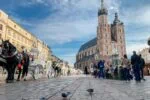
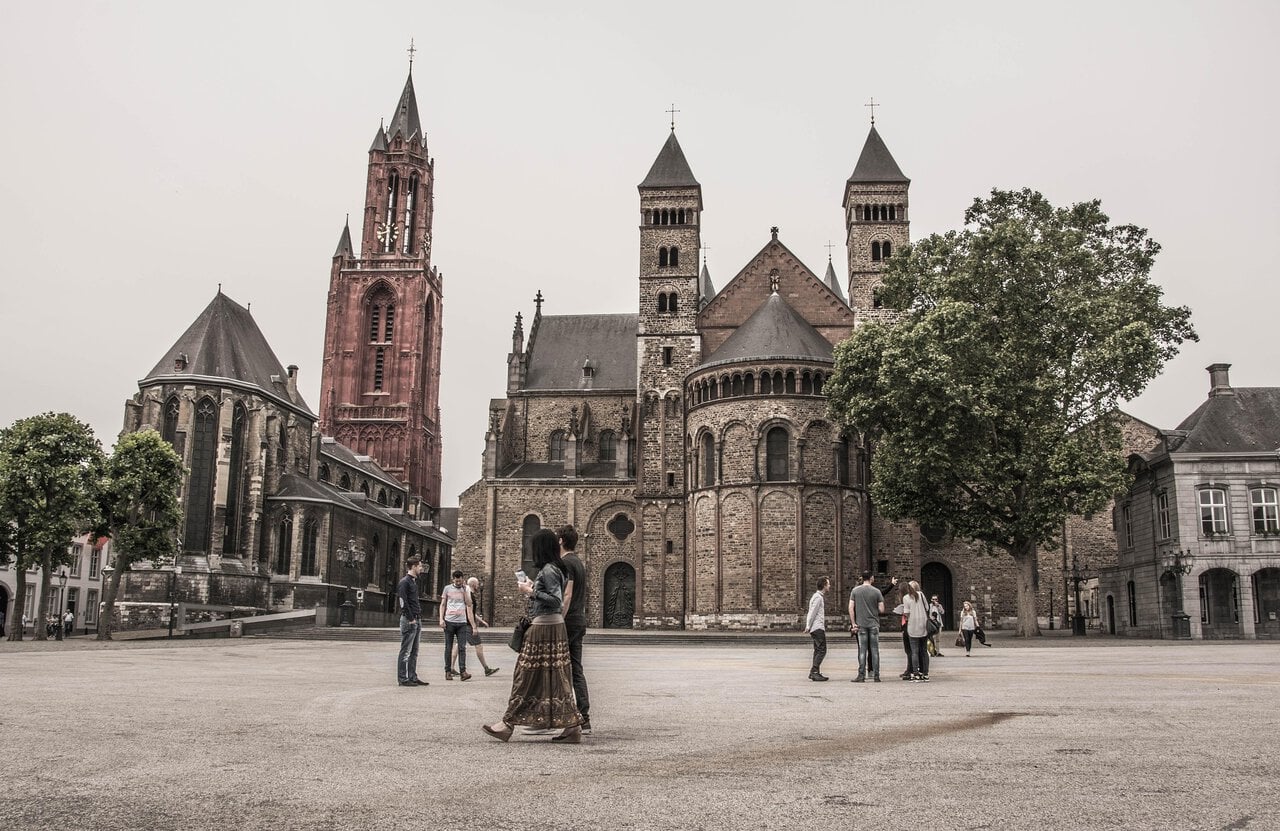
Vrijthof is Maastricht’s largest and most theatrical square, and for most visitors it is where a trip to the city begins and ends. Framed on one side by the Basilica of Saint Servatius and on another by the red-towered Sint-Janskerk, the square is lined with grand 18th and 19th-century townhouses, most of which now house cafés and restaurants with wide, sun-trap terraces. In fine weather it is one of the most pleasant places in the Netherlands to simply sit with a coffee or a glass of Limburg beer and watch the city go by.
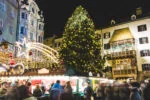
The square has a long civic history. It began as an open, unbuilt area outside the original city walls (the name literally means “free court” or “free churchyard”) and was long used for markets, military drilling and public gatherings. Today it hosts some of Maastricht’s biggest annual events, including the Preuvenemint food festival at the end of August, when local restaurants set up stalls across the square, and an atmospheric Christmas market each December, complete with an open-air ice rink.
Look out for the statue of Jean-Pierre Minckelers near the Basilica, commemorating the Maastricht-born scientist credited with pioneering the use of coal gas for lighting. It is a small detail, but typical of how much layered history sits in plain sight around this square. In winter, Vrijthof also becomes the stage for Toppers in Concert and other major events, so if you are visiting in December it is worth checking the calendar as parts of the square may be fenced off for construction of stages and market stalls in the days beforehand.
Vrijthof is also the natural starting point for exploring the rest of the old town on foot. From here it is a two-minute walk to Boekhandel Dominicanen, five minutes to the Markt and Stadhuis, and ten minutes down to the Maas riverside. Because of this central position, many walking tours and the hop-on cycling routes around the city begin or pass through Vrijthof, and it is a sensible, easy-to-find meeting point if your group is splitting up to see different sights.
Practically speaking, allow 30 to 45 minutes simply to cross the square, admire both church facades and settle in for a drink, longer if you plan to eat a full meal at one of the terrace restaurants. The square is free to enter and open at all times, though it is naturally at its liveliest from late morning through to the evening, and considerably quieter (and arguably more atmospheric) at dawn or after dark when the church facades are floodlit.
Best for two or three nights. The widest choice of rooms, with filters for free cancellation and included breakfast.
View staysBest for groups who want one address and separate bedrooms rather than three hotel rooms.
See holiday homesBest as a last check before booking. Compares Maastricht hotel rates across several sites in one search.
Compare ratesBasilica of Saint Servatius and Its Treasury
The Basilica of Saint Servatius (Sint-Servaasbasiliek) is widely considered the oldest church in the Netherlands, built over the grave of Servatius, the 4th-century bishop of Tongeren who is credited with bringing Christianity to the region and who died in Maastricht around 384 AD. The current Romanesque structure dates largely from the 11th century onwards, though the site has been a place of pilgrimage since long before that, and its solid, fortress-like western tower dominates one side of Vrijthof square.
Inside, the nave’s heavy stone columns and dim, atmospheric lighting give a real sense of the building’s age. The church itself is free to enter, and even a brief walk through gives visitors a feel for how different Maastricht’s ecclesiastical architecture is from the brick Protestant churches typical of the northern Netherlands. This is very much a southern, Catholic, continental European church, closer in feel to religious buildings in Belgium or the Rhineland than to those in Amsterdam or Utrecht.
The real highlight for most visitors is the Treasury (Schatkamer), reached via a separate paid entrance, typically around €6 for adults. It holds one of the most important collections of medieval religious art and reliquaries in the Netherlands, including the reliquary bust of Saint Servatius, the ornate “Noodkist” (Emergency Chest) reliquary paraded through the streets during the septennial Heiligdomsvaart pilgrimage, ivory carvings, and vestments dating back centuries. Even visitors with no particular religious interest tend to find the sheer craftsmanship and age of the objects striking.
The crypt beneath the church, where Servatius is traditionally said to be buried, is another point of interest, along with the cloister garden accessible from inside. Signage throughout is in Dutch and English, and the Treasury visit is self-guided with information panels, taking most visitors 30 to 45 minutes to work through properly on top of time spent in the main church.
Because the Basilica sits directly on Vrijthof, it is easy to combine with a coffee stop or a visit to neighbouring Sint-Janskerk. Opening hours vary seasonally and around religious services, so if the Treasury is your main reason for visiting, it is worth checking current hours online before making a special trip, particularly on Sunday mornings when services take priority.
Sint-Janskerk and the Red Tower
Standing immediately beside the Basilica of Saint Servatius, and sharing the same stretch of Vrijthof, Sint-Janskerk is instantly recognisable for its bright red Gothic tower, which pokes up above the square’s rooftops and is visible from many points around the city. The church itself dates largely from the 14th and 15th centuries and was originally built to serve as the baptismal church for the Basilica next door, since Saint Servatius’s status as a collegiate church meant it could not perform baptisms itself.
The tower’s distinctive colour has a practical, if slightly startling, origin: it was traditionally rendered and tinted using a reddish pigment (historically associated with ox blood in local lore, though modern renderings use mineral-based red paint) to protect and weatherproof the soft local sandstone, and to visually distinguish it from the Basilica’s tower. Today the two towers standing side by side, one pale grey stone and one vivid red, make one of the most photographed views in Maastricht.
For a small admission fee, typically in the €4-5 range, visitors can climb the tower’s roughly 200-plus narrow, winding steps. It is not a climb for anyone with mobility concerns or serious claustrophobia, as the stairwell narrows considerably near the top, but the reward is one of the best panoramic views in the city, taking in Vrijthof, the Basilica’s roofline at close quarters, and rooftops stretching out towards St Pietersberg to the south and the Maas to the east.
The church interior itself is simpler and less ornamented than the Basilica’s, reflecting its originally more functional role, but it is worth a brief look for its whitewashed Gothic vaulting and quieter atmosphere. Sint-Janskerk today also hosts occasional concerts and art installations, so check local listings if you want to combine a tower climb with a musical performance.
Allow around 30 minutes for the full visit, including the climb, and note that the tower is closed in poor weather conditions for safety reasons. Given how close it sits to the Basilica, most visitors combine both in a single stop on Vrijthof, making this one of the most time-efficient pairings in the city.
Boekhandel Dominicanen
Regularly named among the most beautiful bookshops in the world, Boekhandel Dominicanen occupies a 13th-century Dominican church just off Vrijthof, and it is one of the single most striking interiors in the Netherlands. The Gothic church, with its soaring ribbed vaults and tall stained-glass windows, was deconsecrated long ago and used for various purposes over the centuries, including as a bicycle storage depot, before being converted into a bookshop in 2006 by Dutch architecture firm Merkx+Girod.
The conversion is deliberately reversible and respectful of the original building: a freestanding, three-storey black steel bookcase structure rises through the centre of the nave without touching the historic walls or columns, so the church’s original architecture remains fully visible and legible. Walking up the steel staircases inside the structure to browse books at height, with medieval stone vaulting just metres away, is a genuinely unusual experience that draws architecture enthusiasts as much as book lovers.
At the rear of the church, in what was once the choir, sits a small café where visitors can get a coffee and sit with a book beneath a large cross-shaped bookshelf display, one of the shop’s most photographed features. The bookshop stocks a broad range of Dutch and English-language titles, along with stationery, gifts and a well-curated selection of books about Maastricht and the surrounding Limburg region.
Entry is completely free, and browsing (or simply stepping inside to look up at the vaulting) takes most visitors 20 to 30 minutes, though bibliophiles can easily lose an hour here. It gets busy with day-trippers and tour groups, particularly around midday, so an early morning or later afternoon visit tends to be calmer if you want photographs without crowds in them.
Because it sits only a couple of minutes’ walk from Vrijthof, Boekhandel Dominicanen is easy to fold into a wider loop of the old town’s churches and squares, and it is one of the few attractions in this guide that costs nothing at all to enjoy, making it a good stop regardless of budget or how long you have in the city.
Markt Square and the Stadhuis
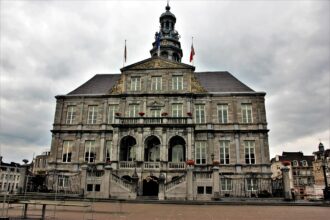
A short walk from Vrijthof, Maastricht’s Markt (market square) is a livelier, more everyday counterpart to its grander neighbour, dominated by the striking 17th-century Stadhuis (town hall) standing in splendid isolation in the middle of the square rather than fronting onto it like most Dutch town halls. Designed by Pieter Post and built between 1659 and 1664, the Stadhuis has a distinctive twin external staircase leading up to its main entrance and a carillon in its central tower that still rings out over the square.
The Stadhuis’s unusual freestanding position and dual-entrance design were partly a diplomatic solution to Maastricht’s historically divided governance: for centuries the city was jointly ruled by the Bishop of Liège and the Duke of Brabant (later the States General), and the symmetrical staircases are said to reflect this dual authority, with each power using its own entrance. Interior visits are possible on certain days or by appointment through the tourist office, revealing 17th and 18th-century tapestries and a wedding hall still used for civil ceremonies today.
The Markt itself hosts a general market on Wednesday and Friday mornings, when stalls selling flowers, cheese, fabric, local produce and street food fill the square, giving visitors a good sense of everyday Maastricht life away from the more tourist-oriented Vrijthof. The surrounding streets are lined with cafés, bakeries and a scattering of independent shops.
Allow 20 to 30 minutes to see the square and Stadhuis exterior properly, longer if you time your visit for a market day or manage to combine it with an interior tour. The square is only a few minutes’ walk from both Vrijthof and the Helpoort, making it easy to link into a wider walking route through the old town.
Basilica of Our Lady (Sterre der Zee)
Tucked into a quieter corner of the old town near the Helpoort, the Basilica of Our Lady, Star of the Sea (Onze Lieve Vrouwebasiliek, locally called the “Sterre der Zee“) is Maastricht’s other great Romanesque church and a striking contrast to the busier Vrijthof churches. Its massive, windowless westwork tower, resembling a fortress more than a place of worship, dates back to the 11th and 12th centuries and reflects a period when churches in this border region doubled as defensive structures.
Inside, the atmosphere is noticeably more hushed and devotional than the Basilica of Saint Servatius. The church houses a revered statue of Our Lady, Star of the Sea, in a candlelit side chapel that remains an active site of pilgrimage and prayer, with racks of votive candles usually lit by visitors and locals alike. The contrast between the heavy Romanesque stonework and the flickering warmth of the candle chapel makes this one of the more atmospheric religious sites in the city.
The cloistered inner courtyard, accessible from within the church complex, offers a peaceful spot away from the streets, and a small museum and treasury section displays vestments and liturgical items relating to the church’s long history as a Marian shrine.
Entry to the main church is free, with donations welcomed, and a visit typically takes 20 to 30 minutes unless you linger in the candle chapel or courtyard. Because it sits close to the Helpoort and the start of several riverside and old-town walking routes, it pairs naturally with a wider stroll through the historic Jekerkwartier neighbourhood, one of the prettiest and least crowded parts of central Maastricht.
St Pietersberg Hill and Fort Sint Pieter
Rising just south of the old town, St Pietersberg (St Peter’s Hill) is a low but distinctive limestone plateau that has shaped Maastricht’s history, economy and even its underground geography for two thousand years. The soft marlstone (locally called “mergel”) that makes up the hill has been quarried since Roman times, first for building material and later, famously, hollowed out into the vast network of tunnels known as the Grotten Sint-Pietersberg, covered in more detail in the next section.
At the top of the hill sits Fort Sint Pieter, a star-shaped fortress completed in 1701 as part of Maastricht’s extensive defensive ring, built to protect the vulnerable high ground overlooking the city from potential artillery positions. The fort saw active military use for over two centuries and offers guided tours (typically around €10-12 for adults, often combinable with a caves ticket) that take visitors through its casemates, gun positions and officers’ quarters, along with sweeping views from the ramparts over the Maas valley and, on a clear day, into Belgium.
The hill itself is a popular green space for Maastricht residents, criss-crossed with walking and cycling paths through orchards, grassland and pockets of woodland managed partly as a nature reserve. It is one of the few genuinely hilly landscapes in the Netherlands, and the contrast with the flat countryside further north is part of why this area feels so distinct from the rest of the country.
Reaching St Pietersberg from Vrijthof takes 30-40 minutes on foot along the Maas, or around 10-15 minutes by local bus, with the fort and cave entrances a short walk apart at the top. Cyclists can also reach it easily via the riverside paths, and combining the fort tour with a caves tour makes for a satisfying half-day out of the city centre.
Allow 2 to 3 hours if you plan to walk up, tour the fort, and spend some time enjoying the views and green space, and dress for the weather since much of this visit is outdoors and exposed on the ramparts.
Best for long or awkward journeys. Builds one itinerary out of separate flights.
View flightsBest for anyone whose home plan charges by the megabyte abroad. Pay a fixed price up front.
Check eSIMsBest after a long flight or a late landing. Price agreed before you travel, and no taxi queue.
Check transfersGrotten Sint-Pietersberg: The Caves Beneath the Hill
Beneath St Pietersberg lies one of the Netherlands’ most surprising attractions: over many kilometres of man-made tunnels and passages, carved out of the soft marlstone by quarrying that began under the Romans and continued in earnest from the Middle Ages through to the early 20th century. These are real, extensive limestone caves, not a recreated tourist attraction, and they are only accessible on guided tours, both for visitor safety in the maze-like network and to protect the fragile historic drawings on the walls.
Two main sections are open to visitors: the North Caves (Grotten Noord), reached from near Fort Sint Pieter, and the Zonneberg Caves (Grotten Zonneberg), entered from the Slavante area on the other side of the hill. Guides lead small groups through cool, constant-temperature corridors (typically around 10-11°C year-round, so a jacket is essential even in summer) lined with centuries of charcoal drawings, carved inscriptions and dates left by generations of quarrymen, soldiers and visitors.
The caves have real historical weight beyond the quarrying itself. During the Second World War, sections of the tunnels served as air-raid shelters for thousands of local residents, and parts of the Zonneberg network were used to secretly store some of the Netherlands’ most treasured artworks, including pieces from the Rijksmuseum collection, safely hidden from occupying forces. Guides typically point out the sealed “vault” areas associated with this wartime storage as part of the standard tour route.
Standard guided tours run around 45 minutes to just over an hour, with tickets typically costing in the region of €9-14 for adults depending on the specific route and operator, and are offered in both Dutch and English at scheduled times (English tours are more limited, especially outside peak season, so booking ahead online is strongly recommended). Combination tickets covering both a cave tour and Fort Sint Pieter are usually available and represent good value if you are making the trip out to the hill anyway.
Note that the caves involve walking on uneven ground with sections of low ceiling, so they are not well suited to visitors with significant mobility restrictions, and comfortable, closed-toe shoes are strongly advised. This is genuinely one of the most memorable things to do in Maastricht and, alongside the food scene, is frequently cited by repeat visitors as the attraction that surprised them most.
Bonnefantenmuseum
Maastricht’s flagship art museum sits across the river from the old town in the modern Céramique district, and it is as notable for its building as for its collection. Designed by the celebrated Italian architect Aldo Rossi and opened in 1995, the Bonnefantenmuseum is instantly recognisable for its rocket-like central dome rising above the Maas riverbank, a striking piece of postmodern architecture that has become something of a symbol for the redeveloped Céramique quarter.
Inside, the collection spans two very different strengths: an outstanding collection of early Italian and Flemish/Netherlandish “old master” paintings and sculpture, including significant medieval and Renaissance devotional works, and a strong programme of modern and contemporary art, with rotating exhibitions that have featured major international names alongside Limburg-connected artists. The building’s dramatic central staircase, rising up through the dome, is worth experiencing in its own right and connects the different collection floors in a genuinely theatrical way.
Adult admission is around €18-22, with free entry for children up to around 12 and reduced rates for students and museum card holders, and the museum is closed on Mondays. Given the size of the collection and the temporary exhibitions, most visitors need 1.5 to 2 hours to see the museum properly, longer for serious art enthusiasts wanting to spend real time with the old masters galleries.
The museum also has a café with river views and a well-stocked shop focused on art books and design objects. It sits about a 10-15 minute walk from Vrijthof across the Sint Servaasbrug or the newer Hoeg Brögk pedestrian bridge, making it an easy add-on to a riverside walk through the Wyck and Céramique areas covered later in this guide.
Because admission prices and opening hours are reviewed periodically, it is worth checking the museum’s official site shortly before your visit, particularly if a major touring exhibition is on, as these sometimes carry a supplementary charge or require timed-entry booking.
Natural History Museum Maastricht
Just a short walk from Vrijthof, the Natural History Museum Maastricht (Natuurhistorisch Museum Maastricht) is a smaller, more old-fashioned museum than the Bonnefanten, but it holds a genuinely important place in scientific history that most visitors never expect from a modest regional museum. The St Pietersberg quarries beneath the city are one of the world’s most significant sites for Late Cretaceous marine fossils, and it was here, in 1770s quarrying, that a huge fossilised skull was discovered that later gave its name to an entire prehistoric marine reptile genus: Mosasaurus, the “lizard of the Maas”.
The museum’s collection includes mosasaur fossils and casts, along with an extensive collection of other marine fossils recovered from the local quarries over the past two centuries, giving Maastricht an outsized role in the naming of the “Maastrichtian” geological age, the final stage of the Cretaceous period before the mass extinction event that ended the age of dinosaurs. For visitors with any interest in palaeontology or geology, this connection between the city’s own quarried hill and a globally recognised scientific timescale is a genuine highlight.
Beyond fossils, the museum covers the natural history and ecology of the wider Limburg region, including its cave-dwelling bats, riverine wildlife along the Maas, and a small but pleasant butterfly garden that is popular with families. Exhibits are presented in a fairly traditional, glass-case style compared to more modern interactive museums, which some visitors find charming and others find a little dated, but the depth of the fossil collection more than compensates.
Admission is typically in the €10-13 range for adults, with the museum generally open Tuesday to Friday and with different, often shorter, hours at weekends, so check current times before visiting, especially around public holidays. A visit takes most people 1 to 1.5 hours, making it easy to combine with the nearby Vrijthof churches or a stop at Boekhandel Dominicanen on the same walk.
Helpoort and the Medieval City Walls
The Helpoort, dating from around 1229, is the oldest surviving city gate in the Netherlands and a rare, tangible piece of Maastricht’s first medieval city wall. Its twin round towers and heavy stone arch once controlled access to the city from the south, near where the road led towards Liège, and the gate’s survival (many equivalent structures elsewhere in the country were demolished as cities expanded) is largely down to Maastricht’s continued status as a fortified border town for centuries afterwards.
Immediately behind the Helpoort runs a well-preserved stretch of the old city walls and the pleasant Stadspark, a green corridor that traces the former fortifications along the edge of the old town. Walking this route gives a good physical sense of how compact and defensible medieval Maastricht was, and how the later, larger ring of walls and bastions (of which Fort Sint Pieter was ultimately part) expanded the city’s defended area over subsequent centuries as the town grew and artillery technology advanced.
The gate’s interior is occasionally opened for small exhibitions and during Heritage Open Days, with a modest fee when this is the case, but for most of the year the main appeal is simply the exterior view and the walk along the adjoining walls and park, both of which are free and always accessible.
The Helpoort sits at the southern edge of the Jekerkwartier, one of Maastricht’s oldest and most picturesque residential quarters, with narrow lanes, the small Jeker river running through it, and several appealing independent cafés. Allow 20 to 30 minutes for the gate and immediate walls, longer if you wander on into the Jekerkwartier itself, which many repeat visitors rate as one of the most charming, least crowded corners of the city.
Riverside Walks Along the Maas
The River Maas cuts right through the centre of Maastricht, dividing the historic western old town from the eastern Wyck and Céramique districts, and its banks offer some of the most relaxed, low-cost sightseeing the city has to offer. The Maaspromenade on the western bank runs along beneath the old fortifications, past small parks and public art, and offers good views across to Wyck’s church spires and the modern Bonnefantenmuseum dome.
Several bridges make it easy to cross back and forth and turn a stroll into a loop. The Sint Servaasbrug, a stone bridge with medieval origins (rebuilt several times over the centuries, most substantially after wartime damage), is the oldest crossing point and is now largely pedestrianised, making it a particularly pleasant place to pause and watch river traffic. The newer Hoeg Brögk pedestrian and cycle bridge, opened in the 2000s, offers a more contemporary vantage point slightly south, while the Wilhelminabrug and Noorderbrug carry most of the vehicle traffic further out from the centre.
For a longer walk, the paths continue south towards the base of St Pietersberg and north past the Bassin harbour area, giving options anywhere from a gentle 20-minute riverside stroll to a genuine hour-plus walk taking in several neighbourhoods. Cyclists are well catered for too, with dedicated paths running along both banks connecting into the wider Dutch and cross-border cycling network.
In warmer months, the riverbanks fill with locals picnicking, paddleboarding and relaxing on the grassy sections near the Bassin, and several bars and restaurants along the Maastricht side of the Maas set up outdoor seating directly overlooking the water. A short scenic boat cruise on the river is also available seasonally from operators based near the Maaspromenade, offering a different perspective on the old town’s fortified riverfront for those who prefer to sit rather than walk.
None of this costs anything beyond what you choose to spend at a café or on a boat trip, and the flat, well-maintained paths make it one of the most accessible things to do in the city for visitors of any mobility level or age group.
Wyck and the Bassin Quarter
Across the Sint Servaasbrug from the old town, Wyck is Maastricht’s most fashionable district for independent shopping and dining, and a useful counterpoint if the old town’s churches and squares start to feel touristy. Rechtstraat, Wyck’s main street, is lined with design boutiques, vintage shops, art galleries and a growing concentration of well-regarded restaurants, giving the area a noticeably younger, more design-conscious atmosphere than the historic core.
A little further north, the Bassin is a former inland harbour, once used for barge traffic connected to the Zuid-Willemsvaart canal, that has been redeveloped into one of the city’s most attractive spots for an evening out. Old warehouse buildings around the water have been converted into bars and restaurants with terraces directly on the harbour edge, and on warm evenings the area has a relaxed, sociable buzz that is quite different from the more formal grandeur of Vrijthof.
Wyck also connects directly to the Céramique district and the Bonnefantenmuseum, making it easy to combine an afternoon of art with an evening of dinner and drinks without needing to cross back to the old town. Maastricht’s train station is also on this side of the river, so Wyck is often visitors’ first and last impression of the city if arriving or departing by rail.
Allow at least an hour to wander Rechtstraat and the Bassin properly, longer if you plan to eat or shop. Because it sits directly across the water from the old town’s main sights, Wyck fits naturally at either the start or end of a day exploring central Maastricht, and its restaurant scene is generally considered a notch more adventurous and less tourist-oriented than the options directly on Vrijthof.
Best for a short stop where being central matters more than the room. Dorms and private rooms both listed.
See hostelsBest for anyone flying more than once or twice a year. Handles the compensation claim so you are not chasing the airline.
See AirHelp+Best for a day with a bag and nowhere to put it. Find a storage point near where you already are.
View storageKruisherenhotel
One of Maastricht’s most talked-about pieces of architecture is not, technically, a visitor attraction at all, but a hotel. The Kruisherenhotel occupies a former 15th-century monastery and Gothic church that once belonged to the Crutched Friars (Kruisheren), and its striking adaptive reuse, completed in the early 2000s, has made it a benchmark example of how historic religious buildings can be given a new life without erasing their character.
The former church nave now serves as the hotel’s dramatic public lobby and bar area, with the original Gothic vaulting, stone columns and stained glass left largely intact above a sleek, minimalist glass-and-steel mezzanine structure inserted within it, echoing the same “building within a building” philosophy seen at Boekhandel Dominicanen across town. Guest rooms occupy the surrounding cloister buildings and a newer wing, but it is this central space that draws non-guests to step inside for a look, or a drink at the bar.
Visitors are generally welcome to enter the public lobby and bar respectfully, particularly to enjoy a coffee or evening drink, though it is naturally not set up as a formal tourist attraction with an entrance fee or set opening hours in the way a museum would be. It is best treated as a bonus stop if you are passing nearby rather than a dedicated destination, and is only a five-minute walk from Vrijthof.
Fifteen to twenty minutes is enough to appreciate the space, though a longer stop for a drink lets you take in the details properly. Along with Boekhandel Dominicanen, the Kruisherenhotel is one of the clearest illustrations of how Maastricht has approached its abundance of historic religious buildings: not as museum pieces frozen in time, but as spaces to be reused, respected and kept genuinely alive.
Stokstraat Quarter and Bisschopsmolen
Running between Vrijthof and the Onze Lieve Vrouweplein, the Stokstraat quarter is Maastricht’s smartest shopping street, lined with 18th-century townhouses now housing designer boutiques, jewellers, and high-end homeware and fashion shops. Even for visitors not planning to shop, it is a pleasant, elegant stretch to walk simply for the architecture and the quieter pace compared to the busier squares nearby.
Just off this route sits Bisschopsmolen, a genuinely working watermill on the small Jeker river that has been milling flour on this site for centuries, and which now doubles as a bakery and café. It is one of the few working watermills left in an urban Dutch setting, and visitors can watch the mill in action through windows while sampling its output, most notably fresh Limburgse vlaai, the region’s distinctive open fruit pie, considered by many locals to be the definitive local specialty food.
The surrounding Jekerkwartier, mentioned earlier in connection with the Helpoort, extends from here down towards the old city walls, and its narrow lanes and the visible course of the Jeker river running between old buildings make it one of the most atmospheric, photogenic corners of Maastricht, especially in the late afternoon light.
Allow 45 minutes to an hour to properly wander Stokstraat, stop at Bisschopsmolen for a slice of vlaai or a fresh loaf, and continue on into the Jekerkwartier lanes. Browsing costs nothing, and this pairing of upscale shopping street and centuries-old working mill captures something distinctive about Maastricht’s blend of refinement and genuine, lived-in history.
Bordering Belgium and Germany: Vaals and the Drielandenpunt
No guide to Maastricht is complete without addressing the city’s unusual geography. Maastricht sits in the narrowest part of the Netherlands, hemmed in by Belgium to the west and south and by Germany to the east, and the actual point where all three countries meet, the Drielandenpunt, is only around 30 minutes‘ drive (or a manageable regional bus journey) from the city centre, near the small Dutch town of Vaals.
The Drielandenpunt sits atop the Vaalserberg, at 322.7 metres the highest point in the mainland Netherlands (a modest hill by most countries’ standards, but a genuine landmark in a country as flat as this one). A viewing tower, an outdoor labyrinth maze, and a scattering of cafés and souvenir stalls mark the spot, and it is entirely possible to stand with one foot in the Netherlands, walk a few paces into Belgium, and continue on into Germany within a couple of minutes, all without showing a passport thanks to the open Schengen border.
Beyond the novelty of the border point itself, this location makes it realistic to combine a Maastricht trip with a taste of neighbouring countries. The German city of Aachen, with its famous cathedral and thermal baths, sits only around 30km (roughly 30-40 minutes by car or train) from Maastricht, while the Belgian city of Liège is a similar distance in the opposite direction, both easily reachable for a half or full day trip using regional trains or the cross-border Euregio Ticket, which is specifically designed for exploring this Netherlands-Belgium-Germany border region by public transport.
Because this really is more of a half-day excursion than a within-city attraction, we cover it and other nearby destinations, including Aachen, Liège and Valkenburg, in more depth in our separate Day Trips from Maastricht guide. But it is worth flagging here as a reminder that Maastricht’s cross-border position is not just a geographic curiosity, it is one of the most practical reasons to base a longer trip here rather than in a more centrally Dutch city.

Which Maastricht Attraction Is Right for You?
With only a single day in Maastricht, prioritise the compact old-town core: Vrijthof and its two churches (the Basilica of Saint Servatius and Sint-Janskerk), a quick look inside Boekhandel Dominicanen, and a walk down to the Markt and across the Sint Servaasbrug to Wyck for lunch. This route covers the highest-density cluster of sights and can comfortably be done on foot in half a day, leaving the afternoon free for either the Bonnefantenmuseum or a first taste of St Pietersberg.
With two days, add St Pietersberg properly: budget a half day for the walk or bus out, the Grotten Sint-Pietersberg caves tour, and Fort Sint Pieter, then use the remainder of your second day for the Natural History Museum, the Helpoort and Jekerkwartier, and the Stokstraat quarter. This pace allows for a relaxed lunch and doesn’t feel rushed between sights, which matters given how much of Maastricht’s appeal lies in lingering rather than checklist sightseeing.
Travelling with children, the Natural History Museum’s fossils and butterfly garden and the genuine adventure of the caves tour tend to be the biggest hits, while the flat riverside paths make for easy family walking without demanding attractions with rigid, adult-paced content. Art and architecture enthusiasts should prioritise the Bonnefantenmuseum, Boekhandel Dominicanen and the Kruisherenhotel, three very different but equally striking examples of how Maastricht treats its buildings.
If you have three days or more, or are staying in the wider region, use the extra time to head out to the Drielandenpunt and combine it with a taste of Aachen or Liège, both realistic half-day additions given how close Maastricht sits to both borders. Whatever your pace, book any timed-entry attractions (particularly cave tours in English) a few days ahead in peak summer months and around the Preuvenemint festival at the end of August, when the city is notably busier than usual.

Rupert’s Handy Travel Tips
Maastricht is a small city with a big personality, and a little planning goes a long way here. Here are my top tips for making the most of your visit.
- Bring a jacket for the caves: the Grotten Sint-Pietersberg sit at a constant 10-11°C year-round, so even a warm summer day up top means a genuinely chilly hour underground.
- Book English cave tours ahead: Dutch-language tours run more frequently than English ones, and English slots can sell out days ahead in peak season, so book online before you arrive rather than turning up hoping for a space.
- Wear proper shoes for St Pietersberg: the hill’s paths and the uneven cave floors are not forgiving in sandals or thin-soled shoes, especially after rain.
- Cross into Belgium or Germany for a change of pace: even a short trip to the Drielandenpunt or a train to Liège shows you a genuinely different country within an hour of central Maastricht, and it’s a novelty worth experiencing.
- Save Wyck for the evening: the old town’s Vrijthof side is glorious by day, but Wyck and the Bassin come alive after dark with a more relaxed, less touristy dinner scene.
Want to meet the reindeer behind our travel tips? Find out more in our page Who is Rupert?.




Frequently Asked Questions
How many days do I need in Maastricht?
A single day is enough to cover Vrijthof, the main churches and the old town, but two to three days lets you add St Pietersberg’s hill, fort and caves properly, plus the museums, without rushing. Many visitors also use Maastricht as a base for day trips into Belgium and Germany, which adds an extra day or two well spent.
Are the St Pietersberg caves suitable for children?
Generally yes, and children often enjoy them enormously, but tours involve roughly an hour of walking on uneven ground in cool temperatures, and very young children may find the darker sections unsettling. Check the specific tour’s age guidance when booking.
Do I need to book cave tours in advance?
It is strongly recommended, particularly for English-language tours and during summer weekends, since tours run in small guided groups at set times and can sell out.
Is Maastricht walkable, or will I need public transport?
The old town, Vrijthof, Wyck and the riverside are all comfortably walkable, generally within 15-20 minutes of each other. St Pietersberg is the main exception, at 30-40 minutes on foot from the centre, though a short local bus ride cuts this down considerably.
Can I easily visit Belgium or Germany from Maastricht?
Yes, this is one of the city’s most distinctive features. The Drielandenpunt border point is around 30 minutes away, Liège in Belgium and Aachen in Germany are both roughly 30-40 minutes by car or train, and the cross-border Euregio Ticket is designed specifically for exploring this tri-national region by public transport.
What is the best time of year to visit Maastricht?
Spring and early autumn offer pleasant weather for walking St Pietersberg and the riverside without peak summer crowds. Late August brings the lively Preuvenemint food festival on Vrijthof, and December is popular for the Christmas market, though both periods mean higher prices and busier attractions.
Is the Basilica of Saint Servatius free to enter?
The main church is free, though the Treasury, which holds the most valuable relics and reliquaries, charges a separate admission fee, typically around €6.
Which museum should I choose if I only have time for one?
Art and architecture enthusiasts should choose the Bonnefantenmuseum for its old masters collection and Aldo Rossi building, while families and anyone curious about the mosasaur discovery connected to St Pietersberg’s quarries will likely prefer the Natural History Museum Maastricht.
Further Reading
If you are planning to venture beyond the city centre, our Day Trips from Maastricht guide covers the Drielandenpunt, Valkenburg, Aachen and Liège in far more depth than we could here, including transport options for crossing into Belgium and Germany. For onward or arrival travel, our Maastricht Airport Transfers guide covers getting to and from Maastricht Aachen Airport, while the Euregio Ticket guide explains the cross-border public transport pass that is particularly useful for a city sitting this close to two other countries.
Visitors combining Maastricht with the rest of the Netherlands should also look at our guides to Things to Do in Eindhoven and Things to Do in Utrecht, both realistic stops on a longer Dutch rail itinerary, or the Interrail Benelux Pass guide if you plan to travel more widely across the Netherlands, Belgium and Luxembourg by train.
And if you’re also visiting Amsterdam as part of your trip, our cornerstone Things to Do in Amsterdam and Day Trips from Amsterdam guides cover the country’s best-known sights in the same level of detail, useful if you’re splitting a longer Netherlands trip between the north and the south of the country.