Reviewed by our editorial team Updated
Discover the Best of Eindhoven
Eindhoven is not the Netherlands most tourists picture. There are no canal rings here, no gabled 17th-century townhouses lining postcard waterways, and no tulip fields stretching to the horizon. What Eindhoven offers instead is something rarer among Dutch cities: a genuine sense of reinvention. This is a city that was quite literally built by a single company, nearly lost its identity when that company scaled back, and then rebuilt itself as the country’s undisputed capital of design, technology and innovation.
Philips founded its lighting and electronics empire here in 1891, and for the best part of a century Eindhoven’s fortunes rose and fell with the company’s. When Philips began moving production and, eventually, its headquarters away from the city through the 1990s, Eindhoven faced a real identity crisis. What happened next is the story this guide tells: the old factories became galleries, workshops and lofts, the engineering talent stayed and multiplied into a thriving tech and design scene, and the city rebranded itself around creativity rather than manufacturing. Today Eindhoven is home to the High Tech Campus, hosts one of the world’s most important design events, and each November transforms its entire city centre into an outdoor light art gallery.
This guide covers the essential Philips-era sites that explain how Eindhoven became what it is today, including the Philips Museum, the DAF Museum, Strijp-S and the extraordinary Evoluon. It also covers the Van Abbemuseum, one of Europe’s most respected contemporary art collections, along with the practical details of visiting during Dutch Design Week and GLOW, and a handful of genuine hidden gems that most short visits miss entirely.
Eindhoven works well as a standalone city break of two to three days, and it also pairs naturally with a trip to Maastricht further south, or with Amsterdam if you’re building a wider Dutch itinerary; Eindhoven Centraal is roughly 80 minutes from Amsterdam Centraal by direct train, making it an easy add-on rather than a major detour. If you’re arriving by air, Eindhoven Airport is the Netherlands’ second-busiest, served mainly by budget carriers, and sits just a short bus ride from the centre.
Unlike Amsterdam, where the challenge is narrowing down an overwhelming list of museums, Eindhoven rewards a slower, more thematic visit. Most of what matters here clusters into two zones: the compact city centre around the railway station (Philips Museum, Van Abbemuseum, the Evoluon nearby) and the Strijp-S district a short tram or cycle ride away. That geography makes Eindhoven refreshingly easy to plan around, and this guide is structured to help you do exactly that.
Eindhoven’s Identity as the Netherlands’ Design and Tech Capital
To understand why Eindhoven feels so different from other Dutch cities, it helps to understand the “Brainport” story. When Philips scaled back its manufacturing footprint through the 1990s, thousands of engineers, technicians and researchers who had spent their careers there stayed in the region rather than leaving. Many went on to found their own companies, spin off engineering consultancies, or move into the semiconductor and precision-manufacturing sector that grew up alongside them. That collective talent pool became the foundation of what’s now branded the Brainport Eindhoven region, a dense cluster of technology companies, research institutes and startups that punches remarkably far above its weight for a metropolitan area of under 300,000 people.
The most visible symbol of this is ASML, the Veldhoven-based chipmaking equipment manufacturer that produces the extreme ultraviolet lithography machines used to make the world’s most advanced computer chips, a company few outside the tech industry have heard of, yet one that sits at the centre of the global semiconductor supply chain. ASML isn’t set up for casual tourism, but its presence (along with the Eindhoven University of Technology, one of the country’s top engineering schools) explains why Eindhoven has such a young, international, highly educated population relative to its size, and why the streets around the centre feel noticeably more startup-and-scale-up in character than heritage-tourism-focused.
The High Tech Campus, a research and innovation park a short drive south of the centre, is sometimes described as “the smartest square kilometre in Europe” and hosts dozens of companies and research groups working on everything from medical technology to artificial intelligence. It’s a working campus rather than a visitor attraction, so most travellers won’t tour it directly, but its existence is part of the same story that gives Eindhoven its yearly design and lighting festivals: this is a city that has consciously chosen to rebuild its identity around innovation rather than simply commemorate an industrial past. Dutch Design Week and GLOW, covered in detail further down this guide, are best understood as the public-facing, walkable expression of that same underlying culture.
| Attraction | Time Needed | Admission | Best For |
|---|---|---|---|
| Philips Museum | 1.5-2 hours | Adults ~€13.50, children/students ~€7 | Understanding how Philips shaped the city |
| DAF Museum | 1.5-2 hours | Adults ~€14.50, students ~€9, children ~€7 | Truck, car and vehicle enthusiasts |
| Strijp-S | 2-4 hours | Free to explore (attractions inside vary) | Design lovers, street art, food halls |
| Van Abbemuseum | 1.5-2.5 hours | Adults €16, students/CJP €8, under-13 free | Modern and contemporary art fans |
| Evoluon | 1.5-2 hours | Adults from ~€15 (Next Nature Museum) | Architecture fans, futurism, families |
| GLOW Light Festival | 2-3 hours (evening) | Free (public route) | Visiting in November, evening walks |
| Dutch Design Week | Half a day to full day | Free outdoor program; ticketed venues vary | Visiting in October, design enthusiasts |
| Stadswandelpark | 30-60 minutes | Free | A quiet green break with sculpture |
| Silly Walks Tunnel | 10-15 minutes | Free | A quirky, quick stop near the station |
| Genneper Park | 1-3 hours | Free to enter (activities cost extra) | Families, outdoor time, a longer visit |
Best if you want daily housekeeping and a front desk. Filter by area first, then by price.
Check availabilityBest for groups who want one address and separate bedrooms rather than three hotel rooms.
See holiday homesBest if you have already picked a hotel. Checks the big booking sites for the same room and shows who is cheapest.
Check dealsPhilips Museum
There is no better place to start understanding Eindhoven than the Philips Museum, housed in the company’s original 1891 factory building on Emmasingel, right in the city centre and a short walk from the railway station. This unassuming redbrick building, nicknamed “de Witte Dame’s” older sibling in the local landscape of former Philips sites, is where it all began: Gerard Philips and his father Frederik set up shop here to manufacture carbon-filament light bulbs, and within a few decades the company had grown into one of the largest electronics manufacturers in the world.
The museum tells that story chronologically and hands-on. Expect galleries covering the earliest light bulb production lines, the radios and gramophones that made Philips a household name across Europe in the interwar years, the company’s wartime history (including the forced relocation of production and the moral complexities of operating under occupation), and the postwar boom that brought televisions, razors and the CD (co-developed with Sony) into homes worldwide. There’s a genuine sense of pride here, but also an honest, well-curated look at the difficult chapters.
Interactive elements make this more than a static walk-through: you can test old radios, see working demonstrations of early inventions, and younger visitors get a treasure-hunt trail included in the children’s ticket. An audio tour is included in every adult ticket and is available in several languages including English, German and French, which is worth knowing since a fair amount of the original signage leans on Dutch context.
The museum is open Tuesday to Sunday from 11:00 to 17:00, with extended hours on Mondays during Dutch school holidays. Adult admission runs approximately €13.50 and includes the audio guide; children aged 4-17 and students/CJP cardholders pay around €7. There’s a genuinely nice touch for budget travellers too: free entry every Tuesday between 15:30 and 17:00 (excluding school holidays and large groups), so if your visit falls on a Tuesday afternoon it’s worth timing your trip around it. The on-site café is a pleasant spot to sit afterwards, and the building itself is fully wheelchair accessible with a lift.
Give yourself closer to two hours here rather than rushing through in one; the chronological layout genuinely rewards a slow pace, and it’s easy to breeze past details in the earlier galleries if you’re eager to reach the more recognisable postwar consumer electronics. Note too that outside food isn’t permitted inside, so plan any packed lunch for before or after your visit, and that bike parking directly outside the museum is plentiful if you’re exploring the city by bicycle, which is the most practical way to get around Eindhoven generally.
DAF Museum
If Philips explains Eindhoven’s electronics heritage, DAF explains its equally important identity as a centre of automotive and truck engineering. DAF (Van Doorne’s Automobielfabriek) was founded in Eindhoven in 1928 and remains headquartered here today as one of Europe’s leading truck manufacturers, now part of the PACCAR group. The DAF Museum, located a little south of the centre on Tongelresestraat, is dedicated to telling that story across more than a century of Dutch vehicle manufacturing.
The collection spans several floors and halls, and it’s considerably more varied than the name might suggest. Alongside the trucks that made DAF’s international reputation, you’ll find the quirky Variomatic-transmission DAF passenger cars from the 1960s and 70s (a genuinely novel engineering approach at the time), military vehicles, prototypes, and a large collection of scale models. There’s also a strong emphasis on the engineering and design process, which fits neatly with Eindhoven’s broader “how things get made” theme running through this guide.
Families tend to enjoy this museum more than they expect: there’s a free activity trail for children aged 6-15, and several vehicles you can climb into or interact with rather than simply view from behind a rope. The museum shop is open to browse even without a ticket, which is a nice option if you’re just passing by.
Opening hours are Tuesday to Sunday, 10:00 to 17:00 (closed Mondays except Easter and Whit Monday). Adult admission is approximately €14.50, students pay around €9, and children aged 5-15 pay around €7; under-4s go free, as do Museumkaart holders. Guided tours can be arranged for groups, either during regular opening hours or outside them for a private experience, and are typically capped at around 15 people per guide to keep things manageable. The museum is about a 15-minute walk from Eindhoven Centraal, or a short hop on bus line 5, and note that parking in the surrounding streets is paid.
Petrolheads will want to budget extra time for the workshop areas, where restoration work on historic vehicles sometimes happens in view of visitors, and for the temporary exhibition space, which periodically hosts themed displays on specific vehicle eras or motorsport history. Because the DAF Museum sits a little further from the centre than the Philips Museum or Van Abbemuseum, it pairs well with a wider loop through the southern part of the city rather than being squeezed in as an afterthought between other stops.
Meet Wildlife from Around the World at Eindhoven Zoo
If you’re travelling with children, enjoy wildlife or simply want a break from Eindhoven’s museums and shopping streets, Eindhoven Zoo makes an excellent day out. Located just outside the city in a spacious natural setting, the zoo is home to almost 100 different animal species, allowing visitors to get surprisingly close to some of the world’s most impressive wildlife.
As you wander around the landscaped enclosures you’ll encounter African lions, Amur tigers, Asian elephants, Indian rhinos, cheetahs, chimpanzees, red pandas, meerkats, penguins and colourful bird species from around the world. The spacious habitats have been designed to replicate natural environments wherever possible, creating a pleasant experience for both visitors and the animals themselves.
Families are particularly well catered for. Alongside the animal exhibits are large indoor and outdoor adventure playgrounds, while younger children can cool off during warmer months in the popular water play area. Throughout the day, the zoo also hosts educational presentations where visitors can learn more about the animals and conservation programmes.
The zoo is easiest to reach by car, with parking available on site. It’s also possible to cycle from Eindhoven city centre in around 30 minutes, while public transport is available to nearby bus stops followed by a short walk. Most visitors should allow three to five hours to explore everything at a comfortable pace.
Whether you’re travelling as a family or simply enjoy seeing wildlife, Eindhoven Zoo offers a relaxing escape from the city and one of the region’s best attractions for animal lovers.
Experience the Home of PSV Eindhoven
Football fans shouldn’t miss the opportunity to visit Philips Stadium, home of PSV Eindhoven, one of the Netherlands’ most successful football clubs. Founded in 1913 by employees of the Philips electronics company, PSV has won numerous Dutch league titles and European trophies, making the stadium one of Dutch football’s most historic venues.
Your visit begins inside the PSV Museum, where you’ll discover the club’s remarkable history through championship trophies, historic shirts, rare photographs, interactive exhibits and memorabilia celebrating more than a century of football. The Hall of Fame pays tribute to legendary players including Romário and Jan van Beveren, while multimedia displays bring some of PSV’s greatest moments back to life.
For an even more memorable experience, upgrade to the guided stadium tour. This behind-the-scenes visit takes you into areas normally reserved for players and officials, including the changing rooms, players’ tunnel, pitchside dugouts, press room and the edge of the famous playing surface. Knowledgeable guides share stories about the club, memorable European nights and what happens behind the scenes on matchdays, making it enjoyable even for visitors with only a casual interest in football.
Located in the centre of Eindhoven, Philips Stadium is within easy walking distance of the railway station, making it one of the city’s easiest major attractions to visit. After exploring the museum or stadium, you can also stop at one of the on-site restaurants or browse the official PSV Fan Store for shirts, souvenirs and gifts.
Whether you’re a lifelong supporter or simply curious about one of the Netherlands’ biggest football clubs, the PSV Museum and Philips Stadium Tour offer a fascinating insight into Eindhoven’s sporting heritage.
Strijp-S: The Former Philips Industrial Site Turned Creative District
If you only have time for one area beyond the city centre, make it Strijp-S. This 27-hectare former Philips industrial complex, a short tram or bike ride (or roughly a 20-minute walk) west of Eindhoven Centraal, is where the city’s transformation from factory town to design capital is most visible and most tangible. Philips built its first factory here in 1916 (a glass plant producing incandescent light bulbs) and eventually operated under a “from sand to customer” philosophy, controlling everything from raw materials to finished consumer products on a single, largely closed-off site. For decades ordinary Eindhoveners couldn’t even enter; it was known locally as “het verboden stad,” the forbidden city.
Philips wound down production through the 1990s and sold the site in 2002 to a public-private redevelopment partnership between the municipality and construction firm VolkerWessels. What followed is a genuinely well-executed example of post-industrial urban renewal, guided by the philosophy “old buildings, new ideas.” Former factory halls have been converted into loft apartments (the GERARD and ANTON buildings among the best known), creative offices, startup space, and cultural venues, while new-build residential blocks fill in around them.
Wander the district today and you’ll find MU Hybrid Art House hosting experimental exhibitions, a rotating cast of independent cafés and restaurants inside converted industrial buildings, the Klokgebouw event hall (originally built as a factory clock tower building and now a major exhibition venue during Dutch Design Week), and SintLucas, a well-regarded creative vocational school that keeps the district genuinely lived-in rather than purely decorative. Street art and public sculpture appear on nearly every corner, and after dark the district’s LED lighting installations, a nod to Philips’ own lighting heritage, give it a distinctive glow.
Strijp-S is free to wander and works well self-guided over two to four hours, ideally combined with a meal at one of the food halls (Area 51 and Sectie-C are popular options with multiple vendors under one roof). Guided walking tours are also available through several local operators if you want more context on the architecture and history than the plaques provide. This is also ground zero for Dutch Design Week each October and hosts stages during GLOW in November, so if your visit coincides with either event, Strijp-S deserves extra time on your itinerary.
It’s worth pointing out some of the more specific buildings if architecture interests you: the Ketelhuis (former boiler house) and the Hoge Rug are both distinctive industrial structures now repurposed for offices and events, and the water tower that once served the factory complex still stands as a landmark visible from several streets away. The district is easiest to reach by bike (roughly 15-20 minutes from the centre along dedicated cycle paths), by tram-style bus services that run along the main Torenallee route, or on foot if you don’t mind a 20-minute walk each way. Cycling is genuinely the best option here, since Strijp-S itself is spread across a wide footprint and you’ll want the flexibility to move between its different pockets without backtracking on foot.
Van Abbemuseum
The Van Abbemuseum, on Stratumsedijk on the southern edge of the city centre (right by the Dommel river), punches well above its weight for a city of Eindhoven’s size. Founded in 1936 thanks to a donation from cigar manufacturer Henri van Abbe, it holds one of the most important modern and contemporary art collections in the Netherlands, with works by Picasso, Kandinsky, Chagall, El Lissitzky and Bacon sitting alongside a strong, continually rotating programme of contemporary artists.
What sets the Van Abbemuseum apart from many peer institutions is its curatorial ambition. Rather than simply displaying a permanent collection, the museum regularly reframes and recontextualises its own holdings, questioning how art institutions decide what’s worth preserving and how art relates to colonial history, politics and social change. It’s a genuinely thought-provoking visit rather than a passive one, and exhibitions change often enough that repeat visits over a few years rarely feel repetitive.
The building itself is worth a mention too: the original 1936 structure by Alexander Kropholler was extended in 2003 with a striking contemporary wing, and the contrast between the two eras of architecture mirrors the collection’s own dialogue between historic and contemporary work.
The museum is open Tuesday to Sunday, 11:00 to 17:00, with additional opening on select public holidays and during Dutch Design Week (it closes for New Year’s Day, King’s Day, Christmas Day and the day of the Eindhoven Marathon). Adult admission is €16, students and CJP cardholders pay €8, under-13s go free, and a family ticket (two adults plus up to three children) costs around €32. As with the Philips Museum, there’s a free entry window on Tuesdays from 15:00 to 17:00. Museumkaart, Rembrandt pass and ICOM/CIMAM members get in free. The museum is well set up for wheelchairs and mobility scooters, with two available to borrow by reservation, and it’s a five-minute walk from Eindhoven Centraal.
Because the collection and hang change so regularly, it’s worth checking the museum’s current exhibitions online before you go, particularly if there’s a specific artist or theme you’re hoping to see, since the permanent collection isn’t always fully on display, since large parts of it rotate through the museum’s thematic reinstallations. Photography without flash is generally permitted in most galleries, and the museum shop stocks a genuinely well-curated selection of design and art books, several of which are hard to find outside the Netherlands.
Best if you can move a day either way. Shows how the fare to Eindhoven changes across the month.
Compare flightsBest if you want maps and messaging working the moment you switch your phone on.
See eSIM plansBest if you would rather not work out the transport on arrival. Book it now and forget it.
View transfersThe Evoluon
No building says “Eindhoven” quite like the Evoluon. Sitting on a roundabout near Strijp on the western edge of the centre, this UFO-shaped structure opened in 1966 as a Philips-funded science and technology museum, designed by architects Louis Kalff and Leo de Bever, and it remains one of the most photographed and instantly recognisable pieces of architecture in the country. The saucer-like dome sits on a ring of slender concrete supports, and it’s every bit as striking in person as it looks in photographs, especially at dusk when it’s lit from below.
The Evoluon originally welcomed the public as a hands-on museum about technology and the future, but visitor numbers declined and it closed to general visitors in 1989. For more than three decades it operated almost exclusively as a conference and events venue, which meant that for a whole generation of visitors to Eindhoven, this landmark building was frustratingly off-limits from the inside.
That changed in 2022, when the Evoluon reopened to the public housing the Next Nature Museum, an institution focused on how technology, nature and the future intersect; interactive exhibitions here explore genetic engineering, artificial intelligence, sustainability and the blurred line between the natural and the artificial, all under that same iconic dome. It’s a genuinely fitting reuse: a building built to showcase the future of technology in the 1960s now houses exhibitions about the future of technology today.
The Next Nature Museum is open Wednesday to Sunday, 11:00 to 17:00, with adult tickets starting from around €15 (check current pricing online, as exhibition-linked pricing can vary). Even if you don’t go inside, it’s worth the short detour from the centre simply to see the building; it’s a five-to-ten minute cycle or bus ride from Eindhoven Centraal, and the surrounding plaza gives good vantage points for photos.
The Evoluon’s history also makes for a good example of how Eindhoven treats its industrial-era landmarks generally: rather than demolishing buildings once their original purpose disappears, the city has consistently found new uses that keep the structures relevant, from the Philips factory that became a museum, to the Strijp-S complex that became a creative district, to this science pavilion that spent decades as a conference venue before finding its way back to public use. If you’re interested in modernist and Brutalist-adjacent architecture more broadly, it’s worth combining a visit here with a look at “de Bijenkorf” and other Philips-era buildings scattered around the centre, several of which retain their original facades even where the interiors have been fully repurposed.
Dutch Design Week
If there’s a single week that captures why Eindhoven now calls itself the Netherlands’ design capital, it’s Dutch Design Week (DDW), held every October and running from the 17th to the 25th in 2026. This is the largest design event in Northern Europe, drawing several hundred thousand visitors across nine days to see work from around 2,600 designers spread over roughly 110 locations throughout the city.
DDW isn’t a single ticketed venue but a citywide programme: former factory buildings, the Klokgebouw and other spaces across Strijp-S, the city centre, and Sectie-C all host installations, product launches, graduate showcases from design academies, and experimental work spanning furniture, fashion, technology, food and architecture. Much of the programme is free to attend, though some talks, workshops and premium exhibitions require tickets booked in advance.
For visitors, the practical reality is that Eindhoven gets busy and hotel prices rise noticeably during DDW week, so book accommodation well ahead if your trip coincides with it. Wear comfortable shoes, since the exhibitions are spread widely enough that you’ll walk or cycle between clusters rather than see everything on foot from one base, and consider picking two or three neighbourhoods (Strijp-S plus the city centre is a sensible combination) rather than trying to cover the entire programme in one visit.
The event traces its roots back to 2002, and it has grown from a fairly modest local showcase into an internationally significant fixture on the design-industry calendar, with buyers, journalists and design students travelling from across Europe and beyond specifically for it. Areas worth prioritising include the Klokgebouw (generally the flagship venue with large-scale installations and headline exhibitors), Sectie-C (a cluster of studios and workspaces that opens up to visitors for the week), and the Design Academy Eindhoven’s graduate show, which has historically been one of the most talked-about single events within the wider programme and a genuine launchpad for young designers’ careers. Food trucks and pop-up bars spring up around the main venues, so you’re rarely far from a place to rest and refuel between exhibition halls.
GLOW Light Festival
Eindhoven’s other unmissable annual event is GLOW, a free outdoor light art festival that transforms the city centre into an after-dark gallery each November. In 2026 GLOW runs from the 7th to the 14th, with artworks illuminated nightly from around 18:30 to 23:00 along a roughly 5-kilometre walking route through the centre, featuring around 35 large-scale light installations from artists working across projection, LED, sculpture and interactive media.
There’s a clear symbolic thread here worth knowing before you go: GLOW exists partly because of Eindhoven’s history as the birthplace of Philips lighting, and several installations play directly on that heritage. It’s genuinely one of the better free things to do in the Netherlands during autumn, and unlike Amsterdam’s own light festival, GLOW is a single, walkable, self-contained route rather than a boat-tour-oriented event, making it easy to do independently at your own pace.
The festival is free to attend, though a printed route map is sold for a couple of euros at information points if you don’t want to rely on your phone. GLOW also extends into several surrounding towns including Helmond, Best, Veldhoven and Oirschot, with slightly earlier closing times in those satellite locations. Public transport and cycling are strongly recommended over driving; the city centre gets very congested during the festival, and if you do need to park, book ahead through the festival’s parking partner. One practical note: several installations use flickering lights and rapid colour changes, so it’s worth checking ahead if you’re travelling with anyone sensitive to that.
GLOW draws international artists working in light, sound and interactive media, and the route typically weaves through familiar city-centre landmarks: the area around 18 Septemberplein, the Catharinakerk, and the streets leading towards Strijp-S all feature prominently in past editions, though the exact route and participating artists change each year. Because the festival is entirely outdoors and free, it’s an easy addition to an evening even if you’re only in Eindhoven briefly; arriving early (from around 18:30 when the lights first switch on) tends to mean smaller crowds than visiting later in the evening, particularly on weekend nights when local visitors from across the region turn out in large numbers.
Stadswandelpark and Genneper Park
Eindhoven isn’t only about industrial heritage and design. Stadswandelpark, a green ribbon that curves along the edge of the city centre, is a genuinely peaceful spot to decompress between museum visits, with mature trees, ponds with ducks, and a scattering of public sculpture tucked among the paths. It’s small enough to see in half an hour but pleasant enough to linger longer, and it’s a favourite with local families and dog walkers rather than a tourist-oriented attraction, which is exactly its appeal.
Genneper Park, further south of the centre, is a bigger and more active green space, combining parkland with an outdoor swimming pool, an ice rink in winter, mini golf, and several dining options, plus access to Eindhoven’s Genneper Parken heritage farm area. It’s better suited to families or anyone wanting a half-day outdoors rather than a quick stop, and it gives a good sense of how Eindhoven residents actually use their city day-to-day, away from the museum circuit.
Neither park charges admission, and both are reachable by bike or a short bus ride from the centre, and Eindhoven is a genuinely excellent cycling city, flat and well served by dedicated cycle paths, so renting a bike for a day is a good way to link these green spaces with the more central attractions in this guide.
Both parks are at their best outside the depths of winter, though Genneper Park’s ice rink means it has a genuine cold-weather draw too. If you’re travelling with young children, Genneper Park’s combination of swimming, mini golf and open green space makes it a sensible half-day option to break up a museum-heavy itinerary, and there are enough dining choices on site that you don’t need to plan a separate lunch stop elsewhere in the city.
Hidden Gems: Silly Walks Tunnel and Beyond
Some of Eindhoven’s best moments are the ones that don’t make the postcards. The Silly Walks Tunnel, an underpass beneath Eindhoven Centraal station, is a genuinely funny, free curiosity: the tunnel is decorated with oversized imagery referencing Monty Python’s “Ministry of Silly Walks” sketch, a nod to Eindhoven’s twin-city relationship and its irreverent civic humour. It takes all of ten minutes to walk through and photograph, but it’s the kind of detail that sums up Eindhoven’s unpretentious character better than any museum plaque could.
If you’re around on a Tuesday, the Eindhoven centre market is worth a wander for fresh produce, flowers, and Dutch street food staples like kibbeling (battered fried fish), alongside the odd vintage stall. It’s a low-key way to see everyday Eindhoven life rather than the curated version aimed at visitors.
For something further off the typical circuit, Prehistorisch Dorp (Prehistoric Village), technically just over the city boundary near Eindhoven, is an open-air living history museum where visitors can try archery, pottery and other ancient crafts in a reconstructed prehistoric and medieval settlement, a good option if you’re travelling with children and want a break from architecture and museums for an afternoon. And architecture fans shouldn’t skip a walk past de Bijenkorf building and the “Witte Dame” (White Lady) former Philips lightbulb factory, now a design library and creative hub in its own right, just a short walk from the Philips Museum, a lower-key companion piece to the bigger industrial-heritage sites covered above.
The Witte Dame in particular deserves a slightly longer mention: originally built as a Philips lightbulb factory in the early 20th century and named for its distinctive white-tiled facade, it now houses the Design Academy Eindhoven’s library, several design and architecture firms, and rotating public exhibitions in its ground-floor spaces. It’s free to walk through the atrium, and the building is a good example of the same adaptive-reuse pattern you’ll see repeated at Strijp-S and the Evoluon: Eindhoven very rarely tears down its industrial past, it repurposes it. Combined with the Silly Walks Tunnel and a stop at the Tuesday market, these smaller sights make for a genuinely enjoyable half-day loop around the centre that costs nothing beyond a coffee or lunch.
Getting Around Eindhoven
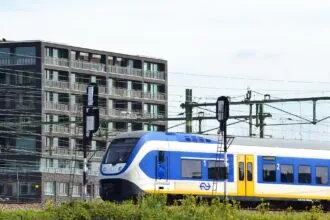
Eindhoven is compact enough that most of the attractions in this guide are within walking or cycling distance of the railway station, and getting around is straightforward once you know the basics. Eindhoven Centraal, the main train station, sits right in the heart of the city and connects directly to Amsterdam (around 80 minutes), Utrecht (around 45 minutes), Maastricht (roughly an hour), and Den Bosch and Tilburg on the way to Rotterdam and The Hague. It’s a genuinely well-connected hub for exploring the southern Netherlands.
Within the city, Hermes operates the local bus network, and an OV-chipkaart or contactless bank card (OVpay) works across buses just as it does on Dutch trains. Most of the central attractions (the Philips Museum, Van Abbemuseum, and the railway station itself) are close enough together to cover on foot, while Strijp-S and the Evoluon are a little further out and better reached by bus, tram-style bus routes, or bike. Eindhoven has an excellent network of dedicated cycle paths, and bike rental is widely available near the station; given how flat and cyclist-friendly the city is, renting a bike for a day is one of the most efficient ways to link the sites in this guide together.
If you’re flying in, Eindhoven Airport is around 8km from the centre and served by bus lines 400 and 401, which run several times an hour and take roughly 20-25 minutes to reach Eindhoven Centraal. Taxis are readily available outside arrivals for a faster but more expensive option, and several pre-booked private transfer services also operate from the airport if you’d rather arrange transport in advance. Our dedicated Eindhoven Airport Transfers guide covers all of these options, including pricing comparisons, in more depth.
Best for a short stop where being central matters more than the room. Dorms and private rooms both listed.
See hostelsBest for anyone flying more than once or twice a year. Handles the compensation claim so you are not chasing the airline.
See AirHelp+Best for a day with a bag and nowhere to put it. Find a storage point near where you already are.
View storageWhich Eindhoven Attractions Are Right for You?
If you only have one day in Eindhoven, prioritise the Philips Museum and Strijp-S; together they tell the core story of the city’s transformation and sit close enough together to combine comfortably, with time left over for a meal at one of Strijp-S’s food halls. Add the Van Abbemuseum if contemporary art appeals to you, or the DAF Museum if you’re travelling with anyone who has an interest in engineering, trucks or classic cars, since the two museums cover genuinely different territory, so choosing between them should come down to your own interests rather than a sense that one is more “essential” than the other.
With two days, add the Evoluon (especially worthwhile for its architecture even if the Next Nature Museum exhibitions aren’t your main interest) and build in time for Stadswandelpark or Genneper Park to slow the pace down. Families should lean towards the DAF Museum’s hands-on vehicles, Genneper Park’s outdoor facilities, and Prehistorisch Dorp, while design-focused travellers should prioritise Strijp-S, the Van Abbemuseum, and timing their visit around Dutch Design Week if at all possible, since it’s genuinely one of the best times to understand what makes this city distinctive.
If your trip falls in October or November, check the calendar before you book anything else: Dutch Design Week (17-25 October 2026) and GLOW (7-14 November 2026) are both strong enough reasons on their own to plan a visit around, and both will reshape how you spend your evenings in the city. Outside those windows, Eindhoven is a quieter, more contemplative visit, arguably the better time to actually focus on the museums covered above without the crowds.

Rupert’s Handy Travel Tips
Eindhoven rewards a bit of planning, especially if design or light festivals are the reason you’re visiting. Here’s what I’d want to know before setting off.
- Time your museum visits for Tuesday afternoon: Both the Philips Museum and the Van Abbemuseum offer free entry between roughly 3:30pm and 5pm on Tuesdays outside school holidays, which can save a genuine chunk of your budget if you plan around it.
- Book accommodation early for DDW and GLOW: Hotel prices in Eindhoven rise sharply during Dutch Design Week (October) and GLOW (November), and rooms sell out well in advance. If your trip overlaps with either, book as soon as your dates are fixed.
- Rent a bike for the day: Eindhoven is flat, compact and extremely cycle-friendly, and a bike makes it easy to link the city centre with Strijp-S, the Evoluon and the parks without relying on buses or trams.
- Don’t skip Strijp-S after dark: The district’s LED lighting and industrial architecture look genuinely different once the sun goes down, so if you can, plan to be there for an evening meal rather than only a daytime walk.
- Check GLOW’s photosensitivity warning: Several installations use rapid flickering and colour changes, so it’s worth knowing in advance if you’re travelling with anyone who needs to avoid that.
Want to meet the reindeer behind our travel tips? Find out more in our page Who is Rupert?.




Frequently Asked Questions
How many days do I need in Eindhoven?
One full day covers the essentials (Philips Museum and Strijp-S at minimum), but two to three days lets you add the Van Abbemuseum, DAF Museum, Evoluon and a couple of parks without rushing. If your visit coincides with Dutch Design Week or GLOW, plan for at least one extra evening.
Is Eindhoven worth visiting if I’ve already seen Amsterdam?
Yes, and it’s a genuinely different experience. Eindhoven has no historic canal district and a much smaller old town, but it offers a design and industrial-heritage story that Amsterdam simply doesn’t have, plus a more contemporary, tech-forward atmosphere.
How do I get from Eindhoven Airport to the city centre?
Bus lines 400 and 401 run between Eindhoven Airport and Eindhoven Centraal station several times an hour, with a journey time of around 20-25 minutes. Taxis are also readily available outside arrivals for a quicker but pricier option.
Is a Museumkaart worth it for a short Eindhoven trip?
If you’re combining Eindhoven with other Dutch cities and plan to visit several museums (the Van Abbemuseum accepts it, for example), a Dutch Museumkaart can pay for itself quickly. For a single-city trip focused mainly on the Philips Museum and DAF Museum, individual tickets usually work out more straightforward.
When is the best time of year to visit Eindhoven?
October (Dutch Design Week) and November (GLOW) are the two standout event windows and give you a very different, more atmospheric city, though they also bring higher prices and larger crowds. Spring and early autumn offer a quieter visit with comfortable weather for walking and cycling between attractions.
Is Strijp-S safe and easy to explore on foot in the evening?
Yes, Strijp-S is a well-lit, actively used residential and commercial district rather than an abandoned industrial site, and it’s generally considered safe to walk around in the evening, particularly along the main routes near the restaurants and food halls.
Can I still visit the Evoluon if I’m not interested in the Next Nature Museum exhibitions?
Absolutely, many visitors come simply to see and photograph the building’s distinctive UFO-shaped exterior, which is freely viewable from the surrounding plaza without a ticket.
Are the Philips Museum and DAF Museum suitable for children?
Yes, both offer children’s activity trails (a treasure hunt at the Philips Museum, an activity hunt at DAF), and DAF in particular has vehicles children can climb into, making it one of the more hands-on museum experiences in the city.
Further Reading
Once you’ve covered the Philips heritage sites and Strijp-S, it’s worth planning what comes next. Our guide to Day Trips from Eindhoven covers the destinations within easy reach, including how Eindhoven’s central location in the south of the Netherlands makes it a genuinely good base for exploring the wider region. If you’re flying in or out through Eindhoven Airport, our Eindhoven Airport Transfers guide breaks down every option from public buses to taxis and pre-booked transfers.
Travellers combining Eindhoven with the south of the country should also look at our guide to Things to Do in Maastricht, a very different but equally rewarding Dutch city a little further south, and if your itinerary crosses into Belgium or Germany, the Euregio Ticket is worth reading about for its cross-border rail value.
If Amsterdam is also on your itinerary, our cornerstone guides to Things to Do in Amsterdam and Day Trips from Amsterdam are the best starting points, and for getting between Dutch cities generally, the NS Day Ticket and Holland Travel Ticket are both worth comparing against a standard OV-chipkaart depending on how much travel you’re planning.