Reviewed by our editorial team Published
The Åland Islands are an autonomous, Swedish-speaking province of Finland scattered across more than 6,700 islands and skerries in the middle of the Baltic Sea, though in practice almost everything a visitor sees sits on the main island and a handful of others reachable by a short ferry hop. Mariehamn is the only real town, small enough to see in half a day, which leaves the rest of a trip built around driving, cycling or island-hopping out to castles, fortress ruins and quiet fishing villages.
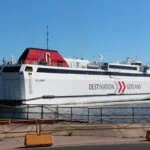
This guide works through the main island district by district, from Mariehamn out to Kastelholm, Bomarsund, Eckerö and the wider outer archipelago, followed by a dedicated section on how to actually move between them. For how to reach Åland in the first place, our separate Åland Islands Ferry Routes guide covers Stockholm, Turku and the direct Grisslehamn crossing in full.
Åland at a Glance
| Place | Why Visit | Time to Spend |
|---|---|---|
| Mariehamn | The only town, with the museum ship Pommern, the Maritime Museum and a walkable centre | Half a day |
| Kastelholm | A medieval castle with an open-air museum and a former prison alongside it | 2–3 hours |
| Bomarsund | 19th-century Russian fortress ruins with a multi-faith cemetery on neighbouring Prästö | 1–2 hours |
| Eckerö and Käringsund | A grand 1828 post and customs house and a quiet fishing village | 1–2 hours |
| Geta and Grottstigen | Åland’s best-known hiking trail, with caves and rock formations | 2–3 hours |
| Outer archipelago (Föglö, Vårdö and beyond) | Genuinely remote island villages reached by the free passenger ferries | A full day or more |
These six areas cover the obvious anchors of a first trip, but they are not the whole island: dedicated sections further down this guide cover boat trips out to Kobba Klintar and Rödhamn, cycling the Archipelago Trail, and playing a round of golf at Slottsbanan, any of which can slot into an itinerary already built around the places above.
Mariehamn: Åland’s Only Town
Mariehamn is compact, walkable and built around two harbours rather than one, with early 20th-century villas lining streets shaded by the linden trees the town is known for locally. The main shopping street, Torggatan, and the surrounding blocks hold most of the cafes and shops, while the Maritime Quarter nearby still practices traditional wooden boat building in working yards rather than as a museum piece.
The town’s standout sight is the Pommern, a four-masted steel barque preserved as a museum ship and moored permanently in the western harbour, open to visitors from May to September as part of the wider Åland Maritime Museum. The museum itself covers model ships, figureheads and seafarers’ own accounts of life aboard, and is one of the more substantial indoor attractions on the whole island.
A combined culture and art museum elsewhere in town covers 7,500 years of Åland’s history alongside contemporary work by local and international artists, and the Mariebad bathhouse and a free disc golf course at Badhusberget round out the town’s more active side for anyone staying more than a single afternoon.
Everything covered above sits within walking distance of the town centre, so no bus or ferry connection is needed to get around Mariehamn itself. It is the one section of this guide where getting there is simply a matter of arriving at the harbour and setting off on foot.
Best for two or three nights. The widest choice of rooms, with filters for free cancellation and included breakfast.
View staysBest for groups who want one address and separate bedrooms rather than three hotel rooms.
See holiday homesBest for double-checking. Runs the same search across several booking sites so you are not leaving money behind.
Compare pricesKastelholm and Sund: Castle, Open-Air Museum and Prison
Kastelholm Castle, a genuine medieval fortress in the municipality of Sund, is Åland’s best-known historic building and the natural anchor for a half-day trip out of Mariehamn. It sits alongside Jan Karlsgården, an open-air museum of traditional Åland farm buildings relocated onto the site, and Vita Björn, a former prison now open as its own small museum.
The immediate area has grown into something of a small visitor hub, with the Åland Distillery and the Slottsbanan golf course both operating nearby, alongside a handful of restaurants that make it easy to turn the castle visit into a full half-day out rather than a quick stop.
Jan Karlsgården itself is built around some twenty relocated buildings, including a manor house, farmhouse, sheep sheds, a working sauna, a smithy and a pair of windmills, giving a genuinely detailed picture of pre-industrial Åland farm life rather than a token handful of huts. The grounds stay open year-round, though the buildings themselves are only unlocked and staffed through the summer months.
The site doubles as a genuine local gathering point rather than just a museum piece: it hosts a traditional Midsummer pole-raising that has run since the 1940s, and Åland’s oldest and largest Christmas market takes over the grounds every year, drawing a very different crowd to the quiet summer daytime visit.
Without a car, Ålandstrafiken bus line 4 runs from Mariehamn’s central bus station via Godby to the Kastelholm/Smakbyn stop, a journey of roughly 35 to 40 minutes. Service runs to a handful of departures a day rather than a frequent shuttle, so it is worth checking the timetable before planning a same-day return.
Bomarsund Fortress and Prästö’s International Cemeteries
Also in Sund, the ruins of Bomarsund mark what was intended to be a major Russian fortress, built in the early 19th century and destroyed during the Crimean War before it was ever finished. A visitor centre, open seasonally from May to September, helps make sense of the sprawling ruins scattered across the site.
The neighbouring island of Prästö holds one of the more unexpected sights on Åland: a set of wartime cemeteries laid out side by side for Greek Orthodox, Muslim, Lutheran, Catholic and Jewish soldiers who died during the Crimean War campaign, a quietly striking reminder of how international the conflict here actually was.
The same bus line 4 that serves Kastelholm continues on to a stop close to the Bomarsund ruins, a similar 35 to 40 minutes from Mariehamn. Prästö and its cemeteries sit a short walk beyond the main fortress site, so no separate transport connection is needed once off the bus.
What makes Bomarsund worth the trip is scale rather than any single standout building: the fortress was designed to be the largest Russian stronghold in the Baltic, and even unfinished and ruined, the scattered gun towers, barracks foundations and earthworks spread across a wide stretch of coastline give a genuine sense of how ambitious the project was before Anglo-French naval forces destroyed it in 1854. Information boards along a signed walking route help make sense of what would otherwise be a scattered set of stone fragments.
Eckerö and Käringsund
Eckerö, at Åland’s western edge, is best known to travellers as the arrival point for the direct ferry from Grisslehamn in Sweden, but it is worth a stop in its own right. The Post and Customs House, a grand neoclassical building completed in 1828 and designed by the architect Carl Ludvig Engel, recalls the era when this was the main mail route between Sweden and the Russian Empire.
Nearby Käringsund is a genuinely idyllic fishing village of traditional boathouses along the water, the kind of quiet spot that rewards simply wandering rather than following a checklist of sights.
Bus line 1 runs from Mariehamn through Hammarland to Eckerö, taking around 24 minutes, though departures are spaced roughly every four hours rather than running hourly. Käringsund itself sits a further short distance beyond the main Eckerö stop, so a car or bike covers that last stretch more easily than the bus alone.
The Post and Customs House today houses a postal museum and an art gallery with an artist-in-residence programme, rather than continuing as a working postal building, and its position right on the water gives a clear sense of why Eckerö was chosen for the role in the first place, sitting at the narrowest and most obvious crossing point over to Sweden. Combined with a ferry arrival at Berghamn a short distance away, this corner of the island doubles as a natural first or last stop for anyone travelling the Grisslehamn route.

Geta and the Grottstigen Trail
Northern Åland’s Geta municipality is the more rugged, hilly end of the main island, and its Grottstigen (“cave path”) hiking trail is generally rated the best of the more than 30 marked walking routes scattered across the archipelago, winding past sea caves, exposed rock formations and viewpoints out over the water.
A seasonal summer bicycle ferry connects Geta with Hammarland to the south, making it possible to build a full day’s loop combining the trail with a scenic ride along the coast rather than backtracking the same way.
Geta is not well served by the island’s regular bus network, so a car or bicycle is genuinely the practical way to reach the Grottstigen trailhead rather than relying on public transport. This is one part of the island where the seasonal bicycle ferry and a hired car both do more work than any bus timetable can.
The trail itself is a genuinely varied walk rather than a single straight path, weaving between exposed granite outcrops, patches of pine forest and a scramble through the cave system that gives the route its name, with several viewpoints along the way looking north over the open sea. It is not a long hike by most standards, but the uneven, rocky ground means sturdy shoes are worth packing rather than treating it as a casual stroll.
Geta’s wider municipality also holds a handful of summer cafés and small guesthouses that fill a genuine gap in an otherwise sparsely served corner of the island, making it possible to turn a Grottstigen visit into a full day out rather than a quick there-and-back trip from Mariehamn.
The Outer Archipelago: Föglö, Vårdö and Beyond
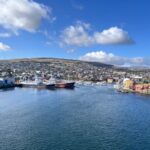
Beyond the main island, Åland’s genuine appeal for many visitors lies in the outer archipelago, reached on the free passenger ferries covered in the next section. Degerby, the main village on Föglö, is the most accessible of these, a small archipelago community with a seasonal charm that changes noticeably between a quiet winter and a busy summer weekend.
Further out, Vårdö holds striking red granite cliffs at spots like Simskäla, worth the detour for the coastal scenery alone, while islands further into the archipelago such as Kökar and Sottunga offer a genuinely remote, slow-paced day out for anyone with enough time to work around the ferry timetable rather than a fixed itinerary.
Reaching the ferry terminals themselves, such as Svinö for the Föglö line, generally means a car or taxi from Mariehamn rather than a direct bus connection, since the archipelago ferry piers sit some way outside the main bus routes. Once aboard, the crossing itself is free for foot passengers, as covered in the section below.
A handful of smaller excursion islands add genuine variety beyond the main village stops. Björkör, a nature reserve in Föglö’s outer archipelago, pairs a well-preserved old archipelago farmhouse with unusually rich plant life for these latitudes, while Signilskär west of Eckerö was a working medieval seafarers’ rest stop, inhabited until 1935 and still holding three of its original buildings. Both are reached by guided boat trip rather than the regular ferry network, so they suit a booked excursion more than a spontaneous detour.
Getting Around: Ferries, Buses and Bikes
The single most useful thing to know about getting around Åland is that the local Ålandstrafiken archipelago ferries are free for foot passengers, with fees charged only for bicycles, motorcycles, cars and caravans. Four main lines run: a northern route between Osnäs and Hummelvik, a southern route between Galtby and Långnäs, a transversal route between Snäckö and Långnäs, and a dedicated Föglö line between Svinö and Degerby. Timetables are published on the operator’s own site and are worth checking directly, since some of the smaller lines run to a genuinely limited daily schedule outside summer.
On the main island itself, five bus lines run out from the central station beside Mariehamn’s library, with a separate town bus, the Mariehamnsbussen, covering the centre. Services thin out noticeably in the evenings and at weekends, so a bus-only itinerary needs some slack built in rather than relying on a tight schedule.
Cycling is genuinely one of the best ways to see the main island, on a growing network of dedicated cycle tracks suited to the short distances between sights, with bikes available to hire from Ro-No Rent in Mariehamn or through many hotels. A car, hired locally through one of two small operators, remains the most flexible option for covering Kastelholm, Bomarsund, Eckerö and Geta in a single trip without waiting on bus timetables.
Best for long or awkward journeys. Builds one itinerary out of separate flights.
View flightsBest for short trips. Install the eSIM at home and arrive with working data, no shop queue.
Browse eSIMsBest when public transport has stopped, or when you are travelling with children and bags.
Book a transferThings to Do on Åland in the Rain
The Åland Maritime Museum and the Pommern together give a genuinely substantial indoor visit, and the combined culture and art museum in Mariehamn covers the rest of the island’s history under one roof. Vita Björn, Kastelholm’s former prison museum, also works well as a covered stop paired with a shorter, drier look at the castle itself rather than a full outdoor visit.
Beyond that, Mariehamn’s cafes and small shops along Torggatan make for an easy, unhurried indoor-leaning wander on a wet day, in a town small enough that the weather rarely derails a visit entirely.
The Post and Customs House at Eckerö is a genuine option too if a wet day coincides with a trip over to that side of the island, combining its postal museum and art gallery with the kind of sturdy 19th-century architecture built to survive far worse weather than a passing shower. It is a longer trip out from Mariehamn than the town-centre options, so it suits a day already planned around Eckerö rather than a spur-of-the-moment change of plan.
A rainy day is also, somewhat counterintuitively, a reasonable time to still take the archipelago ferries themselves, since the crossings are short, free for foot passengers and mostly spent in a covered passenger lounge rather than out on deck. Watching the islands slide past from a warm, dry seat is one of the more relaxed ways to spend a wet afternoon on Åland.
Food Scene and Food Halls
Åland doesn’t run to a dedicated food hall in the way a larger city might, but Mariehamn’s harbourside restaurants lean heavily on the surrounding Baltic waters, with Baltic herring, local fish and Åland’s own black bread appearing across menus in the town centre. The Åland Distillery near Kastelholm adds a genuinely local producer worth building a visit around, with tastings alongside the castle and open-air museum.
Out in the archipelago, options thin out considerably, and it is worth checking that a village’s one or two restaurants are actually open before planning a day trip around eating there, since seasonal opening hours are common outside Mariehamn itself.
Pancakes hold an oddly central place in Åland food culture, with the local Ålandspannkaka, a thick, almost custardy oven pancake made with semolina and cardamom, appearing on menus across the islands, usually served with stewed prunes and whipped cream rather than as a savoury dish. It is worth trying at least once, since it is genuinely specific to Åland rather than a Nordic dish borrowed from elsewhere.
Fresh produce and smaller local suppliers are easiest to find through farm shops scattered across the main island rather than a single central market, selling everything from berries and honey to the distillery’s own spirits directly at the source. Timing a drive out to Kastelholm or Geta to pass one or two of these along the way is a simple way to eat well without relying entirely on Mariehamn’s restaurants.
Nightlife and After Dark
Åland is not a nightlife destination, and honestly doesn’t try to be one: Mariehamn has a handful of bars around the harbour that fill up on summer evenings, but the archipelago beyond town is genuinely quiet after dark. The more memorable evening experience is simply being out on the water or the coast as the long Nordic summer light fades, particularly around the red granite cliffs further out in the archipelago.
Summer visitors get the more dramatic version of this: at Åland’s latitude, June and July bring genuinely long, pale evenings rather than true midnight sun, with the sky never fully darkening for weeks at a time, so an after-dinner walk along the harbour at 11pm still feels more like dusk than night. A sauna, ideally a wood-fired one at a rented cottage or guesthouse, is the closest thing the islands have to a standard evening ritual, and is worth building into an overnight stay rather than treating as an afterthought.
Winter flips the experience entirely: with far fewer daylight hours and clear archipelago skies away from any real light pollution, it is a genuinely decent spot for casual stargazing or a chance at the northern lights on a clear, active night, even if Åland sits further south than Finland’s better-known aurora destinations.

Shopping and Markets
Mariehamn’s Torggatan is the main shopping street, mixing everyday Finnish and Swedish retail with a smaller number of local craft shops selling Åland-made goods, from the distillery’s own spirits to maritime-themed gifts tied to the town’s shipbuilding history. It is a modest shopping scene by design, reflecting a population of under 30,000 across the whole archipelago rather than a lack of things worth buying.
Because Åland sits outside the EU’s VAT and customs territory, the same duty-free arrangement that keeps ferry shops selling tax-free goods also applies on land, and Mariehamn’s larger supermarkets and the ferry terminal shops both reflect it in everyday grocery and drinks pricing rather than only in the ferries’ own onboard stores. It is a genuinely unusual detail for an EU destination and worth knowing before assuming prices will match mainland Finland or Sweden exactly.
Beyond Torggatan itself, the Åland Distillery shop near Kastelholm and the craft stalls that appear at Jan Karlsgården’s summer and Christmas events are the best places to pick up something genuinely made on the islands rather than imported gift-shop stock, and both fit naturally into a half-day trip already built around the castle and open-air museum.
Kobba Klintar and Rödhamn: Boat Trips from Mariehamn
A short boat trip out of Mariehamn’s harbour reaches Kobba Klintar, a former pilot station built in 1862 on a cluster of skerries right at the harbour approach, once used to guide ships safely in through the surrounding rocks. Seasonal excursions run from the berth beside the Pommern in summer, with a return trip typically taking a little over two hours including time ashore, and longer stays can usually be arranged directly with the boat operator.
Further out, Rödhamn is a similarly small pilot and lighthouse outpost that has been turned into a genuinely charming stop for passing boats, with a café, a sauna and a small museum housed in a former radio lighthouse building, alongside a preserved pilot’s cabin and a tiny seafarers’ chapel. Both islands work best as a half-day addition for anyone with a boat of their own or booking a guided excursion, rather than a destination reachable on the regular archipelago ferry network.
These outlying skerries are a useful reminder that Åland’s maritime story extends well beyond the harbour itself, built around the same pilotage and lighthouse network that kept ships moving safely through the archipelago long before car ferries and bridges connected the main islands together.
Cycling the Åland Archipelago Trail
Beyond the everyday cycle tracks around Mariehamn, Åland is also the starting point for the Archipelago Trail, a signed long-distance cycling route that hops between islands using a mix of bridges, causeways and the free foot-passenger ferries already covered elsewhere in this guide. A northern and a southern branch both run out from the main island towards Finland, so riders can choose the version that suits their time and fitness rather than committing to a single fixed itinerary.
The appeal is less about covering big distances and more about the rhythm of the ride itself: short hops between islands, a wait for a ferry, then another short, flat, well-signed stretch of road before the next crossing. Riders comfortable with a multi-day trip can also continue straight on into Finland’s own mainland Archipelago Trail once past Åland’s eastern edge, turning a few days of island-hopping into a considerably longer route for anyone with the time.
A hired bike from Ro-No Rent in Mariehamn or a hotel is enough for a single day out on the main island, but anyone planning the full multi-day trail should book overnight stays on the smaller islands well ahead in summer, since accommodation options away from Mariehamn are genuinely limited.
Best for solo travellers and anyone watching the budget. Dorm beds and private rooms in the same search.
Browse hostelsBest for anyone flying more than once or twice a year. Handles the compensation claim so you are not chasing the airline.
See AirHelp+Best for the gap between checking out and your train. Drop bags at a shop or hotel nearby and carry on.
Store your bagsGolf on Åland
Ålands Golfklubb runs three courses on the main island, all a short drive from Mariehamn: Slottsbanan and Kungsbanan, both full 18-hole courses, plus Prinsessan, a six-hole short course for beginners or anyone short on time. Slottsbanan sits right beside Kastelholm Castle, with the sea in view from every hole, built on land once used by King Gustav Vasa for royal hunting.
Slottsbanan’s reputation is more than local pride. In September 2022 it hosted the Åland 100 Ladies Open by Ålandsbanken, a Ladies European Tour event that brought roughly 120 professional players and a €250,000 (£215,000/$290,000) prize purse to the course over three competition days, confirming its standing as one of the Baltic’s genuinely championship-calibre layouts.
Green fees on Slottsbanan run from €110 (£95/$127) on a May, June or September weekday up to €140 (£120/$162) in July, August or on a summer weekend. Kungsbanan, the more forested and hilly of the two full courses, with narrower fairways and real elevation change compared with Slottsbanan’s open, sea-facing holes, is cheaper throughout, from €60 (£52/$70) in October to €90 (£77/$104) at peak summer rates, and Prinsessan’s six holes cost a flat €15 (£13/$17) per person regardless of season.
The clubhouse overlooking Slottsbanan holds a pro shop, changing rooms, saunas and a seasonal restaurant open May to October, so a round can easily fill a half-day rather than just the hours spent on the course itself.
Golf draws a genuine share of summer visitors to Åland in its own right rather than as an afterthought to a wider trip, helped by long daylight hours that stretch a normal round well into the evening. Pairing a morning at Slottsbanan with an afternoon at Kastelholm Castle and Jan Karlsgården next door makes for an easy, low-effort way to combine the two without much extra driving.
How Many Days Do You Need on Åland?
Half a day covers Mariehamn comfortably: the Pommern, the Maritime Museum and a wander along Torggatan fit easily between a morning arrival and an afternoon sailing onward, which suits travellers treating Åland purely as a stop on a longer Stockholm-Turku journey.
Two to three days is the realistic minimum for anyone who actually wants to see the main island, since it allows a half-day trip out to Kastelholm and Bomarsund, plus either an afternoon at Eckerö and Käringsund or a first taste of the outer archipelago on one of the free foot-passenger ferries.
A longer stay of four days or more opens up the parts of Åland that reward patience rather than a checklist: a proper ride along the Archipelago Trail, a round of golf at Slottsbanan, and genuinely remote stops like Föglö, Kökar or Sottunga that only make sense once a visitor stops racing the ferry timetable.
As on most one-town archipelagos, basing in Mariehamn for the whole trip works better than trying to relocate partway through, since every road, bus route and ferry pier on the main island effectively radiates out from it.
Can You Visit Åland Without a Car?
Mariehamn itself needs no car at all: the Pommern, the Maritime Museum, Torggatan and the harbour are all within easy walking distance of the ferry terminal, so a visitor with no vehicle and no bike can still have a genuinely full day in town.
Beyond the town, going carless is workable rather than effortless. Bus line 4 reaches Kastelholm and Bomarsund, and bus line 1 reaches Eckerö, but departures run to a handful of times a day rather than a frequent shuttle, so a same-day round trip needs the timetable checked before setting off rather than after.
The outer archipelago is, somewhat counterintuitively, the easier stretch to do without a car, since the Ålandstrafiken ferries to Föglö and beyond are free for foot passengers. The catch is reaching the pier itself, since Svinö and the other terminals sit outside the main bus routes and generally need a taxi from Mariehamn first.
Geta and its Grottstigen trail are the clearest case where a car or bicycle genuinely matters rather than merely helping, since the municipality has no meaningful bus service at all. For a Mariehamn-plus-Kastelholm trip, going without a car is a reasonable choice; for a single day covering several corners of the main island, it is not.

Åland as a Stopover Between Stockholm and Finland
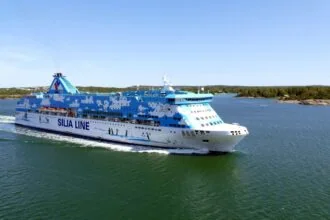
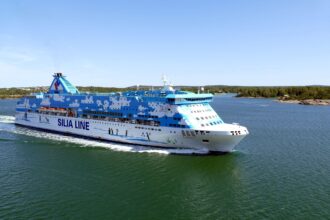
Åland sits almost exactly on the line between Stockholm and Turku or Helsinki, and a fair number of visitors experience it only as an overnight stop rather than a planned destination. Because the same ship that arrives in Mariehamn from Stockholm does not continue on to Turku until the following afternoon, there is a genuine window ashore rather than a brief pause at the quayside.
Turning that layover into an actual stopover depends on the fare booked rather than the ship’s own timetable, since some of the cheapest promotional tickets are sold strictly as through-fares to Turku or Helsinki. It is worth confirming before travel that a booking genuinely permits disembarking at Mariehamn and re-boarding later for the onward leg.
For anyone whose fare does allow it, Mariehamn’s terminal makes the stopover easy to use in practice: it sits a short walk from the town centre, and card-only luggage lockers at the terminal mean bags never need to come along for a few hours at the Maritime Museum, the Pommern or the cafes on Torggatan before heading back to the ship.
The shorter Turku-Mariehamn leg works the same way for travellers approaching from the Finnish side, and its layover tends to fall at a more sociable hour than an overnight Stockholm departure, making it the more comfortable direction for a short Åland stopover rather than a full detour.

Rupert’s Handy Travel Tips
Åland spreads out further than its size on a map suggests, so here are a few tips before exploring it.
- Remember the archipelago ferries are free on foot: only vehicles and bikes pay, which makes island-hopping far cheaper than it sounds.
- Hire a car for a single-day tour of the main island: Kastelholm, Bomarsund, Eckerö and Geta are too spread out for buses on a tight schedule.
- Check the Pommern’s season before visiting: the museum ship only opens May to September.
- Don’t expect nightlife out in the archipelago: Mariehamn has a few bars, but the outer islands are genuinely quiet after dark.
- Check village restaurants are open before a day trip: opening hours in the outer archipelago are often seasonal.
Want to meet the reindeer behind our travel tips? Find out more in our page Who is Rupert?.




Frequently Asked Questions About the Åland Islands
How many days do you need on the Åland Islands?
A single day covers Mariehamn comfortably, but two to three days allows time to add Kastelholm, Bomarsund and either Eckerö or a trip into the outer archipelago.
Are the archipelago ferries in Åland really free?
Yes, for foot passengers. Ålandstrafiken charges only for bicycles, motorcycles, cars and caravans on its local ferry lines.
Do you need a car to see Åland properly?
Not for Mariehamn itself, but a car or bicycle is genuinely useful for reaching Kastelholm, Bomarsund, Eckerö and Geta in a single trip, since buses run infrequently outside the town.
What language is spoken on Åland?
Swedish. Åland is an autonomous, Swedish-speaking province of Finland, and Swedish is the sole official language across the islands.
When is the Pommern museum ship open?
Seasonally, from May to September, as part of the wider Åland Maritime Museum in Mariehamn.
Further Reading & Related Guides
For how to actually reach the islands, our dedicated Åland Islands Ferry Routes guide covers Stockholm, Turku and the direct Grisslehamn crossing in full, including why nearly every big ferry stops here for duty-free reasons.
Travellers combining Åland with Finland should also read our things to do in Turku guide, since the Mariehamn to Turku crossing is the shortest way to link the two.
Anyone starting or ending this trip in Sweden should also read our things to do in Stockholm guide and our wider Ferry Routes from Stockholm guide for the city’s other Baltic connections.
For the wider Finnish ferry network, our practical Finland Ferry Guide is worth reading, and anyone facing the longer Stockholm or Helsinki crossings should also check our Seasickness Travel Guide before booking a sailing.