Reviewed by our editorial team Published
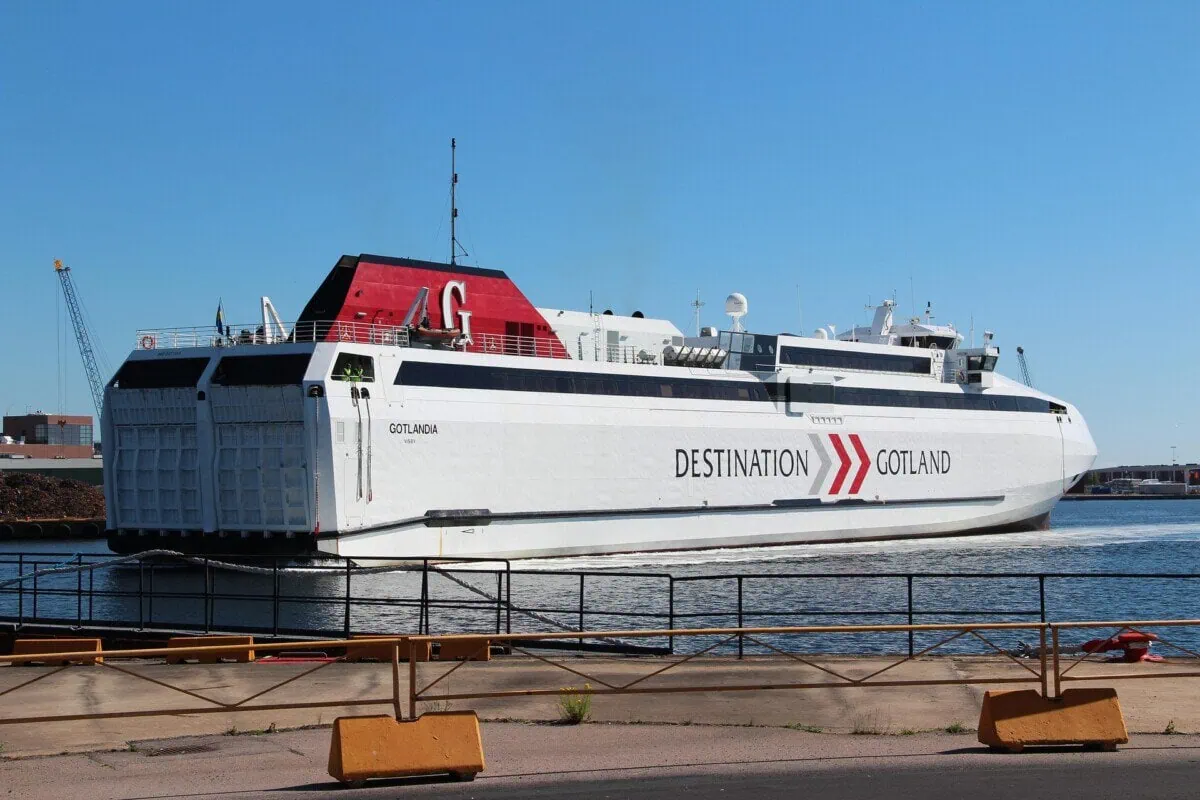
Gotland is Sweden’s largest island, sitting out in the Baltic Sea roughly 90km from the mainland, and there is really only one way to reach it by sea: a single operator, Destination Gotland, runs every scheduled car and passenger ferry across, sailing from two different mainland towns rather than from Stockholm itself. Anyone picturing a ferry leaving directly from the Swedish capital’s harbourfront needs to reset that expectation before booking.
The two departure ports are Nynäshamn, about an hour south of Stockholm by commuter train, and Oskarshamn, further down the coast in southern Sweden. Both connect to Visby, Gotland’s only real town and the island’s sole ferry destination, and both crossings take around three hours regardless of which port a traveller starts from.
Flying is the other realistic option. Visby Airport has scheduled links to Stockholm and a handful of other Swedish and Nordic cities, and it is worth knowing about even for travellers planning to sail one way, since a flight can rescue a trip if ferry sailings are full or the weather turns against a small-boat crossing.
This guide works through both mainland ports, how to actually get to each one, what a Destination Gotland ticket involves, and when to travel for the calmest crossing and the easiest booking. For what to actually do once ashore, our separate Visby and Gotland guide covers the island’s UNESCO old town, beaches and countryside in full.
The Two Mainland Ports: Nynäshamn and Oskarshamn
Nynäshamn is by far the more heavily used of the two ports simply because of where it sits: close enough to Stockholm to work as a straightforward day’s travel, with a direct commuter rail link into the city centre. Most travellers coming from Stockholm, from Arlanda or Bromma airports, or arriving in Sweden by Interrail choose this route without much thought.
Oskarshamn serves a different kind of traveller: anyone already in southern Sweden, driving up from continental Europe, or routing through Kalmar and the Öland bridge rather than Stockholm. It is a longer haul from the capital, but it can shave real time off a journey that starts further south.
Crossing times are close enough between the two routes that the choice usually comes down to which mainland town is easier to reach, not which sailing is faster. Destination Gotland markets both as running in around three hours, with the exact figure depending on the specific sailing and vessel.
| Route | Operator | Typical Crossing Time | Typical Price | Frequency | Best For |
|---|---|---|---|---|---|
| Nynäshamn → Visby | Destination Gotland | About 3 hours 15 minutes | From about SEK 300 (£22/$28/€26) per foot passenger; car packages from SEK 1,100 (£82/$104/€96) | Up to 2–3 sailings daily off-season, far more in peak summer | Travellers coming from Stockholm or its airports |
| Oskarshamn → Visby | Destination Gotland | Just under 3 hours | From about SEK 300 (£22/$28/€26) per foot passenger; car packages from SEK 1,100 (£82/$104/€96) | Around 1 daily off-season, more in summer | Travellers coming from southern Sweden, Kalmar or Öland, or driving from the mainland |
These are illustrative starting fares rather than fixed prices: as the next section explains, Destination Gotland’s tickets move with the season, the day of the week and how close to departure a booking is made, so a quiet November sailing and a July Saturday can cost very different amounts for the same crossing.
Both routes run year-round rather than only in summer. What changes seasonally is frequency: Destination Gotland’s four-ship fleet can reach as many as 18 rotations a day across both ports at the height of summer, dropping back to a much sparser winter timetable once the school-holiday crowds have gone home.
Which Mainland Port Should You Use?
For most travellers the decision comes down to one simple question: which city is the trip actually starting from? Anyone coming from Stockholm, or landing at Arlanda or Bromma, should default to Nynäshamn without much deliberation, since the pendeltåg puts the ferry terminal about an hour from the city centre and no other route comes close on convenience.
Drivers coming from further south have a less obvious choice than the port names alone suggest. Oskarshamn sits directly on the E22, and the drive there from Gothenburg and from Malmö both work out to a broadly similar four-hour, roughly 320km journey, since Gothenburg’s west-coast position and Malmö’s southern one land at nearly the same distance from this particular port. Either city is a considerably longer drive to Nynäshamn by comparison, adding a detour north that neither route otherwise needs.
Travellers starting even further south, driving up from continental Europe or routing through Kalmar and the Öland bridge, should treat Oskarshamn as the obvious choice rather than a close call, since it sits on the direct route rather than requiring a diversion toward the capital. The same logic applies to anyone already building a road trip through southern Sweden rather than a single dedicated day out from Stockholm.
None of this is an absolute rule, since Destination Gotland’s dynamic pricing occasionally makes the less obvious port cheaper on a specific date. Anyone with genuine flexibility on which port to use is still better off comparing both before booking, rather than assuming the port that suits the starting city will also turn out to be the cheaper one.
Best for two or three nights. The widest choice of rooms, with filters for free cancellation and included breakfast.
View staysBest for groups who want one address and separate bedrooms rather than three hotel rooms.
See holiday homesBest as a last check before booking. Compares hotel rates across several sites in one search.
Compare ratesNynäshamn to Visby: What the Crossing Is Like
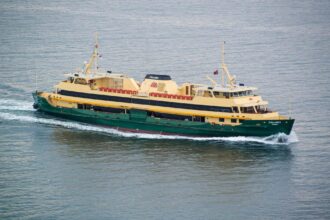
Destination Gotland runs the Nynäshamn crossing with the same fleet of high-speed Ro-Pax ferries it uses across both mainland routes: M/S Gotland, M/S Visby and M/S Drotten rotate between ports rather than being fixed to one, so which specific ship turns up on a given sailing varies by schedule rather than by route. All three were built purpose-made for this crossing, with car decks below and several passenger decks above, rather than adapted from another kind of vessel.
Onboard, the main draw is the restaurant, branded Smaka på Gotland (“Taste of Gotland”), which leans on local Gotland ingredients and Swedish meat alongside proper vegetarian and vegan options, with a breakfast service running until 10am for early sailings. A bistro serves wraps, hot sandwiches and drinks including alcohol for a faster, cheaper option than a full restaurant sitting.
A café on Deck 8 covers snacks, salads, wraps and cold drinks throughout the crossing, and in summer an outdoor bar on Deck 10 opens for sandwiches, ice cream and drinks in the open air. A small kiosk and shop sells sweets, reading material and genuine Gotland crafts and gifts, useful as a last souvenir stop on the way home rather than only on the outbound leg. Card payment is standard, though cash in both SEK and EUR notes is still accepted.
At just over three hours, the Nynäshamn crossing is short enough to treat as part of the day rather than the whole of it: a Stockholm morning departure lands in Visby in time for lunch, and an evening sailing leaves enough daylight in summer for dinner in the restaurant before the medieval skyline comes into view. It is the busier of the two routes for exactly this reason, doing double duty as both the main gateway from the capital and a scenic short cruise in its own right.
Oskarshamn to Visby: What the Crossing Is Like
The Oskarshamn crossing carries the same onboard experience as the Nynäshamn route, restaurant, bistro, café and shop included, since Destination Gotland’s fleet of M/S Gotland, M/S Visby and M/S Drotten works across both ports rather than running separate vessels for each. Anyone who has sailed one route already knows roughly what to expect from the other.
What actually differs is the journey itself. Departing from further south, the Oskarshamn sailing runs just under three hours, marginally quicker than Nynäshamn, and heads out through a stretch of southern Swedish archipelago rather than the busier waters off Stockholm, a genuinely quieter start to the crossing with noticeably fewer passengers aboard outside peak summer weekends.
That relative quiet is the route’s real appeal: fewer day-trippers and a more relaxed restaurant sitting, since Oskarshamn draws mostly travellers already in southern Sweden, driving up from continental Europe, or routing through Kalmar and the Öland bridge, rather than the volume of Stockholm-based tourism that fills the Nynäshamn sailings.
For anyone building a longer Baltic road trip rather than a single island hop, the Oskarshamn crossing is worth choosing on its own merits rather than as a fallback: it slots naturally into a route already heading south through Sweden, and the shorter sailing time means less of the day lost to the water before reaching Visby’s old town.
Nynäshamn: Ferry Terminal and Facilities
Getting to Nynäshamn is a short, well-signposted hop rather than a journey in its own right. The pendeltåg commuter train runs directly from Stockholm Central Station to Nynäshamn in around one hour, and the ferry terminal sits only about 400 metres from the station platform, an easy walk even with luggage.
Travellers landing at Arlanda or Bromma should build in extra time before the train rather than treating the airport transfer and the Nynäshamn leg as one seamless block; our Ferry Routes from Stockholm guide covers the terminal geography and airport connections across the whole city in more depth, including why several of Stockholm’s other Baltic ferries leave from entirely different harbours than this one.
Seasonal Båtbuss coaches also run from Stockholm’s central bus terminal for travellers who would rather avoid the train, and driving down takes roughly 45 to 60 minutes on motorway 73, with parking available near the terminal for anyone leaving a car behind rather than taking it across.
Drivers leaving a car behind rather than taking it across should look for the enclosed long-stay car park about 500 metres from the terminal, which has around 165 spaces and is open from 06:00 to 24:00, locking outside those hours. Pricing has run at roughly SEK 260 a day, though the operator’s own page describes this as charged one day at a time, so travellers leaving a vehicle for a full week or more should double-check the current terms directly before relying on it.
Payment at the barrier is by card or the Apcoa Flow app rather than cash, and an EV charging point (Mer) sits just outside the vehicle check-in area, billed at around 5 kr per kWh. A small kiosk and toilets are available both before and after vehicle check-in, useful for anyone with a long wait ahead of a busy summer sailing.

Oskarshamn: Ferry Terminal and Facilities
Oskarshamn takes more planning than Nynäshamn simply because it sits much further from Stockholm, but it is still a straightforward rail journey rather than an awkward one. The Krösatågen regional operator runs a direct train from Stockholm to Oskarshamn, with the fastest services taking around 4 hours 45 minutes and standard departures closer to 5 hours 30 minutes, at fares that have run to roughly $56 to $70 (£45–56/€52–65) one way depending on departure and how far ahead it is booked.
For anyone already in the south of the country, the journey is far shorter. Kalmar, on the Öland side of the coast, connects to Oskarshamn by a short regional bus or train link, making this port the natural choice for a Gotland add-on to a road trip or rail loop through southern Sweden rather than a dedicated trip out from the capital.
Drivers bringing a car across should note that Oskarshamn sits directly on the E22 coastal road, so joining the ferry queue involves no detour off the main route south, unlike the slight backtrack Nynäshamn requires from central Stockholm.
The terminal offers four long-stay parking options rather than just one: two enclosed lots priced at around 120 kr a day or 600 kr a week, and two open-air lots at roughly 100 kr a day or 500 kr a week. Maximum stay across all four is capped at 28 days, and space fills quickly in July, so booking or arriving early during peak summer is worth it.
Payment is by card or mobile app at the machines rather than cash, and an EV charging point (Mer) is available on similar terms to Nynäshamn’s. Restrooms sit both before and after vehicle check-in, though facilities here are more basic than Nynäshamn’s: vending machines cover the wait after check-in rather than a staffed kiosk.
Visby: Arrival and the Old Town
Both mainland routes arrive at the same place: the Destination Gotland ferry terminal at Färjeleden 14 in Visby, with vehicle check-in handled a short distance away at Färjeleden 16 for anyone sailing back with a car. Foot passengers can simply walk off the ferry and into town without needing to find a separate exit.
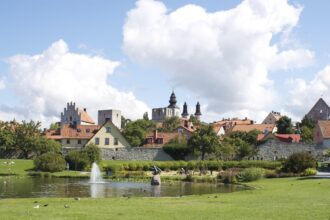
From the terminal it is roughly a 15-minute walk to Visby’s old town and the medieval city walls, flat and easy enough that no bus or taxi is really necessary for anyone travelling light. Visitors staying inside the walls will usually find their accommodation within easy reach on foot from the pier.
It is worth being clear about one thing before arrival: Visby also has a separate cruise-ship quay further along the waterfront, about 1.2km and a 15 to 20 minute walk from the Destination Gotland terminal, used by large ocean cruise ships rather than the Nynäshamn and Oskarshamn ferries. The two are easy to mix up on a map, so travellers meeting someone off a specific sailing should double-check which quay they mean.
Drivers can use the long-stay car park run by Region Gotland near the terminal, priced at around SEK 10 an hour or SEK 50 a day, up to a maximum stay of 14 days, and payable by card, coins or the Easypark app. The terminal building itself has toilets and storage lockers for anyone with time to kill before a sailing.
Booking, Fares and Ticket Types
Destination Gotland prices its tickets dynamically rather than at a fixed rate, with cost shifting according to season, day of the week, demand and vehicle length. A quiet Tuesday sailing in November and a Saturday afternoon crossing in July can carry very different price tags for what is functionally the same three-hour trip, so it is worth comparing a few dates before settling on one.
Three ticket tiers apply to both foot passengers and vehicles. Mini fares are the cheapest but non-changeable and non-refundable once booked. Flexi tickets can be changed or cancelled up to an hour before departure, though the booking surcharge is kept. Flexi+ allows the same late changes with a full refund, surcharge included, for a higher upfront price.
Vehicle packages, sold under names like Alla+bilen for a car and all its passengers together, generally cannot be rebooked or refunded regardless of tier, so it is worth being reasonably confident of travel dates before locking one in. Booking directly through Destination Gotland’s own site rather than a third-party aggregator tends to give the clearest view of what is actually included.
Check-in itself runs on a firm schedule: digital boarding passes are issued three hours before departure, the check-in window opens at most 90 minutes before sailing, and it closes for good 20 minutes before departure. Travellers bringing a car, bicycles, children or heavy luggage should arrive well ahead of that cutoff rather than cutting it fine.
Best if you can move a day either way. Shows how the fare changes across the month.
Compare flightsBest if you want maps and messaging working the moment you switch your phone on.
See eSIM plansBest when public transport has stopped, or when you are travelling with children and bags.
Book a transferSailing with a Car, Bike or Camper
Gotland is a genuinely large island, and most visitors staying more than a couple of nights find a car, campervan or bicycle makes far more sense than relying on buses between towns. Destination Gotland carries all three as standard, and summer demand for vehicle space is intense enough that booking weeks rather than days ahead is the norm for July and August sailings.
Vehicle bookings are made by actual length rather than a generic “car” category, so a roof box, bike rack or trailer needs adding to the measurement at booking rather than discovered at check-in. Campervans and caravans travel under the same rules, though the gas system must be switched off for the whole crossing and while queuing in the terminal area, a safety requirement the operator enforces strictly.
Cyclists get a lighter-touch booking than a full vehicle: bikes and e-bikes travel included in the standard ticket rather than as a separate charge, checked in through the vehicle entrance and stowed on board as directed rather than wheeled through the passenger gangway. Gotland’s largely flat terrain and quiet rural roads make it one of the more popular Swedish cycling destinations, particularly around Fårö and the island’s northern coastline.
Foot passengers without a vehicle have the most flexibility of all, since Visby’s old town and much of the immediate coastline are easily walkable, with local buses covering the villages further out for anyone not driving.
Travelling to Gotland as a Foot Passenger
Foot passengers make up a large share of Destination Gotland’s traffic, and booking online is noticeably simpler than a vehicle ticket: there is no length or roof box measurement to enter, just a name and a sailing. The same three fare tiers, Mini, Flexi and Flexi+, apply exactly as they do to a car booking, so the real choice is about flexibility rather than anything specific to travelling without a vehicle.
The walk-on process itself is quick. A digital boarding pass is issued three hours before departure and scanned at the terminal, with check-in opening at most 90 minutes ahead of sailing and closing 20 minutes before it. Anyone travelling with just a backpack or a suitcase can generally arrive close to that closing window rather than the much longer buffer drivers need to clear the vehicle queue.
What actually changes is everything downstream of the crossing. A foot passenger pays a flat fare regardless of vehicle length, skips the vehicle check-in lane entirely, and can walk straight off the ferry into Visby’s old town in around fifteen minutes rather than waiting for the car deck to clear first. The trade-off comes once ashore, since getting beyond the walls means relying on Gotland’s Kollektivtrafiken buses, a hired car or a bicycle rather than a vehicle already on board.
Travelling this way suits a short break built mainly around Visby itself, or anyone planning to pick up a hire car once ashore rather than pay for scarce summer vehicle-deck space. It also removes one variable from a tight connection, since there is no vehicle lane that can run long and eat into a connecting train or flight.
Flying to Visby as an Alternative
For travellers short on time, or simply keen to skip the mainland leg altogether, Visby Airport sits a few kilometres outside town and takes scheduled flights from several Swedish and Nordic cities. BrommaFlyg connects Visby with Stockholm’s Bromma airport, while services from Stockholm Arlanda have run with Scandinavian Airlines, Norwegian and the smaller operator PopulAir, alongside seasonal links to Helsinki with Finnair.
The Arlanda to Visby hop is a short one: scheduled flights take around 45 minutes in the air, typically flown on small turboprop aircraft rather than a full-size jet, with several departures a day even outside the summer peak. That frequency makes flying a realistic same-day option for a quick trip in a way the three-hour ferry crossing, plus the approach journey to Nynäshamn or Oskarshamn, cannot match.
Route networks on a small regional airport like this one shift more often than a major hub’s, so it is worth checking current schedules directly with Visby Airport or a flight search site before assuming a particular route still runs. Flying is generally the faster option and can be a useful fallback if a ferry sailing sells out in peak summer, though it naturally rules out bringing a car.
Travellers flying in rather than sailing across still have vehicle options once they land: Visby Airport’s arrivals hall has desks for several car hire firms a short walk from baggage claim, covered in more detail further down this guide, plus a short bus link into the old town for anyone travelling without a car at all.

Best Time of Year to Sail
Summer, and especially the school holiday weeks through July and into August, is by far the busiest and most expensive time to sail, driven partly by ordinary tourism and partly by Gotland’s own festival calendar, including early July’s Almedalen Week and August’s Medieval Week, both of which pull large numbers of Swedish visitors across for the season. Both ferry fares and Visby accommodation prices climb sharply during these windows.
Spring and autumn offer a calmer, cheaper alternative with a still-generous sailing schedule, and the Baltic crossing itself tends to be steadier before the autumn storms set in properly. Winter sailings run a much thinner timetable and can occasionally be affected by rough weather or, in a hard winter, drifting sea ice near the coast, so building in some flexibility is sensible for anyone travelling outside the main season.
Booking further ahead pays off more in summer than in any other season: cabins and vehicle spaces for the busiest July and August sailings are often gone weeks in advance, while a Tuesday crossing in April or October can usually be booked just a few days out without much trouble. Sea conditions follow a similar pattern, with the calmest, warmest crossings generally falling in late June through August and the roughest in December and January, when a strong westerly can make even a well-stabilised ferry noticeably lively for sensitive stomachs.
Car Hire: Renting on Arrival or Bringing Your Own
Not every visitor wants to pay for scarce summer vehicle-deck space on the ferry, and hiring a car once ashore in Visby is a straightforward alternative. Four operators, Avis, Europcar, Hertz and the local firm Wisby Biluthyrning, run desks at Visby Airport a short walk from baggage claim, and Europcar also keeps a second counter inside the old town for anyone flying in without wanting to detour via the airport first.
Travellers arriving by sea have their own dedicated option: Mickes Biluthyrning, operating from Färjeleden since 1989, is based only a few hundred metres south of the Destination Gotland terminal at Kopparsviksgatan, making it a genuinely convenient pickup for anyone stepping off a ferry without a car and wanting one for the rest of the stay.
Rates for a standard hire car have run from around SEK 700 a day (roughly £52/$67/€61) in the quieter months, rising to about SEK 750 a day (£56/$71/€65) through the June to August peak, generally with unlimited mileage and basic insurance included in the headline price.
Whether hiring locally or bringing a car depends mostly on length of stay and starting point. A short trip from Stockholm often costs less overall by leaving the car on the mainland and hiring one in Visby instead, since a summer vehicle ticket on the crossing can run to several times the low-season rate. Anyone road-tripping from continental Europe through Oskarshamn, or planning to range well beyond a hire company’s mileage terms, is usually better off bringing their own car across.
Continuing Your Journey After the Ferry
Stepping off the ferry in Visby is not the end of the journey for most visitors, since the old town is only the starting point for exploring the rest of Gotland. The island’s Kollektivtrafiken bus network has its main hub close to the ferry terminal, with regular services fanning out to the larger towns and, on a separate short route, up to Visby Airport in around ten minutes. Taxis also wait at the terminal for anyone who would rather skip the bus stop entirely.
For a first orientation, our companion Visby and Gotland guide covers the island’s public transport, cycling network and car hire options in more detail once travellers are ready to head beyond the old town walls.
The onward journey works the other way too, and it is worth planning a return leg with the same care as the outbound one. The pendeltåg from Nynäshamn back into central Stockholm runs frequently enough that a short wait after disembarking is rarely a problem, but the Oskarshamn route gives a noticeably sparser train timetable, so checking the next Krösatågen departure toward Kalmar or the capital before booking a specific sailing is worth the extra few minutes.
Travellers with an onward flight rather than a train should build in a similar buffer: Nynäshamn to Arlanda or Bromma is not a short hop, and a delayed sailing can turn a comfortable connection into a genuinely tight one.

Rupert’s Handy Travel Tips
Getting to Gotland is simple once you know there’s no ferry from central Stockholm itself, so here are a few tips before booking.
- Book the Nynäshamn train and the ferry as separate legs: the pendeltåg and the crossing aren’t sold as one combined ticket, so allow a comfortable buffer between them.
- Choose Oskarshamn if you’re driving from southern Sweden: it sits directly on the E22, avoiding the detour up towards Stockholm that Nynäshamn requires.
- Book vehicle space weeks ahead for July and August: car spaces on both routes sell out well before foot-passenger tickets do.
- Compare both ports before booking: fares are dynamic, and the cheaper sailing on a given date isn’t always from the port you’d assume.
- Keep flying in mind as a backup: Visby Airport’s Stockholm links can rescue a trip if the ferry you wanted is fully booked.
Want to meet the reindeer behind our travel tips? Find out more in our page Who is Rupert?.




Best if you would rather spend the money on the trip than on the room. Compare hostels by location and rating.
Search hostelsBest for anyone flying more than once or twice a year. Handles the compensation claim so you are not chasing the airline.
See AirHelp+Best for the gap between checking out and your train. Drop bags at a shop or hotel nearby and carry on.
Store your bagsFrequently Asked Questions About Gotland Ferries
Does a ferry to Gotland leave from central Stockholm?
No. Both Destination Gotland routes sail from mainland ports outside the capital: Nynäshamn, about an hour south by commuter train, or Oskarshamn, further down the coast in southern Sweden.
How long does the ferry to Visby take?
Around three hours from either mainland port, though the exact time varies slightly by sailing and vessel.
Do Gotland ferries run all year?
Yes. Sailings run year-round on both routes; only the frequency changes, from a much reduced winter timetable up to as many as 18 rotations a day across both ports in peak summer.
Can you fly to Gotland instead of taking the ferry?
Yes. Visby Airport has scheduled flights from Stockholm’s Bromma and Arlanda airports and seasonal links to a handful of other Nordic cities, making it a practical alternative for travellers without a vehicle.
Which Gotland ferry port should I use if I’m driving?
Oskarshamn suits drivers coming from southern Sweden or continental Europe, since it sits directly on the E22. Nynäshamn suits drivers and train travellers coming from Stockholm.
Further Reading & Related Guides
Travellers starting this journey in the Swedish capital should read our full Ferry Routes from Stockholm guide for the city’s other Baltic connections before making the short hop down to Nynäshamn.
Anyone with a day to spare in the capital first should also read our things to do in Stockholm guide, since most Nynäshamn-bound travellers pass straight through the city on their way to the ferry anyway.
For what actually to do once ashore, our companion Visby and Gotland guide covers the island’s UNESCO old town, beaches and countryside in full.
Anyone concerned about the three-hour Baltic crossing itself should also read our practical Seasickness Travel Guide, and travellers arriving through Arlanda or Bromma can check our Arlanda Airport Transfers guide for the first leg of the journey.