
Reviewed by our editorial team Published
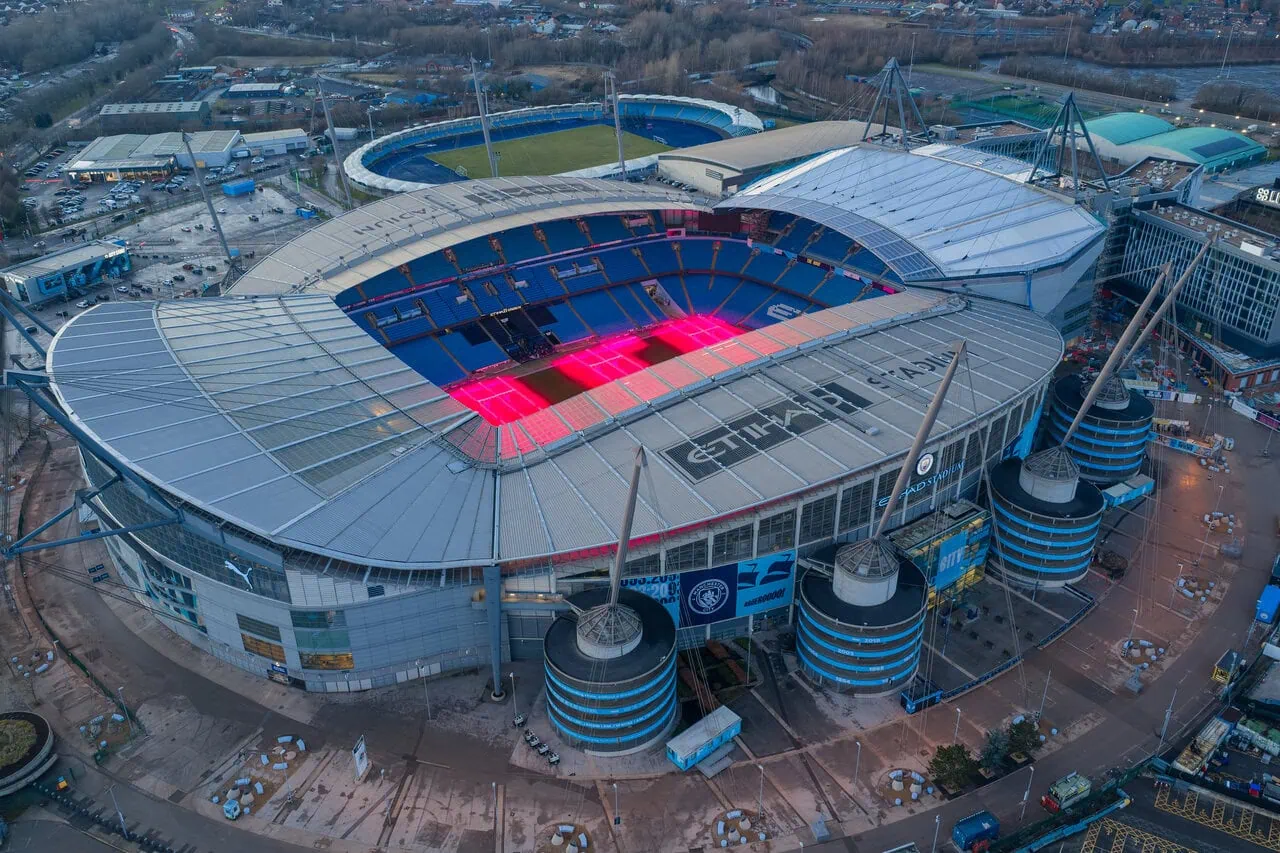
Etihad Stadium is one of Manchester’s easiest major venues to reach by public transport, particularly if you are staying in the city centre. The stadium sits on the Etihad Campus in east Manchester and has its own Metrolink stop, frequent matchday buses, walking routes from Piccadilly and dedicated event transport arrangements that become especially important when more than 50,000 people are arriving or leaving at once.
For EURO 2028, UEFA refers to the venue as Manchester City Stadium. It will stage five tournament matches, including four group games and a Round of 16 fixture, so many visitors will be using Manchester’s transport system for the first time. This guide explains the best tram route, walking options, matchday buses, rail connections, airport arrivals, taxis, parking and how to leave the area efficiently after the final whistle.
If this is your first visit to the city, our Manchester Visitor Guide covers the wider city, while our Manchester Bee Network Guide explains how the tram, buses and integrated transport network work in more detail.
Etihad Stadium Transport at a Glance
| Option | Useful Stop | Typical Final Leg | Best For |
|---|---|---|---|
| Metrolink | Etihad Campus | About 5 minutes on foot | Most city-centre visitors |
| Walk from Piccadilly | Manchester Piccadilly | About 25 to 30 minutes | Avoiding queues after matches |
| Matchday bus | Multiple Greater Manchester stops | Short walk from drop-off | Suburban Manchester journeys |
| City-centre shuttle | Event-specific stops | Direct event service | Alternative to tram |
| Taxi or private hire | Designated pickup areas | Varies with road closures | Groups and mobility needs |
| Park and Ride | Co-op Academy Belle Vue | Shuttle to stadium area | Drivers avoiding campus parking |
The tram is normally the simplest option for first-time visitors. Etihad Campus stop is immediately beside the stadium complex and is served from Manchester city centre, but it can become extremely busy immediately after a sell-out match. Walking back to Piccadilly is often a practical alternative if you are comfortable with a 25 to 30-minute walk.
Manchester City publishes current event arrangements through its official Etihad Stadium travel hub. Check it before travelling because road closures, bus loading points, parking and event-day changes can differ from one fixture to another.
How to Pay for Trams and Buses
For most visitors, contactless tap and go is the easiest way to pay on Manchester’s Bee Network. You can use a contactless bank card, phone or smartwatch. On Metrolink, tap in on the reader at your starting stop before boarding, then tap out at the reader when you reach Etihad Campus. The tap out is important: if you forget it, the system cannot calculate the correct journey and you may be charged more than necessary.
Always use exactly the same card or device to tap in and tap out. A physical bank card and the same card stored in Apple Pay or Google Pay are treated as different payment devices. If you start with your phone, finish with your phone. On Bee Network buses you tap once when boarding and do not tap out.
If you would rather buy a ticket, Metrolink stops have ticket machines and tram and bus tickets are also available through the Bee Network app. Tram tickets must be bought before boarding. TfGM’s official contactless guide explains the current rules and fare caps.
See hotel options and places to stay in Manchester.
Browse hotelsBrowse apartments, homes and self-catering accommodation in Manchester.
Browse rentalsSee hotel prices from multiple booking sites in one search.
Compare ratesUsing Metrolink to Reach Etihad Stadium
Etihad Campus Metrolink stop is the main public transport gateway to the stadium. It sits beside the Etihad Campus and removes the need to navigate matchday traffic around Ashton New Road. For visitors staying in central Manchester, travelling by tram is usually more predictable than taking a taxi or driving.
Etihad Campus is served by two named Metrolink services. The Altrincham – Etihad Campus service terminates at the stadium, while the Ashton-under-Lyne – Eccles via MediaCityUK service runs through Etihad Campus in both directions. From Piccadilly, look for a tram showing Etihad Campus or Ashton-under-Lyne as its destination. TfGM currently schedules both services every day, with extra frequency on the city-centre-to-Etihad section at busy event times. Check the Bee Network journey planner before setting off because engineering works can temporarily alter through-services.
The biggest issue is not getting to the stadium but leaving it. After a major match, large controlled queues form for Etihad Campus stop and trams fill quickly. Staff manage the flow to the platforms, so allow time rather than planning a tight train connection from Piccadilly immediately after full-time.
Our Manchester Bee Network Guide explains contactless payment, tram travel and the wider network, which is especially useful if your hotel is outside the city centre.
Walking from Manchester Piccadilly
Walking from Manchester Piccadilly to Etihad Stadium takes roughly 25 to 30 minutes for most visitors. The route is around a mile and a half and follows the east side of the city towards the Etihad Campus, with large numbers of supporters making the same journey on matchdays.
Walking is particularly useful after a match. If the tram queue is long, you can often reach Piccadilly on foot before passengers near the back of the Metrolink queue have boarded. This matters if you have an onward train to London, Birmingham, Liverpool, Leeds, Sheffield or elsewhere in the North.
The route is straightforward in normal conditions, but allow extra time when roads are closed and pedestrian flows are being managed. The Etihad Campus also contains Co-op Live and other facilities, so on nights when several events overlap the wider area can be busier than a football fixture alone would suggest.
If you have time before the match, walking also lets you experience more of east Manchester rather than simply travelling two tram stops and emerging beside the turnstiles. Our Manchester Walking Tour covers more of the city centre if you are making a full day of the visit.
Manchester City’s Matchday Bus Network
Manchester City operates an unusually extensive matchday bus network. For the 2026/27 season the club lists 18 matchday routes serving 91 stops across Greater Manchester, giving supporters an alternative to travelling into the city centre and then back out towards the stadium.
The network reaches areas including Chorlton, East Didsbury, Stockport, Prestwich, Reddish, Marple, Littleborough, Flixton and other parts of Greater Manchester. That makes it especially useful for visitors staying with friends, in suburban hotels or elsewhere on the Bee Network rather than around Piccadilly or Deansgate.
Do not assume the same pickup and drop-off points will apply in 2028. The current network is a strong indication of how Manchester handles large football crowds, but EURO 2028 will have its own transport plan. Use this guide to understand the available modes, then check the event-specific information once UEFA and local organisers publish the final arrangements.
The club’s current 2026/27 transport update also confirms that some stops and routes have changed compared with previous seasons, another reason not to rely on an old screenshot or remembered matchday route.
Post-Match Shuttle Buses
Dedicated post-match shuttle buses provide another way back towards central Manchester and Ashton. Manchester City’s current arrangements use loading points on Ashton New Road and Alan Turing Way, with additional buses running once they are full.
Road closures affect how quickly these buses can leave. Under the current traffic-management system, some buses on Ashton New Road may be held until the road reopens after full-time, while vehicles using Alan Turing Way can provide a quicker alternative. The exact operation is event-specific and will evolve before EURO 2028.
These services are useful because they spread spectators across more than one transport mode. If the tram queue is particularly heavy, following steward directions towards a shuttle bus can sometimes be more efficient than waiting automatically for Etihad Campus stop.
Getting to Etihad Stadium from Manchester Piccadilly
Manchester Piccadilly is the most important mainline station for Etihad Stadium visitors. It receives long-distance trains from London, Birmingham, Sheffield, Leeds, Liverpool, York and many other cities, and it is directly connected to the Metrolink network.
From Piccadilly you have two obvious choices: tram or walk. The tram is faster in normal conditions and takes you to Etihad Campus, while walking removes the risk of waiting for a crowded event tram. Before the match most people will prefer Metrolink; after the match, walking becomes much more competitive.
If you have an Advance ticket for a specific train after the match, build in a substantial margin rather than assuming you can leave at full-time and be on a train 30 minutes later. Added time can come from exiting the stadium, crowd controls, tram queues and the walk through Piccadilly itself.
Arriving at Manchester Victoria
Manchester Victoria is useful for regional rail passengers arriving from the north and parts of Yorkshire. It is connected directly to Metrolink, so you can continue through the city towards the Etihad Campus without needing a taxi.
Victoria is also convenient if you are staying around the Northern Quarter, Printworks or AO Arena. Depending on the tram pattern on the day, you may need to change in the city centre before continuing towards Ashton-under-Lyne and Etihad Campus.
If your return train departs from Victoria rather than Piccadilly, do not automatically follow the biggest post-match crowd towards Piccadilly. Check the Bee Network planner and use the tram network or city-centre walk that best matches your actual departure station.
Search flights and useful route combinations for your trip.
View flightsUse an eSIM to get online without hunting for a local SIM after arrival.
See eSIM optionsHave a private airport pickup arranged before you travel.
Book a transferTravelling to Manchester by Train for EURO 2028
Manchester is exceptionally well positioned for a multi-city EURO 2028 trip. London and Birmingham lie on the West Coast Main Line corridor, Liverpool is less than an hour away on many services, while the TransPennine route connects Manchester with Leeds, York and the wider north of England.
Our West Coast Main Line Guide is particularly useful if you are travelling between Manchester, Birmingham and London, while our TransPennine Line Guide covers the important east-west corridor through Liverpool, Manchester, Leeds and York.
Liverpool and Manchester are close enough to combine easily during the tournament. Our Manchester to Liverpool Guide compares the train and bus options, which is particularly useful because Everton Stadium will also host EURO 2028 matches.
For a broader explanation of tickets, Railcards, passes and operators, see our UK Rail Guide. Overseas supporters making several long-distance journeys should also compare ordinary tickets with our BritRail Pass Guide and Interrail Great Britain Pass Guide.
Using Seatfrog on Your Journey to Manchester
Seatfrog can be worth checking if you already hold an eligible ticket on a participating rail operator. The app offers auctions and, on some journeys, fixed-price opportunities for First Class upgrades, which can make a longer journey to Manchester more comfortable without paying the normal First Class fare.
It is most relevant to the long-distance part of your trip rather than the final stadium journey. You would still use Metrolink, walk or take a matchday bus from central Manchester to the Etihad Campus. Our Seatfrog App Review explains participating operators, how bidding works and when the upgrade represents good value.
If you are coming from London on Avanti West Coast, another option for flexible travellers is Avanti Superfare. Our Avanti Superfare Guide explains how accepting a wider departure window can unlock lower fares on selected journeys.
National Express to Manchester
National Express is the main long-distance coach alternative for supporters who prioritise price over speed. Manchester is connected by coach with London, Birmingham, Liverpool and many other cities, making it useful when rail fares are high or trains around a major fixture are heavily booked.
Long-distance coaches bring you into Manchester rather than directly to the stadium. From the city centre, continue by Metrolink, local bus or on foot. Our National Express App Review explains tickets, Coachcards, mobile boarding and route planning.
During EURO 2028, coach travel may become especially valuable for late booking because rail capacity and Advance fares are likely to tighten once teams and fixture locations are known. Comparing both modes rather than assuming the train will always be cheapest is sensible.
Getting from Manchester Airport to Etihad Stadium
Manchester Airport has its own railway and Metrolink station. For most overseas supporters, the easiest route is to travel from the airport to Manchester Piccadilly and then continue to Etihad Campus by tram or walk from Piccadilly if the event transport network is already busy.
Direct trains from the airport to Piccadilly are normally the fastest public transport option into central Manchester. Our Manchester Airport Trains Guide explains the station, operators and connections in more detail.
Metrolink also serves Manchester Airport, but the tram is usually more useful for local journeys than for the quickest airport-to-stadium transfer. Travelling into Piccadilly by train and changing there is easier to understand for most first-time visitors.
If your flight lands on matchday, leave a generous buffer between arrival and kick-off. Passport control, baggage collection, the airport station, the city-centre connection and event crowds can turn what looks like a simple transfer into a much longer journey.
Taxis and Private Hire
Manchester has both licensed hackney carriages and pre-booked private-hire services. Useful operators and apps include StreetCars Manchester, Uber and FREENOW. Manchester City Council advises passengers to use licensed vehicles only; private-hire cars must be booked through their operator, while licensed hackney carriages can use authorised ranks or be hailed where permitted. On matchdays, road closures around the Etihad Campus can move practical pickup points away from the stadium, so follow event signage and allow extra time.
A taxi is straightforward away from peak event times, but matchday road closures reduce its advantage. The Etihad Campus is only a short distance from central Manchester, yet the final approach can become slow when Ashton New Road and surrounding streets are under event traffic restrictions.
After the match, use the designated pickup arrangements rather than trying to summon a car directly outside the turnstiles. Large pedestrian flows and controlled roads make it difficult for drivers to reach the stadium perimeter, and walking ten or fifteen minutes away from the busiest area can produce a quicker pickup.
For groups of three or four, a private hire vehicle can still make sense when the fare is shared, particularly if your accommodation is outside the tram network’s most convenient corridor. For city-centre hotels, however, Metrolink or walking will normally be simpler.
Cycling and Starling Bank Bikes
Starling Bank Bikes are a genuinely useful option for the Etihad Campus. The Bee Network hire scheme operates pedal bikes and e-bikes across Manchester, Salford and Trafford, and Manchester City confirms that there are several Starling docking stations across the Etihad Campus. Bikes are hired through the Starling Bikes app, so visitors staying in the city centre can use the scheme without bringing their own cycle.
The stadium also has extensive cycle parking for people using their own bikes, including more than 300 spaces across the campus. On major matchdays, check the Starling app before setting off because bike and docking-space availability can change quickly when large crowds arrive at the same time.
Browse hostels and budget-friendly stays around Manchester.
See hostelsAccess compensation support, eligible lounge benefits and faster payouts when flights go wrong.
See the benefitsUse convenient luggage storage around Manchester between arrival, check-in and departure.
Check storageDriving and Parking at Etihad Stadium
Driving directly to Etihad Stadium is possible, but parking is controlled and limited on major event days. Current Manchester City arrangements give Season Ticket Members priority access to stadium parking before any remaining spaces are released for individual match purchase.
The wider area also operates substantial road closures and traffic restrictions. Manchester City’s current Anti-Terrorism Traffic Regulation Order covers the stadium and surrounding road network, with event controls affecting Ashton New Road and other approaches. This makes turning up without a parking plan a poor strategy.
For EURO 2028, expect dedicated tournament parking rules rather than ordinary Manchester City matchday arrangements. UEFA and local authorities may use park and ride, restricted access zones and spectator transport plans that differ from club fixtures, so final driving advice should always be checked close to the tournament.
Park and Ride from Co-op Academy Belle Vue
Manchester City’s current matchday system includes a Park and Ride option from Co-op Academy Belle Vue. This allows drivers to leave their vehicle away from the Etihad Campus and complete the final part of the journey using the event transport operation.
This is a better model for matchday driving than trying to park immediately beside the stadium. It reduces exposure to local road closures and can make the post-match exit easier, particularly for visitors heading south or east after the event.
The scheme may change before 2028, so treat Belle Vue as the current club arrangement rather than a confirmed EURO 2028 facility. The principle remains useful: if tournament organisers publish official park and ride sites, they are likely to be much less stressful than attempting to reach the stadium car parks themselves.
Cycling to the Etihad Campus
Cycling is practical for visitors staying within central or inner Manchester. The Etihad Campus is close enough to the city centre that the journey is manageable without needing to mix with motorway traffic, and Manchester City publishes dedicated bicycle travel information for supporters.
The main consideration is what happens after the event. Pedestrian crowds are heavy immediately outside the stadium, so be prepared to walk the bike through the busiest sections until you are clear of the controlled spectator zone.
If you are comfortable cycling in Manchester, a bike can be one of the quickest ways to leave the campus after full-time because you avoid tram queues and the worst road congestion. Secure locking and event-specific access restrictions should be checked before travelling.

Accessibility and Step-Free Travel
Visitors with accessibility requirements should plan the final part of the journey before matchday. Etihad Campus Metrolink stop is the obvious public transport option because it avoids the long walk from Piccadilly, while official parking and drop-off arrangements may be available for eligible supporters.
Large events can temporarily alter normal access routes. Crowd barriers, road closures and one-way pedestrian systems sometimes change the route you would use on an ordinary day, so the stadium’s event accessibility guidance should take priority over a generic map.
If you need assistance on the wider Manchester network, check Bee Network and rail operator accessibility information before travelling, particularly if your journey involves Piccadilly, Victoria or Manchester Airport as well as Metrolink.
Where to Stay for Etihad Stadium
Most visitors do not need to stay beside the stadium. Central Manchester gives you a far wider choice of hotels, restaurants and nightlife while keeping the Etihad Campus only a short tram ride or 25 to 30-minute walk from Piccadilly.
Piccadilly is the most practical area for supporters arriving by long-distance train. You can leave your luggage at the hotel, take the tram or walk to the stadium, then return without needing another cross-city transfer late in the evening.
The Northern Quarter and Ancoats are also strong choices because they sit between the city centre and Etihad Campus. They work particularly well if you want restaurants and bars within walking distance while remaining closer to the stadium than Deansgate or Salford.
If football is a major part of your trip, our Football in Manchester Travel Guide covers the city’s wider football attractions, including Old Trafford and the National Football Museum.
EURO 2028 Matches at Manchester City Stadium
Manchester City Stadium is scheduled to host five EURO 2028 matches. UEFA’s confirmed venue schedule includes four group-stage fixtures on 10, 13, 16 and 20 June, followed by a Round of 16 match on 25 June.
| Date | Stage | Fixture |
|---|---|---|
| 10 June 2028 | Group stage | B1 vs B2 |
| 13 June 2028 | Group stage | F3 vs F4 |
| 16 June 2028 | Group stage | D2 vs D4 |
| 20 June 2028 | Group stage | C4 vs C1 |
| 25 June 2028 | Round of 16 | Group C winner vs third place from D/E/F |
If England qualify directly, one of their group-stage matches is scheduled for Manchester City Stadium. The final teams and kick-off times will depend on the tournament draw, so transport planning will become more precise once UEFA confirms the full fixture identities.
For the tournament-wide picture, our EURO 2028 Travel Guide brings together the host cities, stadiums and intercity transport options.

Leaving Etihad Stadium After a Match
The first 20 to 30 minutes after full-time are the busiest part of the journey. Tram queues build quickly, roads remain controlled and thousands of people begin walking towards Piccadilly at the same time.
If you have no urgent connection, waiting can be the easiest strategy. Remaining around the campus for a short period lets the first wave of spectators clear. If you do need to leave immediately, compare the tram queue with walking rather than automatically joining the longest line.
For an onward train from Piccadilly, walking gives you the most control over timing. You are not dependent on queue progression or tram loading, although the route itself will still be busy. Allow considerably more time than the normal 25 to 30-minute walking estimate if your train is important.
Visitors returning elsewhere in Greater Manchester should check the matchday bus network before defaulting to the city centre. A direct suburban service may save you travelling west to Piccadilly only to head back out again.

Rupert’s Handy Travel Tips
Heading to Etihad Stadium? Here are a few useful tips to make the journey smoother:
- Use the tram before the match: Etihad Campus is the simplest arrival point for most city-centre visitors.
- Consider walking afterwards: Piccadilly is roughly 25 to 30 minutes away on foot and walking can beat the post-match tram queue.
- Check matchday buses: Manchester City’s extensive bus network can be much more convenient if you are staying outside the city centre.
- Leave room before your train: Do not book a tight Advance-ticket connection immediately after full-time because crowd controls can add substantial time.
- Check Seatfrog before a long journey: If your rail operator participates, an upgrade can make the intercity part of your trip considerably more comfortable.
Want to meet the reindeer behind our travel tips? Find out more in our page Who is Rupert?.


Frequently Asked Questions
What is the closest tram stop to Etihad Stadium?
Etihad Campus is the stadium’s dedicated Metrolink stop and is only a short walk from the turnstiles.
Which tram should I take from Manchester city centre?
From the Piccadilly area, look for a tram towards Etihad Campus or Ashton-under-Lyne. Etihad Campus is served by the Altrincham–Etihad Campus and Ashton-under-Lyne–Eccles via MediaCityUK services.
Can I walk from Manchester Piccadilly to Etihad Stadium?
Yes. Allow around 25 to 30 minutes. Walking is especially useful after a match when queues for Etihad Campus tram stop can be long.
Are there matchday buses to Etihad Stadium?
Yes. Manchester City currently operates a large matchday bus network plus post-match shuttles. Exact routes and loading points can change, so check the club’s current travel information before the event.
Is cycling practical for Etihad Stadium?
Yes. Etihad Campus has extensive cycle parking and Starling Bikes docking points, making cycling a realistic option for visitors staying elsewhere in Manchester.
Further Reading
For tournament-wide planning, start with our EURO 2028 Travel Guide. It links Manchester City Stadium with every other tournament venue and the main intercity routes between them. For local transport, our Manchester Bee Network Guide explains the tram and bus network in more detail, while the Manchester Visitor Guide covers the city itself if you are staying for more than the match.
Football supporters should also read our Football in Manchester guide. It covers the city’s wider football attractions, while our Co-op Live Guide is useful for understanding the wider Etihad Campus, particularly if another major event is taking place beside the stadium.
If Manchester is part of a multi-city EURO 2028 trip, our West Coast Main Line, TransPennine Line, Manchester to Liverpool, Seatfrog and National Express guides will help with the longer journeys between host cities.











