Reviewed by our editorial team Updated
Why the Manchester Bee Network Matters for Travellers
The Manchester Bee Network is reshaping how people travel across Greater Manchester, bringing together trams, buses, cycle hire, and eventually local rail into one integrated public transport system. For travellers, that matters enormously. Instead of dealing with disconnected operators, different fares, and confusing ticket rules, the Bee Network is designed to make moving around the region feel far simpler, more joined up, and much easier to understand.
At its core, the Bee Network is about seamless connectivity. Whether you are arriving at Manchester Airport, stepping out at Piccadilly Station, or starting your journey from one of the region’s ten boroughs, the aim is the same.
You should be able to move between attractions, neighbourhoods, shopping districts, sports venues, parks, and surrounding towns without constantly switching systems or trying to work out which operator controls which route. That is a major benefit for first-time visitors, but it also helps regular travellers and commuters who want a cleaner, more consistent experience.
For visitors, this kind of integration makes Manchester feel more like a truly modern, world-class city region. The promise is similar to what travellers value in places such as London or Singapore, where the transport system feels coordinated rather than fragmented. The difference is that Manchester’s version carries a strong local identity. The Bee Network is not just a transport rebrand. It is tied directly to the city’s history, pride, and sense of place.
This matters in practical terms as well. A visitor can use the Bee Network to travel from the airport into the city, continue by tram to a football stadium, switch to a bus for a museum or park, and even use cycle hire for the final stretch of a journey, all within one broader system. That removes a huge amount of friction from urban travel and makes it easier to spend time enjoying the city rather than decoding its transport.
For travellers who value simplicity, accessibility, and flexibility, the Bee Network is one of the most important developments in Manchester transport for decades. It turns getting around from something you endure into something that is far more intuitive and manageable.
More Than Transport – A Symbol of Manchester
The Bee Network matters for more than practical reasons. It is also deeply tied to Manchester’s identity through the use of the worker bee, one of the city’s best-known symbols. That emblem dates back to the Industrial Revolution, when Manchester was a global centre of textile production and economic growth. Its mills and factories were often described as hives of activity, and the bee came to represent hard work, cooperation, and progress.
That symbolism has remained powerful for generations, but it took on even deeper meaning after the Manchester Arena attack in 2017. In the years that followed, the worker bee became a highly visible sign of resilience, solidarity, and civic pride. It appeared across the city in murals, memorials, tattoos, banners, and public art, becoming far more than a historical emblem. It became a shared statement about Manchester’s character and its ability to stand together.
By adopting the bee as the central image of the transport system, the Bee Network ties everyday movement around the city directly to that wider identity. This gives the network a cultural weight that most public transport brands never achieve. It is not simply a functional logo or a marketing device. It reflects something people in Manchester already feel strongly about.
For travellers, that means using the Bee Network can feel like engaging with the city itself, not just its infrastructure. The branding, colours, and identity of the system are rooted in local history and local pride, which gives the network a more distinctive feel than a generic transport authority model. It reinforces the idea that Manchester is not just trying to build a more efficient system, but a transport network that genuinely belongs to the place and the people who use it.
This connection between mobility and identity is one of the reasons the Bee Network stands out. It is both a practical travel tool and a visible expression of Manchester’s community spirit, history, and resilience.
See hotel options and places to stay in Manchester.
Browse hotelsExplore holiday homes and apartments around Manchester.
See holiday homesCompare prices for Manchester hotels across multiple booking sites.
Check dealsA Gateway to Manchester’s Culture and Attractions
The Bee Network is not just about helping people get from one stop to another. It acts as a direct gateway to many of Greater Manchester’s most important cultural, sporting, and leisure destinations, which is exactly why it matters so much for visitors. A good transport network does more than move passengers. It unlocks the city.
Using the Bee Network, travellers can reach MediaCityUK, home to the BBC, ITV, The Lowry, and a growing waterfront dining scene. It also provides easy access to the Etihad Campus, where visitors can find Manchester City FC and the National Cycling Centre, as well as to Old Trafford, with both Manchester United’s stadium and the nearby cricket ground drawing huge numbers of visitors throughout the year.
The network also links directly or conveniently to some of Manchester’s best-known museums and galleries, including the Science and Industry Museum, Manchester Art Gallery, and Manchester Museum. For those looking for green space rather than galleries, it also opens the door to places such as Heaton Park, one of the largest municipal parks in Europe, giving visitors a much broader sense of the region beyond the city centre.
What makes this especially valuable is the fact that the Bee Network is designed so its different modes work together. A traveller can take a tram to a key stop, continue by bus to a less directly served area, or use a hire bike for the final stretch. That means attractions do not sit in isolation. They become part of one connected visitor experience.
For tourists, this is a major strength. It means you can build a day that includes multiple parts of the city region without relying heavily on taxis or trying to understand a patchwork of disconnected local services. In practical terms, the Bee Network helps turn Manchester into a place that is easier to explore deeply rather than just superficially.
That is why the network matters so much. It does not simply support tourism. It actively improves how visitors experience Manchester’s culture, sport, history, and neighbourhoods.
Modes of Transport in the Bee Network
A major reason the Bee Network is so useful is that it brings together several different forms of transport within one broader system. For travellers, this is what makes it flexible. Different parts of Greater Manchester are served in different ways, and the strength of the network lies in how these modes complement each other rather than compete.
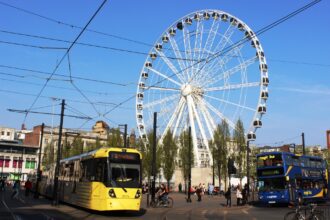
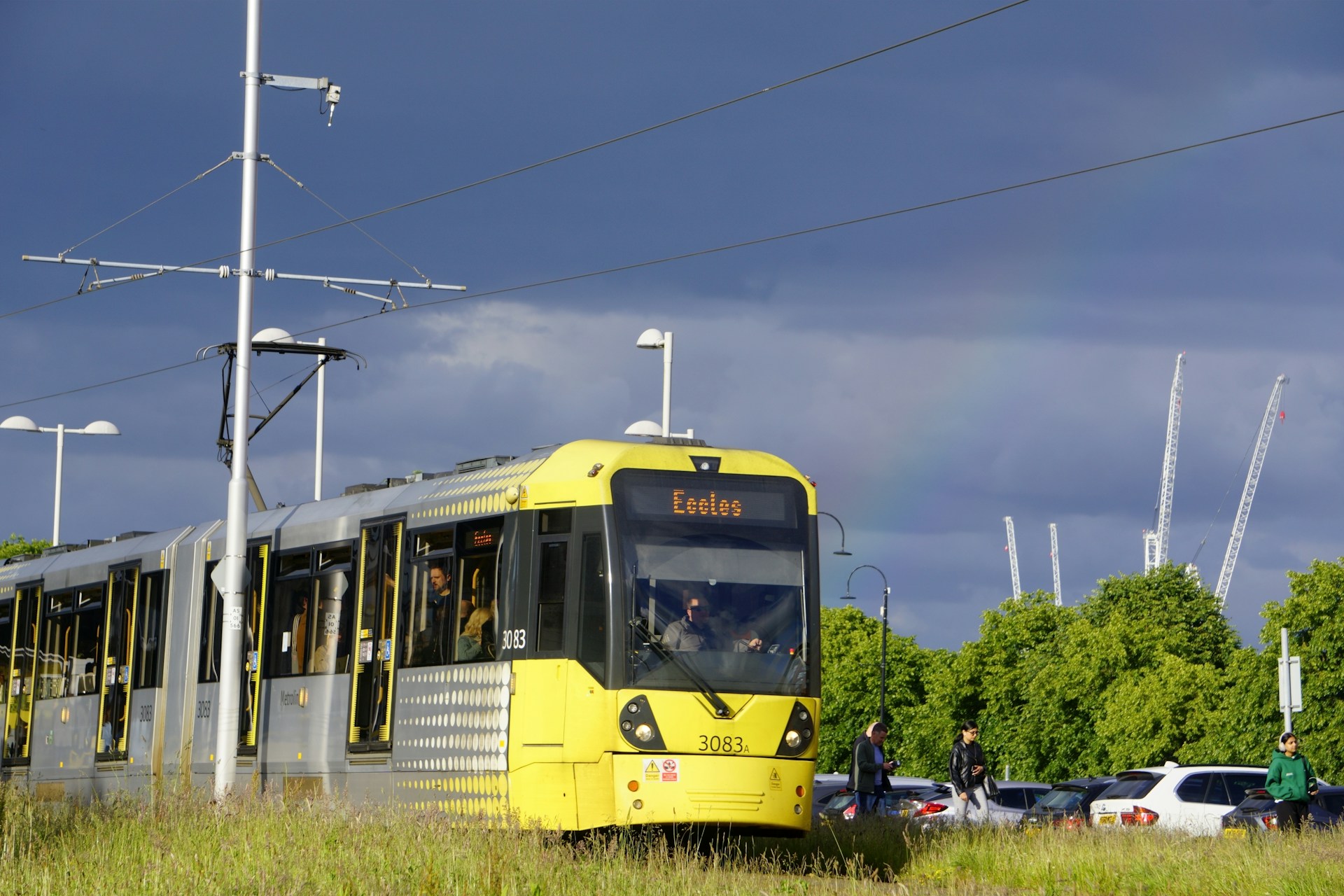
The most visible and established part of the system is the Metrolink tram network. This is the backbone of the Bee Network and one of the most extensive light rail systems in the UK. It includes 99 stops across eight lines, covering more than 64 miles, or 103 kilometres, and links suburbs, city-centre districts, shopping areas, sports venues, attractions, and Manchester Airport. Services typically run every 6 to 12 minutes, making trams one of the fastest and most reliable ways to move around the region.
Alongside this sits the Bee Network bus system, instantly recognisable through its bright yellow livery. Buses are especially important because they connect areas that do not have tram access and help complete the regional network. Simplified flat fares and the Hopper ticket, which allows unlimited bus journeys within one hour for £2.00 ($2.70 / €2.35), make the bus system particularly useful for short urban hops and practical local connections. Some routes also run 24 hours, which adds extra value for late-night travellers and airport passengers.
The network also includes cycle hire, through Starling Bank Bikes. This public bike hire scheme covers central Manchester and nearby districts, offering both standard pedal bikes and e-bikes through the dedicated app. Docking stations are positioned close to major attractions, university areas, and key tram stops, making it easy to combine cycling with other forms of transport. For visitors, this is particularly useful when the final part of a journey is easier on two wheels than by waiting for another service.
Looking ahead, local rail integration is expected between 2026 and 2028, which will eventually bring selected local train services into the Bee Network. The long-term goal is that rail, tram, and bus journeys within Greater Manchester can operate as part of one coherent system, with more unified ticketing and journey planning.
Together, these modes give the Bee Network real depth. It is not reliant on one single form of transport. Instead, it gives travellers a choice of tram, bus, bike, and in future rail, depending on what suits the journey best.
Switching Between Modes
One of the strongest features of the Bee Network is that it has been designed to make switching between different forms of transport far easier than in a traditional fragmented system. For travellers, this is one of the biggest practical benefits. Journeys are rarely perfectly linear, and the ability to move smoothly from one mode to another can save both time and money.
Many tram stops are positioned close to important bus interchanges, which makes tram-to-bus connections straightforward. Key examples include Piccadilly Gardens, Altrincham Interchange, and Shudehill, where passengers can move between services without needing long walks or complicated transfers. This is especially useful for visitors heading to attractions or neighbourhoods that are not directly on the tram network.
There is also a deliberate effort to connect bus routes with cycle hire. Starling Bank Bikes docking stations are often placed near bus hubs, which allows travellers to continue their journey by bike if that is the quickest or most enjoyable option. This can be particularly effective for short urban distances, university areas, park access, or destinations where public transport is nearby but not right at the door.
The same principle applies to tram and cycle hire connections. Major tram stops such as St Peter’s Square, MediaCityUK, and Deansgate-Castlefield have nearby docking stations, giving travellers the option to combine fixed-route rapid transit with flexible last-mile cycling. This is one of the clearest examples of the Bee Network trying to function as a genuinely multi-modal system rather than a collection of separate services.
A particularly important point for visitors is that once you hit the relevant daily fare cap, switching between modes does not necessarily increase your costs in the same way it would under a more fragmented system. That encourages people to choose the combination that is fastest or most convenient rather than worrying about buying fresh tickets every time they change mode.
In practical terms, this means a traveller can arrive by tram, continue by bus, and finish with a bike or short walk, all within one broader travel experience. That flexibility is what makes the Bee Network feel modern. It is not just about the individual vehicles. It is about how well they connect.
Ticketing & Payment
One of the biggest strengths of the Bee Network is that its ticketing system is designed to be far simpler than the patchwork of fares and operators that travellers often struggle with in large urban areas. For visitors, this matters because it reduces confusion and makes it easier to move around Greater Manchester without constantly stopping to work out what kind of ticket is needed for each journey.
The system is built around a few clear payment methods. Contactless payment is the easiest option for most travellers, allowing you to tap and travel across the network while benefiting from daily and weekly fare caps. That means you do not need to calculate the best ticket in advance for every journey. As long as you follow the correct process, especially tapping in and out where required, the system is designed to ensure you do not pay more than the relevant capped amount for your travel. Current cap levels for bus, tram, and combined travel are published on the Transport for Greater Manchester contactless fares page.
There are also ticket options available through the Bee Network app, at tram stop ticket machines, and directly on board buses. This gives travellers flexibility depending on whether they prefer digital tickets, physical tickets, or simple pay-as-you-go travel. Bus users benefit from the particularly useful Hopper fare, which allows unlimited bus journeys within one hour for £2.00 ($2.70 / €2.35). For short urban trips or quick transfers, that can offer excellent value.
Tram fares are structured by zones, with lower prices for shorter journeys and off-peak savings after 09:30 on weekdays. This makes it easier for tourists and leisure travellers to save money if they are not travelling during the busiest commuting periods. There are also special ticket products such as Weekend Travelcards, which can be particularly useful for visitors planning multiple journeys across a Friday-to-Sunday stay.
A key long-term advantage of the Bee Network is that these systems are being built with future rail integration in mind. In time, that means even more journeys will sit within a single fare structure, giving Greater Manchester a much more joined-up and intuitive transport system than it has historically had.
For travellers, the most important point is that the Bee Network aims to remove the need for separate tickets for separate parts of the same day. It makes payment more transparent, travel easier to understand, and multi-stop journeys far more manageable.
The Bee Network App
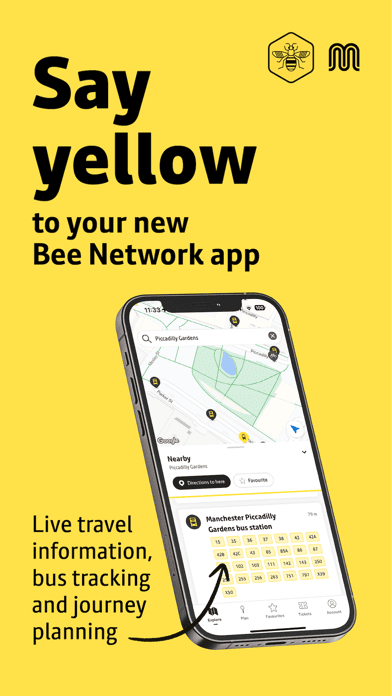
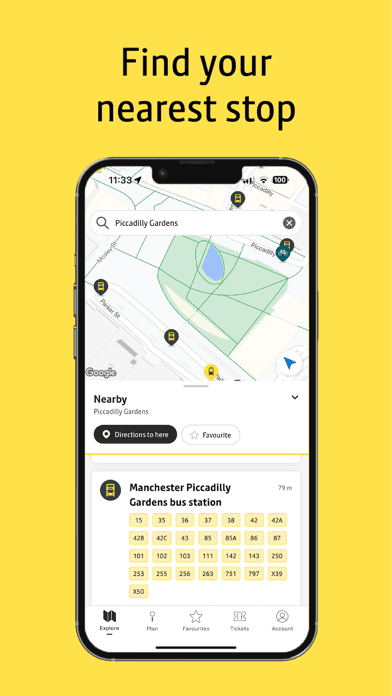
At the centre of the Bee Network’s digital experience is the Bee Network app, which has been designed to make travelling across Greater Manchester more straightforward for both local users and visitors. For travellers, it is one of the most useful tools in the system because it brings together journey planning, ticketing, live updates, and cycle hire integration in one place.
The app is available free on both the Apple App Store and Google Play Store, and it is well worth downloading before arriving in Manchester. Setting it up in advance gives you time to add payment details, save useful destinations, and familiarise yourself with the network before you start moving around the city region. For first-time visitors in particular, that preparation can make the whole transport experience feel much smoother.
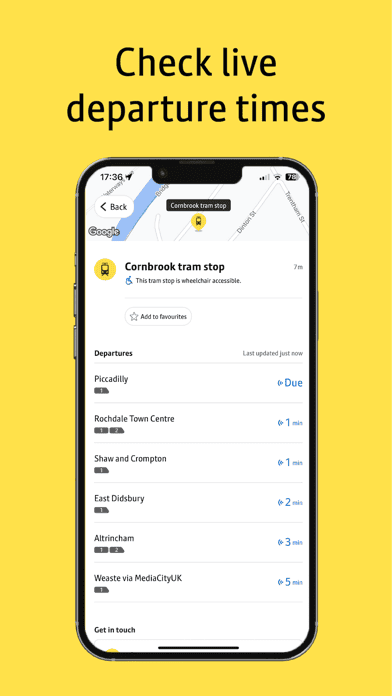
One of its most valuable features is multi-modal journey planning. Instead of focusing on just one kind of transport, the app helps plan routes across trams, buses, and cycle hire, and it can suggest combinations of these modes where that produces the fastest or most efficient journey. Real-time departure boards and alternative route suggestions also make it easier to respond quickly if a service is delayed or disrupted.
The app also provides live service updates, including notifications about delays, engineering works, or route changes. For travellers heading to major venues, airports, or football grounds, this can be especially useful, since crowd levels and event-day diversions can affect normal services. The ability to filter updates to saved routes adds extra convenience for people using the same journeys repeatedly during a stay.
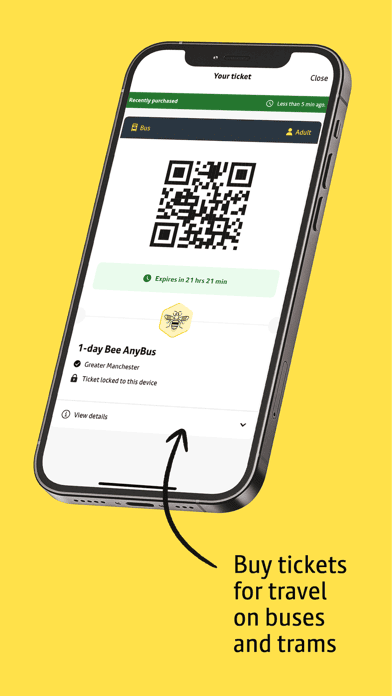
Another practical advantage is digital ticket purchasing. Visitors can buy single, return, and day tickets for buses and trams directly in the app, then store them digitally for easy access during inspections or boarding. This removes the need to queue at machines or work out cash payments on the day.
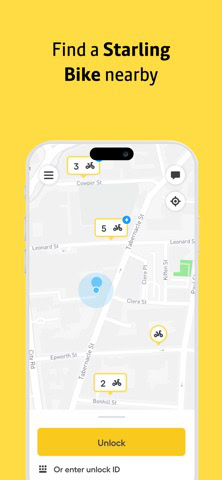
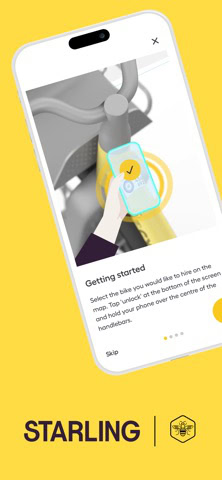
The app also connects with Starling Bank Bikes, allowing users to check bike availability, locate docking stations, and unlock bikes directly from their phone. This is especially useful for travellers who want to combine public transport with cycling for shorter distances or sightseeing.
For visitors, the Bee Network app adds real value even if they are mainly paying contactlessly. It acts as a live guide to the network, helps manage journey decisions in real time, and makes the whole transport system feel more coherent and easier to use.

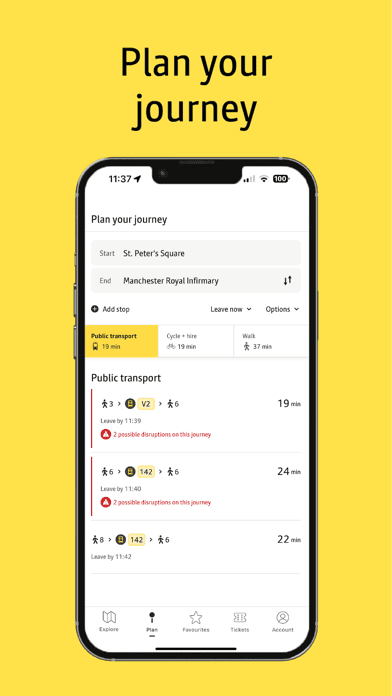
App availability and prices vary by country. Some of these may not appear in your local App Store or Google Play.
Metrolink Trams
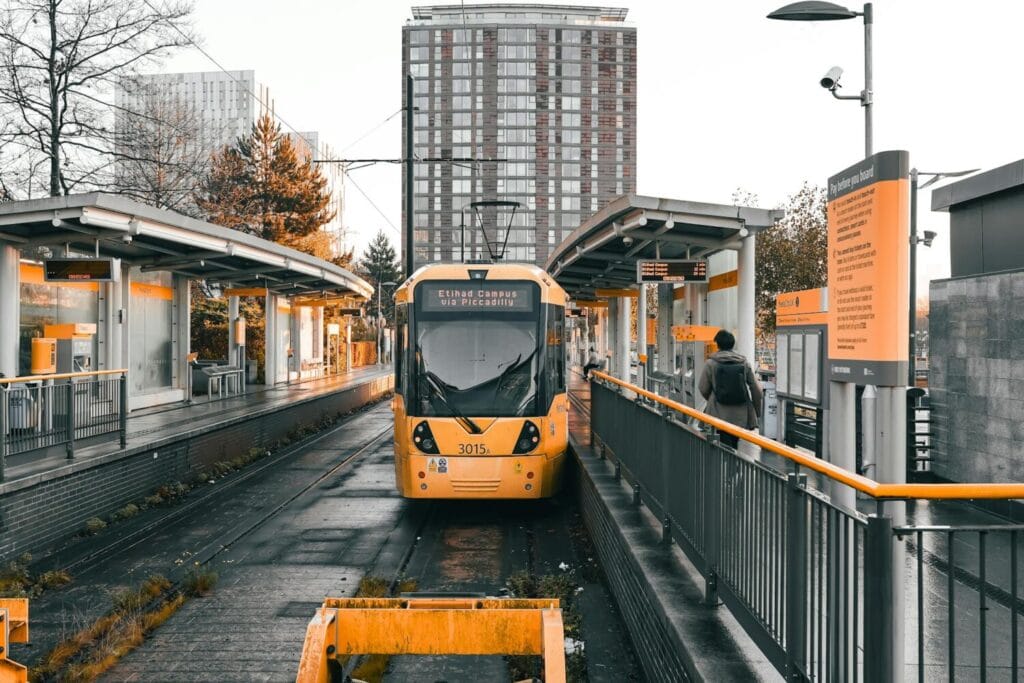
The Metrolink tram system is the backbone of the Bee Network and the part of the system most travellers are likely to use first. It is the most visible, extensive, and recognisable element of Manchester’s integrated transport network, carrying millions of passengers each year across 99 stops and more than 64 miles, or 103 kilometres, of track. For visitors, it is one of the easiest ways to move between key attractions, shopping areas, transport hubs, and outer districts without getting caught in city-centre traffic.
One of the tram system’s biggest advantages is its frequency. Services generally run every 6 to 12 minutes for most of the day, with peak-time operations often as frequent as every 6 minutes on some sections. This means you rarely need to build your day around a rigid timetable, which is a major plus for sightseeing and flexible urban travel.
Operating hours are also broad enough to suit most travellers. Trams typically run from around 06:00 until midnight Monday to Thursday, around 06:00 until 01:00 on Fridays and Saturdays, and from approximately 07:00 until midnight on Sundays, with later services sometimes operating during major events. That makes the system useful not only during the day but also for evening dining, concerts, football matches, and late returns to hotels or suburban accommodation.
Ticketing is designed to work with the wider Bee Network structure. Passengers can use contactless payment with automatic fare capping, buy tickets through the Bee Network app, or use tram stop ticket machines. The system is divided into four fare zones, with the price depending on how many zones you travel through rather than the number of individual stops. This keeps pricing relatively easy to understand once you know your route.
Accessibility is another strength. All Metrolink stops are step-free, and trams include audio and visual announcements, making the network practical for wheelchair users, visually impaired travellers, and anyone unfamiliar with the city. For visitors carrying luggage or travelling with children, this ease of boarding is particularly useful.
Overall, Metrolink is not just the backbone of the Bee Network in a technical sense. It is also the mode that makes Manchester feel genuinely connected. It links airport, suburbs, stadiums, shopping areas, museums, and business districts in a way that makes the city region much more accessible for travellers.
Search flights and useful route combinations for your trip.
View flightsBrowse Airalo eSIM options for convenient travel data.
Check eSIMsCheck private pickup options and plan your onward journey before arrival.
View transfersFare Zones for Trams
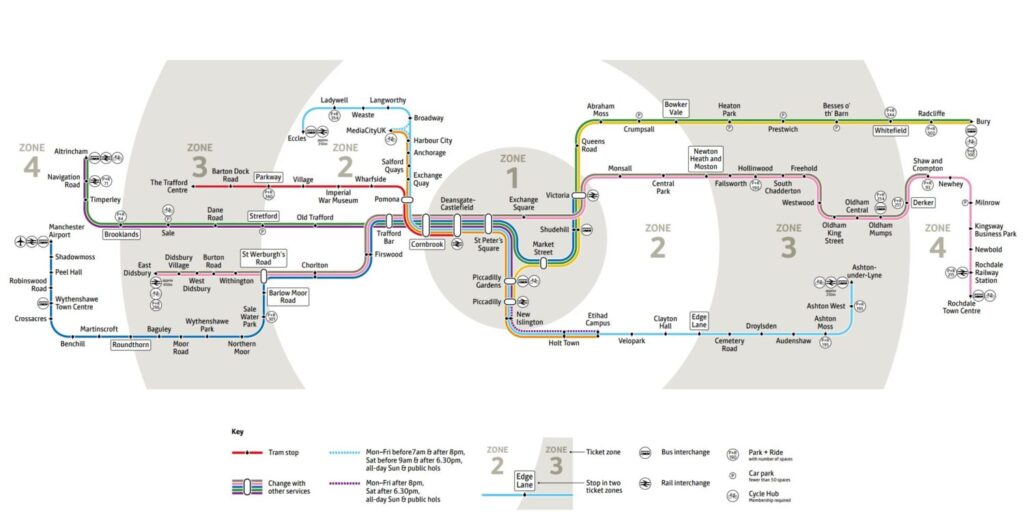
Understanding the Metrolink fare zones is one of the simplest ways to avoid confusion when using the tram network. The Bee Network divides the tram system into four numbered zones, and your fare depends on how many zones you travel through, rather than on the total number of stops. For visitors, this structure is useful because it creates a predictable way to estimate costs before travelling.
Zone 1 covers Manchester city centre, which means many of the places tourists are most likely to visit sit within the cheapest part of the system. If you are using the tram for short city-centre trips, this is where you will usually get the lowest fares. Journeys that move beyond the centre into surrounding districts begin to cross into Zones 2, 3, and 4, with the price increasing as you travel further outward.
For example, a trip entirely within Zone 1 is one of the cheapest tram journeys available and is ideal for moving between central attractions, shopping streets, and transport hubs. By contrast, a journey from the city centre into places such as Oldham, Rochdale, Sale, or East Didsbury will pass through additional zones and therefore cost more. This is a more logical structure than charging by stop count, because it gives a clearer sense of scale across the city region.
The pricing system becomes especially helpful when combined with daily caps. Once you reach the spending limit for your selected zones and travel type, additional journeys within those limits are effectively covered for the rest of the day. That is particularly valuable for travellers planning a busy sightseeing schedule or multiple stops across different parts of Greater Manchester.
There are also off-peak savings available after 09:30 on weekdays, which can make tram travel even better value for leisure users. That timing works particularly well for visitors, who are often less likely to travel during morning commuter peaks anyway.
In practical terms, the fare zones make the tram system easier to read once you understand the basics. They give structure to the network, make fares more transparent, and help visitors plan whether a single ticket, day ticket, or capped contactless travel will offer the best value.
Airport Line – Manchester Airport to Victoria
The Airport Line is one of the most important routes in the Metrolink network, especially for travellers arriving in Greater Manchester by air. Running between Manchester Airport and Victoria, it provides a direct light rail connection from the airport into the city and beyond, making it one of the most useful routes for visitors who want to avoid taxis or immediate rail transfers.
The line is often identified by its purple colour on network maps. It covers approximately 23.2 kilometres and takes around 60 minutes end to end, serving 15 stations along the way. While it is not the fastest airport-to-city option in absolute terms, it is one of the most straightforward and useful for people whose destination is not just central Manchester but also one of the districts connected further along the route.
One of the biggest strengths of the Airport Line is the range of destinations it serves along the way. It gives direct access to Manchester Airport terminals, making arrival and departure simple for visitors who prefer public transport. It also passes areas such as Sale Water Park, which offers walking trails, nature reserve space, and watersports, and provides useful access points for areas linked to cricket, nightlife, and central Manchester attractions.
Further into the city, the route connects with Deansgate-Castlefield, where travellers can explore Castlefield’s Roman fort remains, canalside areas, and nightlife, before continuing towards Victoria, which places passengers near the AO Arena, National Football Museum, and other city-centre destinations. This makes the line useful not just for airport access, but also as a sightseeing and accommodation route.
Another practical advantage is the Park & Ride site at Sale Water Park, which allows travellers driving in from outside the centre to leave their car and continue by tram. For visitors combining car travel with public transport, this can be a very effective way to reduce city-centre traffic stress.
For international visitors or anyone arriving with luggage, the Airport Line is particularly valuable because it offers a direct, step-free route into the wider Bee Network. It is not just a commuter line. It is one of the clearest examples of how Manchester’s integrated transport system is being shaped around real traveller needs.
Altrincham Line – Altrincham to City Centre
The Altrincham Line, shown in green on the Metrolink map, is one of the most useful routes for travellers looking to explore both south Manchester suburbs and the city centre. Covering approximately 12.2 kilometres with a journey time of around 30 minutes, the line includes 10 stations and provides a reliable, high-frequency connection into the heart of Manchester.
For visitors, this line is particularly valuable because it links a mix of local neighbourhoods, major attractions, and central cultural areas in a single, straightforward route. At the outer end, Altrincham itself is a destination worth visiting. The area is known for the award-winning Altrincham Market, which combines artisan food stalls, independent traders, and a lively social atmosphere that draws both locals and tourists.
Moving towards the city, the line passes through Sale, a well-regarded suburban area with independent shops, cafés, and green spaces. It also provides access to Old Trafford tram stop, which is one of the main transport points for visitors heading to Manchester United’s stadium. On match days, this part of the line becomes particularly busy, so planning around peak times is important.
As the route approaches the city centre, it connects directly with St Peter’s Square, one of Manchester’s most important civic spaces. From here, travellers are within walking distance of Manchester Town Hall, major art galleries, theatres, and shopping districts. Continuing further, the line feeds into central areas such as Market Street, placing visitors directly in the city’s main retail and entertainment zones.
For those driving into Greater Manchester, the Park & Ride facility at Altrincham Interchange provides a convenient way to leave a car outside the busiest parts of the city and complete the journey by tram. This is often faster and less stressful than navigating central traffic, particularly on weekends or event days.
Overall, the Altrincham Line is a strong example of how the Bee Network connects suburban life with city-centre culture. It allows travellers to move easily between local markets, major football venues, and Manchester’s core attractions without needing multiple transport options.
Bury Line – Bury to Piccadilly
The Bury Line, marked in yellow, is one of the busiest and most popular routes on the Metrolink network. Stretching approximately 15.9 kilometres with a journey time of around 35 minutes, it serves 11 stations and connects the northern town of Bury directly with Manchester Piccadilly and the city centre.
For travellers, this line offers a particularly strong combination of heritage, green space, and urban access. At the northern end, Bury is well known for its award-winning market, which has been recognised nationally for its variety of fresh produce, street food, and traditional stalls. It is also the gateway to the East Lancashire Railway, a heritage steam railway that attracts visitors interested in historic train travel and scenic countryside journeys.
Heading south, the line passes through areas such as Whitefield and Prestwich, which are popular residential districts with a growing reputation for independent cafés and local dining spots. One of the standout stops along the route is Heaton Park, which provides access to one of the largest municipal parks in Europe. The park offers walking trails, open green space, and seasonal events, making it a strong destination for visitors who want a break from the city environment.
As the line approaches central Manchester, it links into Piccadilly Gardens, one of the city’s main transport and commercial hubs. From here, travellers can easily walk to shopping areas, restaurants, theatres, and major attractions, or transfer to other tram lines and transport options across the Bee Network.
The Park & Ride facilities at Bury Interchange and Whitefield make this line particularly useful for those travelling into the city from further north. These locations allow drivers to leave their vehicles outside the busiest parts of Manchester and complete their journey efficiently by tram.
For visitors, the Bury Line is a well-balanced route that connects historic market towns, major green spaces, and the city centre in a single journey. It highlights the variety that Greater Manchester offers beyond its core urban areas.
East Didsbury Line – East Didsbury to City Centre
The East Didsbury Line, shown in blue, is a shorter but highly practical route within the Metrolink system. Covering approximately 7.1 kilometres with a journey time of around 20 minutes, it serves 8 stations and provides a direct connection between south Manchester suburbs and the city centre.
This line is particularly useful for visitors staying in residential areas such as Didsbury, which is one of Manchester’s most popular neighbourhoods. Known for its independent cafés, boutique shops, and relaxed atmosphere, East Didsbury offers a different perspective on the city compared to the busier central districts. It is a good base for travellers who prefer a quieter place to stay while still having quick access to central attractions.
As the tram moves north, it connects directly to St Peter’s Square, placing visitors within easy walking distance of Manchester’s civic buildings, museums, and galleries. This makes it a straightforward route for anyone commuting into the city centre for sightseeing, dining, or events.
While the line itself does not directly serve major stadiums, it provides easy interchange opportunities with other tram routes that do. For example, travellers can transfer to reach the Etihad Campus or Old Trafford, making it a flexible option for those attending sports events or concerts.
The Park & Ride facility at East Didsbury is another useful feature, allowing visitors to combine car travel with public transport. This can be particularly helpful for those arriving from outside Greater Manchester who want to avoid city-centre traffic and parking.
Overall, the East Didsbury Line is a convenient, efficient route that connects a well-regarded residential area with the heart of Manchester. It is especially valuable for visitors who want a balance between quieter accommodation and easy city access.
Oldham & Rochdale Line – Rochdale to City Centre
The Oldham and Rochdale Line, identified in pink, is one of the longest routes in the Metrolink network. It stretches approximately 23.8 kilometres, takes around 60 minutes end to end, and serves 19 stations, linking Rochdale Town Centre with Manchester city centre.
For travellers, this line provides access to areas that are less commonly explored by tourists but offer a strong sense of local history, architecture, and cultural identity. At the northern end, Rochdale is home to the impressive Rochdale Town Hall, a striking example of Victorian Gothic architecture that has undergone significant restoration. The town also has strong historical connections to the co-operative movement, which adds another layer of interest for visitors.
Further along the route, Oldham offers access to local theatres, cultural venues, and heritage sites. Stops such as Oldham Mumps act as important interchange points, linking different parts of the network and providing access to surrounding neighbourhoods.
As the line moves closer to Manchester, it connects to Exchange Square, one of the main retail and commercial areas in the city centre. From here, visitors are within easy walking distance of shopping centres, restaurants, and major attractions, making it a practical entry point into central Manchester.
The line also includes several Park & Ride sites, including Rochdale, Oldham Mumps, and Derker, which allow travellers to leave their cars outside the city and complete their journey by tram. This is particularly useful for those travelling from further out who want to avoid driving into central Manchester.
For visitors interested in seeing more than just the central districts, the Oldham and Rochdale Line offers a chance to explore Greater Manchester’s wider communities and heritage, while still maintaining a direct link back into the city.
Browse hostels and budget-friendly stays around Manchester.
See hostelsAccess compensation support, eligible lounge benefits and faster payouts when flights go wrong.
See the benefitsUse convenient luggage storage around Manchester between arrival, check-in and departure.
Check storageAshton-under-Lyne Line – Ashton to City Centre
The Ashton-under-Lyne Line, shown in light blue, runs between Ashton-under-Lyne and Manchester city centre, covering approximately 11.6 kilometres in around 30 minutes and serving 9 stations. It is a key route for visitors heading towards east Manchester, particularly for sports and event venues.
One of the most important stops on this line is Etihad Campus, which provides direct access to Manchester City’s stadium and surrounding sports facilities, including the velodrome and fan zones. This makes the line especially busy on match days and during major events, so travelling earlier than peak times is often advisable.
At the outer end, Ashton-under-Lyne offers a more traditional market town experience, with its indoor and outdoor markets providing a mix of local goods, food, and everyday shopping. While it is less tourist-focused than central Manchester, it gives visitors a sense of the wider region beyond the main city attractions.
As the line approaches the centre, it connects to Exchange Square, one of Manchester’s main shopping and leisure areas. From here, travellers can easily access retail districts, restaurants, and cultural sites, or transfer to other tram lines within the Bee Network.
The Park & Ride facility at Ashton-under-Lyne makes this route useful for visitors arriving by car from the east. Leaving a vehicle outside the city and continuing by tram is often quicker and more convenient, particularly during busy periods.
Overall, the Ashton-under-Lyne Line plays an important role in linking sports venues, local communities, and the city centre. For visitors attending events at the Etihad Campus or exploring eastern parts of Greater Manchester, it is one of the most practical and direct routes available.
Eccles & MediaCityUK Line – Eccles to City Centre
The Eccles and MediaCityUK Line, shown in orange on the Metrolink map, is one of the most important routes for visitors interested in modern Manchester, media, and waterfront attractions. The line splits into two branches, with the Eccles route covering approximately 6.4 kilometres in around 20 minutes, while the short MediaCityUK spur connects directly into the heart of Salford Quays.
For travellers, this line offers access to one of the most distinctive parts of Greater Manchester. MediaCityUK is home to major broadcasters including the BBC and ITV, as well as cultural venues such as The Lowry Theatre. The area has developed into a lively waterfront district with restaurants, cafés, and open public spaces, making it a popular destination both during the day and in the evening.
Nearby, Salford Quays provides additional attractions, including the Imperial War Museum North, waterside walks, and a growing selection of dining options. The combination of cultural venues and modern architecture gives this part of the city a very different feel compared to central Manchester, and the tram line makes it easy to include in a wider itinerary.
At the western end of the route, Eccles offers a more traditional town environment, with local markets and a quieter pace. While it is less of a tourist destination, it provides useful connections for travellers exploring the broader region.
The line also includes a Park & Ride facility at Ladywell, allowing visitors to leave their car outside the busiest areas and continue by tram. This can be particularly helpful for those attending events or visiting MediaCityUK during peak times.
For visitors, the Eccles and MediaCityUK Line is one of the most rewarding routes in the network. It connects the city centre with one of Manchester’s most modern and visually distinctive districts, making it ideal for combining culture, architecture, and leisure in a single trip.
Trafford Park Line – Deansgate-Castlefield to Trafford Centre
The Trafford Park Line, marked in dark blue, is one of the newest additions to the Metrolink network and plays a key role in connecting shopping, leisure, and major visitor attractions. Running between Deansgate-Castlefield and the Trafford Centre, the line covers approximately 5.5 kilometres in around 20 minutes and serves 7 stations.
For travellers, this route is particularly valuable because it links the city centre with one of the UK’s largest retail and entertainment complexes, the Trafford Centre. This destination is more than just a shopping mall. It includes a wide range of restaurants, cinemas, and leisure activities, making it a popular stop for visitors looking to combine retail and entertainment in one location.
Along the route, the line also serves areas such as Trafford Park, which has a mix of business, industrial, and visitor-focused attractions. One of the key highlights is the Imperial War Museum North, located near Salford Quays, which offers powerful exhibitions on modern conflict and history. The line also provides convenient access to Old Trafford, the home of Manchester United, via nearby stops and short connections.
At the city-centre end, Deansgate-Castlefield acts as a major interchange point, linking this line with other tram routes and providing access to Manchester’s nightlife, canals, and historic Roman fort area. This makes it easy to combine a visit to the Trafford Centre with dining or entertainment in the city centre.
A Park & Ride facility at Parkway allows visitors travelling by car to switch to tram travel before reaching the busiest parts of the network. This can be especially useful during weekends and peak shopping periods.
Overall, the Trafford Park Line is a highly practical route for visitors who want to combine shopping, culture, and city-centre exploration, all within a short and well-connected journey.
Park & Ride Facilities
For travellers arriving in Greater Manchester by car, the Bee Network’s Park & Ride system provides a practical way to avoid the congestion and cost of city-centre driving. These facilities are located at key points on the tram network and allow visitors to park their vehicle and continue their journey using public transport.
One of the main advantages of Park & Ride is that parking is often free or low-cost when used in conjunction with tram travel. This makes it a highly cost-effective option for visitors who want to combine the flexibility of driving with the convenience of public transport. It is particularly useful during busy periods, such as weekends, major events, or football matches, when central parking can be both expensive and difficult to find.
Key Park & Ride locations are positioned to capture traffic before it reaches the busiest areas of the city. For example, Sale Water Park on the Airport Line, Whitefield on the Bury Line, East Didsbury on the East Didsbury Line, Rochdale on the Oldham and Rochdale Line, and Parkway on the Trafford Park Line all provide easy access to tram services heading directly into the city centre.
Using Park & Ride can significantly reduce travel stress. Instead of navigating unfamiliar streets or dealing with heavy traffic, visitors can complete the final part of their journey quickly and reliably by tram. This is especially useful for those attending events at major venues such as football stadiums or arenas, where large crowds can cause delays for road traffic.
For travellers unfamiliar with Manchester, Park & Ride offers a simple strategy. Drive to the edge of the network, park in a designated area, and let the Bee Network handle the rest of the journey. It combines the independence of driving with the efficiency of public transport.

Bee Network Tram Map 2026
Bee Network Buses
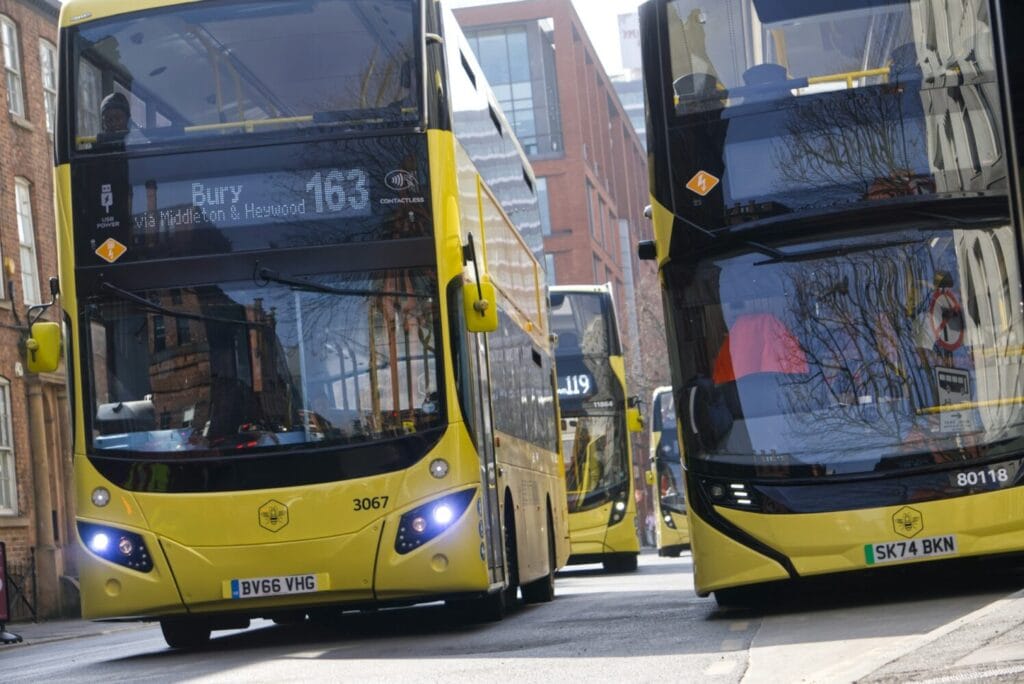
The Bee Network bus system is a crucial part of Greater Manchester’s transport infrastructure, covering areas that the tram network does not reach and ensuring that every borough is connected. For travellers, buses provide the flexibility to access neighbourhoods, attractions, and local areas that sit beyond the main tram corridors.
One of the most noticeable features of the system is its distinctive yellow branding, which makes Bee Network buses easy to identify across the city. More importantly, the network operates with a simplified fare structure, including a flat £2.00 single fare for adults ($2.70 / €2.35), regardless of distance within Greater Manchester. This removes much of the complexity traditionally associated with bus travel.
The Hopper fare is particularly useful. It allows passengers to make unlimited bus journeys within one hour for the same £2.00 ($2.70 / €2.35), making it ideal for short trips or journeys that require a change of route. For visitors moving between attractions or exploring different districts, this can offer excellent value.
Several routes are especially useful for travellers. The 43 route runs 24 hours a day between Manchester Airport and the city centre, with services every 10 to 20 minutes, making it a reliable option for late arrivals or early departures. The 100 route connects Salford Quays, Old Trafford, and the Trafford Centre, linking multiple major attractions in one journey. The 135 route provides a frequent connection between Bury and Manchester, while the V1 and V2 routes offer faster travel into the city using a guided busway.
Another important route is the 50 service, which runs between East Didsbury and MediaCityUK, passing through key areas such as the universities, Deansgate, and major sports venues. This makes it one of the most versatile bus routes for visitors.
Many Bee Network bus services also run into the evening or overnight, with some operating 24 hours, which adds flexibility for travellers attending events or exploring the city’s nightlife. Buses are well lit, widely available, and accept both contactless payments and app-based tickets, making them easy to use even for first-time visitors.
For travellers, the bus network complements the tram system by filling in the gaps. It ensures that no part of Greater Manchester feels disconnected, and it provides a simple, affordable way to reach places that would otherwise be harder to access.
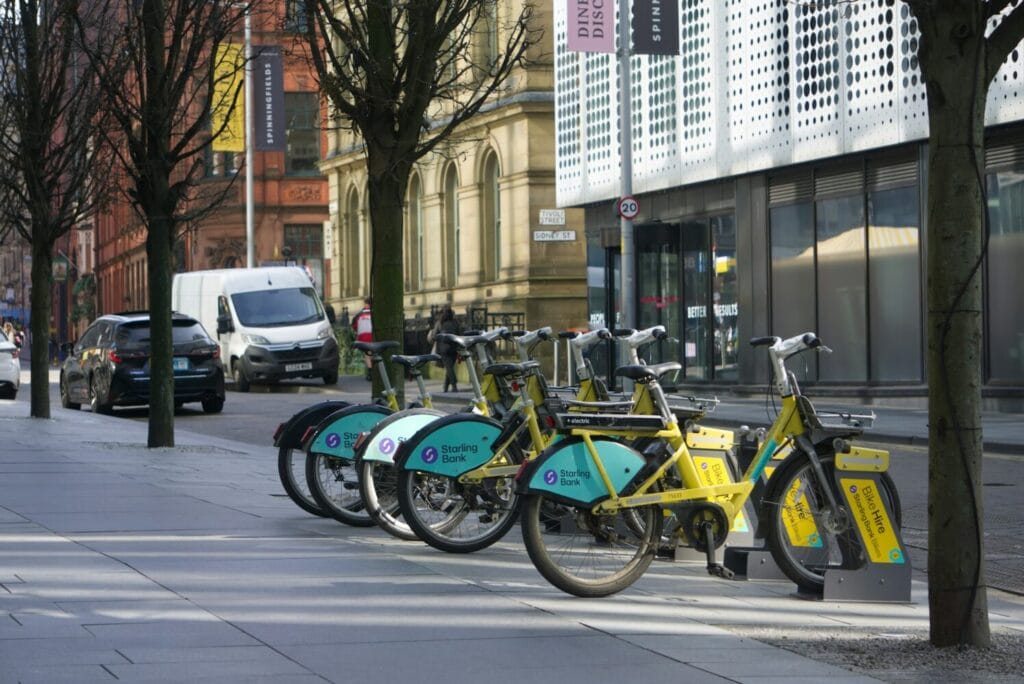
Cycle Hire – Starling Bank Bikes
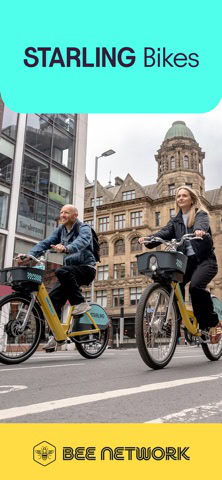
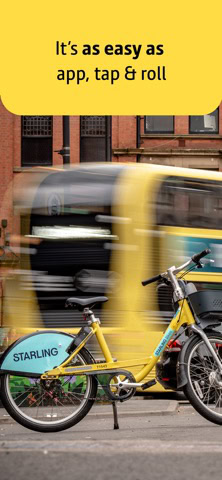
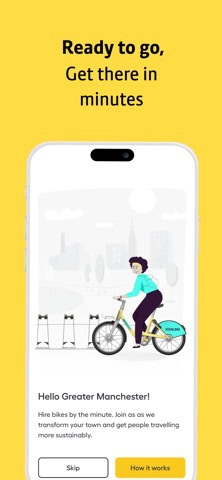
The Bee Network cycle hire scheme, operated through Starling Bank Bikes, adds a flexible and active travel option to Manchester’s transport system. For visitors, it provides a simple way to cover short distances, explore neighbourhoods at a slower pace, or complete the final part of a journey that public transport does not reach directly.
The system operates through a network of docking stations across the city centre, university areas, Salford Quays, and key neighbourhoods, with ongoing expansion into additional districts. Users can locate bikes, unlock them, and manage their journeys through the dedicated app, making the process straightforward even for first-time users.
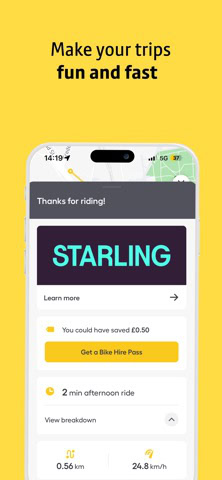
Pricing is designed to be accessible. Standard pedal bikes have an unlock fee of £0.50 ($0.68 / €0.59) followed by a per-minute charge of £0.05 ($0.07 / €0.06), while electric bikes cost £1.00 ($1.35 / €1.17) to unlock and £0.10 ($0.14 / €0.12) per minute. You can also buy minute bundles in advance, from £5.00 ($6.75 / €5.85) for 100 minutes, which bring the rate down to £0.05 ($0.07 / €0.06) a minute on both bike types and remove the unlock fee on standard bikes. This makes the system particularly attractive for visitors planning multiple short journeys or combining cycling with sightseeing. A Pause Ride feature allows users to lock a bike for up to 15 minutes during a stop without ending the session, although the usual per-minute charge continues while the ride is paused.
The scheme includes both standard pedal bikes and electric bikes, giving riders the option of a traditional cycling experience or a boosted ride for longer distances or slightly more challenging routes. This flexibility makes the system suitable for a wide range of users, from casual riders to those looking to cover more ground.
Cycle hire works especially well when combined with other parts of the Bee Network. Travellers can take a tram or bus to a central location and then use a bike for the final stretch of their journey. This is particularly useful in areas such as MediaCityUK, the Northern Quarter, university campuses, and major parks, where cycling can often be quicker than waiting for another service.
Safety and practicality are also considered. Bikes are equipped with lights, and users are encouraged to follow cycle-friendly routes such as the Fallowfield Loop or canal towpaths, which provide safer and more scenic riding options.
Looking ahead, the system is set to expand further, with more docking stations and the development of Bee Lines, a network of up to 1,800 miles of walking and cycling routes designed to create safer and more connected paths across Greater Manchester.
For visitors, Starling Bank Bikes add a layer of freedom to the Bee Network. They make it easier to explore the city on your own terms, bridging the gap between public transport stops and the places you actually want to reach.

App availability and prices vary by country. Some of these may not appear in your local App Store or Google Play.

Tickets, Caps & Passes: At a Glance
The Bee Network fare system is designed to make pricing clearer and more predictable, especially for visitors who may not be familiar with Manchester’s transport structure. Instead of navigating dozens of ticket types, the system focuses on a small number of options, supported by daily and weekly caps that ensure you do not overpay if you make multiple journeys.
For bus travel, the simplest option is the £2.00 single fare ($2.70 / €2.35), which applies anywhere within Greater Manchester. This is particularly useful for short journeys or occasional trips. The added benefit is the Hopper fare, which allows unlimited bus journeys within one hour for that same £2.00 ($2.70 / €2.35), making it excellent value for travellers moving between nearby areas or changing routes.
Tram travel is priced differently, using a zone-based structure. Single fares range from £1.40 to £4.60 ($1.90–$6.20 / €1.65–€5.40), depending on how many zones you cross. For visitors planning several tram journeys in one day, an anytime day travelcard costing £7.10 ($9.60 / €8.30) for all four zones can be more cost-effective. There are also off-peak travelcards, which are cheaper at £4.90 ($6.60 / €5.75) for all zones and valid after 09:30 on weekdays, making them ideal for sightseeing.
For those combining buses and trams, integrated tickets provide even better value. A Bee Network AnyBus and AnyTram day ticket starts at £6.00 ($8.10 / €7.00) for a single tram zone and rises to £9.50 ($12.85 / €11.10) for all four zones, allowing unlimited travel across both modes. Seven-day versions run from £24.80 ($33.50 / €29.00) to £41.00 ($55.35 / €48.00), which is useful for longer stays or repeated travel across several days.
Cycle hire also fits into this wider pricing structure. Starling Bank Bikes minute bundles, starting at £5.00 ($6.75 / €5.85) for 100 minutes, bring the rate down to £0.05 ($0.07 / €0.06) a minute across both standard bikes and electric bikes, making them a strong option for active sightseeing.
The most flexible option for many travellers is contactless payment, which automatically applies daily caps across bus and tram travel. This means you can move freely throughout the day without worrying about choosing the perfect ticket in advance. Once you reach the cap, additional journeys within that day are effectively covered.
Overall, the Bee Network’s pricing approach is built around simplicity, flexibility, and value, giving visitors the confidence to travel without constantly checking fares or worrying about overspending.
Visitor Travel Tips – Making the Most of the Bee Network
The Bee Network is designed to be easy to use, but a few practical insights can make a noticeable difference to how efficiently and comfortably you move around Greater Manchester. For visitors, understanding how to time journeys, choose routes, and use the system’s features can help save both time and money.
Using the Bee Network app is one of the most effective ways to stay informed. It provides real-time updates, journey planning, and multi-modal route suggestions, allowing you to adjust quickly if there are delays or service changes. Even if you are paying contactlessly, the app acts as a live guide to the network.
Contactless payment is generally the simplest way to travel. By tapping in and out where required, you benefit from automatic fare capping, which ensures that once you reach the daily limit, additional journeys are covered. This removes the need to decide in advance whether to buy single tickets or a day pass.
For bus travel, the Hopper fare is particularly useful. At £2.00 ($2.70 / €2.35), it allows unlimited bus changes within one hour, which makes it ideal for short journeys or combining routes without paying extra. For visitors exploring multiple neighbourhoods, this can provide excellent value.
Timing your travel can also improve your experience. Weekday peak hours between 07:00 and 09:00 and again between 16:00 and 18:30 tend to be the busiest, particularly on trams. Travelling after 09:30 not only avoids the largest crowds but also unlocks cheaper off-peak fares. On weekends, mid-morning tends to be quieter than the afternoon, especially in central areas.
Event days require additional planning. Services to locations such as Old Trafford, the Etihad Campus, and major arenas can become crowded before and after events. Travelling earlier than the main rush or waiting briefly after an event can make a big difference to comfort and journey time.
For navigation, knowing a few key interchange points helps enormously. Locations such as Deansgate-Castlefield, Piccadilly Gardens, and Manchester Victoria act as major hubs where you can switch easily between trams, buses, and other services.
Combining different modes is often the most efficient strategy. For example, using a tram for the main part of a journey and a Starling Bank Bike for the final stretch can be quicker than waiting for another connection. This flexibility is one of the network’s biggest advantages.
By applying these simple strategies, visitors can make the Bee Network work to their advantage, turning it into a reliable and cost-effective way to explore the entire city region.
Accessibility & Inclusive Travel on the Bee Network
Accessibility has been a central consideration in the development of the Bee Network, with the aim of ensuring that passengers of all abilities can travel confidently and independently. For visitors, this means the system is not only easy to use but also designed to accommodate a wide range of needs.
Across the tram network, all Metrolink stops are fully step-free, allowing level access between platforms and trams. This makes boarding straightforward for wheelchair users, travellers with pushchairs, and anyone with reduced mobility. At major interchanges such as Deansgate-Castlefield, Cornbrook, and Victoria, lifts and ramps provide easy movement between platforms and connecting services.
On board, trams include dedicated wheelchair spaces, typically located in the middle carriages, while buses across the Bee Network are low-floor vehicles equipped with ramps and clearly marked priority seating areas. These features ensure that passengers who need additional support can travel without difficulty.
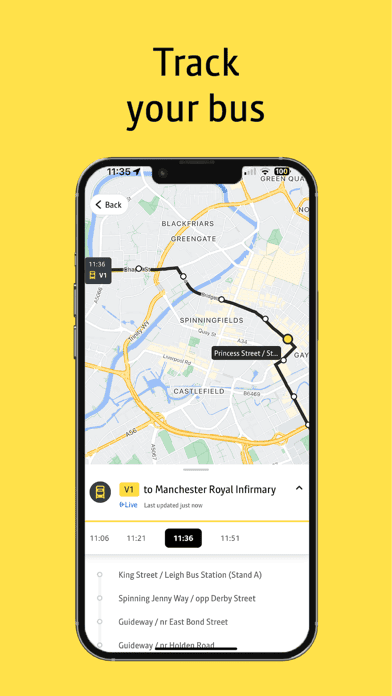
The network also supports passengers with sensory impairments. Trams and buses include audio announcements and digital displays showing upcoming stops, helping both visually impaired and hearing-impaired travellers stay informed throughout their journey. The Bee Network app further enhances this by providing real-time tracking and route information.
The system recognises the Sunflower Lanyard scheme, which allows passengers to discreetly indicate that they may need additional time or assistance. Staff and drivers are trained to respond appropriately, offering help while maintaining a respectful and low-profile approach.
Additional facilities such as accessible toilets, clear signage, and well-lit waiting areas contribute to an overall environment that is safer and more inclusive. For those travelling with mobility aids, folding bikes and certain scooters are permitted under specific conditions, while powered mobility scooters can be used with prior approval.
For visitors, the key advantage is that accessibility features are not limited to isolated parts of the network. They are built into the system as a whole, making it easier to plan journeys with confidence and without needing complex workarounds.

Future Developments for the Bee Network
The Bee Network is still evolving, and its future development is one of the reasons it is such an important project for Greater Manchester. Over the coming years, planned expansions and upgrades will continue to improve connectivity, sustainability, and ease of use for both residents and visitors.
One of the most significant developments is the planned integration of local rail services, expected between 2026 and 2028. This will allow passengers to travel across train, tram, and bus services using a more unified ticketing system, bringing Greater Manchester closer to a fully integrated transport model similar to London’s.
The tram network itself is also set to expand. Proposals include extending the Trafford Park Line further west towards Port Salford, creating stronger links to employment zones and freight hubs. There are also discussions around improvements to the Airport Line, including potential loop connections that would reduce the need to travel via the city centre for certain journeys.
Service improvements are another focus. Increasing the frequency of trams during peak periods will help reduce crowding, particularly on busy routes such as those serving Bury and Altrincham. This will make the system more comfortable and reliable for both commuters and visitors.
On the bus side, a major priority is the transition to a zero-emission fleet, with plans to replace diesel buses with electric or hydrogen vehicles by 2038. This aligns with wider environmental goals and will improve air quality across the region.
Technology is also expected to play a larger role. Future updates to the Bee Network app aim to include real-time crowding information, improved journey planning tools, and deeper integration with ticketing systems. There are also plans for a single smartcard system, similar to London’s Oyster card, which would work across all modes of transport.
In the longer term, the development of Bee Lines, a network of up to 1,800 miles of walking and cycling routes, will further strengthen the system by improving active travel connections between neighbourhoods.
For travellers, these developments mean that the Bee Network is not a finished project but a rapidly improving system. Each phase brings Greater Manchester closer to a transport network that is fully integrated, environmentally sustainable, and easy to use, making future visits even more convenient and enjoyable.

Rupert’s Handy Travel Tips
The Bee Network is designed to make getting around Greater Manchester easier than ever, whether you’re a commuter, first-time visitor, or regular city explorer. Here are my quick facts and best hacks to keep your travel smooth and cost-effective:
Quick Facts for Travellers
- Contactless is king: Tap in and out with your bank card or phone for daily and weekly fare caps.
- Tap in/out correctly: Always touch in and out on trams (and trains) so fare caps apply correctly.
- Off-peak savings: Travel after 09:30 on weekdays and all day at weekends for cheaper fares and quieter journeys.
- Plan ahead: Use the Bee Network app for live updates, tickets, and multimodal journey planning.
- Hopper bus fare: Unlimited bus journeys within 1 hour for just £2 ($2.70 / €2.35), perfect for short hops.
- Park & Ride: Combine driving with tram travel; parking is usually free for transport users.
- Save favourites: Store your hotel, arena, or museums in the Bee Network app for faster journey planning.
Best Travel Hacks
- Combine modes: A single capped fare can cover both bus and tram travel, no separate tickets needed.
- Hit the cap early: On busy sightseeing days, once you reach the cap, extra journeys are effectively free.
- Use weekend Travelcards: Great value if you’re hopping between attractions Friday through Sunday.
- Know the interchanges: Deansgate–Castlefield, Piccadilly Gardens, and Victoria are key hubs for quick tram↔bus swaps.
- Plan around events: Match days at Old Trafford or the Etihad mean crowds; travel earlier to avoid delays.
- Combine bike + tram: Unlock a Starling Bank Bike near St Peter’s Square or MediaCityUK for the last mile.
- Check last services: Some suburban trams stop before midnight; confirm your last tram after a night out.
Want to meet the reindeer behind our travel tips? Find out more in our page Who is Rupert?.


Frequently Asked Questions
What is the Bee Network in Manchester?
The Bee Network is Greater Manchester’s integrated transport system, combining buses, trams, cycle hire, and eventually local rail into a single, coordinated network. It aims to make public transport more reliable, affordable, and accessible for everyone.
How do I pay for travel on the Bee Network?
Most services accept contactless Visa and Mastercard payments and mobile wallets such as Apple Pay and Google Pay, and you can also buy tickets in the Bee Network app, at tram stop machines or on board. American Express is not accepted, and there is still no single Oyster-style smartcard covering every mode. Daily and weekly fare caps are in place, meaning you’ll never pay more than the set limit for unlimited travel within that period.
Is the Bee Network fully operational yet?
Not yet. Bus services have already been franchised under the Bee Network, trams are fully integrated, and cycle hire is live. Local rail services are joining in phases, with the first lines added in December 2026 and all eight Greater Manchester commuter rail lines integrated by December 2028. Remaining local routes are planned to follow by 2030, creating a fully unified system.
Can visitors use the Bee Network easily?
Yes. The network is designed to be straightforward for both residents and tourists. Real-time journey planning is available via the Bee Network app and website, and contactless payment means you don’t need a separate ticket before boarding.
Does the Bee Network cover Manchester Airport?
Yes. Manchester Airport is connected to the Bee Network via the Metrolink tram system and bus services, making it easy to get from the airport to the city centre and surrounding areas without a car.
Further Reading & Related App Guides
Want to prepare for every part of your journey? These related guides will help you stay informed, connected, and ready to travel with confidence. Our Manchester Travel & App Guide is a good place to start, covering the wider city beyond the Bee Network itself, and if you’re flying in, our Manchester Airport Trains guide explains how the rail link into the city connects with the Bee Network.
Once you land, it helps to have your money and connectivity sorted. Our Currency Converter Apps Guide keeps exchange rates up to date so you can budget for fares accurately, while our eSIM Apps Guide covers staying connected worldwide so you can use the Bee Network app without worrying about data.
Finally, it’s worth planning ahead for the practical side of your trip. Our Weather Apps Guide helps you dress for whatever Manchester’s weather brings, and our Travel Insurance Apps Guide makes sure you’re covered before you set off.