Reviewed by our editorial team Updated
Hamburg’s Christmas season runs on a genuine handful of separate markets rather than one central square, each with its own atmosphere and setting. That variety follows the city’s own geography, a port city built around water and warehouses rather than a compact medieval core.
The Rathausmarkt remains Hamburg’s traditional centrepiece, a Roncalli-run village staged against the illuminated facade of the city’s neo-Renaissance town hall. A short walk away, the Jungfernstieg market trades that civic grandeur for the still water of the Binnenalster and a Ferris wheel that has turned beside the lake since 1899.
Further into the newer HafenCity district, a market built specifically around Hamburg’s maritime identity sits between the UNESCO-listed Speicherstadt warehouses and the modern Elbe waterfront. It is one of the few Hamburg markets with a genuine ice rink built into the programme, rather than relying on lights and stalls alone.
Down on the Reeperbahn, Santa Pauli offers something else again, an adults-only, burlesque-tinged take on the season built for the district’s own nightlife energy. It sits only a short walk from the more traditional markets, but it is a genuinely different experience rather than a novelty add-on.
This guide covers each of these markets in turn, the ice skating and carol-singing traditions that fill the gaps between them, and Hamburg’s own rules on Sunday shopping during Advent. It also covers how the city marks Silvester on the Elbe, and the practical business of moving between markets that are, by design, spread across several very different neighbourhoods.
Unlike Dresden’s Striezelmarkt or Frankfurt’s Römerberg, no single Hamburg market claims centuries of unbroken history, so the city’s real point of difference is breadth rather than age. That makes it a genuinely flexible destination for a December visit, one where a single afternoon can move between a historic town-hall square, a lakeside promenade and a warehouse-district ice rink without ever repeating the same stall twice.
Hamburg’s Christmas Markets at a Glance
Hamburg runs a genuine spread of separate Christmas markets each December, from the grand civic square at the Rathausmarkt to smaller, more themed markets tucked into the surrounding districts. The table below rounds up seven of the city’s markets, including the four covered in full elsewhere in this guide, as a starting point for planning a visit.
| Market | Location | What Makes It Different | Dates (2026) |
|---|---|---|---|
| Rathausmarkt | Rathausmarkt, city centre | Roncalli-run historic market with a Flying Santa Claus and model railway | 23 November to 23 December |
| Jungfernstieg (Weißer Zauber) | Jungfernstieg, Binnenalster | Lakeside market with white pagoda tents and a Ferris wheel dating to 1899 | 19 November to 23 December |
| Santa Pauli | Spielbudenplatz, Reeperbahn | Adults-only market with burlesque-style entertainment | Around 16 November to 23 December |
| HafenCity Maritime Market | Überseeboulevard, HafenCity | Maritime-themed market with a 300 square metre ice rink and curling lane | 16 November to 30 December |
| Gänsemarkt | Gänsemarkt, Neustadt | Gingerbread-village theme around the Lessing monument | 18 November to 23 December (closed 22 November) |
| Winterwald | Mönckebergbrunnen / Gerhart-Hauptmann-Platz | Forest-themed market steps from the Hauptbahnhof | 18 November to 23 December (closed 22 November) |
| Wandsbeker Winterzauber | Wandsbek Marktplatz | Ice rink market outside the central cluster that runs into the new year | Check closer to the date; typically runs into early January |
The Rathausmarkt: Hamburg’s Traditional Centrepiece
Hamburg’s Rathausmarkt hosts the city’s largest and most traditional Christmas market, staged in the square directly in front of the Rathaus, Hamburg’s ornate 19th-century town hall. For 2026 the market is scheduled to run from 23 November to 23 December, with stalls typically open from around 11am to 9pm daily, a pattern the market has followed in recent seasons.
The market is organised by Roncalli, the German circus company whose name also anchors several other city-centre Christmas markets in Germany, and it leans into a deliberately historic look. Wooden stalls are arranged into narrow lanes rather than a single open square, giving the market a genuinely old-fashioned feel against the Rathaus’s illuminated backdrop.
Its best-known feature is the Flying Santa Claus, who is suspended on a wire and glides above the crowd several times a day rather than simply standing at a grotto. A dedicated Spezialitätengasse, or speciality food lane, runs through the market alongside a large model railway that keeps children entertained while adults browse the craft stalls.
Entry to the Rathausmarkt is free, as with the great majority of German Christmas markets, and a cup of Glühwein typically costs around €4 to €5 (£3.44-4.30/$4.68-5.85), in line with the rest of the country. The Rathaus U-Bahn station sits directly beside the square, making it the easiest of Hamburg’s markets to reach without a plan.
Best for a short trip. Compare rooms by neighbourhood, price and guest rating before you book.
Compare hotelsBest for groups who want one address and separate bedrooms rather than three hotel rooms.
See holiday homesBest if you have already picked a hotel. Checks the big booking sites for the same room and shows who is cheapest.
Check dealsJungfernstieg’s Weißer Zauber and the Alster Ferris Wheel
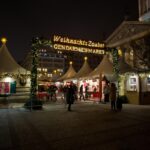
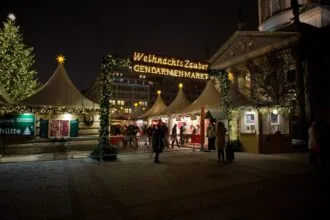
A short walk from the Rathausmarkt, the Jungfernstieg market takes over the promenade along Hamburg’s Binnenalster lake each December under the name Weißer Zauber, or “white magic.” For 2026 it is scheduled to run from 19 November to 23 December, with white pagoda-style tents replacing the wooden chalets found at most other German markets.
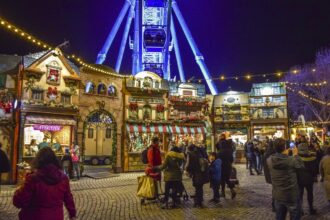
That styling gives the market a noticeably more polished, upmarket feel than the Rathausmarkt a few minutes away, and it tends to sell more design-led gifts alongside the usual handmade crafts. A historic Ferris wheel, turning on the same stretch of promenade since 1899, gives visitors a lakeside view of the lit-up Alster from height rather than street level.
The market’s stalls sit right against the water, and on clear evenings the Alster’s own Christmas tree, moored on a small island in the lake, reflects across the surface alongside the market’s own lights. Feuerzangenbowle, a flaming rum punch poured over a sugar cone, is one of the market’s more theatrical drinks, worth trying at least once even for visitors who usually stick to Glühwein.
Jungfernstieg station, served by the U1, U2, U4, S1 and S3 lines, sits right beside the market, making it just as easy to reach as the Rathausmarkt. Because the two markets are only a few minutes’ walk apart, combining both in a single afternoon is entirely realistic.
Santa Pauli: Hamburg’s Adults-Only Market on the Reeperbahn
On Spielbudenplatz, the square at the heart of the Reeperbahn nightlife strip, Hamburg runs a Christmas market unlike any other in the country. Santa Pauli is scheduled to run from around 16 November to 23 December 2026, and it is openly built for an adult audience rather than families.
The market blends ordinary Christmas market staples, Glühwein, gingerbread and fairground lights, with the district’s own nightlife energy, including burlesque-style performances staged in a dedicated tent. Its stalls sell novelty and adult-themed gifts alongside the usual crafts, and the atmosphere leans closer to a Reeperbahn night out than a traditional Weihnachtsmarkt.
Opening hours run later than Hamburg’s other markets, often stretching into the small hours on weekends, reflecting the surrounding Reeperbahn’s own rhythm rather than a typical market’s early close. Visitors expecting a quiet, traditional market should treat this as a genuinely different occasion rather than a variation on the same theme.
The market sits within a short walk of both St. Pauli (U3) and Reeperbahn (S1/S3) stations, making it easy to combine with an evening exploring the wider district. It is worth visiting with the right expectations set in advance, since it is designed to be provocative rather than cosy.
The Maritime Christmas Market in HafenCity
In Hamburg’s modern HafenCity district, a Christmas market built specifically around the city’s maritime identity runs along the Überseeboulevard, close to the old port authority building and the boundary of the UNESCO-listed Speicherstadt warehouse district. For 2026 it is scheduled to run from 16 November to 30 December, closing only on Totensonntag, Christmas Eve and Christmas Day itself.
Standard opening hours run from midday to 8.30pm daily, a later start than the older city-centre markets that reflects HafenCity’s role as a newer, more leisurely destination. Unlike Hamburg’s other markets, entry includes access to a genuine 300 square metre ice rink, with skate hire and lessons available on site rather than a rink bolted on as an afterthought.
A separate curling lane sits alongside the ice rink, and a glass-fronted bakery lets visitors watch festive treats being made rather than simply buying them ready-made. The setting itself, framed by HafenCity’s contemporary architecture on one side and the historic red-brick warehouses of the Speicherstadt on the other, is one of the more visually distinctive Christmas market backdrops in Germany.
Entry to the market itself is free, though the ice rink and curling lane carry their own separate charges. The nearest stop, Überseequartier, is served by the U4 line, putting the market within a single train ride of both the Rathausmarkt and Jungfernstieg.
Gänsemarkt: Hamburg’s Gingerbread Village
A short walk from Jungfernstieg, Gänsemarkt hosts one of Hamburg’s most whimsical Christmas markets, wrapped around the city’s own monument to the playwright Gotthold Ephraim Lessing, one of Hamburg’s best-known historic squares. Unlike the grander Rathausmarkt a few minutes away, this market trades scale for a single strong theme built around a well-known fairy tale rather than civic history.
The market styles itself as a Lebkuchendorf, or gingerbread village, with stalls built to look like gingerbread houses drawing directly on the story of Hansel and Gretel. That theming runs through the food on offer too, with gingerbread and other baked treats given more prominence here than at Hamburg’s other markets.
For 2026 the market is scheduled to run from 18 November to 23 December, closed on 22 November for Totensonntag, with daily hours from 11am to 9pm and food stalls staying open later, until 11pm. Entry, as with the rest of Hamburg’s markets, is free.
The nearest stop is Gänsemarkt station on the U2 line, only one stop and a short walk from Jungfernstieg, making it straightforward to combine both markets in a single visit. Its compact size means a stop here takes considerably less time than a full visit to the Rathausmarkt or HafenCity.
Winterwald: The Forest-Themed Market by the Hauptbahnhof
Spread across Mönckebergbrunnen and the neighbouring Gerhart-Hauptmann-Platz, Winterwald sits directly on Hamburg’s main shopping street, Mönckebergstraße, within a few minutes’ walk of the Hauptbahnhof. Its name, meaning “winter forest,” reflects the market’s own theme, built around dense stands of evergreen trees rather than the open squares used elsewhere in the city.
That forest setting gives Winterwald a noticeably different feel from the Rathausmarkt’s civic grandeur or Jungfernstieg’s lakeside polish, with narrow paths winding between the trees past mulled wine huts and food stalls. It is one of the more convenient markets for anyone arriving by train, sitting closer to the station than any of Hamburg’s other central markets.
For 2026 the market is scheduled to run from 18 November to 23 December, closed on 22 November for Totensonntag, in line with several of the city’s other markets. Exact daily opening hours are published on the market’s own site each autumn and are worth checking before a visit.
Because it sits so close to the Hauptbahnhof, served by every S-Bahn line and multiple U-Bahn routes, Winterwald is an easy market to fold into an arrival or departure day rather than a dedicated trip. It also sits within easy walking distance of both the Rathausmarkt and the Mönckebergstraße department stores covered elsewhere in this guide.
Wandsbeker Winterzauber: The Market That Runs Into January
East of the city centre, in the district of Wandsbek, the Wandsbeker Winterzauber runs as a genuinely separate market from the central cluster covered elsewhere in this guide, built around Wandsbek’s own Marktplatz. Its defining feature is a full-size ice rink set up in the middle of the square, ringed by food stalls and gift stands.
Unlike Hamburg’s central markets, which mostly close by 23 December, Wandsbeker Winterzauber typically runs on well beyond Christmas, with the market’s own listings placing its season into early January. That longer run makes it a realistic option for visitors travelling over the Christmas period itself, once several of the city-centre markets have already packed up.
Entry to the market is free, though skating on the ice rink carries its own separate charge, in keeping with the pattern at HafenCity’s own rink elsewhere in this guide. The market is also wheelchair-accessible, and dogs are welcome among the stalls.
The market sits directly at Wandsbek Markt station, served by the U1 line and numerous bus routes, putting it within easy reach of the city centre despite sitting outside the main cluster of markets. Exact 2026 opening hours and dates are published closer to the season, and checking them before a visit is worth doing given how much later this market finishes than the rest.
Best for long or awkward journeys. Builds one itinerary out of separate flights.
View flightsBest for anyone whose home plan charges by the megabyte abroad. Pay a fixed price up front.
Check eSIMsBest when public transport has stopped, or when you are travelling with children and bags.
Book a transferIce Skating and Carol Singing Around the Markets
Genuine ice skating in Hamburg during the Christmas season is concentrated at the HafenCity market’s own rink, covered above, rather than scattered across the city’s other markets. The suburban Wandsbeker Winterzauber, in the Wandsbek district east of the centre, also runs its own market with an ice rink, covered in full further up this guide alongside Hamburg’s other markets beyond the central cluster.
Hamburg’s carol-singing tradition centres on St. Michaelis, the Baroque church known locally as the Michel, whose tower has watched over the harbour since the 18th century. Through Advent, the church runs a full programme of concerts from its own choir, brass ensemble and Kantorei, including a Weihnachtskonzert zum Mitsingen, a genuine public sing-along Christmas concert rather than a passive performance.
The church’s Advent season typically also includes a full Bach Christmas Oratorio, performed across multiple sittings with a full orchestra and soloists, alongside a dedicated brass concert from the Posaunenchor St. Michaelis. Exact 2026 dates and ticket details are published on the church’s own site each autumn, and popular sittings are worth booking ahead of a visit.
Because St. Michaelis sits a short walk from the Landungsbrücken piers and roughly fifteen minutes from the Rathausmarkt, pairing an evening concert with a day spent at the markets is straightforward. Its tower is also open to visitors during the day, giving a genuine harbour view over the same waterfront that hosts the HafenCity market below.
Christmas Shopping and Hamburg’s Sunday Trading Rules
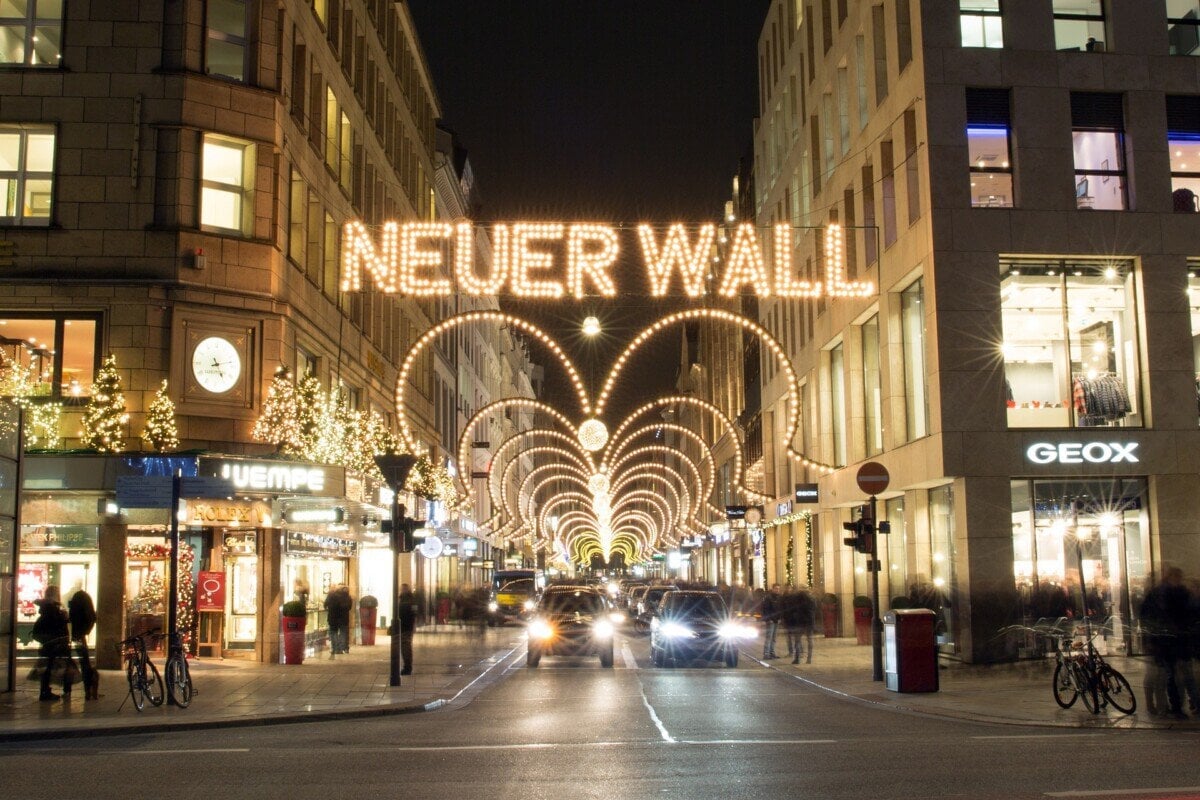
Beyond the market stalls, Hamburg’s main shopping streets are worth building into a Christmas trip, particularly Mönckebergstraße and Neuer Wall, which link the Hauptbahnhof to the city centre with a mix of department stores and higher-end boutiques. The Europa Passage, a glass-roofed shopping arcade just off Jungfernstieg, packs more than 100 shops under one roof a short walk from the lakeside market.
Germany’s general rule keeps shops closed on Sundays outside a small number of exceptions each year, and Hamburg’s own Ladenöffnungsgesetz limits the city to just two verkaufsoffene Sonntage, Sunday shopping exceptions, annually. Standard weekday hours at most city-centre retailers run from around 10am to 8pm Monday to Saturday, broadly in line with the rest of the country.
For 2026, Hamburg’s two confirmed Sunday shopping dates fall on 27 September and 8 November, both before the Christmas markets even open, rather than during Advent itself. That means, unlike Dresden or several other German cities, Hamburg’s shops stay closed on every Sunday of the market season, so a Sunday visit should be planned around the markets rather than around shopping.
Smaller, independent shops around the Schanzenviertel, a short walk from Sternschanze station, keep their own more flexible hours and are worth a browse for anyone after something less mainstream than the department stores on Mönckebergstraße. Checking a specific shop’s hours directly before a Sunday visit is sensible given how tightly the citywide rule is enforced.
New Year’s Eve in Hamburg
The Christmas markets close well before Silvester, so New Year’s Eve in Hamburg is a genuinely separate occasion built around the harbour rather than the market squares. Private fireworks remain legal across most of the city within the national rules allowing category F2 rockets between 6pm on 31 December and 7am on 1 January.
The Landungsbrücken piers, overlooking the Elbe and Hamburg’s working harbour, are the city’s most popular vantage point, drawing large crowds to watch fireworks burst above the water at midnight. The banks of the Alster lakes offer a quieter alternative closer to the city centre, with a similarly wide view of the sky above the rooftops.
Several hotels and restaurants along the waterfront run their own dedicated Silvester events, from gala dinners to rooftop parties with harbour views, and booking ahead is sensible given how popular the city has become as a winter destination. Traditional local customs include eating Berliner doughnuts and carp for luck, and greeting neighbours with “Guten Rutsch,” a wish for a smooth slide into the new year.
For a quieter alternative to the crowds at Landungsbrücken, a walk along the Elbe promenade further from the main piers offers a similarly good view of the fireworks lighting up from multiple directions at once. Dress for standing outside in near-freezing temperatures if that is the plan, since Hamburg’s December and January nights are genuinely cold.
Getting to and Around Hamburg’s Christmas Markets
Hamburg’s Christmas markets are spread across several different neighbourhoods rather than clustered in one old town, so the city’s U-Bahn and S-Bahn network is the practical way to move between them. Flying into Hamburg Airport (HAM), the S1 line runs directly to the Hauptbahnhof in around 25 minutes, with the same network covering the final stretch to any of the markets covered in this guide.
The Rathausmarkt and Jungfernstieg markets sit only a few minutes’ walk apart in the city centre, both served by multiple U-Bahn and S-Bahn lines converging on Jungfernstieg station. The HafenCity market, a stop further on the U4 line, and Santa Pauli on the Reeperbahn, reachable via St. Pauli or Reeperbahn stations, both sit within a single onward journey from the same central hub.
A standard single HVV public transport ticket covers the whole network on the same tariff, and a day ticket is usually the better value option for anyone planning to visit more than two markets in one trip. Hamburg’s main train station, the Hauptbahnhof, sits within easy walking distance of both the Rathausmarkt and Jungfernstieg for travellers arriving by train from elsewhere in Germany. Our Hamburg Public Transport guide covers every ticket type, fare zone and the city’s harbour ferries in full.
Because several of Hamburg’s Christmas markets sit in pedestrianised or heavily trafficked areas, driving directly to any of them is not practical during the season. December is also a genuinely busy period for accommodation in Hamburg, so booking well ahead, particularly for hotels near the Hauptbahnhof or the Alster, is worth doing rather than leaving it until closer to the date.
Beyond the Christmas Markets
Everything above covers Hamburg’s festive markets and the traditions built around them, but a December trip to the city does not have to stop at the stalls. The Speicherstadt warehouse district, the Elbphilharmonie concert hall and the Miniatur Wunderland model railway are all just as worth seeing in winter as at any other time of year, especially on a day when the markets themselves only take up an afternoon.
For everything else worth building into a Hamburg visit, from museums and harbour tours to how to sequence a longer stay, our Things to Do in Hamburg guide covers the city beyond its Christmas market season, and is worth reading alongside this one before finalising an itinerary.
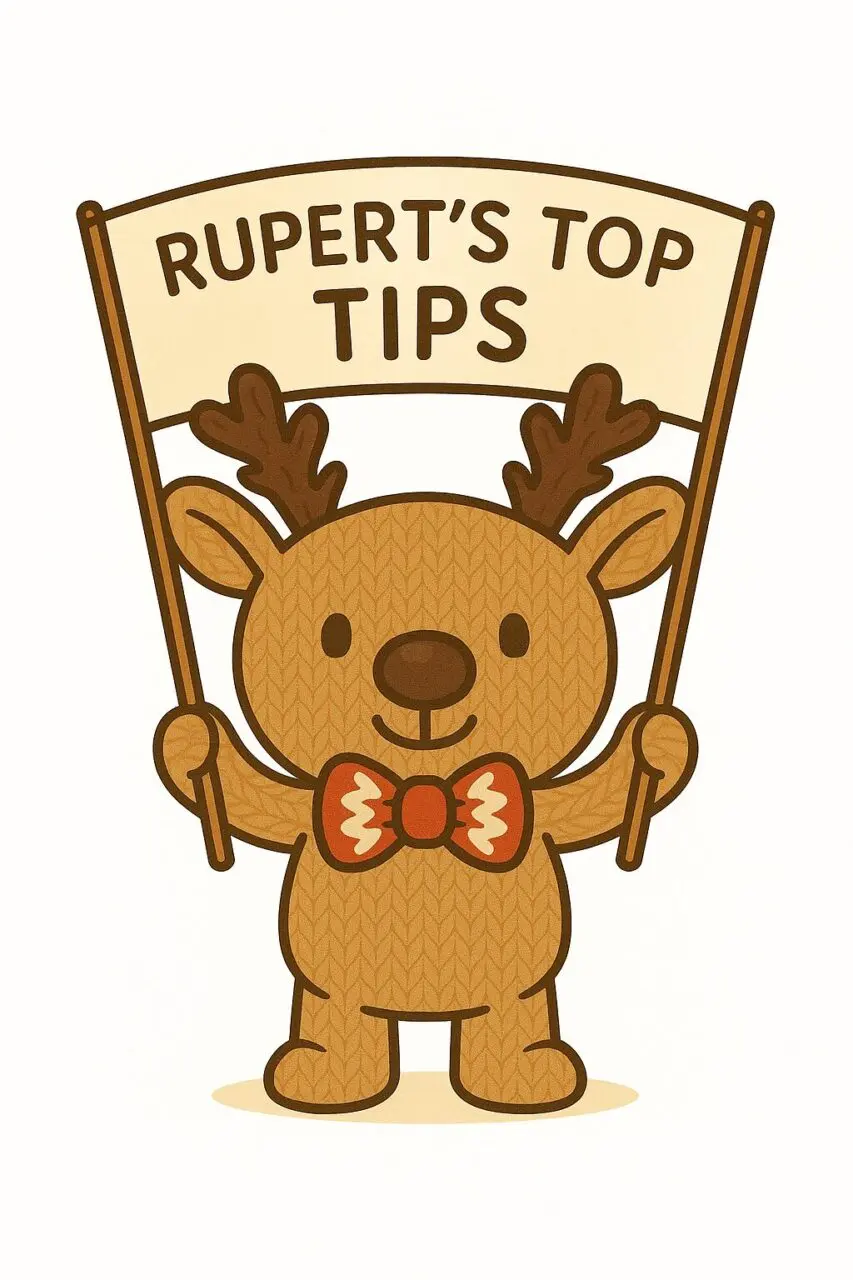
Rupert’s Handy Travel Tips
Planning a trip to Hamburg’s Christmas markets this winter? Here are a few useful tips to make your visit smoother.
- Visit Jungfernstieg after dark: the Ferris wheel and the Alster tree’s reflections on the water are best seen once the lights are fully on.
- Book St. Michaelis concerts ahead: the church’s Advent and Christmas Oratorio sittings are a genuine local tradition and fill up quickly.
- Skate at HafenCity, not the Rathausmarkt: the city’s only genuine city-centre ice rink runs at the maritime market, not the main square.
- Shop on a weekday: Hamburg’s two verkaufsoffene Sonntage for 2026 fall in September and November, outside the market season entirely.
- Treat Santa Pauli as an evening out, not a family stop: it is genuinely adults-only in tone, not a variation on a traditional market.
- Take the U4 to link markets together: it connects HafenCity with the wider network reaching the Rathausmarkt and Jungfernstieg in minutes.
- Book accommodation early: hotels near the Hauptbahnhof and the Alster fill up quickly given Hamburg’s growing reputation as a Christmas destination.
Want to meet the reindeer behind our travel tips? Find out more in our page Who is Rupert?.


Frequently Asked Questions About Hamburg’s Christmas Markets
When do Hamburg’s Christmas markets open in 2026?
Dates vary by market: the Rathausmarkt runs from 23 November to 23 December, Jungfernstieg from 19 November to 23 December, Santa Pauli from around 16 November to 23 December, and the HafenCity market from 16 November to 30 December.
Which is Hamburg’s biggest or most traditional Christmas market?
The Rathausmarkt, staged in front of Hamburg’s town hall and run by Roncalli, is the city’s largest and most traditional market, known for its Flying Santa Claus and historic-style wooden stalls.
Is there ice skating at Hamburg’s Christmas markets?
Yes, at the HafenCity market, which runs a genuine 300 square metre ice rink with skate hire and lessons alongside a separate curling lane. None of Hamburg’s other central markets has its own rink.
What is Santa Pauli?
Santa Pauli is Hamburg’s adults-only Christmas market on Spielbudenplatz, on the Reeperbahn. It blends ordinary market stalls with burlesque-style entertainment and novelty adult-themed gifts, and it runs later into the night than the city’s other markets.
Are shops open on Sundays in Hamburg during Advent?
No. Hamburg is limited to two verkaufsoffene Sonntage a year, and for 2026 both fall on 27 September and 8 November, before the Christmas markets even open. Shops stay closed on every Sunday of the market season itself.
Is Hamburg’s Christmas market free to enter?
Yes. Entry to the Rathausmarkt, Jungfernstieg, Santa Pauli and the HafenCity market is free, though the HafenCity ice rink and curling lane carry their own separate charges.
What should I eat and drink at Hamburg’s Christmas markets?
Glühwein is the standard mulled wine, typically around €4 to €5 (£3.44-4.30/$4.68-5.85), while Jungfernstieg’s Feuerzangenbowle, a flaming rum punch poured over a sugar cone, is a more theatrical alternative worth trying.
Is there carol singing or Christmas concerts in Hamburg?
Yes. St. Michaelis, the Baroque church known as the Michel, runs a full Advent programme including a public sing-along concert and a full Bach Christmas Oratorio performed across multiple sittings.
Are the markets open on Christmas Eve or over New Year?
Most close by 23 December, and the HafenCity market closes specifically for Christmas Eve and Christmas Day before reopening until 30 December. None reopen for New Year, and Hamburg marks Silvester separately with fireworks along the Elbe.
How do I get between Hamburg’s different Christmas markets?
The U-Bahn and S-Bahn network connects every market covered in this guide, with Jungfernstieg station serving both the Rathausmarkt and Jungfernstieg market, and the U4 line reaching HafenCity from the same central hub. Wandsbeker Winterzauber, the one market outside the central cluster, has its own direct U1 stop at Wandsbek Markt.
Further Reading
Landing in northern Germany before the markets open? Our Hamburg Airport Transfers guide covers every realistic way of reaching the city centre from HAM, while our Things to Do in Hamburg guide rounds up the sights worth prioritising beyond the market stalls themselves.
If your December visit has a spare day, our Best Day Trips from Hamburg guide covers Lübeck, Bremen and beyond, and if a cruise brought you into the city, our Hamburg Cruise Port Guide covers the terminals and getting ashore. If a match falls during your stay, our How to Get to the Stadium in Hamburg guide covers both HSV and FC St. Pauli.
Comparing Hamburg against Germany’s other major markets is also worth doing before committing to a single-city trip. Our Berlin Christmas Markets guide covers the capital’s own spread of festive squares, our Dresden Christmas Market guide covers the Striezelmarkt’s six-century history, and our Stuttgart Christmas Market guide covers one of the country’s oldest and largest markets, while our Frankfurt Christmas Market guide and Leipzig Christmas Market guide cover two more of the country’s oldest festive traditions.
Further west, our Cologne Christmas Markets and Düsseldorf Christmas Markets guides cover two very different takes on the Rhineland’s own festive tradition. Our Germany’s Christmas Markets Compared guide pulls all nine of the country’s biggest markets together side by side.