Reviewed by our editorial team Updated
Why Choose GoVolta Trains?
GoVolta trains are attempting something that most European rail operators abandoned years ago. While companies such as Eurostar, ICE, TGV and Deutsche Bahn compete to move passengers between cities as quickly as possible, GoVolta has deliberately positioned itself at the opposite end of the market. Rather than promising the fastest journey, it promises a more relaxed one.
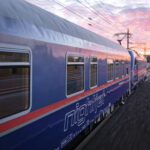
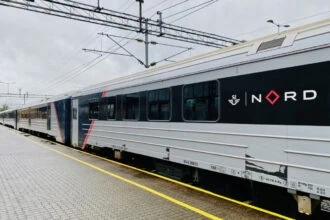
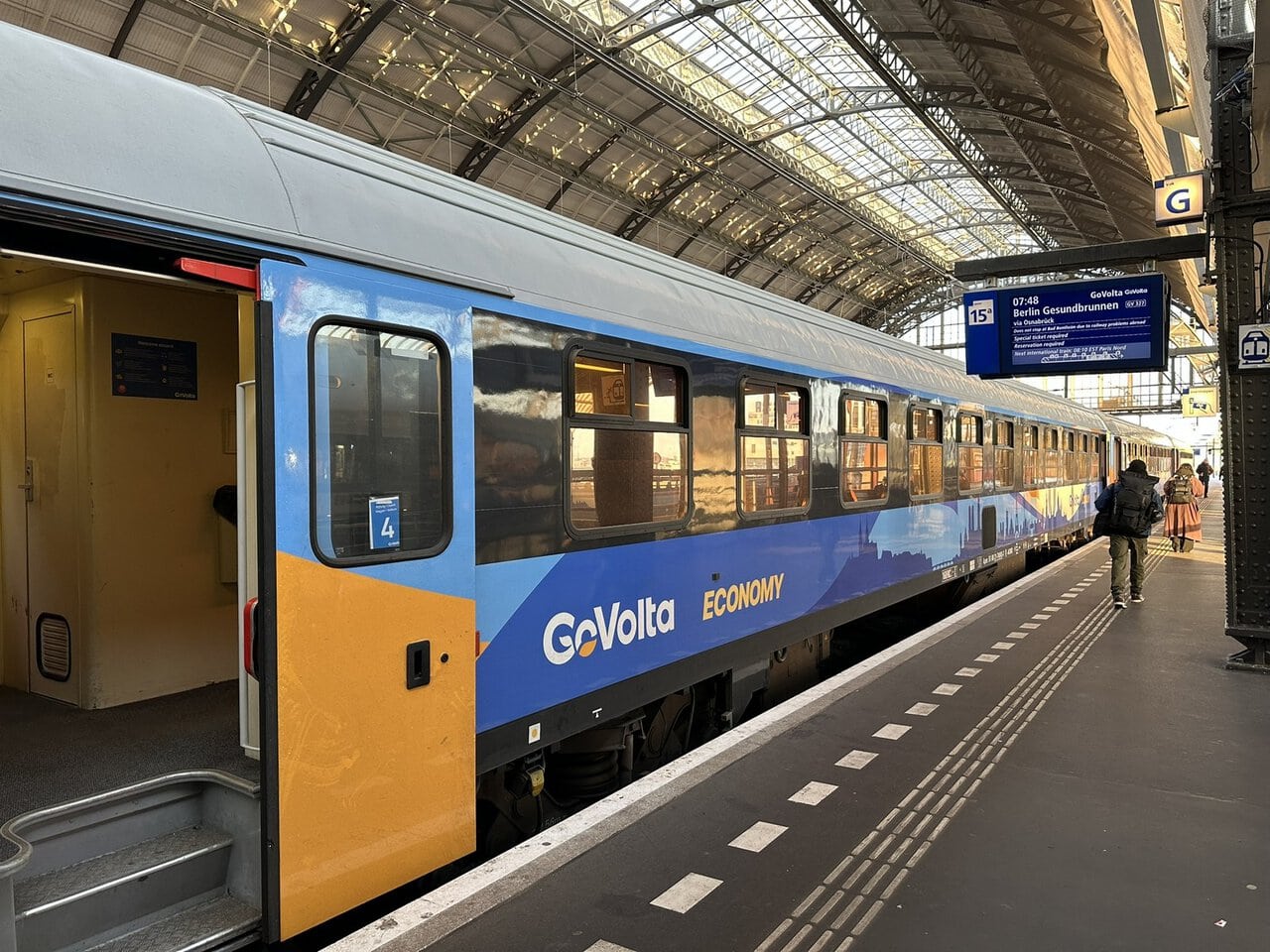
That philosophy becomes obvious as soon as you step onboard. The trains operate at a maximum speed of 160 km/h, considerably slower than Europe’s flagship high-speed services. The carriages are refurbished classic stock rather than modern high-speed units, the windows can actually be opened, and there is currently no WiFi encouraging passengers to spend more time looking out at the scenery rather than staring at a screen.
For some travellers that may sound like a drawback. For others, particularly rail enthusiasts and slow-travel advocates, it is exactly the attraction.
The operator currently links Amsterdam and Berlin, with a new Amsterdam to Paris service launching on 14 December 2026. Combined, these routes create an increasingly interesting network connecting three of Europe’s most visited capital cities while also serving destinations such as Hanover, Osnabrück, Antwerp, Ghent, Rotterdam and The Hague. Instead of treating these cities as places to rush through, GoVolta encourages passengers to enjoy the journey between them.
What makes the concept particularly interesting is that GoVolta sits in a gap that many travellers didn’t realise existed. Flying is often stressful, airports are increasingly crowded, and high-speed rail can be expensive. GoVolta is targeting passengers who would happily trade a few extra hours of travel time for lower fares, guaranteed seating and a more comfortable atmosphere. Whether that trade-off works for you depends entirely on what kind of traveller you are.
Main image courtesy of © GoVolta. Used with permission.
GoVolta at a Glance
| Feature | Details |
|---|---|
| Current Main Route | Amsterdam – Berlin-Spandau |
| New Route | Amsterdam – Paris (14 December 2026) |
| Countries Served | Netherlands, Germany, Belgium, France |
| Maximum Speed | 160 km/h |
| Amsterdam–Berlin Frequency | Six days a week (no Tuesday service) |
| Seating Classes | Economy Class and Comfort Class |
| XL Duo Seat | Available |
| WiFi | No |
| Air Conditioning | No |
| Restaurant Car | Planned |
| Seat Reservation | Included |
| Overbooking | Never |
| Included Luggage | Two cabin-sized bags |
For travellers comparing operators, the most important takeaway is that GoVolta rail travel is designed around comfort and atmosphere rather than speed. If your primary goal is reaching Paris or Berlin as quickly as possible, there are faster options. If your goal is enjoying the journey itself, GoVolta becomes far more appealing.
Compare hotels and other places to stay for your trip.
Check availabilityBrowse apartments, holiday homes and self-catering stays.
View rentalsCompare prices from multiple hotel booking sites.
Check dealsGoVolta Routes and Timetables
The current flagship service is the Amsterdam to Berlin train, which departs Amsterdam Centraal at 08:04 and arrives into Berlin at 15:09. This daytime schedule allows travellers to enjoy the scenery across the eastern Netherlands and northern Germany while still arriving in Berlin with enough time to explore the city during the afternoon.
Since 1 July 2026, GoVolta has run the Amsterdam to Berlin route six days a week, pausing only on Tuesdays, having roughly doubled its frequency from the three-weekly service it launched with. From October 2026, GoVolta will introduce a revised timetable with an earlier departure. The train will leave Amsterdam at 07:00 and arrive into Berlin at 14:45, making the service considerably more practical for weekend breaks and short city trips. The westbound service will also change, with departures from Berlin moving from 16:15 to 15:38 and arrivals into Amsterdam improving from 23:55 to 23:01.
The biggest development, however, is the launch of the Amsterdam to Paris route on 14 December 2026. The southbound service will depart Amsterdam at 07:46 and arrive into Paris at 14:54, while the return service will leave Paris at 15:49 and arrive back into Amsterdam at 23:29.
These journey times are significantly longer than Eurostar, but that is almost the point. GoVolta is not trying to win a race. Instead, it is offering travellers the opportunity to experience a full daylight rail journey through the Netherlands, Belgium and France while avoiding airport security, baggage restrictions and airline fees.
Key Stations Along the GoVolta Network
One of the most appealing aspects of GoVolta trains is that they connect far more than just the headline destinations of Amsterdam, Berlin and Paris. The routes pass through a collection of fascinating overlooked cities that offer excellent food, architecture, history and transport connections. For anyone considering a multi-city rail adventure, several of these intermediate stops deserve serious attention.
Amsterdam
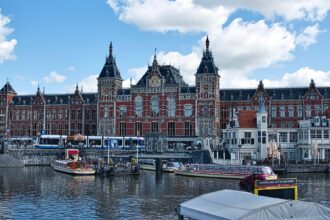
As the northern hub of the network, Amsterdam serves as the starting point for both GoVolta routes. Beyond its famous canals and museums, the city acts as one of Europe’s most connected transport hubs, making it easy to continue onward to destinations across the Netherlands, Belgium, Germany and beyond. Travellers can easily spend several days exploring the Rijksmuseum, Anne Frank House, Jordaan district and the city’s extensive canal network before continuing their journey.
Antwerp
For many travellers, Antwerp may become the surprise highlight of the Paris route. Often overshadowed by nearby Brussels, the city combines spectacular architecture, world-famous diamond trading, excellent restaurants and one of Europe’s most beautiful railway stations. Antwerp Central Station alone is worth seeing, while the compact city centre makes it an ideal stop for a one or two-night break.
Ghent
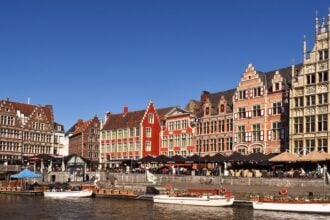
While tourists often flock to Bruges, many seasoned travellers prefer Ghent. The city combines medieval architecture, canals and castles with a lively university atmosphere. The historic centre around Gravensteen Castle and the Graslei waterfront is among the most attractive urban areas in Belgium, yet usually feels less crowded than some of the country’s more famous destinations.
Hanover
Many international visitors know Hanover only as a railway interchange, but the city offers far more than a station connection. The rebuilt historic centre, extensive gardens and relaxed atmosphere make it a pleasant stop on the journey between Amsterdam and Berlin. It also serves as an important gateway to northern Germany, with onward rail links across the country.
Berlin
The eastern terminus of the current network is one of Europe’s most fascinating capitals. Berlin combines layers of history, world-class museums, vibrant nightlife and a constantly evolving cultural scene. Whether your interests lie in the Berlin Wall, Museum Island, Brandenburg Gate or the city’s famous food and nightlife districts, Berlin comfortably rewards several days of exploration.
Paris
When the new route launches, Paris will become the southern anchor of the GoVolta network. Few cities require an introduction, but the arrival of a direct GoVolta service creates a new way to reach the French capital without airports or high-speed rail premiums. For travellers combining multiple cities into a single itinerary, Paris becomes a natural starting or finishing point for a wider European rail adventure.
What makes these stations particularly attractive is that they are not isolated destinations. A traveller could easily build an itinerary combining Paris, Ghent, Antwerp and Amsterdam, or alternatively explore Amsterdam, Hanover and Berlin, all using a single operator and without needing to worry about airports, baggage restrictions or multiple rail companies.
Booking GoVolta Tickets
Booking GoVolta train tickets is intentionally straightforward. Every passenger receives an allocated seat as standard, and because the company does not overbook its trains, there is never any uncertainty about where you will sit once onboard. This immediately removes one of the frustrations sometimes encountered on busy European rail services.
The booking process allows passengers to choose between Economy Class and Comfort Class, while also offering optional upgrades such as the distinctive XL Duo Seat and additional luggage allowances. Unlike some operators that charge extra for virtually every decision, GoVolta keeps the process relatively simple and transparent.
For travellers planning to carry more than the included luggage allowance, it is worth arranging additional baggage before departure. Advance pricing is significantly cheaper than purchasing the same allowance onboard. This is particularly relevant for longer journeys such as Amsterdam to Berlin or Amsterdam to Paris, where passengers are more likely to travel with larger suitcases.
Because GoVolta operates only a limited number of daily services, booking early is generally advisable, especially during holiday periods and major events in Amsterdam, Berlin or Paris. The combination of guaranteed seating and relatively low fares means popular departures can become attractive options for budget-conscious travellers.

Economy Class vs Comfort Class
The difference between Economy Class and Comfort Class is not simply about seat size. It is really about the type of journey you want to have.
Economy Class is designed to offer the best possible value while still providing a comfortable long-distance travel experience. The seating is arranged in traditional bays of four around tables, creating a sociable atmosphere that feels particularly suited to leisure travellers, families and groups of friends. Large windows, bright interiors and reserved seating help create an environment that feels considerably more relaxed than many airline cabins.
For most passengers, Economy Class will be perfectly adequate. The journey times are long enough to appreciate the comfort of a reserved seat but not so long that an upgrade becomes essential. Travellers carrying light luggage or making shorter trips between intermediate stations are unlikely to feel short-changed.
Comfort Class, however, targets passengers who place a higher value on personal space. The seating is more spacious, the environment generally feels quieter, and some areas offer single seats that provide additional privacy. For travellers planning to spend seven or eight hours onboard, particularly on the future Amsterdam to Paris service, these differences can become surprisingly important.
The upgrade is likely to appeal most to business travellers, couples seeking a quieter journey and rail enthusiasts who intend to spend the entire day enjoying the scenery. While Comfort Class will never match the luxury of a premium airline cabin, it offers a noticeably more relaxed experience than standard seating.
What Is the GoVolta XL Duo Seat?
The XL Duo Seat is arguably the most innovative feature currently offered by GoVolta trains, and it is one of the clearest examples of the operator thinking differently from its competitors.
At first glance the concept sounds simple. Passengers travelling in Economy Class can reserve the seat directly opposite them at a reduced price. In practice, however, the benefits go much further than merely having an empty seat nearby.
The most immediate advantage is additional personal space. Long-distance rail travel is far more enjoyable when you are not competing for legroom, table space or somewhere to place a backpack. By securing the opposite seat, travellers effectively create a small private area within the carriage, making the journey feel significantly more comfortable.
The XL Duo Seat also guarantees that passengers travel facing the direction of travel. While this may sound like a minor detail, many travellers actively prefer forward-facing seats, particularly on longer journeys. Some people find travelling backwards uncomfortable, while others simply enjoy watching the landscape unfold ahead of them.
The feature becomes even more valuable for passengers carrying camera equipment, larger bags or personal items that would otherwise need to be stored overhead or beneath the seat. Instead of feeling cramped for seven hours between Amsterdam and Berlin or Amsterdam and Paris, travellers gain additional room without needing to upgrade to a higher class of travel.
Perhaps the strongest endorsement of the XL Duo Seat is that few other operators offer anything comparable. It sits neatly between a standard seat reservation and a full class upgrade, providing extra comfort at a fraction of the cost of moving into a premium cabin. For many passengers, it may represent the single best-value upgrade available anywhere on the GoVolta network.
Luggage Rules and Allowances
One area where GoVolta trains take a noticeably different approach from airlines is luggage. Rather than turning baggage into a complicated maze of restrictions, the operator includes a reasonable allowance within every ticket and then offers straightforward upgrades for passengers travelling with more.
Every passenger may bring two pieces of cabin-sized luggage without paying any additional fees. This consists of one larger item measuring approximately 55 × 40 × 25 cm and one smaller personal item measuring around 30 × 20 × 15 cm. For many city-break travellers heading between Amsterdam, Berlin or Paris, this will be more than enough for several days away.
The policy becomes particularly valuable because GoVolta is clearly targeting travellers who want to avoid some of the frustrations associated with air travel. There are no security liquid restrictions, no baggage carousel delays and no concerns about whether a cabin bag will suddenly be transferred to the hold at the gate. You simply board the train with your luggage and keep it with you throughout the journey.
Travellers carrying larger suitcases can add additional baggage during the booking process for €15 (£13 / $16), while the same option costs €30 (£26 / $32) if purchased onboard. Unless your plans change unexpectedly, arranging extra luggage in advance is the sensible option. The difference in price is substantial, and securing the allowance before departure removes any uncertainty on the day of travel.
For passengers considering the XL Duo Seat, luggage becomes another reason why the upgrade may be worthwhile. The additional space created by reserving the opposite seat can make a significant difference on journeys lasting seven or eight hours, particularly when travelling with photography equipment, work materials or bags that you would prefer to keep close at hand.
Compare routes and fares for your next trip.
Compare flightsBrowse Airalo eSIM options for convenient travel data.
Check eSIMsBook a private airport transfer in advance and have your ride planned before you arrive.
Check transfersFood and Drink On Board
Travellers booking GoVolta rail travel should understand one important detail before departure. At the time of writing, the operator does not yet offer a restaurant or buffet car.
For some passengers this may come as a surprise, particularly given the length of journeys such as Amsterdam to Berlin and the upcoming Amsterdam to Paris service. While many European long-distance trains provide at least basic catering, GoVolta is still preparing to launch its planned lounge car.
The company intends to introduce a dedicated onboard lounge with approximately 40 seats, allowing passengers to purchase drinks, snacks and meals while travelling. Once operational, this should become a significant enhancement to the onboard experience and bring the service closer to what many travellers expect from an international train operator.
Until then, however, preparation is important. Anyone travelling the full route should bring enough food and drink for the entire journey. This is particularly true during summer months, when passengers may appreciate having additional water available due to the lack of air conditioning onboard.
Fortunately, one of the advantages of rail travel is flexibility. Unlike air travel, there are generally no issues bringing sandwiches, snacks, bottled drinks or takeaway meals onboard. Many travellers may even choose to pick up local food at stations such as Amsterdam Centraal, Berlin-Spandau or Paris Gare du Nord before departure, turning the journey into part of the travel experience itself.
For now, the catering situation remains one of the operator’s biggest limitations. It is not necessarily a deal-breaker, but it is something prospective passengers should factor into their planning.
Travelling with Children
Families often discover that long-distance rail travel is considerably less stressful than flying, and GoVolta trains appear to have been designed with that reality in mind.
The absence of airport security queues, baggage belts and boarding gates immediately removes several of the most frustrating aspects of family travel. Parents are able to arrive at the station, board the train and settle into their seats without the pressure and uncertainty that can sometimes accompany air travel. Once onboard, children have more freedom to move around, stretch their legs and enjoy the changing scenery outside the window.
GoVolta has also introduced a practical seating policy that many families will appreciate. When one parent travels with one child, the child will automatically be seated next to that parent without requiring an additional seat reservation. This helps remove one of the common concerns associated with transport booking systems, where families occasionally discover that they have been allocated separate seats.
Larger family groups may still wish to reserve specific seats together during booking. On busier departures, particularly during school holidays or major events in Amsterdam, Berlin or Paris, this provides additional peace of mind and ensures everyone remains in the same area of the carriage.
The traditional bay seating found in Economy Class may also appeal to families. The four-seat arrangement around a shared table creates a more sociable environment than airline-style rows, making it easier to play games, enjoy snacks or simply spend time together during the journey.
For families who view the journey itself as part of the holiday, GoVolta arguably offers a far more relaxed experience than most short-haul flights.
Accessibility and the Onboard Experience
One of the most distinctive aspects of GoVolta trains is that the operator has chosen to embrace its classic rolling stock rather than disguise it. The train’s character is a major part of its appeal, but that same character brings certain practical considerations that travellers should understand before booking.
The service uses refurbished I10 carriages, vehicles that first entered operation during the late twentieth century. Rather than delivering a modern high-speed experience, the trains offer something closer to traditional European rail travel. Large windows allow passengers to enjoy the scenery, and unlike many contemporary trains, those windows can actually be opened. For rail enthusiasts, this creates an atmosphere that has become increasingly rare across Western Europe.
The experience is intentionally slower and more relaxed than high-speed rail. Maximum speeds are limited to 160 km/h, allowing passengers to appreciate the landscapes of the Netherlands, Germany, Belgium and France rather than watching them flash past in a blur. Many travellers may find this surprisingly refreshing after years of increasingly rushed transport experiences.
At the same time, passengers should recognise that the train is not equipped with every modern convenience. There is currently no WiFi, there is no air conditioning, and the onboard toilets are narrower than those found on many newly built trains. During particularly warm weather, bringing water and planning ahead becomes important.
Accessibility is another area where travellers should set realistic expectations. Boarding requires climbing three steps, and passengers who need assistance moving around are advised to travel with a companion. None of these limitations make the service unusable, but they are important considerations when comparing GoVolta with newer operators using purpose-built modern trains.
Ultimately, the onboard experience is likely to divide opinion. Travellers seeking the latest technology, the fastest journey times and a highly polished premium product may find better options elsewhere. Those attracted by classic railway travel, opening windows, scenic routes and a slower pace of life may find that GoVolta offers something genuinely different in today’s European rail market.
GoVolta vs Eurostar
The launch of the Amsterdam to Paris service inevitably invites comparisons with Eurostar, which currently dominates rail travel between the Netherlands, Belgium, France and the United Kingdom. While both operators connect major European cities, they are targeting very different types of traveller.
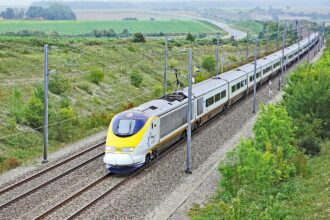
For passengers whose primary concern is speed, Eurostar remains the clear winner. High-speed trains cover the journey between Amsterdam and Paris in little over three hours, roughly half the time taken by GoVolta. Business travellers, day-trippers and anyone with limited time available will naturally gravitate towards the faster option.
However, speed is not the only factor that matters when choosing how to travel. GoVolta trains are built around a fundamentally different philosophy. Rather than minimising the journey, they encourage passengers to enjoy it. Large windows, classic carriages, guaranteed seating and the opportunity to watch the landscapes of the Netherlands, Belgium and France unfold throughout the day create an experience that feels far removed from the high-speed environment of Eurostar.
The route structure is also different. Eurostar focuses on transporting passengers quickly between major cities, while GoVolta serves a wider collection of destinations along the way. Travellers heading to Ghent, Antwerp, Arras or Amiens may find GoVolta particularly appealing because these cities form part of the journey rather than inconvenient detours.
Perhaps the simplest way to view the comparison is this. If your goal is to arrive in Paris as quickly as possible, choose Eurostar. If your goal is to enjoy a full day of rail travel across four countries while avoiding airports and high-speed rail premiums, GoVolta rail travel offers something Eurostar simply does not.
GoVolta vs Deutsche Bahn
Comparing GoVolta with Deutsche Bahn is slightly more complicated because Deutsche Bahn operates an extensive national and international network rather than a handful of specific routes.
For sheer flexibility, Deutsche Bahn is difficult to beat. Its network covers virtually every corner of Germany, offering dozens of daily departures between major cities and countless onward connections. Travellers looking for the fastest route from Amsterdam to Berlin will usually find more timetable options with Deutsche Bahn than with GoVolta.
Where GoVolta begins to stand out is consistency. Every passenger receives a reserved seat, trains are never overbooked, and the onboard experience is designed around comfort rather than capacity. Travellers know exactly where they will be sitting before departure, eliminating one of the frustrations sometimes encountered on busy long-distance services.
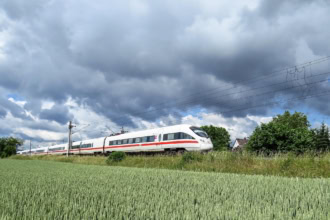
The atmosphere onboard is also very different. Modern ICE trains focus on efficiency, technology and speed. GoVolta focuses on comfort, scenery and a slower pace of travel. Neither approach is inherently better, but they appeal to different audiences.
Travellers who enjoy exploring railways for their own sake may actually prefer GoVolta. The classic rolling stock, opening windows and traditional feel create an experience that has become increasingly difficult to find on modern European railways. By contrast, Deutsche Bahn offers a more contemporary and practical transport solution.
Ultimately, the choice comes down to priorities. Travellers seeking flexibility, frequency and extensive onward connections will probably favour Deutsche Bahn. Those looking for a more distinctive and memorable journey may find themselves drawn towards GoVolta.
Advantages of Travelling with GoVolta
The strongest advantage offered by GoVolta trains is that they provide something genuinely different within the European rail market. Many transport companies now feel remarkably similar, with increasingly standardised trains, identical onboard facilities and a relentless focus on journey times. GoVolta has chosen to move in another direction.
One of the biggest benefits is the guaranteed seating policy. Every passenger boards knowing exactly where they will sit, and because trains are never overbooked there is no risk of standing for part of the journey. This creates a more relaxed atmosphere from the moment passengers step onboard.
The operator also deserves credit for its innovative approach to comfort. Features such as the XL Duo Seat provide practical upgrades that many travellers will appreciate without forcing them to purchase a completely different class of ticket. The result is a product that remains accessible while still offering meaningful ways to improve the travel experience.
The route network itself is another strength. Rather than serving only major capitals, GoVolta links destinations such as Antwerp, Ghent, Hanover and Osnabrück, making the journey useful for a wider range of travellers. This opens up interesting itinerary possibilities and encourages exploration beyond Europe’s most famous cities.
Perhaps most importantly, GoVolta delivers an experience that many travellers thought had disappeared from Western Europe. The combination of opening windows, classic carriages, reserved seating and scenic daytime journeys creates a sense of railway travel that feels increasingly uncommon. For rail enthusiasts, that alone may justify choosing GoVolta over faster alternatives.
Compare hostels and lower-cost accommodation for your trip.
Search hostelsAccess compensation support, eligible lounge benefits and faster payouts.
See the benefitsUse convenient luggage storage between arrival, check-in and departure.
Check storageDrawbacks and Limitations
For all its strengths, GoVolta rail travel is not perfect, and prospective passengers should understand its limitations before booking.
The most obvious drawback is journey time. Whether travelling between Amsterdam and Berlin or Amsterdam and Paris, GoVolta is significantly slower than the fastest available alternatives. Travellers with limited holiday time or tight schedules may struggle to justify spending several additional hours onboard when quicker options exist.
The onboard facilities are also less comprehensive than those offered by many competitors. At present there is no restaurant car, no WiFi and no air conditioning. While some travellers may view this as part of the operator’s charm, others will understandably see it as a disadvantage, particularly during longer journeys or periods of hot weather.
The use of classic rolling stock introduces further compromises. Boarding involves climbing steps, accessibility is more limited than on many modern trains, and some facilities feel dated compared with newly built fleets. None of these issues make the trains unusable, but they are worth considering before booking.
Route coverage remains another limitation. Although the network is expanding, GoVolta currently operates only a small number of services compared with major operators such as Deutsche Bahn, SNCF or Eurostar. Travellers therefore have fewer departure options and less flexibility if their plans change.
Despite these shortcomings, many of the drawbacks are closely connected to the qualities that make GoVolta distinctive. The slower pace, classic atmosphere and traditional approach to rail travel are exactly what attract many passengers in the first place. Whether those characteristics are strengths or weaknesses will depend largely on what you expect from the journey.

Rupert’s Handy Travel Tips
Planning a journey with GoVolta? Here are a few useful tips to help you get the most from the experience:
- Bring food and drinks: GoVolta’s lounge car is still under development, so you’ll need to bring enough refreshments for the entire journey.
- Consider the XL Duo Seat: Reserving the seat opposite you provides extra legroom, more luggage space and guarantees you travel facing forwards.
- Don’t rush through the intermediate cities: Stops such as Antwerp, Ghent and Hanover are well worth considering for an overnight stay.
- Book extra luggage before departure: Additional baggage costs significantly less when purchased in advance than onboard.
- Pack for the weather: The trains are not air-conditioned, so a bottle of water and a small portable fan can make summer journeys much more comfortable.
- Enjoy the scenery: GoVolta is designed around slow travel, making it a great opportunity to sit back and watch the landscapes of Germany, the Netherlands, Belgium and France roll by.
Want to meet the reindeer behind our travel tips? Find out more in our page Who is Rupert?.



Frequently Asked Questions About GoVolta Trains
What is GoVolta?
GoVolta is a private international train operator connecting major European cities including Amsterdam, Berlin and, from 14 December 2026, Paris. The company focuses on comfortable long-distance rail travel with guaranteed seating and a slower, more traditional onboard experience.
What routes does GoVolta currently operate?
GoVolta currently operates direct services between Amsterdam and Berlin. A new route linking Amsterdam and Paris launches on 14 December 2026.
How long does the Amsterdam to Berlin journey take?
The current service departs Amsterdam at 08:04 and arrives in Berlin at 15:09. From October 2026, the timetable changes to a 07:00 departure with arrival at 14:45.
How long does the Amsterdam to Paris journey take?
The new service launching in December 2026 departs Amsterdam at 07:46 and arrives in Paris at 14:54. The return service leaves Paris at 15:49 and arrives back in Amsterdam at 23:29.
Does every GoVolta ticket include a seat reservation?
Yes. Every passenger receives an allocated seat and GoVolta does not overbook its trains.
What is the GoVolta XL Duo Seat?
The XL Duo Seat allows passengers to reserve the seat opposite them at a reduced price, creating additional legroom, storage space and privacy while also guaranteeing a forward-facing seat.
Does GoVolta have WiFi?
No. GoVolta currently does not provide onboard WiFi.
Does GoVolta have air conditioning?
No. The trains are not air-conditioned. Windows can be opened and the carriages are heated during colder weather.
Can I bring luggage on GoVolta?
Yes. Every passenger may bring two cabin-sized items of luggage free of charge. Additional luggage can be purchased during booking or at check-in.
Does GoVolta have a restaurant car?
Not yet. A lounge car with food and drink facilities is planned, but passengers should currently bring their own refreshments.
Is GoVolta suitable for families?
Yes. Families benefit from reserved seating, spacious carriage layouts and a policy that ensures a child travelling with one parent will automatically be seated next to them.
Is GoVolta suitable for passengers with reduced mobility?
Passengers should be aware that boarding requires climbing three steps and the toilets are relatively narrow. Travellers needing assistance are advised to travel with a companion.
Is GoVolta faster than Eurostar?
No. Eurostar is significantly faster on routes where the two operators compete. GoVolta focuses on comfort, scenery and the journey itself rather than the shortest possible travel time.
Further Reading & Related Guides
If you’re planning a trip with GoVolta trains, there are several other guides that can help you get more from your journey. Many passengers will begin or end their trip in Amsterdam, making our Schiphol Airport Transfers Guide useful for navigating one of Europe’s busiest airports and reaching the city centre efficiently before boarding your train.
Travellers exploring multiple countries may also find value in our Interrail Germany Pass Guide, particularly if your route continues beyond Berlin into the wider German rail network. For those comparing operators, our Eurostar and Interrail Guide explains how Europe’s best-known high-speed international service works alongside a rail pass, which is useful if you’re weighing it up against the slower, more scenic GoVolta alternative.
If the appeal of GoVolta is the opportunity to enjoy overnight and long-distance rail journeys, our comprehensive European Sleeper Trains Guide explores some of the continent’s most interesting overnight services. Meanwhile, travellers considering a wider rail adventure should take a look at our Interrail Pass Guide, which explains how to travel across Europe using a single rail pass and may help you combine destinations such as Paris, Amsterdam, Berlin and beyond into one itinerary.
Finally, don’t forget to stay connected while travelling. Our eSIM Guide explains how modern digital SIMs work, helping you access mobile data across multiple European countries without needing to swap physical SIM cards as you cross borders. If Berlin is your final stop, our Germany Travel Guide covers the best apps and planning tips for exploring the country further once you arrive.