Reviewed by our editorial team Published
Chișinău is a compact, easy capital to explore in a couple of days, but it’s the countryside around it that gives Moldova its real character. Within an hour or two of the city centre lie underground wine cities carved from Soviet-era limestone quarries, a cave monastery cut into a river cliff, a five-church Orthodox complex hidden in a wooded valley, and a self-declared breakaway republic where Lenin still stands outside the parliament. Few European capitals offer such a genuinely strange and rewarding spread of day trips within such a small radius.
This guide covers the six best day trips from Chișinău, from the famous underground wineries at Cricova and Mileștii Mici to the cliffside monastery at Orheiul Vechi, the five-church complex at Curchi, the breakaway territory of Transnistria, and the fortress town of Soroca. Each destination is covered in full, with real transport detail rather than vague advice, because getting around Moldova independently means understanding marshrutkas (shared minibuses), knowing which routes need advance booking, and knowing which are genuinely realistic without a car.
Some of these trips overlap naturally. Cricova and Mileștii Mici are both wine-tunnel experiences, so we’ve included a dedicated comparison section to help you choose between them, or decide whether to visit both. Orheiul Vechi and Curchi Monastery sit roughly in the same direction north of the capital, and we’ve covered how realistic it is to combine them in a single day. Transnistria gets its own detailed section, led by a clear summary of the practical formalities involved in crossing into a territory most governments don’t formally recognise.
Whichever combination you choose, the practicalities matter more here than in most parts of Europe. Some of these trips are straightforward by public transport with a little planning, others genuinely benefit from a private driver or organised tour, and two of them (the wineries) require advance booking regardless of how you get there. We’ve flagged exactly which is which throughout, along with real prices in Moldovan lei and their approximate euro, pound and dollar equivalents.
Day Trips from Chișinău at a Glance
Before the full detail below, here’s a quick comparison of distance, travel time and whether advance booking applies to each destination.
| Destination | Distance from Chișinău | Travel Time | Best For | Advance Booking? |
|---|---|---|---|---|
| Cricova Winery | ~15 km | 20-30 mins | Underground wine tunnels, tasting | Yes |
| Mileștii Mici Winery | ~16 km | 30-45 mins | Guinness-record wine collection | Yes |
| Orheiul Vechi | ~60 km | 1-1.5 hrs | Cave monastery, dramatic valley | No |
| Curchi Monastery | ~55 km | 1.5-2 hrs (marshrutka) | Five-church Orthodox complex | No |
| Tiraspol & Transnistria | ~77 km (Tiraspol) | 1.5-2 hrs | Soviet monuments, breakaway curiosity | Recommended (tour) |
| Soroca | ~160 km | 2-2.5 hrs (car) | Medieval fortress, Roma “palaces” | No |
Roughly, these six trips fall into three groups. The two wineries are the closest and quickest, but both need booking ahead of time regardless of how you travel. Orheiul Vechi and Curchi Monastery sit a little further out but are the easiest to reach independently, with regular marshrutkas covering both from the same station, Autogara Nord. Transnistria and Soroca are the two that reward extra planning, one for its border formalities and the other simply for its distance.
Prices throughout this guide are given in Moldovan lei (MDL), with approximate euro, pound and dollar equivalents alongside, since that’s the currency you’ll actually be paying in at the winery gate or the marshrutka driver’s window. Most fares and entry fees here are modest by Western European standards, but cash is worth carrying regardless, since card acceptance thins out quickly once you leave central Chișinău.
Cricova vs. Mileștii Mici: Which Winery Should You Visit?
Both Cricova and Mileștii Mici are underground wine cities built inside former Soviet-era limestone quarries, and both are genuinely worth visiting. If you only have time for one, the decision usually comes down to group size, budget and what novelty matters most to you, rather than one being straightforwardly better than the other.
Mileștii Mici is the one with the Guinness World Record for the largest wine collection on earth, holding over two million bottles across roughly 200 kilometres of tunnels. If the record-breaking novelty is the whole appeal, it’s the clearer choice, and its basic tour is also the cheaper of the two, at around 350 MDL (about €18/£15/$19). Visitors are driven through much of the underground network by minibus rather than walking, which makes it a comfortable option for larger groups or anyone who’d rather not be on their feet for long.
Cricova is smaller in tunnel length, at roughly 120 kilometres, but its tours are more varied and arguably more polished, with electric-cart rides through galleries named after wine varieties and tour tiers running from a quick 70-minute visit up to multi-course VIP tastings. It’s also marginally closer to the city centre, at around 15 kilometres against Mileștii Mici’s 16, though the practical difference is negligible either way.
For a couple or small group wanting a shorter, tighter tasting experience, Cricova’s entry-level packages suit that better. For a slightly larger party after the sheer scale and the bragging rights of the world-record cellar, Mileștii Mici usually wins. Either way, both require advance booking, and doing both in one day is possible but rushed, since each visit realistically needs a half-day once transport and tasting time are factored in.
Best if you want daily housekeeping and a front desk. Filter by area first, then by price.
Check availabilityBest for families, or any stay past about four nights. A kitchen and a washing machine start paying for themselves.
Browse rentalsBest as a last check before booking. Compares hotel rates across several sites in one search.
Compare ratesCricova Winery
Fifteen kilometres north of Chișinău, Cricova is built inside a network of former limestone quarries that were mined for centuries before being converted into wine storage during the Soviet era. The result is one of the most unusual attractions in Moldova: roughly 120 kilometres of underground galleries, kept at a naturally stable temperature and humidity that makes them ideal for long-term wine ageing, with some of the deeper “streets” named after grape varieties.
Visitors explore the tunnels by electric cart, riding past rows of dust-covered bottles and vast storage halls before reaching one of several tasting rooms. Cricova has hosted numerous heads of state and celebrity visitors over the decades, and parts of the cellar are still set aside as private reserves, adding a genuine sense of occasion to what could otherwise just be a cellar tour.
Tour packages range widely. The shortest, the 70-minute “Underground City” tour, costs around 400 MDL (about €20/£17/$22) and includes a short tasting, while longer packages running up to two and a half hours with multi-course food pairings can run to 3,000 MDL or more (about €150/£129/$165) per person. A cheaper weekday-morning tour is also available for around 250 MDL (about €12.50/£10.75/$13.75), tour-only, but it isn’t offered on weekends.
Bookings are essential; walk-ins are not accepted, and tours should be arranged at least a day or two in advance by phone or email, further ahead for weekends, when a surcharge of around 100 MDL (about €5/£4.30/$5.50) per person also applies. There’s no direct public marshrutka to Cricova village aimed at tourists, so most independent visitors arrange transport through the winery itself or take a taxi and arrange a return pickup time with the driver.
Mileștii Mici Winery
A short drive south of the capital, in the village that gives it its name, Mileștii Mici holds the Guinness World Record for the largest wine collection on the planet, with more than two million bottles stored across an underground network stretching roughly 200 kilometres. Only a fraction of that distance is used for actual storage today, but the scale is still genuinely difficult to grasp until you’re inside it.
Because the tunnels are so extensive, tours here are largely conducted by minibus rather than on foot, with visitors driven along underground “streets”, some named after towns and regions, past enormous racks of bottles descending roughly 80 metres below the surface. The basic tour runs 50-60 minutes and costs around 350 MDL (about €18/£15/$19), including a complimentary glass of sparkling wine, with longer tasting-focused packages available at extra cost.
Advance booking is strongly recommended and, in practice, close to essential, since time slots fill quickly, particularly at weekends and during peak summer months. Booking a couple of days ahead through the winery’s own website is usually enough outside the busiest periods, but earlier is safer if your visit is fixed to a specific date.
Minibuses from Chișinău’s central bus station run to Mileștii Mici village, taking around 35-45 minutes and costing roughly €1-2, though public transport drops passengers on the main road, leaving a 15-20 minute walk to the entrance. A taxi is a more comfortable option, particularly if you’re carrying wine home afterwards, since Mileștii Mici also sells bottles directly to visitors at the end of the tour.
Orheiul Vechi
Around 60 kilometres northeast of Chișinău, Orheiul Vechi (Old Orhei) is Moldova’s most dramatic natural and historic landscape, a limestone valley carved by a loop of the Răut River, dotted with caves, capped by a still-active cave monastery, and layered with the remains of settlements stretching back over two thousand years, including a Geto-Dacian fortress.
The centrepiece is the cave monastery, carved directly into the cliff face and reached by a narrow path along the rock. A small community of monks still lives here, and the tiny chapel inside the rock, along with the sweeping views back across the valley, make the climb worthwhile even for visitors with no particular interest in the religious history. Below the monastery, the village of Butuceni preserves traditional Moldovan rural architecture, with several guesthouses and small museums worth a stop.
Independent travel is straightforward. Marshrutkas marked for Trebujeni or Butuceni depart from Chișinău’s Autogara Nord several times a day, taking around one to one and a half hours and costing roughly 40 MDL (about €2/£1.75/$2.25) each way. From the Butuceni stop it’s a short walk to the parking area below the monastery; from Trebujeni it’s closer to 20 minutes on foot. Confirm return times before setting out, since departures thin out later in the afternoon and there’s no formal taxi rank waiting at the site.
No advance booking is needed to visit, and there’s no formal entry fee for the open-air site, though a small donation is customary at the cave church. Allow at least half a day here; the valley rewards slow exploration rather than a rushed stop, and the walk down to the river and back up the opposite bank alone takes the best part of an hour.
Curchi Monastery
Around 55 kilometres north of Chișinău, in the wooded Vatici Valley, Curchi Monastery is one of Moldova’s most striking religious complexes, an 18th and 19th-century Orthodox site made up of five separate churches along with monastic living quarters, a hermitage, a guest wing and an orchard.
The centrepiece is the Cathedral of the Nativity of the Mother of God, a red-and-white, five-domed cathedral built in neo-Byzantine style in the 19th century. Its dome reaches 57 metres, the tallest in Moldova, and the interior’s restored frescoes are genuinely impressive after decades of Soviet-era neglect, when the complex was used as a psychiatric hospital rather than a monastery. The smaller St Demetrius Church, dating to around 1775, and St Nicholas Church each reflect a different architectural period, giving the whole site a layered feel rather than a single unified design.
Marshrutkas heading toward Tabăra village leave from Chișinău’s Autogara Nord and stop at Curchi, with the journey taking roughly two hours depending on the route and stops along the way, and a ticket costing around 47 MDL (about €2.35/£2/$2.60). Tell the driver you’re getting off at the monastery; it’s a short walk uphill from the roadside stop to the complex itself. Moldova’s national tourism board lists further practical detail on Curchi Monastery if you want to check current opening arrangements before travelling.
The monastery operates daily from 6:00am to 9:00pm and welcomes visitors to explore the grounds and church interiors free of charge, with donations appreciated. No advance booking applies, and a visit here typically takes an hour to ninety minutes, making it easy to combine with a longer day out further north.
Combining Orheiul Vechi and Curchi Monastery in One Trip
Orheiul Vechi and Curchi Monastery sit roughly in the same direction north of Chișinău, both within the wider Orhei district, which makes pairing them in a single day a genuinely popular option, particularly for anyone travelling by private car or organised tour rather than public transport.
By car, the two sites are only around 20-25 minutes apart, and a combined day trip is entirely realistic: most visitors allow around half a day at Orheiul Vechi given the walking involved, and an hour or so at Curchi, plus driving time. Several Chișinău-based tour operators run this exact pairing as a single guided day trip, which removes the need to plan connections yourself.
By marshrutka, it’s a much tighter proposition. The two sites are served by different routes with their own limited schedules, and connecting between them independently in a single day means carefully timing departures rather than simply turning up. It’s possible with planning, but realistically only for confident independent travellers happy to build slack into the day in case a connection is missed.
If you’re combining both, visit Orheiul Vechi first. It needs more time and is best explored in the cooler morning hours, especially in summer, when the valley’s exposed paths can get hot with little shade. Curchi, being a smaller, quieter site with a shorter visit time, works well as an afternoon stop on the way back toward Chișinău, rounding off the day without feeling rushed at either location.
Tiraspol and Transnistria
Before You Go: Current Travel Advice for Transnistria
- Passport control: bring your passport. Border officials issue a migration/registration card rather than stamping your passport, recording how long you’re permitted to stay.
- Keep the slip safe: you must present the migration card again to leave the region. Losing it can cause real delays, so keep it somewhere secure for the whole visit.
- Currency: Transnistria uses its own Transnistrian ruble, which cannot be spent or exchanged outside the region. Foreign bank cards generally don’t work, so bring cash (Moldovan lei, euros or US dollars) to exchange at official points in Tiraspol or Bender.
- Check current advisories: Transnistria is a breakaway territory not internationally recognised as independent, with a genuinely different legal status from the rest of Moldova. Check your government’s current travel advice before going, not just this page, since guidance can change.
Transnistria is a self-declared breakaway territory on Moldova’s eastern border with Ukraine, unrecognised by almost every UN member state but functioning with its own government, currency, flag and border formalities. For visitors, that makes it one of the most genuinely unusual day trips in Europe, a place still visibly shaped by the Soviet era in a way that’s disappeared almost everywhere else on the continent.
Independent travel is possible. Marshrutkas leave Chișinău’s central bus station roughly every 30 minutes between 7am and 6pm, taking around 1.5 hours to reach Bender and closer to two hours to Tiraspol, with a one-way ticket costing around 59 MDL (about €3/£2.55/$3.25). That said, a guided tour is genuinely worth considering here more than anywhere else on this list, since a local guide smooths the border process, adds context that’s hard to piece together independently, and typically builds in transport for both Tiraspol and Bender in one trip.
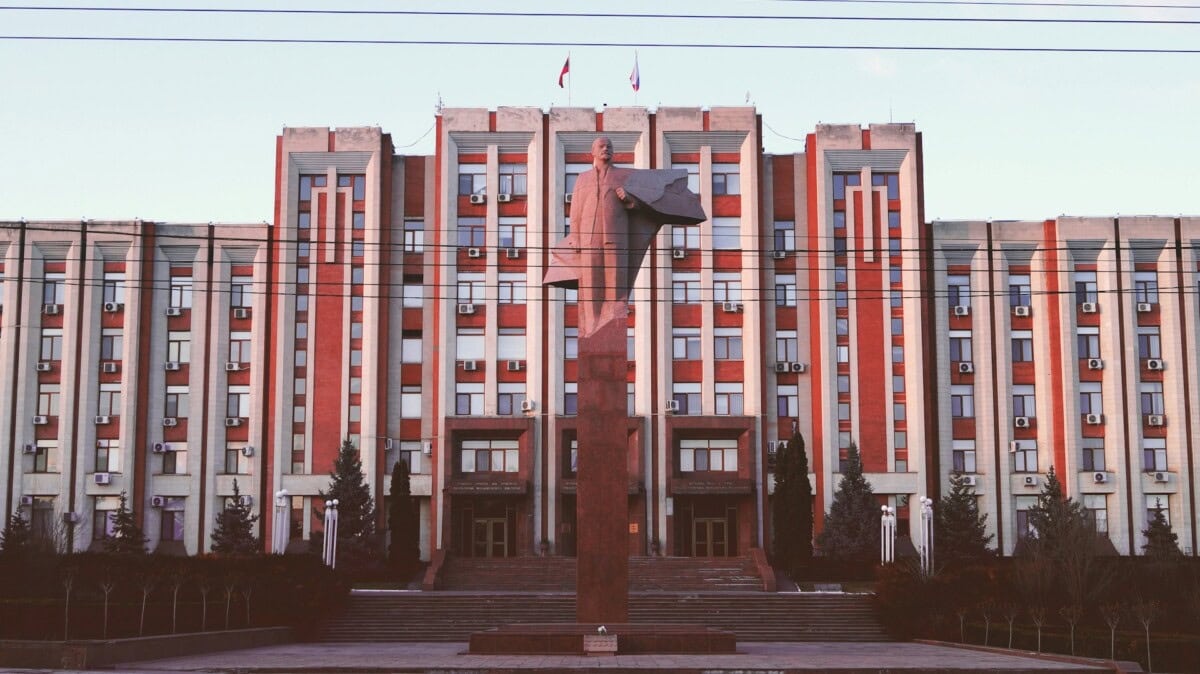
In Tiraspol, the main draw is the city’s remarkably preserved Soviet character: a large statue of Lenin still stands outside the House of Soviets on the central square, wide boulevards are lined with Soviet-era monuments, and a preserved T-34 tank marks a Second World War memorial. The Kvint brandy distillery, one of the region’s few genuinely successful exports, also runs tours and tastings for visitors who want a break from the political history.
On the way back toward Chișinău, Bender is worth a stop in its own right for Bender Fortress, an Ottoman-era stronghold on the banks of the Dniester that’s been partially restored and opened as a museum. Between the two towns, a day trip to Transnistria offers something genuinely different from anywhere else covered in this guide, part historical curiosity, part living reminder of how recently this part of Europe looked very different.
Best for long or awkward journeys. Builds one itinerary out of separate flights.
View flightsBest for short trips. Install the eSIM at home and arrive with working data, no shop queue.
Browse eSIMsBest when public transport has stopped, or when you are travelling with children and bags.
Book a transferSoroca: Fortress Town and Roma Hillside
Around 160 kilometres north of Chișinău, close to the Ukrainian border, Soroca is the furthest destination in this guide, and it’s worth being upfront about that: at roughly two to two and a half hours’ drive each way, it’s a genuinely long day rather than a quick excursion, and realistically only makes sense with a private car, taxi or organised tour rather than public transport alone.
The reward for the distance is Soroca Fortress, one of Moldova’s best-preserved medieval structures. Originally built in wood under Stephen the Great in the 15th century as part of the country’s defensive chain along the Dniester, it was rebuilt in stone in the 16th century under Petru Rareș, with a circular layout, five defensive towers, walls over three metres thick and standing around 21 metres high. Inside, visitors can climb the towers and explore exhibitions including a medieval diorama. The fortress is open Wednesday to Sunday, 10am to 5:30pm, closed Mondays and Tuesdays and during the coldest winter months, with entry around 30 MDL for adults (about €1.50/£1.30/$1.65) and 10 MDL for children aged 7-17 (about €0.50/£0.43/$0.55).
Above the town, on what’s locally known as Gypsy Hill (Dealul Romilor), Soroca’s other major draw is a hillside of large, eclectic mansions built by wealthy Roma families, several modelled loosely on famous buildings like the White House or the Bolshoi Theatre. Many stand empty for most of the year, since their owners live and work abroad and return only for holidays or family celebrations, giving the hillside an unusual, half-abandoned feel even though the buildings themselves are strikingly grand.
The mansions are private homes, not a museum, so the respectful approach is to view them from the surrounding streets rather than approaching residents uninvited. No advance booking is needed for either the fortress or the hillside, and most visitors combine the two into a single stop of two to three hours before the long drive back to Chișinău.
Which Trips Need Advance Booking?
Of the six day trips covered here, the two wineries are the only ones where advance booking is genuinely required rather than simply useful. Both Cricova and Mileștii Mici operate as guided tours on fixed schedules, and neither accepts casual walk-ins; you’ll need to reserve by phone, email or through the winery’s own website, ideally a couple of days ahead and further in advance for weekends or peak summer dates, when slots fill quickly and Cricova adds a weekend surcharge on top.
The monasteries are the opposite case. Orheiul Vechi and Curchi Monastery are both open sites with no ticketed entry system and no need to book anything in advance; you simply turn up, whether by marshrutka, taxi or private car, and explore at your own pace. The only planning that genuinely matters here is around return transport timing, not entry.
Transnistria sits in the middle. Nothing about entering the region requires a booking in the formal sense, since the border process happens on arrival regardless, but a guided tour is worth booking ahead if you’d rather not navigate the crossing, currency exchange and sightseeing independently, particularly on a first visit.
Soroca needs no booking either, though it’s worth checking the fortress’s opening days before setting out, since it’s closed on Mondays and Tuesdays and shuts entirely over the coldest winter months. Given the distance involved, confirming a driver or tour departure time in advance matters more here than any ticket does.
Independent Travel vs. Tour or Car
Every destination in this guide can technically be reached independently, but how comfortable that actually is varies a lot. The two wineries are the trickiest by public transport, since there’s no dedicated tourist marshrutka aimed at either site; most independent visitors either book transport through the winery or arrange a taxi with a fixed return time, which in practice makes a private option the more common choice even for otherwise confident independent travellers.
Orheiul Vechi and Curchi Monastery are the most genuinely independent-friendly trips here. Regular marshrutkas run from Chișinău’s Autogara Nord to both, fares are cheap, and neither site requires advance planning beyond checking return departure times. Combining the two in one day, however, tips the balance back toward a car or tour, purely because of how the schedules line up between separate routes.
Transnistria is doable independently, and plenty of travellers do exactly that by marshrutka, but a guided tour has a real, specific advantage here beyond simple comfort: a local guide understands the border process and can pre-empt confusion at the checkpoint, and typically covers both Tiraspol and Bender in one smoothly organised day rather than leaving you to work out connections between the two towns yourself.
Soroca is the clearest case for a car or tour over public transport. At around 160 kilometres each way, a marshrutka journey eats into most of the day before you’ve even reached the fortress, while a private car or driver cuts the travel time meaningfully and gives you the flexibility to combine the fortress and the Roma hillside without watching the clock for a return departure.

Using Public Transport for These Day Trips
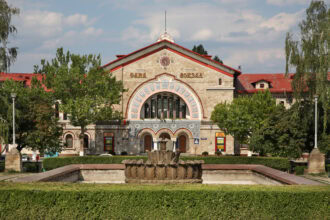
Chișinău’s public transport for these six trips does not run from a single hub, and knowing the difference saves real time once you’re on the ground. Chișinău Railway Station sits on Aleea Gării, close to the south-eastern edge of the downtown core, and it only comes into play here for travellers connecting onward by the city’s international night trains rather than for any of the destinations covered above.
Most of the buses and marshrutkas relevant to this guide start from Autogara Centrală, the central bus station tucked behind the Piața Centrală market on Mitropolit Varlaam street, a short walk from the old town. Departures toward Transnistria leave from a numbered bay here roughly every half hour through the day, and it is also the most straightforward station for a first-time visitor to find on foot from a central hotel.
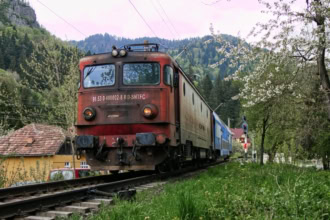
A second station, Autogara Nord, sits further out on Calea Moșilor, closer to the railway station than to the centre, and this is genuinely the departure point for marshrutkas heading into the Orhei district, home to both Orheiul Vechi and Curchi Monastery. Routes running further north toward Soroca and Bălți also use this station rather than the central one, so it is worth confirming which of the two you actually need before setting off, especially if you’re combining more than one destination in a single day.
Buying a ticket is a largely cash-in-lei process rather than something bookable online in advance. A scheduled coach or international route is usually sold from a ticket window inside the station, while a genuine village-bound marshrutka is more often paid straight to the driver once you’ve boarded. It helps to have your destination, such as Trebujeni, Tabăra, Tiraspol or Soroca, written down in Romanian spelling rather than spoken aloud, since unfamiliar place names rarely come out right on a first attempt.
There is no dedicated app for marshrutka timetables or ticketing in Moldova, so route and departure information is still best confirmed in person or by phone rather than online. Yandex Go, already the standard ride-hailing option covered in our Chișinău Airport Transfers guide, remains just as useful here for the short taxi hop between a hotel, the right bus station and the railway station, particularly with luggage or an early start.

Rupert’s Handy Travel Tips
- Book both wineries early: Cricova and Mileștii Mici don’t accept walk-ins, so reserve a tour slot a couple of days ahead, more for weekends.
- Write your destination down: marshrutka drivers respond much better to a written village name than a spoken one, especially for less common stops like Trebujeni or Curchi.
- Carry your passport for Transnistria and keep the migration slip you’re given at the border safe until you leave the region, you’ll need to show it again.
- Bring cash in Moldovan lei: cards are unreliable outside central Chișinău and don’t work at all in Transnistria, where you’ll also need to exchange money on arrival.
- Use a private driver for Orheiul Vechi and Curchi together: it’s the only realistic way to combine both comfortably in one day.
- Wear proper shoes: Orheiul Vechi’s valley paths and Soroca’s fortress towers both involve uneven ground and steps that flip-flops won’t thank you for.
Want more travel advice from Rupert? Visit the Who is Rupert? page to learn more about AppSavvyTraveller’s favourite travelling reindeer.




Frequently Asked Questions
How far is Cricova from Chișinău?
Around 15 kilometres, roughly a 20-30 minute drive from the city centre.
Do I need to book the wineries in advance?
Yes. Both Cricova and Mileștii Mici run guided tours on fixed schedules and don’t accept walk-in visitors, so book at least a day or two ahead, more for weekends.
Is it safe to visit Transnistria?
Day visits are generally straightforward and thousands of tourists cross each year, but it’s a breakaway territory with a genuinely different legal status, so check your government’s current travel advice before you go.
Can I visit Orheiul Vechi and Curchi Monastery in one day?
Yes, particularly by private car or organised tour, since the two sites are only around 20-25 minutes apart by road. It’s a tighter proposition by public transport alone.
Is Soroca worth the extra distance?
It’s the furthest trip on this list at around 160 kilometres each way, so it suits travellers with a car, driver or a full day to spare rather than a quick add-on to another destination.
Do I need a car for these day trips?
Not strictly, most are reachable by marshrutka, but a car or private driver makes the wineries, Soroca and combining multiple stops considerably more comfortable.
Further Reading
If you’re arriving in or leaving Moldova by rail, our guide to Night Trains from Chisinau covers the overnight sleeper routes to Bucharest, Kyiv and Lviv, including the remarkable wheel-changing operation at the Romanian border. Travellers continuing overland into Romania afterwards may also find our Interrail Romania Pass Guide useful for planning onward rail travel through the Carpathians.
If underground wine cellars have caught your interest, it’s worth comparing Moldova’s version against France’s most famous wine village in our guide to Saint-Émilion, which covers its own network of underground monuments carved into limestone, alongside its vineyards and wine tastings. For another genuinely unusual border curiosity elsewhere in Eastern Europe, our page on The Saatse Boot covers a stretch of Estonian road that briefly crosses into Russian territory, a different kind of border oddity from Transnistria but a similarly strange one.
If you’re planning your wider Chișinău trip, our other guides to the city’s airport transfers and best things to do cover the practicalities of getting into town and what to see before or after these day trips. Before you travel, it’s also worth ensuring you have reliable mobile data for maps, tickets and translation apps; our eSIM Apps Guide compares the best providers for international travel, which is particularly useful in a country where mobile coverage and app support can be patchier than elsewhere in Europe.