Reviewed by our editorial team Updated
Why Saint-Émilion Should Be on Your Bordeaux Itinerary
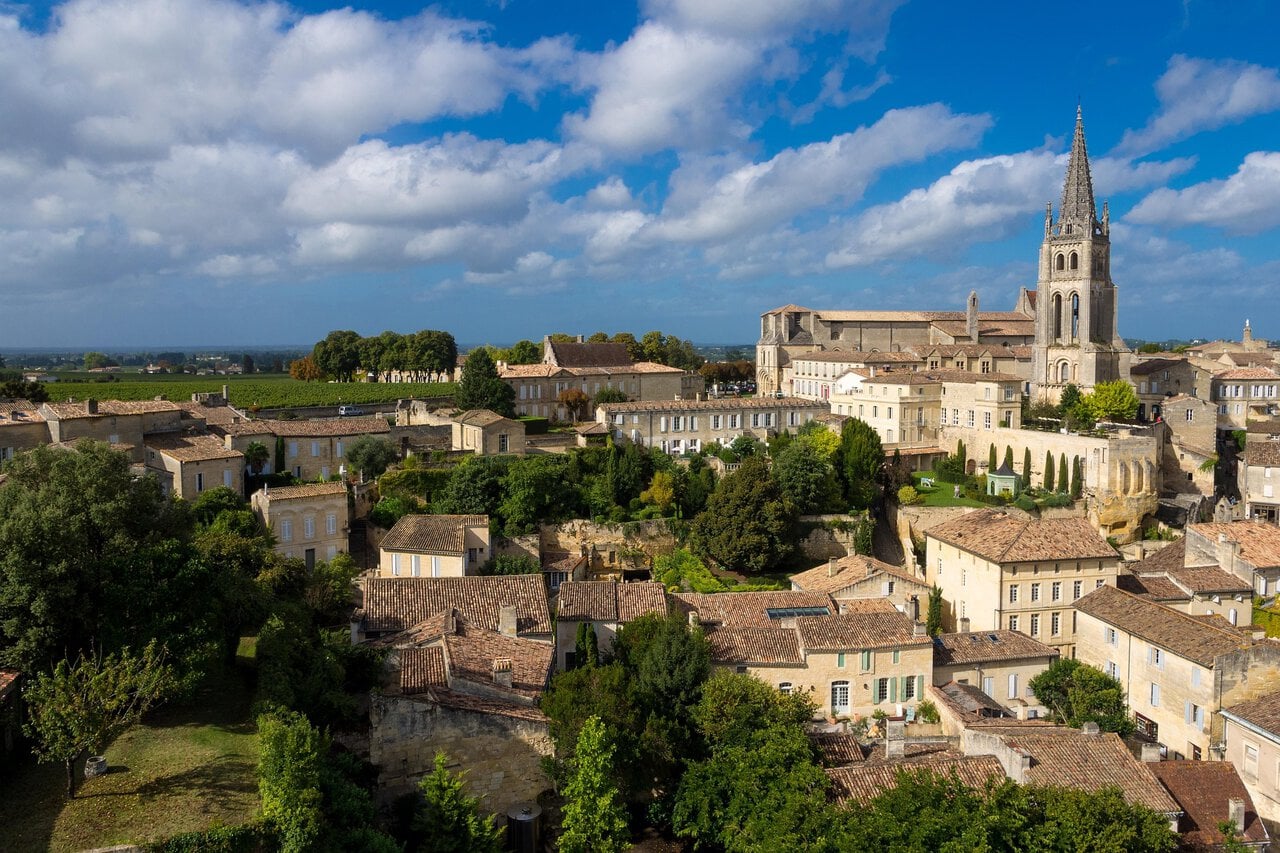
Just 40 kilometres east of Bordeaux, Saint-Émilion is one of France’s most beautiful and famous wine villages. Designated a UNESCO World Heritage Site, this medieval hilltop town combines centuries of history with some of the world’s finest vineyards, making it one of the most rewarding day trips in south-west France.
Although many visitors arrive simply to taste the region’s legendary wines, Saint-Émilion offers far more than vineyards. Cobbled lanes weave between honey-coloured limestone buildings, underground churches lie hidden beneath the streets, panoramic viewpoints overlook endless rows of vines and welcoming cafés spill onto picturesque squares filled with locals and visitors alike.
Whether you’re a wine enthusiast, a history lover, a photographer or simply looking for a slower pace than nearby Bordeaux, Saint-Émilion is a destination that’s easy to fall in love with. The compact historic centre can easily be explored on foot, while the surrounding vineyards offer opportunities for cellar tours, tastings and scenic walks through one of France’s most prestigious wine regions.
In this guide, we’ll show you the very best things to do in Saint-Émilion, along with practical travel tips, recommended experiences and advice on making the most of your visit.
Saint-Émilion Highlights at a Glance
| Attraction | Why Visit? | Time Needed |
|---|---|---|
| Medieval Village | Cobbled streets, historic buildings and charming squares | 1–2 hours |
| Monolithic Church | Europe’s largest underground church carved into limestone | 45 minutes |
| Underground Monuments | Discover Saint-Émilion’s hidden underground world | 1 hour |
| King’s Tower | Climb for panoramic vineyard views | 30–45 minutes |
| Wine Château Tour | Visit a Grand Cru estate and taste local wines | 1.5–2 hours |
| Wine Tasting Experience | Sample some of Bordeaux’s finest wines | 1–2 hours |
| Collegiate Church | Beautiful Romanesque architecture and peaceful cloisters | 30 minutes |
| Vineyard Walks | Explore the surrounding wine-growing countryside | 1–3 hours |
| Local Restaurants | Enjoy regional cuisine paired with local wines | 1–2 hours |
| Guided Walking Tour | Learn about the village’s fascinating history | 1.5 hours |
Compare hotels and other places to stay in Bordeaux.
Check availabilityBrowse apartments, holiday homes and self-catering stays in Bordeaux.
View rentalsCompare hotel deals in Bordeaux from multiple booking sites.
Compare pricesWander Through the Medieval Streets
The best way to experience Saint-Émilion is simply by getting lost. The village is remarkably compact, and almost every narrow street seems to reveal another charming corner, flower-filled courtyard or centuries-old stone building. Unlike many larger tourist destinations, Saint-Émilion has retained an authentic atmosphere, with independent wine merchants, family-run cafés and small boutiques occupying historic buildings that have changed little over hundreds of years.
The steep cobbled streets can be uneven in places, so comfortable footwear is highly recommended. As you wander uphill you’ll pass elegant townhouses, ancient gateways and quiet squares before reaching spectacular viewpoints overlooking the surrounding vineyards. The higher you climb, the better the scenery becomes.
Don’t rush your visit. One of the greatest pleasures of Saint-Émilion is slowing down, stopping for a coffee or a glass of local wine, and soaking up the atmosphere. Early mornings and late afternoons are particularly beautiful, when the crowds begin to thin and the warm limestone buildings glow in the changing light.
Photography enthusiasts will find opportunities around almost every corner, particularly near Place du Clocher, the winding Rue Guadet and the narrow lanes leading towards the King’s Tower.
Step Inside the Monolithic Church
Hidden beneath the streets of Saint-Émilion lies one of the village’s most extraordinary attractions: the Monolithic Church. Carved directly from the limestone rock during the 11th and 12th centuries, it is believed to be the largest underground church in Europe and remains one of the most remarkable religious monuments in France.
Unlike a traditional church built stone by stone, this vast space was excavated by removing thousands of tonnes of limestone, creating soaring arches, impressive columns and an immense underground sanctuary. The scale of the church is difficult to appreciate until you step inside, where the cool air and remarkable acoustics create an unforgettable atmosphere.
The church is named after Saint Émilion, the Breton monk who settled here during the 8th century. According to tradition, he lived as a hermit in a nearby cave before the settlement gradually developed around his religious community.
Access to the Monolithic Church is normally by guided tour, which also includes several other underground monuments hidden beneath the village. It’s one of the most fascinating experiences in Saint-Émilion and provides a completely different perspective on the history that shaped this remarkable UNESCO World Heritage Site.
Explore the Underground Monuments
Beneath the peaceful streets of Saint-Émilion lies an entire hidden underground world that many visitors never realise exists. The Underground Monuments Tour takes you below the village to discover an extraordinary network of religious sites, tunnels and historic chambers carved directly into the limestone over hundreds of years.
Alongside the spectacular Monolithic Church, the guided tour usually includes the Hermitage of Saint Émilion, where the monk is believed to have lived during the 8th century, the beautifully decorated Chapel of the Trinity with its surviving medieval frescoes, and the atmospheric Catacombs, where generations of local residents were laid to rest.
The expert guides bring Saint-Émilion’s story to life, explaining how a small religious settlement gradually evolved into one of France’s most prestigious wine-producing towns. You’ll also gain an appreciation of the incredible engineering involved in excavating these enormous underground spaces using little more than hand tools.
Because visitor numbers are limited, the experience remains quiet, immersive and far removed from the bustle above ground. If you’re only planning to pay for one attraction during your visit, this is the experience we’d recommend above all others. It reveals a fascinating side of Saint-Émilion that simply can’t be appreciated by wandering the streets alone.
Climb the King’s Tower
Standing proudly above the rooftops, the King’s Tower (Tour du Roy) is one of Saint-Émilion’s most recognisable landmarks. Built during the 13th century, it is the only surviving Romanesque keep in the Gironde, and climbing to the top rewards visitors with some of the finest panoramic views in the entire Bordeaux wine region.
The climb involves a narrow spiral staircase, but once you reach the rooftop terrace you’ll be rewarded with 360-degree views across the medieval village, endless vineyards and rolling countryside. On a clear day it’s easy to appreciate why this landscape has earned UNESCO World Heritage status.
The tower itself has served several purposes throughout its long history, functioning as both a defensive structure and later as a bell tower. Today it’s one of the best places to gain your bearings before continuing your exploration of the village below.
Don’t forget your camera. The views are spectacular throughout the day, but they’re particularly beautiful during the golden hour, when the warm limestone buildings glow in the evening sunshine and the surrounding vineyards take on rich shades of green and gold.
Admire the Collegiate Church and Cloisters
While the Monolithic Church rightly receives much of the attention, the beautiful Collegiate Church of Saint-Émilion is equally deserving of a visit. Dating largely from the 12th century, it combines elegant Romanesque architecture with later Gothic additions, reflecting the village’s long and fascinating religious history.
Connected to the church are the peaceful cloisters, where medieval canons once lived and worked. Graceful stone arches surround a tranquil courtyard that offers welcome shade during the warmer months and provides one of the most relaxing spots anywhere in Saint-Émilion.
Unlike some of the village’s headline attractions, the Collegiate Church often remains surprisingly quiet, allowing visitors to appreciate its architecture without the crowds. Take time to admire the stone carvings, stained-glass windows and beautifully restored interior before wandering back into the maze of medieval streets.
It’s a wonderful place to slow down for a few moments and experience a quieter side of Saint-Émilion beyond its world-famous vineyards.
Tour a Saint-Émilion Wine Estate
No visit to Saint-Émilion would be complete without stepping inside one of the region’s famous wine estates, known locally as châteaux. Surrounded by vineyards that produce some of the world’s most prestigious red wines, the village offers countless opportunities to learn about winemaking while sampling exceptional local vintages.
Most tours begin with a walk through the vineyards, where you’ll discover how the region’s unique limestone soils, microclimate and carefully selected grape varieties combine to create wines recognised around the globe. You’ll then move into the winery itself to see how grapes are fermented, matured in oak barrels and blended before finally enjoying a guided tasting.
One of the joys of visiting Saint-Émilion is discovering that every château has its own story. Some are small family-run vineyards producing only a limited number of bottles each year, while others are internationally renowned Grand Cru Classé estates whose wines command premium prices at auction.
Even if you don’t consider yourself a wine expert, these tours are about far more than simply tasting wine. They offer a fascinating insight into the history, traditions and craftsmanship that have made Saint-Émilion one of the world’s most celebrated wine regions. For many visitors, spending an afternoon among the vineyards becomes the highlight of their trip to south-west France.
Search flights and useful route combinations for your trip.
View flightsChoose an Airalo eSIM and arrange mobile data before you arrive.
Browse eSIMsCheck private pickup options and plan your onward journey before arrival.
View transfersJoin a Guided Wine Tasting
Even if you don’t have time to visit a full château, joining a guided wine tasting is one of the best ways to experience Saint-Émilion’s world-famous wines. Throughout the village you’ll find specialist tasting rooms, independent wine merchants and boutique cellars offering relaxed sessions that introduce visitors to the flavours and traditions of the region.
Most tastings include several different wines, allowing you to compare styles from Saint-Émilion, Saint-Émilion Grand Cru and neighbouring appellations. Friendly experts explain the differences between grape varieties, how ageing affects flavour and what makes this corner of Bordeaux one of the world’s most prestigious wine-producing regions.
Don’t worry if you’re completely new to wine. Tastings are designed for everyone, from complete beginners to experienced enthusiasts, and there’s no expectation that you’ll understand specialist terminology. Instead, you’ll be encouraged to discover which styles you personally enjoy while learning more about the stories behind each bottle.
Many tasting venues also offer the opportunity to purchase wines directly from the producers. This can be an excellent way to take home bottles that are difficult to find outside France and make a memorable souvenir of your visit.
Learn How Saint-Émilion Wine Is Made
Saint-Émilion’s reputation has been built over centuries of careful winemaking, and learning how these celebrated wines are produced adds a completely new appreciation to every glass you taste.
The vineyards surrounding the village are planted predominantly with Merlot, supported by Cabernet Franc and smaller amounts of Cabernet Sauvignon. Together, these varieties produce the rich, elegant red wines that have made Saint-Émilion famous across the globe.
During winery visits you’ll discover every stage of the production process, from winter pruning and hand harvesting through to fermentation, oak barrel maturation and finally blending, where winemakers carefully combine different wines to achieve the perfect balance of fruit, structure and complexity.
One of the most fascinating aspects of Saint-Émilion is that every château approaches winemaking slightly differently. Some continue to follow traditional methods passed down through generations, while others have embraced modern technology to improve consistency without sacrificing quality. It’s this combination of history, innovation and terroir that has helped establish Saint-Émilion as one of the world’s greatest wine regions.
Walk Through the Vineyards
Leaving the medieval streets behind for a while allows you to experience another side of Saint-Émilion. The countryside surrounding the village is criss-crossed by quiet lanes and vineyard paths that offer beautiful walks through one of France’s most celebrated wine landscapes.
As you stroll between the vines you’ll pass elegant châteaux, centuries-old stone walls and gently rolling hills stretching towards the horizon. Depending on the season, you’ll see vines bursting into life during spring, lush green canopies throughout summer or spectacular shades of gold, orange and deep red during the autumn harvest.
Walking also provides an opportunity to appreciate the region’s famous limestone plateau, whose unique soils play such an important role in producing Saint-Émilion’s distinctive wines. Information boards and occasional viewpoints help explain the landscape, while many estates welcome walkers to stop for tastings or cellar visits.
If you’re visiting on a warm day, remember to bring comfortable shoes, sun protection and plenty of water, as there can be long stretches without shade. The peaceful vineyard scenery offers a wonderful contrast to the bustling village centre and is one of the highlights of any visit.
Browse the Village’s Independent Wine Shops
Saint-Émilion is packed with independent wine merchants, making it one of the best places in France to buy bottles directly from the region where they’re produced. Whether you’re looking for an affordable everyday wine or a prestigious Grand Cru Classé, there’s something to suit almost every budget.
Unlike many airport or city-centre wine shops, the merchants here often stock bottles from small family-owned vineyards that produce limited quantities and are rarely exported. Staff are generally extremely knowledgeable and are happy to recommend wines based on your preferences rather than simply suggesting the most expensive bottle on the shelf.
Many shops also offer informal tastings, allowing you to sample several wines before making a purchase. It’s an enjoyable way to compare different producers and styles while learning more about the villages, vineyards and classifications that make up the Saint-Émilion appellation.
If you’re flying home, ask whether the shop can provide protective travel packaging or arrange international shipping. Many retailers regularly send wine overseas, allowing you to enjoy your favourite bottles long after your holiday has come to an end.
Try the Local Food and Saint-Émilion’s Famous Macarons
While the wines may be the main attraction, Saint-Émilion’s food scene is every bit as memorable. From cosy cafés tucked into medieval squares to elegant Michelin-starred restaurants overlooking the vineyards, the village offers something for every budget and occasion.
The local cuisine reflects the rich produce of south-west France, with menus featuring duck confit, foie gras, charcuterie, seasonal mushrooms and regional cheeses. Unsurprisingly, almost every dish is accompanied by an excellent local wine recommendation, making Saint-Émilion one of the best places in France to enjoy food and wine together.
No visit would be complete without trying the village’s famous Saint-Émilion macarons. Unlike the colourful Parisian macarons made famous by Ladurée, these traditional biscuits date back to the 17th century and are made from a simple recipe of almonds, egg whites and sugar. Soft, chewy and slightly crisp on the outside, they’re a local speciality that has remained largely unchanged for centuries.
You’ll find several bakeries selling freshly made macarons throughout the village, making them the perfect afternoon treat or an easy gift to take home.
Enjoy a Long Lunch at a Vineyard Restaurant
One of the greatest pleasures of visiting Saint-Émilion is slowing down and enjoying a leisurely lunch surrounded by vineyards. Whether you choose a traditional French bistro, a stylish wine bar or a Michelin-starred restaurant, dining here is very much part of the overall experience.
Many restaurants specialise in seasonal local ingredients, with menus changing throughout the year to showcase the best produce from the surrounding countryside. Expect beautifully prepared dishes paired with wines produced just a few hundred metres away, often recommended by knowledgeable sommeliers who know the local vineyards inside out.
Several wine estates also have their own restaurants, allowing visitors to combine a vineyard tour, wine tasting and lunch into one unforgettable experience. Sitting on a terrace overlooking rows of vines while enjoying a glass of Saint-Émilion Grand Cru is one of those simple travel experiences that’s difficult to beat.
If you’re visiting between May and September, booking ahead is highly recommended, particularly for the village’s most popular restaurants and vineyard dining experiences.
Compare hostels and budget-friendly accommodation around Bordeaux.
Browse hostelsAccess compensation support, eligible lounge benefits and faster payouts when flights go wrong.
See the benefitsLeave your luggage somewhere convenient and enjoy Bordeaux hands-free.
View storageDiscover Saint-Émilion by Tuk Tuk or Electric Bike
Although Saint-Émilion is wonderfully walkable, exploring the surrounding vineyards by electric bike or tuk tuk offers a completely different perspective on the region.
Electric bike tours allow you to venture beyond the village centre without tackling the area’s rolling hills on foot. Quiet country lanes wind past historic châteaux, picturesque vineyards and hidden viewpoints that many visitors never discover. Most guided rides include stops for wine tastings, local history and plenty of opportunities to take photographs.
If you’d prefer a more relaxed experience, several operators offer electric tuk tuk tours, providing comfortable transport between vineyards while local guides explain the history, winemaking traditions and unique landscape of the region. They’re particularly popular with couples and visitors who want to cover more ground without hiring a car.
Both options are an excellent way to experience the wider Saint-Émilion wine region, especially if you’ve already explored the medieval village on foot.
Family-Friendly Things to Do
Although Saint-Émilion is best known for its wine, it can still be an enjoyable destination for families. The medieval streets feel like something from a storybook, with narrow alleyways, ancient stone buildings and hidden passageways providing plenty of opportunities for younger visitors to explore.
Children often enjoy climbing the King’s Tower, wandering through the mysterious underground monuments and spotting the many lizards that bask on the warm limestone walls during the summer months. Walking through the vineyards can also be surprisingly enjoyable, particularly during the grape harvest, when the countryside is full of activity.
Many wine estates welcome families, offering beautiful outdoor spaces where adults can enjoy a tasting while children have room to explore. Some vineyards even provide grape juice tastings, making the experience more inclusive for younger visitors.
If you’re travelling with children, consider combining Saint-Émilion with a day in nearby Bordeaux, where attractions such as parks, riverside walks and interactive museums provide an excellent balance to the village’s slower pace.
The Best Photography Spots in Saint-Émilion
With its golden limestone buildings, vine-covered hills and beautifully preserved medieval streets, Saint-Émilion is one of the most photogenic destinations in the whole of Bordeaux. Whether you’re using a professional camera or simply taking pictures on your phone, you’ll find stunning viewpoints around almost every corner.
One of the most popular locations is the King’s Tower, where the rooftop terrace provides spectacular 360-degree views across the village and surrounding vineyards. The panorama is especially impressive at sunrise or during the golden hour before sunset, when the warm stone buildings glow against the green vines.
Back at street level, don’t miss the charming lanes around Place du Clocher, the steep cobbled streets leading towards the Monolithic Church and the picturesque terraces overlooking the vineyards beyond the town walls. Even the smallest alleyways often reveal flower-covered balconies, historic archways and hidden courtyards that make wonderful photographs.
If you have time, venture a short distance into the surrounding vineyards. Looking back towards the village from the countryside provides some of the most iconic views of Saint-Émilion’s medieval skyline, particularly during the autumn grape harvest, when the vines turn vibrant shades of gold, orange and deep red.

Visiting During the Grape Harvest
If you’re lucky enough to visit between late August and early October, you’ll experience Saint-Émilion during one of its most exciting times of year. The grape harvest, known locally as les vendanges, transforms the normally peaceful vineyards into a hive of activity as growers work long days gathering the year’s crop.
Watching teams harvest grapes by hand while tractors transport freshly picked fruit to nearby wineries offers a fascinating glimpse into one of France’s oldest traditions. Many estates become especially busy during this period, and some offer special harvest tours, giving visitors the opportunity to see the winemaking process at its most important stage.
The village itself also has a wonderful atmosphere during harvest season. Restaurants showcase seasonal produce, wine bars celebrate the latest vintage and the surrounding countryside is at its most colourful, making it one of the best times of year for photography.
Because this is such a popular period, it’s worth booking accommodation, restaurant tables and vineyard tours well in advance. The combination of beautiful autumn colours, pleasant temperatures and harvest activities makes it one of the busiest seasons in Saint-Émilion.
How to Get to Saint-Émilion from Bordeaux
One of the best things about visiting Saint-Émilion is how easy it is to reach from Bordeaux. Whether you’re travelling by train, car or as part of an organised tour, the journey is straightforward and makes for an excellent day trip.
The easiest option is the direct TER regional train from Bordeaux Saint-Jean Station, which normally takes around 35 to 40 minutes. From Saint-Émilion station it’s approximately a 15 to 20-minute uphill walk into the historic centre, passing vineyards along the way. Check current departures on Modalis, the Nouvelle-Aquitaine regional transport service, before you travel.
Driving offers greater flexibility if you plan to visit several vineyards, although parking close to the medieval centre can become busy during weekends and throughout the summer. Many visitors prefer to leave their car in one of the designated car parks outside the historic streets before exploring the village on foot.
If you’d rather leave the planning to someone else, numerous guided day tours operate from Bordeaux. These often combine transport, vineyard visits, wine tastings and expert commentary, making them an excellent choice if you want to sample local wines without worrying about driving.
Is Saint-Émilion Better as a Day Trip or Overnight Stay?
For many travellers, Saint-Émilion works perfectly as a day trip from Bordeaux. The village is compact enough to explore comfortably in a single day, allowing plenty of time to wander the medieval streets, visit the underground monuments, enjoy a vineyard tour and relax over lunch before returning to the city.
However, spending one or two nights here offers a completely different experience. Once the day-trippers leave, the village becomes noticeably quieter, allowing you to enjoy its cobbled streets, charming squares and vineyard views in a much more peaceful atmosphere.
An overnight stay also gives you the opportunity to enjoy long vineyard lunches, wine-pairing dinners, additional château visits and early morning walks through the surrounding vineyards before the crowds arrive. If you’re passionate about wine or simply prefer a slower pace of travel, it’s well worth extending your visit.
Whether you come for a few hours or a couple of days, Saint-Émilion is one of those destinations that rewards anyone willing to slow down, explore its history and savour everything this remarkable corner of south-west France has to offer.

Rupert’s Handy Travel Tips
Saint-Émilion is one of those places that’s best enjoyed slowly. Here are a few tips to help you make the most of your visit.
- Arrive early or stay overnight. Between late morning and mid-afternoon the village can become very busy with tour groups from Bordeaux. Early mornings and evenings are far quieter and far more atmospheric.
- Book vineyard tours in advance. The most prestigious châteaux often limit visitor numbers, particularly during summer and the grape harvest, so don’t assume you’ll be able to turn up on the day.
- Wear comfortable footwear. The medieval streets are steep, uneven and covered with cobbles. Trainers or walking shoes will make exploring much more enjoyable than sandals or heels.
- Don’t just stay in the village. Some of the best views are found just outside Saint-Émilion, where quiet lanes pass through the surrounding vineyards and offer wonderful photo opportunities.
- Travel by train if you’re visiting from Bordeaux. The direct regional train is quick, inexpensive and saves the hassle of finding parking, especially if you’re planning to enjoy a wine tasting or two.
Looking for more inspiration? Browse our growing collection of France travel guides for more ideas on exploring Bordeaux, the French rail network and destinations across the country.




Frequently Asked Questions
Is Saint-Émilion worth visiting?
Yes. Saint-Émilion is one of the most beautiful villages in France and is famous for its medieval streets, UNESCO World Heritage status, underground monuments and world-renowned vineyards.
Can you visit Saint-Émilion as a day trip from Bordeaux?
Absolutely. The direct TER train from Bordeaux takes around 35 to 40 minutes, making Saint-Émilion one of the easiest and most popular day trips from the city.
Do I need to book wine tours in advance?
For the most popular Grand Cru châteaux, booking ahead is highly recommended, particularly between May and October and during the grape harvest.
Can you visit vineyards without taking a tour?
Some estates welcome walk-in visitors, but many require advance reservations for tastings and cellar visits. Booking beforehand gives you the widest choice.
How long should I spend in Saint-Émilion?
Most visitors spend a full day exploring the village, visiting the underground monuments and enjoying a wine tasting. Wine enthusiasts may prefer to stay overnight.
Is Saint-Émilion suitable for families?
Yes. Although it’s best known for wine, families can enjoy exploring the medieval streets, climbing the King’s Tower and visiting the underground monuments, while the surrounding countryside is ideal for gentle walks.
What’s the best time of year to visit?
Spring and autumn are generally considered the best seasons, with pleasant weather, colourful vineyards and fewer crowds. September is particularly popular thanks to the grape harvest.
Do I need a car to visit Saint-Émilion?
No. The village is easily reached by train from Bordeaux, and once you arrive everything in the historic centre can be explored on foot.
Further Reading
If you’re exploring Saint-Émilion, you may also enjoy our guides to Things to Do in Bordeaux, Best Day Trips from Bordeaux, and Bordeaux Airport Transfers, helping you plan the rest of your visit to south-west France.
If you’re planning to see more of France’s Atlantic coast, don’t miss our guides to Visiting La Rochelle and Exploring the Landes de Gascogne, two very different but equally rewarding destinations.
Travelling around France by rail? Our Carte Avantage Guide explains how to save money on SNCF train tickets, while our Interrail France Guide covers everything you need to know about exploring the country by train with an Interrail Pass.
Finally, if you’re visiting from overseas, our Best eSIM Apps Guide compares the leading travel eSIM providers, helping you stay connected throughout your trip without paying expensive roaming charges. Together, these guides will help you plan every stage of your French adventure, from booking your train tickets to discovering some of the country’s most beautiful wine regions and historic towns.