
Reviewed by our editorial team Updated
Why Bordeaux is the Perfect Base
Bordeaux might be best known internationally for its wine, but the city’s real strength as a travel base is how much genuine variety sits within easy reach of it. Within an hour or two in almost any direction, you can be wandering the medieval streets of a UNESCO-listed wine village, climbing Europe’s tallest sand dune, or exploring a quiet coastal peninsula lined with working oyster farms, all without ever needing to pack a bag or change accommodation partway through your trip.
Part of what makes this work so well in practice is Bordeaux’s excellent rail and road network, built up over decades to connect the city efficiently with the surrounding wine appellations and the Atlantic coast beyond them. Direct trains reach several of the region’s best-known destinations in well under an hour, departing frequently enough that you rarely need to plan your day around a single fixed departure time. Meanwhile, a hire car opens up quieter corners of the Médoc and the Landes that public transport doesn’t always reach conveniently, particularly if you want to visit multiple small villages or châteaux in a single outing rather than sticking to one destination.
Whichever direction you head, most of the destinations covered in this guide can be done comfortably within a single day, leaving your evenings free to enjoy Bordeaux’s own restaurants, wine bars and riverside atmosphere once you’re back. Below, we’ve grouped the best options by what they offer, so you can match your day trip to your interests rather than working through an undifferentiated list.
It’s also worth remembering that many of these destinations reward repeat visits at different times of year, whether that’s the vineyards during harvest season, the coast in high summer, or the estuary towns on a crisp, clear autumn day when the light is often at its best for photography. If you’d rather start with the city itself before venturing further out, our Things to Do in Bordeaux guide is the natural place to begin.
| Destination | Travel Time from Bordeaux | Best Transport | Highlights |
|---|---|---|---|
| Saint-Émilion | 35–40 mins | Train | UNESCO village, vineyards and wine tasting |
| Arcachon | 50 mins | Train | Beaches, seafood and waterfront promenade |
| Dune du Pilat | 1 hr 15 mins | Train & Bus | Europe’s tallest sand dune and panoramic views |
| Médoc Wine Region | 1–1½ hrs | Car or Wine Tour | Prestigious châteaux and vineyard tours |
| Cap Ferret | 1–2 hrs | Car | Oyster villages, beaches and cycling trails |
| Cognac | Around 2 hrs | Train | Historic distilleries and cognac tastings |
| La Rochelle | Around 2 hrs | Direct Train | Historic harbour, seafood and maritime heritage |
| Bergerac | Around 1½ hrs | Train | Medieval streets and Dordogne charm |
| Blaye | Around 1 hr | Car | UNESCO citadel and Gironde Estuary views |
| Arcachon Bay Cruise | 50 mins to Arcachon | Train | Boat trips, oyster farms and coastal scenery |
Discover Saint-Émilion
The single most popular day trip from Bordeaux is Saint-Émilion, and deservedly so given how much it packs into such an easy journey. This UNESCO World Heritage village sits amid rolling vineyards producing some of the world’s most famous and sought-after wines, with a medieval centre of steep cobbled streets, a remarkable monolithic church carved directly into the limestone bedrock, and no shortage of wine shops and tasting rooms tucked into every corner of the old town.
Direct trains run roughly hourly from Gare Saint-Jean, taking around 35 to 40 minutes, making this one of the easiest and most cost-effective trips on this entire list for anyone without a car. Services are operated by TER Nouvelle-Aquitaine, and the station sits around 1.5 kilometres from the village centre, a walk of roughly 20 minutes, so you don’t need to arrange onward transport once you arrive, unlike some of the more rural destinations further afield.
If you want to visit the surrounding châteaux rather than simply exploring the village itself, booking an organised tour or hiring a car for the day gives you far more flexibility, since many of the best-known properties require advance reservations for tastings and don’t accommodate casual walk-ins. Even without visiting a single château, though, a few hours spent wandering Saint-Émilion’s steep, atmospheric streets, climbing the bell tower for panoramic views across the vineyards, and stopping for lunch at one of the village’s excellent restaurants makes for a genuinely satisfying day out.
The village also holds a small but worthwhile weekly market, and its underground monolithic church, along with the catacombs beneath it, offers a genuinely different perspective on the village’s history for anyone tiring of vineyard views alone.
Guided tours of the underground church and catacombs run at set times throughout the day and are worth booking ahead in peak season, since access is limited to small groups accompanied by a guide rather than being open for casual, unaccompanied wandering.
Browse hotels and accommodation for your visit to Bordeaux.
View staysBrowse apartments, holiday homes and self-catering stays in Bordeaux.
View rentalsCompare hotel deals in Bordeaux from multiple booking sites.
Compare pricesVisit Arcachon Bay
A firm favourite for anyone wanting a change of pace from wine country, Arcachon combines sandy beaches, a lively seafront promenade and some of France’s best oysters, all within about 50 minutes of Bordeaux by direct train from Gare Saint-Jean. It’s an easy, low-effort trip that rewards visitors with a genuinely different atmosphere from the city, closer to a traditional French seaside resort than anything you’ll find in Bordeaux itself.
Beyond the beach, Arcachon’s Ville d’Hiver neighbourhood is well worth exploring on foot, a hillside district of ornate 19th-century villas originally built as a winter health resort for wealthy visitors escaping harsher climates elsewhere in Europe. The architecture here is genuinely distinctive, with elaborate wooden balconies and turrets that feel more reminiscent of the Alps than the Atlantic coast.
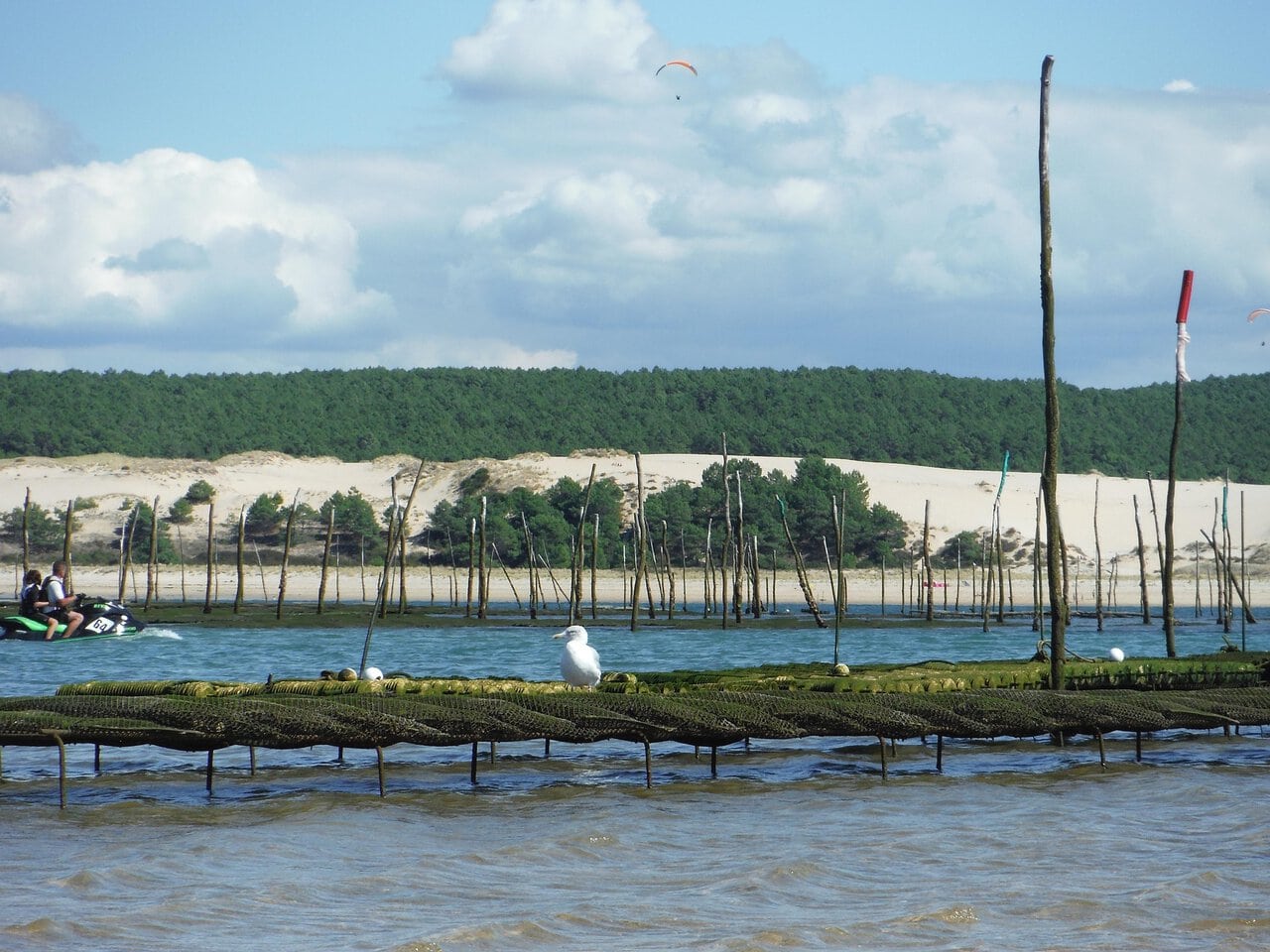
Boat trips around the bay are also widely available from the harbour, offering views of the Dune du Pilat from the water and a good chance to spot the bay’s famous oyster farms up close, along with the birdlife that congregates around the bay’s shallower waters. Combining a morning on the beach with an afternoon boat trip, or vice versa, makes for a well-rounded day that shows off several different sides of the area rather than focusing on just one.
For lunch, head to Les Halles d’Arcachon, the town’s covered market, where local oysters are shucked to order and can be enjoyed with a glass of crisp white wine at one of the market’s small counters, a genuinely memorable way to experience the region’s famous seafood without needing a formal restaurant booking. Cycling is another excellent way to explore Arcachon and the surrounding coastline, with bikes available to hire near the train station and flat, well-maintained paths connecting the town to nearby beaches and the base of the dune itself.
Climb the Dune du Pilat
Europe’s tallest sand dune rises an impressive 100 or so metres above the pine forest and Atlantic Ocean below it, and climbing to the summit for the view across both landscapes is one of the truly great outdoor experiences within reach of Bordeaux. From Arcachon train station, local bus services run out to the dune in around 20 to 30 minutes, making it easy to combine with a visit to Arcachon itself on the very same day rather than needing to choose between the two.
Wooden staircases make the climb considerably easier during the busier summer months, when the site installs additional infrastructure to cope with visitor numbers, though it remains a proper physical workout even with the stairs, given the sheer scale of loose sand involved. Outside peak season, you may find the staircases removed or reduced, making the climb noticeably harder underfoot.
Bring plenty of water, sun protection and sturdy, closed shoes rather than sandals, since sand at this scale gets everywhere and can become uncomfortably hot in direct summer sun. Once at the top, allow time to simply sit and take in the view, with the endless pine forest of the Landes de Gascogne stretching away on one side and the wide sweep of Arcachon Bay and the Atlantic on the other. Few viewpoints in the region offer such a striking contrast between two completely different landscapes in a single panorama.
The dune is also, remarkably, still slowly moving inland, gradually swallowing sections of the surrounding pine forest a few metres each year, a genuinely fascinating detail that information boards near the entrance explain in more depth for anyone curious about the geology behind the view.
Explore the Historic Port of La Rochelle
If you’re prepared for a slightly longer journey, La Rochelle rewards visitors with one of France’s most attractive Atlantic ports. Around two hours from Bordeaux by direct train, the city combines a beautifully preserved medieval old town with a bustling marina, historic harbour and a relaxed seaside atmosphere that feels quite different from the vineyards surrounding Bordeaux.
The city’s most recognisable landmarks are the three medieval harbour towers that have guarded the entrance to the Old Port for centuries. Strolling along the waterfront, you’ll find lively cafés, seafood restaurants and terraces overlooking rows of sailing boats, while the pedestrianised streets behind the harbour are filled with elegant arcades, independent boutiques and colourful half-timbered buildings that make La Rochelle a pleasure to explore on foot.
One of the city’s biggest attractions is La Rochelle Aquarium, widely regarded as one of the finest in Europe, home to thousands of marine creatures from around the world. Families will also enjoy harbour cruises, cycle rides along the seafront and boat trips to nearby Fort Boyard, while history enthusiasts can explore the city’s maritime heritage and its important role as one of France’s great Atlantic ports.
Despite being a little further from Bordeaux than most destinations in this guide, La Rochelle makes an excellent full-day excursion for visitors wanting to experience the French Atlantic coast without hiring a car. With its combination of history, fresh seafood, maritime scenery and relaxed coastal charm, it’s easy to see why many visitors consider it one of the highlights of south-west France.
Tour the Médoc Wine Region
North of Bordeaux, the Médoc peninsula is home to some of the most prestigious and internationally recognised wine appellations anywhere in the world, including Margaux, Saint-Julien and Pauillac, names that will be familiar even to casual wine drinkers. The Route des Châteaux winds through the region past grand, architecturally striking wine estates, making it one of the most rewarding drives in the entire area if you have a car available for the day.
Public transport options are considerably more limited here than around Saint-Émilion, with infrequent connections that make spontaneous château-hopping genuinely impractical without your own transport. This is one of the destinations on this list where hiring a car or booking an organised tour makes a real, tangible difference to how much you can realistically see and experience in a single day, rather than being confined to whichever single stop a bus timetable allows.
Many of the region’s most famous châteaux require advance booking for tastings and tours, sometimes weeks ahead during peak season, so it’s worth planning your route and reservations before setting off rather than expecting to turn up unannounced and be welcomed in. A little planning goes a long way here: decide on two or three specific estates you’d like to visit, confirm your tasting slots in advance, and build your day around those fixed points rather than trying to see everything the Médoc has to offer in one visit.
Beyond the wine itself, the Médoc’s small towns and villages are worth a stop in their own right, with attractive church squares and local markets offering a glimpse of everyday life in the region well away from the grander wine estates.
Escape to Cap Ferret
Curling around the northern shore of Arcachon Bay, this forested peninsula offers a quieter, considerably more laid-back alternative to Arcachon itself, dotted with working oyster farms, small fishing villages and long, often near-empty stretches of sandy beach. It’s around an hour’s drive from Bordeaux, or a noticeably longer two-hour journey by bus, so having a car makes this particular trip considerably easier and more time-efficient.
Once there, hiring a bike is genuinely one of the best ways to explore, with wooded trails connecting charming villages like Grand-Piquey, Piraillan and L’Herbe, each with their own distinct character and a scattering of oyster shacks serving the day’s catch. The pace of life here is deliberately slower than Arcachon, and it shows in everything from the traffic to the atmosphere at the beach.
The Cap Ferret lighthouse offers sweeping views back across the bay towards Arcachon and the mainland, well worth the modest entry fee and climb for the panorama alone. Continuing on to the Pointe du Cap Ferret, the very tip of the peninsula, rewards the walk with a distant view of the Dune du Pilat across the water, a genuinely memorable sight at sunset when the light catches the sand from across the bay.
An alternative way to arrive, popular with visitors already spending the day in Arcachon, is the passenger ferry that crosses the bay directly between the two, avoiding the longer road route around the water entirely. This makes it entirely possible to combine a morning in Arcachon with an afternoon on Cap Ferret without needing a car for either leg of the day, provided you’re comfortable with a shorter window of time in each place rather than a full day dedicated to just one destination.
Explore the Town of Cognac
For something a little different from the wine-and-château format that dominates much of this list, Cognac is around an hour and forty-five minutes from Bordeaux by car, or roughly two hours by train with at least one change along the way. This is the town that gave the world-famous brandy its name, and the great cognac houses here, including internationally recognised names like Hennessy, offer cellar tours and tastings that give a genuinely fascinating sense of how the spirit is actually made, aged and blended.
Beyond the distilleries themselves, Cognac’s old town is attractive in its own right, with well-preserved half-timbered buildings lining narrow streets that predate the brandy trade by centuries. A scenic stretch of the Charente River runs alongside the town, where traditional gabarre boat trips are available for a relaxed, low-effort look at Cognac from the water, taking in views of the town’s grand riverside houses built by the cognac merchants who made their fortunes here.
Given the longer journey time compared with destinations closer to Bordeaux, Cognac works best as a considered choice for visitors with a genuine interest in the spirit itself, rather than a casual add-on to a wider itinerary. Combining a distillery tour with a relaxed lunch and a walk along the river makes for a satisfying, unhurried day that feels quite different in character from the more crowded wine villages closer to Bordeaux.
Several of the larger cognac houses also run small on-site museums covering the history of the trade, worth a stop even for visitors who aren’t especially interested in tasting the spirit itself, since the stories behind the great cognac families are genuinely engaging on their own terms.
Compare routes and fares for your journey to Bordeaux.
Compare flightsBrowse Airalo eSIM options for convenient travel data.
Check eSIMsCheck private pickup options and plan your onward journey before arrival.
View transfersSpend a Day in Bergerac
Slightly further afield in the neighbouring Dordogne region, Bergerac makes a genuinely rewarding day trip for anyone keen to see a different side of south-west France beyond the immediate Bordeaux wine country. The drive takes around an hour and a half, and the train takes a broadly similar amount of time, arriving close enough to the historic centre that onward transport isn’t really necessary.
Bergerac’s old town is full of beautifully preserved timber-framed buildings, many dating back centuries, and the town has some genuinely distinctive museums that set it apart from its neighbours, including one dedicated entirely to wine and another, more unusually, to tobacco, reflecting the region’s lesser-known agricultural history. Wandering the old town’s narrow lanes on foot, stopping in at small independent shops and cafés, gives a real sense of a working French provincial town rather than a destination built primarily around tourism.
It’s a quieter, noticeably less touristy alternative to Saint-Émilion for anyone who has already ticked off the more famous wine villages closer to Bordeaux and fancies exploring somewhere with a bit more breathing room and fewer crowds jostling for the same photograph. The surrounding Dordogne countryside is also worth a mention for anyone with extra time, offering some of the most picturesque rural scenery anywhere in France.
If you’re driving rather than taking the train, it’s worth allowing extra time to detour slightly off the main route to take in a few of the smaller villages between Bordeaux and Bergerac, since this stretch of countryside is dotted with attractive stone villages that rarely make it onto a standard itinerary. Bergerac also makes a sensible stopping point if you’re continuing further into the Dordogne on a longer trip, rather than treating it purely as a single day trip from Bordeaux.
Visit the Citadel of Blaye
Around an hour north of Bordeaux by car, the fortified Citadel of Blaye is a UNESCO World Heritage Site, built by the celebrated military engineer Vauban to guard the Gironde Estuary against naval attack during the reign of Louis XIV. Climbing up onto the ramparts rewards you with sweeping views across the wide estuary, and the site includes a small tourist train for anyone who’d rather not walk the entire complex on foot in the summer heat.
The citadel itself is genuinely impressive in scale, a testament to the strategic importance once placed on defending this stretch of river, and it’s largely uncrowded compared with the more famous wine villages, making it a pleasantly relaxed place to explore at your own pace. Several small shops and cafés operate within the citadel walls, giving you the option of a leisurely lunch surrounded by centuries-old fortifications.
Down at the water’s edge, a passenger ferry crosses the Gironde Estuary, and with a little extra time in your day you can continue on to Fort Médoc on the opposite bank, another part of Vauban’s coordinated estuary defence system, for a fuller picture of how this stretch of river was once protected from attack by sea. Together, Blaye and Fort Médoc formed part of a triangular defensive system with a third fort on an island in the estuary itself, a detail that adds real historical context to what might otherwise be just a pleasant view.
Blaye’s town itself, just outside the citadel walls, is worth a wander too, with a handful of good restaurants overlooking the estuary that make an ideal spot for lunch before or after exploring the fortifications.
Cruise Around Arcachon Bay
If you’d rather experience the coast from the water than from the shore, a boat trip around Arcachon Bay is one of the most relaxing and rewarding ways to spend a day away from Bordeaux. Cruises typically take in views of the Dune du Pilat from the sea, a genuinely different and arguably more impressive perspective than viewing it from the beach, along with the many oyster farms dotted around the shallower parts of the bay.
Most cruises also pass close to the Banc d’Arguin, a protected sandbank and bird sanctuary home to a huge variety of coastal birdlife, particularly during migration season when numbers swell considerably. Knowledgeable boat operators often point out species as you pass, adding an extra dimension to what’s already a scenic trip regardless of your interest in birdwatching specifically.
These trips depart directly from Arcachon itself, so they combine easily with a morning spent in the town before heading out onto the water in the afternoon, or the reverse order depending on tide times and each individual operator’s schedule for the day. It’s worth checking timings in advance, since some of the most scenic routes around the bay’s shallower channels are only accessible around high tide, and operators adjust their departure times accordingly throughout the season.
Several operators also offer sunset cruises during the summer months, timed specifically to catch the changing light over the water as the sun goes down behind the Dune du Pilat, a genuinely popular option for couples or anyone looking for a more relaxed, less activity-focused way to end a day exploring the bay. Booking ahead is sensible for these evening departures in particular, as they tend to be smaller boats with limited capacity and sell out on clear evenings during peak season.
Choosing the Best Day Trip from Bordeaux
With so many excellent destinations within easy reach of the city, the best day trip from Bordeaux really depends on what kind of experience you’re looking for. If this is your first visit and you only have time for a single excursion, Saint-Émilion remains the standout choice. It’s quick and inexpensive to reach by train, combines spectacular medieval architecture with world-famous vineyards, and offers enough history, scenery and excellent restaurants to fill an entire day without ever feeling rushed.
If you’re craving fresh sea air instead of wine cellars, Arcachon and the Dune du Pilat make an outstanding combination. Spend the morning wandering the seafront, sampling freshly shucked oysters or taking a boat trip around the bay before climbing Europe’s tallest sand dune for unforgettable views across the Atlantic Ocean and the vast pine forests of the Landes de Gascogne. It’s one of the most varied and memorable day trips in south-west France.
Wine lovers wanting to explore beyond Saint-Émilion should head north into the Médoc, where prestigious appellations such as Margaux, Pauillac and Saint-Julien are home to some of the world’s most famous châteaux. This is one excursion where hiring a car or joining an organised wine tour makes a significant difference, allowing you to visit several estates without the limitations of public transport.
For visitors looking to escape the busiest tourist hotspots, Cap Ferret, Bergerac, Cognac and the Citadel of Blaye each offer something completely different. Cap Ferret is perfect for relaxed beaches and oyster villages, Bergerac showcases the charm of the neighbouring Dordogne, Cognac introduces visitors to France’s famous brandy heritage, while Blaye rewards history enthusiasts with impressive Vauban fortifications overlooking the Gironde Estuary.
Whichever destination you choose, it’s worth planning your day in advance. Popular wineries often require reservations, boat trips around Arcachon Bay can sell out during the summer, and trains to the most popular destinations become busy during weekends and the grape harvest. A little preparation allows you to spend less time worrying about logistics and more time enjoying some of the finest scenery, history and food that south-west France has to offer.

Rupert’s Handy Travel Tips
If you’re only planning one day trip from Bordeaux, make it Saint-Émilion. It’s quick to reach by train, easy to explore on foot and offers the perfect combination of medieval history, world-famous vineyards and excellent restaurants.
During the summer months, consider combining Arcachon with the Dune du Pilat. Direct trains from Bordeaux and frequent local buses make it simple to visit both in a single day without needing to hire a car.
If your plans include exploring the Médoc Wine Route, Cap Ferret or several different châteaux, hiring a car will give you far more freedom than relying on public transport. Many wineries require advance reservations too, so it’s worth booking tastings before you travel.
Finally, don’t rush back to Bordeaux too early. Many of these destinations have wonderful restaurants, waterfront cafés or vineyard terraces that are at their most relaxing during the late afternoon, making it well worth spending a full day before returning to the city.


Frequently Asked Questions
What is the easiest day trip from Bordeaux?
Saint-Émilion is the easiest day trip from Bordeaux by some distance. Direct trains from Bordeaux Saint-Jean take around 35 to 40 minutes, and the historic centre is only a short walk from the station, making it an excellent choice if you don’t have a car.
Can I visit the Dune du Pilat without a car?
Yes. Take a direct train from Bordeaux to Arcachon, then catch the local bus to the Dune du Pilat, a journey of around 20 to 30 minutes. During the summer, services are frequent and make visiting the dune straightforward without hiring a car.
Do I need a car to explore the Médoc wine region?
A car isn’t essential, but it is highly recommended. Public transport is limited, and many of the best wineries are spread across the peninsula. Hiring a car or joining an organised wine tour makes it much easier to visit several châteaux in a single day.
Which day trip is best for families?
Arcachon and the Dune du Pilat are excellent family-friendly choices. Children can enjoy the beach, climb Europe’s tallest sand dune and take a boat trip around the bay, while adults can sample the area’s famous seafood and enjoy the coastal scenery.
Can I visit two destinations in one day?
Yes. The easiest combination is Arcachon and the Dune du Pilat, as they’re well connected by local buses. More distant destinations, such as Cognac or Bergerac, are best enjoyed as full-day excursions on their own.
Do I need to speak French to visit these destinations?
No. English is commonly spoken in the most popular destinations, including Saint-Émilion, Arcachon and many wineries. Learning a few basic French phrases is always appreciated, but you’ll have little difficulty visiting the places featured in this guide.
When is the best time of year for day trips from Bordeaux?
Late spring and early autumn generally offer the best combination of pleasant weather, fewer crowds and comfortable temperatures. Coastal destinations such as Arcachon are at their liveliest during the summer, while the vineyards are particularly beautiful during the September harvest season.
Further Reading & Related Bordeaux Guides
Before you head off exploring, make sure you’ve read our guide to Getting from Bordeaux Airport to the City Centre so your trip starts smoothly from the moment you land, whichever transfer option you choose.
Our Things to Do in Bordeaux guide covers how to fill the days you spend in the city itself, from the historic centre to its museums and river cruises. For a closer look at the region’s most popular excursion, our Things to Do in Saint-Émilion guide goes beyond a single day out with more detail on the château tours, tastings and the underground monolithic church.
And for something further from the well-trodden wine trail, our Landes de Gascogne Regional Natural Park Guide covers canoeing, cycling and wildlife just south of the city, making an excellent contrast to the wine-focused destinations covered above if you have extra time to spare during your stay.











