Reviewed by our editorial team Updated
Discover One of South-West France’s Hidden Gems
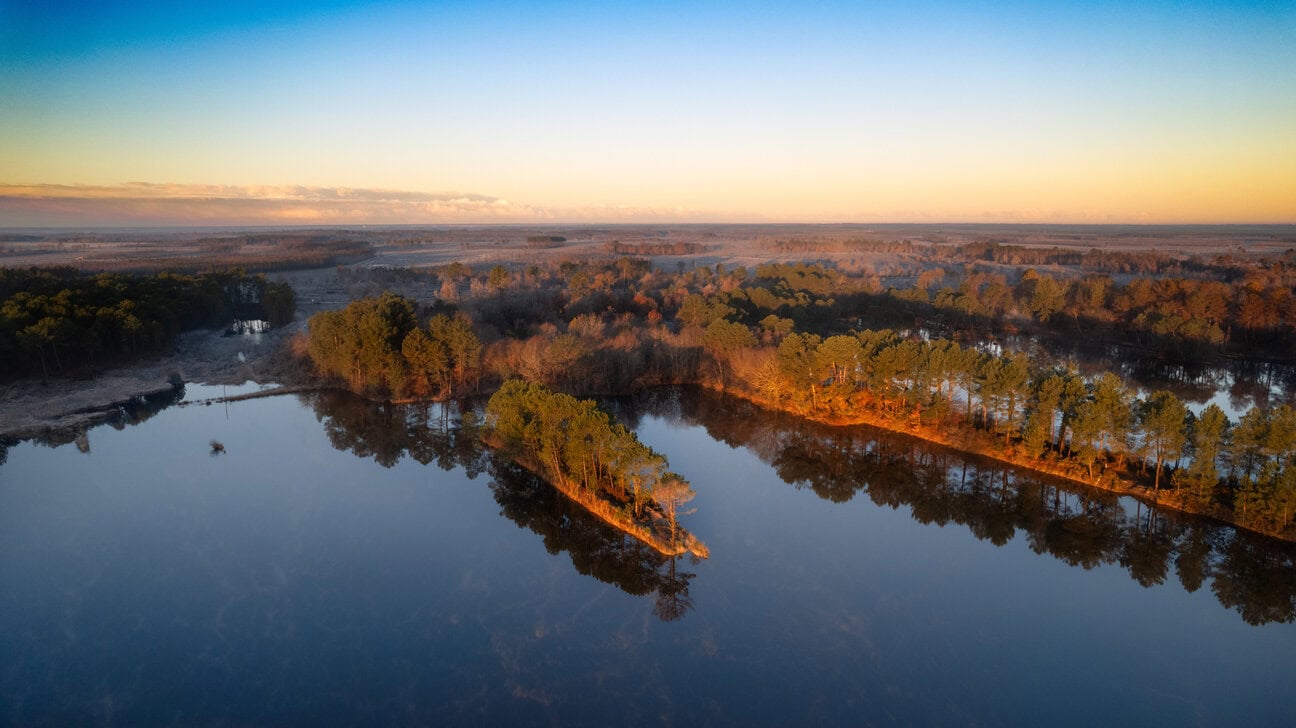
Just beyond the vineyards that make the Bordeaux region internationally famous lies a completely different landscape, one that many visitors to the area never discover at all: over 315,000 hectares of maritime pine forest, wetlands, moorland and one of France’s last genuinely wild rivers. The Landes de Gascogne Regional Natural Park is the kind of place that rewards a slower pace and a willingness to swap postcard vineyards for something quieter and considerably less crowded, whether that means paddling a canoe beneath a dense canopy of trees, cycling long, quiet forest roads, or simply wandering through a handful of villages that have changed remarkably little over the centuries.
Created in 1970 and stretching across the Gironde and Landes départements, the park is particularly notable for being the only one in France crossed by a river from its source all the way to the sea. That river, the Leyre, affectionately nicknamed “the little Amazon” for its dense gallery forest and rich wildlife, is the thread that runs through almost everything worth doing here, whether you’re on foot, on a bike, or in a canoe.
For visitors based in Bordeaux, this park represents one of the most striking contrasts available within a short journey: swap the grand châteaux and manicured vineyards for genuine wilderness, dense forest trails, and a pace of life that feels decades removed from the city. It’s a destination that rewards curiosity and a willingness to slow down, rather than one built around a single must-see attraction that everyone rushes to photograph.
Many visitors are genuinely surprised by how different this landscape feels from the rest of the Bordeaux region, given how close the two sit geographically. Where the wine country is defined by neat rows of vines and grand estate buildings, the Landes de Gascogne is shaped instead by centuries of forestry, water management and a distinctly rural Gascon culture that persists in its villages today.
Where is the Park?
The park sits directly south of Bordeaux, occupying much of the pine forest country that stretches between the city and the Atlantic coast, with the Leyre’s valley running through its heart before the river eventually empties into Arcachon Bay. Its proximity to Bordeaux is genuinely one of its biggest draws for visitors based in the city: despite covering an enormous area of genuine wilderness, comparable in scale to a small English county, it’s rarely more than an hour’s drive from wherever you’re staying in Bordeaux itself.
The park’s boundaries are deliberately not marked by dramatic changes in scenery from a car window, since much of the surrounding region shares similar pine forest, but the difference becomes obvious the moment you leave the main roads and head into the villages, trails and waterways that make up the park’s protected core. Villages like Sore, Moustey and Pissos sit within its boundaries, along with the Leyre delta where the river meets the tidal waters of Arcachon Bay, and the various visitor centres and canoe put-in points that give structure to a visit.
Because the park covers such a large and varied area, most visitors choose a specific corner to focus on for a day trip, whether that’s a stretch of the Leyre for canoeing, a cluster of villages for a gentler cultural visit, or the bird-rich delta for wildlife watching, rather than attempting to see the entire park in a single outing.
The park also straddles two French départements, Gironde to the north and Landes to the south, which occasionally means slightly different signage, visitor centre opening hours or local dialect between one side and the other, though in practice this rarely causes any confusion for visitors moving between the two.
See hotel options and places to stay for your trip.
Browse hotelsBrowse apartments, holiday homes and self-catering stays.
View rentalsCompare hotel deals from multiple booking sites in one search.
Compare pricesReasons to Visit
This isn’t a park built around a single headline attraction the way many destinations near Bordeaux are, but rather a rich collection of quieter, more low-key experiences that reward genuine exploration: a paddle down a river that feels genuinely wild rather than managed, a walk through centuries-old pine forest that’s remained largely unchanged since it was first planted, a handful of villages that still feel authentically rural rather than curated for tourism, and some of the best birdwatching found anywhere in south-west France.
It suits visitors looking for a deliberate contrast to Bordeaux’s wine-focused itineraries, offering something genuinely different rather than more of the same scenery with a different label. It also works equally well as a relaxed half-day escape from the city for anyone with limited time, or as a slower, more immersive multi-day base for visitors who want to properly explore its trails, villages and waterways without rushing.
Families in particular tend to find the park rewarding, since activities like canoeing and cycling naturally appeal across age groups, and the region’s leisure centres, such as the one at Pissos, offer structured activities for children alongside the more independent exploration adults might prefer. The park’s cultural attractions, including its reconstructed historic village, add an educational dimension that pairs well with the more purely outdoor pursuits, giving visitors a genuine sense of how life in this landscape looked before it became a popular destination for canoeing and cycling holidays.
For visitors who’ve already spent a few days touring vineyards and châteaux elsewhere in the region, the change of scenery here often ends up being a genuine highlight of the trip, precisely because it offers something so different from the wine-focused itinerary most people expect from a visit to Bordeaux.
Best Walking Trails
The GR6 long-distance trail crosses directly through the park, offering genuinely panoramic views across the Landes landscape for anyone tackling a longer stretch of it as part of a wider walking holiday through the region. This waymarked route forms part of France’s extensive national network of long-distance footpaths, and the section through the park is considered one of its more distinctive stretches thanks to the contrast between open moorland and dense pine forest.
Closer to the Leyre itself, shorter and more accessible riverside walks are common around villages like Moustey and Sore, where clearly marked paths follow the water through dense gallery forest, offering shade and a genuinely different atmosphere from the drier pine plantations that dominate much of the wider region. These shorter walks are ideal for visitors with only a few hours to spare, or families with younger children who aren’t up for a full day’s hike.
One particularly popular short walk, the Balcon de la Leyre near Sore, follows the Petite Leyre past an orchard conservatory dedicated to preserving endemic apple varieties unique to the region, making for an easy, scenic and quietly educational introduction to the park if you only have an hour or two to spare before moving on elsewhere. The path is well maintained and suitable for most fitness levels, making it a sensible starting point for anyone unsure how much of the wider trail network they want to commit to on a first visit.
Trail maps and route suggestions are generally available at the park’s visitor centres, and many are also waymarked clearly enough on the ground that a printed map isn’t strictly essential, though it’s still sensible to carry one for longer walks away from the main villages.
Scenic Cycling Routes
Cyclists are genuinely well catered for throughout the park, with around 76 kilometres of secure, dedicated cycle paths running between the historic town of Bazas and the Bassin d’Arcachon on the coast. The route takes in notable heritage sites at Villandraut and Uzeste early on, before the landscape gradually opens out into the pine forest that defines much of the rest of the journey, offering genuinely varied scenery rather than one long, unchanging stretch of identical trees.
This dedicated cycling infrastructure sets the Landes de Gascogne apart from many other rural regions in France, where cyclists often have to share narrow roads with traffic. Here, the paths are largely separated from vehicle traffic, making the route suitable for families and less experienced cyclists as well as more serious riders looking to cover longer distances in a day.
Bikes can be hired at several points around the park, including at leisure centres like Testarouman near Pissos, making it entirely possible to plan a route and rent equipment on the same day without needing to bring your own bike from home or from Bordeaux. Most rental points also offer child seats and smaller bikes suitable for younger riders, which makes the cycling routes here a genuinely practical option for family visits rather than something requiring serious cycling experience or equipment of your own.
For anyone planning a longer stay, several operators also offer multi-day cycling itineraries that combine different sections of the network with overnight stops in the park’s villages, a good option if you’d rather explore at a properly relaxed pace than try to cover the whole route in a single day.
Electric bikes are increasingly available to rent alongside standard ones, worth considering if you’re planning a longer route or travelling with less experienced cyclists in your group, since the park’s terrain, while generally flat, can still make for tired legs by the end of a full day’s ride.

Canoeing on the Leyre River
If you only do one thing in this park, make it this. Canoeing or kayaking down the Leyre is the classic Landes de Gascogne experience, gliding along clear, gently flowing water beneath a canopy of deciduous gallery forest that feels genuinely like a world away from the pine plantations surrounding it on either side. The contrast between the open pine forest above and the intimate, shaded river corridor below is part of what makes this such a memorable experience for first-time visitors.
Canoe rental companies operate at several points along the river’s length, offering everything from short half-day paddles suitable for beginners and families, right through to more ambitious multi-day trips that include wild camping directly on the riverbank as you make your way downstream. The river’s gentle current means it’s genuinely accessible to paddlers of most experience levels, though it’s worth choosing a stretch appropriate to your fitness and confidence before setting off.
The dedicated Canoë sur la Leyre website (canoesurlaleyre.com), which the park itself points visitors towards, is a genuinely useful resource for choosing the right stretch of river and rental operator to suit your ability, group size and the amount of time you have available, and it’s worth consulting before you arrive rather than trying to work things out on the day. Booking ahead is particularly advisable during summer weekends, when popular put-in points and rental slots can fill up well in advance of the day itself.
Most rental operators supply everything you need for the day, including paddles, life jackets and often a dry bag for phones and cameras, so there’s little to bring yourself beyond suitable clothing and a sense of adventure. Many also offer a shuttle service back to your starting point once you’ve finished, which removes the logistical headache of arranging your own return transport after a one-way paddle downstream.
Wildlife and Birdwatching
The park sits directly on a major migratory bird route, and the Leyre delta, where the river finally meets Arcachon Bay, is genuinely exceptional for birdwatching by any standard, with around 320 species recorded at the Le Teich ornithological reserve alone over the years. This makes it one of the most significant sites for birdwatching anywhere in this part of France, drawing serious enthusiasts as well as casual visitors curious to see what the fuss is about.
Winter brings large, genuinely spectacular flocks of migrating common cranes passing through the region, a sight worth planning a visit specifically around if birdwatching or wildlife photography is a real priority for your trip rather than a passing interest. The scale of these winter gatherings can be genuinely striking, with flocks numbering in the thousands passing overhead or resting in the park’s wetlands during their migration.
Along the river itself, away from the more structured reserve at Le Teich, keep a careful eye out for otters, kingfishers and various species of dragonflies, all part of the rich, interconnected ecosystem that the Leyre’s gallery forest supports throughout the year. Early morning and early evening tend to offer the best chances of spotting the more elusive mammals, while dragonflies and birdlife are generally easier to observe throughout the day, particularly from a canoe moving quietly along the water rather than from the riverbank.
The Le Teich reserve also runs guided walks led by knowledgeable local naturalists at various points throughout the year, a worthwhile addition to your visit if you’d like more than a self-guided wander through the hides, particularly for anyone hoping to spot some of the reserve’s rarer or more seasonal visitors rather than the commonly seen species.
Traditional Villages to Explore
Several small villages throughout the park make genuinely good bases or worthwhile stopping points during a longer day out. Sore, deep within the forest, has a notable Romanesque church, traditional Landes-style houses built from local materials, and the Porte des Anglais, a striking remnant of 13th-century fortifications that hints at a more turbulent history than the village’s current tranquil atmosphere might suggest.
Moustey is known for its unusual pairing of two separate churches standing close together, and sits precisely at the meeting point of the Grande and Petite Leyre rivers, making it a natural and logical spot to start or finish a canoe trip depending on which direction you’re heading. The village’s position at this confluence has made it an important waypoint for centuries, including as a stop along historic pilgrimage routes through the region.
Pissos offers a more activity-focused stop compared with its quieter neighbours, with a dedicated leisure centre offering canoeing, archery, tree climbing and cycling alongside the more traditional, understated pleasures of a typical Landes village. It’s a sensible choice if you’re travelling with children who might appreciate a wider range of structured activities than a purely historical village can offer.
Look out too, throughout the region, for the Cercles de Gascogne, distinctive community cafés dating back to the aftermath of the French Revolution, of which around 23 survive today across the wider area, a genuinely distinctive and little-known piece of local culture well worth seeking out if you happen to pass through a village that still has one operating.
Beyond these three, smaller hamlets throughout the park reward those willing to wander off the more obvious routes, often with little more than a church, a handful of houses and a real sense of rural quiet that’s become increasingly rare elsewhere in France. None of these smaller stops need more than twenty or thirty minutes, but together they build a much fuller picture of everyday life in the Landes than the main villages alone.
Search routes and flight options for your journey.
Search flightsUse an eSIM to get online without hunting for a local SIM after arrival.
See eSIM optionsArrange a private pickup before travel instead of sorting transport after landing.
Book a transferVisitor Centres and Facilities
The Écomusée de Marquèze is the park’s flagship cultural attraction, a fully reconstructed 19th-century agro-pastoral village that brings traditional Gascon rural life vividly to life through carefully restored buildings, demonstrations and costumed guides. It’s reachable only by a small heritage train departing from Sabres station, which adds a genuinely charming, old-fashioned element to the visit before you even arrive at the village itself.
The reconstruction covers everything from traditional shepherd’s houses on stilts, a distinctive feature of the historic Landes landscape before large-scale pine planting changed the terrain, through to working farm buildings and demonstrations of period crafts and agricultural techniques. It’s a genuinely worthwhile stop for anyone curious about how dramatically this landscape has changed over the past century and a half, from open grazing land to the dense pine forest that defines it today.
For a focus on wildlife rather than cultural history, the Maison de la Nature and Ornithological Reserve at Le Teich serves as the park’s other main visitor centre, with dedicated hides, marked trails and interpretive displays covering the reserve’s remarkable birdlife. Both centres offer a good starting point for understanding the wider park before heading out to explore its trails and waterways independently, and staff at both are generally happy to advise on routes and activities suited to your specific interests and time available.
Both sites also have small cafés and gift shops on-site, making them a sensible stop for a break partway through a longer day of exploring, and both are generally well signposted from the main roads leading into the park, so finding them shouldn’t require much advance planning even for first-time visitors unfamiliar with the area.
The Best Time to Visit
Spring and early autumn generally offer the most comfortable conditions for walking and cycling throughout the park, avoiding both the peak heat of high summer and the wetter, greyer conditions more common in deep winter. Temperatures during these shoulder seasons tend to sit comfortably for outdoor activity without becoming genuinely uncomfortable during longer walks or bike rides.
Summer is unquestionably the best season for canoeing, when water levels and weather conditions are at their most reliable and predictable, making it the obvious choice if a river trip down the Leyre is your main priority. It’s also, understandably, the busiest season throughout the park, so booking canoe rentals and any accommodation well in advance becomes considerably more important during these months.
Winter has its own distinct appeal, particularly for dedicated birdwatchers, with migrating cranes passing through in large numbers and a noticeably quieter, more atmospheric feel across the park generally, with far fewer visitors sharing the trails and villages. The trade-off is shorter daylight hours and cooler, sometimes wet conditions, so it suits visitors prioritising wildlife over general outdoor activity.
Whichever season you choose, it’s worth checking opening hours for the park’s visitor centres and canoe rental operators before travelling, since several reduce their hours considerably, or close entirely, outside the main April to October season. Weekday visits, regardless of season, also tend to be noticeably quieter than weekends, particularly around the more popular canoe put-in points and the Écomusée de Marquèze, both of which draw crowds from Bordeaux on Saturdays and Sundays throughout the warmer months.
Autumn in particular deserves a special mention, since the changing colours of the deciduous gallery forest along the Leyre make for a genuinely beautiful backdrop to a canoe trip or riverside walk, often with far fewer other visitors around than during the busier summer months.
Getting Here from Bordeaux
The Parc naturel régional des Landes de Gascogne is easily reached from Bordeaux, making it a practical day trip or weekend escape. By car, most of the park’s northern gateways can be reached in around 45 to 60 minutes, with quiet roads leading south from the city towards one of Europe’s largest man-made forests.
Travelling by public transport requires a little more planning, but it’s perfectly possible to reach the northern edge of the park. TER Nouvelle-Aquitaine regional trains run regularly from Bordeaux Saint-Jean towards Arcachon, stopping at Marcheprime and Facture-Biganos, while some services towards Mont-de-Marsan, Dax and Hendaye also call at Facture-Biganos. These stations sit on the northern fringe of the regional park and provide the best rail access for visitors without a car.
From Facture-Biganos, regional buses connect with nearby communities around the park, including services towards Belin-Béliet, while local bus networks serve parts of the surrounding area. However, services become much less frequent once you move deeper into the park, and many walking trails, canoe launch points and visitor sites have no direct public transport at all.
If you’re relying on trains and buses, it’s best to concentrate on one part of the park rather than trying to visit several different areas in a single day. Many visitors combine a train to Facture-Biganos with a short taxi ride or bicycle hire to reach nearby nature trails or canoe operators.
For those wanting to explore several villages, enjoy longer walks or discover the quieter parts of the forest, hiring a car remains by far the easiest option. Alternatively, a number of local operators offer guided day trips from Bordeaux, combining transport with activities such as canoeing, wildlife watching or guided walks, removing the need to coordinate regional transport with limited local bus services.
Where to Stay Nearby
Campsites are genuinely plentiful throughout the park and the surrounding area, ranging from simple, back-to-basics pitches through to well-equipped sites offering swimming pools and structured activity programmes for children, making them a consistently popular choice for families visiting during the summer months in particular. Many sit directly on or near the Leyre itself, offering easy access to canoe launch points without needing to drive each morning.
For something a little more comfortable than camping, small guesthouses and gîtes are dotted around villages like Sore and Moustey, typically offering a more intimate, personal experience than larger hotels and often run by local families with genuine knowledge of the surrounding trails and activities. These make an excellent base for anyone planning to spend more than a single day exploring the park properly.
Alternatively, Arcachon and the towns clustered around the bay offer a considerably wider range of hotels and larger accommodation options, making them a sensible choice if you’d rather base yourself on the coast with easier access to restaurants and nightlife, visiting the park itself as a series of day trips rather than staying within its boundaries throughout your visit. Our Best Day Trips from Bordeaux guide covers Arcachon and the bay in more detail.
Whichever base you choose, it’s worth booking ahead during July and August in particular, when both campsites and guesthouses across the region fill up quickly with French domestic holidaymakers as well as international visitors. Outside the main summer season, availability becomes considerably more relaxed, and prices at most accommodation types drop noticeably, making spring and autumn an appealing option for anyone with flexibility over when they travel.
A number of the smaller guesthouses within the park itself are family-run and offer genuine local insight into the best current canoe stretches or walking routes, often adjusting their recommendations seasonally based on water levels and recent weather, something a larger hotel elsewhere in the region simply can’t match.
Frequently Asked Questions
How far is the Landes de Gascogne Regional Natural Park from Bordeaux?
Most of the park’s villages and access points sit within an hour’s drive of Bordeaux, making it a genuinely practical day trip even with fairly limited time available.
Do I need a guide to canoe on the Leyre?
No, canoes and kayaks can be rented independently from operators along the river without any prior experience required for the gentler stretches, though guided trips are also available for those who’d prefer local knowledge of the route and its wildlife.
Is the park suitable for families?
Yes, particularly around Pissos and Le Teich, where dedicated activity centres and the bird reserve offer accessible, structured options for children alongside the more independent canoeing and cycling routes elsewhere in the park.
What is the Écomusée de Marquèze?
The Écomusée de Marquèze is a fully reconstructed 19th-century Gascon village, reached by a small heritage train from Sabres. It showcases traditional agro-pastoral life in the region before large-scale pine plantations transformed the landscape.
Can I visit the park as a day trip without a car?
Yes, but you’ll be limited to the areas served by regional trains and buses, mainly around the park’s northern edge. Hiring a car offers far greater flexibility, while an organised day tour from Bordeaux is a good alternative if you don’t want to drive.
Is the Leyre safe for beginners to canoe?
Yes. The sections most commonly used by visitors have a gentle current and are suitable for beginners, although you should always wear a life jacket and follow the advice of your canoe rental operator when choosing a route.
What should I pack for a day in the park?
Bring comfortable walking or water shoes, sun protection, insect repellent during the warmer months, plenty of drinking water, and a change of clothes if you plan to go canoeing, as it’s common to get at least partially wet, even on calmer sections of the river.

Rupert’s Handy Travel Tips
Planning a visit to the Landes de Gascogne Regional Natural Park? Here are a few tips to help you get the most from your day.
- Book canoe hire early: During summer weekends, the most popular stretches of the River Leyre can sell out several days in advance.
- Carry some cash: Smaller village cafés and traditional Cercles de Gascogne don’t always accept card payments.
- Visit early in the day: Morning is often the best time for canoeing, walking and cycling, with cooler temperatures and quieter trails.
- Don’t forget insect repellent: Mosquitoes can be common near the river and wetlands during the warmer months.
- Check the Marquèze train timetable: The heritage train to the Écomusée de Marquèze runs to a fixed schedule, so it’s worth checking departure times before you arrive.
- Bring an offline map: Mobile reception can be patchy in some of the more remote forested areas away from the main roads.
- Consider hiring a car: Public transport reaches only the edges of the park, while many of the best walking trails, canoe launch points and villages are much easier to reach by road.
- Visit in winter for wildlife: Birdwatchers should consider planning their trip during the winter crane migration, when thousands of cranes pass through the region.
Want to meet the reindeer behind our travel tips? Find out more in our page Who is Rupert?.


Further Reading & Related South-West France Guides
For more ideas beyond the park itself, take a look at our Best Day Trips from Bordeaux guide, which covers everything from Saint-Émilion to the Atlantic coast and pairs well with a visit here for anyone splitting their time between wine country and the wilderness.
Our Things to Do in Bordeaux guide covers making the most of the city itself for the days you’re not out exploring the surrounding region. And if you’re just arriving in the area, our Getting from Bordeaux Airport to the City Centre guide covers every transfer option available, including car hire if you’re planning to head straight out to the park from the airport. For a completely different pace of coast once you’re done with the forest, our Visiting La Rochelle guide covers the Atlantic port’s beaches, boat trips and maritime history further up the coast.