Reviewed by our editorial team Published
Timișoara sits in the far west of Romania, closer to Belgrade and Budapest than it is to Bucharest, and that unusual position is exactly what makes its day-trip options so different from the rest of the country. The city works as a genuine base for exploring the historic Banat region, a mix of Habsburg-era towns, fortified castles and rolling vineyards that most visitors to Romania never actually see.
Some of the destinations covered here sit close enough for a relaxed half day, while others genuinely test the limits of what counts as a day trip at all. Hunedoara’s Corvin Castle is the obvious headline draw, a genuine fairy-tale fortress reachable in under two hours by car, and both Arad and Deva make easy, low-effort additions thanks to frequent direct trains from Timișoara Nord station.
Further out, this guide tries to be honest about what is realistic and what is not. Sibiu is a genuinely rewarding Transylvanian city, but it sits considerably further from Timișoara than anywhere else on this list, and the practical way to reach it is by road rather than rail. Crossing the border into Serbia for a day in Belgrade is entirely possible too, though it makes for a long day out rather than a relaxed one.
Every entry below covers how to actually get there, whether a car is genuinely needed or public transport does the job just as well, and roughly how long each place deserves. A dedicated section further down compares which of these trips work well by train or bus and which realistically need a car, so the right choice depends on how you are travelling rather than guesswork.
Timișoara Day Trips at a Glance
| Destination | Distance | Travel Time by Car | Public Transport | Suggested Time |
|---|---|---|---|---|
| Hunedoara & Corvin Castle | About 170 km | About 2 hours | Train or bus via Deva, around 3.5-4 hours combined | Full day |
| Arad | About 55 km | About 45 minutes | Direct train, roughly hourly, around 1.5 hours | Half day |
| Deva & Deva Citadel | About 150 km | About 1 hour 40 minutes | Direct train, several daily, around 1.5-2 hours | Half day |
| Recaș Wine Route | About 25 km | About 25-30 minutes | No practical public transport; car or tour needed | Half day |
| Sibiu | About 265 km | About 2 hours 45 minutes | Direct coach, several daily, around 4 hours | Full day or overnight |
| Băile Herculane | About 190 km | About 2 hours 40 minutes | Direct train, twice daily, around 3 hours 45 minutes | Full day |
| Belgrade, Serbia | About 160 km | About 3 hours (incl. border) | No train; limited coach services only | Full day (long) |
Hunedoara and Corvin Castle
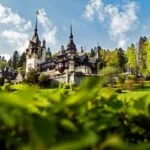
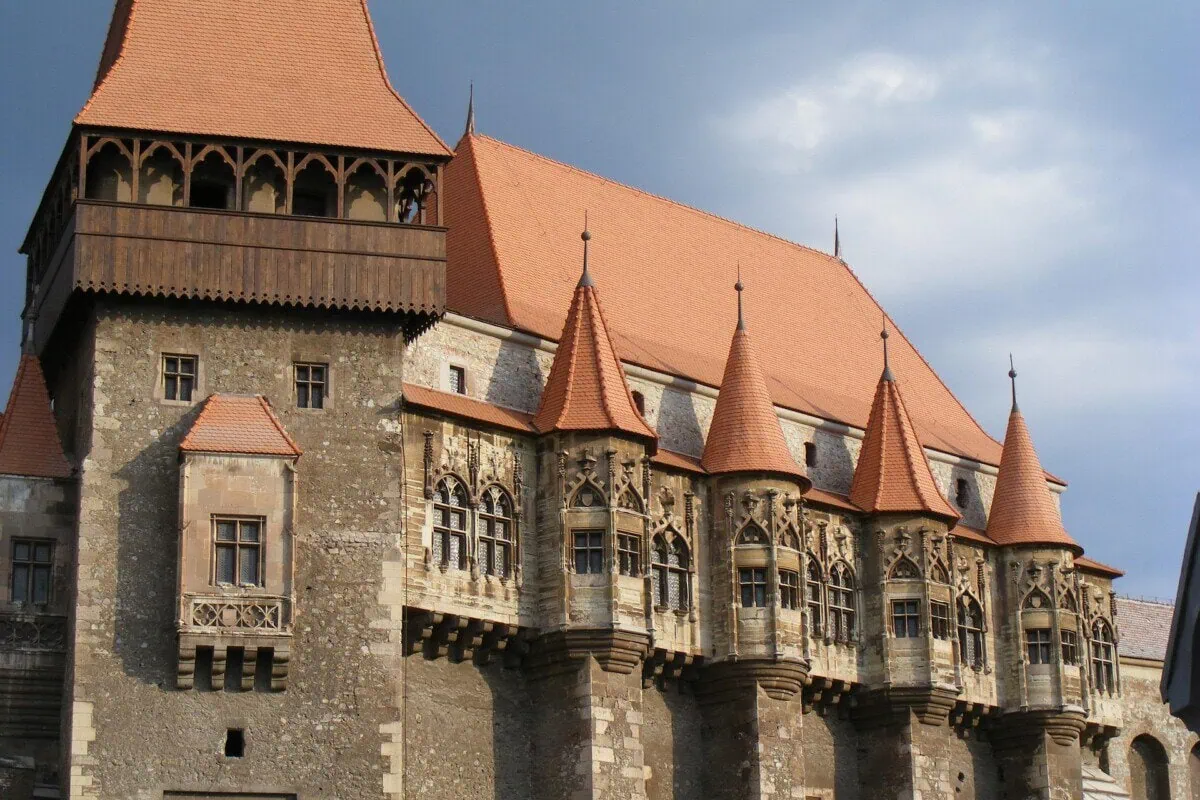
Corvin Castle is the single best reason to hire a car in Timișoara, a vast Gothic-Renaissance fortress of turrets, drawbridges and steep stone stairways that looks like it was built for a film set rather than a working medieval stronghold. It was the seat of John Hunyadi, one of medieval Hungary’s most powerful nobles, and local legend, largely unproven, claims Vlad the Impaler was imprisoned here for several years.
The castle sits around 170 kilometres east of Timișoara, and driving is comfortably the best option, taking roughly two hours along the E70 and then south through Deva. The route itself is easy motorway and dual-carriageway driving for most of the way, with only the final stretch into Hunedoara running through slower town roads.
Without a car, the journey involves a direct train or bus to Deva, followed by a further local bus or short taxi ride into Hunedoara itself, since no direct rail line serves the castle. Combined journey times run to around three and a half to four hours each way, which makes public transport a realistic option only for travellers planning to stay overnight rather than return the same evening.
Inside, the Knights’ Hall and the Diet Hall are the standout rooms, along with the castle’s famous well, supposedly dug by three Turkish prisoners promised their freedom in exchange, though the promise was never kept. Entry runs from around 40 RON (€8/£7/$9) for adults, with a reduced children’s rate, and the castle also runs atmospheric evening tours around Halloween that are worth checking for if visiting in late October.
Parking is available directly below the castle, and a half day is enough to see the interior properly, though pairing the visit with nearby Deva on the same trip makes far better use of the two-hour drive out. Corvin Castle earns its reputation as Romania’s most photogenic fortress, and it is worth building a full day around rather than rushing.
Walking towards the castle for the first time is genuinely one of the best entrances of any sight in Romania, since the approach crosses a long stone bridge with a wooden roof, built across a ravine cut out by centuries of mining, and the walls seem to grow taller with every step until the whole silhouette of towers and battlements is looming directly overhead. Inside, the maze of covered walkways and worn stone stairways connecting each tower still carries a faint echo underfoot, part of what gives the castle its reputation as one of Europe’s most atmospheric medieval survivors.
For travellers without a car, Deva’s train station sits right beside the town’s bus station, and minibuses onward to Hunedoara run extremely frequently, well over a hundred departures a day between roughly 5.20am and 11.40pm, covering the 17-kilometre run in around 25-30 minutes for a fare starting from 18 RON (€3.60/£3.05/$3.95). A taxi from the station covers the same distance in about 20 minutes for roughly 40-50 RON (€8-10/£6.80-8.50/$8.80-11), a useful shortcut for anyone short on time or travelling with luggage.
Best if you want daily housekeeping and a front desk. Filter by area first, then by price.
Check availabilityBest for groups who want one address and separate bedrooms rather than three hotel rooms.
See holiday homesBest if you have already picked a hotel. Checks the big booking sites for the same room and shows who is cheapest.
Check dealsArad: Secession Boulevards near the Border
Arad makes one of the easiest and most rewarding half-day trips from Timișoara, a handsome city of Secession-era architecture and wide boulevards that feels genuinely different in character despite sitting barely an hour away. Its position on the Mureș River, close to the Hungarian border, gave it a prosperous merchant history that still shows in its grand old townhouses.
Trains from Timișoara Nord run roughly hourly throughout the day, with a journey time of around 80 to 100 minutes depending on the service, making Arad one of the simplest and most flexible day trips on this whole list. Fares are inexpensive, typically only a few RON each way, and there is rarely a need to book ahead given how frequent the service is.
The star-shaped Arad Fortress, a well-preserved eighteenth-century Vauban-style stronghold on an island in the Mureș, remains in partial military use and cannot always be entered, though its distinctive outline is still worth viewing from across the river. The real draw is the city centre itself, particularly Boulevard Revoluției and the ornate State Theatre building, both showcasing the same Art Nouveau flair found in Budapest and Oradea.
Reconciliation Park, with its striking sculpture symbolising Romanian and Hungarian unity, sits close to the centre and makes a natural stop on a walking route through the old town. A half day is genuinely enough for Arad’s compact centre, and its frequent, cheap and fast train connection makes it one of the lowest-effort additions to any Timișoara itinerary.
Wandering Boulevard Revoluției on a warm afternoon, past pastel Secession facades and pavement cafés spilling onto the pedestrianised centre, it is easy to forget this is Romania rather than a smaller cousin of Budapest or Vienna. The scale is intimate enough to cover on foot in a couple of hours, with fewer crowds than anywhere else on this list and a genuinely relaxed, unhurried pace to the whole visit.
Trains arrive into Arad Central, a grand Austro-Hungarian-era station on Piața Gării designed by the Hungarian architect Ferenc Pfaff, fitting company for the boulevard’s own Secession architecture and only a short walk from the old town. Services are run by CFR Călători, Romania’s state rail operator, with single fares typically costing somewhere around 15-25 RON (€3-5/£2.55-4.25/$3.30-5.50) depending on the specific train, and tickets can be bought at the station counter, from the conductor on board, or in advance via the CFR Călători website or app.
Deva and Deva Citadel
Deva makes a natural pairing with Hunedoara, since both sit along the same route east of Timișoara, but the town is worth visiting in its own right for the ruined hilltop fortress that dominates its skyline. Deva Citadel sits atop a steep volcanic hill rising sharply above the town, with panoramic views across the Mureș valley from what remains of its medieval walls.
Direct trains run from Timișoara Nord several times a day, with a typical journey of around 90 minutes to two hours depending on the service, and driving covers the roughly 150 kilometres in about an hour and forty minutes. Both options are genuinely practical, which makes Deva one of the more flexible stops on this list for travellers without a car.
The climb to the citadel itself is steep, and as of 2026 the cable car that once carried visitors up is out of service for repairs, with an electric shuttle bus now running the short but steep final stretch from the car park to the fortress gate for a small fee. Energetic visitors can also hike the marked trail up instead, a genuinely pleasant walk through wooded slopes taking around 30 to 40 minutes.
Once at the top, little remains beyond ruined walls and towers, but the view over Deva’s rooftops and the surrounding hills is the real reward, particularly in late afternoon light. Deva works well either as a stop on the way to Corvin Castle or as its own relaxed half day.
The reward at the top is one of the better panoramas on this whole list, with the Mureș River looping below and Deva’s orange-tiled rooftops packed tightly around the base of the hill, the valley stretching hazily into the distance on a clear day. Very little of the medieval structure survives beyond broken curtain walls and a couple of towers, so this is a viewpoint more than a proper museum piece, best timed for late afternoon when the low light turns the stone gold.
Deva’s train station sits around a 15-minute walk from the base of the citadel hill, an easy stroll through the town centre, or a short taxi ride for anyone arriving with luggage. Services are run by CFR Călători, and Deva sits directly on Romania’s principal east-west trunk line through the nearby junction at Simeria, which is why so many long-distance services between Timișoara, Cluj and Brașov call here even though it is a small town.
The Recaș Wine Route
The Recaș wine route sits just outside Timișoara and offers a genuinely different kind of day out from the castles and old towns elsewhere on this list, built around the Banat region’s long, underrated winemaking tradition. Cramele Recaș, the area’s best-known producer, has become one of Romania’s most awarded wineries, exporting to more than 30 countries while still running a genuinely welcoming visitor operation close to home.
The winery sits only around 25 kilometres from central Timișoara, a drive of roughly 25 to 30 minutes along quiet country roads through the Banat plain. There is no practical public transport option for reaching Recaș directly, since the village has no rail connection and bus services are sparse and not geared towards visitors, so this is genuinely a trip that needs either a car or an organised tour.
Visits typically centre on a guided tour of the production facility, lasting around 45 minutes and covering everything from the vineyards to the barrel cellar, followed by a seated tasting of several wines ranging from crisp whites and rosés through to full-bodied reds and dessert styles. Advance booking is essential, since Cramele Recaș operates primarily for pre-arranged groups and events rather than casual walk-in visitors.
Beyond the flagship winery, the wider Recaș area has a scatter of smaller vineyards worth exploring for anyone with more time and their own transport. A private driver or an organised half-day wine tour from Timișoara removes the need to worry about driving after tasting, and makes for one of the most relaxed, least rushed entries on this whole list.
The visit itself has a genuinely unhurried, indulgent feel that nothing else on this list quite matches, walking between rows of vines with the Banat plain rolling flat and green in every direction before settling into the cool of the barrel cellar for the tasting itself. Wines here lean on native and international grapes side by side, and the whites in particular, crisp and mineral, are often overshadowed nationally by the reds despite being arguably the more distinctive style.
Since there is no bus or rail option, most visitors book either a pre-arranged private driver for the return trip or join an organised half-day tour departing directly from central Timișoara, both of which remove any concern about driving after tasting. Anyone driving themselves should note the roads through the Banat plain are quiet, well-surfaced and easy to navigate, and parking at the winery is free and usually simple to find outside peak weekend visits.
Sibiu: Transylvania’s Fairytale Old Town
Sibiu deserves an honest word before anything else, it is genuinely further from Timișoara than every other destination on this list, and it should be treated as a considered full-day trip or an overnight stay rather than a casual add-on. That said, it remains one of Transylvania’s most beautiful cities, with a fortified medieval centre of pastel townhouses, watchful roof-window “eyes” and grand Habsburg-era squares that justifies the extra distance.
The drive covers around 265 kilometres and takes roughly two hours and forty-five minutes along good, mostly dual-carriageway roads, making Sibiu reachable by car within a single working day if departure is early. FlixBus and other coach operators run several direct services daily, with a journey time of around four hours each way, a genuinely practical option for travellers without a car who are prepared for a long day.
Train travel is the one option worth ruling out here, since there is no fast or direct rail link between the two cities, and the fastest realistic route involves changing trains at Simeria for a combined journey of well over six hours each way. Given the far quicker bus and driving alternatives, the train genuinely is not worth considering for this particular route, however appealing it sounds on paper.
Once in Sibiu, the Piața Mare and Piața Mică squares, the Council Tower and the Bridge of Lies are all within a short walk of each other in the compact old town, easily filling an afternoon before the return journey. Anyone travelling by bus should seriously weigh an overnight stay instead, since a same-day round trip leaves very little time in the city, but Sibiu earns its place here with an honest caveat rather than a false promise of an easy day trip.
Piața Mare feels different depending on the hour, filled with market stalls and café tables by day and virtually empty and beautifully lit after dark, ringed by pastel townhouses in blues, yellows and ochres that survived Habsburg rule almost untouched. The Council Tower is worth the short, steep climb for the view alone, looking straight down over the layered rooftops of the upper and lower towns towards the hills beyond.
FlixBus runs the Timișoara-Sibiu route five times daily, with the earliest departure around 1.35am and the latest around 10.45pm, covering the 272-kilometre journey in around three hours fifty minutes for fares starting from roughly 43 RON (€8.60/£7.30/$9.45). Coaches leave from Autogara Normandia on Calea Stan Vidrighin, Timișoara’s main bus station, and arrive into Sibiu at Autogara Transmixt, also known locally as Autogara 1, a short walk or taxi ride from the old town.
Băile Herculane: Europe’s Oldest Spa Town
Băile Herculane is Europe’s oldest spa town, its thermal springs used since Roman times and named for Hercules himself, according to legend, after he bathed here to recover his strength. The town’s faded Austro-Hungarian grandeur, all crumbling belle-époque facades and elegant former bathhouses set deep in the Cerna Valley, gives it an atmospheric, slightly melancholic charm found nowhere else on this list.
Driving covers around 190 kilometres and takes roughly two hours and forty minutes, following the road south through Caransebeș before it climbs into the narrow, forested Cerna Gorge that gives the final approach its drama. Trains run twice daily direct from Timișoara Nord, taking around three hours and forty-five minutes, and this is genuinely one journey worth choosing purely for the scenery, since the line threads directly through the gorge with the river running alongside the tracks for long stretches.
The train itself is a standard CFR InterRegio service with basic seating and no dedicated catering carriage, so it is worth bringing food and drink, though the views through the gorge more than make up for the lack of on-board comforts. Departures are limited to two a day each way, so timings need checking carefully, since missing the return service means a considerably longer wait.
Once there, the Neptune Baths and the surrounding thermal complex are worth a look even for visitors not planning to bathe, alongside a wander through the town’s overgrown, slowly restoring belle-époque quarter. A full day allows time for both the train journey and a proper look around, one of the more unusual, rewarding entries on this list for travellers who enjoy faded grandeur and real scenery.
Wandering the town’s abandoned bathhouses, their stucco peeling and window frames rotting quietly under the Cerna Valley’s forested slopes, has a genuinely haunting quality that no restored heritage site could replicate, somewhere between grand and genuinely sad. The smell of sulphur drifts up from the springs even outside the bathing complexes themselves, a strange, faintly medicinal note that somehow suits the town’s whole faded, unhurried atmosphere.
Trains depart from Timișoara Nord, the city’s main and only intercity station at 2 Gării Street, and arrive directly into Băile Herculane’s own small station a short walk from the thermal complex and the old town centre. Services are run by CFR Călători as standard InterRegio trains, and while there is no café carriage, the route through the narrow Cerna Gorge, hugging the river for long stretches with the forested valley walls pressing close on both sides, is reason enough on its own to choose the train over driving.
Belgrade, Serbia: A Big Day across the Border
Belgrade makes for a genuinely bigger day out than anywhere else on this list, since it means crossing an international border into Serbia, a country outside both the EU and the Schengen area, so a valid passport is essential. The reward is one of the Balkans’ most energetic capitals, with a fortress, a bohemian old quarter and a nightlife scene that punches well above its weight.
The drive covers around 160 kilometres via the direct Vatin to Stamora Moravița border crossing, taking roughly three hours including the crossing itself, and the wait at the border is typically light, usually somewhere between 10 and 20 minutes with no crossing fee charged. There is currently no train option at all, since the passenger rail link through Vršac was discontinued back in 2017 and has not resumed since.
A handful of small coach and shared-minibus operators run the route with journeys of around three and a half to four hours including the border stop, though timetables are limited and seats can sell out, making a self-driven trip or a booked private transfer the more reliable choice. Given the distance and the border crossing, this genuinely is a long day rather than a relaxed one, and an early start is essential.
One direct scheduled option does exist: FlixBus runs two services a day on the Timișoara-Belgrade route, taking as little as two hours for the 166-kilometre journey when the border crossing is quiet, departing from Autogara Normandia in Timișoara. Tickets are best bought in advance through the FlixBus website or app rather than at the station, since seats on both daily departures can sell out, particularly around weekends.
Kalemegdan Fortress, perched above the meeting point of the Sava and Danube rivers, is the unmissable centrepiece, its parkland, ramparts and views making it easily worth two or three hours alone. Skadarlija, Belgrade’s cobbled bohemian quarter of traditional kafanas and live music, is the natural follow-on for lunch or an early dinner before the journey back, and Belgrade suits travellers comfortable with a demanding day rather than those after a relaxed excursion.
Standing on the fortress ramparts as the sun drops behind the confluence of the Sava and Danube, with barges drifting past far below and the whole of New Belgrade spread out across the water, is one of the most memorable views anywhere on this list, castles included. Skadarlija’s cobbled lanes fill with live accordion and violin music from early evening onward, and even a short wander through feels like slipping into a different decade entirely.
Prices in Belgrade run in Serbian Dinar (RSD), not Romanian Leu, so it is worth having a rough sense of the conversion before ordering: 1,000 RSD is approximately 8.50 RON (€8.50/£7.40/$9.60) at current rates. Card payment is widely accepted in the centre, though small cafés in Skadarlija sometimes prefer cash.
Best for long or awkward journeys. Builds one itinerary out of separate flights.
View flightsBest for anyone whose home plan charges by the megabyte abroad. Pay a fixed price up front.
Check eSIMsBest when public transport has stopped, or when you are travelling with children and bags.
Book a transferGetting Around Without a Car
Deciding whether to hire a car really comes down to splitting the list into two groups, since some destinations are genuinely easy by public transport while others realistically need a car or an organised tour to work properly. Arad and Deva are the clear standouts for train travel, both served by frequent direct services from Timișoara Nord that need no connection and no real planning beyond checking the timetable.
Hunedoara sits in a middle category, reachable by train or bus via Deva followed by a local connection, genuinely workable without a car but considerably slower than driving, which covers the same route in around half the time. Sibiu falls into a similar bracket, with a comfortable direct coach service covering the distance in around four hours, a realistic if long option for anyone without their own transport.
Recaș and Belgrade are the two clearest cases for needing a car or a booked tour. Recaș has no meaningful bus service geared towards visitors and no rail connection at all, while Belgrade’s coach options are limited enough that driving or a private transfer is genuinely the more dependable choice for a tightly timed day out.
Băile Herculane is the pleasant exception among the longer trips, since its twice-daily direct train is arguably the better option thanks to the scenic Cerna Gorge route, provided the limited timetable is checked carefully in advance. For exact current timetables, Romania’s official CFR train search tool covers every operator running out of Timișoara Nord, and for travellers without a car, prioritising Arad, Deva and Băile Herculane makes the most sense over the trips that genuinely need a hire car.
Stations, Tickets and the Best Apps for Getting Around
Timișoara’s own transport hub for every trip on this list is Timișoara Nord, the city’s main and only intercity station at 2 Gării Street, a short tram or trolleybus ride from the historic centre and, after a 2020 renovation of its facade, forecourt and pedestrian tunnel, comfortably the largest and busiest railway station in western Romania with 13 platforms and around 174 trains passing through daily. Trolleybus lines 11, 14 and 18 and tram lines 1, 8 and 9 all stop right outside, making it easy to reach from almost anywhere in the city without a car.
Train tickets for every route in this guide, from Arad to Băile Herculane, are sold by CFR Călători, Romania’s national rail operator, either at the station’s ticket counters, from the conductor on short regional hops like Arad and Deva, or in advance through the bilete.cfrcalatori.ro website and the official “CFR Călători bilete online” app for iOS and Android, which also shows live departure boards and platform numbers. Booking ahead is rarely essential on the frequent regional lines, but it is worth doing for the twice-daily Băile Herculane service, where missing a departure means a long wait for the next one.
Buses and coaches, including every FlixBus service mentioned in this guide, leave from Autogara Normandia on Calea Stan Vidrighin, Timișoara’s principal bus station, with a couple of FlixBus departures also picking up from the Autogara Super Imposer stop and an OMV petrol station on Calea Aradului. FlixBus tickets are bought online or through its own app rather than at the station itself, and it is worth checking the exact pickup point on the ticket, since not every departure uses the main bus station.
For getting around once you are there, Moovit covers Timișoara’s own tram, bus and trolleybus network with reasonably reliable schedules, Google Maps is the more dependable choice for driving directions across the wider region, and the CFR Călători app is worth having installed specifically for checking live train times and boarding platforms before a departure.
Buying Bus Tickets Through BusBud
BusBud is a booking platform that aggregates timetables and fares from FlixBus and other operators running out of Timișoara, letting you compare departures and prices from one search rather than checking each company’s own site in turn. It is a handy way to book ahead on routes where seats can sell out, rather than relying on a walk-up ticket at Autogara Normandia.
Several of the routes on this page are covered, including Timișoara to Belgrade and Timișoara to Sibiu, both run by FlixBus and bookable through BusBud with live schedules and fares shown before you commit. The same search also picks up Arad to Sibiu for anyone continuing on rather than returning straight to Timișoara.
Booking works the same way as any other online coach ticket: choose the route and date, pick a departure, and pay by card for an e-ticket that can be shown on a phone rather than printed at the gate. It is worth checking BusBud alongside the FlixBus app directly, since fares and departure times occasionally differ slightly between the two.

Organise Your Timișoara Coach Trip with Busbud
You can use Busbud to research bus travel for Timișoara, check timetables and compare ticket options before booking.
Having the available operators together can make it much easier to plan connections and work out which service fits your schedule.

Rupert’s Handy Travel Tips
Timișoara opens up a genuinely varied spread of day trips, so here are a few things worth knowing before you set off:
- Bring your passport for Belgrade: Serbia sits outside the EU and Schengen, and you will need it at the Vatin border crossing.
- Book Cramele Recaș ahead: the winery runs primarily for pre-arranged groups, so turning up without a reservation rarely works.
- Check the Deva Citadel shuttle before you climb: the cable car is currently out of service, replaced by a short electric shuttle bus.
- Don’t attempt Sibiu as a rushed there-and-back: it is the furthest entry on this list, and an overnight stay makes far better use of the distance.
- Time the Băile Herculane train carefully: only two direct services run each day, and missing the return means a long wait.
- Carry small RON notes for local buses and taxis: smaller towns like Hunedoara and Deva are not always set up for card payments.
Want to meet the reindeer behind our travel tips? Find out more in our page Who is Rupert?.




Frequently Asked Questions About Day Trips from Timișoara
What is the best day trip from Timișoara?
Hunedoara’s Corvin Castle is the standout choice, a genuinely dramatic Gothic-Renaissance fortress reachable in around two hours by car.
Can I visit Belgrade as a day trip from Timișoara?
Yes, though it is a long day out. The drive takes around three hours each way including the border crossing, and there is no train option.
Do I need a car for day trips from Timișoara?
Not for all of them. Arad, Deva and Băile Herculane all have direct trains, but Hunedoara, Recaș, Sibiu and Belgrade are considerably easier with a car.
How far is Sibiu from Timișoara?
Around 265 kilometres, roughly two hours 45 minutes by car or about four hours by direct coach. There is no practical train link between the two cities.
Do I need a passport to visit Belgrade from Timișoara?
Yes. Serbia is outside both the EU and the Schengen area, so a valid passport is required at the border crossing.
Is Corvin Castle worth visiting from Timișoara?
Yes, it is widely considered Romania’s most photogenic castle, and the roughly two-hour drive is comfortably worth it for a half day at the site.
Further Reading
Planning the wider trip around Timișoara itself first? Our Interrail Romania Pass guide covers the country’s rail network in full, including the western routes towards Timișoara, Arad and the Hungarian border, useful context for anyone building a longer Romanian itinerary around these day trips.
Thinking about continuing on to Belgrade for more than a single day? Our Interrail Serbia Pass guide breaks down Belgrade, Novi Sad and the Bar line in detail, a useful next step for anyone tempted to turn this day trip into a longer Balkan detour.
Timișoara’s position close to the Hungarian border also opens up rail connections north, and our Interrail Hungary Pass guide covers Budapest and the Danube Bend for travellers routing onward rather than doubling back towards Bucharest.
Landing in Timișoara before any of these trips, or looking for a fuller rundown of the city itself? Our dedicated Timișoara Airport Transfers and Things to Do in Timișoara guides round out the rest of this cluster, covering everything from arrival to the city’s own attractions before heading out on the road. For checking live Romanian train times directly, the official CFR national timetable search covers every route mentioned in this guide.