Reviewed by our editorial team Published
Chișinău does not try to charm visitors the way Prague or Vienna do. Moldova’s capital has no compact medieval old town, no single postcard monument, and for decades it barely registered on Europe’s tourist map at all. What it has instead is something more unusual: a city almost entirely rebuilt in the mid-twentieth century, where wide Stalinist boulevards sit alongside Soviet housing towers, Orthodox cathedrals rebuilt from rubble stand a few streets from a decaying modernist circus, and a wine culture stretching back thousands of years runs through everyday life in a way few capitals can match.
A catastrophic 1940 earthquake and then the devastation of the Second World War left much of central Chișinău in ruins, and the Soviet authorities who took control afterwards rebuilt it almost from scratch. That history is not tucked away in a museum here, it is the architecture itself, visible on nearly every walk through the centre.
Wine matters just as much to understanding Chișinău. Moldova has one of the oldest winemaking traditions on earth, and the industry still shapes the country’s economy, its export identity and its everyday hospitality, long before a visitor ever descends into one of the underground cellars outside the city. Food tells a similar story: plates of mămăligă and zeamă served in family-run restaurants say more about daily Moldovan life than any single monument.
This guide works through how long to spend in the city, a practical one-day itinerary, that Soviet-era planning, why wine runs so deep in Moldovan identity, and where to actually eat and get around, before covering fifteen individual sights worth building a visit around, from Ștefan cel Mare Central Park to the abandoned State Circus.
How Many Days Do You Need in Chișinău?
Most visitors give Chișinău one day, often as a stopover between Bucharest and points further east, and that is genuinely enough time to see the city centre properly. A single day covers Ștefan cel Mare Central Park, the Nativity Cathedral, the Triumphal Arch and the museums and squares clustered around them, since almost everything on this list sits within a compact, walkable core rather than scattered across the city.
Two days makes more sense if wine is part of the plan. Cricova and Mileștii Mici, Moldova’s famous underground cellars, sit a short drive outside the city and genuinely deserve a half-day each rather than a rushed detour, so a second day gives that trip room to breathe without cutting the city sightseeing short. It also allows time for the Central Market, Valea Morilor Park and a proper sit-down meal rather than a quick lunch between sights.
Three days is worth considering only for travellers using Chișinău as a base for wider Moldova, combining the capital with Orheiul Vechi or a trip toward Transnistria. For most people arriving on a Romania or wider Balkans itinerary, though, Chișinău earns one full day of genuine attention and works best as a well-planned stop rather than a week-long destination in its own right.
One-Day Chișinău Itinerary
Start at Ștefan cel Mare Central Park early, before the heat and crowds build, and walk its full length past the writers’ avenue and the Stephen the Great monument toward the Nativity Cathedral and its bell tower next door. From there it’s a short walk to the Triumphal Arch and Great National Assembly Square, where the Government House and Parliament buildings give an immediate sense of Soviet-era civic scale.
Spend the late morning at the National Museum of History of Moldova, a genuinely substantial collection that rewards an hour or more rather than a quick pass-through, then walk south toward Mihai Eminescu Square for a look at the Opera and Ballet Theatre and Organ Hall, even without booking a performance. Break for lunch somewhere serving proper Moldovan food rather than a tourist-menu substitute, which is where the food section below earns its place in the itinerary.
Use the afternoon for Valea Morilor Park, reached down a long flight of cascade steps from the centre, followed by the Central Market if it’s still open, since it closes earlier than most European markets. Finish at the Eternity Memorial Complex or, for anyone drawn to Soviet-era architecture, a detour past the Romanița tower and railway station before dinner. It’s an ambitious day, but a realistic one on foot and by trolleybus.
Best for a short trip. Compare rooms by neighbourhood, price and guest rating before you book.
Compare hotelsBest for longer stays. Whole apartments and houses, so you are not eating out three times a day.
View rentalsBest for double-checking. Runs the same Moldova search across several booking sites so you are not leaving money behind.
Compare pricesSoviet Chișinău
Chișinău’s Soviet character was not a stylistic choice, it was a rebuild forced by catastrophe. A powerful 1940 earthquake had already damaged the city before the Second World War flattened much of what remained, and by 1944 the historic centre was in ruins. The reconstruction that followed, directed from 1947 under the Moscow-based architect Alexey Shchusev, himself a Chișinău native best known internationally for designing Lenin’s Mausoleum, set the template for the city that stands today.
Shchusev’s plan favoured wide, formal boulevards over the old town’s narrower streets, and Bulevardul Ștefan cel Mare, the city’s main artery, still carries that Stalinist-era scale: broad, tree-lined and flanked by government buildings built to project order rather than charm. As Chișinău’s population grew through the 1950s and beyond, the city expanded outward with vast estates of collective housing, the khrushchyovka-era blocks that still ring the centre and remain home to most of the city’s residents.
The most striking single example is the Romanița tower, a 73-metre residential high-rise completed in the early 1980s as a late-Soviet experiment in collective urban living, its curved balconies and stacked form now weathered but unmistakably part of the skyline. Chișinău’s railway station tells a related story, covered in full later in this guide, as another Shchusev-era rebuild that replaced the pre-war structure lost in the fighting.
Reading this history first makes the rest of the city legible: the scale of the squares, the uniformity of the housing, and the handful of buildings, like Romanița and the station, that turned a functional rebuild into something closer to architecture.
Moldova’s Wine Culture Explained
Wine is not a tourist attraction bolted onto Moldova, it is close to the country’s founding industry. Archaeological evidence places winemaking in this region as far back as 5000 BC, among the oldest continuous wine traditions anywhere on earth, and the vine has shaped the landscape, the economy and the national identity ever since. Moldova is regularly ranked among the world’s largest wine producers relative to its size, and the industry remains one of the country’s most important exports.
That history is physically visible outside Chișinău in a way it rarely is elsewhere. Cricova and Mileștii Mici, both built into former limestone quarries, hold two of the largest underground wine cellars on the planet, with Mileștii Mici alone running to roughly 200 kilometres of tunnels and holding a Guinness World Record for the largest wine collection anywhere, some of it stored on streets named after grape varieties. Both are covered in full on our separate Day Trips from Chișinău guide, but their scale says something important about how central wine is here: entire underground road networks exist purely to age and store it.
Inside the city, that culture shows up in smaller, everyday ways, a glass of local red poured without ceremony alongside a family meal, wine stalls at the Central Market, and National Wine Day, celebrated every October as one of the country’s biggest public celebrations. For a visitor, understanding this context first makes a cellar visit, or even a bottle chosen at dinner, mean considerably more than a generic tasting stop.
Moldovan Food & Where to Eat
Moldovan food draws heavily on Romanian and wider Balkan traditions but keeps its own distinct character, built around hearty, unfussy dishes designed to be shared. Mămăligă, a dense cornmeal porridge similar to Italian polenta, anchors most traditional meals and is often served alongside soft cheese, sour cream or a rich stew rather than eaten alone. Zeamă, a sour chicken soup thickened with noodles and sharpened with borș, a fermented wheat-bran liquid, is considered close to a national dish and is widely regarded as Moldova’s classic hangover cure.
Plăcinte, thin pastries filled with cheese, potato, cabbage or sweet fruit, turn up everywhere from bakeries to market stalls and make an easy, inexpensive lunch on the move. Sarmale, cabbage or vine leaves stuffed with spiced meat and rice, usually appear at larger family meals and celebrations, served with a dollop of sour cream and often alongside mămăligă rather than rice or bread.
For a proper sit-down introduction to the cuisine, La Taifas, a long-running traditional restaurant in the city centre, is known specifically for its mămăligă and zeamă served in a rustic, folk-themed setting. Vatra Neamului has a similar reputation for genuinely traditional Moldovan cooking rather than an international menu with a few local dishes added on. Either makes a far better introduction to Moldovan food than a hotel restaurant, and both sit within easy reach of the central sights on foot or a short taxi ride.
Getting Around Chișinău
Chișinău’s centre is genuinely walkable, and most of the fifteen sights below sit within a compact core stretching from Ștefan cel Mare Central Park down toward the railway station, making it a comfortable base for exploring on foot alone for a day or two. Public transport fills the gaps for anything further out, run through a mix of trolleybuses, buses and marshrutky (shared minibuses) that between them cover almost every corner of the city.
Trolleybuses are the cheapest and most common option, costing around 2 MDL (roughly €0.10/£0.09/$0.11) per ride, paid in cash to a conductor on board rather than at a machine or kiosk. Buses and marshrutky cost a little more, typically around 3 MDL (roughly €0.15/£0.13/$0.17), with marshrutky flagged down almost anywhere along their route and paid directly to the driver on entry. None of these services run especially late, and frequency drops sharply after around 10pm, so plan an evening return by taxi rather than relying on the network late at night.
For taxis, Yandex Go is the standard app-based option and by far the easiest way to book a fair-priced ride without haggling, since Uber does not operate in Moldova at all, which catches out travellers who assume it will. A short city-centre taxi ride typically costs somewhere around 100 MDL (roughly €5/£4.30/$5.50), though it’s worth avoiding taxis hailed directly outside major tourist spots, where prices run noticeably higher than an app-booked fare.
Ștefan cel Mare Central Park
Ștefan cel Mare Central Park is Chișinău’s oldest public park and the natural starting point for exploring the city centre, laid out in the early nineteenth century and known for decades under Russian and Soviet rule as Pushkin Park before reverting to its current name after independence. A long, shaded central avenue runs its length, lined with busts of Moldovan writers and cultural figures, giving the walk through it the feel of an open-air introduction to national literature rather than just a stroll.
The park’s best-known monument is the statue of Ștefan cel Mare (Stephen the Great), Moldova’s most revered medieval ruler, erected in 1927 and now one of the most photographed spots in the city. Elsewhere in the park, a large fountain, quiet benches beneath mature trees and a handful of outdoor cafés make it a genuinely pleasant place to slow down rather than just pass through, and locals use it exactly that way outside peak tourist hours.
An abandoned, half-derelict café building near one edge of the park is worth noticing rather than avoiding, since it’s one of several small reminders scattered through central Chișinău that not every corner of the city has been renovated since independence. The park sits directly beside the Nativity Cathedral and its own grounds, making the two a natural pairing at the start of a day’s sightseeing.
Nativity Cathedral & Cathedral Park
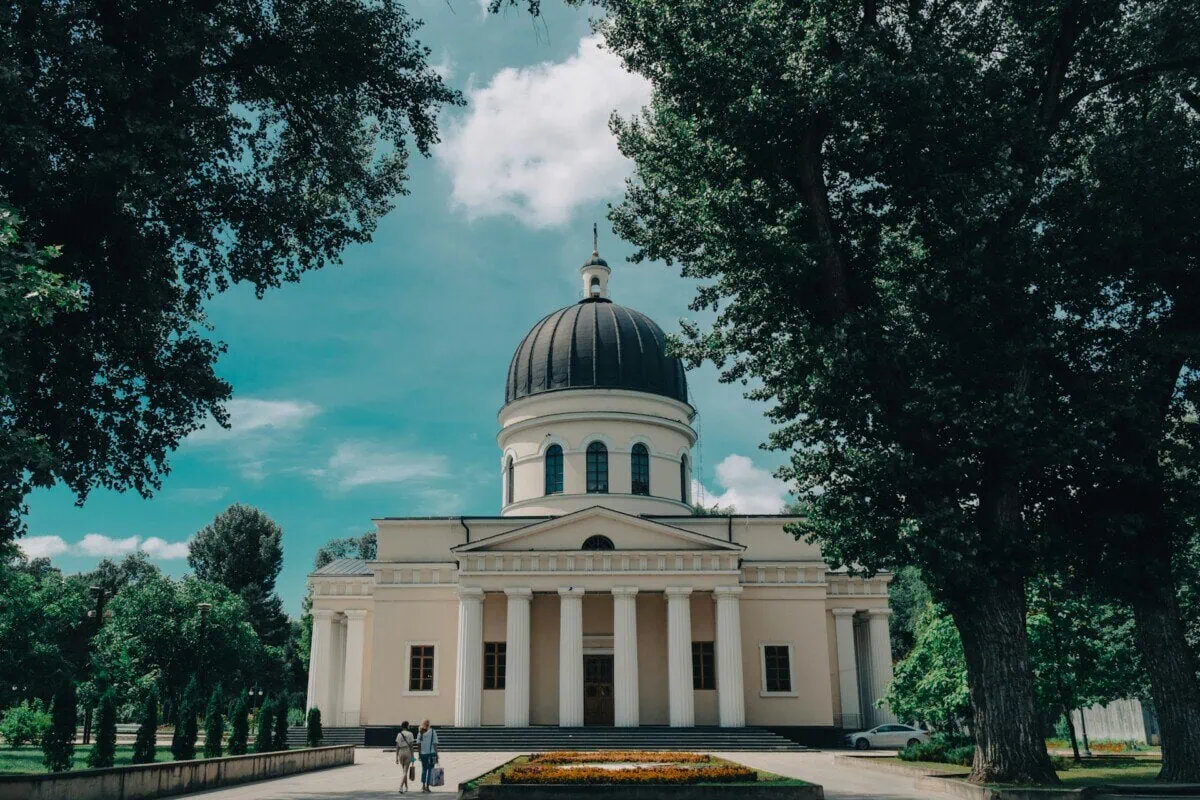
The Nativity Cathedral is Chișinău’s principal Orthodox cathedral, a neoclassical building completed in 1836 with its freestanding bell tower added shortly after in 1840. Both structures suffered heavy damage during the Second World War, and the Soviet authorities who rebuilt the city afterwards repurposed the cathedral as an exhibition hall rather than restoring it as a working church, a fate shared by a number of religious buildings across the country during that period.
The cathedral only returned to full religious use after Moldova’s 1991 independence, and its bell tower, demolished under Soviet rule, was rebuilt from scratch in 1997 to restore the original pairing of church and tower. Inside, the interior follows typical Moldovan Orthodox decoration, with an ornate iconostasis and painted ceiling that reward a few quiet minutes away from the surrounding traffic and market stalls.
The cathedral sits within its own Cathedral Park, a smaller, more formal green space than the adjoining Central Park, dotted with fountains and popular for wedding photographs on weekends. Entry to the cathedral grounds and interior is free, though visitors should dress modestly and keep noise to a minimum if a service is underway. Its central location, directly beside Central Park and a short walk from the Triumphal Arch, makes it an easy first or second stop on any walking route through the city.
Best for long or awkward journeys. Builds one itinerary out of separate flights.
View flightsBest for anyone whose home plan charges by the megabyte abroad. Pay a fixed price up front.
Check eSIMsBest when public transport has stopped, or when you are travelling with children and bags.
Book a transferThe Triumphal Arch
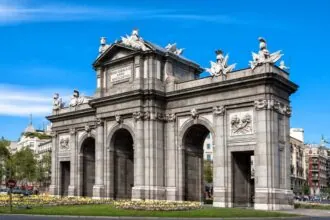
The Triumphal Arch stands on Great National Assembly Square, immediately next to the Nativity Cathedral, and was completed in 1840 to commemorate Russian military victories over the Ottoman Empire in the Russo-Turkish War. It was originally built to house a large bell cast from captured Ottoman cannons, a striking detail that speaks to how directly the monument was tied to the military campaigns it celebrates, though the bell itself proved too heavy to hang in the cathedral and ended up here instead.
Architecturally, the arch is modest compared to grander European triumphal arches, built in a restrained neoclassical style rather than anything monumental, but its position matters more than its scale. It anchors one end of Great National Assembly Square, facing the Government House across the open plaza, and has become one of the default backdrops for national celebrations, protests and public gatherings throughout Moldova’s modern history, including demonstrations during the country’s move toward independence.
The arch is free to view at any time and takes only a few minutes to appreciate properly, which makes it a natural connector between the cathedral grounds and the square beyond rather than a standalone destination. Visiting in the early morning avoids both the worst of the traffic circling the square and the crowds that gather here for official events, giving a clearer view of the arch and the government buildings framing it.
The National Museum of History of Moldova
The National Museum of History of Moldova is the country’s most comprehensive museum, holding a collection of more than 250,000 exhibits spanning ancient archaeology through to contemporary history, housed in a grand nineteenth-century building in the city centre. A replica of Rome’s Capitoline Wolf sculpture stands outside the entrance, a deliberate nod to Moldova’s Latin, Romanian-language roots that sets the tone before visitors even step inside.
Exhibits are organised broadly by era, moving through prehistoric and Roman-period archaeology, medieval Moldovan history under rulers including Ștefan cel Mare, and on to the twentieth century, including material covering the Soviet period and Moldova’s path to independence in 1991. It’s a genuinely substantial collection, and visitors with a real interest in the region’s history should budget well over an hour rather than treating it as a quick stop between other sights.
Adult entry currently costs around 50 MDL (roughly €2.50/£2.15/$2.75), following a significant price increase from the museum’s long-standing lower rate, with reduced tickets of around 20 to 25 MDL (roughly €1-1.25/£0.86-1.05/$1.10-1.35) for students and pensioners. Labelling is mixed between Romanian and English depending on the section, so a little background reading beforehand helps make sense of exhibits without English text. The museum sits close to Great National Assembly Square, making it easy to combine with the Triumphal Arch and Parliament buildings on the same walk.
Great National Assembly Square & the Parliament Building
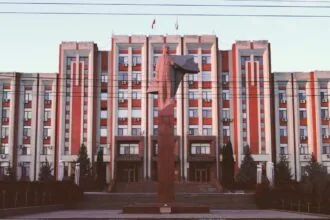
Great National Assembly Square is Chișinău’s largest public square and the political heart of the city, framed by the Government House on one side and within sight of the Parliament building nearby. Built at Soviet scale, the square was designed for mass gatherings rather than casual strolling, and it has hosted genuinely pivotal moments in Moldova’s modern history, including the crowds that gathered here during the country’s push toward independence from the Soviet Union in 1989 and 1991.
The square takes its current name from a specific 1989 gathering widely seen as a turning point in the national independence movement, and it remains the default site for official state ceremonies, national day celebrations and political demonstrations today. The scale of the surrounding government architecture, long, formal and deliberately imposing, is itself a useful lesson in the Soviet civic planning covered earlier in this guide.
Visitors can walk freely across the square and along the perimeter of the government buildings, though the buildings themselves are working government offices and not open for public tours. The square connects directly to the Triumphal Arch and Cathedral Park at one end and Ștefan cel Mare Boulevard at the other, making it a natural midpoint on a walking route through the historic centre rather than a detour.

The Opera and Ballet Theatre
The Maria Bieșu National Opera and Ballet Theatre sits on Mihai Eminescu Square, a short walk from Ștefan cel Mare Boulevard, and remains one of the few former Soviet opera companies to have kept its own full orchestra, chorus, soloists and ballet troupe intact after independence. The opera company traces back to the mid-1940s, turned fully professional in 1956, and the current building opened the following year before a substantial reconstruction in 1980.
The theatre took its present name in 2012, honouring Maria Bieșu, the celebrated Moldovan soprano whose international career helped put the company on the map beyond the Soviet Union. With around 1,200 seats, it stages a regular programme of opera, ballet and orchestral concerts, including full productions of classics like Swan Lake and Giselle, and the company has toured internationally across Europe, Asia and beyond since the late 1950s.
Even without booking a performance, the building itself is worth a look from the square outside, and checking the current programme in advance is worthwhile for anyone travelling with an evening free, since tickets are inexpensive by Western European standards and rarely need booking more than a few days ahead outside major premieres. The theatre sits directly beside Organ Hall, making the two a natural evening pairing after a day spent on the historic sights nearby.
Organ Hall
Organ Hall sits on Mihai Eminescu Square immediately beside the Opera and Ballet Theatre, and is Chișinău’s dedicated venue for organ and classical chamber music, built around a large pipe organ that remains the centrepiece of its regular concert programme. It’s a smaller, more intimate venue than the opera house next door, and the acoustics built specifically around the organ make it a genuinely different experience from a typical concert hall.
The hall hosts a regular schedule of organ recitals alongside chamber orchestra performances, choral concerts and occasional visiting international musicians, with a programme that runs through most of the year rather than a narrow festival season. Ticket prices are modest, generally well under what an equivalent concert would cost in Western Europe, and the hall rarely sells out outside its most high-profile evenings, so booking a day or two ahead is usually enough.
For visitors without a specific concert in mind, it’s worth checking the current listings simply because an organ recital here is a genuinely distinctive way to spend an evening in Chișinău rather than a generic tourist activity. Its position beside the Opera and Ballet Theatre and close to Ștefan cel Mare Boulevard makes it easy to combine with dinner and an evening walk through the surrounding streets.
Valea Morilor Park
Valea Morilor Park, meaning “Valley of the Mills,” is built around a large artificial lake on the southwestern edge of the city centre and is where Chișinău residents actually spend their weekends, rather than a sight built primarily for visitors. A long, dramatic flight of cascade steps connects the park down from the city centre above, and the walk down alone offers some of the better skyline views available in Chișinău.
Once at lake level, the park offers pedalo and rowing boat hire on the water, cycling and rollerblading paths circling the shoreline, and a small stretch of sandy “beach” that gets genuinely busy on warm weekends, alongside quieter wooded paths for anyone wanting to escape the crowds. It’s a useful counterpoint to the formal Soviet squares and churches elsewhere on this list, proof that Chișinău has a genuinely relaxed, everyday side beyond its monuments.
The park is free to enter, with only the boat hire and occasional café stops carrying a small cost, and it works well as a late-afternoon stop after a morning spent on the museums and squares in the centre. Reaching it on foot down the cascade steps is straightforward, though the walk back up is a genuine climb, so anyone short on energy should factor in a short trolleybus ride back into the centre instead.
Best for solo travellers and anyone watching the budget. Dorm beds and private rooms in the same search.
Browse hostelsBest arranged before you fly rather than after. Covers claim handling, plus lounge access on eligible delays.
Explore AirHelp+Best for the gap between checking out and your train. Drop bags at a shop or hotel nearby and carry on.
Store your bagsThe Central Market
The Central Market, known locally as Piața Centrală, sits beside the bus station and is the largest and most chaotic of Chișinău’s markets, spreading across a sprawling covered and open-air site that can feel genuinely overwhelming on a first visit. Stalls sell fresh produce, homemade cheese and dairy, honey, preserved goods, flowers, clothing and household items side by side, with little obvious organisation to a first-time visitor, which is part of its charm rather than a flaw.
It’s also one of the best places in the city to buy Moldovan wine directly from small producers, often at prices well below what a restaurant or specialist shop would charge, alongside home-pressed juices and seasonal fruit that rarely make it onto a supermarket shelf. Haggling is common practice here, though it’s expected to be good-natured rather than aggressive, and a smile and a little patience go a long way with stallholders.
The market keeps earlier hours than most European equivalents, typically winding down by mid-afternoon, so a late-morning visit works better than trying to fit it in after lunch. It’s not a polished, tourist-oriented experience, there’s no curated food hall feel here, but for anyone wanting a genuine sense of everyday Chișinău life, it’s one of the more revealing stops on this list, and it sits an easy walk from the railway station.
The Eternity Memorial Complex
The Eternity Memorial Complex commemorates Moldovan and Soviet soldiers killed during the Second World War, built around a striking monument formed from five giant stone rifles arranged in a pyramid shape, with an eternal flame burning at its base. It’s one of the more visually arresting Soviet-era monuments in the city, deliberately dramatic in a way the more restrained government architecture elsewhere in Chișinău generally isn’t.
A ceremonial honour guard from the Moldovan Army maintains a changing-of-the-guard ritual at the memorial on a set schedule, drawing a small crowd of onlookers each time, and it’s worth timing a visit around this if the schedule allows, since it adds a genuine sense of occasion to what could otherwise be a quiet stop. The surrounding grounds are laid out formally, with rows of trees and quiet pathways that invite a slower pace than the busier squares closer to the centre.
The memorial sits a short distance from the main historic core, reachable on foot in fifteen to twenty minutes or a quick trolleybus ride, and it’s free to visit at any time. It pairs naturally with the Soviet architecture and history covered earlier in this guide, offering a more solemn, human-scale counterpoint to the civic grandeur of Great National Assembly Square and the government buildings nearby.
Ciuflea Monastery
Ciuflea Monastery is one of Chișinău’s most distinctive religious buildings, immediately recognisable by its striking sky-blue exterior and richly decorated façade, a marked contrast to the more restrained stone and stucco of the Nativity Cathedral closer to the centre. Built in the nineteenth century, it took on particular significance during the Soviet period, when it served as Chișinău’s main functioning Orthodox church while the Nativity Cathedral itself had been repurposed as an exhibition hall.
Inside, the monastery holds one main altar and two smaller side altars, each finished with detailed biblical artwork and traditional Orthodox craftsmanship that rewards a slow look rather than a quick glance from the doorway. The interior feels notably more intimate than the grander cathedral in the centre, and because it draws far fewer visitors, it’s often possible to spend genuinely quiet time inside even during the day.
Entry is free, and visitors should dress modestly and keep voices low, particularly if a service is underway, as this remains an active working monastery rather than a museum piece. It sits a short distance south of the main city centre sights, making it an easy addition to a walking route for anyone interested in the religious history that ran alongside Chișinău’s Soviet-era political story, rather than a site that requires a special trip on its own.

St. Mary’s Armenian Apostolic Church
St. Mary’s Armenian Apostolic Church serves Chișinău’s small but long-established Armenian community, a reminder that the city’s religious history extends well beyond its dominant Moldovan Orthodox tradition. Armenian merchants and traders settled in Bessarabia in meaningful numbers from the eighteenth and nineteenth centuries onward, and this church has functioned as a focal point for that community’s religious and cultural life in the capital ever since.
Architecturally, the church follows the distinctive style of Armenian Apostolic worship, visually different from the Orthodox churches that dominate the rest of the city, with a plainer, more geometric exterior and interior details specific to the Armenian liturgical tradition rather than the more ornate Russian-influenced Orthodox style found at the Nativity Cathedral or Ciuflea Monastery. That contrast alone makes it worth a stop for anyone interested in Chișinău’s more layered, less obvious religious history.
The church remains a working place of worship for Chișinău’s Armenian community rather than a tourist attraction in the conventional sense, so visitors should approach quietly and respectfully, particularly around service times. It receives relatively few visitors compared with the city’s larger Orthodox sites, which makes it an easy, low-key addition to a walking route rather than a destination that needs to be planned around, and it costs nothing to step inside.
Chișinău Town Hall
Chișinău Town Hall began life in 1901 as the city’s Duma, the municipal council building under the Russian Empire, before later becoming the seat of the modern city hall, and it remains one of the more architecturally unusual buildings in the centre. Where much of central Chișinău was rebuilt in the plain, functional style of the Soviet decades, the Town Hall survives as one of the clearer examples of the more decorative civic architecture that preceded it.
Its façade mixes ornamental brickwork and detailing that sets it apart sharply from the wide, flat government buildings around Great National Assembly Square, giving visitors a useful visual reminder that Chișinău’s history didn’t begin with the Soviet rebuild, even if that period defines much of what’s visible today. The building remains in active municipal use, so the interior isn’t generally open to casual visitors, but the exterior alone is worth the short detour required to see it.
It sits close enough to the main run of central sights, the park, cathedral and government square, to fold naturally into a walking route without adding meaningful extra time, and it costs nothing to view from the street. For anyone building the Soviet-era architecture into their day, seeing the Town Hall immediately beforehand or afterwards makes the contrast between eras considerably more vivid than reading about it in isolation.
The State Circus
Chișinău’s State Circus is one of the more striking Soviet modernist buildings in the city, an unusual, sweeping concrete structure completed in the early 1980s as part of the wider Soviet network of state-run circuses. It’s also, notably, closed, the building has stood derelict and unused for years after structural and financial problems forced its closure, and it now survives as a decaying landmark rather than a functioning venue.
That closure hasn’t stopped it becoming a genuine point of interest. The circus building draws a steady trickle of architecture enthusiasts and urban explorers specifically because of its bold, futuristic design and its visible decline, a combination that makes it one of the more photographed abandoned buildings in the region. There is no public access to the interior, and visitors should not attempt to enter, the structure is unsafe and any exploration inside is neither sanctioned nor advisable.
Seen from the outside, though, it’s a genuinely worthwhile stop for anyone interested in the Soviet architecture covered earlier in this guide, and it costs nothing to walk past and take it in. It sits a little further from the main historic core than most of the other sights on this list, so it works best paired with a wider walk or a short taxi ride rather than a dedicated special trip.

Chișinău’s Soviet-Era Architecture: The Railway Station & Romanița Tower
Two buildings bring the Soviet Chișinău story covered earlier in this guide into sharp, visitable focus: the city’s railway station and the Romanița tower, both landmarks in their own right rather than mere illustrations of a period. Chișinău Railway Station, located a couple of kilometres southeast of the centre, was rebuilt as part of Alexey Shchusev’s post-war reconstruction plan after the original nineteenth-century station was destroyed during the Second World War, and its Soviet-era design, complete with period mosaics inside, is still very much intact today.
Functionally, the station remains Moldova’s principal railway hub, handling both domestic services and international sleeper trains toward Bucharest and Kyiv, and it’s straightforward to reach, around ten to fifteen minutes by taxi from the centre, or a short ride by bus or trolleybus. It’s smaller and less crowded than equivalent stations in Bucharest or Kyiv, which makes it easy to explore its architecture without feeling rushed.
The Romanița tower, covered in more detail in the Soviet Chișinău section above, sits elsewhere in the city as a 73-metre residential high-rise from the early 1980s, its curved, weathered form still occupied and still one of the more recognisable pieces of late-Soviet housing architecture anywhere in the region. Seeing the two together, a working transport hub and a still-inhabited housing tower, gives a far more complete sense of Soviet Chișinău than either building manages alone.
Chișinău’s Best Indoor Escapes for Rainy Days
Chișinău’s weather swings quickly between bright sun and sudden downpours, especially in spring and early autumn, and a day built entirely around walking the boulevards does not survive a genuinely wet afternoon. The city’s indoor options are not just a fallback either, several of them comfortably fill a few hours on their own merits.
The National Museum of Ethnography and Natural History spreads across more than fifteen halls a short walk from the centre, moving from traditional Moldovan costume and rural life through to dinosaur-era fossils and taxidermied regional wildlife. It is a genuinely broad collection, closer in spirit to a small natural history museum than a folk museum alone, and easily absorbs an hour or more.
The National Art Museum of Moldova, housed in a grand nineteenth-century building near Great National Assembly Square, holds the country’s most significant collection of Moldovan and Russian classical painting alongside contemporary work by local artists. It rarely gets crowded even on a weekend, which makes it one of the more peaceful stops on a wet day.
For something more modern, Sensorica describes itself as Moldova’s first immersive art museum, using projected light, sound and interactive installations rather than framed paintings on a wall, and it appeals particularly to families and anyone travelling with teenagers who might otherwise find a traditional museum a hard sell. Tickets need booking a little ahead on a weekend, since sessions run in timed slots.
When the rain sets in properly, Shopping Malldova on Arborilor Street doubles as an all-day refuge, with its own cinema, food court and well over a hundred shops spread across four floors, covered in more detail in the shopping section later in this guide. Its smaller downtown counterpart, Atrium, works just as well for a shorter break between sights.
A handful of spas and wellness centres, among them Lotus Spa and Aquaterra Sense, offer a genuinely relaxing way to lose an afternoon to bad weather, and several escape-room venues scattered around the centre give a wet evening something to do beyond a restaurant. None of these need advance planning beyond checking they’re open, which makes them useful last-minute options.
Chișinău with Children: Family Days Out
Chișinău is not typically marketed as a family destination, but it has more for children than the Soviet architecture and wine-focused reputation suggests, and most of it sits within easy reach of the centre. A little planning turns what could be a fairly adult-focused itinerary into a genuinely workable family day.
The Zoo of Chișinău, in the Botanica district a short taxi ride from the centre, covers around 25 hectares and holds roughly 1,000 animals across some 120 species, including lions, snow leopards, zebras and a large lake used by pelicans and swans. Adult admission runs to about 25 MDL (roughly €1.25/£1.10/$1.40) off-season and 30 MDL (roughly €1.50/£1.30/$1.65) in peak season, making it one of the cheapest family outings anywhere in the city.
The Republican Puppet Theatre Licurici, founded in 1945 and still staging more than 500 performances a year, is a genuinely good option for younger children even without fluent Romanian or Russian, since puppet shows lean heavily on visual storytelling. It runs two full troupes, one performing in Romanian and one in Russian, with a repertoire built from classic fairy tales that need little translation to follow.
On a hot day, Vara Vara Aqua City on the city’s edge brings a proper water park to the trip, with a wave pool and slides pitched at a range of ages, while the National Botanical Garden’s 76 hectares of themed gardens, including a dedicated Japanese garden, give younger children space to run that a formal city square doesn’t allow. Both need a taxi or a longer walk than the central sights, so they work best as a dedicated half-day rather than a quick add-on.
Valea Morilor Park, covered in full earlier in this guide, already does double duty for families with its lakeside playground, pedalos and small amusement rides, and on a wet day, indoor play centres like Mega Kids offer bowling, trampolines and go-kart simulators as a fallback. Between the park, the zoo and the puppet theatre, a family can build a genuinely full day around Chișinău without needing to leave the city at all.

Chișinău After Dark: The Bar Scene
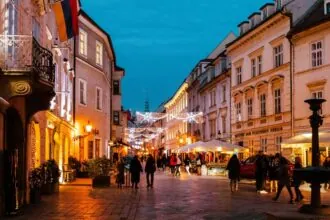
Chișinău’s nightlife will not remind anyone of Berlin or Belgrade, and that is broadly the point, it revolves around relaxed terrace bars and small, personality-led venues rather than a concentrated club district. The best introduction to it is the pedestrian street beside the cathedral, renovated in recent years with cafés, terraces and a stretch of interactive piano-themed paving that draws an evening crowd once the traffic clears.
Hidden Bar, true to its name, sits down a discreet side entrance and pairs cocktails with shisha in a low-lit, laid-back setting that regulars treat as a proper hangout rather than a one-visit novelty. Marlene Bar, a short walk away, leans more European in style, and its hidden summer terrace is worth specifically asking for, since the indoor room alone undersells the place.
Smokehouse BBQ-Beer-Community mixes Tex-Mex food with a genuinely mixed crowd of locals and expats, and its Tuesday pub quiz has become enough of a fixture that it’s worth timing a visit around if trivia is your thing. Craft Baza, for anyone who cares more about what’s in the glass than the atmosphere around it, specialises specifically in craft beer rather than the mass-market lagers found almost everywhere else in the city.
Given how central wine is to Moldovan identity, covered in full earlier in this guide, a dedicated wine bar like Purcari, run by one of the country’s best-known producers, makes more sense here than in most European capitals, offering tastings and bottles from a single estate rather than a generic mixed list. It’s a useful stop for anyone who wants to taste Moldovan wine without booking a full cellar tour outside the city.
Most bars keep relatively modest hours by Western European standards, and the city genuinely quietens down well before 2am outside of a handful of later spots, so it’s worth treating an evening out here as a relaxed few hours rather than planning around an all-night scene that doesn’t really exist. A beer typically costs somewhere around 40-50 MDL (roughly €2-2.50/£1.70-2.15/$2.20-2.75), noticeably cheaper than almost anywhere in Western Europe, and cash still works everywhere even where card payment is accepted.
Chișinău’s Malls and Boutique Shopping
The Central Market, covered in full earlier in this guide as one of Chișinău’s essential sights, handles fresh produce, wine and household goods, but it’s only one side of how the city actually shops. Away from it, Chișinău has a genuinely modern retail scene of malls and smaller boutique streets that most visitors never hear about.
Shopping Malldova, on Arborilor Street between the Botanica district and the centre, opened in 2008 as Moldova’s first large-format retail and entertainment complex, and still ranks as the city’s biggest, spanning 29,000 square metres across four floors with well over a hundred stores, a cinema and more than a thousand parking spaces. It’s the easiest single stop for anyone who needs anything from international clothing chains to a proper cinema screen, air-conditioned and comfortable regardless of the weather outside.
Atrium, closer to the centre, is smaller and more walkable from the main sights, built around a food court and a straightforward mix of clothing and homeware shops rather than Malldova’s full entertainment offer. Unic, on Ștefan cel Mare Boulevard itself, occupies one of the city’s older commercial buildings and gives a useful sense of how shopping here looked before the newer out-of-town malls arrived.
For something more specific to Chișinău than an international mall, the smaller streets branching off Ștefan cel Mare Boulevard hold a scattering of independent boutiques and Moldovan designer labels, worth a slow wander rather than a targeted shopping trip. The pedestrian street beside the cathedral, covered in more detail in the nightlife section above, adds a handful of small shops and stalls to its bars and cafés, particularly on weekend afternoons.
For a genuinely local souvenir, Moldovan wine bought directly from a producer, rather than a generic gift shop bottle, remains the strongest option, and both the Central Market and the larger supermarkets scattered around the centre stock a far wider range than most visitors expect from a country this size. Card payment is now standard in every mall and most boutiques, even where cash still dominates at the market itself.
Chișinău’s Café Culture and Casual Dining Scene
The food section earlier in this guide covers what to actually eat, mămăligă, zeamă, plăcinte, but the city’s wider dining-out culture is worth understanding separately, since it looks less like a post-Soviet capital and more like a smaller Central European city these days. A genuine specialty coffee scene has grown quickly here over the past several years, and casual, all-day cafés now sit comfortably alongside the traditional restaurants covered earlier.
Nest Specialty Coffee and Feeling Coffee are both regularly named among the city’s best third-wave roasters, serving proper flat whites and single-origin pour-overs rather than the instant or over-sweetened coffee still common elsewhere in the region, and Poetry Coffeeshop has built a loyal following specifically for its quality and quiet, unhurried atmosphere. None of them are hard to find in the centre, and all three make a far better breakfast stop than a hotel buffet.
A newer wave of casual restaurants, closer in style to a European bistro than a traditional Moldovan dining room, has opened around the centre in recent years, serving brunch-style plates, salads and international menus alongside the odd local dish, aimed squarely at a younger, more international crowd than the restaurants named earlier in this guide. It’s a genuinely useful option for anyone travelling with fussier eaters or simply wanting a lighter meal between sightseeing stops.
Eating and drinking out in Chișinău remains noticeably cheaper than almost anywhere in Western Europe, a full meal with a drink at a casual café typically runs to somewhere around 150-250 MDL (roughly €7.50-12.50/£6.45-10.75/$8.25-13.75) per person, and outdoor terrace seating is the default rather than the exception whenever the weather allows it. That terrace culture, spilling out onto pavements around Ștefan cel Mare Boulevard and the pedestrian street covered above, is arguably a bigger part of how locals actually socialise than any single restaurant.
Between the specialty coffee scene, the newer casual restaurants and the more traditional options covered earlier in this guide, Chișinău’s dining-out culture has genuinely diversified over the past decade, and a visitor no longer has to choose between a formal Moldovan restaurant and a hotel breakfast. It’s one of the clearer signs, alongside the malls and nightlife covered elsewhere in this guide, of how quickly the city has moved beyond its Soviet-era reputation.

Rupert’s Handy Travel Tips
- Carry small MDL notes and coins: trolleybus and marshrutka conductors take cash only, and nobody on board can break a large note or accept a card.
- Download Yandex Go before you land: Uber doesn’t operate in Moldova at all, and Yandex Go is the easiest way to book a fair-priced taxi without haggling.
- Visit the Central Market before early afternoon: Piața Centrală winds down far earlier than most European markets, so a late-morning visit beats trying to fit it in after lunch.
- Time a stop at the Eternity Memorial around the guard change: the ceremonial changing of the honour guard adds real atmosphere to what’s otherwise a quiet, solemn site.
- Dress modestly for the Nativity Cathedral and Ciuflea Monastery: both remain active places of worship, not museum pieces, so cover shoulders and keep voices low.
- Set aside a full second day if wine is part of your trip: Cricova and Mileștii Mici each deserve a proper half-day rather than a rushed afternoon squeezed between city sights.
Want more travel advice from Rupert? Visit the Who is Rupert? page to learn more about AppSavvyTraveller’s favourite travelling reindeer.




Frequently Asked Questions
Is Chișinău worth visiting?
Yes, though it rewards visitors with an interest in Soviet-era architecture, wine culture and everyday Eastern European life more than those looking for a conventional postcard old town. Its lack of polish is part of what makes it distinctive.
How many days do you need in Chișinău?
One full day covers the city centre’s main sights comfortably. A second day is worth adding if a trip to the Cricova or Mileștii Mici wine cellars is part of the plan.
Is Chișinău safe for tourists?
Chișinău is generally considered a safe city for visitors, with standard city-centre precautions around belongings and late-night travel applying much as they would in any European capital.
Does Uber work in Chișinău?
No. Uber does not operate anywhere in Moldova. Yandex Go is the standard app-based taxi service used throughout Chișinău instead.
What is the best time of year to visit Chișinău?
Late spring and early autumn offer the most comfortable weather for walking the city, avoiding both the intense summer heat and the coldest winter months, while October adds the bonus of National Wine Day celebrations.
Do British, EU and US travellers need a visa for Moldova?
No. Citizens of the UK, EU, US and many other countries can enter Moldova visa-free for short tourist stays, though it’s worth checking current requirements before travelling since rules can change.

Further Reading & Related Guides
Chișinău sits at an unusual junction on Europe’s railway map, and our Night Trains from Chișinău guide covers the sleeper services heading onward to Bucharest and Kyiv, including the famous wheel-changing operation at Ungheni where the train switches between broad and standard gauge tracks. For travellers building a wider regional rail trip, our Interrail Romania Pass guide explains how a Global Pass covers routes through Romania and into Moldova, while our European Sleeper Trains Guide looks at overnight rail options across the wider continent.
If Chișinău is one stop on a longer trip, staying connected matters more here than in most EU capitals, and our eSIM Apps Guide compares the best providers for reliable mobile data across Moldova and its neighbours without hunting for a local SIM card on arrival. For official planning information and up-to-date practical advice before you travel, Moldova’s national tourist board runs a genuinely useful resource covering the whole country, not just the capital.
This guide is part of a wider Chișinău cluster on AppSavvyTraveller, alongside dedicated guides to Chișinău Airport Transfers and Day Trips from Chișinău, covering the practical arrival details and the wineries, monasteries and historic sites that sit just outside the city. Together, they’re designed to take a visitor from touchdown at Chișinău Airport through to a genuinely well-planned few days in Moldova’s capital and beyond.