Reviewed by our editorial team Published
Most visitors meet Brașov and Bran on a single rushed day out of Bucharest: three hours on a coach, a couple of hours photographing Bran Castle’s turrets, then straight back before dinner. That trip has its place, and our Day Trips from Bucharest guide covers exactly how to do it, but it barely scratches what this corner of Transylvania actually offers.
A day trip leaves almost no time for Brașov itself, a genuinely beautiful Saxon fortified town that deserves more than a coffee stop between a car park and a castle. Rushing straight to Bran and back also means missing the walk down Rope Street, the climb up Tâmpa, and the quiet hour inside the Black Church that make Brașov worth lingering over.
This guide takes a different starting point: how to actually base yourself in Brașov for two, three or four nights, rather than treating it as a stop on somebody else’s itinerary. Staying overnight means seeing Piața Sfatului empty at breakfast time, catching the Black Church lit up after dark, and having a full, unhurried day at Bran Castle instead of ninety rushed minutes.
Basing yourself here also opens up the wider region in a way a Bucharest day trip never can. From Brașov, Sighișoara, Sibiu, Râșnov and Poiana Brașov are all realistic half-day or full-day excursions, turning one castle photo into a genuine Transylvanian trip built around a single comfortable base.
What follows covers the practical detail a short visit never needs: how many days to actually allow, every real way of reaching Bran from Brașov, an honest comparison of doing Bran independently versus booking a tour, and the difference between Bran Castle’s Dracula marketing and its far more grounded royal history. There’s also a look at Brașov in winter, food worth seeking out, and where to stay.
How Many Days to Spend in Brașov
A single night in Brașov is enough to see the highlights but not enough to actually settle in, which is really the point of basing yourself here rather than day-tripping from Bucharest. Two nights is the practical minimum for anyone who wants a proper look at the Old Town, Rope Street, the Black Church and Tâmpa without feeling rushed between each one.
Three nights is the sweet spot for most travellers, and it’s the figure this guide is really built around. That gives one full day for Brașov itself, one full day for Bran Castle done properly rather than as a box-ticking exercise, and a third day free for either Râșnov’s fortress or a longer excursion out to Sighișoara.
Travellers who want to use Brașov as a genuine Transylvania hub, adding Sibiu or a day of hiking or skiing at Poiana Brașov, should budget four or five nights. That’s still a modest stay by the standards of a proper regional trip, and it avoids the trap of trying to squeeze too many day trips into too few mornings.
Anyone arriving in winter should add a little slack to whatever number they land on. Shorter daylight hours between November and February mean Bran’s grounds and Tâmpa’s viewpoints are best tackled earlier in the day, and a Christmas market evening in Piața Sfatului is worth building into the schedule rather than squeezing in as an afterthought.
Brașov as a Base for Transylvania
This is the structural difference between this guide and a Bucharest day trip: Brașov isn’t just somewhere to see, it’s a genuinely well-placed hub for the rest of Transylvania. Sitting roughly in the middle of the region with good road and rail links in several directions, it’s realistic to use it as a base for multiple day trips rather than packing up and moving hotels every night.
Sighișoara, the fortified birthplace traditionally linked to Vlad the Impaler, sits around 115km northwest and is comfortably reachable by direct train in under two hours, making it a genuine full-day excursion rather than a stretch. Sibiu, one of Transylvania’s most handsome cities with its own fortified old town and painted “eyes” on the rooftops, is a little further at around 140km, doable by train or car in roughly two to two and a half hours each way.
Closer to home, Râșnov is barely 15km from Brașov and pairs naturally with a Bran Castle day, since its hilltop fortress sits directly on the same road. Poiana Brașov, Romania’s best-known mountain resort, is even closer still, roughly 12km up into the Postăvarul massif and reachable by local bus in around 20 minutes, useful for a hiking day in summer or a skiing day in winter.
Best for a short trip. Compare rooms by neighbourhood, price and guest rating before you book.
Compare hotelsBest for longer stays. Whole apartments and houses, so you are not eating out three times a day.
View rentalsBest for double-checking. Runs the same search across several booking sites so you are not leaving money behind.
Compare pricesPiața Sfatului and the Old Town
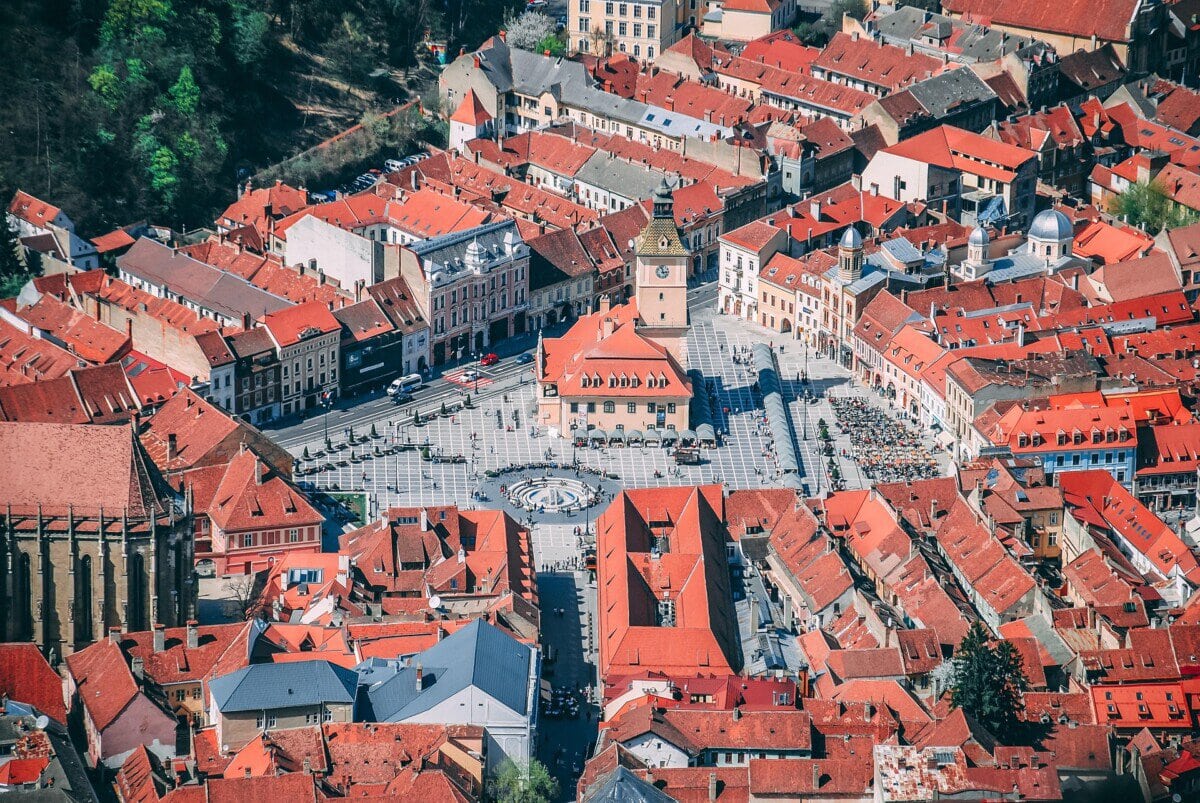
Piața Sfatului, Brașov’s Council Square, is the natural starting point for exploring the town and the obvious place to orient yourself on arrival. The square is dominated by the Old Council House, a yellow baroque building with a clock tower that now houses the Brașov County History Museum, surrounded by pastel-coloured merchant houses that once belonged to the town’s Saxon guilds.
The square is genuinely lively rather than purely decorative, ringed with cafés and restaurants whose outdoor terraces fill up through spring and summer, and anchored by the ornate Fountain of Hercules near its centre. It’s also the departure point for most walking tours of the Old Town and a natural spot to simply sit for half an hour and watch the town go about its day.
Fanning out from the square, the Old Town’s cobbled streets are worth wandering without a fixed plan, particularly Republicii Street, the pedestrianised main shopping thoroughfare lined with bookshops, bakeries and gelaterias running north from the square towards the base of Tâmpa. Look up as you walk, since many of the buildings still carry original Saxon architectural details above modern shopfronts.
Brașov’s Old Town is compact enough to cover comfortably on foot in a morning, but rewards a slower pace over a full day, with detours into small courtyards and side streets that a rushed itinerary would skip entirely. Evening is worth a second pass too, when the square’s buildings are lit and the crowds thin noticeably compared with midday.
Strada Sforii (Rope Street)
Strada Sforii, or Rope Street, is one of Europe’s narrowest streets, measuring barely over a metre wide at its tightest point between two rows of old town houses. It began life as a firefighters’ access route between Poarta Schei and Strada Cerbului, letting crews reach buildings quickly in the days before proper fire engines, and it’s kept that same practical footprint ever since.
Walking its short length, no more than a few minutes end to end, is a small, slightly odd experience that ends up genuinely memorable precisely because it’s so unassuming. Two people can only pass each other side-on, and the street opens without warning into ordinary residential lanes at either end.
It’s free to walk, unticketed and always open, sitting just a short walk from Piața Sfatului through the streets around Poarta Ecaterinei. Street art and the occasional mural have appeared along its walls in recent years, adding colour to what’s otherwise plain stone and rendered brick.
Rope Street gets genuinely busy in peak summer, with visitors queuing to photograph themselves squeezed between the walls, so an early morning or later afternoon visit avoids the worst of the crowds. It’s a five-minute stop rather than an attraction to build a whole visit around, but it’s an easy, free addition to any Old Town walk and worth the short detour.
The Black Church (Biserica Neagră)
The Black Church is the largest Gothic church in Romania and one of the most significant Lutheran churches in south-eastern Europe, its soot-darkened stone façade a legacy of the devastating 1689 fire that gave the building its name. Construction began in the 14th century and stretched on for nearly a hundred years, leaving a soaring, austere structure that dominates the view from almost anywhere in the Old Town.
Inside, the church holds one of Europe’s largest collections of Anatolian carpets, donated by Saxon merchants trading with the Ottoman Empire from the 17th century onward, hung along the nave walls in a display unlike almost anywhere else in the country. The church’s organ, built by the Buchholz workshop in 1839, remains one of the largest mechanical pipe organs in south-eastern Europe and is still used for regular recitals.
Opening hours run seasonally: from April to mid-October, the church opens Tuesday to Saturday 10am-7pm and Sunday/Monday from midday, while from mid-October to April the same days run an hour earlier at closing, 10am-6pm and midday-6pm respectively, with last entry 20 minutes before closing. Adult admission is around 30 RON (approximately €6/£5/$7), with reduced rates for students and children.
Organ recitals are held periodically through the year, particularly in summer, and are usually ticketed separately from general admission; checking the church’s own events calendar ahead of a visit is worth doing for anyone keen to actually hear the instrument played rather than just see it. The church sits directly on Piața Sfatului, so it needs no detour to reach.
Tâmpa Mountain and the Cable Car
Tâmpa is the forested mountain rising directly behind Brașov’s Old Town, topped by a white “BRAȘOV” hillside sign modelled deliberately on Hollywood’s, and it’s the best vantage point in town for a proper view over the terracotta rooftops and the Carpathians beyond. The summit sits at 955m, only around 400m above the Old Town itself, but the climb is steep enough that most visitors take the cable car up, at least on the way there.
The cable car runs from a station a short walk from Piața Sfatului, reaching the upper platform at 940m in a little over two minutes. It operates Tuesday to Sunday, roughly 9:30am to 5pm, and is closed on Mondays for maintenance; tickets cost around 35 RON one-way or 60 RON return (approximately €7/£6/$8 and €12/£10/$13), bought at the base station.
For anyone who would rather walk, several marked hiking trails climb Tâmpa from different points around the Old Town, with the most popular route taking around an hour at a steady pace. The paths are well-maintained but genuinely steep in places, and proper footwear is worth having even though it looks like a short town-centre walk on a map.
From the upper cable car station, it’s a further five-minute walk along a path behind the sign itself to reach the true 955m summit and its best viewpoints. A small restaurant and terrace sit near the upper station for anyone wanting to linger over the view with a coffee rather than heading straight back down.
The Bastions and City Walls
Brașov’s medieval defences were once one of the most formidable in Transylvania, a continuous ring of walls, towers and bastions built and maintained by the town’s craft guilds, each responsible for defending its own stretch. Large sections still survive today, particularly along the base of Tâmpa, making the fortifications one connected system worth understanding together rather than as separate, unrelated stops.
The best-preserved is the Weavers’ Bastion (Bastionul Țesătorilor), a substantial multi-storey structure now housing a small museum on the city’s fortifications, complete with a scale model showing how the walls once encircled the entire town. Nearby, the smaller Graft, Blacksmiths’ and Artists’ Bastions sit along the same defensive line, less developed for visitors but atmospheric to walk past, particularly in the late afternoon light.
Two watchtowers stand apart from the main wall on the slopes of Tâmpa: the Black Tower and White Tower, both offering views back over the Old Town for anyone who climbs up to them, and both free to approach even though the towers themselves have limited interior access. They’re a short, moderately steep walk from the base of the Old Town and pair naturally with a Tâmpa visit.
Two surviving gates complete the picture: Catherine’s Gate (Poarta Ecaterinei), the only town gate to survive fully intact and one of the few original medieval structures still standing at street level, and Schei Gate (Poarta Schei), an 18th-century neoclassical replacement built further out as the town outgrew its original boundary. Both sit at the edge of the Old Town, marking the historic transition into the Șchei district beyond.
The Șchei District and St. Nicholas’ Cathedral
Șchei is Brașov’s historic Romanian quarter, sitting just beyond Schei Gate and the old fortifications in a part of town that Romanian residents were largely confined to for centuries, while the walled centre remained a Saxon merchant preserve. It has a noticeably different character from the Old Town proper: quieter, more residential, and built around smaller, steeper streets that climb gently towards the surrounding hills.
At its heart stands St. Nicholas’ Cathedral, a striking Orthodox church with origins reaching back to the 14th century, though most of what visitors see today reflects later Baroque and Gothic-influenced rebuilding. Its dark, richly decorated interior, heavy with icons and frescoes, offers a deliberate contrast to the austere Lutheran Black Church back in the centre, and the difference is worth experiencing in the same day if time allows.
Immediately next to the cathedral sits the First Romanian School, a small museum in the building traditionally credited as the first school to teach in the Romanian language, with historic classrooms and early printed Romanian texts on display. It’s a modest, unhurried stop but a genuinely significant one for understanding Romanian cultural and linguistic history in Transylvania specifically.
Șchei rewards a slow, aimless wander more than a checklist approach, with small courtyard churches, old cemeteries and quiet residential lanes tucked away from the main routes tourists tend to follow. It’s a five to ten-minute walk from Piața Sfatului through Schei Gate, easily combined with a walk past the bastions on the way there or back.
Best if you can move a day either way. Shows how the fare changes across the month.
Compare flightsBest for short trips. Install the eSIM at home and arrive with working data, no shop queue.
Browse eSIMsBest when public transport has stopped, or when you are travelling with children and bags.
Book a transferGetting from Brașov to Bran
Bran sits roughly 28-30km southwest of Brașov, and the drive itself takes around 45 minutes to an hour depending on traffic, which can build noticeably on the single main road in peak summer and around Christmas market weekends. There’s no rail link to Bran at all, so the realistic options come down to bus, taxi, car or an organised tour.
The local bus is by far the cheapest option, run from Autogara 2 (also known as Autogara Bartolomeu) in northern Brașov, with departures roughly every 30 to 60 minutes between around 7am and 9pm. The journey takes about 45-50 minutes, and a one-way ticket costs somewhere around 10-15 RON (approximately €2-3/£2-3/$2-3), bought directly from the driver rather than in advance.
A taxi is quicker and more convenient, particularly with luggage or children, with a one-way metered fare typically around 100-140 RON (approximately €20-28/£17-24/$22-31). A round trip with waiting time built in commonly works out to somewhere around 200-280 RON (approximately €40-56/£34-48/$44-62), though this is worth agreeing with the driver upfront.
Uber and Bolt both operate in Brașov and are usually a little cheaper than a rank taxi one-way, though availability for the return trip from Bran itself can be patchy, so it’s sensible not to rely on hailing a return ride from the car park without a backup plan. Driving yourself is straightforward on the same road, with parking near the castle for a small fee.
There is no dedicated app that reliably tracks this specific route. Buses to Bran leave from Autogara 2 under the regional operator Transbus rather than Brașov’s own RATBV city transport network, so the city’s own transit apps don’t cover the line at all, and general journey planners such as Moovit list the route without offering dependable live departure data for it. The most reliable check remains the printed timetable board at Autogara 2 itself on the day, or simply confirming the return times directly with the driver when boarding out.
Bran Independently vs. an Organised Tour
Visiting Bran independently by bus or taxi is cheaper and gives complete control over timing, which matters more than it might sound given how much the castle’s crowd levels swing through the day. It suits anyone comfortable navigating a short bus journey and a queue for tickets on arrival, and it’s the natural choice for travellers already planning to base themselves in Brașov rather than treat Bran as a single isolated errand.
A typical independent visit, bus there, several hours at the castle and village, bus back, costs little beyond the fares and entry ticket, putting the day at somewhere around 150-200 RON per person (approximately €30-40/£26-34/$33-44). The trade-off is a bit of legwork: working out bus timings and queuing for tickets without a guide to explain what’s actually being seen.
An organised tour removes all of that friction. Most Brașov-based tours combine Bran Castle with Râșnov Fortress, sometimes adding a bear sanctuary, and typically include return transport, a guide and often skip-the-line entry. Prices generally run from around €35-60 (£30-51/$39-66) per person, noticeably more than the independent route but with none of the planning.
A guide’s context is the tour’s real value beyond convenience: separating the castle’s actual royal history from the Dracula marketing, covered in more detail below, is something a self-guided visit relies entirely on interpretation panels for, while a good guide fills the gaps in real time. Families juggling young children, or anyone short on a single day, tend to get the most value from paying the premium for a tour.
Bran Castle: History and What’s Actually Inside
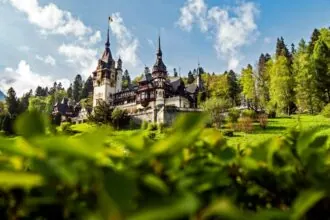
Bran Castle was first built in 1377 by Saxon merchants and the crown of Hungary as a customs post guarding the mountain pass between Transylvania and Wallachia, a genuinely strategic border position long before it became a tourist landmark. Perched dramatically on a rocky outcrop with turrets and whitewashed walls visible from the approach road, it’s easy to see why the silhouette alone has done so much marketing work over the decades.
The castle’s most significant historical chapter came in 1920, when it was gifted to Queen Marie of Romania, granddaughter of Queen Victoria, who transformed it into a genuine royal residence and her favourite retreat. Marie oversaw a substantial renovation, adding furnishings, gardens and modern comforts while preserving the castle’s medieval character, and it remained in royal use through her descendants until the communist confiscation of the monarchy’s property after the Second World War.
Today’s visit covers around 57 rooms across four floors, connected by narrow spiral staircases and a genuinely hidden secret passage, originally built to allow the royal family to move discreetly between floors. Rooms are furnished largely as they were during Queen Marie’s era, mixing original royal furniture with historical exhibits on the castle’s earlier customs-post and border-fortress role.
An inner courtyard, several outbuildings and a small open-air museum of traditional Romanian village architecture sit within the grounds, worth allowing time for alongside the castle interior itself. Multilingual interpretation panels throughout explain the rooms without needing a guide, though as covered in the previous section, a guide adds real context that the panels alone don’t fully deliver.
Bran Castle: Dracula vs. the Real History
Bran Castle is marketed worldwide as “Dracula’s Castle,” and the association has become so entrenched that many visitors arrive assuming it’s simply fact. The real picture is considerably more tangled, and worth untangling properly rather than letting the gift-shop version stand unchallenged.
Bram Stoker, the Irish author who wrote the 1897 novel Dracula, never visited Romania or Bran Castle in his life. His description of Count Dracula’s fictional castle was a composite drawn from travel writing and research in London libraries, and while it bears a passing resemblance to Bran’s dramatic clifftop silhouette, Stoker had no specific Transylvanian castle in mind when he wrote it.
The link to Vlad the Impaler, the 15th-century Wallachian ruler whose brutal reputation partly inspired Stoker’s character, is similarly thin on the castle side specifically. Historians generally agree Vlad may have passed through or briefly stayed near Bran given its position on a key mountain route, but there’s no solid evidence he ever lived there, ruled from there, or held any lasting connection to the building itself.
What actually happened is far less gothic but arguably more interesting: a working medieval customs fortress that later became a much-loved royal family home under Queen Marie of Romania in the 1920s. The Dracula connection was largely built up afterward, by tourism marketing capitalising on Stoker’s global fame and Bran’s suitably dramatic looks rather than any genuine historical thread.
Bran Castle: Tickets, Crowds and Best Time to Visit
Standard adult admission to Bran Castle currently runs to around 90 RON (approximately €18/£15/$20), covering the interior, courtyard and grounds, with reduced rates for children and students. A combined Royal Tour ticket, adding the Time Tunnel multimedia experience and Torture Museum alongside priority entry, costs around 170 RON (approximately €34/£29/$37).
The castle opens seasonally: April to early November runs Monday midday-7pm and Tuesday-Sunday 9am-7pm (last entry), while early November to March shifts an hour earlier, Monday midday-6pm and Tuesday-Sunday 9am-6pm. Tickets bought online in advance are worth it, since they can sell out on the busiest summer and holiday weekends.
Crowds build steadily through the morning and peak firmly around midday to mid-afternoon, particularly when a tour coach convoy arrives from Bucharest or Brașov all at once. Arriving right at opening, or in the last two hours before closing, consistently means shorter queues both for the ticket window and for the castle’s narrower internal staircases, which genuinely bottleneck when several tour groups overlap.
Late October, around Halloween, is the single busiest period of the year by a wide margin, driven almost entirely by the Dracula association, and is worth avoiding entirely unless that atmosphere is specifically the goal. Outside that narrow window, weekday visits in spring or early autumn offer the best balance of good weather and manageable crowds.
Bran Village
The village of Bran exists almost entirely because of the castle towering above it, and the approach road up to the main entrance is lined with a dense row of market stalls selling wool jumpers, embroidered blouses, wooden carvings, honey, cheese and Dracula-branded souvenirs of every variety. It’s worth a slow walk through rather than rushing straight to the ticket window.
Prices at the stalls are generally reasonable and fixed rather than heavily negotiable, though a little polite haggling on larger purchases like woollen goods is normal enough. Quality varies considerably between stalls, with genuine handmade items sitting alongside mass-produced imports, so it’s worth a careful look rather than buying from the very first stall reached.
Beyond the market, Bran itself is a modest mountain village rather than a destination in its own right, with guesthouses, small restaurants and a few minor attractions, including a small zip line and adventure park aimed mainly at families. A handful of cafés near the entrance offer a spot to rest before or after the visit.
For anyone with extra time, the village sits close to Zărnești and the Piatra Craiului National Park, a genuinely dramatic limestone ridge popular with hikers, though that’s a separate excursion from a standard Bran Castle day rather than something to combine casually. Bran is not somewhere to base a multi-night stay; it works best as a half-day stop built around the castle itself.
Best for solo travellers and anyone watching the budget. Dorm beds and private rooms in the same search.
Browse hostelsBest arranged before you fly rather than after. Covers claim handling, plus lounge access on eligible delays.
Explore AirHelp+Best if your room is not ready yet. Left luggage booked in advance, so you are not hunting for a locker.
Check storageBrașov’s Food and Drink Scene
Transylvanian food leans heartier and more central-European than the cuisine further south and east in Romania, a legacy of the region’s Saxon and Hungarian influence alongside Romanian tradition. Ciorbă, a sour soup made with fermented bran or lemon juice, is the classic starting point, with ciorbă de burtă (tripe soup) a common Brașov menu fixture.
Mains worth seeking out include mici, small grilled skinless sausages served with mustard and bread, and sarmale, cabbage rolls stuffed with minced meat and rice, typically served with sour cream and polenta. Game dishes, particularly venison and wild boar, appear more often here than in Bucharest, reflecting the surrounding Carpathian forests.
No visit is complete without papanași, Romania’s signature dessert: deep-fried doughnuts made from cottage cheese dough, served hot with sour cream and fruit jam, usually blueberry or cherry. They’re rich, filling, and worth ordering to share rather than as a solo indulgence after a full main course.
On the drinks side, Romania’s local wine is genuinely underrated internationally, and Brașov restaurants often stock bottles from nearby Transylvanian vineyards alongside the more familiar Recaș and Murfatlar regions further afield. Țuică, a strong plum brandy, is the traditional local spirit, often offered as a welcome shot in more traditional restaurants rather than something to order deliberately.
Piața Sfatului’s surrounding restaurants offer the easiest introduction, though prices run higher than side-street alternatives a few minutes away. A full meal with a drink typically costs around 50-80 RON per person (approximately €10-16/£9-14/$11-18) away from the square, noticeably less than equivalent dining in Bucharest.
Beyond the restaurant menu, Brașov has built a genuine specialty coffee culture over the past decade, with small independent roasters and coffee bars tucked along the side streets off Piața Sfatului and Strada Republicii rather than the generic chain cafés found in most European city centres. These are worth seeking out for a proper flat white or pour-over between sightseeing stops, and several double as informal workspaces with better wifi than most hotel lobbies.
A short walk from the Old Town, a daily produce market operates away from the main tourist routes, useful for picking up local cheese, honey and seasonal fruit either to take home or simply to snack on while wandering. It’s a genuinely local scene, far removed from the Dracula-branded stalls sold to day-trippers at Bran, and gives a better sense of what Brașov’s food culture actually looks like off the postcard.
Shopping in Brașov’s Old Town
Shopping in Brașov looks nothing like the roadside stalls lining the approach to Bran Castle, covered elsewhere in this guide. The Old Town trades instead in small artisan workshops and independent boutiques tucked into side streets and courtyards, the kind of shopping that rewards a slow wander rather than a quick browse on the way to a ticket window.
Strada Republicii, the pedestrianised main street running north from Piața Sfatului, is the natural spine for browsing, lined with a genuine mix of jewellers, clothing boutiques, antique dealers and gift shops set behind restored Saxon facades. Locals still sometimes call it by its old German name, Purzengasse, a small reminder that this has been a working trading street for centuries rather than a shopping strip built purely for visitors.
For genuinely handmade goods, several small shops around the Old Town specialise in hand-painted ceramics, wood carving and traditional embroidered ie blouses, alongside locally produced honey, jams and preserves, a sharp contrast with the mass-produced Dracula merchandise that dominates Bran’s market stalls. Quality and pricing both tend to be more honest here than on a tourist-heavy castle approach road, since a shop with a fixed address and repeat local custom has far less incentive to overcharge a passing visitor.
Prices for a hand-embroidered blouse or a piece of hand-painted pottery typically start from around 80-150 RON (approximately €16-30/£14-26/$18-33), depending on how much handwork has gone into it, and most Old Town shops open daily through the main tourist season with shorter hours in deep winter. The Christmas market season adds a second, temporary wave of craft stalls to Piața Sfatului itself, briefly blurring the line between shop and market each December.
Nightlife in Brașov’s Old Town
Brașov’s evenings centre on Strada Republicii and the streets just off Piața Sfatului, where restaurant terraces gradually give way to a livelier bar scene as the night goes on. It’s a relaxed, mixed crowd of locals, expats and travellers rather than a rowdy stag-do circuit, closer in feel to a small central European university town than a Balkan party destination.
Aftăr Stube, a small brewpub just off the Old Town core on Strada Alecu Russo, is the standout for craft beer, brewing its own range on site and running a beer garden that fills up on warmer evenings. It’s a genuine local favourite rather than a tourist-trap recommendation, and worth seeking out for anyone who’d rather sit with a proper pint than a mass-market lager.
O’Peter’s Irish Pub is the reliable choice for a livelier night, with regular live music, quiz nights and a football-friendly atmosphere that keeps it busy most evenings of the week. For something later, Times is generally reckoned the city’s most popular nightclub, while a handful of rooftop bars around the Old Town offer a quieter, view-led alternative for a last drink before heading back.
Most bars stay open until around 1-2am on weekends, later at the handful of proper clubs, and the compact Old Town means almost everywhere worth visiting is a five to ten-minute walk from Piața Sfatului. Brașov is a genuinely safe city to walk back through at night, though the usual common sense around quieter, poorly lit side streets still applies here as it would anywhere.

Brașov in Winter
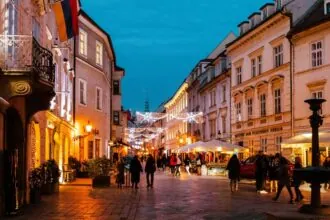
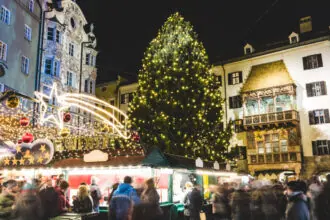
Brașov transforms noticeably in winter, and it’s genuinely one of the better times to visit if the goal is atmosphere over ideal weather. A Christmas market fills Piața Sfatului and the streets around it from late November through late December or early January, with wooden stalls selling mulled wine, roasted chestnuts and handmade crafts against the backdrop of the square’s illuminated buildings.
The market atmosphere pairs naturally with the Old Town’s medieval architecture in a way few other Christmas markets manage, and evenings are particularly worth timing a visit around, once the square’s lights and the Black Church’s floodlighting are both on. Exact dates shift slightly year to year, so checking current opening and closing dates before booking a trip specifically around it is worth doing.
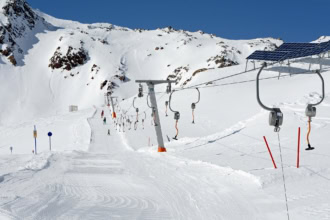
For skiing, Poiana Brașov sits just 12km from the town centre and is Romania’s best-known and most developed ski resort, with a mix of beginner and intermediate slopes served by a network of gondolas, chairlifts and drag lifts up the Postăvarul massif. It’s realistic as a day trip from a Brașov base, reachable by local bus, taxi or hotel shuttle in around 20 minutes, without needing to relocate for the ski days specifically.
The ski season generally runs from December to March, snow conditions permitting, with equipment rental and lessons widely available at the resort for anyone without their own gear. Lift pass and rental prices are considerably lower than in the Alps, making Poiana Brașov a genuinely accessible option for anyone curious about skiing without committing to a full Alpine ski trip.
Getting to Brașov from Bucharest and Where to Stay
The train is the best way to reach Brașov from Bucharest, a genuinely well-served corridor by Romanian standards, with well over a dozen departures a day between Gara de Nord and Brașov station, running from before 6am to around 9pm. Several operators share the route, including state operator CFR Călători alongside private companies like Astra Trans Carpatic and Regio Călători, so it’s worth comparing rather than defaulting to the first listed departure.
Journey times vary by category: the fastest InterCity services cover the 166km route in around two hours fifteen minutes, InterRegio trains take roughly two hours twenty-five to forty, and slower Regio services can stretch beyond three hours. Second-class fares run from around 37 RON (approximately €7/£6/$8) up to 68.50-78.50 RON (approximately €14-16/£12-13/$15-17) for InterRegio and InterCity, with seat reservations included on the faster categories.
For where to stay, the Old Town around Piața Sfatului is the obvious choice for anyone prioritising walkable access to the Black Church, Rope Street and the bastions, though rooms here run a little pricier than elsewhere. The streets just beyond the Old Town core, particularly towards Șchei or along Republicii Street’s quieter northern end, offer a good balance of walking distance and noticeably lower prices.
Travellers planning a day at Poiana Brașov, whether for hiking or skiing, might consider a hotel with easy bus access to both the Old Town and the resort, since staying right at Poiana Brașov itself sacrifices easy access to everything covered elsewhere in this guide. Whichever base is chosen, Brașov is compact enough that nowhere within the general town centre is genuinely inconvenient.

Rupert’s Handy Travel Tips
Basing yourself in Brașov rather than day-tripping from Bucharest? Rupert has a few tips worth knowing before you go:
- Book Bran Castle tickets online in advance: peak summer and Halloween week can genuinely sell out, and online booking skips the on-site ticket queue entirely.
- Go early or late in the day at Bran: arriving right at opening or in the last two hours before closing avoids the worst of the tour-coach crowds.
- Agree a taxi’s round-trip price before setting off: a fixed round-trip fare with waiting time built in is usually cheaper than two separate one-way rides.
- Don’t skip the Black Church’s organ: check the events calendar for a recital date, since seeing one of Europe’s largest mechanical organs played is worth timing a visit around.
- Pack proper footwear even in summer: Tâmpa’s hiking trails and Rope Street’s cobbles are steeper and rougher underfoot than they first appear.
- Give Brașov at least three nights: a single overnight barely allows time for the Old Town, let alone a full unhurried day at Bran.
Want to meet the reindeer behind our travel tips? Find out more in our page Who is Rupert?.


Frequently Asked Questions About Brașov and Bran
How many days do you need in Brașov and Bran?
Three nights is a comfortable minimum for most travellers, giving a full day for Brașov itself, a full day for Bran Castle, and a third day for Râșnov or a longer excursion. Two nights works for a shorter visit, while four or five suit anyone adding Sibiu, Sighișoara or Poiana Brașov.
Is Bran Castle actually Dracula’s castle?
No. Bram Stoker never visited Romania and based his fictional castle on a composite description, while Vlad the Impaler’s real connection to Bran is thin at best. The castle’s genuine history centres on Queen Marie of Romania, who made it her royal retreat from 1920.
How do you get from Brașov to Bran Castle?
A local bus from Autogara 2 runs roughly every 30-60 minutes and takes about 45-50 minutes for around 10-15 RON. Taxis, ride-hailing apps, driving and organised tours are all realistic alternatives depending on budget and convenience.
How much does Bran Castle cost to visit?
Standard adult admission currently runs to around 90 RON (approximately €18/£15/$20), with a combined Royal Tour ticket including the Time Tunnel and Torture Museum costing around 170 RON. Prices and exact figures should always be checked against the official site before travelling.
What’s the best time to visit Bran Castle to avoid crowds?
Arriving right at opening or within the last two hours before closing consistently means shorter queues, particularly on weekdays outside late October, which is the single busiest period of the year around Halloween.
Is there a Christmas market in Brașov?
Yes. A Christmas market fills Piața Sfatului and the surrounding streets from late November through late December or early January, with mulled wine, roasted chestnuts and handmade crafts sold against the Old Town’s illuminated backdrop.
Further Reading
Travelling to Brașov by rail from elsewhere in Romania or further afield? Our Interrail Romania Pass guide covers how a rail pass can work out cheaper than buying individual tickets for a wider Transylvanian route taking in Brașov, Sibiu and Sighișoara, alongside sleeper options for longer journeys across the country.
Short on time and weighing up whether Brașov and Bran work better as a single day out of the capital instead? Our Day Trips from Bucharest guide covers exactly that alternative, the coach and tour options that make a rushed Brașov and Bran visit possible in one day, as distinct from the based-yourself-here approach this guide focuses on.
Curious about skiing at Poiana Brașov in more depth, or comparing it against other budget-friendly European resorts? Our Cheapest Places to Ski guide and Ski and Snowboard in Europe guide both cover how Romania’s slopes stack up against the wider continent on price and terrain.
For verified, current details on Bran Castle’s own opening hours, ticket tiers and special events, the official Bran Castle website is the most reliable source, particularly since seasonal hours and ticket prices are reviewed and updated regularly. It’s worth a final check before finalising a visit date, especially around the shoulder-season hour changes covered earlier in this guide.