Reviewed by our editorial team Updated
Berlin is a big, flat city surrounded by an unusually generous ring of lakes, forests and small historic towns, and the country’s excellent regional rail network means almost all of them are within easy reach without a car. Whether you have a single free afternoon or a whole week in the capital, there is a genuine day trip to match, from a UNESCO palace garden to a canoe route through a protected wetland.
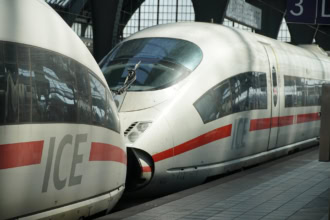
Deutsche Bahn runs almost every route in this guide, from slow RE regional trains costing a few euros to faster ICE and EC services covering longer distances in under two hours. Berlin’s immediate surroundings also sit inside the VBB transport network, so several of these trips only need a standard public transport ticket rather than a separate long-distance fare. Our full guide to Berlin’s public transport network explains how those VBB tickets and fare zones work before you set off.
The single most popular day trip from the city is Potsdam, home to Sanssouci Palace and its sprawling UNESCO-listed park, while the Spreewald biosphere reserve trades palaces for canoe routes and punt boats through a maze of forest channels further south. Two of Germany’s other great cities, Dresden and Leipzig, are honestly a long way from Berlin for a single day out, but both are doable with an early start.
For a heavier, more reflective trip, the Sachsenhausen Memorial sits barely thirty minutes north of the city, while Lutherstadt Wittenberg offers a genuine dose of Reformation history within an hour and a half. Four further destinations round out the list for anyone who wants to go beyond the obvious choices: Brandenburg an der Havel and Kloster Chorin are both comfortably under 45 minutes away, Frankfurt (Oder) lets you walk across the border into Poland for an afternoon, and Rheinsberg trades speed for a genuinely quiet lakeside palace at the end of a slower, two-train journey.
Below, an at-a-glance table compares journey times and transport for all ten destinations, followed by a dedicated section on each place and a final verdict on which trip suits which kind of traveller.
| Destination | How to Get There | Journey Time | Suggested Time Needed |
|---|---|---|---|
| Potsdam | Direct RE1 or S7 train from Berlin Hbf | Around 25 to 40 minutes | Full day |
| Spreewald (Lübbenau) | Direct RE2, RE7 or RE18 train from Berlin Hbf | Around 1 hour to 1 hour 20 minutes | Full day |
| Sachsenhausen Memorial | Direct RE5 or S1 train to Oranienburg, then bus or a short walk | About 25 to 45 minutes, plus onward transfer | Half day |
| Lutherstadt Wittenberg | Direct ICE from Berlin Hbf (or slower RE3 regional) | About 40 minutes by ICE, up to 1 hour 30 minutes by RE3 | Full day |
| Dresden | Direct EC or IC train from Berlin Hbf | About 1 hour 50 minutes to 2 hours 15 minutes | Full day, early start |
| Leipzig | Direct ICE or IC train from Berlin Hbf | About 1 hour 15 minutes to 1 hour 45 minutes | Full day, early start |
| Brandenburg an der Havel | Direct RE1 train from Berlin Hbf | About 45 minutes | Half day |
| Kloster Chorin & Niederfinow | Direct RB60 train from Berlin Gesundbrunnen | About 40 minutes | Half day |
| Frankfurt (Oder) | Direct RE1 train from Berlin Hbf | About 55 minutes to 1 hour | Half day |
| Rheinsberg | RB12 to Löwenberg (Mark), then RB54 onward | About 1 hour 45 minutes to 2 hours, one change | Full day |
Potsdam: Sanssouci Palace and a UNESCO Park on Berlin’s Doorstep
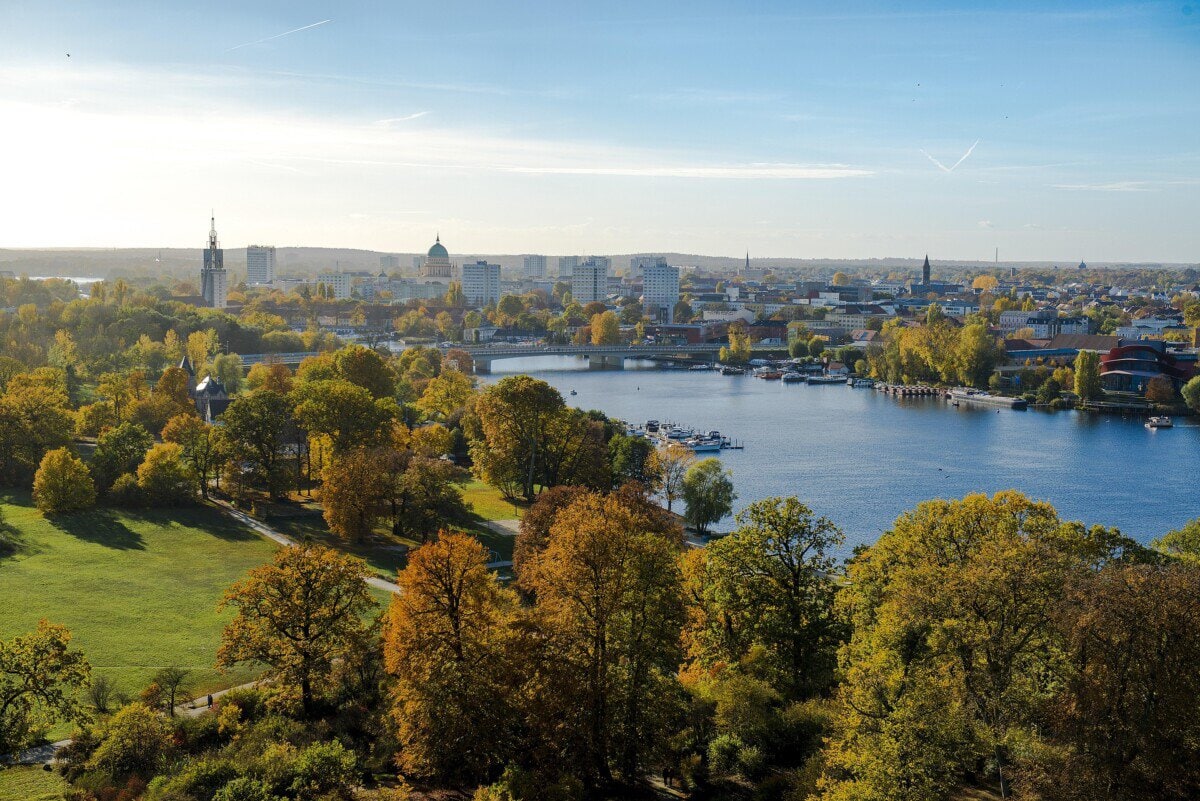
Potsdam is the single most important day trip from Berlin, and for good reason. The former residence of the Prussian kings sits just across the Havel from the capital, yet its centrepiece, Sanssouci Palace, feels like a different world entirely, a rococo summer palace built for Frederick the Great that gave the wider parkland its name, roughly translating as “without a care.”
The palace itself is modest by royal standards, a single storey building rather than a grand block, but its terraced vineyard gardens and gilded interiors more than make up for the restraint. The surrounding Sanssouci Park spreads across nearly three hundred hectares and also holds the New Palace, the Orangery, and the Chinese House, so a single ticket rarely covers everything worth seeing.
Getting there could not be simpler. The RE1 regional express runs from Berlin Hauptbahnhof to Potsdam Hauptbahnhof roughly every 20 minutes throughout the day, taking around 25 minutes on double-deck DB Regio stock with onboard screens and luggage space, and the parallel S7 line covers the same route in around 35 to 40 minutes via Wannsee for anyone happy to trade a little time for a lakeside view.
Because Potsdam sits in VBB fare zone C, a standard Berlin AB city ticket will not cover the journey; you need an ABC ticket, priced at €5.00 (£4/$6) for a single adult fare, the same ticket used to reach BER Airport. From Potsdam Hauptbahnhof, trams and buses continue to the park entrance in a further ten minutes or so.
Admission runs on the sanssouci+ combined ticket, which covers every open SPSG palace in Potsdam on a single day and includes a reserved entry slot for Sanssouci Palace itself, priced at €22 (£19/$26) for an adult and €17 (£15/$20) reduced, with a family ticket covering two adults and up to four children at €49 (£42/$57). Full details and live booking sit on the official SPSG ticket page, and booking a timed slot in advance is genuinely worth doing in summer.
Give yourself a full day here rather than rushing it. Between the palace interiors, the gardens, and Potsdam’s own old town with its Dutch Quarter, most visitors find half a day disappears before they have even reached the New Palace at the far end of the park.
Spreewald: Canoeing and Punting Through a Forest Biosphere Reserve
The Spreewald is Berlin’s greenest day trip, a UNESCO biosphere reserve southeast of the city where the River Spree splits into hundreds of small forest channels rather than one main course. The best way to see it is from the water, either paddling yourself or being punted along by a boatman with a long wooden pole.
The gateway town is Lübbenau, a pretty little settlement with a castle turned hotel and an old town built almost entirely around its harbour. From here, traditional punt boat tours run for two to three hours through the narrow channels, gliding past reed beds and the tiny stilt-and-canal village of Lehde, which has no roads connecting some of its houses.
Anyone wanting more control over the pace can hire a canoe or kayak instead, with rental points around Lübbenau’s harbour offering anything from a couple of hours on the water to a full-day paddle deeper into the reserve. A flat network of cycling paths also follows the channels between villages for anyone who would rather stay on dry land.
Getting to Lübbenau takes a little over an hour from Berlin Hauptbahnhof, with three regional lines, the RE2, RE7 and RE18, calling there roughly every 20 to 30 minutes between them, so services run more often than a single-line timetable suggests. A standard one-way ticket costs around €16.20 (£14/$19) per person, though the Berlin-Brandenburg group ticket covers up to five adults for a same-day round trip for €36.50 (£31/$43) on weekdays after 9am, a far better deal for families or friends.
The Spreewald is also famous for its pickles, grown in the fertile channel-side soil and sold from roadside stalls along what locals call the “Gherkin Mile.” Pair a morning on the water with an afternoon in Lübbenau’s old town, and it is easily one of the most relaxed, least city-like days you can spend anywhere near Berlin.
Best for a short trip. Compare rooms by neighbourhood, price and guest rating before you book.
Compare hotelsBest for families, or any stay past about four nights. A kitchen and a washing machine start paying for themselves.
Browse rentalsBest as a last check before booking. Compares Berlin hotel rates across several sites in one search.
Compare ratesSachsenhausen Memorial: A Sobering Half-Day North of the City
The Sachsenhausen Memorial and Museum, just outside the town of Oranienburg, occupies the site of a former Nazi concentration camp that operated from 1936 until the end of the Second World War. It later served as a Soviet special camp until 1950, carrying the weight of two distinct, difficult periods of history rather than one.
Visitors can walk the preserved roll-call area, several reconstructed and original barrack buildings, and the camp’s watchtowers, alongside permanent exhibitions documenting the imprisonment, forced labour and murder of tens of thousands of people held here. It is not a place to visit for entertainment, and most people find a slow, quiet walk through the grounds affects them more than any single exhibit.
Reaching Oranienburg from Berlin is straightforward. The RE5 regional express covers the distance from Berlin Hauptbahnhof in around 25 minutes, while the S1 line takes roughly 45 minutes from Friedrichstraße with more stops along the way, and both run frequently through the day on a standard VBB ABC ticket, priced at €5.00 (£4/$6) for a single adult fare.
From Oranienburg station, bus lines 804 and 821 run directly to the memorial’s entrance, or it is a manageable twenty-minute walk for anyone who would rather go on foot. Admission to both the memorial grounds and the museum exhibitions is free, a deliberate choice to keep the site accessible to as many visitors as possible.
The site is open daily, from 8:30am to 6pm between late March and late October and 8:30am to 4:30pm for the rest of the year, with full details on the memorial’s official visitor information page. Guided tours in English run regularly and are worth booking, since they add historical context the outdoor site alone does not always convey.
Set aside a minimum of three to four hours for a proper visit, including travel, and treat it as a standalone half day rather than something squeezed in before or after a lighter stop. Bring comfortable shoes for the largely outdoor site, and consider visiting in the morning, when the grounds are quieter.
Lutherstadt Wittenberg: The Cradle of the Reformation
Lutherstadt Wittenberg earned its official name because this small Saxony-Anhalt town is where Martin Luther is traditionally said to have nailed his Ninety-Five Theses to a church door in 1517, setting off the Protestant Reformation. The town has leaned fully into that history, and its UNESCO-listed old town is compact enough to see properly in a single day.
The obvious starting point is the Castle Church (Schlosskirche), whose famous bronze Theses Door still stands, inscribed with Luther’s original arguments, alongside his tomb inside the church itself. A ticket covering the church and theses door costs €3 (£3/$4), with a further €3 (£3/$4) to climb the tower for a rooftop view over the rest of the town.
A short walk away, the Town Church of St. Mary’s is where Luther preached most of his sermons, and a combined ticket with the Castle Church costs €5 (£4/$6). The Augusteum, a modern exhibition space, adds further context on the Reformation for €6 (£5/$7) adult and €4 (£3/$5) reduced.
Two more sites round out the picture: the Melanchthonhaus, home of Luther’s closest collaborator Philipp Melanchthon, costs €5 (£4/$6), while the immersive LUTHER 1517 panorama costs €14 (£12/$16) for adults and €7 (£6/$8) for children. Be aware that the Luther House itself, Luther’s actual family home and usually the town’s headline museum, is closed for renovation until spring 2027.
Trains make this an easy trip. A direct ICE service runs roughly hourly from Berlin Hauptbahnhof and reaches Wittenberg in about 40 minutes, with advance Super Sparpreis fares from around €7 (£6/$8), while the slower RE3 regional train takes closer to 1 hour 30 minutes but suits anyone already holding a Deutschland-Ticket.
Wittenberg rewards a traveller with a genuine interest in religious or European history, and its small scale means it never feels rushed as a single-day round trip. It is a quieter, more reflective alternative to the bigger cities on this list, and one of the better value days out on the whole guide.

Compare Trains and Buses with Omio
Choosing between trains and buses is not always obvious. Some routes are faster by train, while others are cheaper or easier by bus. Omio helps you compare routes, journey times, prices, and tickets in one place.
It is useful for city-to-city travel, cross-border journeys, and trips where flexibility matters. You can quickly see which option works best for your route, budget, and schedule before booking.
Dresden: A Long but Genuinely Worthwhile Day Out
Be honest with yourself before treating Dresden as a casual add-on: it sits around 190km south of Berlin, and even the fastest direct trains take close to two hours each way. That said, plenty of visitors do make it work as a single long day, and Dresden’s baroque old town is dramatic enough to justify the travel time for anyone with a genuine interest in architecture and art.
The city’s rebuilt Frauenkirche, a domed baroque church painstakingly reconstructed after being destroyed in the 1945 bombing of Dresden, anchors the historic centre and is free to enter outside of services. Nearby, the Zwinger Palace houses several of the city’s major art collections, including the Old Masters Gallery and the Semper Gallery, both of which reward at least an hour or two of unhurried browsing.
Along the Elbe riverfront, the Brühl’s Terrace promenade offers some of the best views back across the old town, and the nearby Fürstenzug, a vast porcelain mural depicting a procession of Saxon rulers, is one of the more unusual public artworks in Germany.
Both EuroCity (EC) and InterCity (IC) trains run the route from Berlin Hauptbahnhof, broadly alternating on an hourly pattern. The EC, operated by Czech Railways, takes around 1 hour 51 minutes with almost no stops, while the DB-operated IC calls at a handful of stations including BER Airport and takes closer to 2 hours 15 minutes.
Fares start from around €18 (£15/$21) for an advance single, though the standard flexible fare runs closer to €39 (£34/$46), so booking ahead genuinely pays off. Given the round trip alone can eat up nearly four hours, this is a day for an early start, with a clear plan for whether you would rather browse the Zwinger’s galleries or simply wander the old town.
Leipzig: Music History and a City That Made Modern Germany
Leipzig is a genuinely easier long day trip than Dresden, since Germany’s fastest ICE services cover the roughly 190km route in a little over an hour, though typical journeys average closer to an hour and three quarters. It is Saxony’s largest city and one with a real claim to have helped end the Cold War, alongside a musical pedigree running through Bach himself.
The Nikolaikirche (St. Nicholas Church) was the starting point for the Monday demonstrations of 1989, the peaceful protests that helped bring down East Germany’s communist government, and its plain, elegant interior is free to visit today. A short walk away, St. Thomas Church is where Johann Sebastian Bach worked as choirmaster for nearly three decades and where his remains now rest, making it essential for anyone with even a passing interest in classical music.
Leipzig’s compact old town mixes handsome merchant houses, glass-roofed shopping arcades and the vast Neoclassical Old Town Hall, all easily covered on foot in a few hours. For something different, the Panometer, a former gasometer turned giant panoramic art installation, makes a strong addition if your day allows more than the historic centre alone.
Direct ICE and IC trains leave Berlin Hauptbahnhof roughly every 30 to 60 minutes throughout the day, part of around 39 daily services on the route, with the fastest journeys taking about 1 hour 15 minutes and the average sitting closer to 1 hour 45 minutes depending on the specific service. Advance fares start from around €7 (£6/$8), though prices climb quickly on peak weekday departures if left until the last minute.
Because the fastest trains genuinely undercut two hours each way, Leipzig is a more forgiving long day trip than Dresden, and it is realistic to see the old town, Nikolaikirche and St. Thomas Church with a relaxed lunch in between. Book tickets a little in advance where possible, since the fastest departures are also the most popular on this well-used corridor.
Brandenburg an der Havel: The Cathedral Island That Gave the Region Its Name
Long before Berlin existed as a city, there was Brandenburg an der Havel, the medieval settlement that eventually lent its name to the whole state surrounding the capital. It sits across a cluster of islands and channels where the River Havel widens out, and its skyline is still dominated by the same cathedral that made the town important a thousand years ago.
The Dom St. Peter und Paul occupies its own small island at the edge of the old town, a Romanesque cathedral founded in 1165 and expanded into Gothic brick over the following centuries. Entry to the cathedral itself is free, with donations welcomed, while the attached Dommuseum costs €5 (£4/$6) for a closer look at the cloister and its collection of medieval textiles and manuscripts.
Away from the cathedral, Brandenburg’s Altstadt and Neustadt (old town and new town) sit either side of their own stretch of the Havel, joined by a scatter of bridges, each half with its own market square, town hall and brick Gothic church. The centre rewards an unhurried wander far more than a checklist of sights, and boat trips along the surrounding lakes run from the harbour in summer for anyone who wants to see the town from the water instead.
Getting there is about as easy as day trips from Berlin get. The RE1 regional express, the same line that also serves Potsdam, continues on to Brandenburg Hauptbahnhof in around 45 minutes from Berlin Hauptbahnhof, running two to three times an hour. A gentle half day covers the cathedral and both old towns comfortably, leaving the rest of the day free for somewhere else on this list.
Kloster Chorin and the Niederfinow Boat Lift: Ruins and Engineering in One Trip
Kloster Chorin is one of the finest examples of North German brick Gothic architecture anywhere in the country, a Cistercian monastery founded in 1258 and left as a romantic, roofless ruin after the Reformation shut it down in the sixteenth century. Its red brick gables and empty window tracery sit inside a quiet clearing in the Schorfheide-Chorin biosphere reserve, and the grounds double as a concert venue for the Choriner Musiksommer festival every summer.
Admission to the ruins costs €7 (£6/$8) for an adult, and the site opens daily, from 9am to 6pm between April and late October and a shorter 10am to 4pm the rest of the year. A short walk around the neighbouring Amtsee lake makes a pleasant extension once the monastery itself has been covered.
A few kilometres away, the Niederfinow Boat Lift sounds like a niche curiosity and turns out to be genuinely spectacular: a vast steel structure that hoists entire barges thirty-six metres between the Oder and the Havel canal systems in a single vertical lift. The original 1934 lift still operates alongside a much larger modern replacement, and a viewing platform lets visitors watch a ship rise or fall at close range.
Entry to the older lift’s visitor area costs €7 (£6/$8), or €12 (£10/$14) for a combined ticket and guided tour covering both structures. Reaching either site starts with the RB60 regional train, run by the Niederbarnimer Eisenbahn from Berlin Gesundbrunnen, which takes around 40 minutes to Chorin station, with a local bus or a roughly 5km walk or cycle covering the final stretch to Niederfinow. Pair the two sites and it is comfortably a half day.
Best for finding routes the airlines do not sell as a single ticket. Combines carriers to bring the fare down.
Search flightsBest if you want maps and messaging working the moment you switch your phone on.
See eSIM plansBest when public transport has stopped, or when you are travelling with children and bags.
Book a transferFrankfurt (Oder): A Twin City Split Across the Polish Border
Not to be confused with its much larger namesake in the west, Frankfurt (Oder) sits directly on the River Oder, with the Polish town of Słubice facing it from the opposite bank. The two were one town until the border was redrawn after the Second World War, and today a pedestrian bridge across the river lets visitors walk from Germany into Poland in a couple of minutes, with no passport check required inside the Schengen area.
The old town’s centrepiece is St. Marienkirche, a brick Gothic church largely destroyed in 1945 and rebuilt over decades, now fitted with a set of striking modern stained glass windows replacing medieval originals lost in the war. The Kleist Museum, dedicated to the playwright Heinrich von Kleist, who was born in the town, adds a literary detour for anyone with the time, while the riverside promenade gives a straightforward view across to Słubice’s own market square.
Frankfurt (Oder) is also a genuine university town, home to the Europa-Universität Viadrina, a cross-border institution drawing German and Polish students in roughly equal numbers, which gives the compact centre a livelier feel than its size alone would suggest.
Direct trains run on the RE1 line, the same regional service that also reaches Potsdam and Brandenburg an der Havel at its opposite end, taking a little under an hour from Berlin Hauptbahnhof, with a small number of faster EuroCity services covering the same route in under an hour. A half day comfortably covers the old town and a walk across into Słubice, making this one of the more unusual entries on this list.
Rheinsberg: The Lakeside Palace Behind a Famous Love Story
Rheinsberg is the furthest and least direct destination on this list, which is exactly why it stays quieter than almost everywhere else here. Long before he became King of Prussia, the young Crown Prince Frederick the Great spent some of the happiest years of his life at Rheinsberg Palace, surrounding himself with musicians, philosophers and poets rather than the rigid military court his father favoured.
That reputation as a retreat outlived Frederick by nearly two centuries: the writer Kurt Tucholsky set his 1912 novella “Rheinsberg: A Picture Book for Lovers” here, and the palace now houses a small museum dedicated to him alongside the historic royal apartments. The combined Palace and Tucholsky Museum ticket costs €14 (£12/$16) for an adult and €10 (£9/$12) reduced, with a family ticket at €20 (£17/$23).
The palace sits directly on the Grienericksee, a lake that makes for an easy walk around the grounds or a rented rowing boat on the water itself, and the town runs a chamber opera festival in its historic theatre most summers. It is a genuinely different pace of day out from anywhere else on this list, closer to a countryside escape than a sightseeing itinerary.
Getting there takes real planning. There is no direct train, so the standard route is the RB12 from Berlin Ostkreuz to Löwenberg (Mark), followed by a change onto the RB54, which continues to Rheinsberg but only runs once every two hours. All told, budget 1 hour 45 minutes to 2 hours each way depending on the connection, and check the timetable before setting off rather than assuming a train will be waiting. Treat this one as a genuine full day, and save it for a trip with no other plans either side of it.
Which Day Trip Should You Choose?
If you only have one day to spare from Berlin, make it Potsdam. Sanssouci Palace and its park form the single most complete day trip on this list, close enough to feel unhurried and substantial enough to fill a whole day without feeling like padding.
Families and nature lovers are usually happiest in the Spreewald, where a punt boat or a hired canoe turns the day into an activity rather than a museum crawl, though Kloster Chorin paired with the Niederfinow boat lift runs it close for anyone who also wants a dose of engineering. Anyone with a genuine interest in history has several distinct eras to choose between: Wittenberg for the Reformation, Sachsenhausen for a heavier, essential piece of twentieth century history, Leipzig for the peaceful revolution that helped end the Cold War, and Brandenburg an der Havel for a cathedral town that predates Berlin itself. Anyone curious about the border should make time for Frankfurt (Oder), the only trip on this list that ends with a walk into another country.
Treat Sachsenhausen as its own standalone day rather than pairing it with somewhere lighter, since it deserves the emotional space that comes with not rushing from a memorial straight into a café crawl. It works well without an early start, much like Potsdam, Brandenburg an der Havel and Frankfurt (Oder), while Dresden, Leipzig and Rheinsberg all need a day when you can leave by mid-morning at the latest, the last of those because of its infrequent onward connection rather than distance alone.
Travellers short on time should stick to Potsdam, the Spreewald, Sachsenhausen, Brandenburg an der Havel or Kloster Chorin, all comfortably doable without sacrificing the rest of a Berlin itinerary. Both Dresden and Leipzig are genuinely worth an overnight stay instead if your schedule allows it, and the same goes for Rheinsberg if its infrequent connection puts you off a same-day round trip, turning a rushed day trip into a properly relaxed visit rather than a box-ticking exercise.
As a general rule, pair one relaxed, nearby trip with one longer, more demanding one rather than trying to fit everything into a single week. Potsdam plus the Spreewald makes a genuinely varied, low-stress pairing, while saving Dresden or Leipzig for a day with no other plans tends to produce a far better visit than squeezing it in as an afterthought.

Rupert’s Handy Travel Tips
Day trips from Berlin are refreshingly easy on the whole, but a few destinations have quirks worth knowing before you set off.
- Buy an ABC ticket for Potsdam and Sachsenhausen, not an AB ticket: both sit in VBB fare zone C, so a standard Berlin city ticket will not cover the ride.
- Book a timed Sanssouci Palace slot in advance in summer: the sanssouci+ ticket includes a reserved entry time, and walk-up queues can be long on a sunny weekend.
- Use the Berlin-Brandenburg group ticket for the Spreewald if there are two or more of you: it covers up to five adults for a same-day round trip for less than a single return fare each.
- Treat Sachsenhausen as its own day, not an add-on: it is a memorial to a genuine atrocity, and rushing it to fit in something lighter afterwards does the visit a disservice.
- Check the Luther House is still closed before planning a Wittenberg day around it: it is shut for renovation until spring 2027, though the Castle Church, Town Church and Augusteum remain fully open.
- Book Dresden and Leipzig tickets in advance where possible: Deutsche Bahn’s advance Sparpreis fares are considerably cheaper than a walk-up ticket on the day, especially on the longer routes.
Want to meet the reindeer behind our travel tips? Find out more in our page Who is Rupert?.





Frequently Asked Questions About Day Trips from Berlin
What is the best day trip from Berlin?
Potsdam is generally considered the best single day trip from Berlin, combining Sanssouci Palace’s UNESCO-listed park with a journey of well under an hour on a standard VBB ticket.
Can I visit Dresden or Leipzig as a day trip from Berlin?
Yes, though both involve at least two to three and a half hours of travel round trip, so they suit a full day with an early start rather than a relaxed half-day excursion.
Do I need to book Sanssouci Palace tickets in advance?
It is not strictly required outside peak season, but the sanssouci+ ticket includes a reserved entry time, and booking ahead through the official SPSG website avoids long queues in summer.
Is the Spreewald suitable for families with children?
Yes, a guided punt boat tour is a relaxed, low-effort way for families to see the reserve, while older children and teenagers may enjoy hiring their own canoe or kayak instead.
Is Sachsenhausen Memorial free to visit?
Yes, admission to both the memorial grounds and the museum exhibitions is free, though many visitors choose to book a paid guided tour for the extra historical context it provides.
What ticket do I need for Potsdam or Sachsenhausen from Berlin?
Both sit in VBB fare zone C, so you need a standard ABC ticket, priced at €5.00 (£4/$6) for a single adult fare, rather than a Berlin-only AB ticket.
Is the Luther House open in Wittenberg?
No, the Luther House is currently closed for renovation until spring 2027, though the Castle Church, Town Church, Augusteum and Melanchthonhaus all remain open.
Do I need a car for any of these day trips?
No, every destination in this guide is reachable by direct or near-direct train from Berlin Hauptbahnhof, and a car would add very little beyond the flexibility of stopping wherever you like along the way.
Further Reading
Landing at the airport before any of these trips? Our Berlin Airport Transfers guide covers every realistic way of reaching the city centre from BER, while our Best Things to Do in Berlin guide rounds up the sights worth prioritising in the city itself before you head out on any of the trips above. Sachsenhausen and Leipzig both brush up against the Cold War story, and our dedicated Berlin Wall and Cold War History guide covers the fuller picture back in the capital. If your trip falls in winter, our Berlin Christmas Markets guide rounds up the festive season back in the city once you are done exploring further afield.
For the wider picture on getting around by rail, our German Rail Tickets Explained guide breaks down the Deutschland-Ticket, regional day tickets and how they compare with buying single fares for trips like these, while our Interrail Germany Pass guide explains when a country-specific pass beats individual tickets for a longer stay.
Continuing your trip through the country’s new Germany cluster on AST? Our Best Day Trips from Nuremberg guide covers Bamberg, Würzburg and Bavaria’s own excellent day-trip country, a useful comparison if your itinerary covers both ends of Germany.