Reviewed by our editorial team Published
The Arctic Fjords Around Tromsø
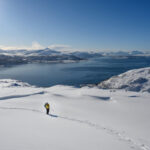
Tromsø sits surrounded by some of the most dramatic fjord scenery in Norway, from the gentler bays of its own neighbouring island to the jagged, glacier-carved peaks of the Lyngen Alps rising almost straight out of the sea further east. This landscape is arguably the single biggest reason the wider region draws visitors at all, in both winter and summer.
Unlike some of the specific activities covered elsewhere in this cluster, exploring the fjords is less a single fixed experience and more a category covering everything from a short scenic drive to a full day’s boat trip or a multi-day sailing itinerary.
This guide covers the main fjord areas within reach of Tromsø, the different ways to see them, and how the experience changes between summer and winter, including a couple of bookable trips further down the page for anyone who would rather book directly than shop around.
Further east, the jagged summits of the Lyngen Alps rise almost straight out of Lyngenfjord roughly two hours’ drive from Tromsø, a landscape better known for hiking and ski touring than for a quick afternoon detour. Closer to the city, Kvaløya’s own bays of Ersfjord and Grøtfjord sit within about thirty minutes of the centre, while the causeway-linked beaches of Sommarøy add roughly another forty-five minutes to that same drive.
Fjord trips themselves can be arranged as almost anything, from a two-hour scenic sailing straight out of Tromsø harbour to a full-day expedition combining sightseeing with fishing or a beach picnic further afield. Wherever travellers end up heading, the same combination of steep granite peaks, deep cold water and the realistic chance of a sea eagle overhead defines the fjord scenery around Tromsø.
The Fjords Around Tromsø at a Glance
| Area | Distance / Time From Tromsø | Best Known For |
|---|---|---|
| Kvaløya (Kaldfjord, Ersfjordbotn, Hellesandstranda) | Closest option, well under 30 minutes to Kaldfjord; a full loop around southern Kvaløya is around 137 km / under 3 hours | Dramatic peaks rising straight from the sea, white-sand beaches and fishing villages within easy reach of the city |
| Lyngen Alps and Lyngenfjord | A half-day-plus journey via the E8 to Fagernes, then the Rv91 to Breivikeidet, then the Breivikeidet-Svensby car ferry (about 20 minutes) and on to Lyngseidet | The most dramatic alpine scenery of the three, jagged peaks over 1,800m, glaciers and Sámi/coastal culture |
| Sommarøy | Around 45 minutes west of Tromsø | A small working fishing village famous for strikingly pale sand beaches, plus orca and marine wildlife viewing |
Best for a short trip. Compare rooms by neighbourhood, price and guest rating before you book.
Compare hotelsBest for groups who want one address and separate bedrooms rather than three hotel rooms.
See holiday homesBest if you have already picked a hotel. Checks the big booking sites for the same room and shows who is cheapest.
Check dealsKvaløya: The Closest Fjord Scenery
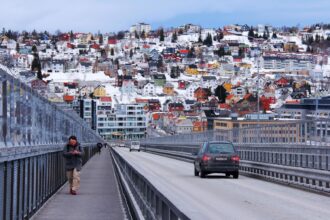
The island of Kvaløya, connected to Tromsøya by the Sandnessund Bridge, is the easiest fjord scenery to reach from the city, home to bays such as Ersfjord and Grøtfjord that offer dramatic mountain backdrops within a thirty-minute drive of the centre.
Further out on Kvaløya, the small fishing settlement of Sommarøy, connected by a causeway to its own tiny neighbouring islands, has become one of the most photographed spots in the region thanks to its white sand beaches and turquoise water set against a genuinely Arctic backdrop.
A self-drive loop around Kvaløya is entirely feasible in a single day with a rental car, making it one of the simplest ways to see genuine fjord scenery without booking any organised trip at all.
The drive out to Ersfjord passes through Kaldfjord on the western side of the island, and the route from central Tromsø to the beach at Ersfjordbotn takes well under an hour even with a stop or two for photos. Grøtfjord, on the opposite side of Kvaløya, adds a slightly wilder stretch of coastline that stays quieter than Ersfjord simply because fewer visitors drive that far.
Sommarøy itself sits roughly 45 to 50 minutes from Tromsø by road, and the short causeway crossing gives way almost immediately to the white sand of Hellesandstranda beach. Visitors doing the full Kvaløya loop in a single day typically allow four to five hours behind the wheel once stops at Ersfjord, Grøtfjord and Sommarøy are all included.
The Lyngen Alps and Lyngenfjord
East of Tromsø, the Lyngen Alps rise sharply from the edge of Lyngenfjord, creating one of the most striking mountain-meets-sea landscapes anywhere in Norway, with jagged peaks that hold snow well into summer directly above deep, still fjord water.
The area is a genuine day trip from Tromsø by road, roughly two hours each way, though many visitors choose to stay a night or two locally to properly explore rather than rushing straight back.
Beyond simply admiring the view, Lyngenfjord is also one of the region’s main centres for ski touring, hiking and sea kayaking, covered in more depth in our dedicated skiing guide for anyone visiting specifically for the mountains.
Most visitors reach Lyngenfjord via the village of Lyngseidet, using a short ferry crossing from Breivikeidet that cuts a good chunk off the drive around the fjord by road and offers some of the best views of the peaks from the water. Further round the peninsula, the smaller settlement of Svensby sits closer still to the steepest summits and is a common base for guided hiking and ski touring trips.
For anyone without a car, day tours from Tromsø to Lyngen typically run from around 7am to early evening, reflecting how much of the day the round trip alone accounts for. The fjord itself occasionally turns up seals near the shoreline, though most visitors come for the mountain scenery rather than any realistic chance of a whale sighting this far inside the fjord.
Ways to See the Fjords
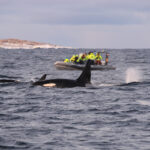
A boat trip is the classic way to see the fjords from the water rather than the road, ranging from a relaxed cruise with an indoor cabin to a faster, more exposed rigid inflatable boat, both commonly combined with sightings of white-tailed sea eagles, and, in winter, orcas or humpback whales further along the coast.
A self-drive road trip is the simplest independent option, following the E8 and connecting roads around Kvaløya or east toward Lyngen, stopping wherever the view demands it rather than sticking to a fixed itinerary.
In summer, sea kayaking adds a slower, quieter way to explore the calmer stretches of fjord close to shore, while sailing trips of a day or more let visitors reach parts of the coastline that are genuinely difficult to access by road at all.
Guided fjord tours booked directly from Tromsø typically run from as little as two hours for a short sightseeing sailing up to a full day for trips that head further out toward Sommarøy, with prices scaling accordingly. Smaller RIB boats reach further and faster than the larger cabin cruisers, trading that speed for a more exposed, weatherproof-suit experience.
For visitors basing themselves in Lyngen rather than day-tripping from Tromsø, local operators also run shorter fjord sailings directly from villages such as Lyngseidet, cutting out the long approach drive entirely. Booking a couple of days ahead in peak summer, when the midnight sun draws the biggest crowds, is worth doing given how quickly the more popular sailings can fill.
Where the Boat Tours Depart From
Not all fjord trips leave from the same place, and it is worth understanding the two different patterns before booking. General scenic fjord cruises around Kvaløya’s nearer bays commonly depart directly by boat from a pier in Tromsø’s own harbour area, close to the Nerstranda shopping centre. Guests simply walk down to the quayside, board, and are out on the water within minutes of meeting the crew.
This harbour-departure pattern suits shorter sightseeing sailings well, since there is no road transfer eating into the time actually spent on the water. It also means the cruise begins the moment you step aboard, rather than after an hour or more spent driving out to a departure point.
The Sommarøy-focused trips work differently. Because Sommarøy sits a genuine drive west of the city, these itineraries are typically road or minibus tours with a central Tromsø meeting point, collecting guests from town before driving out to Sommarøy and back.
Any boating on these Sommarøy trips generally happens locally, once the group has already arrived by road, rather than the whole outing being sailed directly from Tromsø’s harbour. It is a sensible way to reach a destination that would otherwise mean a long stretch of open water simply to get there, and it keeps the trip more affordable than a dedicated ocean-going charter would be.
Both patterns are genuine and coexist rather than one being a workaround for the other. Harbour-departure cruises suit anyone short on time or based centrally who wants to be on the water quickly, while road-based Sommarøy tours suit those who specifically want the beaches, fishing village and wider scenery further out.
It is worth checking the specific departure point when booking, since it is not always the harbour. A confirmation email or voucher will usually state clearly whether to head to the quayside near Nerstranda or to a central meeting point for a minibus pickup.
Wildlife on the Fjords
Beyond the scenery itself, the fjords around Tromsø support a genuinely rich array of wildlife, most visibly white-tailed sea eagles, among the largest eagles in the world, which are a common sight wheeling above the water on almost any boat trip in the region.
Seals are regularly seen hauled out on rocks or bobbing near the shoreline, and porpoises occasionally appear in the calmer inner fjords, though sightings of either are always a matter of chance rather than something any trip can guarantee.
For the larger whale species that draw so many visitors north in winter, see our dedicated whale watching guide, since those sightings are concentrated further along the coast rather than in the fjords immediately around Tromsø itself.
Sea eagle sightings are especially reliable around Kvaløya and the entrance to Lyngenfjord, where the birds regularly follow boats hoping for scraps, and a decent pair of binoculars makes a real difference at a distance. Otters turn up in smaller numbers along quieter shoreline too, though they are considerably more elusive than the seals and eagles most trips actually see.
Winter brings its own additions further along the coast, with orcas and humpback whales occasionally visible from headlands near Skjervøy during the herring season, well beyond the fjords immediately around Tromsø. Inside the more sheltered inner fjords, harbour porpoises are the most likely marine mammal on any given day, usually seen as little more than a brief dark fin breaking the surface.
Summer or Winter Fjords
The fjords around Tromsø look genuinely different depending on the season. In summer, under the midnight sun, the water often turns a startling turquoise in shallow bays, and long daylight hours mean there is effectively no bad time of day to head out.
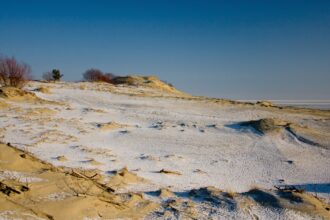
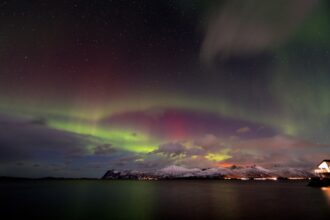
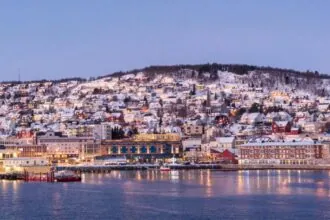
In winter, snow-covered peaks meet dark water under short, dramatic daylight or the deep blue light of the polar night, and a clear evening on the fjord occasionally offers a genuine chance of spotting the northern lights reflected on the water itself.
Neither season is objectively better, and the choice comes down largely to whether a visitor is chasing summer hiking and colour or winter’s aurora and snow, both of which the fjords deliver in their own way.
Peak summer, roughly June to August, brings the midnight sun and the calmest water for kayaking, though it is also when Sommarøy and the more photogenic Kvaløya viewpoints are at their busiest. Autumn, from around September, thins the crowds considerably while still offering reasonable daylight and the first realistic chances of aurora on clear nights.
Deep winter, from December to February, offers the shortest daylight but the most dramatic combination of snow-covered peaks and the possibility of the northern lights reflected on still water. Whatever the season, genuinely windproof layers matter more on the water than on land, since the chill on an open boat is consistently harsher than it looks from the harbour.
Best for long or awkward journeys. Builds one itinerary out of separate flights.
View flightsBest if you want maps and messaging working the moment you switch your phone on.
See eSIM plansBest if you would rather not work out the transport on arrival. Book it now and forget it.
View transfersA Full-Day Trip to Sommarøy With a Beach Picnic
This expedition heads out by boat towards Sommarøy, the island and peninsula area on Kvaløya best known for its white sand beaches and strikingly clear water, a real contrast against the Arctic backdrop. It is a longer, more immersive outing than a standard fjord cruise, giving guests proper time to take in the scenery around Sommarøy rather than passing through on the way to somewhere else.
The trip is built around a VIP-style salmon picnic served during the outing, making this one of the more premium, food-focused ways to experience the fjords around Tromsø. It suits travellers who want their sightseeing paired with a proper meal rather than a quick snack, though that added format generally comes with a higher price point and a slower pace than a straightforward scenic cruise.
This trip typically runs for around four and a half to six hours door to door, reflecting the distance involved in sailing all the way out to Sommarøy and back rather than staying within the closer fjords around Tromsø. That length makes it more of a full-day-out format, and it is worth planning the rest of the day around it accordingly.
Unlike the fishing-focused cruise covered below, this trip is destination-led, built around the journey west to Sommarøy’s white sand beaches and islands with the salmon picnic served as the centrepiece. A vegetarian option is usually available on request, and the longer sailing also brings a reasonable chance of spotting sea eagles or seals along the way.
A Shorter Cruise Built Around Hands-On Fishing
This cruise combines fjord sightseeing with hands-on fishing, giving guests the chance to drop a line for Arctic species such as cod rather than simply watching the scenery go by. It is a more participatory format than a standard cruise, with crew typically on hand to help with tackle and technique for anyone who has not fished before.
Depending on the operator, the catch can sometimes be prepared and eaten on board or shortly after, turning the trip into a fjord-to-table experience rather than just a sightseeing run. It suits families and travellers wanting an active element built into their fjord day out, though as with any fishing trip, what actually gets caught is never guaranteed.
This cruise typically runs for around four to five hours, noticeably shorter than the Sommarøy expedition above, and stays closer to Tromsø’s own surrounding fjords rather than making the longer journey west. Gear and thermal suits are usually provided as part of the price, so guests do not generally need to bring their own equipment.
Where the Sommarøy trip is built around the destination and the picnic, this one is genuinely activity-led, with hands-on fishing as the core of the experience rather than a secondary extra. On a good day the crew will typically turn part of the catch into fresh fish soup on board, with fillets sometimes available to take home afterwards.
What to Bring on an Arctic Fjord Boat Trip
Arctic fjord boat trips are genuinely cold even in summer, so layering properly matters more than any single heavy item. A base layer, an insulating mid-layer such as fleece or wool, and a waterproof, windproof outer shell together cope far better with a moving boat than one thick coat alone.
A warm hat and gloves make a bigger difference on the water than most first-time visitors expect, since wind chill from boat speed strips heat quickly from exposed skin. Insulated, waterproof boots are worth prioritising too, as cold, wet feet tend to ruin a trip faster than almost anything else.
Many operators provide thermal or flotation suits as part of the price, but these usually go over ordinary clothing rather than replacing it entirely. Dressing warmly underneath is still essential, since a suit alone will not keep out the cold on a longer Arctic crossing.
A camera is worth bringing for the scenery and any wildlife encountered, though cold temperatures drain batteries noticeably faster than they do at room temperature. Packing a spare battery, kept somewhere warm such as an inside pocket, avoids missing a sea eagle or a good stretch of coastline because the camera has died.
Seasickness is a reasonable concern for some travellers, though it is worth keeping in perspective. Fjord waters are generally much calmer than the open sea covered on dedicated whale-watching routes further along the coast, since the surrounding land shelters the water from the worst of the swell.
Anyone who knows they are prone to seasickness should still take the usual precautions regardless of how sheltered the route looks on paper. Ginger, motion-sickness tablets and choosing a seat towards the boat’s centre, where movement is felt least, are all sensible steps before setting out.

Rupert’s Handy Travel Tips
The fjords around Tromsø reward a bit of planning around season and transport. Rupert’s tips will help you choose the right approach.
- Start with Kvaløya if you’re short on time: it offers genuine fjord scenery within a thirty-minute drive of the city.
- Allow a full day, or an overnight, for Lyngen: it’s roughly two hours each way, so rushing it does the scenery a disservice.
- Bring binoculars for sea eagles: they’re a common sight on boat trips but easy to miss without them.
- Pick summer for colour, winter for drama: both seasons suit the fjords, just in very different ways.
- Hire a car if you want full flexibility: a self-drive loop lets you stop wherever the view demands it.
Want to meet the reindeer behind our travel tips? Find out more in our page Who is Rupert?.



Frequently Asked Questions About the Arctic Fjords Around Tromsø
What is the closest fjord scenery to Tromsø?
The island of Kvaløya, reachable within about thirty minutes by road, offers dramatic bays such as Ersfjord and Grøtfjord without needing a full day trip.
How far is Lyngenfjord from Tromsø?
Roughly two hours by road each way, making it a full day trip, or an overnight stay for those who want more time to explore.
Do I need a boat trip to see the fjords, or can I drive?
Both work well. A self-drive loop around Kvaløya or toward Lyngen is entirely feasible, while a boat trip offers a different perspective from the water along with a chance of wildlife sightings.
Can you see whales in the fjords right around Tromsø?
Occasionally, but the largest whale concentrations in recent winters have been further along the coast, so see our dedicated whale watching guide for the full picture.
Is it better to visit the fjords in summer or winter?
Neither is objectively better. Summer brings the midnight sun and turquoise shallow water, while winter brings snow-capped peaks and a chance of the northern lights over the water.
Further Reading & Related Guides
For a fuller sense of what else the city and surrounding area have to offer, our main guide to things to do in Tromsø is the best starting point beyond the fjords themselves. It pulls together the wider range of activities available around the city, from day trips to indoor attractions, in one place.
Several more specific guides cover activities closely tied to the same landscape covered here. Chasing the northern lights and dog and reindeer sledding both make use of the same Arctic scenery after dark or on land, while our whale watching guide covers the marine wildlife that ranges further along the coast than the fjords immediately around Tromsø.
Anyone drawn to the mountains rather than the water should also look at our skiing from Tromsø guide, which covers the Lyngen Alps and nearby areas in more depth for hiking and ski touring. Before any of that, though, our Tromsø Airport to City Centre guide covers every transfer option into town, worth reading first regardless of which activities end up on the itinerary.