Reviewed by our editorial team Published
Dog and Reindeer Sledding: Tromsø’s Two Classic Snow Experiences
Alongside the northern lights, dog sledding and reindeer sledding are the two experiences most visitors picture when they imagine an Arctic Norway trip, and Tromsø sits close enough to genuine wilderness that both are realistic day trips rather than a long journey away.
The two are related but genuinely different experiences. Husky sledding is fast, physical and driven by the dogs’ own enthusiasm for pulling, while reindeer sledding is slower, quieter and tied closely to Sámi culture and the traditional reindeer herding practised across northern Norway for centuries.
Both are usually based at dedicated kennels or herding camps outside the city, most commonly in valleys such as Tamok, roughly ninety minutes from Tromsø, where snow cover is more reliable than on the coast itself.
This guide covers what each experience actually involves, when to go and what to expect, including a few bookable trips further down the page for anyone who would rather book directly than shop around.
Choosing between the two often comes down to personal taste rather than one being objectively better, and plenty of visitors end up doing both across a single stay rather than picking just one. Husky sledding tends to suit travellers after an active, adrenaline-tinged morning, while reindeer sledding draws those more interested in a slower, culturally grounded encounter.
Both experiences are usually run by small, family operated kennels or herding families rather than large tour companies, so the exact format and atmosphere can vary noticeably from one provider to the next. Advance booking is strongly recommended through the peak winter months, since capacity at any single kennel or camp is limited by the number of dogs or reindeer they keep.
What Husky Sledding Actually Involves
A typical husky sledding trip starts at a kennel, with a safety briefing and basic instruction before guests are paired into sleds, usually two people per sled with the option to swap between riding and standing on the sled’s rear runners to help drive it.
The dogs themselves are the real stars of the experience. Most kennels are genuinely enthusiastic about letting visitors meet the huskies beforehand, including puppies where the kennel is currently breeding, and the dogs’ own excitement to run is infectious even for first-timers who arrive unsure what to expect.
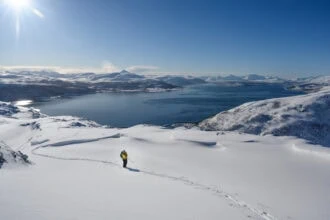
Trips typically run from a couple of hours to a full day, gliding across snow-covered valleys and frozen lakes, and most end back at the kennel with a hot drink and a chance to properly meet the dogs once they have had a rest.
Teams typically number between four and eight dogs per sled, with the exact size depending on the operator and how much weight, one or two passengers, the sled needs to pull. Guides usually explain basic mushing commands and braking technique before departure, since even a passenger who later swaps onto the runners needs to know how to slow the team on a downhill stretch.
Standing on the runners and helping drive the sled is more physically demanding than it looks, and holding a stable position while the dogs pull hard over uneven snow works the legs and core harder than most first-timers expect.
Best for a short trip. Compare rooms by neighbourhood, price and guest rating before you book.
Compare hotelsBest for families, or any stay past about four nights. A kitchen and a washing machine start paying for themselves.
Browse rentalsBest as a last check before booking. Compares hotel rates across several sites in one search.
Compare ratesWhat Reindeer Sledding Actually Involves
Reindeer sledding is a noticeably calmer, quieter experience than husky sledding, usually involving a single reindeer pulling a small sled at a gentle walking pace across snow, guided by a Sámi herder rather than driven by the visitor.
Most experiences take place at or near a working reindeer herding camp, and are commonly paired with time inside a traditional lavvo tent, warmed by an open fire, where herders often share food and explain the history and present-day realities of Sámi reindeer husbandry.
Because this is a living Indigenous culture and a genuine working industry rather than a historical re-enactment, it is worth approaching the experience with the same respect and curiosity as any other visit to a working farm, rather than treating it purely as a photo opportunity.
Where huskies pull hard and fast almost from the moment they are harnessed, a reindeer moves at a measured walking pace throughout, and the rhythm feels closer to a gentle procession than the burst of energy typical of a dog team. There is no steering or braking to learn, since the herder leads the animal from the front, leaving passengers free to sit back and take in the surroundings.
Groups are usually seated in a short line of individual sleds, each pulled by its own reindeer, following one behind the other along a fixed track rather than spreading out across open snow. This single-file format keeps the animals calm, and it means even nervous first-timers can relax without needing to manage the reindeer themselves.
A Motorised Snowmobile Trip Into the Lyngen Alps
Not a sledding trip at all, this is a guided snowmobile tour into the Lyngen Alps, the dramatic mountain and fjord scenery to the east of Tromsø, worth flagging here as a faster-paced alternative for anyone drawn to the same winter landscape. Guests generally drive their own machine in convoy behind a guide, following marked routes through the mountains rather than freeriding independently.
Compared with the quiet, animal-powered pace of a sledding trip, this is a noisier, more physical activity, with real speed and some handling skill involved, so it suits travellers who want an adrenaline element alongside the scenery rather than a gentler wildlife-focused outing. Warm outer clothing and basic riding instruction are typically part of the format, though a valid driving licence is usually required to take the controls.
The full outing typically runs around eight hours door to door, usually departing by minibus around 8:30am and returning by roughly 4:30pm, a full-day commitment rather than a half-day add-on. Of that, roughly two hours each way is spent transferring to and from the Lyngen Alps, leaving around two and a half hours of actual riding time once the group arrives.
This is the only motorised tour on this page, and also the only one that leaves Tromsø’s immediate surroundings, trading a good chunk of the day for genuine access to bigger alpine peaks and fjord views the closer-in sledding valleys cannot match. Anyone weighing this against the sledding options above should factor in that longer transfer time, since it eats into the day in a way none of the animal-powered trips do.
Feeding and Sledding With Reindeer, Guided by Sámi Herders
This experience pairs a short reindeer sled ride with time spent hand-feeding the animals up close, led throughout by a Sámi guide who can speak from lived experience about the culture and the practicalities of reindeer herding. It leans more educational than adrenaline-focused, with the guide typically explaining how a herd is managed through the seasons and what the animals need to survive the Arctic winter.
Because the pace is gentle and the feeding element is hands-on, it tends to suit families and travellers of most ages and fitness levels better than a faster activity like snowmobiling would. The cultural framing, hearing directly from a Sámi guide rather than a generic tour narrator, is the real point of difference here compared with a purely recreational sledding ride.
The whole experience runs to around four hours in total, including transfer time from Tromsø, the sledding itself, the feeding session and a meal shared in a lavvo before heading back. That relatively compact window makes it easier to fit around a flight or an evening plan than some of the longer full-day options on this page.
Unlike the self-drive husky option further down the page, guests here ride as passengers throughout rather than steering anything themselves, which keeps the focus squarely on the reindeer and the guide’s storytelling rather than on technique. That passenger format, combined with the hands-on feeding and direct Sámi guiding, sets it apart from every other tour here as the clearest cultural-immersion option of the four.
An Evening of Reindeer Sledding and a Traditional Dinner
On a sledding-focused page, the sledding itself is the clear centrepiece of this combined tour, with guests gliding behind a reindeer team through snow-covered terrain before the group regroups at a Sámi camp for a traditional dinner. It is a natural fit alongside the husky sledding options above for anyone comparing the two animal-powered ways to get out into the Arctic landscape.
The dinner that follows, usually served in a lavvo, extends the evening well beyond the sled ride itself, and any northern lights sighting is a welcome bonus rather than something the tour can promise. It suits travellers who want the sledding experience as their main draw and would be glad of an aurora appearance without building the whole evening around chasing one.
The tour runs for around four and a half hours, departing Tromsø in the early evening, typically around 6pm, and running on into the night, making it the only evening or night departure among the tours on this page. Scheduling it after dark means the group is already out under open sky exactly when conditions for spotting an aurora are best, even though a sighting is never guaranteed.
Dinner is usually a proper three-course meal cooked and served inside the camp’s lavvo, paired with storytelling from the Sámi hosts once the sledding has wound down for the evening. That combination of a sit-down dinner, fireside stories and a genuine chance of the aurora overhead is what sets this apart from the other reindeer tour on the page, which runs earlier in the day and skips the evening meal entirely.
Driving Your Own Dog Sled Team, With Lunch Included
Unlike a passenger sled ride, this tour puts guests in direct control of their own sled, standing on the runners and steering behind a team of huskies while an experienced guide leads the group and keeps an eye on pace and safety. It is a considerably more active, hands-on version of husky sledding, with guests learning basic mushing technique before setting off.
A traditional lunch, often cooked over an open fire at a stop along the route, rounds out the day and gives everyone a chance to warm up before heading back. It suits travellers who want genuine physical involvement rather than just riding along, though the self-drive format demands more concentration and stamina than a passenger seat would, which is worth knowing before booking.
The tour runs to around four hours in total once transport to and from the kennel is included, though the actual mushing time is shorter than that overall figure suggests. Since two guests typically share and swap control of a single team, each person generally spends somewhere between forty-five minutes and an hour and a half actually driving, with the rest split between briefing, transfer and the lunch stop.
This is the only tour on the page where visitors actively drive their own dog team rather than riding as a passenger throughout, giving it a hands-on character the other three tours here do not offer. That trade-off, real control over the sled in exchange for more physical effort, is the main thing to weigh up against the passenger-based options above.
Where These Experiences Take Place
Both activities are almost always based outside Tromsø itself, since the coastal city’s own snow cover is less reliable than the more sheltered valleys further inland. Camps in areas such as Tamok Valley sit roughly ninety minutes from the city by road and see consistently deeper, longer-lasting snow through the winter.
Transport to these camps is normally included as part of any booked trip, typically a minibus collection from a central Tromsø meeting point, since self-driving to a specific kennel or herding camp is rarely straightforward without local knowledge.
Many providers offer combined trips covering both husky and reindeer sledding across a single full day, which suits visitors with limited time who want to experience both without arranging two separate excursions.
Tamok Valley is the best known of these inland bases, but it is far from the only one, several kennels and herding camps operate in similarly sheltered valleys further along the same road corridor, chosen for the same combination of altitude and shelter from coastal weather. The Lyngen Alps, covered separately above for snowmobiling, lie in a different direction entirely, east across the fjord from Tromsø rather than inland toward Tamok.
Because the drive out is part of the day rather than something guests arrange themselves, it is worth checking the pickup time and location when booking, since some operators collect from hotels directly while others use a single central meeting point in town. The return leg usually arrives back in Tromsø by early evening for a half-day trip, leaving time to catch the northern lights afterwards if skies are clear.
Best for long or awkward journeys. Builds one itinerary out of separate flights.
View flightsBest for short trips. Install the eSIM at home and arrive with working data, no shop queue.
Browse eSIMsBest after a long flight or a late landing. Price agreed before you travel, and no taxi queue.
Check transfersBest Time of Year for Sledding
Both activities depend on reliable snow cover, which typically runs from around late November to April in the valleys where most kennels and herding camps are based, slightly longer than the snow season in Tromsø’s own coastal microclimate.
Early and late in the season, conditions can vary noticeably from one year to the next, so it is worth checking directly with any operator whether their season has opened or is drawing to a close if travelling right at the edges of winter.
Deep midwinter, during the polar night, adds the novelty of sledding under near-permanent darkness or twilight, while late winter days bring more daylight without losing meaningful snow depth.
December and January sit at the heart of the season, with consistently deep snow and, further north of the Arctic Circle, the polar night reducing daylight to only a few hours of twilight around midday. February and March generally offer the most reliable combination of good snow depth and longer daylight hours, which is why many repeat visitors and photographers favour those months over deep midwinter.
Temperatures through the core season regularly sit well below freezing, and cold snaps can push considerably lower on clear, still nights, so the layering advice further down this guide is worth taking seriously rather than treating as boilerplate. Snowfall itself is rarely a problem for these trips, since operators are used to running in light or moderate snow, though a genuinely severe storm can occasionally lead to a rebooked departure.
What to Wear and Bring
Both activities involve long stretches sitting still outdoors in genuinely cold conditions, so proper thermal layering matters more than for a normal winter walk: thermal base layers, an insulating mid layer and a windproof, waterproof outer shell, topped with a warm hat and insulated gloves.
Most kennels and herding camps provide a heavy-duty outer snowsuit and warm boots as part of the experience, since regular travel clothing rarely copes with sitting still on a sled for an hour or more, but it is worth confirming this in advance rather than assuming.
A camera with a spare battery is worth bringing for both, though extreme cold drains batteries unusually fast, and keeping a spare in an inner pocket close to body heat helps it last through a full trip.
Footwear matters just as much as outer layers, and thick wool or thermal socks worn underneath the boots most kennels provide make a real difference on a trip where feet stay still for long stretches rather than moving to generate warmth. A neck gaiter or scarf pulled up over the lower face is worth packing too, since wind chill on an open sled bites harder than the still-air temperature alone suggests.
Cotton is worth avoiding as a base layer, since it holds moisture rather than wicking it away and can leave skin feeling colder once sweat builds up, so merino wool or a synthetic thermal fabric is the safer choice. Sunglasses are worth bringing on bright days too, since sunlight reflecting off open snow can be surprisingly harsh.

Rupert’s Handy Travel Tips
Sledding trips involve more sitting still in the cold than most visitors expect. Rupert’s tips will help you stay comfortable.
- Dress in proper thermal layers underneath: the snowsuit most operators provide is an outer layer, not a full solution on its own.
- Ask what’s included before booking: outer clothing and boots are often provided, but it’s worth confirming rather than assuming.
- Approach reindeer sledding with respect: it’s a living Sámi culture and working industry, not a re-enactment.
- Keep a spare camera battery close to your body: extreme cold drains batteries far faster than usual.
- Consider a combined day if you’re short on time: many providers offer both husky and reindeer sledding together.
Want to meet the reindeer behind our travel tips? Find out more in our page Who is Rupert?.



Frequently Asked Questions About Dog and Reindeer Sledding From Tromsø
Which is better, husky sledding or reindeer sledding?
They are different experiences rather than one being better: husky sledding is fast and physical, while reindeer sledding is slower and more closely tied to Sámi culture and tradition.
Do these trips take place in Tromsø itself?
No. Most kennels and herding camps are based in inland valleys such as Tamok, roughly ninety minutes from the city, where snow cover is more reliable than on the coast.
Do I need to bring my own winter clothing?
A proper thermal base layer is worth wearing underneath, but most operators provide an outer snowsuit and boots, which is worth confirming directly before your trip.
Can I do both husky and reindeer sledding in one day?
Often, yes. Many providers run combined full-day trips covering both activities for visitors with limited time.
When is the sledding season in the Tromsø region?
Roughly late November to April in the inland valleys where most operators are based, though conditions can vary at the very start and end of the season.

Further Reading & Related Guides
Sledding across snow-covered valleys is a memorable part of an Arctic Norway trip, but it’s rarely the only thing on a Tromsø itinerary, and our main guide to things to do in Tromsø is worth bookmarking for everything else the city and its surrounding fjords have to offer, from the cable car above town to the museums and restaurants that fill in the hours between excursions. It’s the best starting point for shaping the rest of a winter stay around whichever outdoor experiences appeal most.
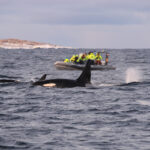
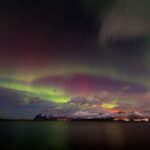
For visitors drawn to wildlife and dark-sky evenings alongside the reindeer and huskies, two more dedicated guides cover the other big draws of an Arctic winter trip. Our guide to chasing the northern lights walks through where and when to head out for the best chance of an aurora sighting, while the separate guide to whale watching covers the boat trips that run out into the fjords to find orcas and humpbacks feeding through the darker months. Both pair naturally with a sledding day, since neither competes for the same daylight hours.
For those who’d rather stay on the move under their own power, the Arctic fjords around Tromsø guide covers the boat and kayak trips that get visitors out onto the water itself, while a separate guide to skiing from Tromsø rounds out the region’s other classic winter sport, from lift-served slopes to backcountry touring further from the city. Between sledding, skiing and a fjord crossing, there’s enough here to fill a full week without repeating an activity.
Before any of that, it’s worth sorting out how to actually get into town: our Tromsø Airport to City Centre guide covers every transfer option, from the airport bus to taxis and pre-booked transfers, so arrival logistics are settled before the first excursion of the trip.