Reviewed by our editorial team Published
Whale Watching From Tromsø: What to Actually Expect
Whale watching has become one of the most popular winter activities in the Tromsø region, drawing visitors hoping to see orcas and humpback whales feeding in the cold Arctic waters of northern Norway. It is worth understanding upfront, though, that most whale watching trips do not simply head out from Tromsø harbour into nearby waters.
Whale activity in this part of Norway follows the movements of huge herring shoals, and those shoals have shifted their wintering grounds more than once over the years. For a period, whales gathered close to Tromsø itself; more recently, the largest concentrations have been found further north, particularly around Skjervøy, roughly two to three hours from the city.
This means a genuine whale watching day from Tromsø is usually a full-day commitment involving significant travel time, rather than a short hop out into the fjord, and it is worth planning accordingly rather than expecting a quick after-lunch trip.
This guide covers what to realistically expect, including a few bookable trips further down the page for anyone who would rather book directly than shop around.
Because whale activity has shifted so far north, operators now run two genuinely different formats rather than one replacing the other. Some tours depart by road from Tromsø to Skjervøy and board the boat there, while others sail directly out of Tromsø harbour itself and cover the whole distance by sea.
Either version tends to make for a long day out, with total time away from the hotel often running eight hours or more once transport, boarding and the return leg are counted. This guide also flags which boats supply thermal suits as standard and which expect visitors to bring their own warm clothing, since that detail changes what needs to go in a suitcase.
Which Whales You Might See
The two species most closely associated with the Tromsø region’s winter whale watching are orcas (killer whales) and humpback whales, both of which follow the herring shoals into the fjords of northern Norway during the darker months.
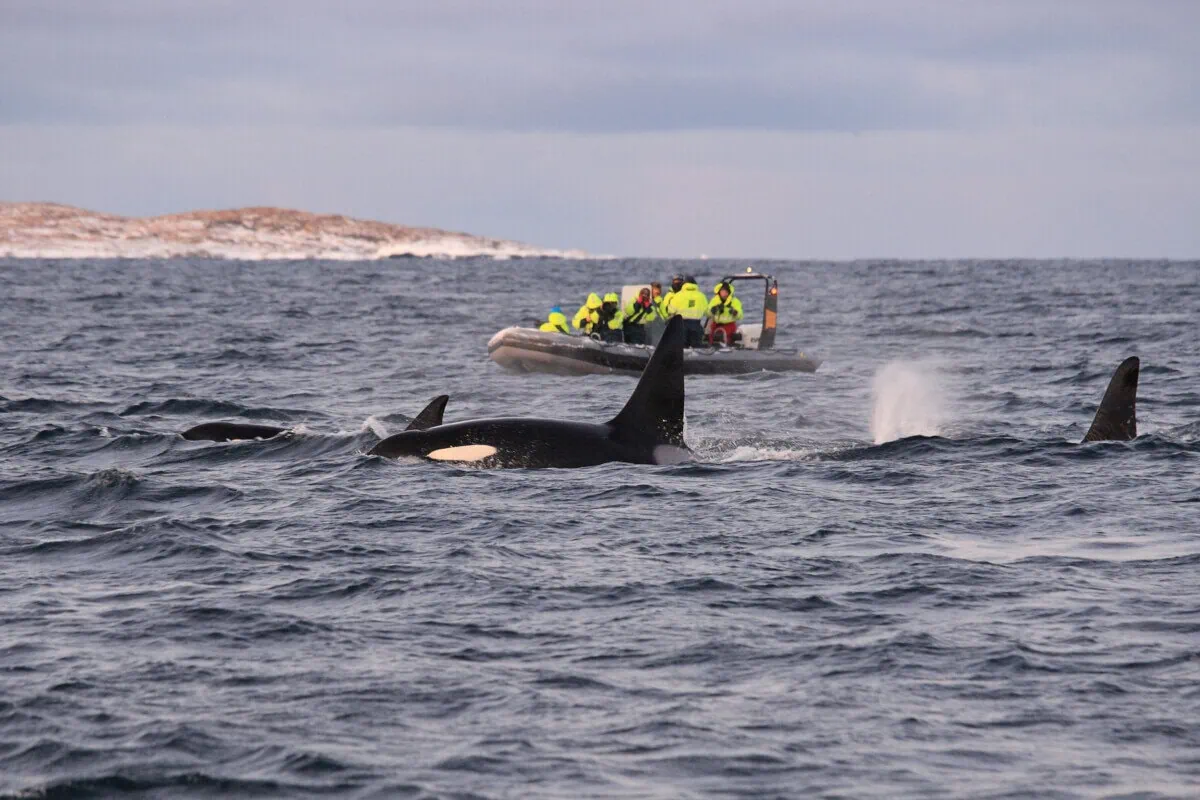
Orcas typically travel in tight family pods and are often the more reliably sighted of the two when the herring are present in numbers, while humpbacks are usually spotted individually or in small, looser groups, sometimes breaching or lunge-feeding at the surface.
Sightings ultimately depend on where the herring have gathered that particular winter, and no operator can guarantee whales will appear on any specific trip, however strong the season has been so far.
Orcas here typically measure around six to eight metres long and are often the easier of the two species to spot at a distance, since their tall dorsal fins and sharp markings break the surface clearly even in low winter light. Humpbacks are considerably larger, sometimes reaching fourteen metres, and are more commonly identified by the shape of their tail fluke as they dive.
Both species can turn up wherever the herring have gathered that winter, and it is not unusual for a boat to encounter a mixed group of orcas and humpbacks feeding in the same stretch of water. Guides are generally experienced at reading surface behaviour, such as diving seabirds, which often signals activity before any whale actually breaches.
Best for a short trip. Compare rooms by neighbourhood, price and guest rating before you book.
Compare hotelsBest for groups who want one address and separate bedrooms rather than three hotel rooms.
See holiday homesBest for double-checking. Runs the same search across several booking sites so you are not leaving money behind.
Compare pricesWhere the Tours Actually Go
Because whale locations shift with the herring, it is worth checking exactly where a specific trip departs from and how far it actually travels, rather than assuming every whale watching tour departs directly from Tromsø harbour into nearby waters.
Many trips currently combine a coach transfer to a departure point further north, such as Skjervøy, with the boat trip itself, making for a long but genuinely rewarding day when whales are present in numbers.
Because these patterns can shift again in future winters as the herring move, it is always worth checking current departure points directly with any operator rather than relying on older information, including this guide.
In practice, departure patterns fall into two genuine categories rather than one being more correct than the other. RIB tours generally depart by road transfer from Tromsø, with pickup at the Prostneset bus terminal, travelling to Skjervøy where guests then board the boat itself.
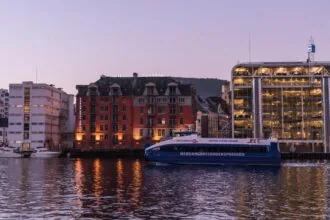
Larger boats, including the hybrid-electric vessel, catamaran and orca safari options, typically sail directly from Tromsø’s own harbour instead, covering the distance to the whale feeding grounds by sea. This usually takes roughly two to three and a half hours each way, and the hybrid-electric tour is confirmed to depart from Kaigata 6, beside the Skarven Kro restaurant.
Both approaches are genuinely in use this season, so it is simply a matter of matching a specific tour to a personal preference for road travel versus time at sea.
Boat Cruise or Rigid Inflatable Boat
Two main styles of boat are used for whale watching in the region. A larger cruise-style boat offers an indoor heated cabin, seating and often food and drink on board, making it the more comfortable option for families or anyone sensitive to the cold.
A rigid inflatable boat (RIB), by contrast, sits much lower and closer to the water, in full protective survival suits, and tends to suit visitors who want a faster, more hands-on experience and do not mind being genuinely exposed to the elements throughout.
Neither style is objectively better for actually seeing whales, since sightings depend far more on where the whales happen to be that day than on the type of boat used to reach them.
Cold tolerance is usually the deciding factor for most visitors choosing between the two. A cruise-style boat with a heated cabin allows guests to step inside between sightings, while a RIB offers no such shelter at any point during the trip.
Group composition is worth thinking about too, since a cruise boat’s larger, steadier deck tends to suit families with children or anyone with limited mobility far better than a small, fast-moving RIB. A RIB, by contrast, carries far fewer passengers per trip, which some visitors actually prefer.
Cost and inclusions can also differ between the two formats, so it is worth checking exactly what is covered, such as transport, suits and refreshments, before comparing prices between the two.
A Fast, Open-Boat Whale Safari Near Skjervøy
This trip heads out from the Skjervøy area, roughly two to three hours north of Tromsø, to where the whales following the herring migration have increasingly concentrated in recent winters. Guests travel aboard a rigid inflatable boat (RIB), a small, fast craft that sits low in the water and can get considerably closer to feeding whales than a larger vessel typically can. Because a RIB has no cabin, the ride is bracing and fully exposed to the Arctic air and sea spray, so everyone is fitted with a full flotation and survival suit before setting off.
The speed and manoeuvrability of the boat make this one of the more thrilling, hands-on ways to see whales up close, with skippers able to reposition quickly once activity is spotted. It suits travellers who do not mind the cold and want an active, adrenaline-tinged outing rather than a sheltered cruise, though the open, unprotected format is a real trade-off for anyone prone to seasickness or hoping to stay properly warm throughout.
This trip departs by coach transfer from Tromsø, with pickup at the Prostneset bus terminal, travelling roughly three and a half to four hours by road each way to Skjervøy where the boat is boarded. Time actually on the water is typically closer to two and a half to four hours, varying by operator.
The boat itself sets this trip apart: a small, open, high-speed inflatable that can cover more water faster and get noticeably closer to whales than larger vessels. The trade-off is comfort, since there is no cabin, so cold spray should be expected even with the flotation suit provided, and it best suits those prioritising proximity over comfort.
A Quieter Whale Watching Cruise on an Electric Boat
This tour uses a larger hybrid-electric vessel, capable of running on battery power alone once whales are nearby rather than a conventional diesel engine throughout. The quieter running is more than a comfort detail: reduced engine noise and lower emissions mean less disturbance to whales going about their normal feeding behaviour, a genuine consideration for operators working the same fjords winter after winter.
Being a larger boat, it typically comes with a heated indoor cabin alongside open deck space, so guests can step out of the wind between sightings rather than staying exposed for the whole trip. That mix of comfort and warmth makes it a natural fit for families, older travellers, or anyone wanting a relaxed whale watching experience without giving up deck access when something is spotted, though a bigger, steadier boat generally cannot match a RIB’s speed.
This tour sails directly from Tromsø harbour itself, departing from Kaigata 6 beside the Skarven Kro restaurant, so no road transfer is needed beforehand. The full day typically runs seven to nine hours door to door, with roughly three to three and a half hours of sailing each way and one to two and a half hours actually spent with the whales.
The boat itself is a large catamaran-hulled vessel with heated, panoramic-window lounges, multiple outdoor decks and a café or bar, switching to near-silent electric propulsion near the whales to reduce disturbance. It is the quietest, most comfortable and lowest-disruption option covered on this page, though it cannot match a RIB for speed or proximity.
An Orca and Whale-Focused Wildlife Cruise
This safari-style tour pairs scenic fjord travel with a dedicated search for whales and orcas, typically aboard a mid-size boat that sits between a compact RIB and a larger passenger vessel. Guides watch for signs such as diving seabirds and surface activity while narrating the surrounding landscape, so the journey itself, through narrow sounds and past snow-covered peaks, is worthwhile even before any whales appear.
As a fairly standard format for the region, it works well as an all-rounder: enough stability and shelter for comfort, without the very close, high-speed encounters of a RIB safari. It suits travellers wanting a balanced first whale watching trip that does not lean too far towards either extreme, combining Arctic scenery, wildlife spotting and a genuine chance of orca and humpback sightings in one outing.
This safari runs to around eight hours in total, covering both the journey out to wherever the whales are currently feeding and a genuine amount of time actually spent watching them. It is explicitly built around wildlife rather than general sightseeing, focused on orcas and humpback whales specifically, alongside the seabirds that often signal where activity is happening.
The boat used tends to carry smaller passenger numbers than some larger vessels on this page, which usually means more time can be spent lingering in the whale area rather than moving on quickly. Guests still have access to a heated indoor lounge as well as open decks, so there is somewhere to warm up without missing activity outside.
A Steadier Catamaran Crossing for Families
This tour takes place aboard a catamaran, a twin-hulled boat that sits noticeably steadier in the water than a single-hulled vessel of similar size. That extra stability makes for a smoother ride through open fjord water, which matters in winter conditions when swell and wind chop are common on the approach to whale feeding grounds.
The stable, spacious deck also makes this a strong choice for photography, giving guests a steadier platform to track whales with a camera or long lens than a smaller, rockier boat allows. Many catamarans used for whale watching also have an indoor area, so there is somewhere to warm up between sightings, and the flat, open deck spreads a full group out comfortably rather than everyone crowding one rail.
Timings vary depending on which version is booked, with a trip reaching the main feeding grounds typically running four to five hours, while a shorter, fjord-only option can be closer to three hours. It is worth checking which version is being booked, since the two cover noticeably different ground.
What genuinely sets a catamaran apart is the twin-hull design, which gives far more stability and deck space than either a monohull cruise boat or a RIB of similar size, making it the most seasickness-friendly format on this page. The layout also offers multiple viewing zones, including an indoor saloon and outdoor deck, so guests can move between shelter and open-air views as conditions change.
Best for finding routes the airlines do not sell as a single ticket. Combines carriers to bring the fare down.
Search flightsBest for short trips. Install the eSIM at home and arrive with working data, no shop queue.
Browse eSIMsBest if you would rather not work out the transport on arrival. Book it now and forget it.
View transfersBest Time of Year for Whale Watching
The main whale watching season in northern Norway runs roughly from late October to late January, tracking the herring’s own winter migration into the fjords, with the exact peak weeks varying somewhat from year to year.
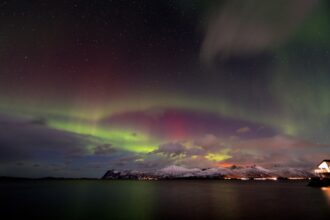
This overlaps almost entirely with the northern lights season and much of the polar night, which is why many visitors combine whale watching with aurora chasing across the same trip.
Outside this window, sightings become far less reliable, and most dedicated whale watching operators scale back or pause their season entirely once the herring, and the whales following them, have moved on.
Within that broader window, December and January tend to see the most consistent activity, since this is usually when the herring shoals are most concentrated in the fjords around Skjervøy. Even so, exact timing shifts from year to year, so booking a trip too early or too late in the season carries a genuine risk of missing the main activity altogether.
Daylight is also worth factoring into planning, since much of the season overlaps with the polar night, when the sun barely clears the horizon around Tromsø. This does not affect whale sightings themselves, since boats simply operate in the available low light or darkness, but it does mean photography conditions differ noticeably from a typical daytime wildlife trip.
Responsible Whale Watching
Norway follows recognised responsible whale watching guidelines intended to limit boat speed and approach distance around whales, reducing stress on the animals while they feed. Reputable operators build their routes and behaviour around these principles rather than chasing whales for a closer photo.
It is reasonable to ask any operator directly how they approach whales and how many boats typically operate in the same area on a given day, since genuinely responsible practice is one of the clearest signs of a well-run trip.
Treating any sighting as a privilege rather than an entitlement, and accepting that the animals’ welfare comes first, is the right mindset to bring into any whale watching trip in the region.
In practice, this means boats should approach whales slowly and from the side rather than head-on, avoid boxing animals in against other vessels, and give feeding groups room to move away undisturbed if they choose to. Skippers who follow these guidelines will sometimes hold back from an obvious sighting rather than press closer, which is worth recognising as good practice rather than a missed opportunity.
Visitors can play a part too, mainly by staying reasonably quiet on deck when whales are nearby and following crew instructions about where to stand and when flash photography is appropriate. Loud noise and sudden movement on a crowded deck can add to the disturbance a boat already causes, even when the boat itself is behaving responsibly.
What to Wear and Seasickness
Dressing properly starts with proper layering rather than one thick coat: a merino wool base layer, an insulating mid-layer such as fleece or down, and a waterproof and windproof outer shell over everything. This copes far better with a cold, wet, windy day on deck than any single heavy garment.
Extremities lose heat fastest, so a warm hat covering the ears, gloves or mittens, and insulated, waterproof snow boots all matter more than they might seem to. Cold hands and feet are usually the first thing to spoil an otherwise good day, and the easiest to prevent.
What is actually provided varies by tour and is worth knowing before packing. RIB tours to Skjervøy generally supply a full flotation and thermal suit, boots and mittens once guests arrive at the departure point, while larger boats such as the hybrid-electric vessel and catamaran generally do not provide thermal suits, leaving passengers to rely on their own warm layers plus the heated cabin.
Seasickness is worth preparing for, since fjord waters can still get choppy on a windy day. Ginger, as sweets or tea, or a standard seasickness tablet taken in advance both work well for many people, and eating a light meal beforehand tends to sit better than travelling on an empty stomach.
On board, a stable seating position low down and towards the middle of the boat, plus watching the horizon rather than a screen, both help considerably. Our full seasickness travel guide covers this in more depth, including which remedies suit different situations.

Rupert’s Handy Travel Tips
Whale watching trips can involve more travel and more open sea than visitors expect. Rupert’s tips will help you prepare properly.
- Check exactly where your trip departs from: whale locations have shifted north in recent years, so many tours involve a long transfer.
- Choose a RIB or a cruise boat based on comfort, not sightings: neither guarantees better whale encounters.
- Take seasickness medication in advance if you’re prone to it: fjord waters can still get choppy on a windy day.
- Dress warmly underneath any suit provided: time on deck gets cold even on a heated boat.
- Ask about the operator’s approach to the whales themselves: responsible distance-keeping is a good sign of a well-run trip.
Want to meet the reindeer behind our travel tips? Find out more in our page Who is Rupert?.





Frequently Asked Questions About Whale Watching From Tromsø
Do whale watching trips leave directly from Tromsø?
Not always. Many current trips involve a coach transfer to a departure point further north, such as Skjervøy, where whale activity has been strongest in recent winters.
What whales can you see near Tromsø?
Mainly orcas and humpback whales, which follow herring shoals into the fjords of northern Norway during the winter months.
When is the best time for whale watching in the Tromsø region?
Roughly late October to late January, tracking the herring’s winter migration, with the exact peak weeks varying year to year.
Is a rigid inflatable boat (RIB) better than a cruise boat?
Neither is objectively better for sightings. A RIB suits a faster, more exposed experience, while a cruise boat offers a heated cabin and more comfort.
Are whale sightings guaranteed?
No. Sightings depend on where the herring, and the whales following them, happen to be on any given day, and no operator can guarantee a sighting.
Further Reading & Related Guides
Whale watching is usually just one part of a longer Arctic itinerary, so anyone still working out how to fill the rest of a Tromsø trip should start with our main guide to things to do in Tromsø, which rounds up the region’s other signature activities alongside whale watching itself.
Because the whale watching season overlaps so heavily with the darkest months, many visitors pair a boat trip with a chance at the northern lights on a clear evening, or add a day of dog and reindeer sledding for a more hands-on Arctic experience away from the water. Both make a natural complement to a day spent scanning the fjords for orcas and humpbacks.
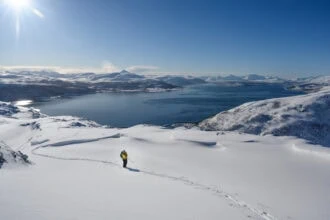
For anyone keen to spend more time on or near the water beyond a single whale watching trip, the Arctic fjords around Tromsø reward a slower, more scenic look in their own right, while those who fancy solid ground instead can head for skiing from Tromsø, a genuinely different way to experience the same winter landscape.
Before any of that, it is worth sorting out how to actually reach the city. Our Tromsø Airport to City Centre guide covers every transfer option into town, so the whale watching trip is not the first thing to plan around.