Reviewed by our editorial team Published
Why Tromsø Is One of the Best Places on Earth to See the Northern Lights
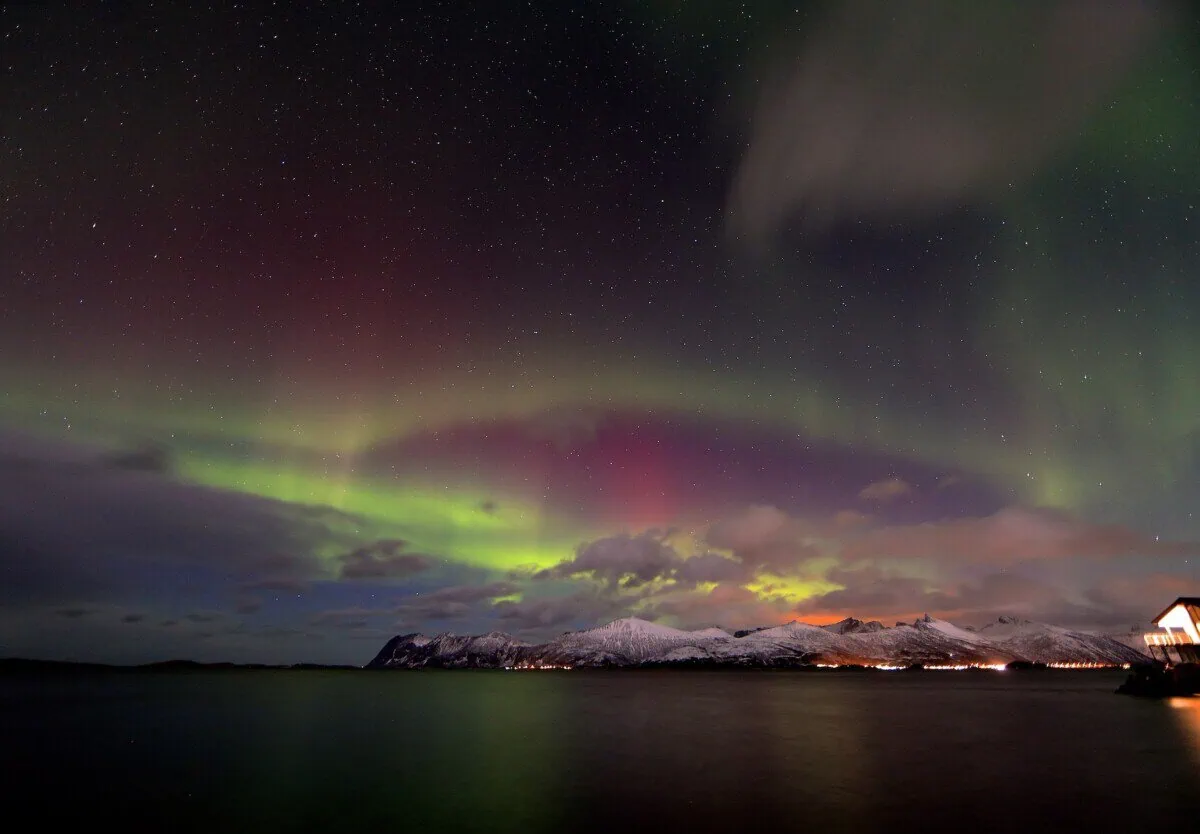
Tromsø sits almost directly beneath the auroral oval, the ring-shaped band around the magnetic pole where the northern lights are most frequently active, which is the main reason the city has built such a strong reputation as an aurora destination. Unlike some Arctic locations that only catch the lights on unusually strong nights, Tromsø has a genuine chance of activity on a large proportion of clear nights through the season.
That said, seeing the aurora borealis is never guaranteed anywhere on earth. It depends on solar activity, cloud cover and genuine darkness all lining up on the same night, and even in Tromsø there will be trips where the sky simply does not cooperate.
What Tromsø does offer, more than almost anywhere else, is flexibility. Its position on the coast, good road connections and status as a genuine city rather than a remote outpost mean visitors have real choices in how they chase the lights, from a short walk out of town to a full evening spent driving toward clearer skies.
This guide covers the practical basics: when to visit, where the lights are actually seen from, and the realistic options for trying to catch them, including a handful of bookable tours further down the page for anyone who would rather have the chase organised for them.
Part of the appeal is also practical: Tromsø has direct flights from several European hubs, a proper airport just outside the city centre, and enough hotels, restaurants and daytime attractions to fill the hours between aurora hunts. That combination of a genuine Arctic aurora zone and an easy-to-reach, well-equipped city is fairly unusual, since many of the world’s other leading aurora destinations demand far more remote and difficult travel to reach.
When to See the Northern Lights in Tromsø
The northern lights are visible above Tromsø any time the sky is dark enough and active enough, which in practice means roughly late September to early April. Outside that window, the midnight sun keeps the sky too bright for the aurora to be seen at all, regardless of solar activity.
Within the season, the polar night months of late November to mid-January offer the longest stretches of darkness, sometimes with a chance of activity even in the early afternoon. Late winter, from February to early April, often pairs genuinely dark, clear nights with more settled weather than deep midwinter.
Within any given night, activity is most commonly reported roughly between 6pm and 1am, though the aurora can appear at any hour once it is properly dark, and there is no fixed schedule to rely on.
The overall strength of a season also depends on the wider solar cycle, the roughly eleven-year rise and fall in solar activity, and the current cycle sits close to its maximum, so stronger and more frequent displays are statistically more likely through this period than during a quieter year. That still does not make any single night predictable, since even a strong solar cycle needs a favourable KP index reading and a genuinely clear sky on the night itself to produce a visible display over Tromsø.
Best if you want daily housekeeping and a front desk. Filter by area first, then by price.
Check availabilityBest for groups who want one address and separate bedrooms rather than three hotel rooms.
See holiday homesBest if you have already picked a hotel. Checks the big booking sites for the same room and shows who is cheapest.
Check dealsWhere the Lights Are Actually Seen From
A strong aurora can occasionally be seen from directly within Tromsø city centre, particularly from elevated spots such as the top of the Fjellheisen cable car, but street lighting and cloud rolling in off the coast both work against a clear view.
Because of this, most serious aurora chasing involves travelling away from the city, either toward the darker skies of Kvaløya island just to the west, or further inland toward the Norway-Finland-Sweden border region, where the climate is drier and cloud cover is typically lower than on the immediate coast.
This is the main reason most aurora tours in the region involve a genuine drive, sometimes of an hour or more, rather than simply stepping outside a Tromsø hotel. Chasing clear sky, not just chasing the aurora itself, is the real skill involved.
In practice, escaping Tromsø’s own light pollution generally means travelling at least 20 to 30 kilometres out of the centre, whether across the bridge onto Kvaløya or south and east along the mainland roads, since the glow from the city itself remains visible for a surprising distance on a clear night. Ersfjordbotn, a small settlement on the far side of Kvaløya facing open water, is one of the more commonly used viewpoints for exactly this reason, offering a wide, dark horizon with the sea in front and hills behind to block the worst of any residual light.
Guided Tours or Self-Drive
A guided aurora tour is the most common way to chase the lights from Tromsø, typically a minibus or coach heading out toward clearer inland skies for an evening, often with a guide checking forecasts and adjusting the route in real time to find a gap in the cloud.
The alternative is self-drive, with a rental car giving complete control over timing and destination for anyone comfortable driving on dark, occasionally icy roads well outside city lighting. This suits confident winter drivers far more than first-timers to Arctic conditions.
Whichever approach is used, patience matters more than almost anything else. A single evening rarely guarantees a sighting, and anyone with more than one or two nights in the region genuinely improves their odds simply by having more chances for the sky to cooperate.
As a rough guide, a standard minibus or coach aurora tour from Tromsø typically costs somewhere around NOK 1,300 to 1,700 per adult (roughly £104-136 / $140-184 / €121-158), usually including hot drinks and sometimes a light snack, though prices vary by operator, season and how much photography support is included. A rental car for a single evening is often cheaper outright, particularly split between two or more people, but that saving needs to be weighed against winter tyres, fuel, unfamiliar dark roads and the loss of a guide’s local knowledge of where the cloud tends to break.
How to Chase the Northern Lights Yourself
Kvaløya, the large island just west of Tromsø, holds several of the most useful self-drive viewpoints. Ersfjordbotn is around 30 minutes from the city centre and has a well-known viewing platform looking out over the fjord, while Kattfjordeidet, near Kattfjordvatnet just past Ersfjordbotn, is about 40 minutes away with marked parking and noticeably low light pollution.
Further along the same island, Grøtfjord is roughly an hour’s drive and offers a beach and ocean-facing viewpoint with a wide open horizon. Sommarøy, about an hour west across Kvaløya, is another dependable option for anyone happy to drive the full length of the island for a genuinely dark outlook.
On the mainland side, Skibotn lies 30 minutes or more east along the E8 and has a gravel lot with a north-facing view over the water, well clear of Tromsø’s own glow. Ramfjordmoen, just a few minutes off the E8 in the same direction, is a large unlit car park that works well as a quicker option on a night when a longer drive is not practical.
The actual routine most self-drivers settle into starts with the weather rather than the aurora itself. Checking Yr, the Norwegian Meteorological Institute’s app, or a similar weather service a few hours ahead helps identify pockets of clear sky, since cloud cover, not the KP index on its own, is the main thing standing between a clear night and a wasted one.
It is worth cross-checking the KP index and the aurora oval on a dedicated forecast app before committing to a direction, then heading for a dark, north-facing pull-off. Parking only in marked or legal spots and switching off both headlights and interior lights once stopped make a genuine difference to what is visible.
Eyes take a few minutes to properly adjust to the dark, so it helps to resist checking a phone screen too often while waiting. A faint pale or greenish glow low on the horizon is often the first sign of activity, and if a spot clouds over, thirty to sixty minutes is usually long enough to judge whether to wait it out or relocate to another forecast-clear spot rather than giving up.
Two apps worth having installed are My Aurora Forecast & Alerts and Hello Aurora, both genuinely active and maintained, which combine KP readings with local cloud data. For a more scientific source, the University of Tromsø’s Space Weather forecast service is a genuine local option for anyone who wants the detail behind the numbers.
Rental cars in the region come with legal winter or studded tyres as standard, but black ice and packed snow are common on rural roads even when the surface looks clear. Moose and reindeer can cross unexpectedly at night, so braking gently rather than swerving hard is the safer response, and it is worth keeping headlights on, stopping only in marked pull-offs rather than a traffic lane, carrying warm layers, a torch, a phone charger and snacks in case of a long wait, and checking Statens Vegvesen, Norway’s road authority, for road conditions in bad weather.
A Guided Minibus Safari With Photos Taken For You
This is the classic Tromsø aurora format: a small-group minibus or coach tour that drives away from the city’s light pollution in search of a clear patch of sky, sometimes covering a fair distance across the region if the forecast demands it. The guide reads the forecast and local conditions in real time, so the exact route is never fixed in advance, and evenings with heavy cloud may mean more driving and more patience than a still, clear night.
A distinctive feature of this format is that the guide also acts as photographer, carrying a proper camera and tripod to capture guests under the lights, since ordinary phone cameras generally struggle to render the aurora well in the dark. It suits travellers who want a genuine chance at photos without owning or understanding manual camera settings themselves, though the trade-off is sharing that attention with everyone else in the group.
A typical evening runs five to eight hours door-to-door, sometimes stretching to nine hours if extra driving is needed to reach clear sky. The mid-size minibus format keeps numbers capped at around fifteen guests, small enough that the guide can realistically photograph everyone individually rather than just the group as a whole.
Each guest is generally photographed using the guide’s own DSLR camera and tripod, set up and shot for them individually rather than left to manage manual settings alone in the dark. That level of one-to-one camera attention is one of the clearest differences between this format and a larger coach tour, where the same effort is spread across far more people.
Chasing the Aurora in a Smaller Group
This tour follows the same basic chase-the-clear-sky principle as other aurora hunts, but keeps the group size deliberately small, usually a single vehicle rather than a full coach. That makes it easier for the guide to change plans quickly, pull off at a promising spot, or backtrack if the sky opens up somewhere unexpected, which matters on a hunt where conditions can shift within the hour.
The smaller format also tends to mean more personal guiding, with more chance to ask questions about the aurora itself and get individual help framing photos, rather than being one of a large coachload. It suits couples, small families or anyone who finds a big-group tour impersonal, though it can cost a little more per person than a large-coach equivalent for the same basic experience.
Evenings typically run five to nine hours, commonly settling around six to eight depending on how far the group needs to travel to escape cloud cover. Because there is only ever one vehicle and one small group to manage, the guide can make real-time decisions about where to stop next based on the latest forecast, rather than coordinating a fixed schedule for a full coachload.
That flexibility translates into a noticeably more relaxed pace than the minibus or coach formats, with fewer people to load and unload at each stop and more scope to simply wait somewhere promising a little longer. It is the format best suited to travellers who value unhurried, adaptable pacing over covering the widest possible ground in a single evening.
A Longer-Range Coach Expedition With a Dedicated Photographer
Where a minibus tour covers a modest radius, this larger coach-based expedition is built to range further afield, giving guides more options when the weather near Tromsø itself is uncooperative. Covering more ground generally improves the odds of finding a clear window somewhere in the region, which is the main appeal of the bigger-vehicle format.
The trade-off for that reach is a larger group, so the experience is naturally less personal than a minibus tour, and a dedicated professional photographer, rather than the driving guide, usually handles the photography instead. It suits travellers focused mainly on maximising their chances of a sighting and coming away with decent photos, rather than those prioritising an intimate small-group feel.
A typical departure lasts around six hours, usually somewhere between five and seven depending on how far the coach needs to travel to find clear sky that night. Being a full-size coach rather than a minibus, it also comes with practical extras such as an onboard toilet, which matters on a long evening spent mostly on the road.
The dedicated photographer works independently of the driving guide, moving through the coach and setting up shots at each stop, with images typically delivered separately after the tour rather than handed over on the night. That division of labour is part of what allows the larger group to still get individual photo attention despite the bigger headcount.
Best if you can move a day either way. Shows how the fare changes across the month.
Compare flightsBest for anyone whose home plan charges by the megabyte abroad. Pay a fixed price up front.
Check eSIMsBest if you would rather not work out the transport on arrival. Book it now and forget it.
View transfersAn Evening Built Around a Wilderness Campfire
This version follows a similar minibus-and-chase format to other aurora tours, but builds in a stop at an outdoor campfire site as a base for part of the evening. Rather than watching the sky purely from inside a moving vehicle, guests get a fixed spot to gather round the fire, typically with a hot drink to hand, while the group waits and watches.
Aurora hunting involves a lot of waiting, and a campfire stop makes that wait genuinely comfortable rather than just cold and static, which is a real point of difference from a tour that keeps everyone in the vehicle between viewing spots. It suits travellers who want a cosier, more atmospheric evening alongside the chase itself, though the campfire stop is one part of the itinerary rather than the whole focus.
The full evening runs to around seven hours door-to-door, with roughly four hours of that spent at the wilderness campsite itself rather than on the road. That is a very different rhythm from a tour built around continuous driving, since most of the evening happens in one fixed spot rather than a sequence of short stops.
This is the only format among the Tromsø aurora options built around a dedicated static outdoor base rather than ongoing chasing, trading some of that mobility for a genuinely comfortable, extended wait under open sky. It suits travellers who would rather settle in by a fire with hot food and drinks than spend the evening repeatedly getting in and out of a vehicle.
Watching the Aurora From the Water by Electric Boat
This tour swaps the minibus for a boat, taking guests out onto the fjord aboard an electric or hybrid-electric vessel to watch for the aurora from the water rather than from land. Being out on open water gives a wider, unobstructed view of the sky in every direction, and the fjord setting itself, with dark hills rising on either side, is part of the appeal even before any lights appear.
The electric or hybrid propulsion makes for a noticeably quieter ride than a diesel boat, with less engine noise and lower emissions, which suits travellers who like the idea of a calmer, more environmentally conscious option. It is worth noting this is a genuinely different experience to a land-based chase, generally calmer but with less flexibility to relocate quickly, and those prone to seasickness should weigh that honestly before booking.
A typical cruise lasts around three hours, noticeably shorter than most land-based chases, which suits travellers who want a concentrated evening rather than a long open-ended hunt. It is also the only water-based option among the Tromsø aurora tours, and many boats include a heated saloon below deck where guests can warm up between spells on the open viewing areas, an amenity a minibus or coach simply cannot offer in the same way.
Reindeer Sledding and a Sámi Dinner, With the Aurora as a Bonus
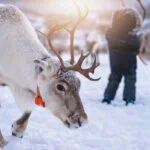
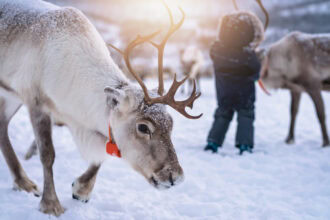
This tour combines a reindeer sledding experience, usually in a Sámi camp or lavvo setting, with a traditional dinner served in the warmth of the camp itself. It is built as a rounded evening out rather than a single-activity trip, giving guests a taste of reindeer herding culture and a proper meal alongside the sledding.
The northern lights element is included as a genuine bonus rather than a guarantee, since the group’s focus and location are set by the sledding and dinner, not by chasing clear sky the way a dedicated aurora tour would. It suits travellers who want a broader cultural evening and would be happy either way, rather than those whose main priority is maximising their odds of a sighting specifically.
The whole experience runs to around four and a half hours, making it the shortest of the main Tromsø aurora-linked tours, and one built firmly around the sledding and camp itself rather than a long night spent chasing clear sky. Dinner is typically a proper three-course traditional meal, served alongside storytelling about Sámi culture and reindeer herding, so guests come away with a full evening of activity and food even on a night when the aurora does not appear at all. It is the option worth picking for anyone who wants a guaranteed good evening regardless of what the sky does, rather than one built entirely around the gamble of a sighting.
Checking the Forecast: KP Index and Cloud Cover
Two separate forecasts matter for aurora chasing, and it is easy to check only one. The KP index measures geomagnetic activity, roughly how strong the aurora is likely to be, while a standard cloud cover forecast determines whether it will actually be visible from the ground at all.
A high KP forecast under thick cloud is worthless, while even a modest KP reading under a genuinely clear sky can produce a memorable display. Several free aurora forecast apps and websites combine both figures for specific locations across northern Norway, and checking them a few hours ahead is standard practice for anyone chasing the lights independently.
Local knowledge of where the cloud tends to break, built up over years of watching regional weather patterns, is one of the genuine advantages a guided tour has over a first-time visitor with a rental car and a forecast app.
The KP scale itself runs from 0 to 9, and Tromsø’s far-northern latitude means even a relatively modest reading of two or three can be enough to produce a visible display overhead on a clear night, unlike locations much further south that typically need a KP of six or higher. This is one of the clearest practical advantages of chasing the aurora from this far north rather than from a lower latitude.
Cloud forecasts this far north can also change quickly, and a forecast checked at breakfast can look quite different by early evening once a guide or independent driver needs to commit to a direction. Many aurora chasers get into the habit of checking an updated cloud forecast again in the late afternoon, specifically for the hours after dark, rather than relying on whatever the morning forecast happened to show.
What to Wear and Bring
Aurora chasing means standing still outdoors for long stretches on genuinely cold nights, which is a very different experience from simply walking between buildings. Layering is the key principle: thermal base layers, an insulating mid layer and a proper windproof, waterproof outer shell, topped with a warm hat, insulated gloves and thermal boots.
Hand and foot warmers are cheap, widely available locally, and genuinely make a difference on the coldest nights. A thermos of something hot is a small comfort that most seasoned aurora chasers never skip.
For photography, a camera capable of a manual long exposure, a sturdy tripod and a spare battery are the practical minimum, since batteries drain unusually fast in extreme cold and a shaky handheld shot rarely captures the aurora well.
A single pack of disposable hand or foot warmers typically costs only a small amount, often well under NOK 50 (roughly £4 / $5 / €5) for several pairs, making them one of the cheapest and most effective additions to an aurora kit. In genuinely cold conditions, a fully charged camera battery can lose a significant share of its charge within an hour or two of continuous outdoor use, which is why most experienced aurora photographers carry at least one spare, kept warm in an inner pocket rather than left in a cold camera bag between shots.
Setting Realistic Expectations
Even in one of the best locations on earth for it, the northern lights are never guaranteed on any single night, and a run of cloudy weather can affect an entire trip regardless of how good the underlying solar activity happens to be.
Booking at least two or three nights specifically for aurora chasing, rather than a single evening squeezed into a wider itinerary, is the single biggest factor most repeat visitors point to when asked how they finally saw a strong display.
A trip built around the wider appeal of Tromsø and Arctic Norway, with the aurora as a genuine bonus rather than the sole reason for travelling, tends to leave visitors happiest, whatever the sky ultimately does.
As a rough pattern rather than a hard statistic, most seasons see a mix of clear and overcast nights week to week, and local guides generally reckon on somewhere between two and four nights in an average week offering skies clear enough to give a genuine chance, weather patterns permitting. On a typical three-night stay dedicated to aurora chasing, many repeat visitors and tour operators report that most groups see at least some activity on one of those nights, even if it is not always the strong, sky-filling display often shown in photographs.

Rupert’s Handy Travel Tips
Chasing the aurora is as much about patience as luck. Rupert’s tips will help you make the most of clear skies when they show up.
- Book more than one night if you can: a single cloudy evening can otherwise end your chances entirely.
- Check both the KP index and the cloud forecast: a strong aurora under thick cloud is invisible either way.
- Dress for standing still, not walking: proper layers matter far more than they do for a normal winter walk.
- Bring a spare camera battery: extreme cold drains batteries far faster than usual.
- Give your eyes time to adjust: step away from phone screens and bright lights for a few minutes before judging the sky.
Want to meet the reindeer behind our travel tips? Find out more in our page Who is Rupert?.



Best for solo travellers and anyone watching the budget. Dorm beds and private rooms in the same search.
Browse hostelsBest if you have ever given up on a claim. AirHelp checks whether the flight qualifies and pursues it for you.
See the benefitsBest for the gap between checking out and your train. Drop bags at a shop or hotel nearby and carry on.
Store your bagsFrequently Asked Questions About Northern Lights From Tromsø
What is the best month to see the northern lights in Tromsø?
There is no single best month within the season, but the polar night period from late November to mid-January offers the longest darkness, while February and March often bring clearer, more settled weather.
Can you see the northern lights from Tromsø city centre?
Occasionally, on a strong night, particularly from elevated spots like the top of the Fjellheisen cable car, but street lighting and coastal cloud mean most serious chasing involves travelling out of the city.
How many nights should I plan for aurora chasing?
Most repeat visitors recommend at least two or three nights specifically set aside for it, since a single cloudy evening can otherwise end the chances for a short trip.
Do I need a tour, or can I chase the lights myself?
Both are genuine options. A guided tour brings local knowledge of where cloud tends to clear, while a rental car offers complete control for confident winter drivers.
Is the KP index the only thing that matters?
No. Cloud cover matters just as much, and a high KP forecast is worthless under thick cloud, so both should always be checked together.
Further Reading & Related Guides
Aurora chasing is usually only one part of a wider Tromsø trip, and our main guide to things to do in Tromsø is the best starting point for filling out the rest of the itinerary around it. It covers the city’s other big draws well beyond the night sky, from museums and cable cars to day trips further afield.
Wildlife and scenery both deserve dedicated guides of their own here too. Our write-up on dog and reindeer sledding covers two of the region’s most popular winter activities in more depth, our whale watching guide explains when and where the fjords offer the best sightings, and our guide to the Arctic fjords around Tromsø is worth reading for anyone keen to explore the scenery beyond the aurora itself.
For anyone drawn more to the mountains than the water, our skiing from Tromsø guide rounds out the region’s other big winter draw, and pairs naturally with an aurora trip for visitors staying more than a few days.
Before you arrive, it is worth reading the practical side too. Our Tromsø Airport to City Centre guide covers every transfer option, and our eSIM Apps Guide is particularly useful for keeping aurora forecast apps and maps running smoothly throughout the trip.