Reviewed by our editorial team Updated
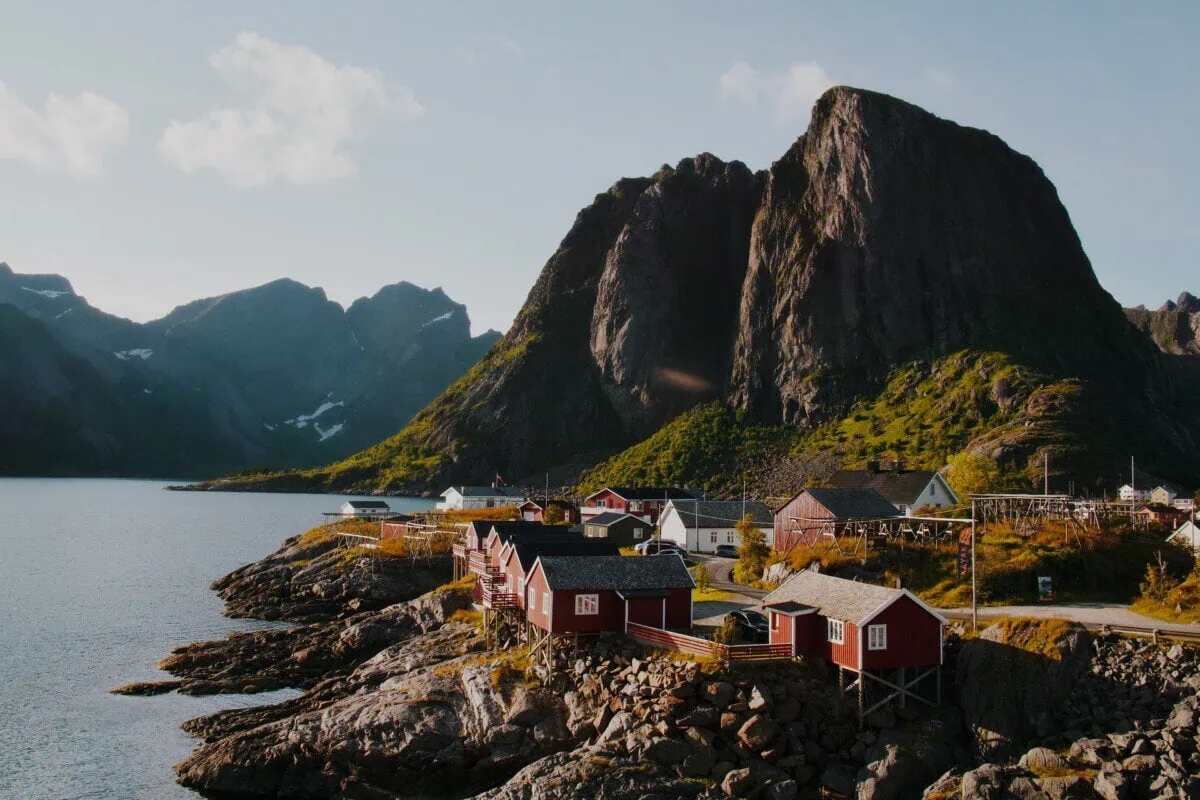
The Lofoten Islands rise straight out of the Norwegian Sea in a jagged wall of granite peaks, and few places in Europe pack so much drama into such a small area. Fishing villages built on stilts cling to narrow inlets, sheep graze on white-sand beaches that look tropical until the wind reminds you otherwise, and the E10 highway threads between mountains and fjords like it was designed purely for the view.
This archipelago sits well above the Arctic Circle in northern Norway, reached most commonly via Bodø or the small local airports at Svolvær and Leknes. Despite the remote setting, Lofoten has become one of Norway’s most photographed destinations, and it rewards travellers who come for more than a single viewpoint.
What makes Lofoten different from many Arctic destinations is how liveable it feels once you arrive. Proper roads, real fishing villages still working the same waters as a century ago, and a genuine rorbuer accommodation tradition mean visitors get authenticity rather than a manufactured tourist experience built around a single lookout point.
This guide covers how to actually get to Lofoten by air, rail and road, when to go depending on whether you want the midnight sun or the Northern Lights, which villages genuinely deserve your time, and the activities and hikes that make the islands worth the effort of reaching them. It also covers where to stay and how to get around once you land, since this is a place where the practical logistics shape the trip as much as the scenery does.
How to Get to Lofoten
Lofoten can be reached three distinct ways, and the right choice depends on how much time is available and whether the journey itself is meant to be part of the trip. The table below summarises typical journey times for flying, taking the train and ferry, or driving, with the sections that follow covering each route in full detail.
| Route | Typical Journey Time | When It Makes Sense |
|---|---|---|
| Flight (via Svolvær or Leknes, or via Evenes) | Around half a day from Oslo, plus a further two-and-a-half to three-and-a-half hour drive if flying into Evenes | Best for travellers short on time who want the fastest link into Lofoten |
| Train and ferry (Trondheim or Oslo to Bodø, then ferry to Moskenes) | A full day or more, including a three-to-four-hour sea crossing | Best for travellers who want the journey itself to be part of the trip |
| Driving (via the LOFAST connection and the E10) | Several days depending on the starting point, since the E10 is slow and made for stopping | Best for road-trippers who want full flexibility and a relaxed pace |
Whichever route is chosen, it is worth building in a little slack, since flights, ferries and mountain roads in this part of Norway are all genuinely weather-dependent. Booking well ahead matters most in July and August, when seats, ferry car spaces and the smaller regional flights all come under the heaviest pressure.
How to Get to Lofoten by Air
Flying is the fastest way into Lofoten, and the regional carrier Widerøe operates the small airports at Svolvær and Leknes, both short-runway airfields designed for the Dash 8 aircraft it flies on Norway’s coastal network. These flights typically route through Bodø or Tromsø, so a journey from Oslo almost always involves a connection rather than a single hop.
The alternative is flying into Harstad/Narvik Airport at Evenes, which has more direct connections from Oslo on SAS and Norwegian and generally cheaper fares thanks to bigger aircraft and more competition. The trade-off is a drive of roughly two and a half to three and a half hours from Evenes into central Lofoten, which is a genuine consideration if you are arriving late in the day.
Because Svolvær and Leknes are small regional airports with limited seats, fares on these direct routes can run noticeably higher than equivalent mainland domestic flights, especially in the short summer peak. Many travellers find it cheaper overall to fly into Bodø, where competition is stronger, and then continue to Lofoten by ferry or a short onward Widerøe hop.
Whichever airport you choose, book well ahead for July and August. Seats on the smaller Lofoten-bound routes sell out early once the midnight sun season is underway, and last-minute fares on these thin routes rarely come cheap.
Best for a short trip. Compare rooms by neighbourhood, price and guest rating before you book.
Compare hotelsBest for longer stays. Whole apartments and houses, so you are not eating out three times a day.
View rentalsBest for double-checking. Runs the same search across several booking sites so you are not leaving money behind.
Compare pricesReaching Lofoten by Train and Ferry
For travellers who want the journey to be part of the trip, the classic overland route runs by rail to Bodø and then by sea into the islands. Our full Nordland Line Guide covers the Trondheim to Bodø railway in detail, including the Arctic Circle crossing, so we won’t repeat that here beyond saying it is one of the great scenic train rides in Europe.
Travellers coming from further south often combine the daytime railway with an overnight sleeper from Trondheim or Oslo the night before, which our Norway Night Trains guide explains in full, including cabin classes and how to book them through Vy. Arriving into Bodø rested rather than jet-lagged makes the onward ferry crossing far more enjoyable.
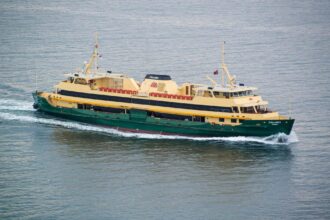
From Bodø, the year-round car ferry to Moskenes is the main sea link into Lofoten, taking roughly three to four hours across open water. At the time of writing, a car with driver costs in the region of NOK 834 (about €72/£63/$81) including reservation, while foot passengers travel free, though exact fares vary by vehicle length and season and are worth checking directly before you go. Drivers can cut that fare significantly by registering for the AutoPASS Ferry prepayment scheme covered in our Norway on a Budget guide, which cuts most private vehicle ferry fares by half.
A faster passenger-only express boat also runs from Bodø to Svolvær during the summer months, cutting the crossing time considerably for anyone travelling without a car. Whichever ferry you choose, book your car space ahead in July and August, since this crossing is genuinely busy at the height of the season.
Driving to Lofoten: Roads and Mainland Connections
Driving into Lofoten from the east no longer requires a ferry at all. The LOFAST road connection, completed in 2007, links Lofoten to the mainland via a chain of tunnels and bridges across Hinnøya and Austvågøy, including the Raftsund Bridge, replacing what used to be a ferry crossing through Vesterålen.
This means a car arriving from Evenes or driving down from Tromsø and Narvik can reach Svolvær entirely on tarmac, and the same is true travelling within the archipelago itself. The main islands of Austvågøy, Vestvågøy, Flakstadøy and Moskenesøy are all connected along the E10 by a mix of bridges, causeways and undersea tunnels, so a single road trip can genuinely run from Svolvær down to Å without a ferry ticket.
That said, this is an area where infrastructure has changed relatively recently and continues to be upgraded, so it is worth double-checking current conditions before relying on a specific route, particularly for a winter trip. Some approaches from the south still involve a genuine ferry, including the Bognes-Lødingen and Skutvik-Svolvær crossings, and outlying islands such as Værøy and Røst remain reachable mainly by ferry or a short flight rather than by road.
Whichever direction you approach from, allow more time than the distances on a map suggest. The E10 is a spectacular road, but it is narrow, winds constantly around fjords, and is genuinely slow going compared with a mainland highway of similar length.
Reaching Værøy and Røst by Ferry
The connection worth discussing here isn’t between Lofoten’s main islands, which are already linked by road as covered above. It’s the outer islands of Værøy and Røst that rely on a genuine inter-island ferry, since neither has a bridge or tunnel back to the E10 network.
The service is a variant of the Bodø-Moskenes ferry already covered earlier in this guide. Alongside the direct Route A crossing, a Route B sailing calls at Værøy and Røst en route between Bodø and Moskenes, effectively doubling as the inter-island link for anyone based in Lofoten who wants to visit either island.
Route B sailings run less often than the direct crossing, with roughly one or two departures a day in winter, rising to several daily through the summer peak, so it’s worth checking the current timetable before building a day trip around one. Passenger fares to and from Værøy and Røst are typically free, with only vehicles charged, though this is worth confirming directly since fare rules can change.
A short flight is the practical alternative to the ferry for both islands. Widerøe operates a fixed-wing service linking Bodø, Røst and Svolvær roughly twice daily, while Lufttransport runs a scheduled helicopter between Bodø and Værøy on a similar schedule, and there is no separate ferry running directly between the two islands, so reaching one from the other still means routing via Bodø on Route B.

Best Time to Visit Lofoten: Midnight Sun and Northern Lights Seasons
Lofoten essentially runs on two very different travel seasons, and the right one depends on what kind of trip you actually want. Between late May and mid-July, the sun barely dips below the horizon, giving near-endless daylight for hiking, cycling and photography at hours that would normally be asleep.
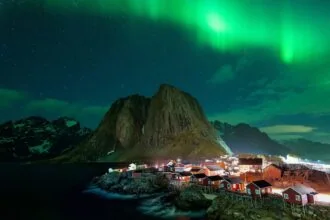
Winter flips the experience entirely. From roughly late September through March, long dark nights make Lofoten one of the destinations covered in our Northern Lights Guide, with the aurora appearing over jagged mountain silhouettes rather than flat tundra, which is part of why photographers rate it so highly.
The honest trade-off is that winter weather in Lofoten is genuinely unpredictable. Storms roll in fast off the Norwegian Sea, roads can close temporarily, and several of the more popular summer hikes, including Reinebringen, become unsafe or are simply closed once snow and ice set in.
May and September are the honest shoulder-season compromise, with far fewer crowds than peak summer and milder conditions than deep winter, though you should still expect changeable weather and pack for rain regardless of which month you choose. Whatever season you pick, build at least one buffer day into the itinerary in case weather disrupts a hike, ferry or flight.
Lofoten’s Towns at a Glance
Before looking at each village in detail, it helps to see how they compare side by side, since Lofoten’s best-known settlements each suit a slightly different kind of stop. The table below sets out why each one is worth visiting and roughly how much time to allow, with a full section dedicated to each further down this guide.
| Village | Why Visit | Time to Allow |
|---|---|---|
| Reine | Lofoten’s classic postcard village and the base for the Reinebringen hike | A few hours for the village itself, half a day or more with the hike |
| Henningsvær | A working fishing harbour turned art hub, with a cliffside football pitch and the Festvågtind hike | Two to three hours as a lunch or half-day stop |
| Å | The end of the E10, home to the Norwegian Fishing Village Museum and historic fish-drying racks | Best as an overnight stop rather than a quick visit |
| Nusfjord | One of Norway’s oldest and best-preserved fishing hamlets, with a paid heritage area by the harbour | An hour or two, longer with lunch at the village restaurant |
None of these villages need a rushed visit, and several work far better as an overnight base than a quick photo stop. Reine and Å in particular reward staying the night in a rorbuer cabin, letting the harbour light change from evening into morning without having to drive straight back afterwards.
Reine and the Reinebringen Hike
Reine is the village most people picture when they think of Lofoten, a cluster of red and white fishing houses squeezed onto a narrow spit between sheer granite peaks and the sea. It is small enough to walk end to end in ten minutes, but the surrounding scenery is what draws people here rather than the village itself.
Directly above the village runs Reinebringen, Lofoten’s most famous viewpoint hike and one of the most photographed short walks in Norway. A team of Nepalese Sherpa trail-builders installed roughly 2,000 stone steps up the steepest section in recent years, which has made the ascent considerably safer and more manageable than the eroded scramble it used to be, though it remains a genuinely steep 45 minutes to an hour of climbing.
The marked stairs end below the summit, after which an unmarked path continues over exposed, narrow ridges to the true top, a section only suited to confident hikers comfortable with heights. Conditions can change quickly at altitude, so check the weather and only attempt Reinebringen between roughly May and September, when the route is officially considered safe to walk.
Paid parking in central Reine fills up fast in summer, so an early start matters as much for finding a space as for beating the crowds at the top. The official Visit Lofoten trail page is worth checking before you go for the latest access and safety notes.
Best for long or awkward journeys. Builds one itinerary out of separate flights.
View flightsBest if you want maps and messaging working the moment you switch your phone on.
See eSIM plansBest after a long flight or a late landing. Price agreed before you travel, and no taxi queue.
Check transfersHenningsvær, the Art and Fishing Village
Henningsvær sits on a cluster of tiny islets connected by narrow bridges, a genuine working fishing harbour that has also become something of an artistic hub. Galleries, cafés and a small but well-regarded contemporary art space share the same weathered wooden buildings as the boats still landing cod each morning.
The village’s other claim to fame is its cliffside football pitch, wedged onto a rocky outcrop with the sea and mountains as its boundary lines, which regularly turns up on lists of the world’s most scenic sports grounds. It is a genuinely odd, memorable sight rather than a manufactured photo stop.
Above the village, the short but steep hike up Festvågtind gives one of Lofoten’s best panoramic views back down over Henningsvær’s scattered islets, and is a genuinely popular alternative to Reinebringen for hikers looking to avoid the busiest crowds. It is a shorter climb but no less rewarding for the effort.
Henningsvær makes a good lunch or half-day stop on a road trip rather than a full base, since it sits slightly off the main highway down a short connecting road. Give yourself at least two or three hours to wander the harbour, browse the galleries and, if the weather holds, tackle Festvågtind.
Å, Lofoten’s Southernmost Fishing Village
Pronounced simply “oh”, Å sits right at the end of the E10 where the road runs out and the archipelago finally gives way to open sea. It is genuinely tiny, a handful of rorbuer cabins and fish-drying racks gathered around a small harbour, but that scale is exactly what makes it feel like the true edge of the map.
The village is home to the Norwegian Fishing Village Museum, a genuinely worthwhile stop that explains the stockfish trade which built Lofoten’s economy for centuries and still shapes it today. Wooden racks hung with drying cod are a common sight around Å from winter through spring, and the smell is as much a part of the experience as the photographs.
Beyond the museum, Å rewards travellers who simply slow down. Short coastal walks lead out past the last houses toward open water, and the low sun of early morning or late evening produces some of the most atmospheric light in the whole archipelago.
Because it sits at the literal end of the road, Å works best as an overnight stop rather than a quick drive-through. Staying a night in one of its rorbuer cabins lets you catch the harbour in both evening and morning light without rushing back up the E10.
Nusfjord, a Preserved Fishing Hamlet
Nusfjord is one of Norway’s oldest and best-preserved fishing villages, tucked into a narrow, sheltered inlet on Flakstadøy that has protected it from the storms that regularly batter more exposed parts of the coast. Its wooden buildings, boat sheds and cod-liver-oil factory have survived largely intact since the 19th century.
Unlike some restored heritage sites, Nusfjord still functions as a genuine small settlement rather than a museum piece, though a section of the village operates as a paid heritage area with an entrance fee covering access to the old buildings and harbour front. The rest of the hamlet, including its handful of rorbuer, remains open to wander freely.
The setting is what really sets Nusfjord apart, with steep mountains rising almost straight out of the water on both sides of the narrow harbour mouth. It photographs beautifully in flat evening light, when the reflections in the sheltered water double the drama of the surrounding peaks.
Nusfjord sits a short detour off the main road down a quiet side lane, making it an easy half-day addition to a wider road trip between Leknes and Reine. Allow an hour or two to walk the harbour and old buildings, longer if you plan to eat at the village’s small restaurant.
Sea Eagle Safaris and RIB Boat Tours
Getting out onto the water is arguably the best way to actually understand Lofoten’s scale, since so much of what makes the islands dramatic is only visible from the sea. Fast RIB boat tours run from harbours including Svolvær, Reine and Ballstad, typically lasting two to three hours and covering sheltered fjords, open coastline or both depending on conditions.
The most popular version of these trips is a dedicated sea eagle safari, which heads out to known nesting grounds where white-tailed eagles, Europe’s largest bird of prey, are reliably seen swooping down toward the boat for bait thrown by the guide. Sightings are genuinely close to guaranteed on a clear day, which is unusual for wildlife tourism anywhere.
Operators supply full waterproof survival suits, which matters, since Arctic sea spray at speed is cold even in July. Trips generally run from spring through autumn, with winter departures more weather-dependent and often shorter.
Book a few days ahead in summer, since the most established operators sell out on clear-weather days, and it is worth staying flexible on the exact date if the forecast looks marginal. A calm, clear afternoon makes a genuine difference to both the eagle sightings and the overall comfort of the ride.
Haukland and Kvalvika Beaches
Few people expect white-sand beaches inside the Arctic Circle, which makes Haukland one of Lofoten’s more surprising stops. A wide curve of pale sand backed by steep green mountains and lapped by startlingly turquoise water sits just off the E10, easily reached by car with a proper car park right behind the dunes.
The water is genuinely Arctic despite the tropical colouring, so swimming is a short, bracing dip rather than a lounge-about activity for most visitors. A short trail from the northern end of Haukland climbs over a headland to the smaller, quieter Vik beach on the other side, worth the twenty-minute detour if Haukland itself is busy.
Kvalvika is the wilder counterpart, a beach with no road access at all, reached only by a roughly 45-minute hike over a mountain pass from a small car park near Fredvang. The reward is a genuinely secluded curve of sand hemmed in by cliffs on both sides, with none of the day-trip infrastructure found at Haukland.
Both beaches are best visited in decent weather, since the walk to Kvalvika in particular becomes slippery and unpleasant in heavy rain. Bring proper footwear rather than sandals, and allow half a day if you want to combine the hike in with time to actually enjoy the beach itself.
Staying in Traditional Rorbuer Cabins
Rorbuer are the traditional wooden fishermen’s cabins found throughout Lofoten, originally built to house seasonal cod fishermen and now converted, in varying degrees, into tourist accommodation. Staying in one is genuinely the most atmospheric way to sleep in Lofoten, usually right on the water with boats moored a few steps from the door.
Quality and authenticity vary a lot between properties, and it is worth knowing this before booking on looks alone. The most characterful, genuinely old rorbuer tend to be found in the smaller western villages such as Å, Reine and Nusfjord, while some newer, purpose-built cabins near Svolvær borrow the style without the history.
Prices swing hard with the season. In peak summer, expect somewhere in the region of NOK 900 to NOK 1,800 a night (roughly €80-155/£70-135/$90-170) depending on size and location, dropping noticeably outside July and August, though exact rates vary considerably by operator and should be checked directly.
Most rorbuer come with a full kitchen, which is genuinely useful given how limited and pricey restaurant options can be in the smaller villages. Book several months ahead for a July or August stay in one of the well-known western hamlets, since the best cabins there are a genuinely limited resource.
Best for short city stops where being central matters more than the room. Dorms and private rooms both listed.
See hostelsBest if you have ever given up on a claim. AirHelp checks whether the flight qualifies and pursues it for you.
See the benefitsBest if your room is not ready yet. Left luggage booked in advance, so you are not hunting for a locker.
Check storageGetting Around Lofoten
A rental car is genuinely the easiest way to see Lofoten properly, given how spread out the villages, beaches and trailheads are along the E10 and its side roads. Rental desks operate at all three local airports and in Bodø, though it is worth booking ahead in summer, as availability on the smaller islands can run tight.
For travellers without a car, a genuine but limited local bus network connects the main towns along the E10, running more frequently in summer than winter. Buses are workable for reaching one or two fixed points, such as Svolvær to Reine, but they are not a practical way to chase the more remote beaches, hikes or side-road villages on a flexible schedule.
A handful of shorter local ferries still operate within the archipelago and out to smaller outlying islands not reached by the main road, filling the gaps the bridges and tunnels do not cover. These are genuinely useful if your itinerary stretches beyond the main connected islands, though schedules are limited and worth checking well ahead.
Taxis exist in the larger towns but are expensive and thin on the ground elsewhere, so they work as an occasional backup rather than a primary way to get around. For most visitors, a hire car remains the only realistic way to see more than one or two villages in a single trip.
Cycling and Road-Tripping Through Lofoten
The E10 itself is arguably Lofoten’s biggest single attraction, a road that winds between fjords, tunnels and mountain passes for its entire length from the mainland connection down to Å. A one-way road trip along its full stretch, stopping properly at the villages and beaches along the way, realistically needs at least three to four days rather than a rushed single day.
Cycling the E10 has become genuinely popular in summer, helped by long daylight hours and relatively gentle gradients compared with much of mountainous Norway. That said, the road is narrow with little shoulder in places and can carry heavy tourist traffic in July and August, so confident road cycling experience matters more here than on a quiet rural route elsewhere.
Several of the archipelago’s road tunnels are genuinely long and can feel intimidating on a bike, so check tunnel-specific cycling rules before setting out, since a few require lights or are best avoided in favour of an older parallel road where one still exists.
Whether driving or cycling, build in generous time rather than treating the road as a point-to-point transit route. The whole appeal of a Lofoten road trip is stopping constantly, and a schedule built around mainland driving speeds will only leave you frustrated.
A Sample Lofoten Itinerary
The following five-day plan strings together Lofoten’s essential villages, one signature hike and a boat trip into a realistic pace, and works well whether arriving by flight or via the train-and-ferry route covered earlier in this guide. It assumes a hire car and a base or two changed partway through, rather than one fixed hotel for the whole stay.
Day one begins with arrival, whether that means flying into Svolvær or Leknes or driving in via the LOFAST connection, followed by checking into a rorbuer cabin near Svolvær for the first night. There is little point rushing straight back out after a travel day, so a relaxed evening wandering Svolvær’s harbour, where several of the RIB and sea eagle safari operators are based, sets a good tone before the road trip properly begins the next morning.
Day two heads south along the E10 toward Henningsvær, a worthwhile lunch stop for its galleries, working harbour and cliffside football pitch, with the climb up Festvågtind on offer for anyone keen on an extra view. Continuing on, a short detour into Nusfjord makes a good late-afternoon call, its narrow inlet and preserved wooden buildings worth an hour or two before pushing on to Reine for the night.
Day three is built around the Reinebringen hike, best tackled with an early start both to beat the crowds and to find parking in central Reine before it fills up. The climb up the Sherpa-built stone steps takes roughly 45 minutes to an hour to the main viewpoint, leaving the rest of the day free to recover over a slow lunch back in the village.
Day four moves onto the water with a RIB boat or sea eagle safari, easily booked from Reine or one of the other harbours already covered, with weather and eagle sightings both close to guaranteed on a clear day. Back on dry land by early afternoon, a stop in Å suits the remaining hours well, taking in the Fishing Village Museum and the drying racks before an overnight stay right at the end of the E10.
Day five turns toward the coast for a slower pace, with Haukland beach an easy stop for its pale sand and turquoise water, and the short walk over to Vik beach worth the detour if Haukland feels busy. From there, the drive back north toward Leknes or Svolvær for a flight, or onward to catch the ferry from Moskenes, rounds out the trip at a gentler rhythm than the hiking and boat days that came before it.

Rupert’s Handy Travel Tips
Planning a trip to Lofoten? Rupert has a few tips to help things run smoothly once you land:
- Book flights and ferries early: Svolvær, Leknes and the Bodø-Moskenes crossing all have limited capacity in summer.
- Start Reinebringen at first light: parking in Reine fills fast, and the climb is more comfortable before the day heats up.
- Pack proper layers regardless of season: Arctic weather can turn quickly even during the midnight sun months.
- Reserve rorbuer months ahead: the best fishing-village cabins in Å, Reine and Nusfjord book out early for July and August.
- Build buffer days into your itinerary: weather can disrupt hikes, boat tours and ferries with little warning.
- Check current road and tunnel conditions before a winter trip: infrastructure here has changed a lot in recent years and continues to be upgraded.
Want to meet the reindeer behind our travel tips? Find out more in our page Who is Rupert?.



Frequently Asked Questions
Do you need to take a ferry to reach Lofoten?
Not necessarily. Driving from the east via the LOFAST connection and the E10 avoids a ferry entirely, though the classic Bodø-Moskenes route, or approaches from the south such as Bognes-Lødingen, still use one.
What is the best month to visit Lofoten?
June and July offer the midnight sun and the most reliable weather, while February and March suit travellers chasing the Northern Lights. May and September are a genuine shoulder-season compromise with fewer crowds, though weather is changeable either way.
Can you see the Northern Lights in Lofoten?
Yes, Lofoten is a recognised aurora destination from roughly late September through March, with the added draw of the lights appearing over dramatic mountain scenery rather than flat terrain.
How many days do you need in Lofoten?
Four to five days covers the main villages, one or two hikes and a boat trip comfortably. A week or more allows time for the outlying islands and a more relaxed pace along the E10.
Is the Reinebringen hike difficult?
It is steep but manageable for most reasonably fit hikers thanks to the Sherpa-built stone stairs, taking around 45 minutes to an hour to the main viewpoint. The unmarked extension to the true summit involves exposed ridges and is only for confident, sure-footed walkers.
Do you need a car in Lofoten?
A hire car is strongly recommended. Local buses cover the main E10 towns but are impractical for reaching beaches, trailheads and side-road villages on a flexible schedule.

Further Reading and Related Guides
Travellers combining rail with a Lofoten trip should read our full Nordland Line Guide for the Trondheim-to-Bodø railway that leads into the ferry crossing, alongside our Norway Night Trains guide for booking an overnight sleeper on the approach.
Anyone planning a wider Norway itinerary around Lofoten will also want our Bergen things-to-do guide and our Day Trips from Bergen guide, since Bergen is a common starting point for a longer Norwegian rail-and-fjord route, and our dedicated Northern Lights Guide for full detail on when and where the aurora is most reliably seen.
For those extending north from Lofoten, our guides to things to do in Tromsø and the Arctic fjords around Tromsø cover the other major Arctic Norway base many travellers pair with an island trip further south.