Reviewed by our editorial team Published
Things to do in Bucharest span more of Europe’s twentieth century than almost any other capital on the continent. Wide, tree-lined boulevards, wedding-cake apartment blocks and a handful of genuine Belle Époque villas earned Romania’s capital its old nickname, the Paris of the East, and on a sunny afternoon along Calea Victoriei the comparison still holds up.
That elegance sits directly alongside something far heavier. Nicolae Ceaușescu bulldozed a fifth of the historic centre in the 1980s to build his own vision of the city, and within a few years of the last stone being laid, the crowds who gathered to hear him speak turned against him live on television. Few capitals wear their communist history quite this openly, or this close to the surface.
This guide puts that story at its centre, rather than scattering it between unrelated stops the way many Bucharest round-ups do. The Palace of the Parliament, the fall of Ceaușescu and the square where it played out sit together here, in the order the history actually happened, before the guide moves on to the rest of the city.
Away from that spine, Bucharest is an easy, walkable capital with a surprising amount packed into a compact centre. Cobbled Old Town streets, a concert hall built with public donations, a book-lined former bank and two of the largest parks in south-eastern Europe all sit within a short metro ride of each other.
Prices below are given in Romanian lei (RON), the country’s currency, with rough euro, pound and dollar equivalents alongside. Read on for how many days to set aside, a one-day itinerary if time is tight, the full run of attractions built around that central spine, and how to get between all of it without a car.
How Many Days Do You Need in Bucharest?
Two full days is the realistic minimum for Bucharest, and it’s enough to cover the spine this guide is built around plus a proper wander through the Old Town. Day one can comfortably run from the Palace of the Parliament through the revolution sites to Revolution Square, with day two given over to Lipscani, the Athenaeum and Calea Victoriei.
Trying to compress the essentials into a single day works, and there’s a full itinerary for exactly that further down this page, but it moves fast and leaves out the parks, museums and Therme entirely. Anyone landing on a tight layover or a stopover between flights should treat the one-day version as a hard limit rather than a starting point.
Three to four days is where Bucharest genuinely opens up. That’s enough time to add Herăstrău Park and the Village Museum at an unhurried pace, spend a half-day at Cotroceni Palace or the Grigore Antipa Museum, and still have room for an afternoon at Therme Bucharest, which sits well outside the walkable centre.
Anyone building a longer Romania itinerary should budget at least three days here before heading onward, since Bucharest is also the country’s main rail and flight hub and a natural base for several worthwhile day trips into Transylvania and beyond. Five days starts to feel generous for the city alone unless those day trips are part of the plan.
Whatever the length of stay, most visitors find the communist and revolutionary history covered here the part of Bucharest that stays with them longest, so it’s worth building a trip around that rather than squeezing it in as an afterthought.
One-Day Bucharest Itinerary
Start early at the Palace of the Parliament, since tours run to a fixed daily schedule and the building is large enough that a rushed visit undersells it. Book the standard tour for the first available slot, allow roughly an hour inside, and use the walk out to take in the sheer scale of the Civic Centre Ceaușescu built around it.
From the Palace, it’s a short taxi or metro hop north to Revolution Square, where the history from the previous stop plays out in the open. Spend twenty minutes here taking in the former Communist Party headquarters, the Memorial of Rebirth, and the exterior of the National Museum of Art, before deciding whether the collection inside is worth an hour of the day.
Walk south into the Old Town for lunch among Lipscani’s cafés and restored 19th-century façades. Duck into Stavropoleos Church on the way, a five-minute stop that rewards the detour, then thread through the Macca-Villacrosse Passage toward Calea Victoriei for the afternoon.
Spend the early afternoon on Calea Victoriei itself, Bucharest’s grandest avenue, calling in at Cărturești Carusel along the way for its six-storey white spiral of books. Photographers should budget extra time here, since the store’s interior is one of the most photographed spots in the city.
Close the day with a concert or a daytime visit at the Romanian Athenaeum, followed by dinner back in the Old Town, which stays lively well into the evening. This route covers the page’s essential spine in a single day, but it’s a genuinely full day, and anyone with a second day free should use it to slow down rather than add more stops.
Best if you want daily housekeeping and a front desk. Filter by area first, then by price.
Check availabilityBest for longer stays. Whole apartments and houses, so you are not eating out three times a day.
View rentalsBest as a last check before booking. Compares hotel rates across several sites in one search.
Compare ratesPalace of the Parliament (Casa Poporului)
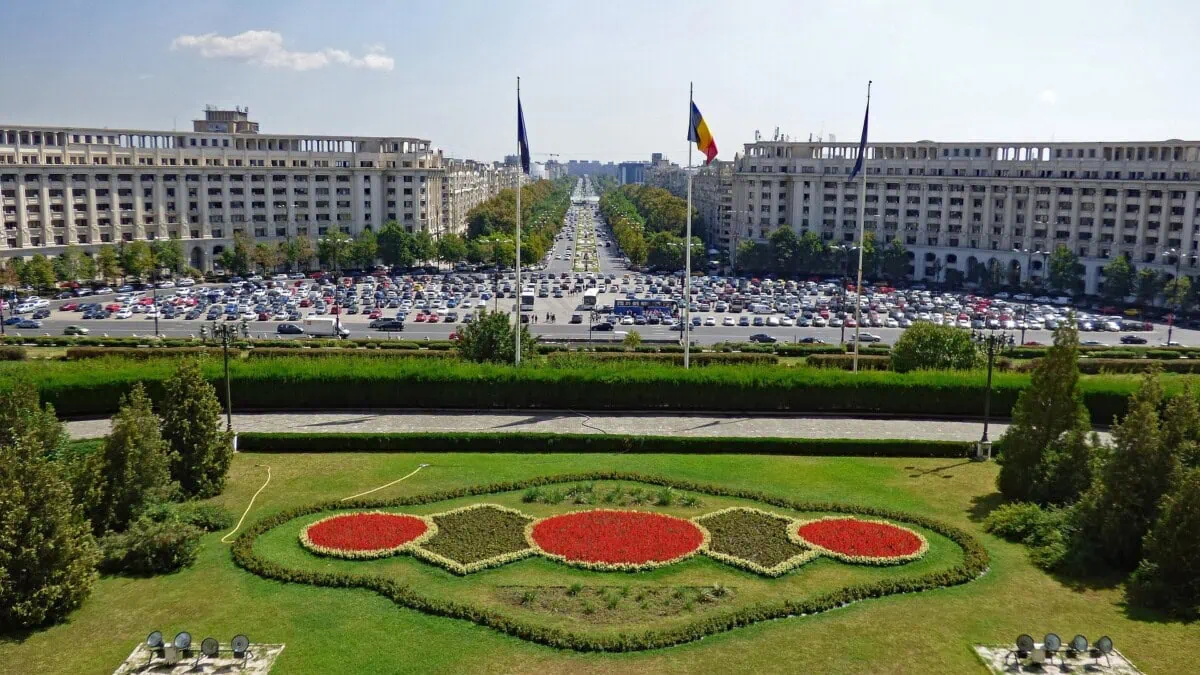
Nothing quite prepares first-time visitors for actually standing inside the Palace of the Parliament. Photographs flatten it into just another oversized government building, but walking through room after echoing room, past marble staircases wide enough for a parade and chandeliers that took years to install, gives a physical sense of a dictator’s ego that no statistic quite manages on its own.
The numbers still help. The building covers 365,000 square metres of floor space across 12 storeys above ground and eight more below, with roughly 1,100 rooms in total, of which only around 400 have ever been finished and put to use. At 84 metres above ground and 92 metres below it, it’s widely cited as the heaviest building on earth, and the third-largest administrative structure in the world after the Pentagon and Thailand’s Sappaya-Sapasathan.
Construction began on 25 June 1984 under chief architect Anca Petrescu, who was just 28 when Ceaușescu appointed her to lead a team of around 700 architects. Work continued in three shifts with a workforce estimated at anywhere between 20,000 and 100,000 people, and the building wasn’t declared complete until 1997, eight years after the regime that ordered it had already fallen.
Today the Palace houses both chambers of the Romanian Parliament, the Senate and the Chamber of Deputies, alongside the Constitutional Court, the National Museum of Contemporary Art and an international conference centre that regularly hosts NATO and EU meetings. Even with all of that activity, an estimated 70% of the building still sits unused, a scale problem that has followed it since the day it was finished.
The Palace can be visited daily between 09:00 and 17:00, though which halls are open on a given day depends on what parliamentary business is scheduled. Standard tours run for individuals and small groups, and a private tour option is available for groups of up to 35 people at a flat rate rather than a per-person fee.
Adult tickets cost 85 RON (around €17/£14/$19), with students aged 19 to 26 paying 55 RON (about €11/£9/$12) against a valid student card and children aged 7 to 18 paying 40 RON (around €8/£7/$9). Children under 6 get in free with an accompanying adult, and visitors with disabilities and one companion each are admitted free of charge on production of proof.
Booking ahead is essential and tickets are cash-only on-site, with no online sales. Groups of one to nine people should call at least one working day in advance, with Monday visits needing to be booked by the Friday before, while parties of ten or more should email the visitor office at least three days ahead with the group’s details. The Chamber of Deputies’ official visiting page lists current phone numbers, email addresses and any schedule changes before you travel.
Communist Bucharest & the 1989 Revolution
The Palace of the Parliament didn’t appear in isolation. It was the centrepiece of systematisation, Ceaușescu’s decades-long programme of forced urban planning that ran from 1974 until his fall in 1989, and Romanians still call the demolition that cleared its site Ceaușima, a blunt portmanteau of his name and Hiroshima.
Roughly 5.9 square kilometres of Bucharest’s historic centre was levelled in the 1980s to make way for the Palace and its surrounding Civic Centre. Three monasteries, twenty churches, three synagogues, three hospitals, two theatres and an Art Deco stadium were all demolished, and around 40,000 residents were evicted with a single day’s notice and relocated to the new housing blocks that replaced their neighbourhoods.
The regime’s collapse began, fittingly, on a balcony a few hundred metres from that construction site. On 21 December 1989, Ceaușescu addressed a huge rally from the Central Committee building overlooking what is now Revolution Square, expecting the usual staged applause. Instead, live on state television, the crowd began jeering, and the broadcast cut out mid-speech as his authority visibly collapsed in front of the entire country.
By the next afternoon, 22 December, protesters had stormed the same building, and Ceaușescu and his wife Elena escaped by helicopter from its roof, first toward Snagov and then Pitești. The pilot set them down near Găești, citing the risk of anti-aircraft fire, and the couple commandeered a car before being detained by army units near Târgoviște shortly afterward.
Their trial, held at a military base in Târgoviște on Christmas Day, 25 December 1989, lasted barely an hour and ended in a guilty verdict on every charge. Both were executed almost immediately by firing squad, and more than a thousand people are estimated to have died nationwide during the wider revolution that toppled the regime that week.
That single week, from the balcony speech to the execution four days later, is the hinge on which modern Bucharest turns, and the next stop on this page, Revolution Square, is where visitors can stand in the exact spot where it began.
Revolution Square & the Royal Palace / National Museum of Art
Having covered how it got there, Revolution Square itself is worth slowing down for rather than just photographing on the way past. It’s a genuinely handsome square lined by some of Bucharest’s grandest buildings, and every one of them has a story that predates December 1989.
The former Royal Palace on the square’s western side now houses the National Museum of Art of Romania, whose collection spans medieval icons and Brâncovenesc-era furniture through to a genuinely strong European gallery with works by Rembrandt, Rubens and El Greco. It’s an easy way to spend an hour without leaving the square, and most visitors are surprised by the quality of the European wing in particular.
The museum opens Wednesday to Sunday, closed Mondays and Tuesdays, running 10:00 to 18:00 midweek and 11:00 to 19:00 at the weekend, with the last entry an hour before closing. Admission is free on the first Wednesday of every month, and it’s worth checking the museum’s own listings for the current adult price before visiting on any other day.
At the square’s centre stands an equestrian statue of King Carol I, unveiled in December 2010 and recreated from the original sculptor’s family archives after the first version was melted down under communism. Nearby, the Memorial of Rebirth, a marble column pierced by a bronze crown-like structure, honours those killed during the 1989 uprising and remains a genuinely moving, low-key monument rather than a tourist set piece.
The former Communist Party headquarters itself, the building with the balcony, became home to the Senate in 1990 before switching to the Ministry of Interior in 2006, and it’s still a working government building today rather than a museum. The ornate Athénée Palace Hotel sits just off the square too, and the Romanian Athenaeum, covered in full further down this page, is only a two-minute walk away.
Old Town & Lipscani
Lipscani, Bucharest’s Old Town, takes its name from the German merchants who traded goods from Leipzig here from the 17th century onward, and it served as the city’s commercial heart for two hundred years before falling into serious disrepair during the communist period and the years immediately after. A genuine restoration effort from the mid-2000s onward brought the cobbled streets and pastel façades back to life.
Today it’s Bucharest’s densest concentration of bars, restaurants and independent shops, all packed into a compact grid of pedestrianised lanes that’s easy to explore without any particular plan. By day it’s a pleasant architecture walk past restored 19th-century buildings; by night it turns into the city’s main nightlife district, loud and crowded from Thursday through Saturday.
The ruins of Curtea Veche, the Old Princely Court, sit right in the middle of the district and mark the spot where Bucharest itself began in the 15th century under the rule of Vlad Țepeș, better known as Vlad the Impaler. A small on-site museum explains the excavated foundations, and a bust of Vlad stands nearby for anyone tracking Dracula connections around the city.
For a slice of Old Town history that still functions as a working restaurant, Caru’ cu Bere, open since 1879, serves traditional Romanian food under a genuinely stunning neo-Gothic interior of stained glass and painted ceilings. It’s touristy by local standards but earns the reputation, and booking ahead is sensible on weekend evenings.
Lipscani sits within easy walking distance of Universitate metro station on the M2 line, and most of the district’s key stops, including Stavropoleos Church and the Macca-Villacrosse Passage covered next, are within a five-minute walk of each other. There’s no admission charge to wander the district itself; the cost is whatever you spend in its cafés, bars and restaurants.
Romanian Athenaeum
The Romanian Athenaeum almost didn’t get built at all. Funds ran out midway through construction in the 1880s, and it was rescued by a public appeal, “Give a leu for the Athenaeum,” led by writer and philanthropist Constantin Esarcu, with ordinary Romanians donating small sums to finish what French architect Albert Galleron had designed. It opened in 1888 and has been the city’s premier concert hall ever since.
The domed, colonnaded exterior is striking enough from the street, but the real reward is inside, where a vast fresco by Costin Petrescu spirals around the interior of the dome, depicting key moments of Romanian history from Roman-era Dacia through to the country’s 20th-century unification. The hall is now home to the George Enescu Philharmonic and hosts the George Enescu International Festival every few years.
Daytime visits without a concert are possible and cost 15 RON (around €3/£2.50/$3.30) for general admission, with tickets available at the musicians’ entrance on Strada Benjamin Franklin, which takes cash only, or at the main box office on Strada Constantin Esarcu.
Visiting hours are updated monthly and published as a downloadable schedule on the Philharmonic’s own website, since the building’s availability shifts around rehearsals and concert bookings. It’s worth checking that schedule before turning up, particularly in the run-up to a festival week when daytime access can be limited.
Attending an actual concert is a different experience entirely and ticketed separately from the daytime visit, with prices varying by performance and seating. Either way, it’s one of the more affordable ways in the whole city to spend an hour inside a genuinely world-class piece of architecture.
Stavropoleos Church
Tucked into a narrow Lipscani side street easy to walk straight past, Stavropoleos Church is one of Bucharest’s most quietly impressive buildings. It was founded in 1724 by a Greek monk, Ioanikie Stratonikeas, as the chapel for an inn he ran nearby, and it has survived nearly three centuries of a city that has demolished far grander structures.
The church is a rare, well-preserved example of Brâncovenesc style, a distinctly Romanian blend of Byzantine, Ottoman and Renaissance influences named after Prince Constantin Brâncoveanu. Its carved stone facade and delicately worked wooden iconostasis reward a slow look rather than a quick photo from the doorway.
Behind the church, a small monastery courtyard holds a collection of old tombstones and fragments of stone carving rescued from other Bucharest churches demolished during the communist era, making it an unexpectedly poignant stop given the history covered earlier on this page. It’s home to a small community of Orthodox nuns, who still use the church for daily services.
Entry is free, though a small donation is appreciated given the building’s upkeep, and the church is generally open to visitors daily from around 9:00 until early evening, closing around services. As a functioning place of worship, modest dress and a quiet demeanour are expected, especially if a service happens to be underway.
Stavropoleos sits right in the heart of Lipscani, a two-minute walk from both Caru’ cu Bere and the Macca-Villacrosse Passage, which makes it an easy five-minute detour to fold into any Old Town wander rather than a dedicated trip.
Best if you can move a day either way. Shows how the fare changes across the month.
Compare flightsBest for anyone whose home plan charges by the megabyte abroad. Pay a fixed price up front.
Check eSIMsBest after a long flight or a late landing. Price agreed before you travel, and no taxi queue.
Check transfersCalea Victoriei & the Macca-Villacrosse Passage
Calea Victoriei is Bucharest’s oldest and grandest boulevard, first laid out in 1692 to connect the old princely court with Prince Constantin Brâncoveanu’s residence at Mogoșoaia. It earned its current name, meaning “Victory Avenue,” after Romanian troops paraded along it following the country’s 1878 independence from the Ottoman Empire, and it has been the city’s ceremonial main street ever since.
Walking its length today turns up an unusually dense run of landmarks, including the domed CEC Palace bank headquarters, the elegant Crețulescu Church, and the Bucharest Municipality Museum housed in the neo-classical Șuțu Palace. The avenue also passes the National Military Circle and a long run of Belle Époque townhouses that survived the demolitions of the 1980s.
Partway along, duck into the Macca-Villacrosse Passage, a covered arcade built in 1891 by architect Felix Xenopol and topped with a distinctive yellow glass canopy. Its unusual forked, two-pronged shape exists because the owner of a hotel on the site refused to sell, forcing the passage to wrap around it in two separate wings rather than run straight through.
The passage now holds a cluster of cafés, bars and restaurants, including an Egyptian-themed lounge and a long-running wine bar, all sheltered under that yellow glass roof regardless of the weather outside. It’s one of the more atmospheric places in the city for a coffee or an evening drink away from the busier Lipscani streets.
One end of the passage opens directly onto Calea Victoriei, while the other leads toward the National Bank and the edge of Lipscani, making it a natural connector between the two areas rather than a detour. There’s no charge to walk through, and it takes only a couple of minutes end to end.
Cărturești Carusel
Cărturești Carusel opened in February 2015 inside a beautifully restored 19th-century building on Strada Lipscani that had previously served as a bank, and it remains the most photographed bookshop in the country. The renovation stripped the interior back to its original white plasterwork and iron balustrades before filling it with books.
Six stacked floors of white spiral galleries wrap around a central atrium, earning the building its nickname, the “carousel of light,” and international press has repeatedly ranked it among the most beautiful bookstores in the world. Even visitors with no interest in Romanian-language books tend to find twenty minutes disappearing just looking up.
Beyond the books themselves, the upper floor houses a small art gallery and record shop, and the ground-floor Carusel Café is a genuinely pleasant spot for a coffee break in the middle of an Old Town wander. English-language sections cover travel, fiction and design, so it’s not purely a browse-and-leave stop for non-Romanian speakers.
Entry is completely free, with no ticket or admission charge of any kind, and the store opens daily from 10:00, closing at 22:00 Sunday to Wednesday and extending to midnight Thursday through Saturday. Early morning or late evening visits are worth timing deliberately, since the ground floor gets genuinely crowded with visitors taking photos from around mid-morning onward.
It sits directly on the main Lipscani strip, a minute’s walk from both Stavropoleos Church and the Macca-Villacrosse Passage, making it easy to fold into the same stretch of Old Town sightseeing rather than a special trip.
Herăstrău Park & Lake (King Michael I Park)
At 187 hectares, of which 74 hectares is open water, King Michael I Park is comfortably Bucharest’s largest green space and one of the biggest urban parks anywhere in south-eastern Europe. Most locals still call it by its older name, Herăstrău, and both names are used interchangeably on maps and signage.
The park has been renamed more times than almost any other landmark in the city, tracking Romania’s own political shifts. It opened as Carol II Park under the monarchy, became Stalin Park after the communists took power, was renamed Herăstrău in 1956 during de-Stalinisation once Stalin’s statue came down, and finally became King Michael I Park in December 2017 following the former king’s death.
The lake itself takes its name from ferăstrău, the Romanian word for a saw, after the water-powered sawmills that once lined the Colentina River here. Rowing boats are available to rent on the water, and the Dimitrie Gusti Village Museum, covered in its own section below, sits directly on the park’s southern shore.
Elsewhere in the park, Elisabeta Palace serves as a residence for the Romanian royal family, and Berăria H, reputedly the largest beer hall in south-eastern Europe with room for 2,000 people indoors and another 1,000 outside, draws a lively evening crowd through the warmer months. An open-air theatre, yacht club and several sports facilities round out the park’s amenities.
The nearest metro stations are Aviatorilor and Aurel Vlaicu, both on the M2 line and each within a short walk of a different park entrance. There’s no charge to enter the park itself, only for specific activities like boat hire or the beer hall.
The Village Museum (Muzeul Satului)
The Dimitrie Gusti National Village Museum is one of the oldest open-air museums in Europe, founded in 1936 by the sociologist whose name it carries. Rather than reconstructing buildings from drawings, the museum physically moved genuine rural houses, churches, windmills and farmsteads from across Romania’s regions and reassembled them here piece by piece.
The result is a small village-sized site holding close to three hundred authentic structures, ranging from wooden Maramureș churches with their famously steep, shingled roofs to modest peasant homesteads from the Danube Delta and Transylvania. Walking between them gives a far more tangible sense of rural Romanian life than any museum display case could manage.
Interiors are furnished as they would have been in use, with woven textiles, wood-fired stoves and traditional tools left in place rather than roped off, and costumed demonstrations of weaving or pottery run on selected weekends. It’s a genuinely absorbing couple of hours even for visitors with no particular interest in folk architecture going in.
The open-air exhibition runs Wednesday to Sunday, from 9:00 to 19:00 in summer and 9:00 to 17:00 in winter, with the last ticket sold an hour before closing. The museum closes entirely over Easter, Christmas and New Year.
Adult admission is 40 RON (around €8/£7/$9), with students and school pupils paying 10 RON (about €2/£1.70/$2.20) and retirees 20 RON (roughly €4/£3.40/$4.40); children under six get in free. ICOM museum members are also admitted at no charge.
The main entrance sits on Șoseaua Kiseleff, directly bordering King Michael I Park, with a second set of gates opening from inside the park itself at weekends. It pairs naturally with a stroll around the park and lake covered in the previous section.
Cișmigiu Gardens
Cișmigiu Gardens is Bucharest’s oldest public park and still its largest green space right in the centre of the city, covering 14.6 hectares. It was designed from 1843 onward by Carl Meyer, a German horticulturist invited to Bucharest by Prince Gheorghe Bibescu, and officially opened to the public on 23 September 1847.
The park’s name comes from cișmea, an old word for a public fountain or well, and it was laid out on the site of a former lake and vineyard that had supplied the city’s water for generations before Meyer’s redesign. Little of that earlier landscape survives, replaced instead by his romantic, English-style layout of winding paths and mature trees.
At its centre sits an artificial lake, connected by canal to the Dâmbovița River, where rowing boats are available to rent through the warmer months and the paths around its edge fill with joggers and dog-walkers from early morning. Fountains, small bridges and seasonal flower displays line the route around the water.
The Writers’ Rotunda near the park’s centre displays bust statues of twelve major Romanian authors, including national poet Mihai Eminescu, while separate memorials honour French and American soldiers who died supporting Romania. It’s a genuinely reflective spot to sit for ten minutes between busier Old Town stops.
Entry is free and the park stays open year-round, a short walk from University Square and easily combined with a Calea Victoriei or Old Town visit. Locals treat it as a genuine neighbourhood park rather than a tourist attraction, and chess games at the outdoor tables are a fixture most afternoons.
Grigore Antipa Natural History Museum
The Grigore Antipa National Museum of Natural History takes its name from the Romanian biologist who ran it in the early 20th century and modernised its collections into what’s still considered one of the finest natural history museums in this part of Europe. The current neo-classical building on Kiseleff Road opened its doors in 1908.
Inside, the museum’s strength is its dioramas, life-sized recreated habitats populated with taxidermy animals arranged as they would appear in the wild, alongside a dedicated hall of dinosaur skeletons and a genuinely striking deep-sea gallery. A separate wing devoted to insects and invertebrates rounds out a collection built up over more than a century.
Recent renovations have brought parts of the museum up to a genuinely modern standard, with interactive displays alongside the older cabinet-style exhibits, which makes it a rare Bucharest attraction that appeals equally to children and adults with no particular interest in natural history.
Adult admission is 32 RON (around €6/£5.50/$7), with students and school pupils paying 8 RON (about €1.60/£1.40/$1.75) and retirees 16 RON (roughly €3/£2.70/$3.50). The museum operates its own opening calendar around public holidays, so it’s worth checking ahead if visiting around a holiday weekend.
It sits on Șoseaua Kiseleff, a short walk from Piața Victoriei, where the M1 and M2 metro lines cross, making it an easy add-on to a visit to the Arch of Triumph or the Village Museum further up the same road.
Best for solo travellers and anyone watching the budget. Dorm beds and private rooms in the same search.
Browse hostelsBest for anyone flying more than once or twice a year. Handles the compensation claim so you are not chasing the airline.
See AirHelp+Best for a day with a suitcase and nowhere to put it. Find a storage point near where you already are.
View storageThe Arch of Triumph & Kiseleff Avenue
Bucharest’s Arch of Triumph has stood on this spot in three different versions. A temporary wooden arch went up in 1878 to celebrate independence from the Ottoman Empire, a second wooden version marked victory in the First World War in 1922, and the permanent stone monument standing today, designed by architect Petre Antonescu, was finally completed in 1936.
It’s modelled in part on the Arc de Triomphe in Paris, complete with sculpted reliefs by leading Romanian artists of the era, and it commemorates both the 1878 independence war and Romania’s role in the First World War. It remains a genuinely impressive piece of civic architecture rather than a minor roadside monument.
Visitors can climb the 164 steps inside to a viewing terrace at 27 metres, and there’s no elevator, so the ascent takes a steady 30 to 60 minutes round trip depending on how many people are queuing on the stairwell. The panoramic view over northern Bucharest and the tree-lined avenue below is worth the climb.
The arch opens Tuesday to Sunday, 10:00 to 18:00, with last entry at 17:30 and the whole site closed on Mondays. Adult tickets cost 15 RON (around €3/£2.50/$3.30), students pay 8 RON (about €1.60/£1.40/$1.75), and an audio guide adds a further 10 to 15 RON.
The arch sits at the head of Kiseleff Avenue, a broad, tree-lined boulevard deliberately modelled on the Champs-Élysées and lined with embassies and grand early-20th-century villas. It runs directly past both the Grigore Antipa Museum and the entrances to the Village Museum and King Michael I Park, making it a natural spine for a single northern-Bucharest outing. The nearest metro station is Aviatorilor on the M2 line, around a ten-minute walk away.
The People’s Salvation Cathedral
Directly across from the Palace of the Parliament, on Arsenal Hill, stands the People’s Salvation Cathedral, widely cited as the tallest Eastern Orthodox church building in the world at around 120 metres to its main cross, and among the largest by interior volume anywhere on earth. Seeing both buildings in the same frame, communist mega-structure and post-communist mega-church, is one of the more pointed visual contrasts in the whole city.
Construction began in 2010 and the main structure was consecrated on 25 November 2018, timed to mark a century since Romania’s 1918 unification. The building wasn’t considered fully finished until its interior mosaics were completed and separately consecrated in October 2025, closing out fifteen years of construction.
The scale shows in the raw numbers alone: roughly 420,000 tonnes of building, made from about 145,000 cubic metres of reinforced concrete and 22,000 tonnes of brick. Inside, gold-backed mosaics cover the domes and upper walls, giving the interior a genuinely different atmosphere from the older, more intimate churches covered elsewhere on this page, like Stavropoleos.
Entry to the nave is free, as with any working Orthodox church, and modest dress is expected given it remains an active place of worship as much as a landmark. Given the building’s youth and continuing refinement work, it’s worth checking locally for the current state of any visitor access before planning a visit around it specifically.
The cathedral sits a short walk from the Palace of the Parliament, close enough that both make sense as a single stop on the itinerary outlined earlier in this guide, particularly for anyone interested in how Bucharest’s skyline reflects its last forty years of history.
Therme Bucharest
Therme Bucharest is one of the largest water and wellness complexes in Europe, split across three connected zones: Galaxy, home to water slides and flumes for families, The Palm, a more relaxed run of thermal pools and steam rooms, and Elysium, an adults-only sauna and relaxation area.
It sits around 25 kilometres north of central Bucharest, near Balotești and close to Otopeni Airport, which makes it a genuinely convenient stop either at the start of a trip or on the way to a late flight rather than purely a standalone day out.
A free shuttle bus runs from Piața Romană roughly every two hours, marked “Therme” on the windscreen, and it’s the easiest option for anyone without a car. Local bus R442 also reaches the site for a day-pass fare of around €1.50 (roughly £1.30/$1.70), bought from a ticket machine rather than on board, while a taxi or ride-hailing app typically costs around €15 (about £13/$17) and takes 30 minutes or so depending on traffic.
The complex opens daily from 10:00 to 22:00, and pricing is genuinely complicated, with different combinations of zones, time-limited entry and add-ons like the sauna rituals all priced separately. It’s worth checking the official Therme website for the current ticket matrix before visiting, since prices change with the season and the specific package chosen.
Sauna rituals and peeling sessions don’t take advance bookings and fill up quickly, so arriving at least 15 minutes before a scheduled session is the only reliable way to secure a spot. Bring a swimsuit, towel and flip-flops, or budget extra for rental if travelling light.

Cotroceni Palace
Cotroceni Palace is the official residence of Romania’s president, but a section of it operates as the National Cotroceni Museum, open to the public on a guided-tour basis. It’s one of the least visited major sights on this page relative to how genuinely interesting it is, largely because so few visitors realise you can go inside at all.
The site began as a 17th-century monastery before being rebuilt as a royal residence, and its most significant transformation came under King Ferdinand and Queen Marie in the early 20th century, whose personal apartments and art collection form the heart of the museum’s current display. Later additions and a serious fire in the 1980s mean the palace visitors see today is a genuine architectural patchwork spanning several centuries.
Inside, period rooms furnished in Art Nouveau, Neo-Romanian and Neoclassical styles sit alongside a collection of European and Romanian art, giving a very different flavour of Romanian history to the communist-era sites covered earlier on this page. It’s a useful counterweight for anyone who wants Bucharest’s royal, pre-communist story as well as its revolutionary one.
As a working presidential residence and a former military site, visitors must show photo ID on arrival, which staff hold for the duration of the visit, and outdoor photography is generally restricted. The museum opens Tuesday to Sunday, 09:30 to 17:30, closed Mondays, with all visits conducted as part of a guided tour rather than a free wander.
Advance booking is strongly recommended given the limited tour slots and security checks involved, and it’s worth confirming current ticket pricing and available languages directly with the museum before travelling, since both can change without much notice. The nearest metro stop is Eroilor, on the M1 line, a short walk from the palace gates.
Bucharest Without a Car
Bucharest is genuinely manageable without a car, and most visitors sticking to the attractions on this page will find a mix of walking and the metro covers nearly everything. The city runs two separate public transport operators, Metrorex for the underground metro and STB for buses, trams and trolleybuses, and the two use compatible ticketing.
The metro runs five lines, M1 through M5, operating roughly 5:00 to 23:00 daily. The M1 forms a loop connecting Gara de Nord, the city’s main train station, while the M2 runs north to south through the centre and is the most useful single line for reaching Revolution Square, Piața Victoriei and Herăstrău. A single metro ticket costs 5 RON (around €1/£0.85/$1.10).
Surface transport is extensive, with around 102 bus routes, 22 tram lines and 14 trolleybus routes covering the parts of the city the metro doesn’t reach directly. A single bus, tram or trolleybus ticket costs 3 RON (about €0.60/£0.50/$0.65) and covers a 90-minute journey, including transfers between different surface routes.
Payment is straightforward: a contactless bank card tapped directly on the reader works across both metro and surface transport, and the 24Pay app and SMS ticketing are also accepted for those who’d rather not carry a card. A reloadable Activ or Multiplu card is available from STB ticket booths for anyone staying longer, and a 24-hour integrated pass costs 18 RON (around €3.60/£3.05/$3.95), which comfortably pays for itself after three or four journeys in a day.
The historic centre itself, covering the Old Town, Calea Victoriei and Revolution Square, is compact enough to walk between stops without transport at all. For anything further out, like Therme Bucharest or a late-night return from the Old Town, Bolt and Uber both operate reliably across the city as an affordable backup. For a full breakdown of every metro line, the surface network and how the ticketing actually works, see our dedicated Bucharest Public Transport Guide.
Bucharest When It Rains: Where to Head Indoors
A wet forecast doesn’t have to cost Bucharest a day of sightseeing. The city’s museum collection is genuinely deep, and several of the attractions covered earlier in this guide, the National Museum of Art on Revolution Square, the Grigore Antipa Natural History Museum, Cotroceni Palace and the nave of the People’s Salvation Cathedral among them, are entirely indoors and easily fill a rained-off afternoon on their own.
Cărturești Carusel, the spiral bookshop covered earlier, is one of the best wet-weather stops in the whole city, since its six floors of galleries and ground-floor café give visitors somewhere genuinely pleasant to linger for an hour without spending a leu. The Macca-Villacrosse Passage nearby works the same way, its yellow glass canopy keeping the rain off a run of cafés and bars regardless of what’s happening outside.
For a bigger rainy-day option, AFI Cotroceni in western Bucharest is Romania’s largest shopping centre, a 90,000 square metre complex holding around 300 stores, restaurants and services under one roof. It’s a genuine half-day option rather than a quick errand, easily reached from the centre by taxi, ride-hail or bus.
Băneasa Shopping City, in the north of the city, is a similar-scale alternative with roughly 280 stores across four floors, and it houses the Grand Cinema&More multiplex, complete with Dolby Atmos screens. Cinema City, Romania’s biggest chain, also runs multiplexes inside several other Bucharest malls, and foreign-language films are almost always shown with Romanian subtitles rather than dubbed.
Coffee culture has grown quickly here too, and a wave of independent specialty coffee shops has opened along Calea Victoriei and the quieter northern edge of the Old Town in recent years, giving rain-dodging visitors somewhere better than a chain café to wait out a shower. Bucharest’s covered produce halls, led by the historic Obor Market covered in full further down this page, are another genuinely dry option if the museums and malls don’t appeal.

Bucharest with Kids: Family Days Out
Bucharest is a genuinely easy city to bring children to, with wide green spaces, low admission prices and a metro system that copes fine with a pushchair outside rush hour. Much of the groundwork is already covered elsewhere on this page: both King Michael I Park and Cișmigiu Gardens have boating lakes children tend to love, and King Michael I Park specifically has a dedicated playground area near its southern shore, close to the Village Museum entrance.
For something not yet covered, Bucharest Zoo sits on Str. Vadul Moldovei in the north of the city and has been open since 1955, holding more than 150 species of mammals, birds, reptiles and fish across 5.85 hectares of enclosures. It draws over 300,000 visitors a year, takes part in international conservation programmes for species like the grey wolf, and is an easy half-day out reached by taxi or public transport from the centre.
Orășelul Cunoașterii, a hands-on children’s science museum with exhibits covering magnetism, mirrors, reaction speed and water play, plus a dedicated toddler room and an outdoor maze, is well suited to younger children in particular. Admission has historically run around 32 RON (about €6/£5.50/$7) for children and 18 RON (about €3.60/£3/$4) for accompanying adults, though it’s worth confirming current hours and pricing directly before making it the centrepiece of a day.
Therme Bucharest, covered in detail earlier on this page, is also worth expanding on for families specifically: its Galaxy zone of slides and flumes is built for children, while the adults-only Elysium zone is simply off-limits, so families naturally spend their visit split between Galaxy and the more relaxed Palm pools. Locker hire and equipment rental are available on-site for anyone travelling light with young kids.
Beyond the headline attractions, Bucharest’s residential neighbourhoods are dotted with well-kept public playgrounds, and combining one of the larger parks with a nearby playground stop is an easy way to break up a day of sightseeing when younger legs need a rest.
Shopping and Markets Beyond the Old Town
The souvenir shops threaded through Lipscani cover magnets and painted eggs well enough, but they’re only a small slice of how Bucharest actually shops. Calea Victoriei, the grand boulevard covered earlier in this guide for its landmarks, doubles as the city’s main boutique strip, with flagship stores from Romanian designers and international fashion houses sitting between the CEC Palace and the Athénée Palace Hotel.
Walking the avenue slowly turns up small concept stores and jewellers alongside the bigger names, and it rewards the same unhurried pace suggested for its architecture earlier on this page. It’s a genuinely pleasant way to shop without setting foot in a mall.
For mall-based shopping, AFI Cotroceni and Băneasa Shopping City, both introduced in the rainy-day section above, are Bucharest’s two biggest options, between them covering close to 600 stores of mostly international and Romanian high-street brands. Either is a reasonable stand-in for a full afternoon of retail therapy if that’s what a trip calls for.
For something with far more local character, Piața Obor, in the east of the city, is one of Romania’s oldest and largest produce markets, trading in some form for more than three hundred years. The ground floor is stacked with fresh fruit and vegetables, braided garlic and walnuts still in their shells, while the upper floor holds meat, cheese, preserves and a scattering of spice shops and natural pharmacies.
Obor runs daily from around 7:00, and the outdoor Obor Terrace alongside it is a genuine local spot to eat freshly grilled mici among the market stalls rather than at a tourist restaurant. It sits right at Obor metro station on the M1 line, making it an easy add-on rather than a special trip, and there’s no admission charge to wander it.
Bucharest Nightlife: Lipscani, Rooftops & Craft Beer
Lipscani’s after-dark reputation, mentioned briefly in the Old Town section earlier on this page, is well earned. Once the restaurants and souvenir shops close up, the same pedestrianised grid fills with bar-to-bar crowds from Thursday through Saturday, and terraces spill straight onto the cobbles whenever the weather allows.
The district covers everything from cocktail lounges to themed pubs and late-opening clubs, and cover charges are rare outside a handful of the bigger club nights. A typical evening out usually starts with dinner in or near the Old Town, works through two or three bars within an easy stagger of each other, and winds down somewhere quieter well after midnight.
Bucharest’s rooftop bar scene has grown considerably in recent years and is worth a detour from Lipscani for the view alone. Aria TNB, perched on top of the National Theatre near Universitate, and 18 Lounge by Embassy, the highest of the lot at eighteen floors up near King Michael I Park with sweeping views over the lake and skyline, are two of the better-regarded options; cocktails at most of these venues run roughly 40 to 60 RON (around €8 to €12, or £7 to £10, or $9 to $13).
Beer drinkers are equally well served. Zăganu, a brewpub on Calea Victoriei running since 2013, and a small cluster of independent taprooms including Hop Hooligans near University Square and Anagram Brewery by Lake Morii, anchor a genuine craft beer scene, while Gabroveni Street in the Old Town has become an informal strip of dedicated craft beer bars for anyone who’d rather bar-hop within Lipscani itself.
Sensible city precautions apply after dark just as they do in the daytime crowds mentioned in the FAQ below: stick to well-lit main streets, keep valuables zipped away in busy bars, and use a licensed taxi or Bolt or Uber rather than hailing an unmarked cab off the street for the journey home, since the metro stops running at 23:00.

The Bucharest Food Scene: Romanian Cuisine and Street Food
Romanian food draws on a genuine crossroads of influences, Ottoman, Balkan, Hungarian and Slavic, and the result is hearty, comfort-driven cooking built around slow-cooked meat, cabbage and fresh bread. Caru’ cu Bere, covered earlier in the Old Town section, is a fine introduction to the formal end of that tradition, but the wider food scene stretches well beyond one restaurant.
Sarmale, minced pork and rice rolled in cabbage or grape leaves and slow-simmered, is generally considered Romania’s national dish and turns up on nearly every traditional menu in the city, usually served with polenta and a spoonful of sour cream. Mici, skinless grilled rolls of beef, lamb and pork seasoned heavily with garlic, are the closer thing to Romanian street food, eaten with mustard and fresh bread and traditionally grilled outdoors, including at the Obor Terrace covered in the shopping and markets section above.
Covrigi, Romania’s take on the pretzel, are sold from carts and kiosks across the entire city, topped with poppy seeds, sesame or plain salt, and cost next to nothing. Zacuscă, a spread of roasted eggplant and red pepper, and a tangy fermented bean soup are two of the country’s best vegetable-forward dishes, and both are common enough that vegetarian visitors have more genuine options here than the meat-heavy reputation suggests.
Beyond the Old Town’s tourist-facing restaurants, a newer wave of modern Romanian kitchens has opened around Calea Victoriei and the quieter streets bordering Cotroceni, reinterpreting dishes like tochitură and plăcintă for a younger local crowd rather than a coach-tour audience. A full sit-down lunch with a soup, main course and a drink typically runs around 100 RON (roughly €20/£17/$22) at a mid-range restaurant, though the weekday meniul zilei, a fixed daily menu served at lunchtime, is usually far cheaper.
A tip of around 10% is standard practice at sit-down restaurants and is best left in cash rather than added to a card payment, since staff don’t always see the full amount otherwise. Rounding up the bill is enough at cafés and bars.

Rupert’s Handy Travel Tips
Heading to Bucharest? Rupert has a few practical suggestions to help you make sense of a capital that’s more layered than it first looks.
- Book the Palace ahead, not on a whim: tickets are phone or email only, sold a day in advance for small groups and three days ahead for larger ones, so it can’t be a same-day decision.
- Do the spine in order: the Palace of the Parliament, the revolution history and Revolution Square land far harder as a sequence than as three separate, unrelated stops on a map.
- Pick your Old Town base carefully: Lipscani is genuinely loud from Thursday to Saturday nights, so anyone wanting sleep should book a street or two back rather than right in the middle of it.
- Carry some cash: the Athenaeum’s musicians’ entrance, several museum ticket desks and smaller cafés don’t always take card, even in the centre.
- Combine Therme with a late flight: it sits close to Otopeni Airport, so it works well as a last stop before departure rather than a dedicated day trip from the city.
- Skip the taxi at rush hour: Bucharest’s road traffic is among the worst in Europe, and the metro will usually beat a car or ride-hail across the centre during peak times.
Rupert’s verdict: most capitals give you a checklist of sights. Bucharest gives you a story, and it’s worth building your days around that story rather than treating the Palace of the Parliament as just one more stop on a list.
Want to learn more about Rupert? Visit our Who is Rupert? page.




Frequently Asked Questions
How many days do I need in Bucharest?
Two full days covers this page’s essential spine, the Palace of the Parliament through to Revolution Square, plus a proper wander through the Old Town. Three to four days lets you add the parks, Therme Bucharest and Cotroceni Palace at a much easier pace.
Is Bucharest safe to visit?
Yes, Bucharest is generally a safe city for visitors, with the usual big-city precautions worth taking around pickpocketing in crowded areas like the Old Town on weekend nights. Violent crime against tourists is rare.
Can you actually go inside the Palace of the Parliament?
Yes, daily guided tours run between 09:00 and 17:00, though tickets are sold on-site only and must be booked in advance by phone or email, since there is no online booking system.
What happened at Revolution Square in 1989?
It’s where Nicolae Ceaușescu gave his final public speech from the Central Committee building balcony on 21 December 1989, the moment the crowd turned against him live on television and his regime began to collapse within days.
Do I need a car to see Bucharest’s attractions?
No, the metro and surface transport network covers nearly everything on this page, and the historic centre itself is compact enough to explore mostly on foot.
Is Bucharest worth visiting for its communist history alone?
Yes, many visitors say the Palace of the Parliament and the 1989 revolution sites are the single most memorable part of a Bucharest trip, and there’s genuinely nothing quite like this combination anywhere else in Europe.
Further Reading & Related Guides
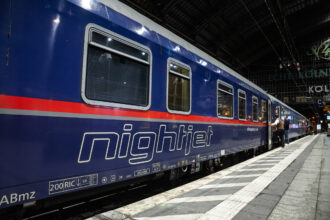
If you’re travelling on to explore more of Romania by rail, our Interrail Romania Pass guide covers the country’s Carpathian routes and sleeper trains, and our wider European Sleeper Trains Guide explains how to book overnight routes on from Bucharest to the rest of the continent.
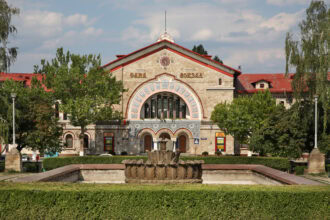
Heading further east afterwards, our Night Trains from Chișinău guide explains the sleeper routes linking Romania with Moldova’s capital, useful for anyone extending a Bucharest trip across the border.
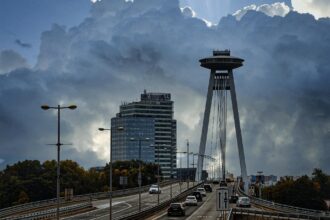
For more on the kind of communist and Cold War history covered in the middle of this page, our Bratislava Cold War Guide covers a similar theme in Slovakia’s capital, while our Things to Do in Budapest guide is a useful comparison for anyone weighing up the two capitals on the same trip.
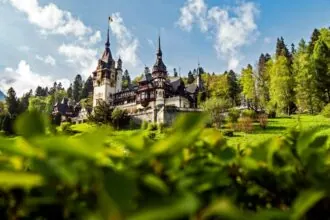
We’re also building dedicated guides to Bucharest Airport Transfers, Day Trips from Bucharest and Bucharest Christmas Markets, covering everything from getting in from Henri Coandă Airport to Peleș Castle and Bran Castle day trips and the city’s festive markets, so check back soon if those are relevant to your trip.