Reviewed by our editorial team Published
Getting around Bucharest once you have already arrived is a genuinely different question from getting into the city in the first place, and it comes down to understanding two separate operators working the same streets. Metrorex runs the underground metro, five lines threading beneath the capital, while STB (Societatea de Transport București) runs everything above ground, buses, trams and trolleybuses, on a ticketing system built to work smoothly alongside the metro rather than as a rival to it.
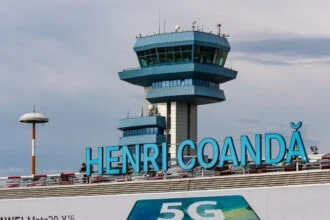
This guide picks up exactly where our Bucharest Airport Transfers guide leaves off, at the point a visitor has already reached Gara de Nord, Piața Unirii, or a hotel somewhere in the centre and now needs to actually move around the city day to day. It deliberately does not repeat anything about reaching Henri Coandă Airport itself, since Metro Line M6, the long-planned direct rail link to the airport, remains under construction with a target opening around 2028, so the two networks still connect only through the bus, train, and taxi options covered on that separate page.
Once inside the city, Bucharest is genuinely easy to navigate without a car, and most visitors end up combining all three layers of the system within a single day. The metro handles the long, fast hops across the centre, the surface network fills in almost everywhere the metro does not reach, and a short walk usually closes the final gap between a station and wherever you are actually headed.
What follows covers every part of that system in real depth: the ticket types and what each one actually buys, the metro’s five lines broken out individually, the surface network’s genuine scale, how to actually pay for a journey, and the practicalities of travelling at night or with limited mobility. Prices are given in Romanian lei (RON) first, since that is what every machine, card reader and kiosk in the city actually charges, with approximate euro, pound and dollar conversions alongside using a rate of roughly 1 RON = €0.20 = £0.17 = $0.22. Treat those conversions as a rough guide rather than an exact figure, since exchange rates move daily.
| Ticket Type | Price | Validity |
|---|---|---|
| Single metro ticket | 5 RON (€1/£0.85/$1.10) | One metro journey, no surface transfer included |
| Single surface ticket (bus/tram/trolleybus) | 3 RON (€0.60/£0.50/$0.65) | 90 minutes, unlimited surface transfers |
| 24-hour integrated pass | 18 RON (€3.60/£3.05/$3.95) | 24 hours from first validation, metro and surface |
| Activ / Multiplu reloadable card | Pay-as-you-go, small one-off card fee | Reusable, top up as needed |
| Contactless bank card tap | Same as single fares, charged automatically | Per tap, no pre-purchase needed |
Which Ticket Should You Buy?
The right ticket in Bucharest depends far more on how you plan to move than on how long you are staying, since the metro and surface tickets are sold and priced separately rather than as one blended fare. Working out roughly how many metro rides a day involves is the single most useful question to answer before choosing anything.
For a single short visit, someone popping into the centre for an afternoon or making one or two specific journeys, a single metro ticket at 5 RON (€1/£0.85/$1.10) or a single surface ticket at 3 RON (€0.60/£0.50/$0.65) covers the trip without any need to think further, and a contactless bank card tap works just as well without buying anything in advance. There is genuinely no reason to overthink a one-off hop across town.
A full sightseeing day that mixes the metro with a couple of surface hops, say a morning at the Palace of the Parliament, an afternoon in the Old Town, and an evening back out to a hotel near Piața Romană, changes the maths quickly. The 24-hour integrated pass at 18 RON (€3.60/£3.05/$3.95) pays for itself once the day includes four or five separate journeys across both networks, and it removes the friction of buying and validating a fresh ticket at every stop.
For a longer stay, several days or a full week based in the city, an Activ or Multiplu reloadable card is the most practical option, since it can be topped up as needed and avoids repeatedly queuing at a machine. Visitors who would rather not carry a dedicated card at all can simply keep tapping the same contactless bank card for every journey, which works identically across both operators without any setup.
The Metro Network: Five Lines Across Bucharest
Metrorex operates Bucharest’s metro across five lines, M1 through M5, running roughly from 5am to 11pm daily. It is the fastest way to cross the city, and understanding what each line actually connects saves considerably more time than trying to memorise the whole coloured map at once.
M1 is Bucharest’s oldest line, opened in 1979, and it runs as a large loop rather than a straight route, connecting Gara de Nord, the city’s main railway station, with the eastern districts around Dristor and Pantelimon before curving back through the centre. It shares a stretch of track with M3, and its key interchange points are Piața Unirii and Eroilor, with trains running every 3 to 6 minutes at rush hour and 9 to 12 minutes off-peak.
M2 is the single most useful line for a first-time visitor, running north to south directly through the historic centre between Pipera and Tudor Arghezi. It calls at Piața Victoriei, Piața Romană, Universitate and Piața Unirii in a fairly straight run, putting most of the sights covered in our Things to Do in Bucharest guide within one or two stops of a station, and it runs every 1 to 3 minutes at peak times.
M3 runs east to west just south of the centre, between Preciziei and Anghel Saligny, sharing track with M1 for part of its route. Its main interchanges are Eroilor and Nicolae Grigorescu, and it is most useful for cutting across the southern part of the city rather than reaching the central sightseeing core directly.
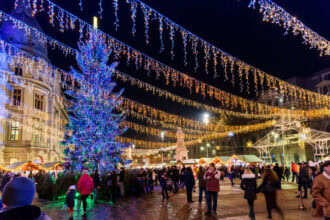
M4 is a short but useful line linking Gara de Nord with the northern district of Străulești, and it is the line most likely to be extended once the airport link opens. M5, opened in 2020 and the network’s newest and most modern line, runs from the western Drumul Taberei district in to Eroilor, and it is the line that serves Parc Drumul Taberei, home to one of the city’s four Christmas markets each winter.
A sixth line, M6, is under construction to finally connect the metro directly to Henri Coandă Airport, but as of late 2026 it remains unfinished, with the first section targeted for 2027 and the airport connection itself not expected before around 2028. Until then, the airport train covered in our Bucharest Airport Transfers guide, not the metro, is the only rail link between the two.
Best for two or three nights. The widest choice of rooms, with filters for free cancellation and included breakfast.
View staysBest for longer stays. Whole apartments and houses, so you are not eating out three times a day.
View rentalsBest for double-checking. Runs the same search across several booking sites so you are not leaving money behind.
Compare pricesBucharest’s Major Train Stations
Gara de Nord is not just Bucharest’s main railway station, it is the city’s single most useful navigation anchor, since it carries its own stop on both the M1 and M4 metro lines. Fourteen platforms handle roughly 200 domestic and international routes, connecting the capital to destinations from Vienna and Budapest through to Sofia and Istanbul.
The station’s facilities have improved considerably from its communist-era reputation, with a McDonald’s, KFC, Subway and Starbucks lining the main concourse alongside a small supermarket and a proper left-luggage office. The dedicated train to Henri Coandă Airport also leaves from here, which is one reason Gara de Nord genuinely functions as the handover point between the city network and the wider national rail system.
Three smaller stations sit around Gara de Nord’s role rather than competing with it. Gara Basarab, built in 1959 barely a kilometre away, mainly handles services heading southwest, while Gara Obor on the eastern side of the city links Bucharest with Constanța and the Black Sea coast.
Gara Băneasa, up in the north near the airport district, leans heavily seasonal, with most of its departures running to the seaside in summer only. None of these three carries anywhere near Gara de Nord’s traffic, but knowing they exist helps make sense of a ticket or departure board naming a station other than the one you expected.
Every one of these stations sits within reach of the surface network covered later on this page, even where a direct metro link does not exist, so a tram or bus connection is usually only a short walk from the platform. Gara de Nord alone is served by bus routes including 105, 123 and 133, several trolleybus lines and two tram routes, on top of its own direct metro stop.
Bucharest’s Bus Stations: The Autogară System
Long-distance coaches in Bucharest do not share one central hub the way trains do, and this catches out visitors expecting a single autogară to check before every departure. The city runs several separate bus stations instead, each historically built to serve a different direction of travel, and knowing which one a ticket names matters just as much as knowing the departure time.
Autogara Filaret, built on the site of a much older railway station south of the centre, is the busiest of the group and the main terminus for coaches to and from Chișinău and Moldova, with several daily departures covering the roughly ten-hour run. Autogara Militari, out to the west and reachable by tram, handles a broad mix of regional services.
Autogara Rahova, in the southwest, is the station most transfer coaches arriving from Western Europe use, while smaller terminals at Obor and Băneasa cover regional routes to the east and north of the country. None of these stations connects directly into the metro network, so a tram, trolleybus or bus transfer, or a short taxi ride, is usually needed to reach one from the centre.
For a visitor arriving by coach rather than by train or plane, the practical takeaway is simple: check exactly which autogară a ticket names before travelling. Arriving at the wrong station across a sprawling city wastes considerably more time than the fare itself is ever worth, and both the booking platform and the operator’s own confirmation email will state the specific terminus.
Trams, Buses and Trolleybuses: The STB Surface Network
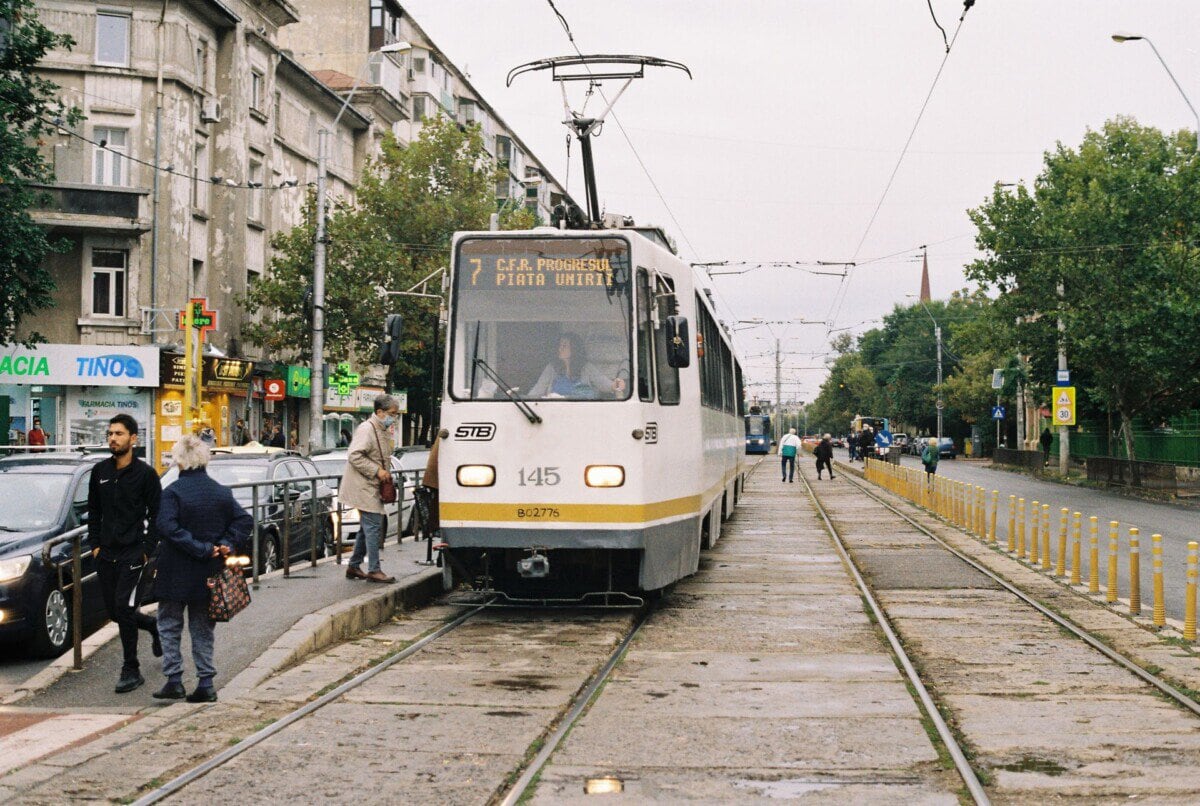
Where the metro is fast but limited to five fixed lines, STB’s surface network is what actually covers the rest of the city, and its scale genuinely surprises most first-time visitors. Around 102 bus routes, 22 tram lines and 14 trolleybus routes between them reach almost every residential district, park and outlying neighbourhood the metro simply does not touch.
This density matters most in the gaps between metro stations, and there are plenty of them, since Bucharest’s five lines leave large parts of the city, particularly the leafy northern districts around Herăstrău and the residential sprawl to the west and south, entirely reliant on surface transport. A tram or trolleybus is often the only realistic way to reach a specific street address rather than just the general area a metro station happens to serve.
Trams run largely on their own dedicated tracks along Bucharest’s wide boulevards, which keeps them moving reasonably well even when road traffic backs up, while trolleybuses, drawing power from overhead wires, cover several of the busiest central corridors. Standard diesel buses fill in everywhere else, and together the three modes form a genuinely dense grid rather than a scattering of isolated routes.
Every surface ticket, whichever of the three vehicle types you board, is valid for a full 90 minutes from first validation, and that window covers unlimited transfers between different bus, tram and trolleybus routes without buying a fresh ticket each time. In practice this means a single 3 RON fare can cover a bus to a tram stop and then a further tram across town, provided the whole journey fits inside the 90-minute clock, which makes the surface network’s flat 3 RON (€0.60/£0.50/$0.65) fare considerably better value than it first appears for anyone changing routes partway through a trip.
Where the Lines Meet: Bucharest’s Key Interchange Points
A handful of stations do more work than the rest of Bucharest’s network combined, and learning to recognise them is one of the fastest ways to navigate the city with real confidence. An interchange point is simply somewhere two or more metro lines meet, or where the metro connects directly into a dense cluster of surface routes, and Bucharest has a small, genuinely useful set of them.
Piața Unirii is the busiest of all, where the M1, M2 and M3 lines converge across two linked station buildings, one shared by M1 and M3 and a second for M2, joined by a connecting passage. It also anchors a wide spread of surface routes, including trams 7, 27, 32 and 47 and a long list of bus lines, making it the natural point to change direction entirely rather than just switch metro lines.
Piața Victoriei, where M1 and M2 cross beside the government headquarters, runs a close second in passenger volume, while Eroilor is arguably the most useful interchange for a visitor, since it is the only station where three lines, M1, M3 and M5, genuinely meet. Universitate, by contrast, sits on M2 alone but still functions as a major hub thanks to the dense web of trams and buses converging on University Square above it.
What makes a station like this genuinely useful to know is not just the line count, it is that a wrong turn or a missed stop rarely costs much when the fix is one more short hop through a hub you already recognise. Building a mental map around four or five names, Unirii, Victoriei, Eroilor and Universitate chief among them, does more for a first-time visitor’s confidence than trying to memorise the whole network at once.
Tickets, Fares and Zones Explained
Bucharest’s fare structure is simpler than the two-operator system might suggest, mainly because there is no zoning to worry about within the city itself. A single metro ticket costs 5 RON (€1/£0.85/$1.10) and covers one metro journey only, with no automatic transfer onto the surface network included in that fare.
Surface transport works differently, and more generously. A single STB ticket costs 3 RON (€0.60/£0.50/$0.65) and buys 90 minutes of travel across buses, trams and trolleybuses combined, so switching from one surface route to another within that window costs nothing extra. This is the same fare and validity that covers the Express Bus 100 airport shuttle described in our Bucharest Airport Transfers guide, since it runs on the same STB ticketing system as the rest of the city.
For anyone using both networks across a full day, the 24-hour integrated pass at 18 RON (€3.60/£3.05/$3.95) is the simplest option, covering unlimited metro and surface journeys for a full day from first use rather than requiring separate metro and surface tickets to be bought and tracked individually. There is currently no equivalent multi-day pass sold specifically for tourists, so a longer stay is better served by a reloadable card or repeated contactless taps than by hunting for a 72-hour ticket that does not exist here.
Unlike some European capitals, Bucharest does not split its fare system into concentric zones for city-centre travel, so a standard ticket works the same whether the journey is one stop or across the entire line. The only genuine exception is travel well beyond the city’s own boundary, towards some outer suburbs, where a different regional fare structure can apply, though this rarely affects a standard visitor sticking to the sights and districts covered on this site.
Buying Tickets: Machines, Kiosks and Apps
Buying a ticket in Bucharest involves more options than most first-time visitors expect, and which one makes sense depends largely on whether you are about to use the metro or the surface network. Metro tickets are sold from vending machines and staffed booths inside every station, both accepting cash and card, so there is rarely a need to plan ahead before a metro journey specifically.
Surface tickets work differently, and this catches out a fair number of visitors: STB drivers do not sell tickets on board. Instead, tickets need buying in advance from the small grey STB ticket kiosks found near major stops and intersections across the city, or sorted through one of the digital options below before stepping onto a bus, tram or trolleybus.
The 24Pay app is the most convenient digital option for both networks, letting you buy and store a valid ticket on your phone before you even reach a stop, which is particularly useful late at night or somewhere far from a kiosk. SMS ticketing works as a low-tech backup, texting the letter C to the short number 7458 to buy a surface ticket charged directly to your phone credit, a genuinely useful option for anyone without a working data connection at that moment.
Whichever method you use, the ticket needs validating at the start of the journey, either at a metro turnstile or by tapping or scanning it on board a bus, tram or trolleybus, since an unvalidated ticket counts the same as travelling without one if checked. For most visitors staying more than a day or two, though, a contactless bank card genuinely removes the need to think about any of this in the first place.
Best for long or awkward journeys. Builds one itinerary out of separate flights.
View flightsBest for short trips. Install the eSIM at home and arrive with working data, no shop queue.
Browse eSIMsBest if you would rather not work out the transport on arrival. Book it now and forget it.
View transfersValidating Your Ticket: Taps, Gates and Inspectors
Buying a ticket in Bucharest is only half the job, since an unvalidated ticket counts as travelling without one if an inspector checks, whatever the receipt in your pocket actually says. The mechanics differ slightly between the metro and the surface network, and it is worth knowing both before your first journey rather than working it out at a barrier with a queue building behind you.
On the metro, validation happens automatically at the turnstile: a paper ticket, a loaded Activ card or a contactless bank card is tapped once against the reader, the gate opens, and that single tap is the validation. On a bus, tram or trolleybus, the same tap happens on a small orange reader mounted just inside the doors, and it needs doing immediately after boarding, not at some point before you get off.
Two genuinely useful mechanics to know on the surface network: hold the ticket or card flat against the reader until it beeps once, and if it beeps twice with a message reading “repetați validarea”, try again on the same machine rather than a different one, since that message simply means the first tap did not register. A single validated surface ticket then covers 90 minutes of further transfers without needing to tap again on a different route, provided the whole journey stays inside that window.
Inspectors do check, on trains, buses and at metro barriers alike, and the consequences of skipping validation are genuinely worth avoiding. STB’s own published rules set the fine for travelling without a valid or validated ticket at 300 to 500 RON (€60 to €100 / £51 to £85 / $66 to $110), though in practice an inspector will often offer an on-the-spot reduced surcharge of 80 RON (€16 / £13.60 / $17.60) to settle the matter immediately rather than issuing a formal notice.
None of this applies to a contactless bank card tap, which validates itself the moment it touches the reader, or to a journey made on a 24-hour integrated pass once it has been activated on first use. For most visitors, the safest habit is simply treating every single boarding, metro or surface, as needing its own deliberate tap, rather than assuming one validation somehow covers the whole day.
The Activ and Multiplu Card, and Contactless Tap and Go
This is genuinely the part of Bucharest’s transport system that catches out the most visitors, largely because two very different payment methods look similar at first glance but work quite differently underneath. Understanding both properly before your first journey saves a lot of confusion at the gate or the reader.
The Activ card (used mainly on the metro) and the Multiplu card (STB’s surface equivalent) are reloadable plastic cards, bought for a small one-off fee from ticket booths and kiosks across the city and then topped up with credit as needed. Once loaded, a card is tapped at a metro turnstile or an on-board reader exactly like a single ticket would be, drawing down the relevant fare each time rather than requiring a fresh purchase for every journey.
For visitors staying more than a couple of days, this is genuinely the most practical option, since it avoids repeatedly queuing at a machine or kiosk and can simply be topped up again if the balance runs low. The trade-off is the small amount of upfront effort involved in buying and loading the card in the first place, which is exactly why so many short-stay visitors skip it entirely.
Contactless bank card payment is the simpler alternative for anyone not staying long enough to justify a dedicated card. Tapping a contactless Visa, Mastercard or linked mobile wallet directly on the reader at a metro gate, or on board a bus, tram or trolleybus, charges the standard fare automatically, with no card to buy, load or remember to carry. The one habit worth building is using the same card or device for every tap during a single journey, since mixing a bank card with a phone wallet partway through a trip can complicate how a transfer or fare is calculated.
Apps Worth Having for Getting Around
The 24Pay app covered earlier on this page solves the buying half of getting around Bucharest, but it does not tell you which bus to actually get on, and that is where a second kind of app earns its place on your phone. Live route planning is a genuinely different job from ticket buying, and Bucharest is reasonably well served by two apps most visitors already have some familiarity with.
Moovit is the strongest dedicated option, with real-time departure data for both Metrorex and STB and door-to-door journey planning that accounts for the walk at each end, not just the ride itself. It is free, keeps saved routes available offline, and is genuinely one of the better-maintained transit apps for a mid-sized European capital rather than a token listing sitting behind stale timetables.
Google Maps also handles Bucharest’s public transport competently, pulling live metro and STB departure times directly into its usual walking and driving directions, which makes it the simpler choice for anyone who would rather not install a second app just for one city. The trade-off is that Moovit’s Bucharest-specific detail, particularly around which exact door of a station to use or which platform a line calls at, tends to run a little more precise.
Neither app replaces the ticketing app covered earlier, and using one for navigation alongside the other for payment is the genuinely practical combination most visitors settle into within a day or two. Both work fine on a local SIM or eSIM data plan, and downloading offline maps for at least the central area before arriving is a sensible habit regardless of which app becomes the default.
Night Buses and Step-Free Access
Bucharest’s metro does not run all night, closing at around 11pm, but the city’s transport does not simply stop there. STB operates a dedicated night bus network of more than 20 routes, split between the N1 to N10 lines, which broadly follow the closed metro’s own corridors, and the N101 to N122 lines, which connect outer neighbourhoods back into the centre.
Every one of these night routes starts from Piața Unirii, making it the genuine hub of the whole overnight system in the same way it is a daytime interchange for the metro and Express Bus 100. Buses run roughly every 30 minutes between 11pm and 5am, and the fare stays the same as the daytime rate, 3 RON (€0.60/£0.50/$0.65), paid by tapping a card directly on board rather than needing a ticket bought in advance.
Accessibility across the network is genuinely mixed, and it is worth knowing this honestly rather than assuming every station works the same way. M4 is the most accessible line, with lifts at every station since it was built to modern standards from the outset, while several older stations across M1, M2 and M3, including major interchanges such as Piața Victoriei and Eroilor, still lack a working lift, meaning stairs are the only way in or out for a wheelchair or pushchair user at those specific stops.
Surface transport is generally the more reliable option for step-free travel: standard STB buses run low-floor vehicles with a fold-out ramp at the centre door, and a large share of the trolleybus fleet is built to the same standard, though coverage is not yet universal across every single route. Anyone travelling with a wheelchair, a pushchair, or heavy luggage is generally better off planning around specific accessible stations and bus routes rather than assuming every stop on a given line will work the same way.
Dockless E-Scooters: Lime and Bolt
Unlike Milan’s docked BikeMi network, Bucharest has no fixed-station bike-share scheme at all. Instead, the city’s short-hop option is dockless e-scooters, run mainly by Lime and Bolt, which are picked up and left anywhere within a defined operating zone rather than at a dedicated dock.
Both apps work the same way most visitors will already recognise from other European cities: download the app, scan the scooter’s QR code, and ride, paying a small unlock fee plus a per-minute charge that is confirmed inside the app before you set off. Scooters are genuinely easy to find scattered along central sidewalks, particularly around Piața Unirii, Piața Victoriei and the wider Old Town, since both operators concentrate their fleets in the areas visitors are most likely to use them.
Honesty matters more than enthusiasm here: Bucharest’s dedicated bike lane network is still genuinely limited, patchy in the centre and often disconnected between one stretch and the next, and local drivers can be noticeably assertive around anything moving slower than car traffic. A scooter is a reasonable way to close a short gap between two points that are awkward to walk and not directly served by the metro, but it is not, at this stage, a relaxed or fully protected way to cross the city.
Treat e-scooters as a supplement to the metro and surface network rather than a primary way of getting around, best suited to short, daytime hops on quieter streets rather than a longer cross-city ride or anything after dark. Both operators periodically restrict where scooters can be ridden or parked, including around parks and major public events, so it is worth checking the in-app map for any active restrictions before setting off.
Common Mistakes to Avoid
A handful of genuine, repeated pitfalls trip visitors up far more often than anything actually complicated about Bucharest’s network, and most of them come down to assuming one part of the system works exactly like another. Knowing these in advance saves the kind of small, avoidable frustration that otherwise eats into a first afternoon in the city.
The single most common mistake is boarding a bus, tram or trolleybus expecting to buy a ticket from the driver, the way it works in plenty of other European cities. STB drivers do not sell tickets under any circumstances, so a ticket needs sorting beforehand, from a kiosk, the 24Pay app or an SMS to 7458, or the boarding needs to be a contactless tap instead.
A second, related mistake is assuming a metro ticket also covers a bus or tram, or the other way round. Metrorex and STB run genuinely separate ticketing systems that happen to share some payment methods, a contactless bank card being the clearest example, but a single paper metro ticket will not open a bus’s on-board validator, and a surface ticket will not open a metro gate.
Contactless bank cards deserve a specific caveat rather than a blanket assumption either way. While the metro accepts contactless reliably at every gate, coverage on the surface network still depends on the specific vehicle, since only newer buses and a portion of the tram fleet carry a working contactless validator, so it is worth carrying a backup ticket rather than assuming a bank card will work on every single bus that pulls up.
A final, smaller mistake worth flagging: buying one of the city’s general tourist or museum cards and assuming it doubles as a transport pass. It does not, and public transport in Bucharest is bought and validated entirely separately from any sightseeing card, however comprehensive that card’s other benefits look on paper.
Best for solo travellers and anyone watching the budget. Dorm beds and private rooms in the same search.
Browse hostelsBest if you have ever given up on a claim. AirHelp checks whether the flight qualifies and pursues it for you.
See the benefitsBest if your room is not ready yet. Left luggage booked in advance, so you are not hunting for a locker.
Check storageMajor Sights and Their Nearest Metro Stop
Matching a landmark to its nearest metro stop is the fastest way to plan a day of sightseeing without doubling back across the city, and it is worth doing before setting out rather than working it out station by station on the day. The table below pairs the attractions covered in depth on our Things to Do in Bucharest guide with the metro stop each one actually uses.
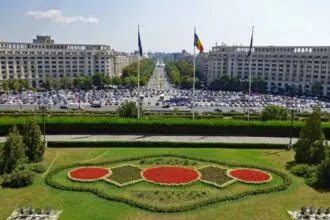
A couple of these pairings are worth a specific note. The Palace of the Parliament and the People’s Salvation Cathedral sit directly opposite each other on Arsenal Hill and share the same nearest stop, Izvor, even though the walk from the station to the Palace’s own entrance is a genuinely substantial one rather than a quick hop.
Therme Bucharest is the deliberate exception on this list, since it sits roughly 25 kilometres north of the centre near Otopeni and is not reached by metro at all. The free shuttle bus from Piața Romană is the easiest way there without a car, which is why that station appears in the table rather than a metro stop nearer the complex itself.
| Attraction | Nearest Metro Stop | Line(s) |
|---|---|---|
| Palace of the Parliament (Casa Poporului) | Izvor | M1, M3 |
| The People’s Salvation Cathedral | Izvor | M1, M3 |
| Revolution Square & National Museum of Art | Universitate | M2 |
| Old Town & Lipscani | Universitate | M2 |
| Stavropoleos Church | Universitate | M2 |
| Cărturești Carusel | Universitate | M2 |
| Romanian Athenaeum | Piața Română | M2 |
| Cișmigiu Gardens | Izvor | M1, M3 |
| Grigore Antipa Natural History Museum | Piața Victoriei | M1, M2 |
| The Arch of Triumph & Kiseleff Avenue | Aviatorilor | M2 |
| Herăstrău Park & Lake | Aviatorilor / Aurel Vlaicu | M2 |
| The Village Museum | Aviatorilor | M2 |
| Cotroceni Palace | Eroilor | M1, M3, M5 |
| Therme Bucharest | Piața Română (free shuttle) | M2 |
Treat this table as a starting point rather than door-to-door directions, since most of these stops still leave a walk of five to fifteen minutes to the attraction itself, longer in the Palace of the Parliament’s case. Combining it with the interchange points covered earlier on this page, particularly Universitate and Piața Victoriei for the Old Town and northern parks respectively, makes it straightforward to chain two or three sights into a single day without retracing your steps.
Getting to Bucharest vs Getting Around It
It is worth being explicit about where this guide’s scope starts and stops, since Bucharest’s airport and its city network are genuinely two separate systems that only recently gained even a partial rail link between them. This page covers moving around once you are already in Bucharest, not the journey in from Henri Coandă Airport itself.
For the arrival itself, our separate Bucharest Airport Transfers guide covers the Express Bus 100, the dedicated airport train to Gara de Nord, taxis, Uber and Bolt, private transfers and hiring a car, along with what changes for a very early or very late landing. That guide also confirms the current, honest state of Metro Line M6, still under construction with a 2028 target, so nothing on this page assumes a direct metro link to the airport that does not yet exist.
Once that first journey ends, whether at Gara de Nord, Piața Unirii or a hotel doorstep somewhere between them, everything from that point onward is exactly what this guide describes. The two pages are built to be read together rather than as one long article, since the practical questions, and the honest answers to them, are genuinely different before you have arrived versus once you are already standing on a Bucharest street working out how to reach the next stop.

Rupert’s Handy Travel Tips
Bucharest’s two-operator system looks more complicated on paper than it feels once you have made a couple of journeys, so here is what I would want you to know first.
- Skip the queue with a contactless tap: a bank card or phone wallet works identically to a ticket on both Metrorex and STB, and it is genuinely the easiest option for a short stay.
- Remember STB drivers don’t sell tickets: buy a surface ticket before boarding, from a kiosk, the 24Pay app, or an SMS to 7458, never from the driver.
- M2 does most of the sightseeing work: if you only learn one line, learn this one, since it runs straight through Piața Victoriei, Piața Romană, Universitate and Piața Unirii.
- Check a station’s accessibility before you rely on it: M4 has lifts everywhere, but several older stations, including Piața Victoriei and Eroilor, still don’t.
- Head for Piața Unirii after the metro closes: every night bus route starts there, running every 30 minutes until the metro reopens around 5am.
- Treat scooters as a top-up, not a plan: Bucharest’s bike lanes are still patchy, so save Lime and Bolt for short, daytime hops rather than a cross-city ride.
Want to meet the reindeer behind our travel tips? Find out more in our page Who is Rupert?.




Frequently Asked Questions About Bucharest Public Transport
How much is a single metro ticket in Bucharest?
A single metro ticket costs 5 RON (about €1/£0.85/$1.10) and covers one metro journey, with no automatic transfer onto buses, trams or trolleybuses included.
Can I use a contactless bank card on Bucharest’s metro and buses?
Yes, contactless bank cards and linked mobile wallets work directly at metro gates and on board STB buses, trams and trolleybuses, charging the standard fare automatically.
Does the Bucharest metro go to the airport?
Not yet. Metro Line M6 will eventually connect directly to Henri Coandă Airport, but as of late 2026 it remains under construction with a target opening around 2028, so the dedicated airport train remains the only rail link for now.
What is the best metro line for sightseeing in Bucharest?
M2 is the most useful single line for a first-time visitor, running north to south through the centre and calling at Piața Victoriei, Piața Romană, Universitate and Piața Unirii.
How do I get around Bucharest after the metro closes?
STB runs more than 20 night bus routes, all starting from Piața Unirii, running roughly every 30 minutes between 11pm and 5am at the same 3 RON fare as daytime travel.
Is Bucharest’s public transport wheelchair accessible?
It is mixed. Standard buses are low-floor and ramp-equipped, M4 has lifts at every station, but several older metro stations on M1, M2 and M3, including Piața Victoriei and Eroilor, do not yet have working lifts.

Further Reading & Related Guides
Still working out how to actually reach Bucharest before using any of the network above? Our Bucharest Airport Transfers guide covers the Express Bus 100, the airport train, taxis and every other realistic way of reaching the city centre from Henri Coandă, and it is the natural starting point before this page takes over.
Once you know how to move around, our Things to Do in Bucharest guide rounds up the landmarks this network can actually take you to, from the Palace of the Parliament to the Old Town’s Lipscani district, all reachable using the metro lines and surface routes covered here. For anyone with extra days either side of a city stay, our Day Trips from Bucharest guide covers Peleș Castle, Bran and Brașov, each reached from Gara de Nord, the same station several of this page’s metro and surface routes connect into.
Visiting over the festive season instead? Our Bucharest Christmas Markets guide covers all four of the city’s winter markets, including exactly which metro station serves each one, from Izvor for the flagship Piața Constituției market to Parc Drumul Taberei on the M5 line described above.
For live timetables, route maps and fare updates straight from the operator, STB’s official website is worth bookmarking before a longer stay, particularly if your trip involves routes or districts not covered in detail on this page.