

Why Brindisi Airport Matters for Southern Italy Travel
Brindisi Airport has become one of the most important arrival points for travellers exploring Southern Italy, the Salento Peninsula, and Adriatic ferry routes towards Greece and Albania. Officially known as Brindisi Papola Casale Airport, the airport sits relatively close to the city centre and functions as a major gateway into the wider Apulia region.
The airport has expanded rapidly thanks to low-cost airlines including Ryanair, easyJet, and seasonal European carriers serving Southern Italy. Travellers arriving here often continue onward towards destinations such as Lecce, Gallipoli, Otranto, and the Adriatic coastline.
One major advantage of Brindisi is simplicity. Unlike airports requiring long motorway journeys into the city, the airport sits relatively close to the railway station, ferry areas and historic centre. Under normal traffic conditions, many transfers take less than 30 minutes.
For ferry passengers, the airport is especially useful because it provides relatively easy access towards overnight Adriatic sailings connecting Italy with mainland Greece and the Balkans. Travellers can realistically land, transfer into the city, and continue onward by ferry or train without needing complicated long-distance connections.
Compared with larger Italian airports, Brindisi Airport also feels considerably calmer and easier to navigate. Walking distances inside the terminal are manageable, transport links are relatively straightforward and the overall arrival experience is usually far less stressful than in Italy’s largest transport hubs.
Quick Transfer Comparison Table
| Transfer Option | Typical Cost | Journey Time | Best For | Main Arrival Point |
|---|---|---|---|---|
| Local Airport Bus | Around €1 to €3 | Around 15 to 25 minutes | Cheapest transfer option | Brindisi city centre |
| Taxi | Around €20 to €35 | Around 15 to 25 minutes | Luggage and direct hotel transfers | Door-to-door |
| Private Airport Transfer | Around €45 to €80+ | Around 20 to 30 minutes | Families and stress-free arrivals | Direct accommodation drop-off |
| Bus + Train to Lecce | Around €8 to €15 total | Around 45 to 75 minutes | Travellers continuing into Salento | Lecce railway station |
| Car Hire | Varies heavily | Depends on destination | Exploring wider Puglia | Airport pickup area |
| Taxi to Ferry Port | Around €20 to €30 | Around 15 to 20 minutes | Ferry passengers | Port of Brindisi |
See hotel options and places to stay in Brindisi.
Browse hotelsBrowse apartments, homes and self-catering accommodation in Brindisi.
Browse rentalsSee hotel prices from multiple booking sites in one search.
Compare ratesWhere Is Brindisi Airport?
Brindisi Airport sits just outside the city on the Adriatic coast of Apulia in Southern Italy. The airport lies relatively close to central Brindisi compared with many Mediterranean airports, which is one reason transfers are usually straightforward and reasonably fast.
The airport functions as one of the main gateways into the wider Salento Peninsula, serving both coastal tourism and international ferry traffic across the Adriatic. Many travellers arriving here continue onwards towards Lecce, beach resorts along the Ionian coast, or ferry routes towards Greece and Albania.
Inside the terminal, navigation is normally fairly simple. Arrivals, taxi ranks, bus stops and car hire desks are all positioned within a relatively compact area. Compared with larger airports such as Rome Fiumicino or Milan Malpensa, Brindisi feels considerably easier to understand for first-time visitors.
Because the airport is located so close to the city itself, transfer times are generally short. Under normal traffic conditions, taxis can often reach central Brindisi in under 20 minutes, while local bus services also provide relatively cheap access into the city.
During summer weekends the airport becomes significantly busier, particularly when low-cost airline arrivals overlap with Adriatic ferry departures and coastal tourism traffic heading deeper into Southern Italy.
Airport Bus Services Explained
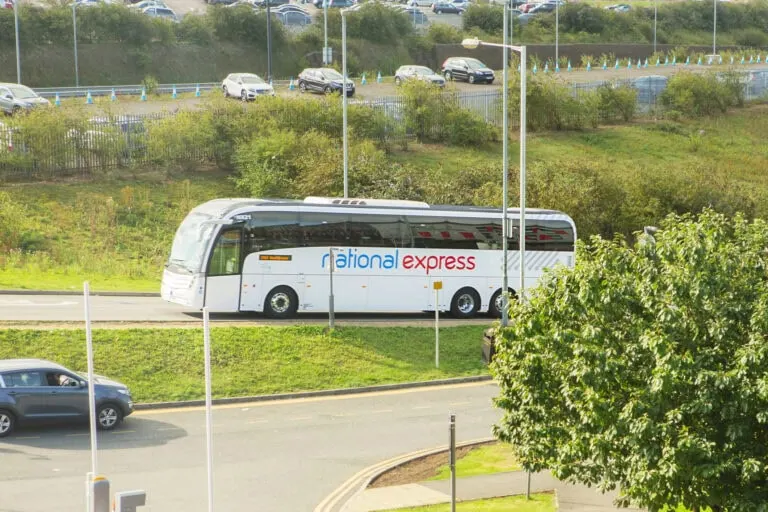
Local bus services provide the main public transport connection between Brindisi Airport and the city itself. For most budget travellers, buses are normally the cheapest way to reach central Brindisi, the railway station and some onward transport connections.
The airport bus network is designed mainly around local transport needs rather than dedicated luxury airport express services. That means buses are practical and inexpensive, but they can also become crowded during busy periods and are more heavily affected by traffic conditions than rail connections.
Bus stops are located outside the terminal area and are generally easy to locate after arrivals. Services normally operate throughout much of the day, although frequencies reduce during late evening periods and on some holidays.
Tickets are usually inexpensive and can normally be purchased through local ticket vendors, tobacconists, kiosks or sometimes directly onboard depending on the service operating. Travellers using paper tickets should validate them where required after boarding to avoid possible fines during inspections.
One thing many travellers underestimate is luggage space. Local airport buses are designed primarily for everyday urban transport rather than large tourist suitcases. During busy summer periods, buses can therefore feel crowded, especially when flights arrive simultaneously.
For travellers prioritising low costs over maximum convenience, the airport buses remain a perfectly workable option and one of the cheapest airport transfers anywhere in Southern Italy.
Bus to Brindisi City Centre
For most travellers using public transport, the local airport bus is the cheapest and simplest way to travel between Brindisi Airport and central Brindisi.
The airport sits relatively close to the city itself, which means transfer times are usually far shorter and less stressful than at many larger Southern European airports. Under normal traffic conditions, journeys into the centre often take around 15 to 25 minutes depending on congestion levels and the exact stop being used.
The main airport connection is usually operated by STP Brindisi, the local public transport operator serving the wider province. Buses normally stop directly outside the terminal building near the arrivals area, making the transfer process relatively straightforward even for first-time visitors.
Services generally connect the airport with key parts of the city including Brindisi railway station, central shopping streets, the waterfront and surrounding urban districts. For most visitors, the railway station area is the most important stop because it provides onward train connections across Apulia towards destinations such as Lecce, Bari, and wider Southern Italy.
During daytime periods, buses are usually reasonably frequent, although services become less regular later in the evening and during quieter seasonal periods. Travellers arriving on very late flights should therefore always check schedules in advance rather than assuming buses will continue operating normally overnight.
Tickets are inexpensive and usually cost only a few euros. In many cases, travellers can purchase tickets from airport kiosks, tobacconists known locally as tabacchi, authorised ticket vendors or directly through local transport apps depending on the system currently operating.
Some services may also support onboard payment or contactless systems, although relying entirely on onboard card payments is not always the safest strategy in smaller Italian cities. Carrying a small amount of cash remains sensible because payment systems occasionally fail or operational arrangements change.
Like many Italian local transport systems, paper tickets often require validation after boarding using the small machines positioned onboard the bus. Travellers unfamiliar with the Italian system sometimes forget this step and can technically receive fines during ticket inspections even if they already purchased a valid ticket.
One detail many visitors underestimate is luggage pressure during summer. Although Brindisi is smaller and calmer than Naples, airport buses can still become crowded when several flights arrive close together, particularly during the peak Adriatic ferry and beach tourism season.
Travellers carrying oversized luggage, travelling in groups or continuing directly towards ferry departures often find taxis considerably easier despite the higher price.
For most solo travellers and budget visitors staying in central Brindisi, however, the airport bus remains a very practical, affordable and relatively stress-free transfer option.
Getting to Brindisi Railway Station
Many travellers arriving at Brindisi Airport are continuing onward by rail rather than staying in Brindisi itself. The city’s railway station provides important connections across Apulia and wider Italy, including services towards Lecce, Bari, Rome, and Northern Italy.
Unlike larger Italian airports with direct rail stations attached to terminals, Brindisi Airport does not currently have a direct airport train connection. Travellers normally reach Brindisi railway station using local buses, taxis or private transfers.
The local airport bus is normally the cheapest option. Journey times are usually around 20 to 30 minutes depending on traffic conditions and stop locations. Travellers should still allow extra time during busy summer periods because roads around the city can become congested.
Taxis provide the fastest and simplest transfer between the airport and railway station. Under normal conditions, journeys are often completed within roughly 15 to 20 minutes. Travellers with heavy luggage, tight train connections or late-night arrivals often find taxis significantly less stressful than navigating local buses.
The railway station itself is relatively manageable compared with larger Italian transport hubs. High-speed and regional services operate throughout the day, and the station acts as one of the key gateways into the wider Salento region.
Travellers continuing towards smaller coastal towns should still check rail schedules carefully because some regional connections become less frequent outside major daytime periods.
Transfers to the Ferry Port
One reason Brindisi Airport is so useful for Adriatic travel is the relatively short distance between the airport and the ferry terminals.
Many travellers arriving in Brindisi are continuing directly onto overnight ferries towards Greece or Albania, particularly routes towards Igoumenitsa, Patras, and Vlorë.
For ferry passengers, taxis are usually the simplest overall option. Under normal traffic conditions, transfers between the airport and harbour generally take around 15 to 20 minutes depending on the exact terminal being used.
Local buses can provide a cheaper alternative, although travellers should remember that ferry terminals are operational transport areas rather than tourist centres. Navigating local transport with large luggage loads can therefore become tiring, especially during hot summer weather.
Private transfers are particularly useful for travellers boarding overnight ferries because drivers normally understand the harbour layout and can drop passengers relatively close to the correct departure area. This removes much of the confusion sometimes experienced by first-time visitors.
Travellers connecting directly from flights onto ferries should always leave generous transfer margins. International ferry boarding procedures can take longer than expected, especially during summer weekends when vehicle traffic across the Adriatic increases sharply.
Passengers travelling with campervans, motorcycles or large luggage loads should be especially cautious about tight transfer timings because port traffic around departure periods can become surprisingly busy.
Reaching Lecce by Train and Bus
For many travellers, Lecce is the real destination rather than Brindisi itself. Known for its extraordinary baroque architecture and historic streets, Lecce has become one of Southern Italy’s most popular cultural destinations.
The most common route from Brindisi Airport involves first reaching Brindisi railway station before continuing south by train towards Lecce.
Regional trains between Brindisi and Lecce operate relatively frequently throughout much of the day, and journey times are usually around 25 to 35 minutes depending on the service being used.
Overall transfer times from the airport to Lecce normally range between roughly 45 and 75 minutes once bus or taxi connections into Brindisi itself are included.
Travellers with heavy luggage or late arrivals sometimes prefer direct private transfers because they remove the need for separate bus and rail connections. This is especially useful for visitors staying in countryside accommodation or smaller coastal towns outside Lecce itself.
During summer, trains towards Lecce can become extremely busy with beach tourism traffic moving deeper into the Salento Peninsula. Travellers arriving on Friday evenings and summer weekends should therefore expect more crowded conditions than during quieter seasons.
Search routes and flight options for your trip to Brindisi.
Search flightsUse an eSIM to get online without hunting for a local SIM after arrival.
See eSIM optionsArrange a private airport pickup for your trip to Brindisi.
Check transfersGetting to Gallipoli, Otranto and the Salento Coast
Beyond Lecce, many travellers continue deeper into the Salento Peninsula towards beach towns and coastal resorts along both the Adriatic and Ionian coasts.
Popular destinations include Gallipoli, Otranto, Santa Maria di Leuca, and smaller seaside towns scattered across Southern Apulia.
Reaching these areas by public transport is certainly possible, but journeys become slower and more fragmented once travellers move beyond the main railway lines connecting Brindisi and Lecce.
Most travellers first continue towards Lecce before changing onto regional rail services or local buses serving the coast. Journey times vary heavily depending on destination, season and connection quality. Some routes are relatively straightforward, while others involve multiple regional buses or slower local trains.
During summer, additional seasonal transport services sometimes operate towards major beach destinations, although frequencies and reliability vary significantly depending on the route.
For travellers staying in smaller coastal towns, private transfers and car hire often become much more practical than relying entirely on public transport. Parts of the Salento region are surprisingly rural once outside the main urban corridors, and transport frequencies can reduce substantially during evenings and Sundays.
Travellers planning beach-focused holidays across Southern Italy frequently find that hiring a car from Brindisi Airport provides far greater flexibility, particularly for exploring hidden beaches, countryside accommodation and smaller coastal villages.
Taxi Transfers from the Terminal
For travellers wanting the simplest and fastest arrival experience, taxis remain one of the easiest ways to travel from Brindisi Airport into the city, railway station or ferry terminals.
Official taxis wait outside the arrivals area and normally provide direct transport towards hotels, apartments and onward transport hubs without requiring additional connections.
Under normal traffic conditions, journeys into central Brindisi usually take around 15 to 25 minutes depending on the exact destination and traffic levels. Transfers towards the ferry terminals are often similarly quick because of the airport’s relatively close proximity to the harbour.
Taxi prices are generally lower than in larger Italian cities such as Rome or Milan, although fares still increase during late-night periods, holidays and busy summer weekends.
Travellers carrying heavy luggage, travelling with children or connecting onto overnight ferries often find taxis considerably less stressful than buses or multiple transport changes.
Taxis are also especially useful for late-night arrivals when local bus frequencies become more limited. Unlike some regional airports where taxis can feel unreliable or difficult to locate, Brindisi normally maintains a visible taxi presence around the arrivals area.
Travellers should still avoid unofficial drivers approaching passengers inside the terminal. Using the official taxi rank outside arrivals remains the safest and simplest option.
Private Transfers and Welcome Pickups
Travellers wanting the smoothest possible arrival experience often choose private airport transfers from Brindisi Airport directly to hotels, ferry terminals or coastal accommodation.
Private transfers are especially useful for first-time visitors unfamiliar with Southern Italy’s transport systems, travellers arriving late at night and passengers carrying large luggage loads.
Instead of navigating ticket machines, bus stops or railway connections after landing, passengers are met directly at arrivals before continuing straight towards their accommodation or onward destination.
This can be particularly valuable for travellers continuing towards coastal resorts, countryside accommodation, ferry departures or smaller Salento towns poorly connected by public transport.
Private transfers are also popular with ferry passengers because drivers usually understand the port layout and can drop passengers close to the correct departure area. This removes much of the uncertainty sometimes associated with international Adriatic ferry terminals.
Families and groups often find private transfers more reasonable than expected once costs are split between several passengers. Journey times are usually similar to taxis, although pricing is fixed in advance rather than relying on metered fares.
For travellers prioritising comfort, simplicity and predictable arrival logistics, private transfers remain one of the strongest overall transport options from Brindisi Airport.

Book Your Brindisi Airport Transfer with Welcome Pickups
Arriving in Brindisi? You can arrange your airport transfer with Welcome Pickups before you travel, so your driver is ready when your flight arrives.
Pre-booking can be especially convenient after a late flight or when visiting Brindisi for the first time, giving you a direct journey from the airport to your accommodation.
Compare transfer options for Brindisi. You can also check another transfer provider before booking.
Compare hostels and budget-friendly accommodation around Brindisi.
Browse hostelsAccess compensation support, eligible lounge benefits and faster payouts when flights go wrong.
See the benefitsLeave your luggage somewhere convenient and enjoy Brindisi hands-free.
View storageCar Hire and Driving in Puglia
For travellers exploring the wider Apulia region, hiring a car directly from Brindisi Airport is often the most flexible transport option available.
While trains work reasonably well between major cities such as Brindisi, Lecce, and Bari, many of the region’s beaches, countryside hotels and smaller coastal towns become far easier to reach with a vehicle.
The airport contains several major international and local car hire operators, and pickup areas are generally positioned relatively close to the terminal itself.
Driving from the airport is usually fairly straightforward because Brindisi connects efficiently with regional coastal roads and wider motorway networks across Southern Italy.
Many travellers use rental cars to explore destinations such as Gallipoli, Otranto, Alberobello, Polignano a Mare, and smaller Salento beach towns.
Travellers should still prepare for Southern Italian driving conditions. Roads around historic centres can become narrow and congested, while parking in older districts is often restricted through ZTL traffic control zones.
Summer traffic also becomes significantly heavier across the Salento coastline, particularly during weekends when beach tourism peaks.
Automatic vehicles are less common than in countries such as the United Kingdom or United States, so travellers specifically requiring automatics should normally book well in advance during summer periods.
Compare Car Hire Prices in Brindisi
If you are planning to explore beyond Brindisi, hiring a car can give you much more flexibility over where you go and how long you spend there.
Compare prices through Discover Cars and EconomyBookings to check vehicles, rental conditions and offers from multiple car hire companies before you book.
Late Night and Early Morning Transport
Late-night arrivals at Brindisi Airport are generally easier than at many smaller Mediterranean airports, although transport options reduce significantly outside normal daytime hours.
During the day, buses and taxis normally provide relatively straightforward access into Brindisi, the railway station and ferry terminals. Late at night, however, local bus frequencies become far less regular and waiting times can increase substantially.
Travellers arriving close to midnight or during very early morning periods should therefore check transport schedules carefully before travelling rather than assuming buses will still be operating normally.
Taxis become considerably more important during overnight periods. Official taxis normally remain available outside arrivals even when public transport frequencies reduce, although queues can form when multiple flights land simultaneously during summer.
Private transfers are particularly useful for late arrivals because drivers usually monitor incoming flights and adjust pickup times if delays occur. This removes a large amount of stress for travellers arriving in Southern Italy for the first time.
Ferry passengers should be especially cautious with overnight timings. Some Adriatic ferry routes towards Greece and Albania require passengers to complete boarding procedures well before departure, meaning tight airport-to-ferry connections can become risky if flights are delayed.
Travellers staying overnight before onward journeys often find accommodation near the railway station or waterfront the most convenient overall option because it allows easier access towards both ferry terminals and regional train services the following morning.
Compared with many larger airports, one advantage of Brindisi is that the city itself remains relatively compact and manageable even outside normal daytime hours. The airport does not feel isolated far outside the urban area in the way some regional Mediterranean airports do.
Accessibility and Luggage Considerations
Accessibility at Brindisi Airport is generally fairly good compared with many smaller Southern European airports. The terminal is relatively compact, which means walking distances are usually manageable and navigation inside the airport feels considerably simpler than in Italy’s largest international hubs.
The airport provides lifts, ramps, step-free access routes and assistance services for passengers with reduced mobility. Travellers requiring additional support can normally arrange assistance through airlines before departure.
One major advantage of the airport is layout simplicity. Arrivals, taxi areas, bus stops and car hire desks are all positioned within relatively easy walking distance of one another, reducing the amount of complicated navigation required after landing.
For travellers carrying large luggage loads, taxis and private transfers are often the easiest overall transport option. Local buses are inexpensive but can become crowded during summer periods when flights arrive close together.
Ferry passengers should think carefully about luggage handling. Travellers continuing onto Adriatic ferry crossings towards the Balkans or Greece often carry significantly larger luggage loads than standard city-break passengers, particularly when travelling with camping equipment or extended overland travel gear.
The ferry terminals themselves can also involve longer walking distances than some travellers initially expect. Anyone continuing directly from the airport onto an overnight ferry should therefore leave enough transfer time to move comfortably through the harbour areas.
Travellers using wheelchairs or mobility aids should also remember that some older parts of Brindisi and smaller Salento towns may contain uneven paving and historic infrastructure less suited to mobility access than the airport itself.

Common Transfer Mistakes Travellers Make
One of the most common mistakes travellers make is underestimating how busy Southern Italy becomes during summer. On paper, Brindisi Airport looks compact and straightforward, but during July and August the combination of beach tourism, ferry traffic and low-cost airline arrivals can create surprisingly heavy congestion around the city and harbour.
Many travellers also assume public transport operates constantly throughout the night. While buses normally run well during daytime hours, late-night frequencies reduce significantly and extremely late arrivals may find taxis or private transfers much easier overall.
Another frequent mistake involves tight ferry connections. Travellers sometimes book Adriatic sailings too close to flight arrival times without accounting for delays, baggage reclaim or traffic around the harbour. Ferry boarding procedures can take considerably longer than expected, especially during busy summer weekends.
Visitors also regularly underestimate luggage difficulties on local buses. While Brindisi itself is compact, navigating crowded public transport with large suitcases during hot weather quickly becomes exhausting, especially for travellers continuing onto ferries or regional trains.
Car hire creates its own challenges. Many visitors unfamiliar with Italy do not realise that historic town centres often contain restricted driving zones, while parking in older coastal areas can become extremely difficult during peak tourism periods.
Another mistake is treating Brindisi purely as a transport stop rather than a destination in its own right. Even travellers continuing quickly towards Lecce, the Salento coast or Adriatic ferries often find the city’s waterfront and historic areas surprisingly enjoyable for a short overnight stay.
Finally, many travellers forget about mobile connectivity changes once continuing beyond Italy towards parts of the Balkans. EU roaming rules do not always apply once crossing the Adriatic, so preparing with travel eSIMs or regional data plans before departure is often a smart decision.
Using the Airport for Ferry Connections
One of the biggest strengths of Brindisi Airport is how efficiently it works alongside Adriatic ferry travel.
Many travellers arriving at the airport are not actually staying in Brindisi itself. Instead, they are connecting directly onto overnight ferries towards Greece or Albania as part of larger overland journeys across Southern Europe and the Balkans.
Because the airport sits relatively close to the harbour, transfers are usually manageable even for same-day ferry departures. Under normal conditions, taxis often reach the ferry areas within around 15 to 20 minutes depending on traffic and the exact terminal being used.
For travellers carrying large luggage loads or travelling with vehicles onboard ferries, private transfers are often the least stressful option because drivers usually understand the harbour layout and departure areas.
Summer weekends are by far the busiest periods for ferry connections. Roads around the harbour can become heavily congested when Adriatic ferry traffic overlaps with beach tourism and airline arrivals.
Travellers connecting directly from flights onto ferries should always leave generous margins rather than assuming everything will run perfectly on time. Delays at baggage reclaim, passport control or city traffic can quickly create problems for tight onward ferry schedules.
For many overland travellers, Brindisi Airport functions as the beginning of one of Europe’s great Adriatic travel corridors linking Italy, Greece, and the wider Balkans without relying entirely on flights.

Rupert’s Handy Travel Tips
Rupert likes arriving at Brindisi Airport because everything feels relatively compact and manageable compared with some larger Italian airports. You can usually land, collect luggage and be heading toward the city or ferry port surprisingly quickly.
Rupert enjoys using Brindisi as a gateway into the wider Salento Peninsula. According to him, some of Southern Italy’s best coastline begins once you head south toward Lecce, Otranto, and the Adriatic beaches.
- Rupert usually takes a taxi if connecting directly onto an overnight ferry because dragging luggage across unfamiliar harbour areas after a flight quickly becomes tiring.
- During summer, Rupert avoids scheduling extremely tight airport-to-ferry connections because roads around the port can become far busier than travellers expect.
- Rupert recommends keeping some cash available for buses, cafés and smaller transport purchases because parts of Southern Italy still operate slightly differently from Northern European cities.
- Rupert always checks late-night bus schedules in advance because regional airport transport frequencies reduce significantly after evening arrivals.
- Rupert believes the first proper meal after landing in Apulia should involve fresh seafood, local olive oil and absolutely no rushing.
Rupert considers Brindisi one of Southern Europe’s most underrated transport gateways. The city quietly connects beaches, ferries, railways and Adriatic overland travel far better than most travellers realise.
Frequently Asked Questions About Airport Transfers
What is the cheapest way to get from Brindisi Airport to the city centre?
The local airport bus is usually the cheapest option for reaching central Brindisi from Brindisi Airport.
Does Brindisi Airport have a train station?
No. Travellers normally reach Brindisi railway station using buses, taxis or private transfers before continuing onward by rail.
How far is Brindisi Airport from the ferry port?
Under normal traffic conditions, journeys between the airport and ferry areas usually take around 15 to 20 minutes by taxi.
Can you get from Brindisi Airport directly to Lecce?
Yes, although most travellers first transfer into Brindisi railway station before continuing south by regional train towards Lecce.
Are taxis expensive from Brindisi Airport?
Taxi prices are generally lower than in larger Italian cities, although fares still increase during late-night periods and busy summer weekends.
Is Brindisi Airport easy to navigate?
Yes. Compared with larger Italian airports, the terminal is relatively compact and straightforward to understand.
Do buses run late at night from Brindisi Airport?
Bus frequencies reduce significantly during late evening and overnight periods, so travellers arriving late should always check schedules carefully beforehand.
Is Brindisi Airport good for ferry connections?
Yes. The airport sits relatively close to the harbour and works well for travellers connecting onto Adriatic ferries towards Greece and Albania.
Further Reading & Related Guides
Travellers arriving through Brindisi Airport often continue far beyond the city itself. Our detailed Brindisi Ferry Routes Guide explains the main Adriatic crossings towards Greece and Albania, including overnight ferry advice, vehicle transport and ferry operators.
If you are exploring wider Southern Italy, our rail coverage explains how to continue through Apulia using regional and long-distance trains, while our Interrail Italy Guide and wider European Railway Network Guide cover onward journeys across Italy and the Balkans.
If you are relying heavily on maps, digital tickets and mobile boarding passes, our eSIM Apps Guide explains the best connectivity options for travellers moving between Italy, Greece and the Balkans.