Reviewed by our editorial team Published
Why Planning Your Vágar Airport Transfer Really Matters
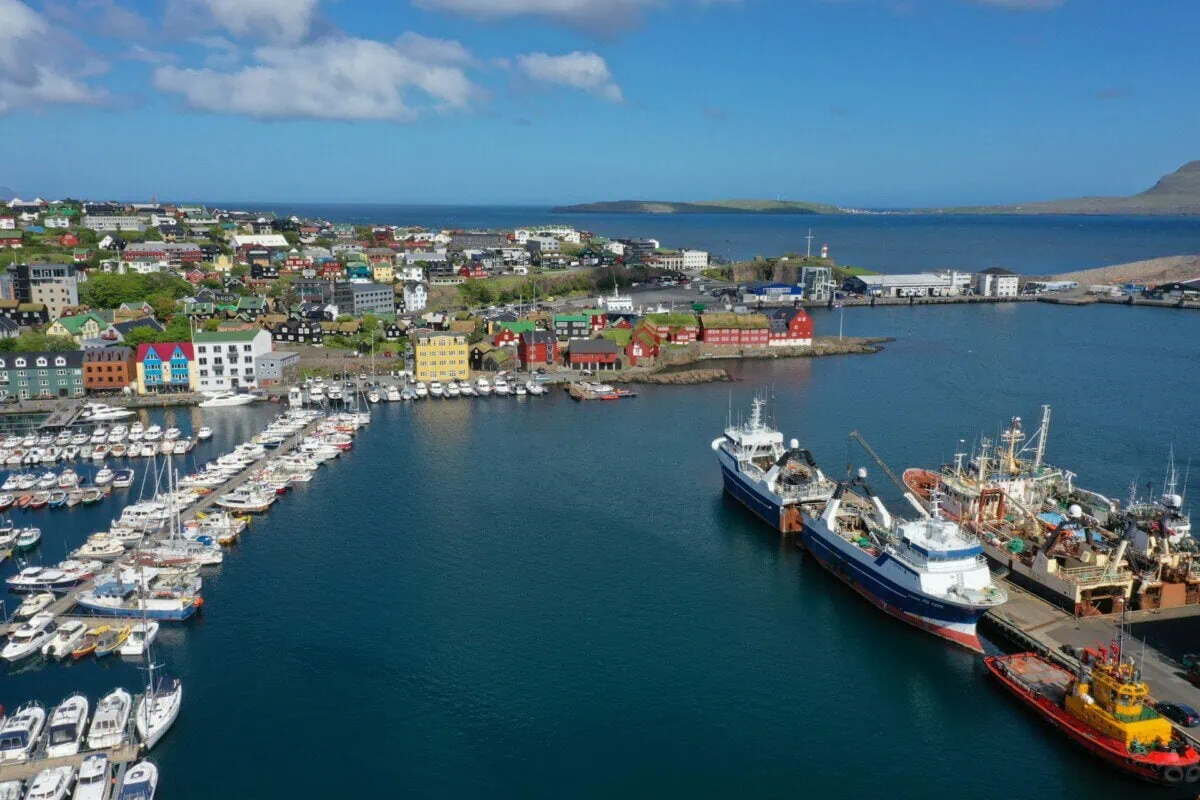
The Faroe Islands are one of the most remote destinations in Europe, and Vágar Airport (FAE) is the only way almost every visitor arrives. Unlike a typical European capital, where the airport sits a short taxi ride from the centre, Vágar is separated from Tórshavn by open water and a mountain range, crossed only via an undersea tunnel, which makes the transfer itself a genuine part of the trip rather than an afterthought.
This is a self-governing Danish territory with its own transport company, its own currency pegged to the Danish krone, and a subarctic climate that regularly interferes with flight schedules. Getting the transfer wrong, whether that means missing the last bus of the day or assuming a taxi will simply be waiting outside, can turn a short hop into a genuinely stressful few hours on an island chain with very few backup options.
The good news is that once you understand the layout, the choices are refreshingly simple. A public bus links the airport directly to Tórshavn, a small number of taxi firms cover fixed-fare transfers, and car hire is genuinely the most practical option for anyone planning to explore beyond the capital, since so much of what makes the Faroe Islands worth visiting lies well outside town.
This guide walks through every practical option for reaching Tórshavn and the wider islands from Vágar Airport, checked against current 2026 schedules, fares and tunnel tolls. It also covers the one factor that catches almost every first-time visitor out: how weather-dependent flights into Vágar actually are, and why building in a buffer day is sensible planning rather than excessive caution.
Whether you are heading straight to a hotel in Tórshavn, picking up a hire car to chase waterfalls and villages, or continuing on to explore the rest of the archipelago covered in our separate guide to things to do in the Faroe Islands, the details below should make the first and last leg of the trip painless.
Quick Transfer Comparison Table
Here is how the main options for getting from Vágar Airport to Tórshavn compare, before going into more detail on each below.
| Option | Journey Time | Approx. One-Way Price | Best For |
|---|---|---|---|
| Bus (Route 300) | 50-55 minutes | DKK 100 (£12/€13/$14) | Budget travellers, light luggage |
| Taxi | 40-45 minutes | From DKK 245 (£29/€33/$35), fixed fare | Small groups, late or early flights |
| Car Hire | 45-50 minutes (self-drive) | From £55/day (€63/$70), plus tunnel toll | Exploring beyond Tórshavn |
| Private Transfer | 40-45 minutes | From around £45 (€52/$59) per car | Families, door-to-door pickup |
Best for two or three nights. The widest choice of rooms, with filters for free cancellation and included breakfast.
View staysBest for groups who want one address and separate bedrooms rather than three hotel rooms.
See holiday homesBest for double-checking. Runs the same search across several booking sites so you are not leaving money behind.
Compare pricesWhich Transfer Should You Choose?
A solo traveller watching the budget, or anyone landing on a well-timed daytime flight with just a backpack or a single case, is generally best served by the Route 300 bus. It costs a fraction of a taxi, has enough luggage space for typical hand baggage, and covers the tunnel crossing into Tórshavn in around fifty minutes without any need to book ahead beyond checking the timetable.
A couple or small group without heavy luggage needs, especially on an early or late flight the bus timetable does not reach, is usually better off with a taxi or private transfer. Splitting a fixed one-way fare between two or three passengers narrows the price gap with the bus considerably, and a pre-booked car removes any need to work out connections after a long journey.
Anyone renting a car and planning to explore beyond Tórshavn from day one should simply collect the vehicle at the airport and drive straight off. This suits travellers heading to villages, hiking trailheads or the smaller islands that the bus network does not reach, provided the hire desk has confirmed the Vágatunnilin toll arrangement before the keys are handed over.
A family travelling with young children, car seats or a heavier stack of luggage will usually find a private transfer the least stressful option. A driver waiting with your name in the arrivals hall, direct door-to-door delivery to a hotel, and no need to manage bags on a bus or fold a car seat into a hire car all count for a lot after an unfamiliar, sometimes delayed flight.
Where Is Vágar Airport, and Why Is It So Far From Tórshavn?
Vágar Airport sits on Vágar, one of the westernmost islands in the Faroese archipelago, roughly 45 km (28 miles) from Tórshavn by road. That distance is genuinely unusual for a capital city’s main airport, and it catches a lot of first-time visitors off guard when they compare it to, say, a 20-minute Arlanda Express ride into central Stockholm.
The road route runs across Vágar itself, through the Vágatunnilin undersea tunnel beneath the Vestmannasund strait to the island of Streymoy, and then on through further tunnels and coastal road into Tórshavn. In good conditions the drive takes around 42-50 minutes, but the bus timetable and most published guides quote closer to an hour once stops and traffic through Tórshavn’s approach roads are factored in.
There is no train and no metro option here, and the Faroe Islands’ small population means public transport frequency, while genuinely useful, is nowhere near as dense as a mainland European capital’s. A short-haul Atlantic Airways helicopter service also links Vágar with a heliport near Tórshavn in around 12 minutes, though seats are limited, heavily subsidised for residents, and not something most visiting travellers plan around.
The practical upshot is that this transfer deserves more attention in your planning than most airport transfers do. Whichever option you choose, build in a little extra time, particularly if you are arriving on one of the later flights of the day when the last bus of the evening may already have gone.
Bus: The SSL Route 300 Service
The public bus between Vágar Airport and Tórshavn is Route 300, operated by Strandfaraskip Landsins (SSL), the state-owned company that runs the Faroe Islands’ entire network of buses and ferries. It is the only scheduled public transport option covering this route, and it is a genuinely comfortable, reliable way to make the journey if your flight timing lines up with it.
Route 300 runs several times a day in each direction, typically around seven weekday departures and a slightly reduced weekend schedule, timed loosely around flight arrivals and departures rather than a fixed clockface interval. The buses are modern coaches with comfortable seating and luggage space, calling at Sørvágur and Miðvágur on the way, with onward connections to Vestmanna available on Route 100 at certain times.
The full journey takes around 50-55 minutes and costs approximately DKK 100 (£12/€13/$14) one-way, payable on board or online through SSL’s booking system. Visitors planning several journeys around the islands may find better value in the Tourist Travel Card, which covers a 4-day pass from around DKK 500 (£58/€67/$73) or a 7-day pass from around DKK 700 (£81/€94/$102) and is valid on both buses and ferries.
The one genuine catch is that buses do not run after every single flight, particularly late evening arrivals, so it is worth checking the current SSL timetable for Route 300 against your actual arrival time before relying on it, rather than assuming a bus will simply be waiting.
There is no dedicated SSL mobile app for booking or tracking buses. Timetables and online ticket booking are handled entirely through SSL’s own website at ssl.fo and its booking portal at booking.ssl.fo, both of which work fine in a mobile browser, so there is no need to hunt for an app before you travel.

Taxi: Fast, Simple and Priced by the Car
A taxi is the fastest way to cover the 45 km between Vágar Airport and Tórshavn, with a typical journey taking around 40-45 minutes depending on traffic through the tunnels. Local taxi firms operate a fixed one-way rate rather than a running meter for this specific route, which removes any surprise about the final fare.
Expect to pay somewhere in the region of DKK 245 (£29/€33/$35) for the transfer when booked in advance, a price that generally covers the whole car rather than being charged per passenger, so it can work out reasonably well for two or three people travelling together. Taxis wait for scheduled flight arrivals at the terminal, and most firms operate on a 24-hour basis to cover early departures and late arrivals that the bus timetable does not reach.
Because there are only a handful of taxi operators covering the whole island chain, it is sensible to book ahead rather than expect to simply hail one outside the terminal, particularly outside the main summer season. Your accommodation can usually arrange this for you, and it removes one more thing to worry about after a long flight.
Car Hire and Driving: The Most Practical Option for the Faroe Islands
If there is one transfer option worth genuinely considering over the others, it is car hire. The Faroe Islands are built for driving: a network of well-surfaced roads and dramatic undersea tunnels connects almost every inhabited island, and huge amounts of the scenery that makes this destination worth visiting, from remote fjord villages to hiking trailheads, simply is not reachable by public transport at all.
Avis, Europcar, Hertz, SIXT and Budget all operate at Vágar Airport alongside several dedicated local Faroese operators, so there is a genuine choice of desks to compare rather than a single monopoly provider. Booking ahead in the summer months is strongly recommended, as the islands’ small fleet size means cars, particularly larger 4x4s useful on gravel village lanes, can sell out well in advance.
Expect prices from around £55 (€63/$70) per day for a small economy car in peak season, rising to £90 (€103/$115) or more for a larger vehicle or automatic transmission. Fuel is sold in litres at broadly Scandinavian prices, and driving itself is straightforward: right-hand traffic, generally quiet single-carriageway roads, and speed limits rarely above 80 km/h outside the very short stretches of dual carriageway near Tórshavn.
The one thing every driver needs to plan for is the Vágatunnilin tunnel toll. This 4.9 km undersea tunnel beneath the Vestmannasund strait is the only road link between Vágar and the rest of the islands, and it is genuinely tolled, currently around DKK 50 (£6/€7/$8) for a return crossing for a standard car, charged automatically by number-plate recognition rather than at a barrier. Rental cars are billed for this by the hire company directly rather than through the driver’s own card, so it is worth asking at pickup whether the toll is already included in your rate, since some operators bundle it in and others invoice it separately afterwards.

Explore Faroe Islands with a Hire Car
Hiring a car can open up more of Faroe Islands and its surrounding region, giving you the freedom to travel beyond the main public transport routes.
Compare offers from Discover Cars and EconomyBookings before booking so you can check both price and rental conditions.
Hire Car Collection: Airport or Tórshavn?
Collecting a hire car directly at Vágar Airport is the simplest choice for most visitors, since it means driving the tunnel-toll route into Tórshavn or onward to a village immediately, without any second transfer to arrange. The main international desks and several local Faroese operators all have a pickup point at the terminal, so a car can generally be collected within a few minutes of clearing arrivals.
Collecting instead in Tórshavn can suit a traveller who wants to take the bus or a taxi in first, settle into a hotel, and only pick up a car once ready to explore further afield, perhaps a day or two into the trip. The tradeoff is that this means paying for an airport transfer and a hire car both, plus a second trip back out to a rental office, rather than driving away in one movement.
For most itineraries, airport collection makes more sense, since it avoids doubling up on transfers, but Tórshavn pickup is worth considering if your flight lands very late, when driving an unfamiliar tunnel route for the first time after a long day is best avoided in favour of a taxi or private transfer, with the car picked up fresh the next morning instead.
Best if you can move a day either way. Shows how the fare changes across the month.
Compare flightsBest for short trips. Install the eSIM at home and arrive with working data, no shop queue.
Browse eSIMsBest after a long flight or a late landing. Price agreed before you travel, and no taxi queue.
Check transfersPrivate Transfer Between the Airport and Tórshavn
For travellers who would rather not deal with schedules, fixed taxi ranks or driving on unfamiliar roads straight off a long flight, a pre-booked private transfer is worth considering. This typically means a driver waiting in the arrivals area with your name, direct door-to-door service to a hotel or guesthouse in Tórshavn, and no need to work out connections or luggage space in advance.
A standard car for two or three passengers with luggage typically starts from around £45 (€52/$59) for the one-way journey, broadly comparable to a fixed-fare taxi but arranged and confirmed before you fly rather than sourced on arrival. Larger groups or minibus-sized vehicles cost more, and most operators can also arrange onward transfers to other parts of the islands if you are not staying in Tórshavn itself.
This is a sensible option for families travelling with young children, anyone arriving very late in the evening after the last bus has gone, or visitors who simply want one less thing to think about after an unfamiliar and sometimes weather-delayed flight. Your accommodation is often the easiest way to arrange a genuinely reliable transfer, since they will already know which local services are dependable.

Compare Airport Transfer Companies
Pre-booking your airport transfer can save time and reduce stress when you arrive. Whether you need a private taxi, shared shuttle or executive transfer, comparing providers can help you find the best price and service for your journey.
We’ve selected three trusted airport transfer companies so you can compare prices, vehicle options, cancellation policies and customer reviews before you travel.
What Happens If Your Flight Is Delayed?
The Route 300 bus runs to a published timetable rather than in direct response to individual flights, so a delayed arrival does not mean a bus is held back or an extra one added. Landing an hour late may simply mean a longer wait at the terminal for the next scheduled departure, or in the worst case missing the last bus of the day entirely if the delay pushes arrival past its final run.
Taxis and private transfers generally cope with delays far more comfortably, provided the booking includes your actual flight number rather than just an estimated time. Most local firms and pre-booked transfer drivers track incoming flights and adjust the pickup accordingly, so a short delay rarely causes a problem as long as the driver knows to expect it.
The practical takeaway is that flexibility has a cost. A bus fare of around DKK 100 (£12/€13/$14) is unbeatable value when everything runs on time, but a taxi or private transfer booked with flight details attached is the safer bet if your flight into Vágar has a real chance of running late, which, given the airport’s weather record, is worth assuming rather than hoping against.
Flight Delays and Weather: Why Vágar Needs a Buffer Day
Vágar Airport is genuinely one of the more weather-affected airports in Europe, and this matters for anyone planning a transfer as much as it matters for the flight itself. The airport’s location among steep hillsides, combined with a subarctic maritime climate, means low cloud and sea fog regularly drop visibility below the minimum needed to land, and Danish civil aviation rules require specially trained pilots to fly the approach at all.
Atlantic Airways, the Faroese national carrier that operates the great majority of scheduled flights into Vágar, is well practised at managing this, but delays, diversions to Bergen or elsewhere, and occasional cancellations do happen, particularly in autumn and winter. This is a genuinely known characteristic of flying to the Faroe Islands, not a rare fluke, and experienced visitors plan around it rather than being caught out by it.
The practical implication for your airport transfer is simple: avoid booking a tight onward connection, whether that is a same-day international flight home or a ferry departure elsewhere, immediately after landing at Vágar. Building in at least one full spare day at either end of the trip, particularly outside the calmer summer months, is standard advice from locals and repeat visitors alike, and it takes a huge amount of stress out of an already long journey.
It is also worth keeping travel insurance and flight-tracking apps close at hand, since a diverted or delayed flight can mean an unplanned night in Tórshavn or, less commonly, a rebooked arrival on a different day entirely. None of this should put you off visiting, but going in with realistic expectations makes the whole transfer experience far less stressful than assuming Vágar will behave like a typical mainland European airport.
Reaching Other Faroese Towns and Villages from the Airport
Not every visitor is heading straight to Tórshavn, and Vágar Airport’s bus and road connections extend well beyond the capital. Route 300 itself stops at Sørvágur and Miðvágur, the two villages closest to the airport on Vágar island, both useful bases for exploring the island’s own dramatic coastline and hiking trails without needing to cross the tunnel at all.
From Tórshavn’s bus terminal, onward SSL services fan out across the archipelago to towns including Klaksvík in the north and Vestmanna, the departure point for the well-known sea cliff and bird tours, with a direct connecting bus (Route 100) from the airport at certain times of day. These onward journeys generally add another 45-90 minutes on top of the airport transfer itself, so factor that into arrival-day planning.
| Route(s) | Connects | Frequency | Journey Time from Airport |
|---|---|---|---|
| 300 | Airport ↔ Sørvágur / Miðvágur | Around 7 weekday departures, reduced weekend service | 10-15 minutes |
| 300, transferring to 100 | Airport ↔ Vestmanna | Selected daily departures, transfer required at certain times | Roughly 45-90 minutes total |
| 300, transferring to 401 (express) or 400 | Airport ↔ Klaksvík (via Tórshavn) | Express (401): 4 weekday departures. Regular (400): around 10 weekday departures plus weekend service | Roughly 1 hour 40 minutes to 2 hours 15 minutes total, including the Tórshavn transfer |
For anywhere off the main bus corridors, particularly the smaller islands reached by ferry or the more remote hiking villages, a hire car is by far the most flexible option, which is one more reason it earns its place as the standout choice for this destination. A separate road trip guide to the Faroe Islands covers these onward routes and island-hopping ferry connections in far more depth than an airport transfer page can.
Airport Journey Times to Klaksvík, Vestmanna, Sørvágur and Gásadalur
The table below pulls together approximate driving times from Vágar Airport alongside whether the routes already covered on this page reach each destination directly or need a change, useful for a quick decision at the arrivals hall.
| Destination | Approx. Driving Time from Airport | Direct Bus/Transfer? |
|---|---|---|
| Sørvágur | Around 10 minutes | Yes, direct on Route 300 |
| Vestmanna | Around 35-40 minutes | No, requires transferring from Route 300 to Route 100 |
| Klaksvík | Around 1 hour 30 minutes to 1 hour 45 minutes | No, requires transferring from Route 300 to Route 400 or the Route 401 express in Tórshavn |
| Gásadalur | Around 20-25 minutes | No scheduled bus or transfer covered on this page reaches Gásadalur directly; a hire car or pre-arranged private transfer is the practical option |
These are driving estimates rather than published timetables, and they assume normal tunnel conditions rather than winter weather or roadworks. For Vestmanna and Klaksvík by bus, use the connection details in the route table above rather than the driving time here, since the two figures are answering different questions.
Accessibility, Luggage and Late or Early Flights
Vágar Airport is a small, single-terminal building, and both the bus stop and taxi rank sit just outside the arrivals area, meaning wheelchair users and travellers with heavy luggage generally do not face a long walk between flight and transfer. The terminal itself has step-free access throughout, though as with much of the islands, weather and wind can make the short outdoor walk to a vehicle genuinely bracing at times.
Bus luggage space is reasonable for typical suitcases, but hikers travelling with large packs, camera equipment or ski-style bags may find a taxi or hire car more comfortable, especially on a full bus. If you are arriving on one of the day’s final scheduled flights, check the SSL timetable in advance, since it is genuinely possible for the last bus of the day to have already departed before a delayed flight lands.
Early departures back to the airport carry the same caution in reverse: the first bus of the morning does not always align neatly with the earliest flights out, so travellers with an early departure should double-check timings the night before rather than assuming a convenient connection exists. A pre-booked taxi or private transfer removes this risk entirely for anyone with a genuinely tight morning flight.
Best for solo travellers and anyone watching the budget. Dorm beds and private rooms in the same search.
Browse hostelsBest arranged before you fly rather than after. Covers claim handling, plus lounge access on eligible delays.
Explore AirHelp+Best for the gap between checking out and your train. Drop bags at a shop or hotel nearby and carry on.
Store your bagsService Availability for Late Arrivals and Very Early Departures
Route 300 does not run around the clock, and the honest answer is that the last bus of the day typically leaves not long after the final scheduled evening arrival, so anyone landing on a delayed late flight should not count on it being there. Checking the specific departure times against your booked flight, rather than assuming a late service exists, avoids an unwelcome discovery at an empty bus stop.
Taxis are more reliable overnight than the bus, since local firms are used to covering the airport’s earliest and latest flights, but availability with only a handful of operators covering the whole island chain is not guaranteed on demand. Booking ahead of a genuinely late arrival or a pre-dawn departure, rather than expecting to hail one on the spot, remains the safer approach.
Hire car desks are the least flexible option at unusual hours. Staffing at the terminal is generally built around the day’s scheduled flights rather than a 24-hour rota, so a very late collection or a pre-dawn drop-off may need arranging directly with the rental company in advance rather than assumed as standard service. If in doubt, confirm desk hours against your specific flight when booking.
Choosing Where to Stay on Arrival Night
Given how weather-dependent flights into Vágar can be, the safest first-night strategy is usually the simplest one: book a hotel or guesthouse in or near Tórshavn, the one place every transfer option, bus, taxi, car hire and private transfer, can reach without extra complication, rather than an ambitious first-night stay in a remote village.
If your flight lands late or has already been delayed, resist the urge to push straight on to a far-flung base the same evening. Arriving into Tórshavn first, settling in, and picking up a hire car or continuing onward the next morning keeps the first night manageable even if the transfer itself ran later than planned.
Travellers with an early departure booked later in the trip, particularly a tight onward connection, are better served by spending their final night back in or near Tórshavn as well, since it keeps every transfer option, including a pre-booked taxi, genuinely available rather than relying on a long drive back from a remote village in the dark.
Before You Leave the Airport
Before heading out of the terminal, it is worth confirming a handful of practical details while you still have easy access to the arrivals hall and its information desk. Check the current Route 300 timetable against the time you actually landed rather than the time you were originally due, confirm whether a pre-booked taxi or private transfer driver is waiting or has been notified of any delay, and if you are collecting a hire car, confirm the tunnel toll arrangement and fuel payment method at the desk before driving off. A few minutes spent checking these details at the airport is far easier than sorting them out on the road or after arriving at your accommodation.

Common Mistakes to Avoid
The single biggest mistake visitors make is underestimating the distance and time between Vágar Airport and Tórshavn, treating it like a typical short capital-city transfer rather than the 45-minute-plus, tunnel-crossing journey it actually is. This catches out travellers booking tight onward connections more than any other single factor.
A close second is assuming a bus will always be running, particularly for late evening arrivals or very early departures, when Route 300’s schedule genuinely does not cover every flight. Checking the timetable against your specific flight time, rather than assuming public transport will simply be there, avoids an unnecessary scramble for a taxi at an hour when firms may be harder to reach.
With car hire, the most common oversight is forgetting the Vágatunnilin toll entirely and being surprised by an invoice from the rental company after returning home, or arriving without checking whether a debit card works at Faroese fuel pumps, which sometimes prefer chip-and-PIN credit cards for unattended payment. Confirming both details at the rental desk before driving off saves any post-trip surprises.

Rupert’s Handy Travel Tips
Vágar Airport is a beautiful but unusual gateway, and a little planning goes a long way on this transfer.
- Check the Route 300 timetable against your flight: buses do not meet every single arrival, especially late in the day.
- Book car hire early in summer: the islands’ small fleet of hire cars, particularly 4x4s, sells out well ahead of peak season.
- Ask about the tunnel toll at pickup: confirm whether your rental rate already includes the Vágatunnilin crossing.
- Build in a spare day either side of your trip: fog and low cloud regularly delay or divert flights into Vágar.
- Pre-book a taxi for very early or late flights: only a handful of firms cover the whole island chain.
Want to meet the reindeer behind our travel tips? Find out more in our page Who is Rupert?.




Frequently Asked Questions About Faroe Islands Airport Transfers
How far is Vágar Airport from Tórshavn?
It is around 45 km (28 miles) by road, a journey of roughly 42-55 minutes depending on your transport choice and traffic through the Vágatunnilin tunnel.
Is there a direct bus from Vágar Airport to Tórshavn?
Yes. SSL Route 300 runs several times daily in each direction, taking around 50-55 minutes and costing approximately DKK 100 (£12/€13/$14) one-way.
Does the airport bus meet every flight?
No. Route 300 runs to a set daily timetable rather than every single arrival, particularly late in the evening, so it is worth checking the current schedule against your flight time before relying on it.
Do I need a car to see the Faroe Islands properly?
Not strictly, but car hire is genuinely the most practical option for this destination, since much of the scenery and many villages worth visiting are not reachable by public bus at all.
Is the Vágatunnilin tunnel toll included in car hire?
Sometimes. The tunnel is tolled at around DKK 50 (£6/€7/$8) for a return crossing, and rental companies bill this to your agreement directly, so always confirm at pickup whether it is bundled into your rate.
Why do Faroe Islands flights get delayed so often?
Vágar Airport sits among steep terrain in a foggy, low-cloud climate, and Danish aviation rules require specially trained pilots for the approach, so weather-related delays and occasional diversions are a genuine, known feature of flying here.
Further Reading & Related Guides
For the wider picture beyond the airport transfer itself, our Faroe Islands travel guide ties together the islands, getting around, healthcare, costs and where to stay in one place.
If you are connecting through Scandinavia on the way to the Faroe Islands, our Stockholm Airport Transfers Guide and our Bergen Airport to City Centre guide cover two of the most common Nordic gateway airports in similar depth, from public transport through to car hire and private transfers.
Since the Faroe Islands are a self-governing part of the Kingdom of Denmark, travellers combining the trip with mainland Denmark may also find our Interrail Denmark Pass Guide useful for planning onward rail travel once back on the mainland.
Given how weather-dependent flights into Vágar can be, it is worth reading our Travel Insurance Apps Guide before you travel, alongside our eSIM Apps Guide for staying connected to check flight and tunnel-toll updates once you land.