Reviewed by our editorial team Published
Dresden Airport Is Smaller Than You Might Expect, and That Changes the Maths
Dresden Airport (DRS) is a small regional airport, carrying under a million passengers a year rather than the tens of millions passing through Frankfurt or Munich. Sundair is the biggest single operator here, and most of the timetable leans on domestic hub connections through Frankfurt and Munich alongside leisure routes to Mallorca, Antalya and Zürich rather than long-haul flights of its own.
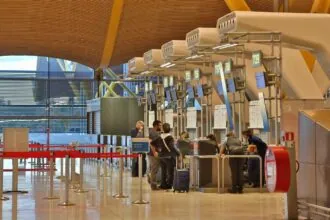
That modest scale keeps everything physically close together. DRS operates from a single terminal building with just seven jet bridges, converted in 2001 from a former aircraft-industry hangar rather than built from scratch, and it sits only 9 kilometres (5.6 miles) north of the centre in the Klotzsche district, closer to town than Munich’s, Berlin’s or Stuttgart’s airports.
The airport’s own station, opened in March 2001, was the first underground railway station built anywhere in Saxony, sitting directly beneath the terminal and reached by lift or escalator straight from the arrivals level. It stayed the only one in the state until Leipzig’s own city tunnel opened years later.
Nearly every transfer option in this guide leans on that same station, since the S2 line begins and ends there and feeds straight into Dresden’s tram and S-Bahn network. Bus stops, the taxi rank, car hire desks and the airport’s car parks all sit within the same short walk from Arrivals, so nothing here involves a long trek before the transfer even starts.
Scale and layout make the choice fairly forgiving here, but not identical for everyone. A solo traveller with hand luggage and a family hauling three suitcases and a pushchair will still land on different answers, and a flight touching down close to midnight changes the calculation more than the destination does, since the S2 and both bus routes thin out overnight while the taxi rank does not.
What follows walks through each realistic option for reaching the city from the airport: the S2 rail line, the two local bus routes, taxis and app-based booking, pre-booked private transfers, hiring a car, and driving yourself, including where to park.
None of that makes the choice trivial. A traveller heading for a hotel on the far side of the Altstadt can easily lose the advantage of a short flight by queuing at the taxi rank out of habit when the S2 would have had them there in half the time, so it is worth reading a little further before picking an option.
| Transfer Option | Typical Journey Time | Approximate Cost | Best For |
|---|---|---|---|
| S-Bahn (S2) | ~23 mins to Hauptbahnhof | €3.60 (£3.10/$4.21) | Budget travellers, most stops |
| Local Bus | 8-13 mins to nearest hub | €3.60 (£3.10/$4.21) | Stops nearer a bus route than the rail platform |
| Taxi | 20-30 mins | €25-35 (£22-30/$29-41) | Door-to-door convenience |
| Private Transfer | 20-30 mins | Similar to taxi, fixed in advance | Families and groups |
| Car Hire | Flexible | Varies by season | Exploring Saxony beyond Dresden |
| Self-Drive/Drop-off | 20-30 mins | Parking from €2 (£2/$2) | Travellers with their own car |
What Sets DRS Apart From Germany’s Bigger Hubs
Dresden Airport has operated from the Klotzsche site since 1935, though today’s building bears little resemblance to that history. It was seized for exclusively military use during the war and did not reopen for civilian flights until 1957, then grew piecemeal, with a second terminal added in 1995 ahead of the current single terminal’s conversion a few years later.
That industrial history is still visible next door. Elbe Flugzeugwerke, a joint venture between Airbus and ST Engineering, converts retired passenger widebody jets into freighters on the same site, which is why an occasional stripped-down A330 sits on the apron alongside the regional turboprops and mid-sized jets using the terminal’s seven jet bridges.
In 2023, DRS handled just under 930,000 passengers, averaging roughly 14 flights a day. Sundair is the single biggest operator, and the two busiest routes both run to domestic hubs, Frankfurt and Munich, rather than to one dominant leisure destination.
That small scale strips out the layover logistics that shape a transfer at a bigger airport. There is a single terminal, a single set of arrivals doors, and one underground station a lift ride below, so the real question is rarely which terminal or exit to head for, only which option below suits the trip.
Because DRS sits inside the same Dresden tariff zone as the city centre, the fare for the S2 or a local bus is identical to any other city journey, unlike airports further out where a separate airport supplement applies. That detail alone keeps public transport the cheapest option for most visitors, whatever hotel they have booked.
The rest of this guide works through each option in turn, starting with the S2 line that most visitors default to first.
Best for a short trip. Compare rooms by neighbourhood, price and guest rating before you book.
Compare hotelsBest for families, or any stay past about four nights. A kitchen and a washing machine start paying for themselves.
Browse rentalsBest for double-checking. Runs the same search across several booking sites so you are not leaving money behind.
Compare pricesS-Bahn to Dresden: The S2 Line Explained
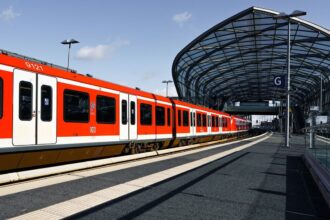
For most travellers, the S-Bahn is the natural way into Dresden from DRS. The S2 line starts and terminates at the airport station and uses the same integrated ticketing as the rest of the region’s bus and tram network, with full timetables published on the Dresden Airport website.
The S2 reaches Dresden-Neustadt in around 13 minutes and continues to Dresden Hauptbahnhof in about 23 minutes, calling at several stops through the northern suburbs along the way. On weekdays, a number of services continue beyond the centre to Heidenau and Pirna, which suits anyone staying south-east of the city rather than in it.
Trains run roughly every 30 minutes through most of the day, which is a little less frequent than the S-Bahn at some larger German airports, so it is worth checking the departure board time rather than assuming a train will always be minutes away. A standard single ticket for the ride costs €3.60 (£3.10/$4.21) for the Dresden tariff zone, since the airport itself falls inside that same zone as the city centre.
Tickets can be bought from machines on the platform, through the DVB app or VVO mobil app, or from the ticket desk inside the terminal, and the same fare covers up to an hour of onward travel on the local bus and tram network. A day ticket can work out cheaper for anyone planning several trips or a return journey later the same day.
The platform sits below ground, reached by lift or escalator, so luggage and stairs are less of an issue here than at stations without step-free access. The platform is one lift ride from Arrivals with no separate ticket gate to navigate, so even a traveller who normally avoids trains after a long flight should find the S2 straightforward.
For nearly everyone landing at DRS with a central Dresden hotel booked, the S2 is the option worth defaulting to first. It is simple, reasonably frequent, and considerably cheaper than a taxi, and it rarely needs much more thought than checking the next departure time.
Bus Options at Dresden Airport
Alongside the S2, two local bus routes call at the terminal, useful for anyone whose accommodation sits closer to a bus stop than a rail platform. Unlike some German airports, DRS has no separate branded express coach into the centre, so the buses here mainly work as connectors into the wider tram and bus network rather than a direct alternative to the train.
Line 77 runs to Infineon Nord and Ahlbecker Straße, taking around eight minutes and operating roughly every 15 minutes from around 5am to 9pm. It is mainly useful for the business and residential districts immediately north of the airport rather than a straightforward run into the centre.
Line 80 reaches Bahnhof Klotzsche in around 13 minutes, where it meets regional rail and tram services heading into Dresden, before continuing on a much longer run out to Omsewitz on the western side of the city. Buses on this route run every 20 to 30 minutes, with Klotzsche station being the useful transfer point for most visitors rather than the far end of the line.
Standard VVO fares apply across the bus network, so a single ticket costs the same €3.60 (£3.10/$4.21) as the S2, and the same tickets and apps work across both. There is no need to buy a separate bus-specific fare or worry about compatibility between the two.
Staying on line 80 all the way into town rarely pays off: changing at Klotzsche station onto a train or tram almost always beats riding the bus the rest of the way. For most first-time visitors heading to a central hotel, the S2 will do the job better than either bus route, and the buses are really there for destinations away from the direct rail corridor.
Anyone unsure which stop is closest to their accommodation should check a journey planner before committing to either bus, since neither route runs anywhere near as frequently as the equivalent services at some larger German airports. For a first-time visitor, the rail platform just beneath the terminal remains the simpler starting point.
Taxi and Ride-Hailing at Dresden Airport
The taxi rank sits directly outside the arrivals area, with licensed vehicles generally available around the clock regardless of flight time, so it needs no advance planning the way a train timetable does.
Dresden’s regulated taxi tariff charges a base fare of €4.90 (£4.21/$5.73), plus a per-kilometre rate that steps down the further the journey runs. Because the airport sits only around 9 kilometres from the centre, a typical journey into Dresden works out at around €25 to €35 (£22-30/$29-41), with the exact fare depending on traffic and the precise drop-off point.
Journey times generally run between 20 and 30 minutes in normal traffic, and rates rise slightly in the evening, overnight, and on Sundays and public holidays compared with the weekday daytime tariff. Late-evening and early-morning trips are often quicker simply because the roads are clearer.
Two named local firms handle most of the rank and phone-booking trade at DRS. Dresdner Taxigenossenschaft eG, the city’s main taxi cooperative and radio dispatch centre, has operated since 1946 and can be booked on 0351 211211. Taxi Elbflorenz, a smaller Dresden operator, specifically advertises fixed-price airport transfers and can be reached on 0351 88883733.
App-based booking is also available through services such as FreeNow, which operates in Dresden and lets travellers book and track a licensed taxi from a phone rather than queuing at the rank. Fares through the app follow the same regulated tariff as a metered taxi, so the price is broadly comparable either way.
For groups of five or more travelling together, a larger vehicle can usually be requested at the rank, and it often works out cheaper per person than several separate S2 tickets. Accessible vehicles can typically be requested through the rank staff or the booking app itself.
The most common mistake here is heading straight for the taxi rank out of habit when travelling solo with light luggage, when a €3.60 S2 ticket covers the same 23-minute run to Hauptbahnhof. The taxi mainly earns its place for late-night arrivals, heavy luggage, or groups splitting the fare.
Booking a Driver in Advance for Dresden
A pre-booked private transfer suits anyone who would rather not think about the arrival at all. Instead of joining a rank, a driver waits inside the terminal holding a name board, and because DRS has only one arrivals exit, there is no risk of missing each other in a maze of exits the way there might be at a larger airport.
Prices are agreed before travel rather than metered, so fixed-rate transfers into central Dresden typically run from around €28 to €40 (£24-34/$33-47) for a standard car, a little above the metered taxi fare, reflecting the certainty of a guaranteed pickup rather than any real difference in distance.
Journey times mirror a taxi at around 20 to 30 minutes. The appeal here is not speed but certainty, since families arriving with car seats, business travellers on a tight schedule, and anyone landing with more luggage than a taxi boot comfortably holds tend to find the guaranteed pickup point worth the small premium.
Several operators also run larger vehicles for groups and can extend a booking well past Dresden itself, out to Saxon Switzerland, the Ore Mountains, or towns such as Meissen and Bautzen. That is worth knowing for anyone heading straight on to a second destination without wanting to double back into the centre first.
A pre-booked driver earns its keep most clearly around a big event, since the Striezelmarkt Christmas market in December and major trade fairs at the Messe Dresden exhibition centre can both stretch the taxi rank’s queue well beyond its usual few minutes. The same logic applies to very early departures, when the S2’s 30 minute gaps overnight make a fixed pickup time worth paying for.
For most solo travellers on a budget, the S2 still beats a private transfer on price without costing much time. Anyone who would rather remove that decision entirely, though, should book ahead and confirm the driver’s name and flight number in advance rather than accepting an unmarked offer inside the arrivals hall.

Compare Airport Transfer Companies
Pre-booking your airport transfer can save time and reduce stress when you arrive. Whether you need a private taxi, shared shuttle or executive transfer, comparing providers can help you find the best price and service for your journey.
We’ve selected three trusted airport transfer companies so you can compare prices, vehicle options, cancellation policies and customer reviews before you travel.
Renting a Car for Trips Beyond the City
Renting a car makes sense here mainly for what lies beyond Dresden’s compact centre. Sixt, Hertz, Avis, Budget, Europcar and Enterprise all keep desks on the arrivals level, a short walk from the S2 platform below.
Collecting the keys involves no shuttle bus, since the rental car area sits right next to the terminal. Daily rates swing considerably with the season and how far ahead a booking is made, and reserving online in advance rather than walking up on the day usually beats the on-the-spot price by some margin.
Where a hire car actually pays off is reaching places the rail network handles awkwardly: the sandstone cliffs and hiking trails of Saxon Switzerland, the spa towns and mining heritage of the Ore Mountains, or a longer loop through eastern Germany toward the Czech border. It also suits a family with enough luggage to fill a boot rather than juggle it down to the S-Bahn platform.
None of that applies to Dresden itself. Trams, buses and the S-Bahn cover the city well, parking around the Altstadt and the Frauenkirche is metered and limited, and most of the rebuilt old town rewards walking over driving anyway.
Renting purely to cover the nine kilometres into town, then leaving the car outside a hotel for the rest of the stay, wastes money the S2 already saves for a few euros. The car becomes a parked cost rather than a convenience the moment the airport run is done.
Car hire at DRS earns its cost for travellers building a multi-stop trip around Saxony, not for anyone whose plans stop at Dresden’s well-connected centre.

Search Car Hire Options in Dresden
When public transport does not fit your plans in Dresden, hiring a car can give you more control over your route and travel times.
Search both Discover Cars and EconomyBookings to compare rental prices, vehicle categories and supplier conditions.
Driving Yourself: Roads, Journey Times and Parking
Drivers reach DRS via its own junction on the A4 Autobahn, signed “Dresden-Flughafen,” which connects onward to the A13 toward Berlin and the A17 toward the Czech border. The final stretch from the motorway exit into the terminal runs along the B97 federal road.
The run into the centre takes around 20 minutes in normal traffic, dropping closer to 15 minutes early in the morning or late at night once the A4 approach clears of commuter traffic. Rush hour on the surrounding roads is really the only thing that stretches it much beyond that.
Kerbside drop-offs are quick, and the nearest short-stay spaces cost from around €2 (£2/$2) for the first half hour, climbing to roughly €3.50 to €4 (£3/$4-5) an hour after that. A delayed arrival or a longer goodbye calls for one of the longer-stay car parks instead.
The main multi-storey car park holds around 2,900 spaces directly connected to the terminal, with cheaper outdoor lots a short walk further out. A week’s stay in the multi-storey works out from around €13 (£11/$15) a day, against roughly €9 (£8/$11) a day in the outdoor lots over the same period.
Accessible spaces sit close to the terminal entrance, and electric vehicle charging points are dotted across several of the car parks. As at most German airports, booking a space online ahead of the trip beats paying the walk-up rate on arrival.
Driving only really earns its place here for a drop-off or a collection. For reaching the centre itself, the S2 already covered above will almost always beat the time and cost of finding somewhere to park.
Best if you can move a day either way. Shows how the fare changes across the month.
Compare flightsBest for short trips. Install the eSIM at home and arrive with working data, no shop queue.
Browse eSIMsBest after a long flight or a late landing. Price agreed before you travel, and no taxi queue.
Check transfersContinuing On From Dresden Hauptbahnhof
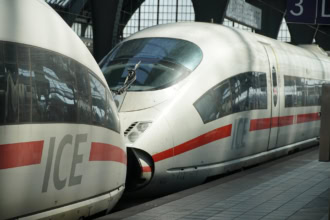
For anyone using DRS as a stepping stone rather than a final stop, Dresden Hauptbahnhof is a genuine rail hub in its own right, with direct ICE, EC and regional services fanning out across Saxony and beyond. The S2 from the airport arrives at the very same station these onward trains depart from, so there is no need to cross the city to make a connection.
Anyone connecting straight through should still allow a little slack beyond the S2’s 23 minute run, since even a same-station change means finding the right platform with luggage in tow. The table below lists journey times for the destinations travellers most often ask about next.
| Mode | Destination | Journey Time | Direct? |
|---|---|---|---|
| ICE | Leipzig Hauptbahnhof | ~1 hour 9 minutes | Yes |
| ICE | Berlin Hauptbahnhof | ~1 hour 34 minutes | Yes |
| EC | Prague (Praha hl.n.) | ~2 hours 5 minutes | Yes |
| RE | Chemnitz Hauptbahnhof | ~1 hour 4 minutes | Yes |
Matching the Transfer to the Trip
There is no single right answer here, only a right answer for a given group. Luggage, budget, destination and how many people are travelling together matter more than distance, since the S2 platform sits directly beneath Arrivals and every option starts from the same spot.
A solo traveller or a couple booked into a hotel near the Hauptbahnhof or the Altstadt should default to the S2. It costs a fraction of a taxi fare, and a realistic door-to-door estimate, including the walk from Arrivals, comes in around 30 to 35 minutes.
A hotel closer to a bus stop than a rail platform makes line 80 toward Klotzsche worth checking, since it needs no more advance planning than the train does. Beyond that, the choice between bus and S2 really just comes down to whichever stop sits closer to the door.
Late-night landings, a family with a pushchair, or anyone with more luggage than a train platform comfortably holds should lean toward a taxi or a pre-booked private transfer instead. Paying €25 to €35 for a nine-kilometre run is still modest by German airport standards, and a private transfer’s fixed price removes any guesswork over what a delay might cost.
Car hire earns its place only for trips that genuinely continue past Dresden, into Saxon Switzerland or the Ore Mountains, since the city’s own centre is compact enough that a rental car mostly just sits parked. A drop-off or collection should be budgeted at a straightforward 20 minutes, no more.
Put simply: take the S2 or a bus with light bags and no particular hurry, book a taxi or private transfer for late arrivals, groups or heavy luggage, and only add a rental car to the plan if Saxony beyond Dresden is actually on the itinerary.

Rupert’s Handy Travel Tips
Flying into Dresden Airport? Rupert has a few tips that can save both time and money:
- Buy a standard Dresden tariff zone ticket: the airport sits inside the same zone as the city centre, so the S2 fare stays low at €3.60.
- Don’t expect a train every few minutes: the S2 runs about every 30 minutes, so it is worth checking the departure board time rather than assuming one will be along shortly.
- Book through FreeNow if you’d rather not queue at the rank: it uses the same regulated taxi tariff, so the price is much the same either way.
- Book a private transfer for very early or late flights: S-Bahn frequency drops right back overnight, and a pre-booked driver avoids any risk of a longer taxi queue.
- Only hire a car if you are leaving Dresden: the city’s own transport network covers the centre well, and parking in the Altstadt is limited.
- Do not expect a long journey either way: DRS is one of the closer regional airports to its city centre in Germany, so a 20 to 30 minute transfer is normal whichever option gets picked.
Want to meet the reindeer behind our travel tips? Find out more in our page Who is Rupert?.




Frequently Asked Questions About Dresden Airport Transfers
What is the fastest way to get from Dresden Airport to the city centre?
The S2 regional line reaches Dresden Hauptbahnhof in around 23 minutes, and it needs no advance booking.
Which rail line serves Dresden Airport?
Dresden Airport is served by the S2 line, which starts and terminates at the airport station and runs roughly every 30 minutes.
How far is Dresden Airport from the city centre?
Dresden Airport is located approximately 9 kilometres (5.6 miles) north of central Dresden.
What ticket do I need for the train from Dresden Airport?
A standard single ticket costs €3.60 (£3.10/$4.21) for the Dresden tariff zone, the same fare that covers local buses.
Are taxis available at Dresden Airport?
Yes. An official taxi rank operates outside the terminal, with fares to the centre typically €25-35 (£22-30/$29-41).
Can I book a taxi through an app at Dresden Airport?
Yes. FreeNow operates in Dresden and lets travellers book a licensed taxi at the same regulated tariff as the rank.
Is it worth hiring a car at Dresden Airport?
Only if travelling beyond Dresden itself. Within the city, the tram, bus, and S-Bahn network are usually simpler and cheaper than driving.
Further Reading & Related Guides
Once you have arrived, our Things to Do in Dresden guide rounds up the Zwinger, the Frauenkirche and the rest of the rebuilt Altstadt, while our Best Day Trips from Dresden guide covers Saxon Switzerland’s Bastei Bridge, Meissen and three more excursions across Saxony.
Visiting for a Dynamo Dresden fixture or the Striezelmarkt? Our How to Get to the Stadium in Dresden guide covers the Rudolf-Harbig-Stadion, and our Dresden Christmas Market guide covers the Striezelmarkt’s 2026 dates, the Stollenfest parade and the city’s other festive markets.
For onward rail travel beyond Saxony, our German Rail Tickets Explained guide breaks down the Deutschland-Ticket and Saxony’s own regional fares, and our Interrail Germany Pass guide explains when a country-specific pass beats buying individual tickets.