Reviewed by our editorial team Published
Stockholm sits at the point where Lake Mälaren meets the Baltic Sea, which means the city is ringed by an unusually rich mix of day-trip options: medieval towns, royal palaces, genuine Viking settlements, and thousands of islands scattered across the archipelago. Few European capitals put this much variety within a single day’s return journey.
This guide covers 15 of the best day trips from Stockholm, chosen for a genuine mix of history, scenery and ease of access without a rental car. Most are reachable by train, bus or one of the region’s many archipelago boats, and several can be combined with a change of transport for a longer, more varied day.
Stockholm itself has more than enough to fill several days on its own, covered in detail in our Things to Do in Stockholm guide, so this page focuses entirely on where the trains, buses and boats out of the city can take you next.
Prices below are quoted in Swedish krona (SEK) with approximate GBP, EUR and USD conversions. Several of the boat-based trips run seasonally, typically from May to September, so it’s worth checking current schedules before building a winter itinerary around them.
Best Day Trips from Stockholm at a Glance
Every destination below gets its own section further down the page, but this table is a fast way to compare journey times before reading on.
| Destination | Journey Time | How to Get There | Best For |
|---|---|---|---|
| Uppsala | Around 40 minutes | Direct SJ train | Cathedral, castle & Viking mounds |
| Sigtuna | Around 60-75 minutes | Commuter train + bus | Sweden’s oldest town |
| Drottningholm Palace | 25-60 minutes | Metro + bus, or boat | UNESCO royal palace |
| Vaxholm | 45-60 minutes | Ferry or bus | Archipelago fortress town |
| Birka | Around 1 hour 45 minutes | Boat from Klara Mälarstrand | UNESCO Viking city |
| Mariefred & Gripsholm Castle | 1 hour by rail; 3.5 hours by steamboat | Train or historic steamboat | Renaissance castle & steam train |
| Sandhamn | Around 2 hours 15 minutes | Cinderella boat | Outer archipelago & sailing culture |
| Fjäderholmarna | Around 25 minutes | Ferry | A quick archipelago taste |
| Skokloster Palace | Around 1.5 hours | Train + bus | Unfinished Baroque castle |
| Tyresta National Park | Around 50 minutes | SL bus | Old-growth forest & hiking |
| Västerås & Anundshög | Around 1 hour | SJ regional train | Sweden’s largest burial mound |
| Trosa & Tullgarn Palace | Around 1-1.5 hours | Bus or car | Baltic coast & royal gardens |
| Kolmården Wildlife Park | Around 2-2.5 hours | Train + shuttle bus, or car | Scandinavia’s largest zoo |
Booking Your Train and Bus Tickets
Most of the destinations on this list are reached by train or bus rather than needing a car, and buying the right ticket in advance is usually the easiest way to keep the day simple. SJ, Sweden’s national rail operator, sells tickets for the InterCity and regional trains running to places like Uppsala, Västerås and Sigtuna directly through its app or website, with advance fares typically cheaper than a ticket bought at the station on the day.
For destinations without a direct train, or where a bus works out cheaper, FlixBus runs regular long-distance coach routes out of Stockholm, including direct services to Uppsala and Västerås, generally at a lower fare than the equivalent train ticket in exchange for a somewhat longer journey time.
Rather than checking SJ, FlixBus and other regional operators separately, a comparison platform like Omio lets you search train and bus options for the same route side by side in one place, which makes it easier to weigh up a faster, pricier train against a cheaper, slower bus before committing to either.
Both train and bus tickets are normally issued as a mobile e-ticket rather than anything that needs printing, and booking a few days ahead is worth doing for weekend travel in summer, when the most popular Uppsala and Sigtuna departures can sell out on the cheapest fare tiers first.

Compare Trains and Buses with Omio
Choosing between trains and buses is not always obvious. Some routes are faster by train, while others are cheaper or easier by bus. Omio helps you compare routes, journey times, prices, and tickets in one place.
It is useful for city-to-city travel, cross-border journeys, and trips where flexibility matters. You can quickly see which option works best for your route, budget, and schedule before booking.
Best for two or three nights. The widest choice of rooms, with filters for free cancellation and included breakfast.
View staysBest for longer stays. Whole apartments and houses, so you are not eating out three times a day.
View rentalsBest for double-checking. Runs the same Stockholm search across several booking sites so you are not leaving money behind.
Compare pricesUppsala: Cathedral, Castle and Viking Mounds
Uppsala is Sweden’s fourth-largest city and one of its oldest seats of learning, home to Uppsala University, founded in 1477 and the oldest university in Scandinavia. Its skyline is dominated by Uppsala Cathedral, whose twin spires rise 118 metres and make it the tallest church building in the Nordic countries.
Just outside the centre, Gamla Uppsala holds a cluster of monumental Viking-age burial mounds, believed to be the resting place of early Swedish kings, alongside a small museum explaining their significance. Uppsala Castle, overlooking the cathedral from a hill above the old town, adds a further layer of royal and academic history to the visit.
Direct SJ regional trains run frequently from Stockholm Central, taking around 38-46 minutes each way, with one-way tickets typically costing 75-120 SEK (£6-9/€7-11/$7-11). Trains run throughout the day, so there’s rarely a long wait for the next departure.
Uppsala works well as a year-round destination, unlike several of the archipelago and boat-based trips further down this list, making it a sensible choice for a winter day trip when seasonal services aren’t running.
Inside the cathedral, Swedish monarchs were crowned there from 1441 to 1719, and it remains the resting place of Gustav Vasa, the 16th-century king regarded as the founder of the modern Swedish state, along with Sweden’s patron saint, Erik IX. A short walk away, the university’s Carolina Rediviva library displays the Codex Argenteus, a sixth-century Gothic Bible bound in silver lettering and one of the rarest manuscripts on public view anywhere in the world.
Garden lovers should build in time for the Linnaeus Garden, Sweden’s oldest botanic garden, laid out to a design personally overseen by Carl Linnaeus and open to visitors from mid-May to mid-September. The adjoining Linnaeus Museum occupies the naturalist’s former family home, and a stroll along the Fyris River through the centre links the cathedral, castle and university quarters in one unhurried walk, with plenty of riverside cafes to break up the route.
Sigtuna: Sweden’s Oldest Town
Founded around 980 AD, Sigtuna claims the title of Sweden’s oldest still-existing town, and its compact centre still runs along the same medieval main street, Stora Gatan, lined with wooden buildings rather than the stone architecture found elsewhere in the region.
The town holds one of the country’s densest concentrations of Viking-age rune stones, scattered through the streets and churchyards rather than confined to a museum, alongside the ruined medieval church of Mariakyrkan. A small, slightly eccentric detail worth seeking out is a bookshop run by nuns from a nearby convent, trading since 1948.
Getting there takes a little longer than some other options on this list: a commuter train (pendeltåg) to Märsta, followed by local bus 570 or 579, for a combined journey of around 60-75 minutes. The whole trip is covered by a standard SL travel card, with no separate ticket needed.
Sigtuna is at its best from May to September, when the lakeside paths and outdoor cafés are in full use, though the historic centre itself is open and walkable year-round.
The Sigtuna Museum, just off Stora Gatan, gives context to the finds scattered around town, including coins minted locally under King Olof Skötkonung around 995 AD, generally regarded as the first coins ever struck in Sweden. A self-guided rune stone walk threads more than a dozen inscribed stones through the streets and churchyards, most of it comfortably covered in under an hour.
Lake Mälaren laps right up to the town, and a waterside path leads past small swimming spots to the ruined tower of St Olof’s Church, one of several medieval churches around Sigtuna left as picturesque ruins rather than rebuilt. Combined with the wooden main street, this makes Sigtuna a place that rewards slow wandering rather than a tight checklist of sights.
Drottningholm Palace: A UNESCO Royal Retreat
Drottningholm Palace, a UNESCO World Heritage Site since 1991, is often described as Sweden’s answer to Versailles, and it remains a genuine royal residence today, home to the Swedish royal family’s private apartments. The formal Baroque gardens, stretching down to the water, are free to walk even without a palace ticket.
The estate’s 18th-century Court Theatre is one of the best-preserved of its era anywhere in the world, still using much of its original stage machinery for performances today, and the ornate Chinese Pavilion in the grounds reflects the 18th-century European fascination with East Asian design.
A Strömma boat from Stadshusbron takes around an hour and costs roughly 260 SEK (£19/€23/$25) return, running seasonally, while the year-round alternative is the green metro line to Brommaplan followed by a short bus, taking about 25 minutes and covered by a standard SL fare.
Because it’s reachable year-round and combines a palace, theatre and gardens in a single easy half-day, Drottningholm is one of the most reliable choices on this list regardless of season.
The Court Theatre was built in 1766 for Queen Lovisa Ulrika after an earlier theatre burned down, and its wooden stage machinery, including original capstans, rollers and painted backdrops, is still operated entirely by hand on the guided tours run year-round. Every summer the theatre also stages a season of 18th-century-style opera and dance, performed with much of the same equipment its original audiences would have watched.
Beyond the formal Baroque garden, the grounds open out into an English-style landscape park dotted with statues and shaded walking paths, a quieter contrast to the clipped hedges nearer the palace. Combining the palace interior, theatre tour and Chinese Pavilion in one visit generally takes 3 to 4 hours, making Drottningholm one of the more complete half-day trips on this list.
Vaxholm: Gateway to the Archipelago
Vaxholm is the easiest genuine taste of the Stockholm archipelago beyond Fjäderholmarna, a small island town of pastel wooden houses built around its role guarding the main sea approach to the capital. The 1830s Vaxholm Fortress, on its own tiny island a short ferry hop from the town, is the headline sight.
The fortress runs as a museum through the summer, open daily from 11am to 5pm (June to August), with adult admission around 110 SEK (£8/€10/$10) and restored officer quarters alongside archipelago-facing gun batteries.
A direct Waxholmsbolaget or Strömma ferry from Strömkajen takes around an hour, with return fares from roughly 195 SEK (£14/€17/$18), while SL bus 670 from Tekniska Högskolan metro station covers the same distance by road in about 45 minutes on a standard travel card.
Beyond the fortress, wandering the 19th-century wooden architecture, swimming from one of several small beaches, and a seafood lunch at the waterfront fill out a comfortable half to full day.
The fortress seen today isn’t the original: Gustav Vasa first fortified the strait in 1560, recognising it as one of only two routes large enemy ships could use to reach Stockholm, but the granite structure standing now took 30 years to build and was only completed in 1863. Ironically, it was obsolete almost immediately, since a test firing in 1872 showed new rifled artillery shells could punch straight through walls over two metres thick.
Vaxholm also makes a useful hub for exploring further, with smaller connecting ferries continuing on to quieter islands like Rindö without doubling back to Stockholm first. The town’s several waterfront restaurants lean heavily on Baltic herring and freshly caught fish, and outside the summer season it still makes a pleasant, much quieter half-day walk even with the fortress museum closed.
Birka: Sweden’s First Viking City
On the small island of Björkö in Lake Mälaren, Birka was Sweden’s first true town and a major Viking-age trading hub, and it now holds UNESCO World Heritage status for the scale and importance of what’s been found there. More than 3,000 burial mounds remain visible across the site, an extraordinary concentration for a single settlement.
Reconstructed Viking longhouses and an on-site archaeological museum help bring the excavated finds to life, and guided walks around the old town ramparts are included in most boat packages rather than sold separately.
A Strömma boat from Klara Mälarstrand near City Hall takes around 1 hour 45 minutes each way, with a full round trip including museum entry running to roughly 470 SEK (£35/€41/$44) and the whole excursion typically filling 8 hours.
Birka runs May to September only, and booking ahead is worth doing in peak summer, since sailings are limited and the site itself has no other practical way to reach it.
Birka’s importance extends beyond trade: in 829 AD, the missionary Ansgar arrived here at the request of a Swedish king and spent six months preaching, establishing what’s generally regarded as the first organised Christian congregation in Sweden. He returned twice more in the following decades, making Birka the starting point for Christianity’s slow spread across the country.
The island’s archaeological museum displays jewellery, weapons and everyday objects recovered from the burial mounds, giving a genuine sense of Birka’s reach as a trading post that connected Scandinavia with the Byzantine Empire and the Islamic world via eastern river routes. Because the crossing takes most of a day, this trip pairs poorly with anything else, and is best treated as a full day dedicated to Viking history rather than combined with another stop.
Mariefred and Gripsholm Castle
Gripsholm Castle, founded by Gustav Vasa in 1537 on the site of a former monastery, is a genuine Renaissance fortress that has served as a royal residence, a prison, and now a museum holding the world’s oldest surviving national portrait gallery. One of Europe’s best-preserved 18th-century theatres sits inside the castle walls.
The small lakeside town of Mariefred around it is built from rustic wooden houses in red, green and ochre, with an unhurried, lived-in feel rather than a manicured tourist centre. A narrow-gauge museum railway, staffed by volunteers in period uniform, runs steam services on the approach to town, complete with the quirk of manually turning the locomotive by hand at the end of the line.
The practical route is train to Läggesta followed by a connecting bus or the museum railway, taking around an hour in total for roughly 115 SEK (£8/€10/$11). The more memorable option, running May to September, is the historic S/S Mariefred steamboat from City Hall Quay, a scenic 3.5-hour journey each way for around 440 SEK (£33/€39/$41).
Castle admission runs about 170 SEK (£13/€16/$17) for adults, and 1.5 to 2 hours is enough to see it properly, leaving time for the town’s well-known cake café before the journey back.
The narrow-gauge railway between Läggesta and Mariefred is run entirely by volunteers from the Östra Södermanlands Järnväg association, using steam locomotives more than a century old that have puffed along this line since 1965. Services run seasonally from May to September, and the operation includes a small workshop where visitors can sometimes see engines being maintained between runs.
Inside Gripsholm Castle, the round corner towers and thick defensive walls reflect its origins as a genuine fortress rather than a purely ceremonial palace, and the national portrait gallery now numbers several thousand works spanning Swedish history from Gustav Vasa’s era to the present day. Mariefred’s cake café, a short walk from the castle gates, is well known locally for its princess cake and remains one of the more reliable lunch stops on any of these day trips.
Best if you can move a day either way. Shows how the fare to Stockholm changes across the month.
Compare flightsBest if you want maps and messaging working the moment you switch your phone on.
See eSIM plansBest when public transport has stopped, or when you are travelling with children and bags.
Book a transferSandhamn: The Outer Archipelago
Sandhamn sits far enough out in the Stockholm archipelago to feel genuinely remote, and it has been the summer base of the Royal Swedish Yacht Club since the late 19th century, giving the small island a strong sailing culture that’s still visible in its harbour today.
Red-painted wooden houses line narrow car-free lanes, and Trouville Beach, a short walk from the village, is one of the more attractive swimming spots anywhere in the archipelago. Seasonal restaurants around the harbour lean heavily on fresh Baltic seafood.
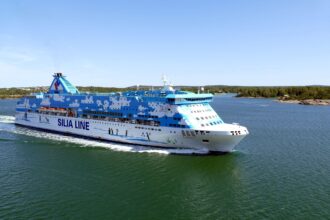
The direct Cinderella boat from Nybrokajen takes around 2 hours 15 minutes each way, with return fares from roughly 380 SEK (£28/€33/$36); a bus-and-ferry combination via Stavsnäs is slightly quicker but involves a change partway.
Given the travel time, Sandhamn suits an early start and a full day rather than a rushed half-day visit, and it runs best from June to September, when the restaurants and beach are properly open.
Every summer, Sandhamn becomes the finish line for the Gotland Runt, one of the world’s largest offshore sailing races and hosted by the Royal Swedish Yacht Club, which has been based on the island since the 1890s. Hundreds of yachts converge on the harbour for the finish, filling the village with a genuine sailing-festival atmosphere for a few days each summer.
Away from the harbour, quiet paths cross the island’s pine forest and rocky shoreline to reach smaller, near-empty coves beyond Trouville Beach, well worth the extra 20 to 30 minutes’ walk for anyone wanting to escape the day-trip crowds. Because there’s no road access, Sandhamn stays genuinely car-free even in peak season, which is part of what keeps its harbour village feel intact.
Fjäderholmarna: The Quickest Archipelago Escape
For anyone short on time, Fjäderholmarna is the closest archipelago island group to the city, reachable in around 25 minutes by direct ferry from Nybroviken or Slussen, making it realistic even as an add-on to a morning already spent in the city centre.
The islands hold a small working brewery and distillery, craft workshops, a seaplane museum, and several seasonal restaurants built around smoked and fresh fish, giving visitors a genuine, if compact, sense of archipelago life.
Return ferry tickets run from around 180 SEK (£13/€16/$17), and the islands run their full range of restaurants and shops from May to September, with a reduced service outside that window.
A popular use of Fjäderholmarna is a sunset dinner trip rather than a full sightseeing day, since the islands are small enough to see in an hour or two before settling in for a harbourside meal as the light fades.
The main island, Stora Fjäderholmen, sits within Stockholm’s Royal National City Park and has a more layered history than its size suggests: among its old military bunkers, one was used for a time as ageing storage by a Swedish whisky producer, an unexpected reuse of Cold War-era infrastructure hidden beneath the craft shops above.
A short marked trail loops around the main island in well under an hour, taking in rocky swimming spots and views back across the water to central Stockholm, which makes Fjäderholmarna a genuinely realistic option even for visitors with only half a day free. Outside the main May to September season, the ferry service and most restaurants scale back sharply, so it’s worth checking hours before making a special trip in winter.
Skokloster Palace: Sweden’s Baroque Time Capsule
Skokloster Palace is one of Europe’s largest Baroque castles, and it has remained genuinely unfinished since building work stopped in 1676, leaving several rooms in an unplastered, half-built state that gives an unusually candid look at 17th-century construction methods.
Inside, the palace holds a private library of more than 40,000 volumes and one of the best-preserved collections of period armour and weapons in Sweden, largely untouched since the original owner’s death. A waterfront café in the grounds overlooks Lake Mälaren.
The most practical route is an SJ train to Bålsta followed by local bus 311, a combined journey of around 1.5 hours each way for roughly 95 SEK (£7/€8/$9) in train fare, plus a palace admission of about 150 SEK (£11/€13/$14).
Because of its unfinished state and dense collections, Skokloster tends to appeal most to visitors with a specific interest in Baroque architecture or military history, rather than as a casual general sightseeing stop.
The palace was the vision of Carl Gustaf Wrangel, a Swedish field marshal who grew immensely wealthy from his campaigns during the Thirty Years’ War, and building work began in 1654. When Wrangel died in 1676, his heirs had little interest in finishing a project on this scale, leaving several upper rooms bare brick and plaster to this day, a rare chance to see 17th-century construction methods laid open rather than hidden behind finished walls.
The weapons hall alone holds what’s regarded as the largest surviving collection of 17th-century personal military weapons in the world, much of it war booty brought back from campaigns in Poland and elsewhere, displayed alongside more unusual pieces such as a 16th-century Arctic canoe. Combined with the palace’s own grounds along Lake Mälaren, most visitors find 2 to 3 hours enough time to see the main rooms and collections properly.
Tyresta National Park: Old-Growth Forest on the Doorstep
Tyresta National Park protects one of the largest remaining areas of old-growth pine forest in southern Sweden, with trees several hundred years old standing above dark, still lakes barely 20 kilometres from the city centre.
A network of marked trails ranges from an easy 2-kilometre loop suitable for most fitness levels up to a demanding 12-kilometre route through the park’s wilder northern section, including an area that regenerated naturally after a large wildfire in 1999.
SL bus 873 runs directly from Gullmarsplan metro station, taking around 50 minutes and covered entirely by a standard SL travel card, with no separate park entry fee.
Because it’s free, covered by public transport, and open year-round, Tyresta is one of the best low-cost options on this list for anyone wanting genuine Swedish wilderness without renting a car or paying for tickets.
Near the main entrance, Tyresta village preserves a cluster of 18th-century farm buildings still in something close to their original layout, with animals kept in the paddocks and a small shop selling locally produced meat. The adjoining Naturum visitor centre is a useful first stop for picking a route, with staff on hand to suggest a trail matched to the time and fitness level available.
The 1999 wildfire that burned through part of the park’s northern section is now a feature rather than a scar, with the regrown birch and pine offering a rare, close-up look at how Nordic forest regenerates after a major burn. Sturdy footwear is worth packing regardless of the trail chosen, since the ground between the old-growth pines stays damp and root-strewn even on a dry summer day.
Västerås and Anundshög
Västerås, on the shore of Lake Mälaren west of Stockholm, pairs an easy-going lakeside town with one of Sweden’s most significant Viking-age sites just outside it. Regular SJ regional trains make the roughly 1-hour journey from Stockholm Central for around 95-150 SEK (£7-11/€8-13/$9-14) each way.
Anundshög, a short bus or taxi ride from the station, is Sweden’s largest burial mound, standing around 9 metres high, and the surrounding field holds stone ship settings and a rune stone, forming one of the country’s most complete Viking ceremonial landscapes.
Back in town, a walk along the lakeside promenade takes in Hotel Utter Inn‘s distinctive floating café, and Västerås’s compact centre has enough restaurants and shops to fill out a relaxed afternoon after the mounds.
This combination suits visitors who’ve already covered Birka and Gamla Uppsala and want a third, quieter angle on Viking-age Sweden, without the crowds of the more famous sites closer to the city.
The mound at Anundshög is flanked by two stone ship settings, one 51 metres and the other 54 metres long, formed from standing stones laid out in the outline of Viking-age vessels, a rare survival that underlines the site’s likely role as a ceremonial assembly place rather than a burial ground alone. A nearby runestone linked to the historic Eriksgata, the route newly elected Swedish kings once had to travel to be formally recognised, adds a further layer to the site.
Västerås itself is a genuinely lived-in Swedish city rather than a tourist set-piece, and its cathedral, first consecrated in 1271 and rebuilt several times since, including after a 17th-century fire, holds the tomb of the deposed King Erik XIV and anchors a compact old town worth an hour’s wander before or after the mounds. The combination of city and burial ground makes this one of the more relaxed day trips on this list, with none of the queues found at busier sites closer to Stockholm.
Trosa and Tullgarn Palace
Trosa is a small Baltic coastal town built around a canal, its waterfront lined with well-preserved 18th and 19th-century wooden harbour houses that give it a noticeably different character from Stockholm’s own old town.
On the way, Tullgarn Palace, a former royal summer residence, sits in landscaped gardens running down to the Baltic shore, with a more intimate, lived-in feel than the grander state rooms at Drottningholm.
A combination of bus and a short walk covers the roughly 75 kilometres from Stockholm in about 1 to 1.5 hours, though a hire car makes it considerably easier to combine both the palace and the town in a single day.
Trosa is best treated as an unhurried, slow day out, built around a canal-side lunch and a wander rather than a checklist of specific sights, which makes it a good choice for a final day trip after a busier itinerary.
Trosa’s harbour was historically where the town’s fishermen landed their summer catch, selling salted fish from stalls on the grassy area that still hosts markets and festivals today, including the summer Trosa Galejet food and music event. A handful of harbourside restaurants continue that tradition with locally caught fish on the menu, best enjoyed at one of the outdoor tables looking over the water.
At Tullgarn Palace, the interiors reflect its later life as a favourite summer residence of King Gustaf V and Queen Victoria from 1881 onwards, including hand-painted Dutch tiled walls and a breakfast room styled after a German beer hall, a more personal, lived-in feel than the grander state rooms at Drottningholm. The surrounding parkland runs down to the Baltic shoreline and is free to walk even outside the palace’s own opening hours.
Best for solo travellers and anyone watching the budget. Dorm beds and private rooms in the same search.
Browse hostelsBest for anyone flying more than once or twice a year. Handles the compensation claim so you are not chasing the airline.
See AirHelp+Best for a day with a bag and nowhere to put it. Find a storage point near where you already are.
View storageKolmården: Scandinavia’s Largest Wildlife Park
Kolmården Wildlife Park, near Norrköping, is the largest zoo in Scandinavia, home to more than 750 animals across a large forested site, including a distinctive cable car safari section that carries visitors above open enclosures for elephants, giraffes and other large species.
Beyond the safari section, the park includes a dolphinarium, an aquarium, and a more conventional walk-through zoo area, making it substantial enough to fill a full day rather than a quick stop.
The journey takes around 2 to 2.5 hours each way by train to Norrköping followed by a shuttle bus, or roughly 2 hours by car, and adult admission runs to about 555 SEK (£41/€49/$52).
Given the travel time and cost, Kolmården makes most sense specifically for families with children, rather than as a general-interest addition to a Stockholm itinerary aimed at history or architecture.
The Safaribanan cable car was rebuilt in 2011 after the original drive-through safari closed, and today it carries visitors low over five themed zones, from Nordic elk and bison to African lions and a savannah enclosure with giraffes and zebras, without the animals ever being separated from riders by a vehicle window. It’s included in standard park admission rather than sold as an extra.
Beyond the safari, the Wildfire roller coaster and a dolphinarium with regular shows add a theme-park element that sets Kolmården apart from a conventional zoo, and the park is large enough that a shuttle train connects its furthest sections rather than expecting visitors to walk the whole site. Families planning a full day should aim to arrive at opening, since the most popular shows and the safari both tend to draw queues by mid-morning in peak summer.
Getting Around: Boats, Trains and the SL Card
Most of the inland destinations on this list, including Uppsala, Sigtuna, Drottningholm and Tyresta, are covered entirely by Stockholm’s own SL travel card, the same card used for the city’s metro, buses and trams, which makes a standard 72-hour or 7-day pass genuinely good value for a multi-day itinerary.
The archipelago boats, run mainly by Waxholmsbolaget and Strömma, operate on a separate ticketing system from the SL network, though Waxholmsbolaget does accept SL travel cards on some of its routes, including the one to Vaxholm. It’s worth checking each operator’s own site for the specific route being used.
For destinations further afield, such as Västerås and Kolmården, national operator SJ runs the regional and InterCity trains, with tickets bought separately from the SL system through the SJ app or website.
Because several archipelago routes run on a reduced winter timetable or stop entirely outside May to September, checking the current schedule before travelling is worth doing for any boat-based trip on this list, particularly Birka and Sandhamn.
Anyone aged 65 or over qualifies for discounted SL fares on the metro, bus and commuter train network from the day they reach that age, though this generally doesn’t extend to the separately ticketed archipelago boats or SJ intercity services. The SL app also sells single tickets and passes directly, which avoids queuing at a machine on busier routes like the commuter train to Uppsala.
For a faster alternative to public buses on some inland routes, bike rental is worth considering at compact destinations like Sigtuna and Mariefred, where the historic centre and surrounding countryside can comfortably be covered by bicycle in a couple of hours. Whichever mode is used, building in a little buffer time around connections, particularly bus transfers to Skokloster or the onward walk from Birka’s boat, avoids a missed link turning into a much longer day than planned.
Booking Your Day Trip
Train and bus tickets for the inland routes are covered in the booking section near the top of this guide; from here, the main extra planning to think about is the archipelago boats, the SL card, and admission for the castles and museums along the way.
For the boat-based trips, Strömma and Waxholmsbolaget both take bookings directly through their own websites, and pre-booking a specific sailing is worth doing for Birka and Sandhamn in particular, since summer departures can sell out several days ahead.
Anyone planning several of these trips across a longer stay should weigh up a standard SL travel card against paying for individual tickets, since the card’s flat-rate access to the metro, bus and commuter train network usually pays for itself after two or three inland day trips.
Museum and castle tickets for sites like Gripsholm, Skokloster and Drottningholm can generally be bought on arrival without a long wait, though booking ahead online avoids any risk of a sold-out timed slot during the busiest summer weekends.
For a more structured option, several tour operators run guided day trips that bundle transport, admission and a guide into a single booking, useful for destinations like Birka where a guide can add real context to the burial mounds and excavated finds that a self-guided visit might miss. These tend to cost more than arranging transport independently, but they remove the need to check timetables or connections.
Cancellation and refund policies vary noticeably between operators, so it’s worth checking the terms before paying, particularly for weather-dependent boat trips where a sudden change in conditions can affect a sailing. Building a little flexibility into the itinerary, rather than booking every day trip on a fixed schedule back to back, also makes it easier to swap a rainy day at Tyresta for an indoor option like Skokloster or Gripsholm Castle instead.

Rupert’s Handy Travel Tips
Stockholm’s day trips split into two groups, year-round and seasonal, and knowing which is which saves a wasted trip.
- Save Birka and Sandhamn for summer: both rely on seasonal boats that stop running from around October to April.
- Pick Uppsala or Drottningholm in winter: both are reachable by year-round train or metro rather than a seasonal boat.
- Book archipelago boats ahead in July: Strömma and Waxholmsbolaget sailings to Birka and Sandhamn can sell out days in advance.
- Use your SL card on inland trips: Uppsala, Sigtuna and Tyresta are all covered, so there’s no need for separate tickets.
- Take the steamboat to Mariefred once: it’s slower than the train, but the 3.5-hour Lake Mälaren crossing is worth doing for its own sake.
Want to meet the reindeer behind our travel tips? Find out more in our page Who is Rupert?.





Frequently Asked Questions About Day Trips from Stockholm
What is the best day trip from Stockholm for a first visit?
Uppsala is hard to beat for a first-timer: it’s under an hour away, runs year-round, and combines a cathedral, a castle and genuine Viking burial mounds in a single easy trip.
Do I need a car for any of these day trips?
No. Every destination in this guide is reachable by train, bus or boat, though a hire car does make combining Trosa with Tullgarn Palace more convenient in a single day.
Which day trips run all year round?
Uppsala, Sigtuna, Drottningholm (via the metro and bus route), Skokloster, Västerås and Tyresta National Park are all reachable year-round by train, bus or metro rather than a seasonal boat.
Is Birka worth the boat journey?
Yes, for anyone with a genuine interest in Viking history. It’s a UNESCO World Heritage Site with thousands of visible burial mounds, though the seasonal, roughly 8-hour round trip is a bigger commitment than most other options on this list.
What’s the easiest archipelago day trip?
Fjäderholmarna, at around 25 minutes each way by direct ferry, is by far the quickest, though Vaxholm offers a fuller archipelago experience for only a little extra travel time.
Can I use my Stockholm travel card on these day trips?
Yes, for most inland destinations, including Uppsala’s commuter services, Sigtuna, Drottningholm’s metro-and-bus route, and Tyresta. The archipelago boats and long-distance SJ trains to places like Västerås and Kolmården are ticketed separately.
Further Reading
For everything worth doing inside Stockholm itself before heading further out, see our Things to Do in Stockholm guide, covering the city’s museums, old town and islands in full.
Anyone arriving by air should also read our Stockholm Airport Transfers guide, covering the Arlanda Express, buses and taxis from both Arlanda and Bromma.
For onward travel further into Sweden or across the Baltic, our Interrail Sweden Pass guide and Ferry Routes from Stockholm guide cover rail passes and longer sea connections beyond the day trips on this page.